It Says It Will Save Your "Morning Coffee, Evening Alcohol" Routine and Keep You Energized | BlueRun Ventures Headlines

Sleep easy, wake free.
BlueRun Ventures Headlines — each issue brings you one small breakthrough redefining future tech and everyday life.
Today we're sharing MindLax, the sleep mat from Yuanlai Technology that aims to solve the "not quite an illness but absolutely debilitating" problem of sleep disorders. BlueRun Ventures was Yuanlai's angel round investor. Enjoy —
Some 300 million people in China suffer from sleep disorders — roughly one in five. That's according to the 2023 China Healthy Sleep White Paper. Sleep problems are a cause or trigger for sub-health conditions and numerous chronic diseases, with thousands of potential underlying causes.
But the bigger issue is that most people simply don't know how to manage their energy. Unhealthy eating habits, failing to recover physical stamina, habitual negative avoidance, compulsive short-video consumption — these patterns lead us to squander energy without realizing it. There's no question: difficulty falling asleep, staying asleep, and sleeping well has become a widespread, persistent pain point across genders and age groups.
Against this backdrop, Yuanlai Technology has built its approach on neurofeedback mechanisms from brain science, with materials innovation and digital content encoding as its two core technical moats. The company pioneered the Multi-frequency Waveguide System (MWS) and launched its first product based on this technology — the MindLax Sleeping Mat — using "tech innovation" to help users improve sleep quality and relieve stress.
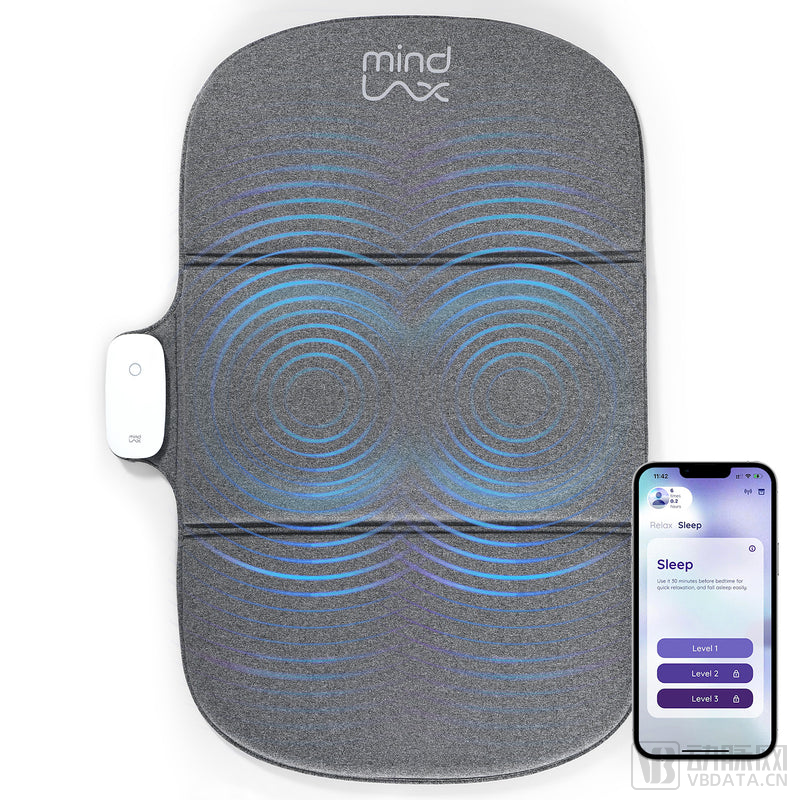
MindLax Sleeping Mat
Cognitive Haptics as a Moat, Achieving Closed-Loop "Perception + Regulation" Healing
"I sleep fine myself, but more and more people around me face varying degrees of anxiety, depression, and sleep disorders. And when sleep problems do arise, very few seek drug treatment or psychotherapy — and even fewer stick with it. That leaves a massive population of sleep-disordered patients without effective, sustained healing. I wanted to do something for these people, using physical methods to trigger biofeedback and regulate emotions and neural relaxation," said Yitong Liu, Yuanlai Technology's founder and CEO, in an interview.
Before diving into Yuanlai's technology and products, Liu first discussed her two prior entrepreneurial experiences, both at the frontier of medical technology: one in global digital life and precision health management, the other in sports emergency care — both unicorn companies where she served as CTO, focused on technology innovation and R&D.
Drawing on her deep experience in healthcare, Liu noticed that while the industry focuses on "major" diseases, it neglects the enormous population suffering from sleep disorders. With over two decades of innovation experience in the broader health industry and overseas work experience, Liu resolved to break convention with her partners, using dual-channel tactile and auditory technology to develop China's first non-pharmaceutical sleep intervention tactile technology system based on cognitive neuroscience — the MWS system.
Music therapy for the auditory channel is nothing new, but how does touch heal our sleep?
The 1944 and 2021 Nobel Prizes in Physiology or Medicine respectively discovered sensory nerve fibers and tactile receptors. Yet the human nervous system is extraordinarily complex, and the mechanisms of tactile transmission and regulation remain under exploration. With recent breakthroughs in underlying complex tactile sensing mechanisms and core materials technology, haptics has become a critical direction for next-generation human-computer interaction.
"In haptic interaction, a notable trend is the leap from machine haptics to cognitive haptics. Machine haptics mainly refers to tactile sensation — purely perceptual. Cognitive haptics involves not just human perception, but targeted regulation and intervention of cognitive states, completing a closed loop of perception plus regulation," Liu explained.
Since 2018, Yuanlai Technology has built on predecessors' theoretical foundations in cognitive haptics to conduct independent innovation and R&D, ultimately developing the multi-frequency waveguide system that achieves this perception-regulation closed loop.
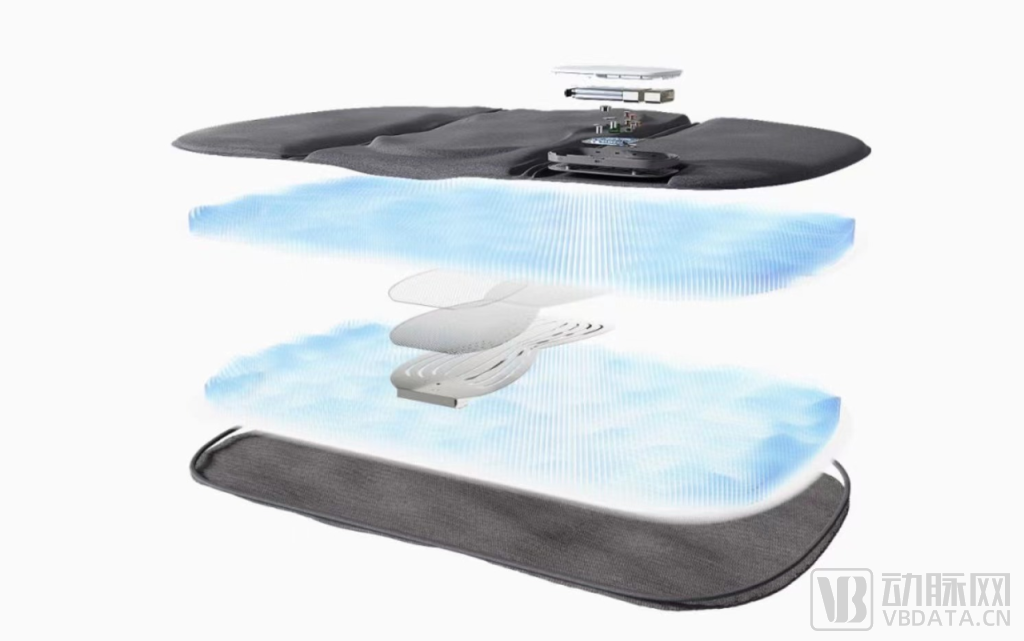
MindLax Sleeping Mat — Structural Diagram
The multi-frequency waveguide system contains no speaker structure. Through materials innovation, it generates mechanically wave signals with specific Fourier transformations, allowing the user's ears and body to perceive sound and tactile vibration — essentially transmitting regulatory signals to neurons in the central, peripheral, and autonomic nervous systems. Upon receiving external signals, the nervous system adjusts brainwave patterns according to the external frequency, ultimately synchronizing internal brain oscillations with external rhythmic patterns.
Liu explains: "This is known as the 'brainwave entrainment effect.' The multi-frequency waveguide system generates and induces typical brainwave patterns of sleep stages, guiding users into a relaxed state, while employing dual tactile-auditory pathways to enhance the effectiveness of neural regulation, achieving imperceptible interaction."
Innovative Materials + Digital Encoding, Building a Safer, Imperceptible Sleep Improvement Solution
As introduced earlier, rare alloy materials and digital content encoding are Yuanlai Technology's two core technical moats.
Neuro Arc™, the rare alloy material, consists of multiple metals and gold thin plates processed with special ion plating. This material generates wide-band, slow-velocity sinusoidal carrier waves with 6–12 effective harmonic orders acceptable to the human body — far exceeding the 4–6 orders of ordinary metal materials, with wave velocity seven times that of conventional materials.
Neuro TIM™, the dynamic digital content encoding technology, has underlying logic based on frequency encoding of the rare alloy material. Through deep research into the characteristics of human sympathetic and parasympathetic nerves, the team identified special composite frequencies for precise regulation of the human nervous system.
Liu offered an analogy: "Drop one pebble in water and you get a single central ripple; drop a thousand pebbles simultaneously and you get a far more complex, multi-faceted ripple pattern. As a brain science innovation company, what Yuanlai does is use different frequencies and frequency combinations, along with harmonics of varying duration, to interact and resonate with the human body, generating acoustic sensations that directly envelop the cranial nerves, thereby achieving neural healing."
Sleep is Yuanlai's first application scenario. The MindLax Sleeping Mat follows a product design philosophy of no complex wearables, efficient immediate experience, and personalization. Users need no additional cumbersome devices — simply lie on the "mat" to scan their personal "tension" level, and through closed-loop regulation achieve reduced sleep onset time, increased deep sleep duration, and optimized sleep architecture.
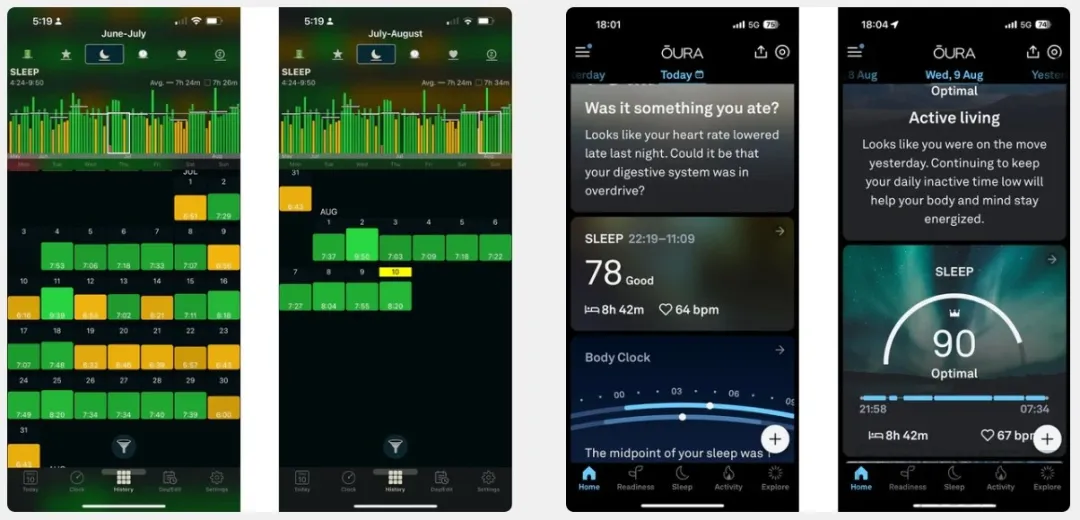
Sleep monitoring data from select users
More importantly, compared to conventional drug treatments or transcranial magnetic stimulation therapy, the MindLax Sleeping Mat has no drug side effects, no dependency, and causes no other harm to the body. As a D2C consumer medical product, the mat folds for easy carrying — 70 cm wide when folded, 1.6 kg including packaging — convenient for daily transport and shipping.
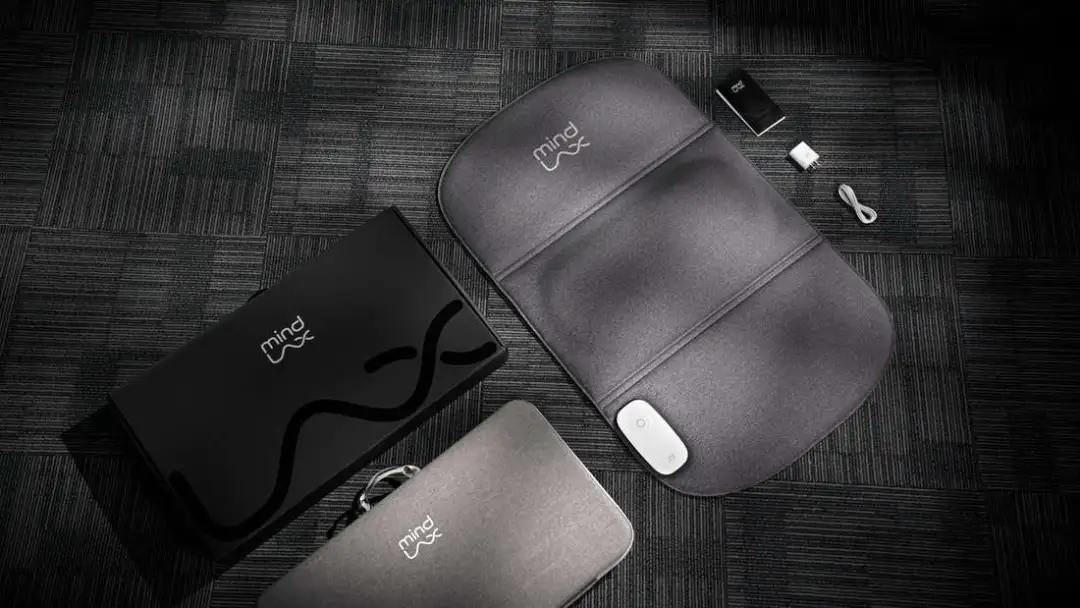
MindLax Sleeping Mat packaging
"After listening to user feedback, the second-generation MindLax product will launch in the second half of 2024. The new generation will add an AI Healer functional module, addressing modern people's pre-sleep dependence on phones and other electronic devices. After subscribing to courses through the app, users simply follow voice-guided human-machine interaction to achieve deep relaxation and quality sleep experiences, establishing natural sleep cycles," Liu said.
Clinical Registration Underway in China and Japan, Serving 100,000+ Uses Across 52 Countries
Currently, leveraging its underlying module technology advantages, the MindLax Sleeping Mat has gained recognition from numerous B2B clients. For example, it has partnered with Alipay's sleep health section, Weiyi Brokerage's insurance agent platform, and Shanyu Nutritionist platform to provide sleep management services for insurance agents and other users. Additionally, the company has established deep partnerships with leading new energy vehicle makers, hotels, wellness centers, and medical aesthetics centers.
"Considering different countries' consumption habits and spending power, the company selected Europe and North America as its initial launch markets, where it has received positive user feedback. Meanwhile, the team is actively expanding in Asian markets. In China, for example, the MindLax Sleeping Mat is available on major e-commerce platforms and sold globally through Yuanlai Technology's official website. Importantly, the company has simultaneously initiated medical device registration processes in both China and Japan."
On the clinical front, at the end of 2023 Yuanlai completed a clinical research project at the Affiliated Mental Health Center of Zhejiang University School of Medicine (Hangzhou Seventh People's Hospital). Results showed that the MindLax multi-frequency waveguide system reduced sleep latency by an average of 23.34%, improved sleep efficiency and quality, and PHQ-9 depression screening scale scores indicated reduced depression among subjects after using the product.
Going forward, MindLax plans to embed into clinical treatment protocols and expand beyond hospitals, forming a truly evidence-based, companion-style, intelligent, personalized sleep solution that achieves closed-loop sleep monitoring, intervention, and data feedback.
After five years of accumulation and R&D, Yuanlai has assembled a strongly interdisciplinary team spanning materials, sensors, cognitive science, psychoacoustics, and more, with integrated hardware-software capabilities, and has secured 12 patents. In March 2023, the company successfully completed a tens-of-millions RMB angel round exclusively invested by BlueRun Ventures.
In closing the interview, Liu stated: "As national living standards improve and health awareness deepens, China's shortage of both sleep therapists and psychological counselors continues to grow. Yuanlai Technology's service layout establishes an 'AI Healer,' empowering more scenarios through on-device AI to bring better life experiences to more users."
"At the same time, as a technology innovation enterprise, we will continue to dig deep into technological potential and build high technical moats. As the company consolidates and expands in the cognitive haptics domain, we also hope to further leverage Chinese innovation to launch more innovative and leading products, achieving leapfrog brand development, and bringing MindLax's products and brand to the global market to create more value for users."
More to Explore




Founded in 2005, BlueRun Ventures is a venture capital firm focused on early-stage startups.
Currently managing over RMB 15 billion in assets under management, BlueRun Ventures is one of China's largest early-stage funds. It invests primarily at Pre-A and Series A stages, covering technology, consumer, and healthcare sectors, with over 200 portfolio companies including Li Auto, Waterdrop, QingCloud, Guazi.com, Qudian, Ganji.com, Energy Monster, Gaussian Robotics, Songguo Mobility, Yuntion Semiconductor, Machenike, CloudSaints Intelligence, Anxin Netshield, and BioMap.
BlueRun Ventures has been ranked #1 on Zero2IPO's "China Top 30 Early-Stage Investment Institutions" and ChinaVenture's "China Best Early-Stage Venture Capital Institutions TOP30," and was named to Preqin's Top 10 Global VC Fund Managers for Sustained High Returns.
The firm has also received consecutive annual honors from Forbes China, 36Kr, Cyzone, Caixin Media, CBNweekly, Jiemian, and other media institutions as "China's Best Early-Stage Institution," "China Top Venture Capital Firm," "Most Entrepreneur-Friendly Early-Stage Institution," and "Most Influential Early-Stage Institution."