Jui Chan, BlueRun Ventures: Riding the Waves — Don't Waste a Crisis | BlueRun Perspectives

Adaptability is the eternal question for investors.
The world is being tossed by towering waves. Faced with the eternal question of adaptability, how should investors respond?
ChinaVenture recently sat down with Jui Chan, Managing Partner at BlueRun Ventures. In his view, the next generation of venture funds needs both the daring conviction and forward-looking judgment of dollar funds, and the deep industry immersion and heavy bets on hard tech of RMB funds. As the times shift gears, the "atypical" BlueRun Ventures is fully prepared.
It's rare for a GP to spend nearly half of an annual LP meeting discussing the severity of external conditions and looming risks. Yet at yesterday's (the 10th) BlueRun Ventures Annual LP Meeting, Managing Partner Jui Chan shared his view of the world: upheaval has become the defining theme —
In mid-April, the IMF once again downgraded its 2023 global growth forecast in the latest World Economic Outlook, warning of "highly uncertain" prospects. The March Silicon Valley Bank collapse sent global VCs scrambling. According to Bain & Company, Asia-Pacific PE deal volume plummeted 44% year-over-year in 2022. The venture industry, so tightly coupled to global macroeconomics, is growing more anxious by the day.
True, the world is adrift in violent seas with no clear direction. But that doesn't mean we can only wait passively.
At the meeting on the 10th, Chan quoted a classic value investing maxim: "You can't predict. You can prepare." In his view, if a fund can push "Prepare" to its extreme, it can avoid wasting a crisis and catch the biggest fish amid the waves.
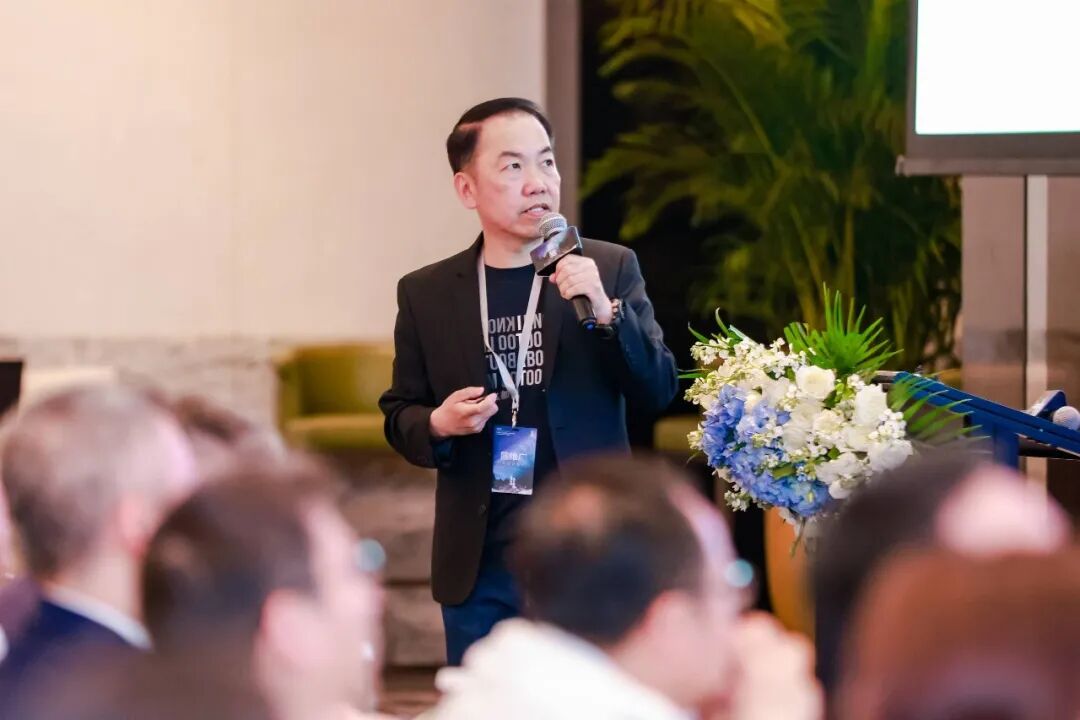
Preparation means agile response on one hand. Chan noted that in this new historical environment, innovation investing must focus on shifting from growth logic to profit logic; at the same time, it must boldly seize the developmental momentum that breakthrough technologies are bringing. "AI's reshaping of the human-technology relationship will be like electricity — ubiquitous and profoundly influential. A new productivity revolution will unleash massive innovation opportunities." On the other hand, it means building internal strength. Chan said that over the years, BlueRun Ventures has diligently accumulated organizational mechanisms, talent, dry powder, and ecosystem resources even as it grew its business, enabling it to navigate turbulence through institutionalization.
The waves bring new risks, but also new tracks and new opportunities. Adaptability is the eternal question for investors. What is BlueRun Ventures' answer?
A Dollar Fund That's Bet on Hard Tech for Ten Years
In the recent financial turbulence, China's dollar funds are widely known as one of the hardest-hit groups. Facing the new market environment, dollar institutions are switching tracks — raising RMB, investing in hard tech. Yet among the many established dollar funds active in China, BlueRun Ventures is something of an "oddball" — it's a rare dollar fund without transition pressure. Instead, BlueRun Ventures even feels a sense of spring finally arriving.
The secret to its quick pivot lies in forward-looking bets on hard tech. In fact, when it comes to hard tech investing — whether in duration, expertise, focus, or coverage — BlueRun Ventures is no less competitive than traditional RMB funds.
As a standout in early-stage investing, BlueRun Ventures recognized hard tech early enough. Back in 2008, when BlueRun Ventures had just entered China, its very first investment was a semiconductor project. Between 2013 and 2014, it began researching new energy vehicles and became an early investor in Li Auto. In 2014, it started researching robotics and intelligent manufacturing. In 2015, "hard tech" hadn't yet become a buzzword, and hard tech projects were still widely seen as unlikely to generate returns — yet BlueRun Ventures had already systematically articulated its hard tech philosophy: hard tech needs a soft landing, connecting the node between research achievements and commercial conversion, focusing on the fusion of core technology with real-world applications.
Flip through BlueRun Ventures' portfolio, and you'll find systematic investments across every major hard tech track — the "hard tech" concentration is high enough to shatter stereotypes about dollar funds.
In new energy alone, it has invested in Li Auto, Bocui Recycling, XinGan Technology, Shengke Energy, YunChu New Energy, and Yimoly Intelligence. In robotics, it has backed Gaussian Robotics, Youibot, BlueCore Technology, Keyi Technology, Muyi Robotics, Tian Cheng Technology, Wanxun Technology, and other star companies.
And of course, semiconductors. In April alone, BlueRun Ventures invested in Jaren Semiconductor, a fourth-generation semiconductor company, and added to its stake in Shanhai Semiconductor, a mixed-signal chip developer.
Moreover, under the "autonomous and controllable" theme so closely tied to national strategy, BlueRun Ventures has made numerous bets. For instance, in autonomous driving base software, Huayu Tongsoft is the only domestic, autonomous and controllable communication middleware company based on the OMG SDDS standard. Leimo Technology is the only domestic leader that has crossed into industrialized application of mold 3D printing.
BlueRun Ventures' leading hard tech layout is directly reflected in fund performance. In last year's widely known capital winter, BlueRun Ventures announced in May the successful close of a dual-currency fund totaling roughly RMB 5.5 billion. The RMB fund completed fundraising in just six months, with an LP roster encompassing national funds including the National SME Development Fund, well-known government guidance funds, mainstream financial institutions, top-tier fund-of-funds, and prominent family offices.
Hard tech investing differs enormously in approach from the TMT investing that dollar funds traditionally excelled at — this is also the biggest concern RMB LPs have about traditional dollar funds. Many LPs have noted that some well-known dollar funds' RMB funds perform vastly differently from their dollar funds. But BlueRun Ventures revealed that it has already achieved oversubscription for three consecutive RMB funds, with all funds older than five years posting DPI above 1 — a track record that is unquestionably top-tier among early-stage RMB funds, and not inferior to its dollar funds.

Finding That "Non-Consensus"
Strong performance in RMB investing doesn't mean BlueRun Ventures is imitating RMB funds. It brings the dollar fund characteristics of greater risk appetite and pursuit of alpha returns to hard tech investing. Looking back at some of BlueRun Ventures' classic cases, you'll find they often formed their own non-consensus when the market wasn't bullish, catching unicorns before they emerged.
The Li Auto investment was very "un-RMB." In 2016, new energy vehicles were still an industry without consensus, with loud voices of skepticism and doubts about Li Auto's chosen path. But BlueRun Ventures not only made a firm early bet, it went on to invest across five consecutive rounds — even in 2017 and 2018, when new car makers faced existential crises, BlueRun Ventures chose to keep adding.
The same was true for Gaussian Robotics. BlueRun Ventures' first investment in this commercial cleaning robot company came in 2017, when the Series A-stage Gaussian was still exploring ROI improvement, the entire track was in early stages, and far from today's robotics explosion. Now Gaussian Robotics generates annual revenue exceeding RMB 1 billion. Against the backdrop of global labor depletion, it has successively entered over 50 countries and regions, capturing 60-70% of the global commercial cleaning robot market.
Chan once reflected: "To make serious money, your view has to differ from others'. When many people dismiss something as just a toy, that's precisely when you need to take it seriously."
Undefined non-consensus and long-term courage to bet both rest on solid forward-looking research. Chan said traditional investing focuses more on current revenue and profit, without requiring much future projection. But to do tech investing well, you must maintain enormous curiosity, not underestimate edge demand, understand real market conditions, and make independent judgments.
Why did BlueRun Ventures dare to invest in Gaussian Robotics at Series A? Because they believe no one can predict the future, but thoroughly understanding the present is the best preparation for welcoming it. BlueRun Ventures began tracking robotics in 2014, and through intensive offline demand-side interviews, derived two models: first, judging the certainty of long-term value; second, determining optimal timing amid complex scenarios. After building out an industry map, Gaussian Robotics entered BlueRun Ventures' radar precisely this way.
Beyond the industry map, BlueRun Ventures' focus on robotics had deeper logical drivers. Chan mentioned in a speech that as early as 2016-2017, BlueRun Ventures studied various industry data and inferred that the demographic dividend was about to disappear — the crossover point where fertility falls below mortality would arrive around 2023, and supply of low-end labor would cliff-dive. On the other hand, the key factor constraining adoption of picking robots, cleaning robots, and other robots was LiDAR price. At the time, a single LiDAR cost over RMB 10,000, but BlueRun Ventures' research concluded that costs would very likely drop below RMB 1,000 as more entrepreneurial teams entered and manufacturing processes advanced. Today, LiDAR has indeed fallen to that price point.
In such a complex market environment, single dollar-fund or RMB-fund approaches are both proving inadequate, and the traditional classification of white-horse versus dark-horse funds is already outdated. The next generation of venture funds needs both the daring conviction and forward-looking judgment of dollar funds, and the deep industry immersion and heavy bets on hard tech of RMB funds. As the times shift gears, the atypical BlueRun Ventures aims to become the player best adapted to the new environment for tech innovation.
Systematically Upgrading the Hard Tech Playbook
Entering the era of hardcore tech innovation, "industry resources" have become hard currency for GPs — meaning the ability to deliver real orders to portfolio companies. This is also the most obvious advantage of established RMB funds; to some extent, competition among RMB funds today is competition over industry resources.
And BlueRun Ventures is no slouch on industry resources either. Having深耕 hard tech for many years and already managed three RMB funds, BlueRun Ventures recognized this early, continuously building and deepening its early-stage tech resource circle over the years, and on the RMB investment ecosystem side, connecting with various types of strategic LPs and local governments.
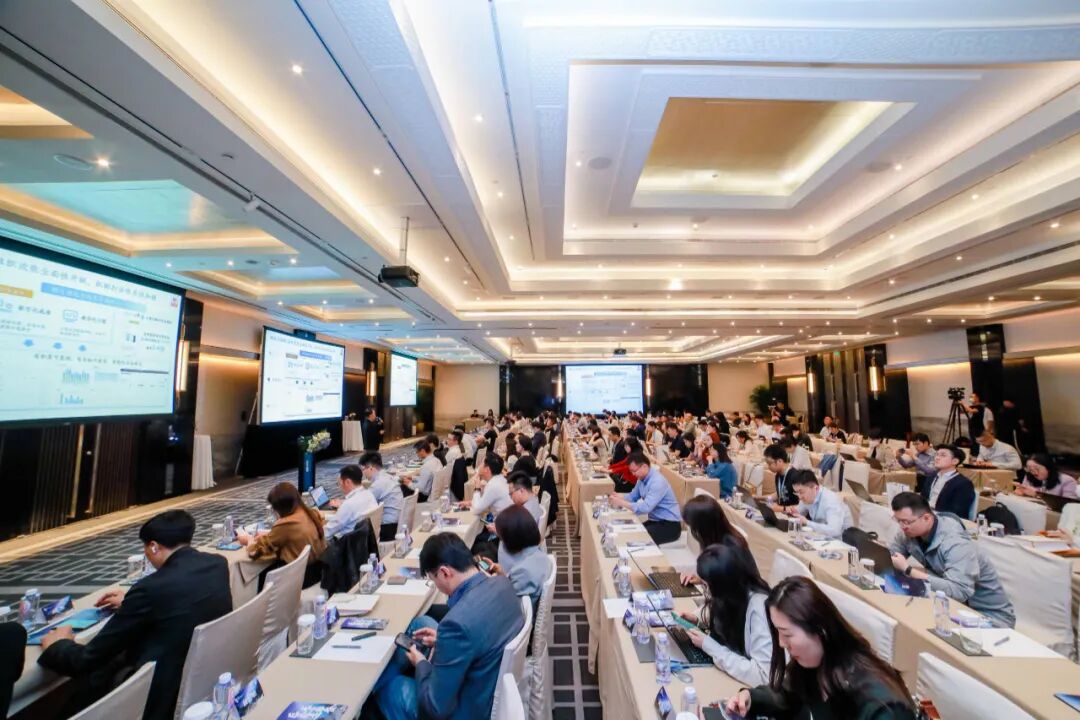
At this year's 4th OpenI/O Qizhi Developer Conference "NLP Large Model Forum," BlueRun Ventures was the invited exclusive investor, joining top AI experts to launch China's NLP Large Model Headquarters Base, becoming one of its first members. In April, Shenzhen's Guangming District held the 4th Engineering Biology Innovation Conference, where the Synthetic Biology Industry Innovation Alliance was established, with BlueRun Ventures also among the first signatory institutions.
Meanwhile, BlueRun Ventures is actively building an entrepreneur ecosystem, creating opportunities for horizontal and vertical collaboration among innovation companies across different industries. Among BlueRun Ventures' ecosystem event IPs are not only "BlueRun Ventures Demo Day" helping portfolio companies with fundraising, but also platforms like the "BlueRun Ventures AGI Pioneer Club" that bridge industry, academia, and research.
BlueRun Ventures' emphasis on industry capability is clearly reflected in team composition. BlueRun Ventures spent over a decade building a hybrid team combining industry backgrounds with professional expertise.
Across the entire organization and mechanism, BlueRun Ventures has made systematic upgrades to adapt to hard tech investing and the RMB ecosystem — going even further than traditional RMB funds.
As an early-stage fund, BlueRun Ventures maintains a professional post-investment team, hoping through high-frequency communication to discover portfolio companies' real pain points and common needs, providing targeted activities and services, assembling BlueRun Ventures' advantage resources, and empowering companies across business, talent, finance, marketing, and fundraising. Early-stage companies' general functions like talent development, organizational structure, and compensation systems are still immature, precisely when they need institutional support. BlueRun Ventures positions itself as a key early-stage enabler, emphasizing working with entrepreneurs to understand and meet needs earlier and more precisely at the 0-to-1 stage, and through a longer-term perspective, supporting companies still at or before the commercial conversion node.
To comprehensively improve organizational efficiency, BlueRun Ventures has also launched a BI automation system spanning all departments and businesses, integrating over a decade of accumulated business and operational data, and achieving full workflow digitization.
The only constant in the world is change, and investing is like surfing — a struggle against uncertainty. Chan, who has spent 20 years in tech investing, reflected: value can evaporate, judgments can err, environments can change, and things taken for granted can fail. "But there's nothing scary about that," he said. "Supporting technology is contributing to national rise and the advancement of human technological endeavor. We'll be the change we want to see."
More Content




Originating in Silicon Valley, BlueRun Ventures was established in 2005 and is a venture capital firm focused on early-stage startups.
Currently, BlueRun Ventures manages multiple dollar and RMB dual-currency funds in China, with assets under management exceeding RMB 15 billion, making it one of the largest early-stage funds domestically. Its investment stage focuses on Pre-A and Series A, covering hard tech and innovative interaction, enterprise technology, new consumption, and healthcare. It has cumulatively invested in over 150 startups, including Li Auto, Waterdrop, QingCloud, Guazi Used Car, Qudian, Songguo Mobility, Ganji.com, Monster Charging, Yuntu Semiconductor, Machenike, Yunsheng Intelligence, Anxin Wangdun, and BioMap.
BlueRun Ventures has been ranked #1 on Zero2IPO's "China Top 30 Early-Stage Investment Institutions" and ChinaVenture's "China Best Early-Stage Venture Capital Institutions TOP30," and was named among Preqin's Top 10 VC Fund Managers Globally for Sustained High Returns.
Additionally, BlueRun Ventures has for multiple consecutive years received honors from Forbes China, 36Kr, Cyzone, Caixin Media, CBNweekly, Jiemian, and other media institutions, including "China Best Early-Stage Institution of the Year," "China Top Venture Capital Institution," "Most Entrepreneurur-Friendly Early-Stage Institution of the Year," and "Most Influential Early-Stage Institution of the Year."