Moonshot AI's Explorer Edition Is Here: The Best Search Is the One You Don't Have to Do | BlueRun Ventures Headlines

Let's explore a bigger world together.
Recently, Moonshot AI launched Kimi Research, a version with autonomous AI search capabilities that processes 10 times the search volume of the standard version, with comprehensive advantages in accuracy and completeness, outperforming comparable products by at least 30%. Kimi Research aims to eliminate the tendency of AI to cobble together verbose, lazy answers, helping users actually save time. BlueRun Ventures, an early investor in Moonshot AI, congratulates the company on reaching another milestone.
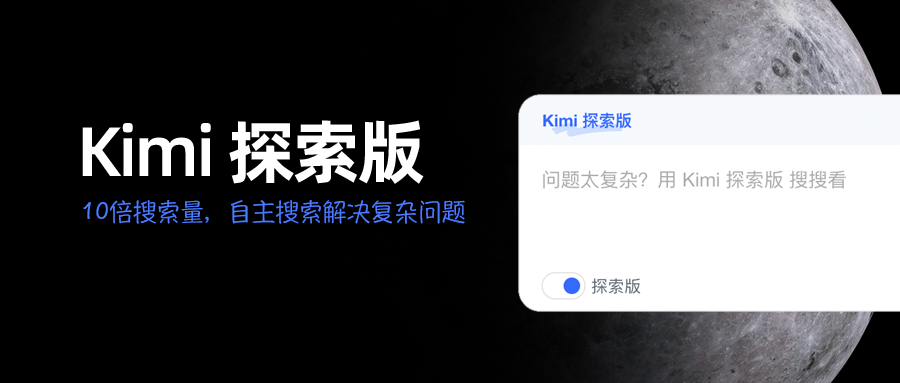
Today, we'd like to introduce a new friend: Kimi Research.
Kimi Research features autonomous AI search capabilities. It can simulate human reasoning and thinking processes, break down complex problems into multiple levels, execute deep searches, and instantly reflect on and improve results to provide more comprehensive and accurate answers, helping you complete complex tasks such as analysis and research more efficiently.
Kimi Research processes 10 times the search volume of the standard version, with a single search capable of intensively reading over 500 pages. Tests show that compared to all mainstream AI assistants and search products at home and abroad, including paid and professional versions, Kimi Research demonstrates comprehensive advantages in answer accuracy and completeness, with overall performance exceeding comparable products by at least 30%.
"If Kimi can't find the information, there's a good chance users would struggle to find it themselves through traditional search engines. In the future, search engines will become tools that AI is better at calling upon — people just need to focus on asking good questions, and AI can combine its inherent capabilities with autonomous, large-scale searches across the vast internet, continuously reflecting and iterating to more precisely find the answers needed," said the Kimi Research product lead.
Search and research are foundational and essential for Kimi's core users — knowledge workers and university students (future knowledge workers) — to discover and create new knowledge. They need information with higher density, timeliness, and authority. Yet no good tool on the market currently meets their needs. Most AI products' advanced search or research modes tend to cobble together verbose answers. They appear rich and information-dense, but actually contain little useful information. When AI lazily assembles lengthy responses, it ends up wasting more of people's time.
Kimi Research aims to help users save time spent on search and research tasks, so everyone can have more time to focus on asking questions, thinking, and creating.
How does it achieve this? Kimi Research has three secrets:
One: Autonomous strategy planning, step by step. Before answering, Kimi Research will, like an analyst, pre-plan an overall strategy for solving the problem, breaking down complex questions into hierarchical sub-problems, establishing a clear task structure, and then executing step by step. When executing specific tasks and calling upon search capabilities to obtain information and knowledge, Kimi Research leverages model capabilities to identify users' true intent, converting complex queries into multiple matching search keywords, generating next-step search keywords in real time based on previous search results, and also converting to keywords in different languages when necessary.
Two: Automated large-scale information retrieval, exhaustively covering authoritative sources. With its advantage of massive capacity, when encountering users' lengthy, difficult questions and complex problems, Kimi Research can exhaustively cover authoritative sources, quickly grasping the background information needed to answer the question, becoming the most suitable assistant for that particular query. When we use traditional search engines to look up hard-to-find information, we constantly change keywords, but this process is ultimately serial — we can only search one keyword at a time, then move to the next. Kimi Research can parallel-search dozens of different keywords at once, filtering and reading hundreds of authoritative sources.
Three: Instant reflection on search results to supplement information. Like humans, Kimi Research can leverage reflection capabilities to improve and enhance answer quality. When facing open-ended exploratory questions, if Kimi Research discovers missing information in its initial answer, it will proactively supplement with more. For number-related search questions, if Kimi discovers data conflicts after learning more, it will promptly provide multi-perspective information for reference and decision-making.

Enough talk — let's look at some examples:
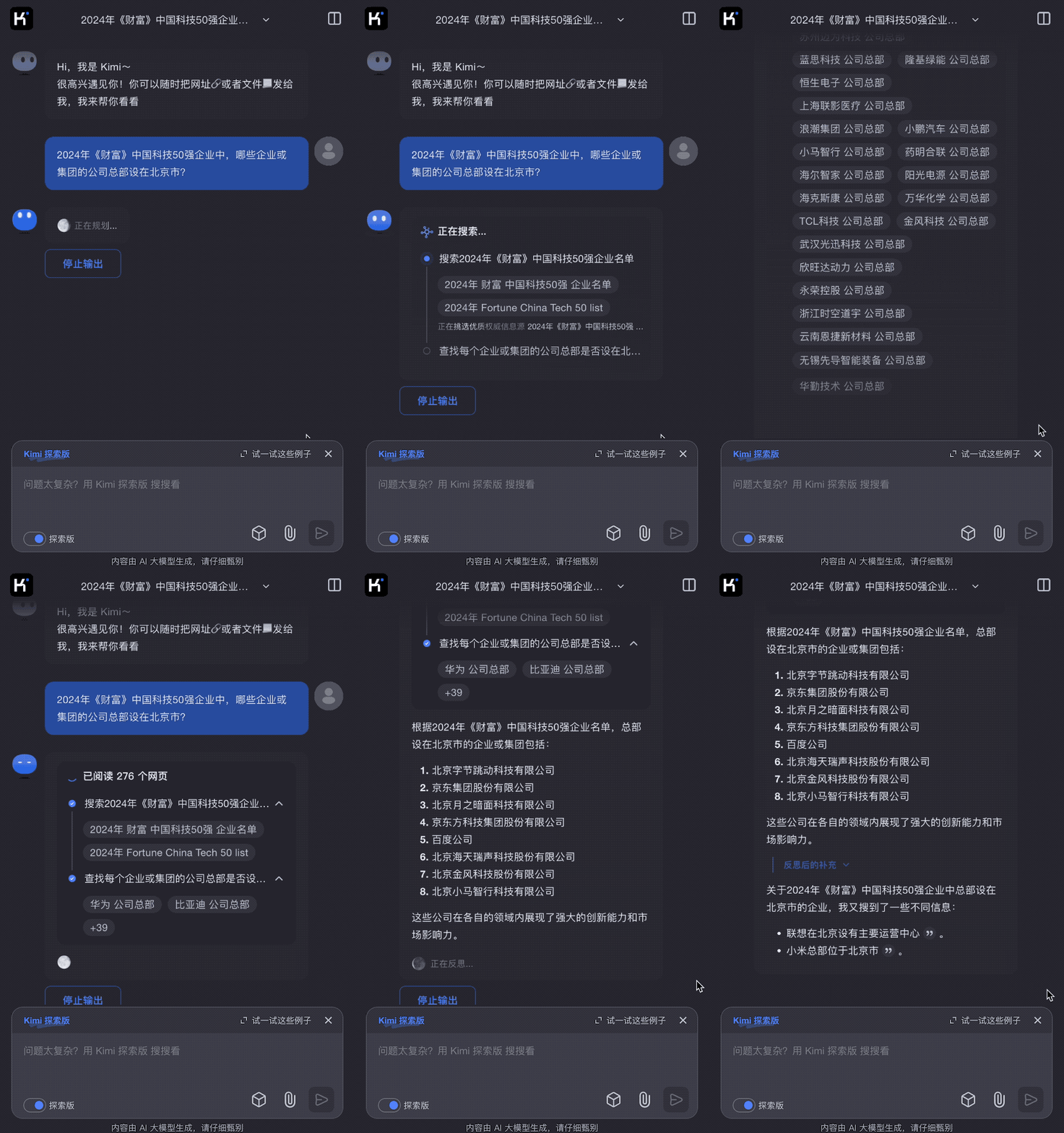
If you want to know how many of the top 50 tech companies are headquartered in capital cities, in the past you'd have to look them up one by one. Now, Kimi Research can search dozens of keywords at once, reading hundreds of web pages, doing its best to find the answer for you. Note: in this example, Kimi, through reflection, realized it hadn't found all companies in its first attempt, then added 2 more companies to find all 10.
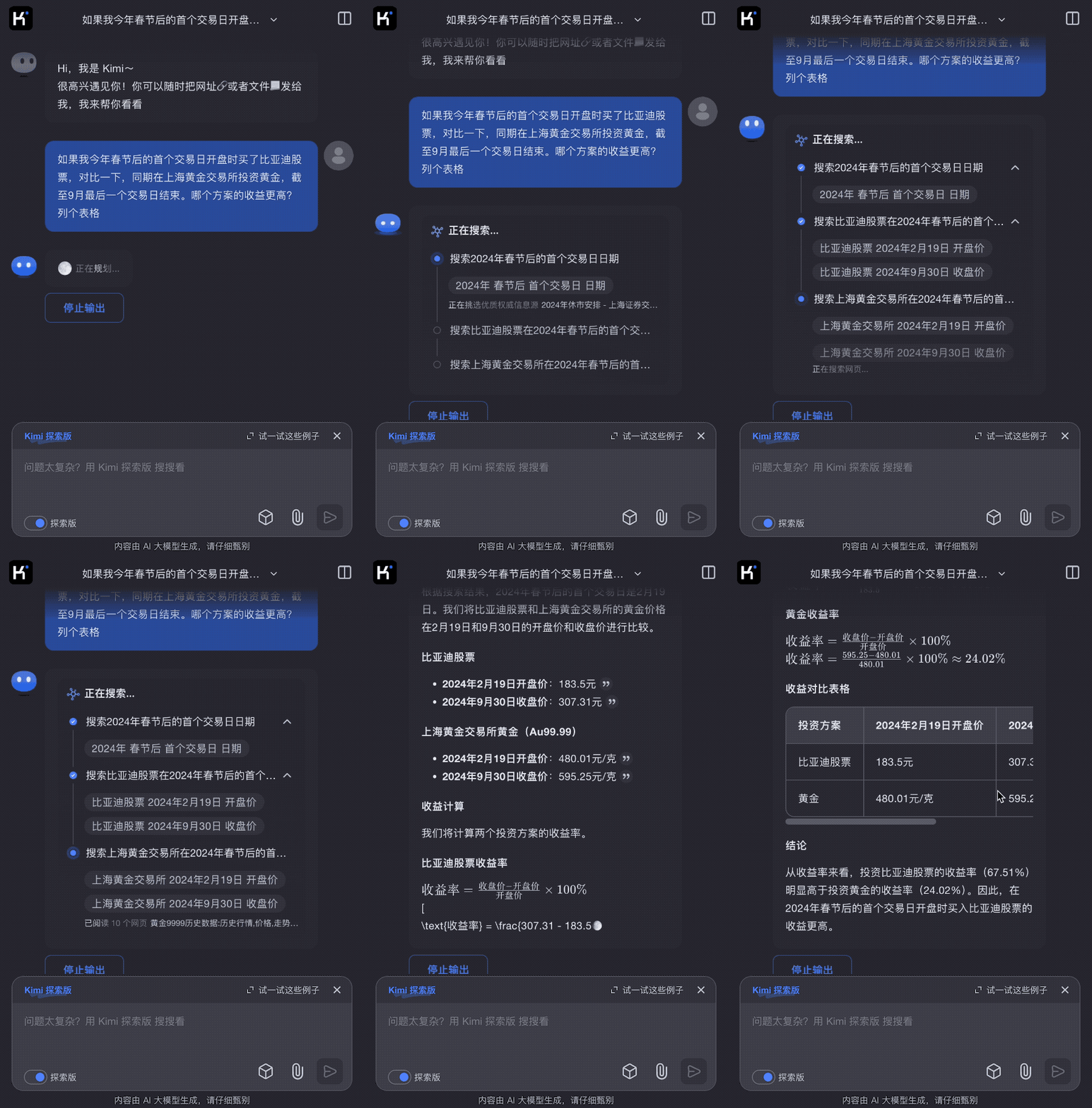
When you want to compare returns between investing in BYD stock versus gold, you no longer need to manually search for opening and closing prices for each option at different times, then put them in spreadsheet software to write formulas for calculation and comparison. Kimi Research will plan it out itself, step by step finding the required data, and directly calculate the answer for your reference:
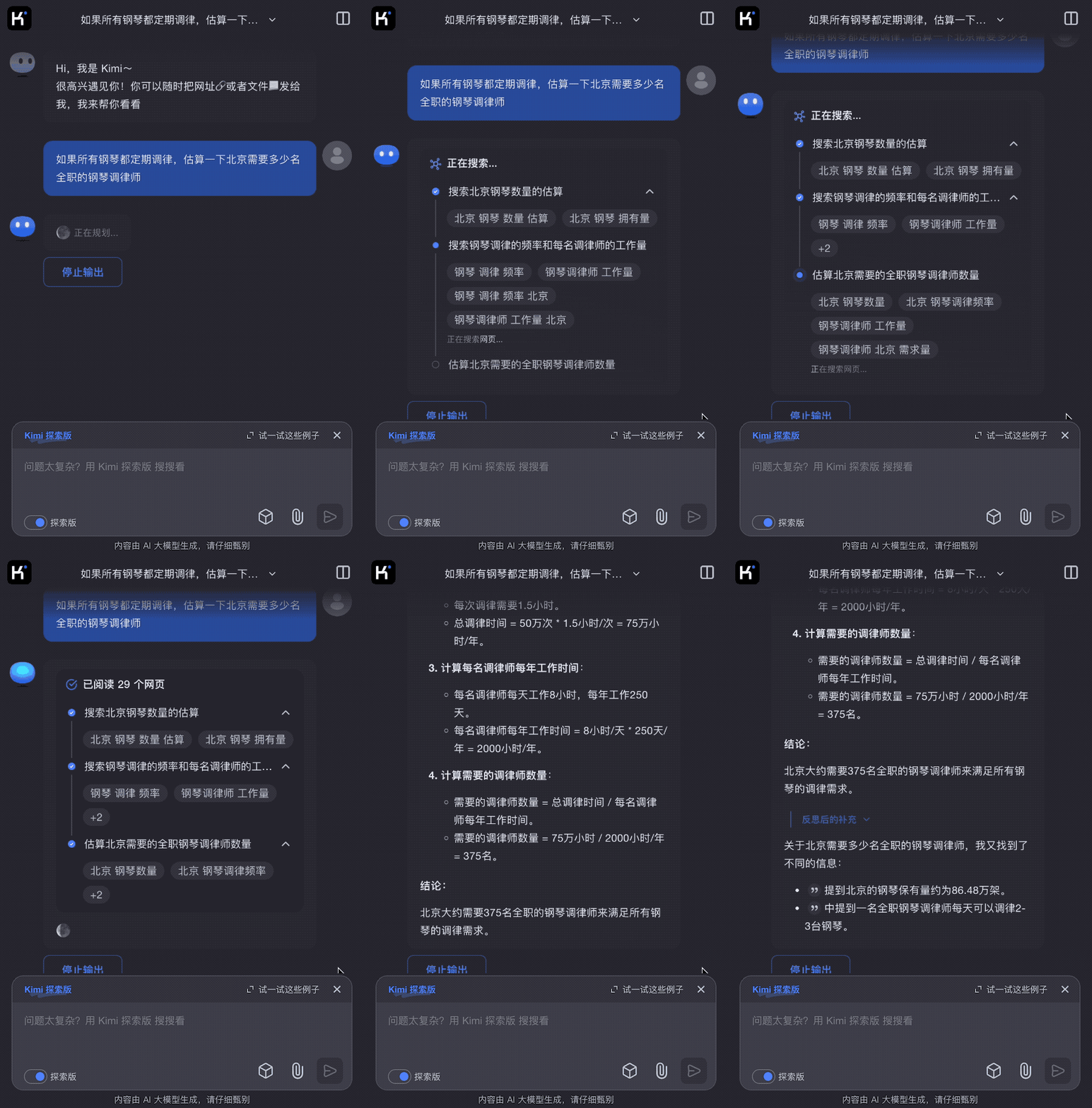
When doing industry research, if you need to make an estimated business analysis, such as estimating market size for a niche profession, Kimi will carefully find reference information and methods step by step. Note: at the end of this case, Kimi reflected and provided additional reference information about sound engineers' workload.
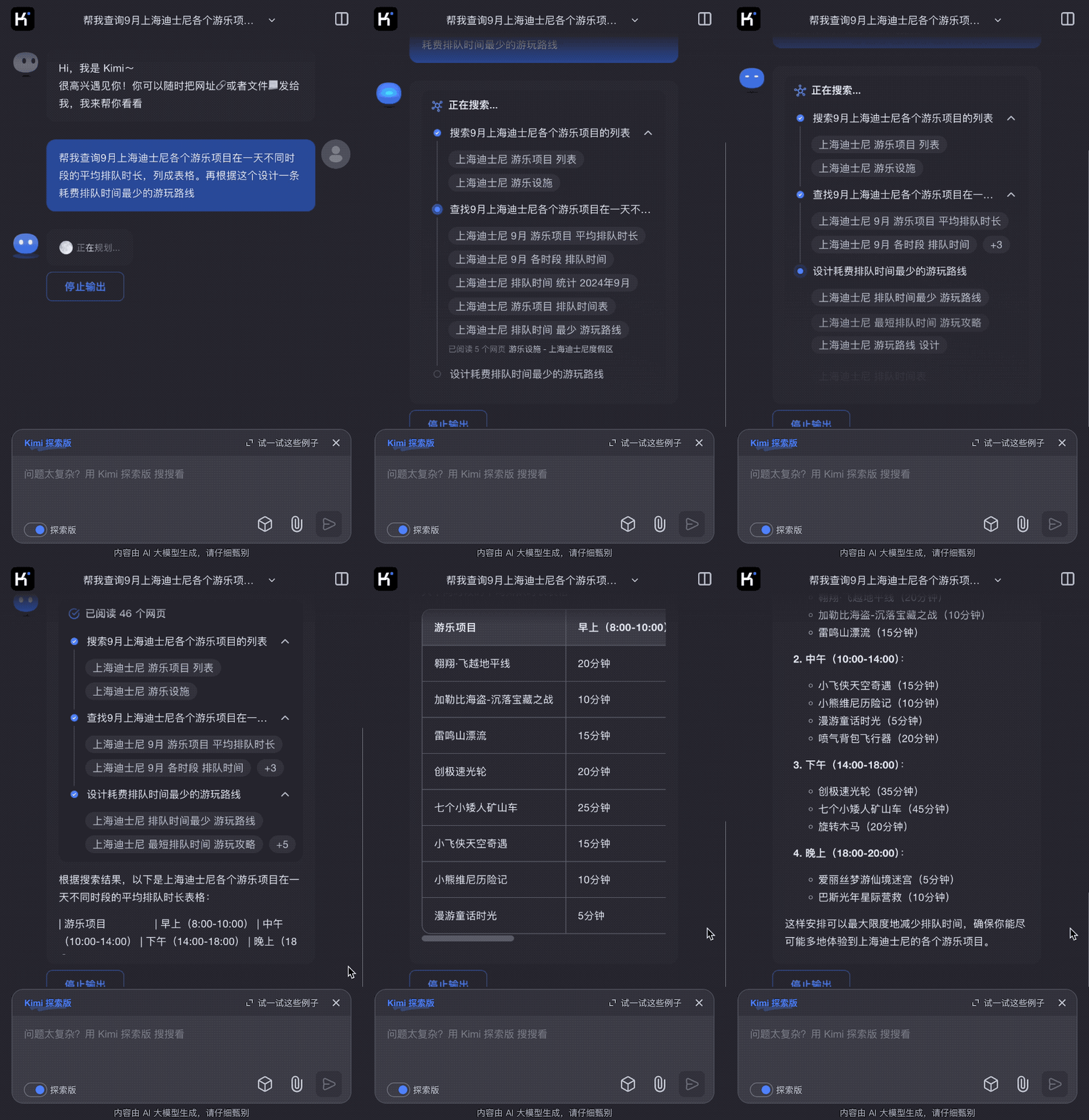
When you want to plan a Shanghai Disney route with minimal queuing, Kimi is happy to find all the attraction lists and wait times, then help design a reference route:
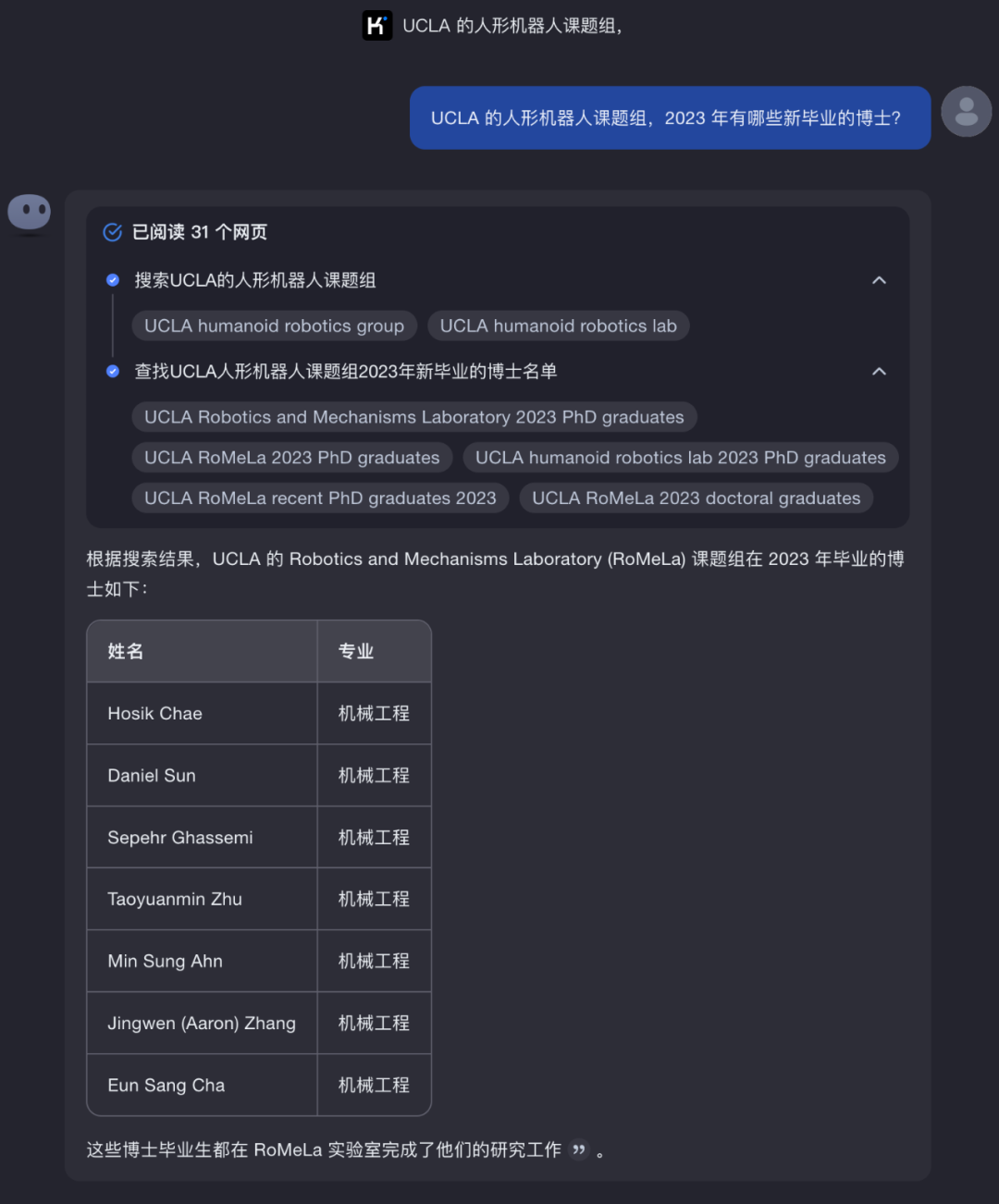
If you're doing global talent research and want to learn about overseas university information, such as which PhD graduates have come from UCLA's humanoid robotics research group, Kimi will automatically switch to English search to find more accurate information for you, incidentally also promoting information equity.
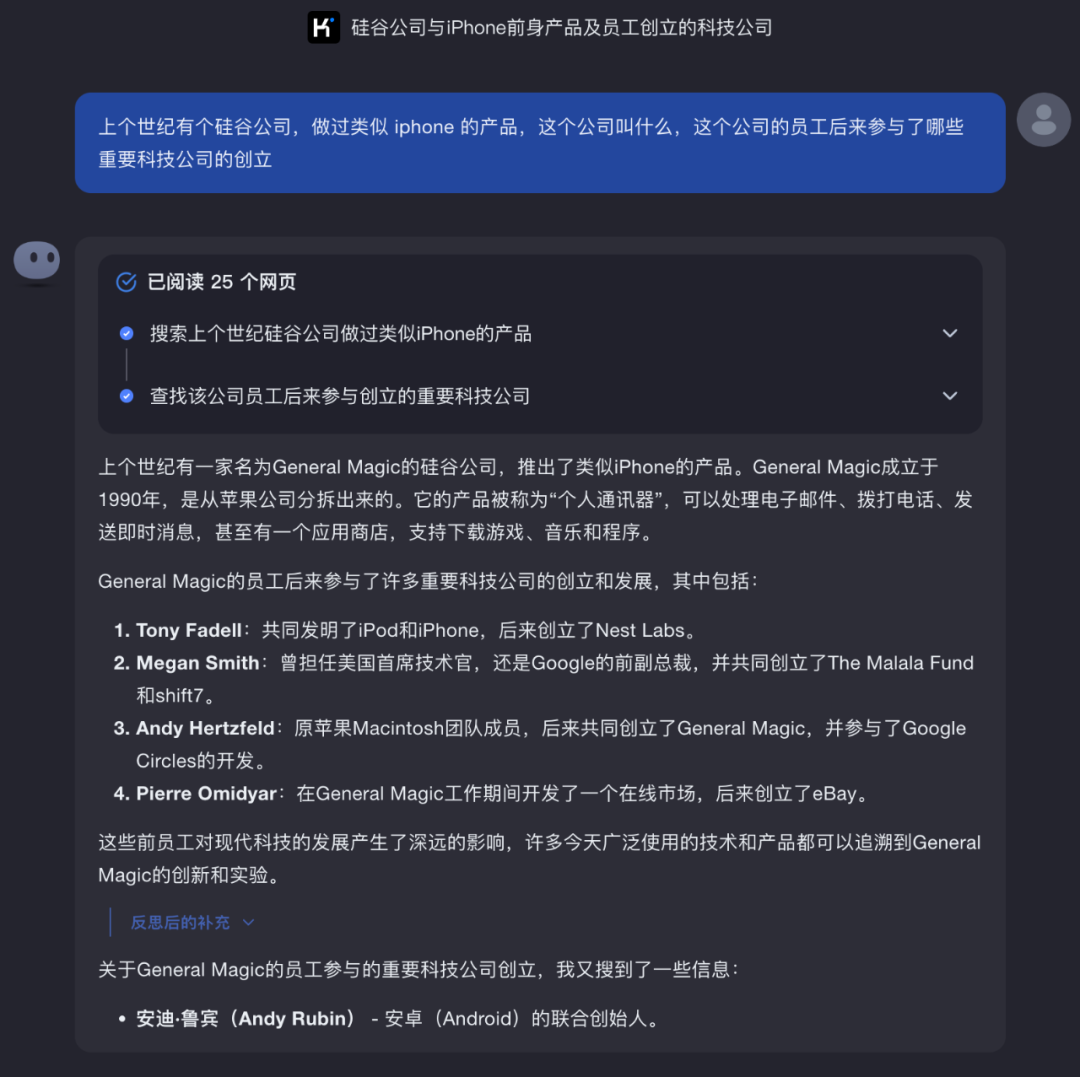
Often have something on the tip of your tongue but can't remember the specific person's name, place, company, or product name? Kimi can help you do fuzzy searches, jogging that impression buried deep in your memory. After reflection, Kimi also discovered that Android's founder had once worked at this company too.

Kimi Research is gradually rolling out on the web (kimi.ai), with full availability to all users expected by next Monday. Users who receive the update simply need to toggle the "Research" switch in the lower left corner of the dialog box, or directly type a slash "/" in the dialog box to activate Kimi Research, letting Kimi explore answers to more complex questions with you.
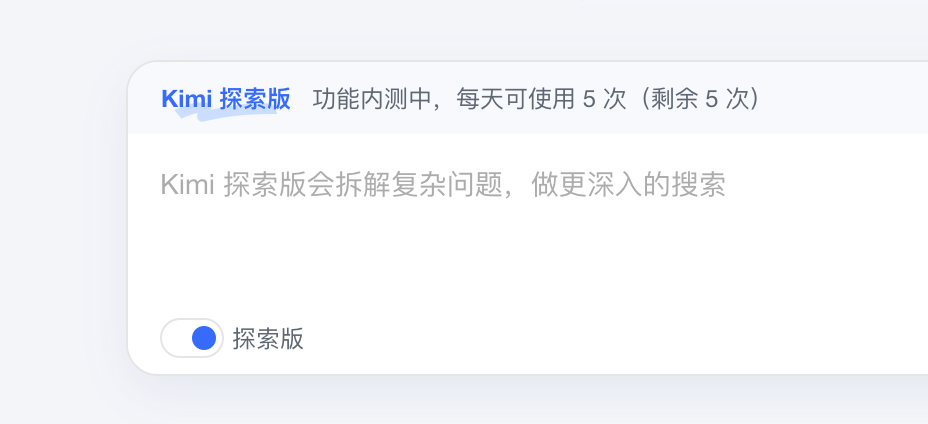
To ensure more people can use it, Kimi Research currently allows 5 uses per person per day. Beyond the web version, the Kimi AI assistant mobile app will also launch this feature soon. Kimi Research looks forward to exploring a bigger world with you.


BlueRun Ventures won multiple awards including Annual Influence at the Golden Investment Awards and Top 20 Investment Institutions in AI and Big Data

Luchen Tech Completes Hundreds of Millions in A++ Round | BlueRun Ventures

Machenike Completes Hundreds of Millions in C1 Round, Accelerating Mass Production and Global Market Expansion of Intelligent Driving Solutions | BlueRun Ventures