Moonshot AI's Yutong Zhang Shares Her "Chain of Thought" on AI Entrepreneurship for the First Time | Buming Entrepreneurship Camp
Seven Topics AI Entrepreneurs Care About
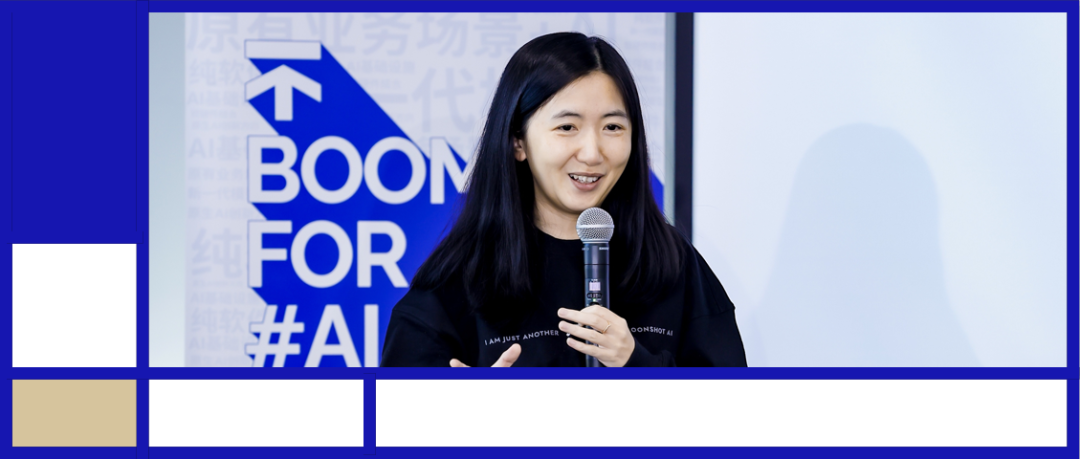
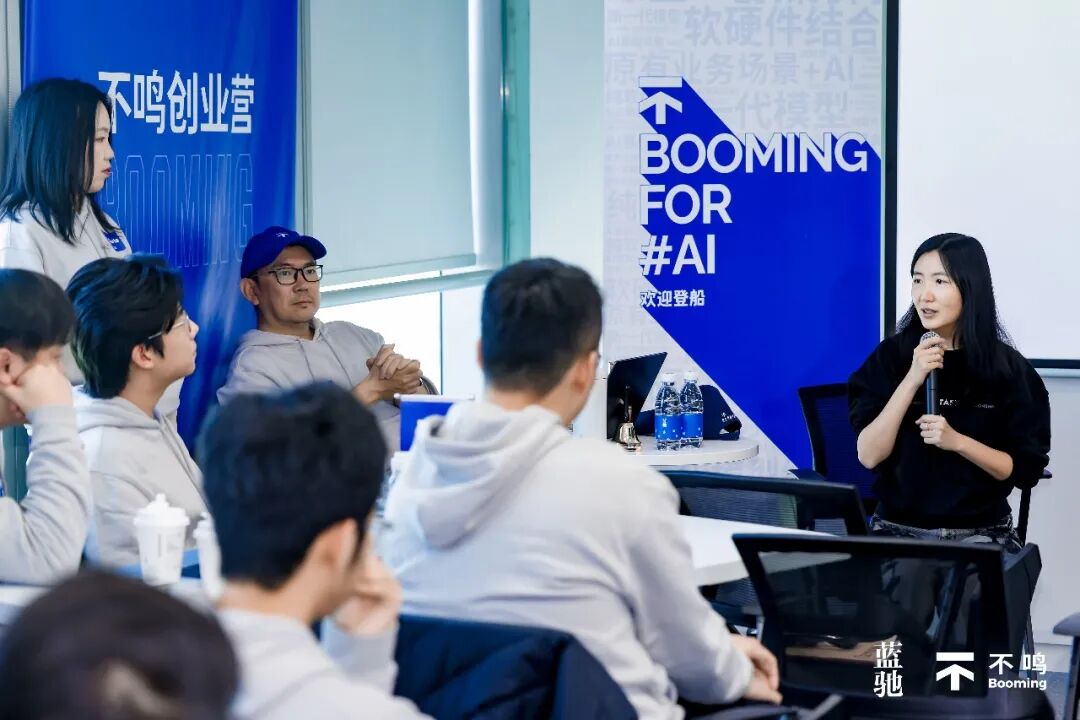
On January 10, at the fifth cohort of BlueRun Ventures' Bu Ming Entrepreneurship Camp, Moonshot AI President Yutong Zhang shared her thoughts on how founders should think and make decisions amid the surging AI wave, and how to navigate volatility and change. Zhang oversees Moonshot AI's overall strategy and commercialization. Her appearance at Bu Ming marked one of her rare in-person events over the past year. Speaking to more than 20 young AI founders, she shared her "chain of thought" on many topics much like a reasoning model would. At the methodology level, she discussed how to keep a team technologically sharp and innovative, and how to build trust within a team. She didn't shy away from past missteps, revisiting strategic errors and sharing her thinking on model commercialization. "Business models always come after technological innovation," she argued. "The business models we see today may not be the best ones." Most valuably, she spoke candidly about how founders should handle skepticism. For her, human adaptability is the strongest beta. There's no shortcut for dealing with pressure and doubt — you simply get through it. "The external market environment can throw anything at us, but we can still build world-leading models." BlueRun Ventures was an early investor in Moonshot AI and has doubled down in subsequent rounds. In witnessing Moonshot AI reach milestone after milestone, BlueRun has grown more convinced that open-source model companies like Moonshot AI will catalyze more innovative applications across the industry, unlocking productivity through diverse paths. Here's a fun aside: at this Bu Ming cohort, a participant who runs an AI talent recruiting firm mentioned that from his backend data, the volume of resumes Moonshot AI receives for its open positions is roughly twenty times that of comparable large model companies. Below is Yutong Zhang's on-stage sharing at Bu Ming Entrepreneurship Camp. Enjoy.

For a team to stay technologically sharp and innovative, the core is finding people who are themselves innovative. When evaluating candidates, for instance, look at where they get their information. Some people read the latest papers every day, scroll through X (formerly Twitter) constantly. There are many overseas technical discussion communities — observing which communities a candidate immerses themselves in reveals their ability to stay sharp.
Internally, we have a paper-sharing group. Anyone who sees a good paper posts it, and everyone discusses below. Behind all this, everyone is pushing toward one goal: building world-class technology. With that motivation, the team naturally maintains sensitivity to technological innovation.
Innovation also depends on whether the organization provides psychological safety. Innovation inherently means risk, and risk is what enables breakthroughs beyond the routine.
When a team is under 20 people, you may not worry much about organizational constraints on innovation — everyone is innovating from scratch. As a company grows, new hires may feel nervous. To prove themselves, people gravitate toward higher-certainty, more conservative work. At this stage, the company must build safety through organization and management: give new people time, and communicate clearly that "it's okay if this fails."
Everyone has creativity, but it only emerges when psychological safety is strong. Many great ideas come bottom-up; safety gives everyone the courage to innovate.

Switching from investor to founder, one major change for me was becoming more direct. Investors are typically very friendly, very polite in how they speak. In a conversation, they might only say 10% of what they mean, with 90% of concerns or other considerations left unexpressed.
After starting a company, I found that exposing your CoT (Chain of Thought) like a large model does is an excellent communication method. When you proactively reveal your chain of thought, others understand your thinking much better.
Sometimes issues that seem obvious to you may trigger extensive speculation from others on the team. Having frank discussions and working through the real underlying problems together is itself a friendly invitation to the team, one that builds deeper trust.

Building a distinctive moat is quite difficult for a startup. A moat isn't something you can fully conceptualize or construct on day one — it's an ongoing challenge that requires time to accumulate.
For example, everyone thinks the "data flywheel" is an excellent moat, but pursuing it too early may not suit our business, at least for now. Today, models' general capabilities still have massive room for leapfrog improvement. Through innovations in underlying architecture, scaling compute and data, and building better data pipelines, we can substantially boost model capability — making it perhaps unnecessary to focus on the data flywheel too soon.
Compared to building moats, finding PMF is more important in a startup's early days. Identifying something with genuine market validation is genuinely hard.
When we first launched Kimi, we weren't very confident — we even scrambled at the last minute to name the product and secure the domain. We wondered whether we should refine the model further before going live. But we ultimately decided to launch early and collect user feedback.
It turned out that because we placed heavy emphasis on search and long-context capabilities, we received positive feedback from early users, and the product grew organically. As long as you're addressing a real need, even if you're not at 100%, shipping first and gathering feedback matters more.
Your most passionate early users may pull the product toward its ultimate direction. Find those who use your product heavily every day, observe what they're doing, and you may discover what true PMF looks like.

In 2025, we're only now starting to build out overseas business. We began the company in 2023, and our product first launched in October 2024. Why didn't we go international earlier?
On one hand, we spent enormous time and energy on our China business. China is a massive, crucial market — you need intense focus to do it well.
On the other hand, we deliberately avoided any overseas presence, not even a Twitter account. DeepSeek and Qwen moved earlier on open source, building technical influence in the Silicon Valley community, while we were essentially "a blank slate" abroad.
Looking back, the focus issue could have been solved through organizational expansion. The deeper reason was our own lack of judgment about the international landscape.
Now I encourage everyone to consider overseas markets from day one of founding. In 2025, we've made a strategic shift from closed-source to open-source, hoping to build our technical influence in the global tech community.

Currently, many overseas companies have already proven that AI commercialization has massive, explosive growth potential. It's not the "do 1 million this month, grow 20% next year" model — it's "nothing this year, 10x next year, another 10x the year after." Take Anthropic: their revenue expectations might follow a curve of 1 billion, then 10 billion USD annually.
This explosive growth means real demand exists for AI. We've only been doing commercialization for two-plus months — we didn't even integrate Alipay until late December. Yet even at this early product stage, we have overseas users who, while also using ChatGPT and Claude, will pay for our product.
AI product users today are all "multi-homing" — no one uses just one AI product. Even within the same use case, users employ multiple AI products and compare different outputs.
Users judge whether to pay for a product based on value in a specific scenario. For instance, some CFOs at foreign companies are willing to pay for Kimi's agent product to generate presentations, because they need to prepare materials better and walk into board meetings with more confidence. So I think AI products can afford to be slightly more "aggressive" in pricing — even if you set it high, you always have room to lower prices or offer discounts.
Overall, business models always come after technological innovation. First comes technological innovation, then interaction innovation, and finally perhaps business model innovation. These innovation patterns all take time and will be continuously unlocked. The business models we see today may not be the best ones.

At the model level, one clear trend we're watching is that multimodality will show capability leaps this year, and Kimi will soon release its next-generation model with multimodal understanding capabilities.
Google's technical roadmap makes this evident: once models acquire substantial knowledge through text and code, evolving into VLMs (visual language models) is a natural progression.
For now, video serves more as an interface for human-digital world interaction. At least under current architectures, models don't yet absorb video and other multimodal knowledge very efficiently.
But when multimodal data can be better absorbed into model architectures, we'll see very significant breakthrough innovations. A development path like Gemini's — from a comprehensive knowledge model, to a strong visual language model, to a multimodal model — will bring many different kinds of breakthroughs.

Q: What kind of talent do AI companies need?
Yutong Zhang: We have certain preferences when selecting talent. We highly value people with founder spirit and agency — it makes collaboration much smoother.
Not someone who just does what they're told, but someone who thinks several steps ahead, exceeds your expectations, asking why we're doing this, whether there's a better way, and proactively solving new problems that emerge along the way. This capability is actually very close to what founders need, because founders spend every day solving countless problems.
On the hiring journey, we always need to experiment and take detours. Especially in the large model industry, it's so new that few people have experience polishing AI products. It's hard to find people who can truly build good original products with innovative ideas. You need to keep exploring to discover who has the highest organizational fit.
For example, Kimi decided to build product very early — before any AI large model products existed on the market — so the AI product managers we needed didn't yet "exist." We could only hire product managers first and cultivate them internally.
Product managers at large model companies need two important skill sets: first, product design capabilities — things like event tracking, user experience, and interaction design from traditional internet products; second, deep understanding of model capabilities and AI technology.
Model capabilities are evolving rapidly, so product managers need to anticipate what's achievable. Many product managers today are more like engineers — previously PMs mostly wrote requirements, but today they need to deliver features themselves.
Q: How should founders deal with skepticism?
Yutong Zhang: Great question. When many problems first arise, it feels like the sky is falling. But looking back, it's like not turning in homework in elementary school — not a big deal at all. Many problems feel enormous to "you in that moment" — you have very intense feelings — but they may only matter to you; others are more preoccupied with their own issues.
Human adaptability is the strongest beta. Like skiing: the first time you see a slope, it looks incredibly steep and terrifying. But once you stumble through it, the next time you stand at the top, you're not trembling as much. By the third time, you're skiing smoothly and moving on to the next slope. There's no special solution — you just naturally get through it.
You still need a firm belief and goal. A particular black swan event may not affect the goal you're trying to achieve. For instance, how the company performs next depends on whether we can build a good model. The external market environment can throw anything at us, but we can still build world-leading models. When you focus on the work at hand and trust that it will carry you toward your long-term goal, you're less disturbed by external noise.

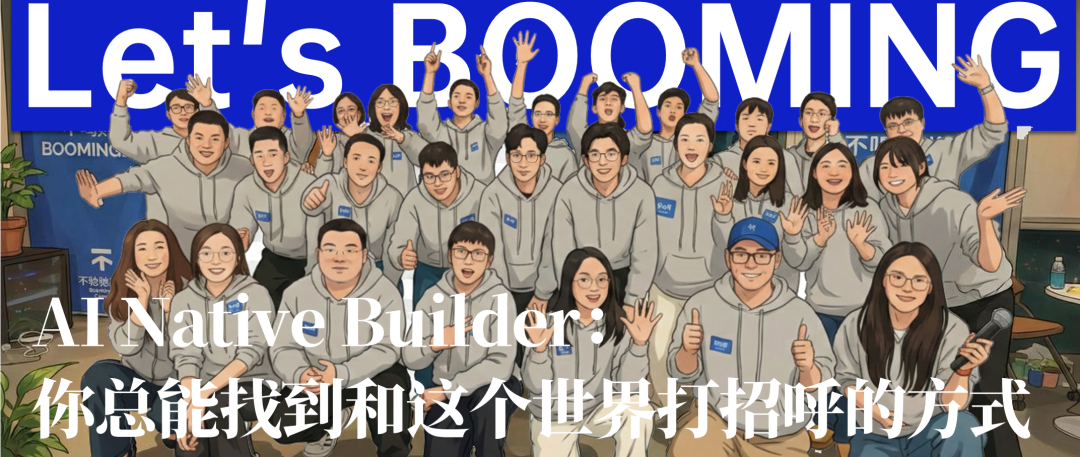 AI Native Builder: You Can Always Find a Way to Say Hello to the World | Bu Ming Entrepreneurship Camp
  Winning the World's Admiration with Bare Hands in the AI Era | Bu Ming Entrepreneurship Camp Now Recruiting
Before AGI Arrives, This Is the Last Night on Earth | Booming Night