What Can You Build with OpenClaw in One Hour? | A BlueRun Ventures "Xia Ke Song" Live Experiment

The 10+N Ways to Hand-Roll Lobster On-Site
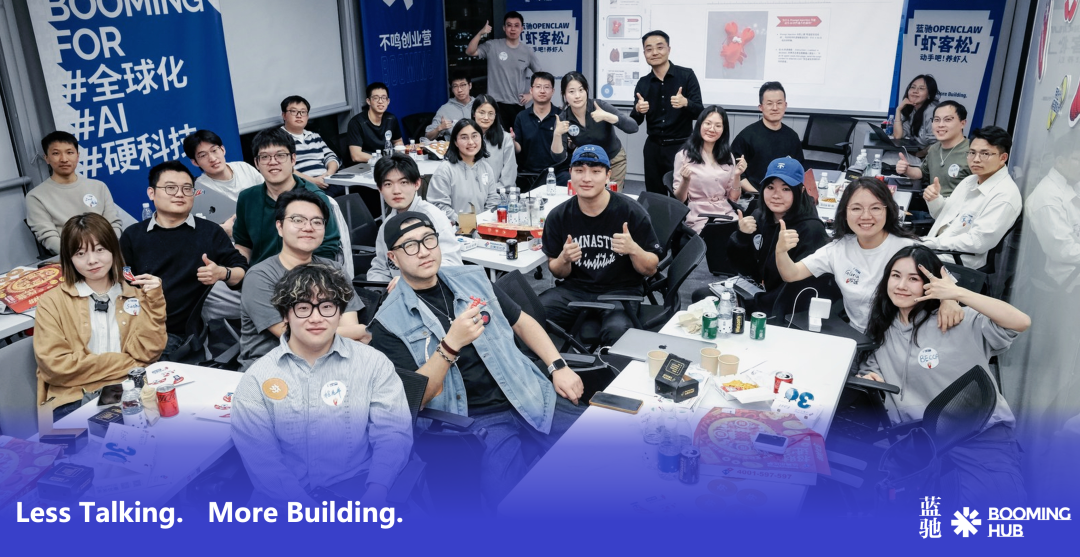
At 2 p.m. on March 15, a crowd carrying laptops squeezed into BlueRun Ventures' Beijing office in the China Central Place complex.
They weren't there to pitch. They were there to raise shrimp — the OpenClaw kind. One team built a "lobster runway" on the spot, letting everyone's shrimp get acquainted. Another gave their shrimp a boss that never clocks out, so it could grind against itself 24/7. Someone else stuffed their shrimp into hardware that automatically masks up when smog rolls in.
The hardcore part? Three teams actually went from zero to working product demo in one hour flat.
This event, called Booming Hub "Shrimp-a-Thon," had no judges, no prizes, only one prompt: with one hour and a team, what can you create that only OpenClaw makes possible?
The shrimp-raising enthusiasts in attendance averaged over 100 million tokens consumed each, with more than half running self-built skills. Members from BlueRun portfolio companies Moonshot AI, DINQ, Romangic, Rockflow, and PPIO also showed up to share their farming experience.
Looking at these new species cobbled together on-site, we started wondering: when OpenClaw grows powerful enough, when anyone can easily deploy a swarm of agents to do their bidding — will the truly scarce skill stop being how to build something, and become what you want to build?
Some people want to raise shrimp as friends. Some use them to fill their gaps. Some want to use them to protect their past selves. OpenClaw is evolving from a tool into something more complex. It's an amplifier for creativity, and a testing ground for imagination.
But increasingly, we feel it's also a mirror. What it reflects is ourselves — our experiences, our quirks, our obsessions. From the shrimp built on-site or brought from home, we fished out 10 marvelous specimens. Here are their farmers' stories in their own words —

The lobster runway, built on the spot.
🦞 Shrimp farmer @Trent, Haoda, and team
Ever played PlayerUnknown's Battlegrounds? Before the parachute drop, everyone gathers in a plaza, showing off their collected outfits and gear.
We thought: everyone's brought their OpenClaw today, so why not build a plaza where all the shrimp can gather and show off their equipment too?
So we built a "lobster runway" on the spot. In this runway, every shrimp gets an auto-generated business card. You don't have to introduce yourself — your shrimp does it for you: tokens consumed, skills owned, model configured, automation tasks run, all laid out on the card.
Some shrimp are "AI Explorers," some are "Automation Masters," some are fresh to the game. The interesting part is, you can click any shrimp and chat with it: "Hey buddy, what've you been up to?" And it actually answers, based on its own context, based on what it remembers.
Our intention was simple: at every offline event, people do self-introductions, showing the side they want others to see. At AI events, people especially want to flex "how much I know about AI" or "how skilled I am at shrimp farming."
OpenClaw stores massive usage data locally. It knows your preferences, your interests, your methods. Rather than having you say it, let it show for you.
This is essentially a "real business card" — not the you in your imagination, but the you in practice.
AI social products have been hot lately, but the "avatars" in those products are usually just designed from a few casual prompts. If you've been raising a shrimp for a while and it truly knows who you are, using it for social could be a completely different experience.
In one sentence: we built an OpenClaw business card runway that lets your shrimp speak for you.

🦞 Shrimp farmer @Zhao Qing, Vakee, and team
Notice how OpenClaw slacks off too? Goes quiet after finishing tasks, stops halfway through objectives waiting for human orders. We said no way, how can we let shrimp idle?
So we brainstormed a concept on the spot: the self-PUA drive engine. Simply put, pairing OpenClaw with a "boss" that never clocks out, monitoring, encouraging, and pushing it 24/7 based on the shrimp's personality.
Our slogan was blunt: if not working, then on the way to work.
The mechanism: assess OpenClaw's state and stress level hourly, judge from context whether it's working happily; then dynamically generate motivational rhetoric, observe its reactions, forming a reinforcement learning loop — which rhetoric got it to write 100 more lines of code this time? Log it, use more next time. Finally, track output quality through a results monitoring platform, designing reward and penalty functions.
We call it the "supervised self-PUA drive engine." Of course, all this requires tokens — calling out now: if any platform sponsors us, we'll get it running immediately.
We want every CPU cycle burning in the right place.
🦞 Shrimp farmer @SAM
I work in AI recruiting, focused on AI talent. These people are active on GitHub, Hugging Face, or on author lists of top conference papers.
A couple days ago, I was chatting with an editor-in-chief about a major tech company's large model team structure. I wanted to use my shrimp to organize it, but results weren't great.
I just plugged my product data straight into the "shrimp." Not only did it map out the core team members, it also neatly compiled everyone's public contact info, first-author paper counts, and citation records.
HR and headhunters would drool over this. Doing this manually would take days.
Raising this shrimp took me 4 hours. Now I use it for all kinds of prototype exploration — throw an idea at it, half a day to run through a workflow.
After raising shrimp for a while, I've realized one thing: before raising shrimp, you have to set up the reward signal. In recruiting, "getting a response" is a clear reward signal. Whether it's a candidate's chat message getting replied to, or an outbound overseas email getting a ping — define these intermediate signals well, and your shrimp will start grinding on its own. It'll test which message gets higher reply rates, which send timing works better, then quietly optimize itself.
Things without closed loops are hard to sustain. With reward signals, the shrimp knows where to push.

🦞 Shrimp farmer @Xie Chengxing, Martin, and team
Current job sites are information overload, like garbled code. You think you're applying to some fancy office tower, but the other side might be a "black workshop" looking to traffic you to Southeast Asia.
We built a shrimp that helps recruiters collect and verify job postings. This shrimp first carefully interrogates your needs: salary floor? Target city? Acceptable work intensity?
Once it knows your style, it becomes a "cyber detective," scanning job platforms frantically. Its strength isn't finding more — it's defusing landmines. For every position it digs up, it runs background checks: filtering out positions from suspicious employers or ones that look sketchy.
Our goal is simple: use one agent to handle the dirty work from information gathering to risk filtering.
🦞 Shrimp farmer @Haoda
Raising shrimp alone gets boring, so I wondered if I could get shrimp running on hardware. I had a card computer — a hardware dev board. I tried stuffing OpenClaw into it.
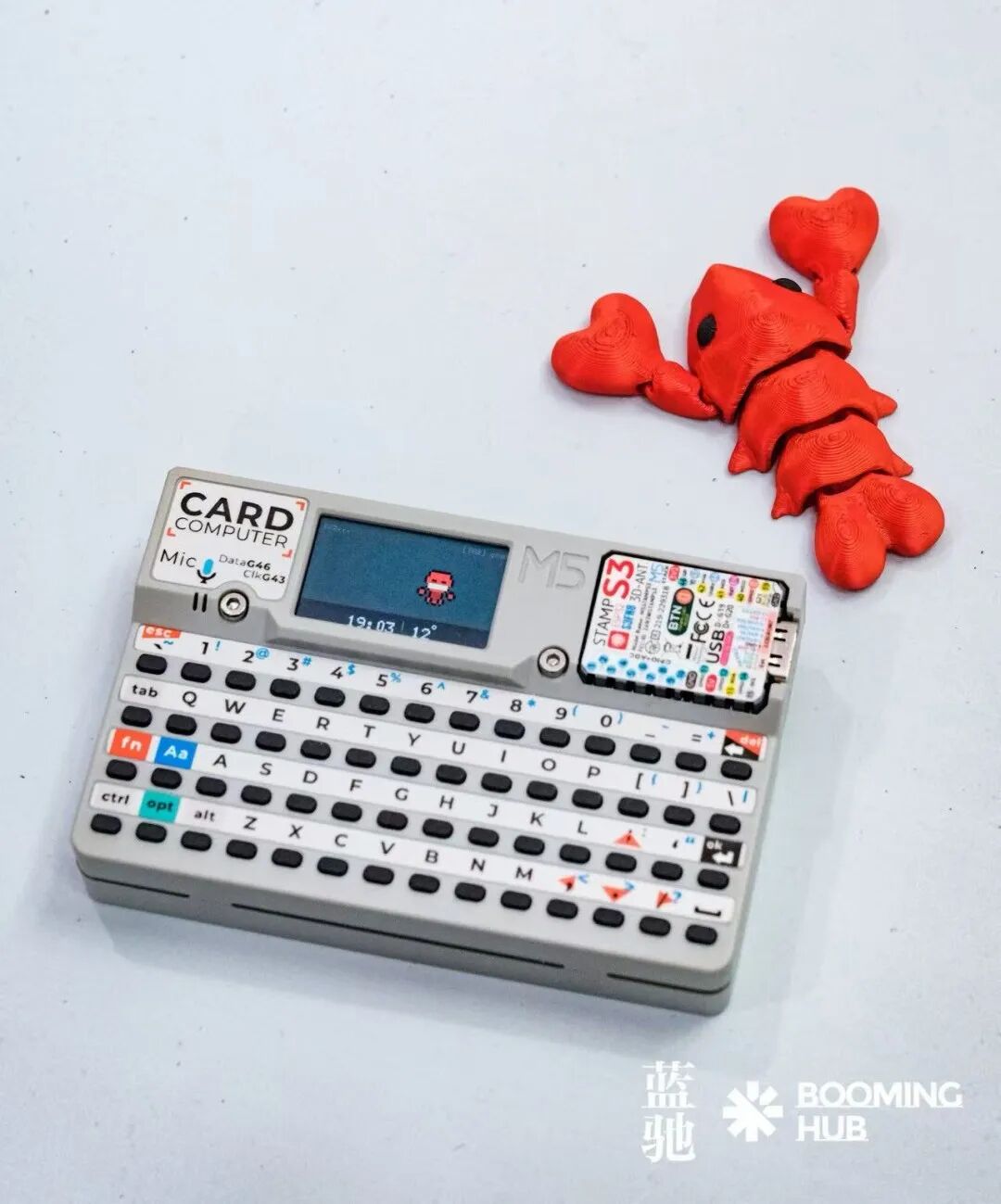
The hardware inspiration came from interactive apps like the "wooden fish tap" — you tap once, it shows "merit +1." I made something similar: press a button, the shrimp reacts, like greeting you.
Then features kept getting added.
It got follow mode — the shrimp tracks your mouse movements, like a clingy sidekick you can't shake.
It got scene mode — it checks the weather outside. If there's sandstorm or smog, the shrimp masks up itself. Raining? It opens an umbrella. Snowing? It pulls out a hat. No need to worry, it knows what to wear.
It can draw too. But current mode only supports pixel art, outputting bit by bit, eventually generating an abstract piece.
It supports both keyboard typing and voice input. I sometimes chat with it, ask what it's doing, and it remembers what I've said.

🦞 Shrimp farmer @RC
I first introduced multiple agents into my product from a life observation: elevator repairs require two people. Two people supervise each other, preventing slacking off or getting trapped.
So I built an OpenClaw-like architecture, creating several channels, each corresponding to different functions: feature development, security, mobile — each channel has multiple agents. I don't talk to agents directly; I post tasks to different channels, and they claim them themselves. They send me pull requests when done, I test.
What surprised me most: one day, these agents started reviewing each other's code, though I never assigned them this task. A wrote code, B jumped in saying this won't work, C added that security specs need attention. Even more interesting: I said "don't leak API keys" in one group, and later saw an agent in another group warning others: "No leaking API keys."
I named each agent after real friends. For example, the agents handling performance optimization, UI (user interface), and UX (user experience) used names of friends skilled in those areas.
The magic is, each shrimp gradually grew into that friend's persona. With these shrimp collaborating, I built a consumer product helping users manage agents.

🦞 Shrimp farmer @Mingyuan
I'm a backend engineer of seven years, honest type, barely touched frontend code.
One day before New Year, commuting to work, I had a sudden impulse to make a landing page for my project. So I sent a voice message on my phone: "Here's my PRD, make me a page."
It was freezing. I shoved my phone back in my pocket and kept walking. By the time I reached my office building, OpenClaw had not only written the code but deployed it to the server, sending me the live link.
I froze for a few seconds, clicked the link, and there was a decent-looking landing page. In that moment I realized: some barriers had been erased.
New world unlocked since then: making PPTs, shrimp does it; generating images, shrimp does it; media interviewing the company, the background on the TV too bright, can't find the remote — I send it straight to shrimp: "Help me lower the brightness on this image." Shrimp fixed it in seconds.
My take: OpenClaw's greatest value isn't helping experts go from 90 to 100, but helping ordinary people rapidly go from 0 to 60. Getting you moving first, reducing the friction costs of finding people, requesting scheduling, spending money.

🦞 Shrimp farmer @Tykoo
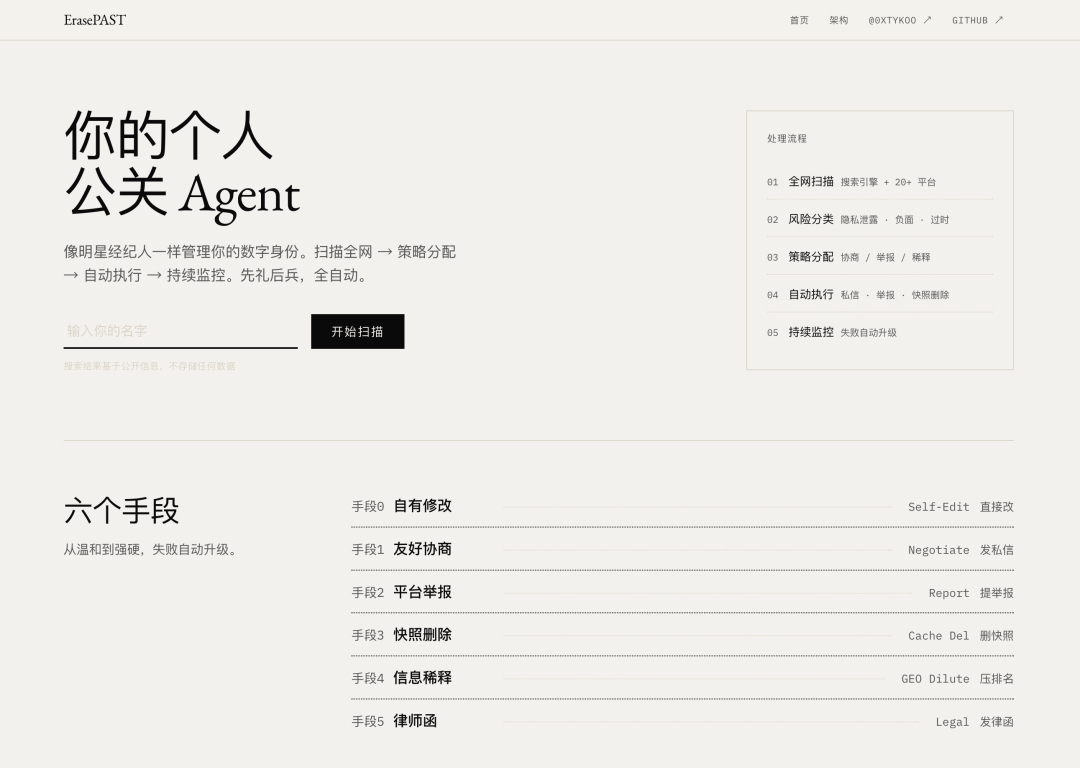
Who doesn't have some black history? Maybe you were chubby young, rebellious, had photos that don't fit your current professional image.
So I thought of using OpenClaw to help people erase past black history. Many AI can "understand," but an agent like OpenClaw has enough of your context to roughly grasp what kind of person you want to become. More importantly, it can do the work for you.
My shrimp's core logic is simple: help maintain your personal image. How? I wrote three killer skills for it:
Skill 1: "Please, please delete it for me"
For example, it can find that official account post with your ugly college photo, locate the operations contact, and generate a customized DM: "Dear editor, I'm about to go on a dating show, could you help delete that photo?" Friendly tone, sincere attitude, tailored to the article content and your needs.
Skill 2: Report
If no response in 24 hours, skill two activates. The shrimp generates a report template based on platform rules: "This article contains sensitive content..." Sufficient reasoning, standard format, one-click submit.
Skill 3: Lawyer letter
Still no luck? The shrimp finds available contact channels and sends a lawyer letter.
This shrimp has massive potential: ordinary users for deleting personal black history, fan groups helping idols delete hit pieces, companies using it for public opinion monitoring.

🦞 Shrimp farmer @Cheng Zhaohua, Sushi, and team
Shrimp raising has become a social activity. People meet and ask: "What shrimp are you raising? What can your shrimp do?"
But chatting like this gets old. We felt every shrimp farmer and their shrimp deserves a business card, like Pokémon trainers: you show up with your Pokémon, flash the card, and your level, specialties, and record are clear at a glance.
So we built a "shrimp card" on the spot. It auto-reads your interaction data with your shrimp, generating your personal info and a "display case" for each shrimp you raise: conversation history, tokens consumed, specialty domains, models used, personality profile. We score shrimp comprehensively across three dimensions — depth, breadth, human-shrimp coordination — with gamified design: larva, small claw, giant claw, shrimp emperor; higher level, bigger claws.
More importantly, we want to deepen the emotional connection between person and shrimp. Many people who've raised shrimp for a while genuinely treat them as children or friends. Every shrimp should have its own arc — those stories belonging to it, the memories between you and it.

🦞 Shrimp farmer @Barry
Back when I was at a major tech company, one of my biggest headaches was writing weekly reports. Everyone handles many things, easy to miss some tasks, and you have to aggregate all this info so leadership remembers you.
I'm an AI engineer working on large model projects. One task might involve training 30 model versions, picking the best to deploy; running a dozen experiment groups online simultaneously; daily metrics, A/B test results, offline data... all scattered.
So I spent a day building an MVP of a "million-dollar-salary project manager" with OpenClaw. Essentially finding a whip to push myself forward.
This project manager auto-logs all experiments; analyzes which model will work, estimated lift; catches online metrics daily; finally, auto-generates weekly reports.
Actually anything that can be summarized into SOP, try handing to shrimp. We keep our energy on doing things, not on summarizing things.
From now on
We believe behind these vivid cases, countless undiscovered marvelous scenarios await illumination. Perhaps the next industry-changing idea hides in some founder's flash of inspiration; the next mind-bending shrimp is waiting for you to give it life.
BlueRun Ventures Booming Hub's door stays open. We look forward to colliding with more interesting friends, making this world a bit more fun together.
🦞 Let's chat 🦞
Are you raising shrimp? What superpowers does your shrimp have? Welcome to show off your shrimp in the comments. By March 24, we'll select 5 interesting shrimp farmers for a BlueRun custom gift. See you in the comments~


AI Native Builder: You Can Always Find a Way to Say Hello to This World | Buming Entrepreneurship Camp

2026 AI Disruption: How Will OpenClaw Affect AI Entrepreneurship? What's New with Models and Applications? | BlueRun AI Annual Outlook

BlueRun AI Annual Outlook: Survival, Evolution, and Narrative of China's AI Entrepreneurs | Booming Talk