BlueRun Ventures' Cao Wei: Tesla's Humanoid Optimus Is Nothing New — The Robotics Sector's Reach Is Far Beyond What Anyone Imagines

We will ultimately advance human evolution through robotics.
During the National Day holiday, Tesla's official unveiling of its humanoid robot sparked widespread discussion. As early as 2014, BlueRun Ventures began tracking the robotics sector, backing standout startups including Gaussian Robotics, Youibot, Bluecore Technology, WoodAnt, Tian Cheng, and Wanxun. Recently, Cao Wei, partner at BlueRun Ventures, sat down with multiple media outlets to share his perspectives on entrepreneurship and investment in robotics. We've compiled and edited those conversations below.
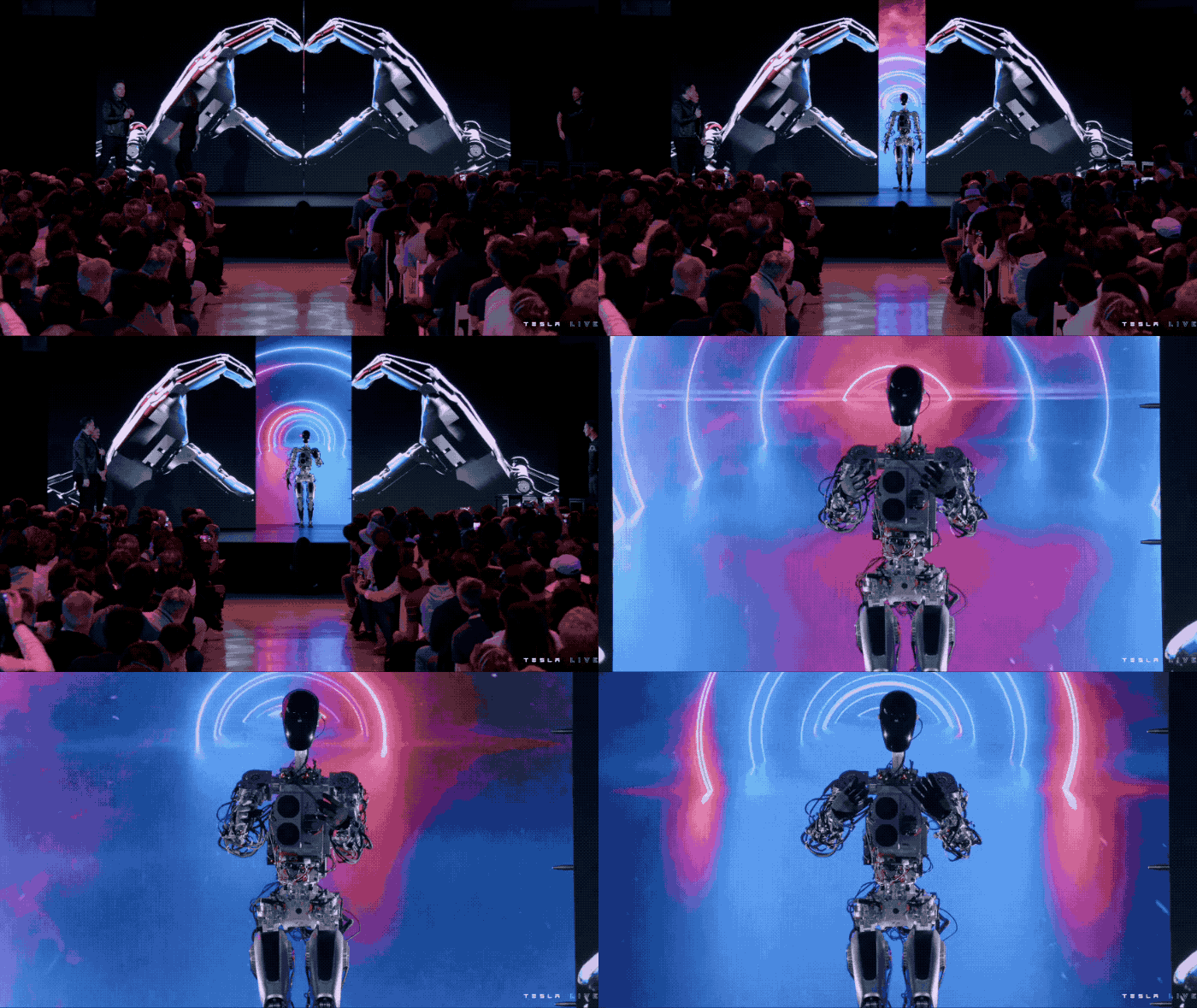
On October 1, Tesla officially unveiled the Optimus humanoid robot prototype at AI Day. The robot integrates AI technology, is powered by autonomous driving systems, and uses the DOJO D1 supercomputing chip — drawing considerable market attention and discussion.
In truth, as technology has advanced in recent years, labor shortages have widened, and industrial structures have transformed and upgraded, a wave of tech entrepreneurs has already flooded into the robotics sector. According to the China Robot Industry Development Report (2021), China's robot market reached approximately 83.9 billion yuan in 2021, with industrial robots accounting for roughly 44.57 billion yuan (53.1%) and service robots for about 39.33 billion yuan (46.9%). The overall market continues to grow rapidly.
As an early-stage tech investment firm, BlueRun Ventures anticipated the massive potential of the robotics industry ahead of the curve, and began tracking the sector in 2014, investing at early stages in robotics projects including Gaussian Robotics, Youibot, Bluecore Technology, Keyi Tech, CloudSail Intelligence, WoodAnt Robotics, and Tian Cheng Technology.
As the industry iterates forward and the industrial chain continuously improves and extends, a new era of intelligent robots is about to be unlocked.
01 What's your take on Tesla's humanoid robot?
Cao Wei: Humanoid robots actually date back to research at Japan's Waseda University in the late 1960s and early 1970s. It's not a new concept, but it has passed through important milestones.
The first challenge was mastering gait control. Waseda's robot walked very slowly — its rhythm, tempo, and motion control were all in a平缓 state. It wasn't until Boston Dynamics that humanoid robots achieved movement tempo and speed resembling humans. Just looking at locomotion and gait alone, there's a 40-50 year research arc. Mobile robots break down into wheeled, tracked, bipedal, and quadrupedal. Bipedal is the hardest. When we talk about autonomous mobile robots, there's a massive technical divide between slow bipedal movement and fast bipedal movement.
Gait control is just the foundation. Once a robot can move quickly and agilely on two legs in an environment, it basically has stable locomotion capability. On top of this, robots are similar to yet different from autonomous driving in environmental perception. Perception is data collection. In the middle is decision-making — assessment and planning. Finally comes control. The end goal is SLAM: real-time visual mapping and navigation positioning. We talk about perception-decision-control-interaction. Humans are a strongly interactive species. I can't say what level Tesla can achieve on interaction.
Tesla's robotics effort can carry over some advantages from autonomous driving. Getting robots to do real-time modeling and autonomous mobile navigation is close to Tesla's autonomous driving capability. As Tesla itself said, the underlying chip is the same — it's based on the Dojo supercomputer system, D1 chip, and pure vision algorithms, which can largely be inherited.
What can't be inherited? For example, extremely precise force control. Because you basically don't need it for driving. Let me give an example: having a robot peel an egg or peel crawfish — this requires human perception of the external environment and subtle movements, and human environmental perception is multi-dimensional. Beyond vision, there's sound, touch, smell, and more — capabilities robots don't have.
At this launch event, Tesla's robot overall form factor was decent, but the gait algorithm was middling.
Some articles on the market are rather extreme, saying that with Tesla's humanoid robot, other companies will be eliminated. This is actually said casually by many people who don't really understand — every robot or intelligent agent's key is helping humans solve pain points and difficulties in their specific scenarios. Ultimately its form is what humans iterated over 10, 20, even 50 years based on that scenario's pain points and difficulties. Only when a scenario's pain points and difficulties absolutely require a humanoid robot to address does humanoid form become the optimal solution.
For example, forklift robots — it's a forklift, the flatbed can hold lots of things: three TVs, two big boxes, plus assorted cargo. You can't have 500 robots in a cargo hold running around on two legs, each carrying just one box. That's illogical.
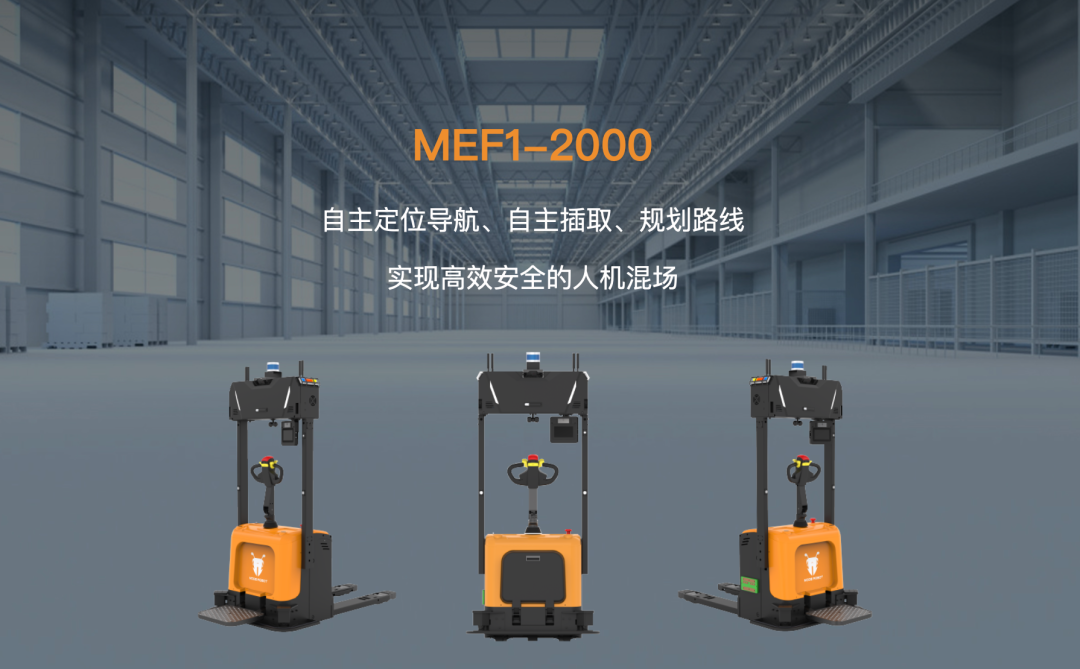
WoodAnt Robotics product
Many industrial scenarios don't necessarily require bipedal humanoid robots — it's service scenarios closely tied to human life that need humanoid robots more. For example, household help — robots watching kids, cleaning windows, folding clothes, tidying rooms. It's hard to imagine a big hunk of metal doing these things.
But even when humanoid robots emerge, will people actually want to buy them for their homes? Here academia discusses the "uncanny valley" effect.
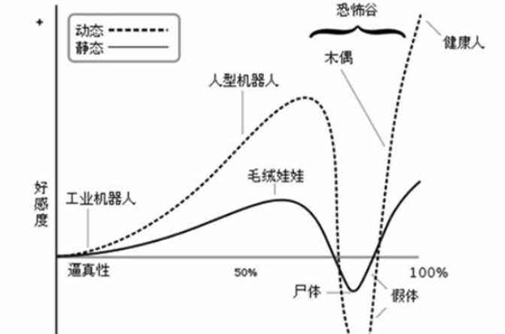
As shown in the chart, at the bottom of the valley, this large robot is human-like but not极致 — like a zombie, unable to achieve lifelike realism. During this period, people feel unsettled seeing it — like me but not me, movements strange and creepy — this is the "uncanny valley." Further along, robots look exactly like humans, eventually indistinguishable from people, and human affinity for robots rises again. So the uncanny valley is an innovation trap for humanoid robots.
However, in terms of nuanced understanding of future society and technology development, Tesla went from being a cutting-edge new energy vehicle maker 20 years ago to a mainstream automaker, with its imagination space and valuation challenged. Now tossing out a new concept to kick off a second growth curve, it should sustain itself for many more years.
02 What changes have occurred in the robotics industry in recent years?
Cao Wei: Starting around 2014, we saw in the robotics sector how underlying robotics-related technologies enabled the combination of performance and scenarios — for example, autonomous positioning and mobility capabilities and object recognition capabilities applied to industrial搬运 AGVs. So we've been continuously looking for opportunities where these technical innovations can deliver long-term落地 value on the scenario and application sides.
I think the current overall market environment and external changes are quite numerous, and China has unique systemic opportunities in this wave of robotics:
From the demand side, population aging is a problem we must confront. In recent years, China's population growth has slowed and the demographic dividend is gone. Young people don't want to do physical labor, and manufacturing faces severe labor shortages. Rising labor costs and robot costs have formed a very pronounced scissors gap.
Past technological advances have brought productivity transformations. Under new circumstances, what technology can lead humanity to the next level? Our answer is — AI robots.
Especially as technology matures and market education progresses, robot types keep increasing, performance improves, and application scenarios and scope further expand. The market space for jobs robots can replace is vast. China has already become the largest robot consumer country.
From the supply side, China's entrepreneur community has an active community. Not only are there many universities with robotics engineering programs, many entrepreneurs, and abundant capital, but there's also upstream and downstream ecosystem, enabling faster product iteration than other countries.
Relying on domestic supply chain and manufacturing advantages, the robotics industry has clear advantages in scaled production, and many robotics companies' products also sell well overseas.
From the industrial policy perspective, during the 14th Five-Year Plan period, China introduced a series of smart manufacturing plans and robotics industry development plans, treating the robotics industry as a strategic emerging industry for key support. Robots, as products integrating big data, cloud computing, and artificial intelligence, are no longer merely traditional mechanical equipment but representatives of new-generation smart manufacturing and carriers of industrial interconnectivity, with clear medium- to long-term policy direction.
The robotics track mainly divides into industrial robots and service robots. According to the China Robot Industry Development Report (2022) published this August, China's industrial robot market is expected to approach 59 billion yuan in 2023, with a CAGR exceeding 12% over the past five years, making it the world's largest industrial robot application market. The service robot market is projected to exceed 60 billion yuan by 2023, with a five-year CAGR as high as 34%.
Therefore, from performance and cost dimensions, robot substitution of human labor has very high certainty globally for a considerable period to come, which is our underlying framework for betting on the robotics track. We believe that whether in service industries or industrial logistics, over the next 30-50 year mega-cycle, robots will enter a period of vigorous development.
03 Which sub-segment opportunities in robotics do you favor?
Cao Wei: BlueRun began tracking the robotics sector in 2014, and favors investment opportunities in robots with relevant industrial scenario know-how沉淀, underlying technical accumulation, and effective realization of human labor substitution and efficiency improvement. At the intersection of robotics and细分 domains, enormous opportunities often emerge.
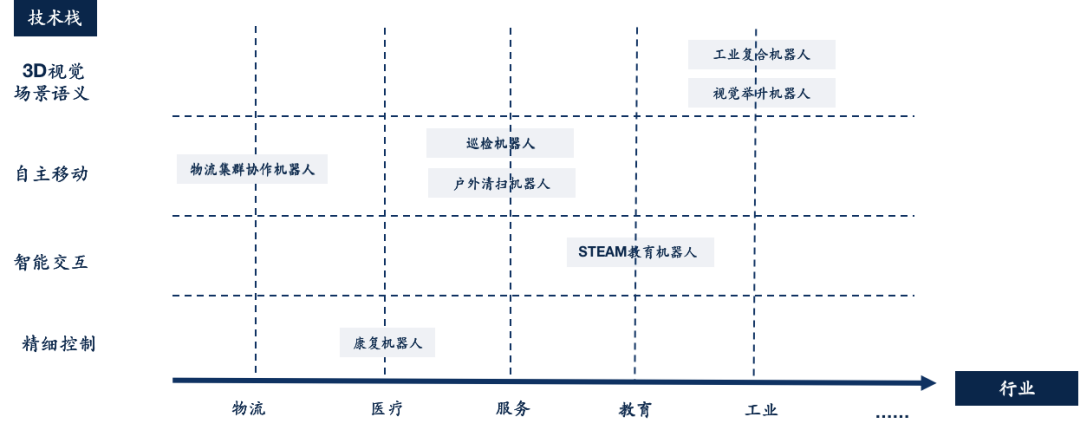
For example, in the cleaning robot domain, we invested in Gaussian Robotics. From our initial investment in the commercial cleaning robot track to today, the industry's development has completely exceeded our original expectations.
According to statistics, among China's 30 billion square meters of property management area, cleaning robot coverage is currently less than 20%. This massive growth space has continuously attracted new players to the commercial cleaning robot track. As product performance stabilizes, customer procurement volumes rise, and global markets落地, the entire cleaning robot industry has entered a volume expansion phase. Combined with internal and external environment changes in recent years, we are at a golden节点 of industry explosion and growth.
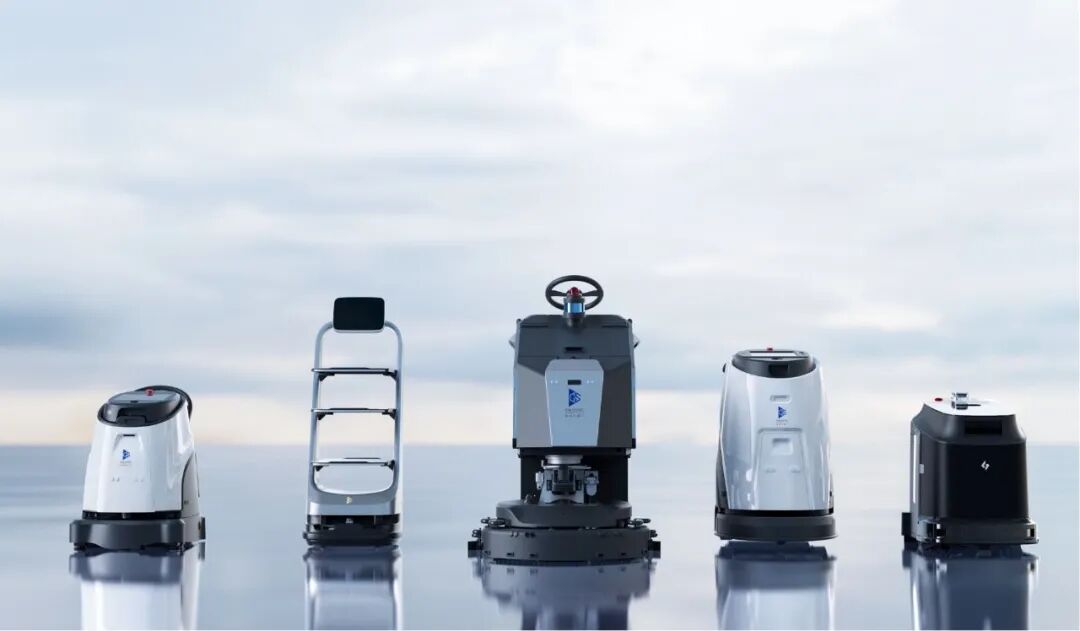
Gaussian Robotics product
But to become a leader in this industry, numerous practical product, market, and technical issues still stand before companies needing urgent resolution.
We've seen many cross-border teams attempting intelligent cleaning, but they often give up before figuring out the ropes. What makes startups precious is possessing craftsman spirit and persevering courage — every product launch is a背水一战.
Robotics is the combination of underlying robotic capabilities plus scenario know-how. Scenario know-how involves business depth, data闭环, upper-layer innovation models, and协同 between robotics experts and industry experts, requiring long-term polishing. If a team hasn't developed its own methodology and system for polishing and iterating products, results will likely be unsatisfactory, or they simply won't endure long enough.
Customer needs center on product quality and effectiveness — this is top priority. Next comes service system and after-sales support: how to get customers to use it, then to be unable to do without it — this is worth manufacturers' consideration. For after-sales service, previously cleaning robot after-sales mostly required on-site service, but as robot intelligence levels improve, through software-hardware integrated service systems, most after-sales issues can be resolved remotely.
In the final analysis, robots must still excel at product. Only when efficiency improves dramatically will customers pay for new technological innovation and product iteration.
In the medical robot domain, we invested in Tian Cheng Technology. This is a company making post-surgical rehabilitation exoskeleton robots. Patients wear the exoskeleton, and the device guides them through walking training by judging and understanding their physical condition. Through walking training, it helps patients restore key connection points in damaged central nervous systems, helping them recover quickly after surgery — a very typical cross-boundary fusion emerging domain.
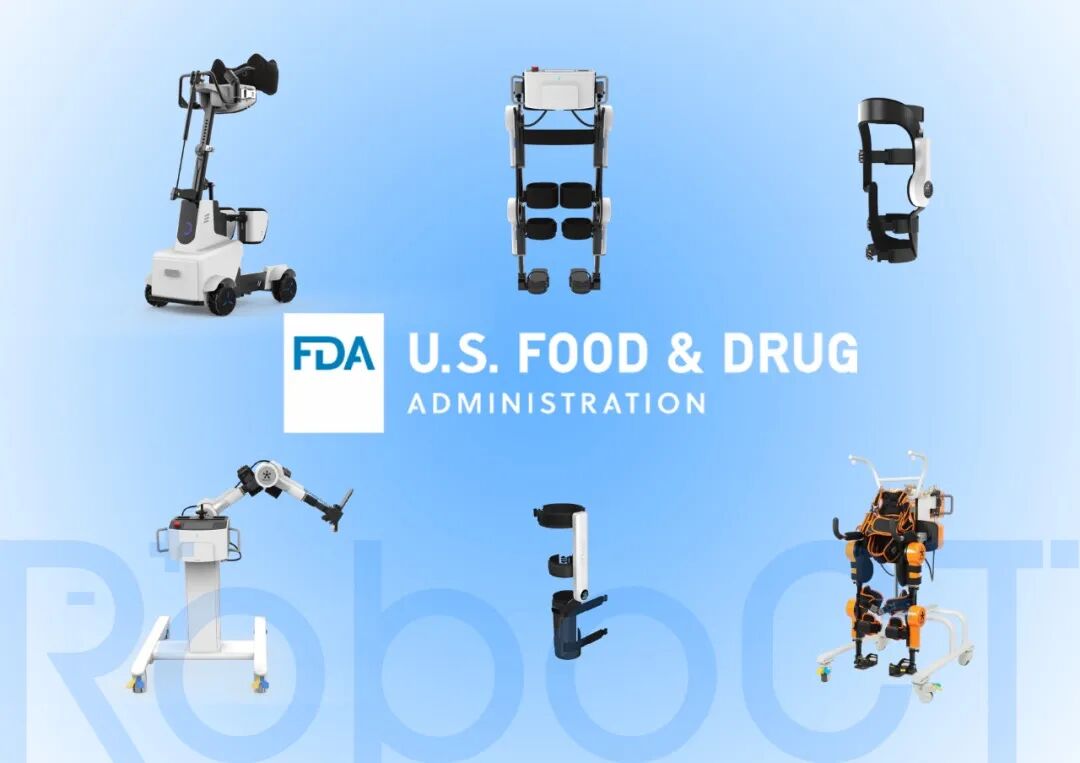
Tian Cheng Technology product
As China has explicitly proposed developing "medical robots and other high-performance diagnostic and treatment equipment," medical service robots are also showing rapid growth. China currently has 250 million elderly people, including 40 million with disabilities or semi-disabilities. This contains enormous market potential.
But if an exoskeleton robot sells for 2 million yuan, there will be little market opportunity. What will ultimately ignite the entire market are teams with: first, cross-disciplinary跨界 capabilities; second, the ability to create爆款 products with excellent cost-performance and outstanding rehabilitation effects.
Traditional exoskeleton robots only solved the walking problem — they were assistive walking devices without rehabilitation or treatment capabilities, and thus couldn't obtain medical device product certification. In recent years, some leading companies can now more clearly conduct rehabilitation treatment for patients' central nervous system damage, thus truly becoming rehabilitation devices rather than just assistive devices.
After solving this problem, a new problem emerges: at what cost can these companies solve it? Exoskeleton robots remain high-end medical devices whose costs haven't reached scaled production临界点, which is key to their inability to普及. The entire industry awaits a company that can tear open a commercial口子.
We believe the most critical factor is finding the fastest-growing vertical细分 market. If a team has solid underlying technical capabilities, the next step can absolutely extend to more scenarios — this is also where the exoskeleton robot track's most imaginative opportunities lie in the future.
From the industry payment capability angle, medical rehabilitation scenarios are more rigid-demand, our top priority for investing in exoskeleton robots, followed by industrial scenarios, and finally other special scenarios.
The basis for this judgment comes from our industry research. We found that for domestic workers' operating environments, factories' willingness to protect workers and enhance worker capabilities remains at a very初级 stage. In European and American factories, workers are basically college-educated with higher学历, which is why foreign applications are slightly better. But even so, the foreign industrial exoskeleton robot market still hasn't exploded.
In the medical domain, post-surgical rehabilitation is a rigid-demand market. For example, stroke patients through post-surgical rehabilitation treatment can very possibly recover motor function from hemiplegia and return to society as normal people. This is the essential difference between rigid-demand and non-rigid-demand scenarios.
The inflection point for exoskeleton robot track explosion will likely appear in the next two to three years. At a price point of 2 million yuan per exoskeleton robot set, it remains a "major purchase" for medical institutions, requiring heavy procurement decisions, so volume growth won't be fast. New equipment typically requires users to try it first — if they find it effective, they'll have purchase intent — but often users don't get the opportunity to experience it.
If production cost is 300,000 yuan per set, producing 100 sets requires 30 million yuan in capital, which would undoubtedly create enormous financial pressure for startups. But if cost is 30,000 yuan per set, 100 sets only need 3 million yuan, enough to cover trials at 100 hospitals, among which there might be 20-30% purchase conversion.
Tian Cheng Technology began commercialization in the second half of 2021, and in just half a year reached cooperation with over 200 hospitals, covering over 80% of provincial-level administrative regions nationwide, with cumulative usage exceeding 100,000 person-times. By comparison, Israel's ReWalk, after 20 years of development, has only about 600 units installed globally.
04 Which startups will be able to break through in the future?
Cao Wei: From an investor's perspective, we believe the first thing startups must do is focus. Every startup has its own script — how to perform your own script well is key. First, manufacturers need to create a爆款 product. After customers purchase the product, they should form positive feedback and口碑 effects regarding payback period and robot efficiency.
But simultaneously, robotics technology has no boundaries — general underlying technology can freely extend to various domains. Therefore, after startups极致 their first milestone, they can continuously extend and grow along their technical accumulation. Good teams definitely depart from core scenarios, thoroughly understand that scenario, then summarize their own complete technical system and product matrix.
Finally, under a complete product matrix, gradually form their own sales network and sales system, building first-mover advantage, providing customers with sufficiently good high cost-performance products. Then through defining industry standards, raise the entire industry's entry barriers, build industry norms, and achieve scale effects.
Only after running through the entire system can startups form their own moats and advantages.
However, this B-side business model differs明显 from C-side. In C-side markets, scenarios are relatively单一, products are highly replicable. Therefore, to capture C-side markets, manufacturers need to continuously launch new products, disrupting existing product experiences. This places very high demands on the team's innovation capability and product definition capability.
From BlueRun's perspective, as an early-stage tech investment institution, we focus more on underlying technology. In an era where technology is king, the logic of investing in people remains highly applicable. Startups must have very solid fundamentals in underlying hardware and teams with deep科研 backgrounds, not only possessing the ability to dialogue with domain experts in their professional fields, but founders must also have stronger judgment in mission-vision-values building, talent organization, and OKR/KPI setting.
In the previous decade's mobile internet era, everyone's innovation still revolved around underlying dividends and mega-trends. Now, many innovation models in the hard tech domain have no对标 companies overseas to reference. This business model exploration requires domestic teams to have very strong驾驭 capabilities and judgment of underlying commercial logic, because only by truly grasping what doesn't change can you build robust business models and ensure the value ultimately created is sustainable.
Startups in the new environment should also appropriately expand their horizons globally. When we initially invested in Gaussian Robotics, its first foothold was overseas. At that time domestically, whether in terms of labor costs or overall market acceptance, conditions weren't mature for robot落地.
But in recent years, our most直观 feeling is that China's manufacturing can completely crush overseas markets. Whether from cost perspective, product definition capability, or product iteration speed, overseas manufacturers rarely can match domestic ones. Perhaps twenty years ago, we exported washing machines, TVs, and refrigerators. But I believe in the next two to three years, China's service robots and industrial robots will definitely sweep the globe, covering every corner of the world — this is beyond doubt.
Correspondingly, there may also emerge numerous sensor companies in the future, such as sensor force control, vision, flexible actuators, etc. Sensors aren't only used in robots but also in automated machinery, forming a vast泛机器人 industry chain.
The risk of entrepreneurship in this track lies in rhythm control. If you can just survive, persist for 30 years, there will definitely be value. The problem is many companies can't control rhythm amid fluctuations, making it hard to survive. We haven't yet seen negative externalities from robots. Perhaps in the future people won't get along with people anymore, they'll all get along with robots — that would be a negative externality. Robots approximating human form — why are they resisted in so much sci-fi and film? Because humans are imperfect, robots are perfect.
In the long term, robot companies that can truly reach the tens of billions or hundreds of billions level will have very blurred product boundaries or market boundaries in the future, which also illustrates a future融合 trend for robots.
This article is compiled from Cao Wei's recent interviews with Tencent Technology, TMTpost, Cyzone, Light Cone Intelligence, and others, with editing and abridgment during compilation.
Further Reading
BlueRun Ventures Quarterly Investment Overview | 2022 Q3
BlueRun Ventures Quarterly Investment Overview | 2022 Q3
BlueRun Ventures' Jui Chan: Investment amount won't decrease this year, concentrating on advantaged projects
BlueRun Ventures: The golden era of tech investment arrives, being calm pioneers amid era transformation and industrial innovation
Missed BlueRun Demo Day with 4000+ project matchings? Any remedies?

BlueRun Ventures was established in Silicon Valley in 1998. BlueRun Ventures China was founded in 2005 and is a venture capital firm focused on early-stage startups.
Currently, BlueRun Ventures China manages multiple USD and RMB dual-currency funds, with assets under management exceeding 15 billion yuan, making it one of the largest early-stage funds domestically. Its investment stage focuses on Pre-A and Series A, covering hard tech and innovative interaction, enterprise tech, new consumption, and healthcare, having cumulatively invested in over 150 startups including Li Auto, Waterdrop, QingCloud, Guazi Used Cars, Qudian, Songguo Mobility, Ganji.com, Energy Monster, Yuntu Semiconductor, Machenike, CloudSail Intelligence, Anxin Network Shield, and BioMap.
BlueRun Ventures has been ranked #1 in Zero2IPO's "China Early-Stage Investment Institutions Top 30," #1 in ChinaVenture's "China Best Early-Stage Venture Capital Institutions TOP30," and named among Preqin's Top 10 Global VC Fund Managers with Sustained High Return Performance.
Additionally, BlueRun Ventures has consecutively received honors from Forbes China, 36Kr, Cyzone, Caixin Media, CBNweekly, Jiemian, and other media institutions including "China Best Early-Stage Institution of the Year," "China Top Venture Capital Institution," "Most Entrepreneur-Friendly Early-Stage Institution of the Year," and "Most Influential Early-Stage Institution of the Year."