I'm Not the Pianist on the Ocean, I Choose to Walk onto Land | Terry Zhu in Conversation with OriginFlow's Qin Shentao

Identify the right people, bet on long-term things

"I quietly messaged a colleague on WeChat: this person, we absolutely have to get him."
At a recent industry conference panel, Terry Zhu, Managing Partner at BlueRun Ventures, said with a smile. Sitting across from him was the founder he had "gotten" — Qin Shentao of OriginFlow.
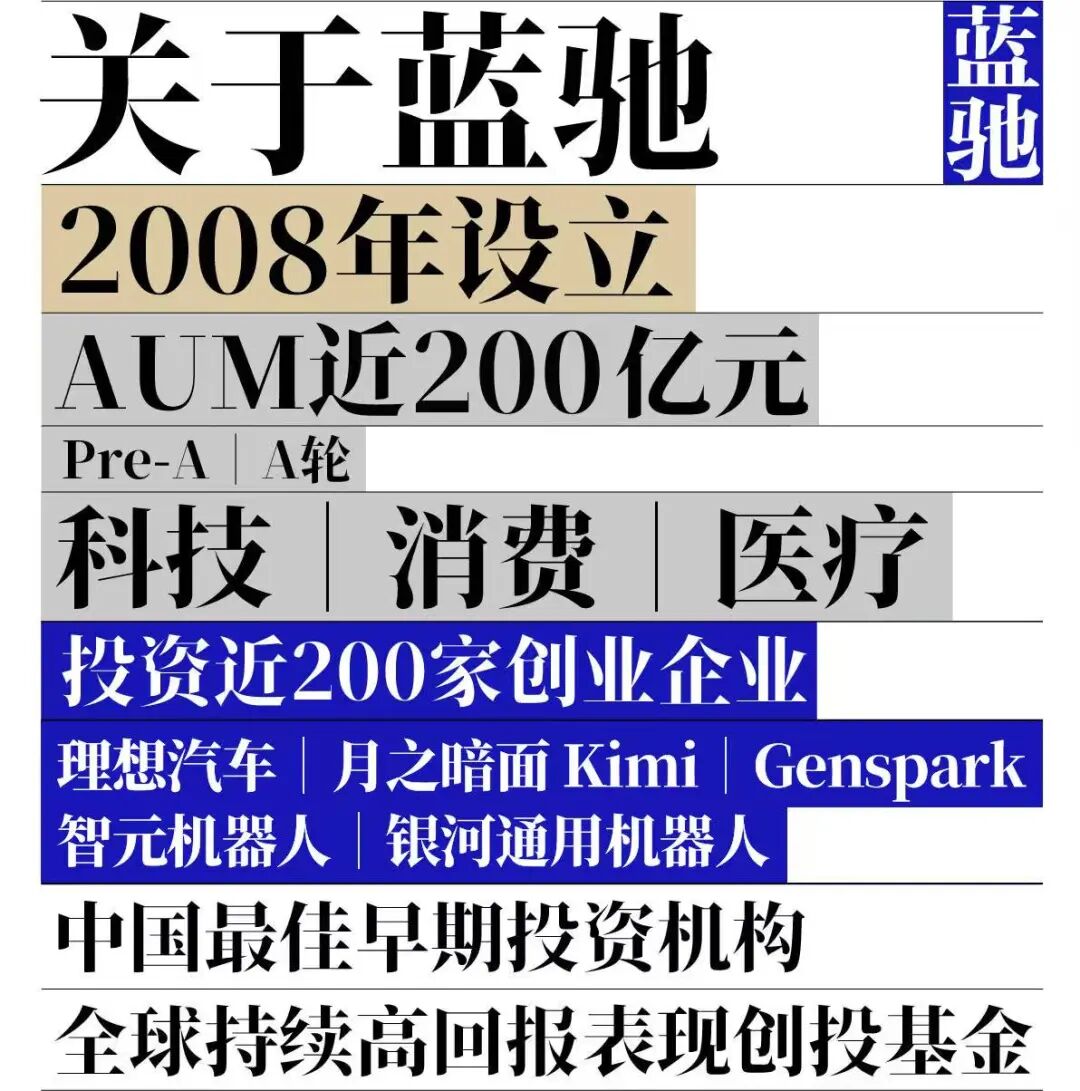
OriginFlow set a record by raising over 500 million RMB within just five months of operation. BlueRun chose to stand firmly with OriginFlow, not only leading the angel round but also adding to its position across three consecutive rounds, becoming a key investor.
At opposite ends of the roundtable sat two archetypes: on one side, one of the few early-stage VC firms in China to have hit top-tier foundation models, embodied intelligence, and applications; on the other, the kind of founder who shines brightest in the AI era — a Gen-Z Tsinghua PhD candidate, leading a team obsessed with cracking physical-world data, focused and pure in their mission.
After the panel, their exchange was compressed into a feel-good legend: they talked for just 30 minutes, and Terry invested in another wunderkind. "Another," because across Terry's two-decade investment career, there have been several founders who struck him with such force, with such certainty that he had to back them. He offered examples: Kun Jing of Genspark, Zhilin Yang of Moonshot AI, and Xiang Li of Li Auto.
But the noisy primary market hardly needs another legendary anecdote.
The real value of the BlueRun-OriginFlow investment story lies in what it represents: a rare breed of AI investing that is not FOMO-driven, not flashy — simply investor and founder, each following their own long-term methodology, simultaneously catching the same super-signal and recognizing each other.
OriginFlow believes in the power of data. It is obsessed with cracking the hardest bottleneck in embodied intelligence: the data loop, focused on laying the "foundation" of physical interaction data for embodied AI.
"If we truly believe Physical AGI is the last industrial revolution in human civilization, then we must complete a solid底层基建 process: widening the data collection funnel and efficiently uploading the physical interaction data from human production and daily life." This is Qin Shentao's resolve.
Early in his career, Terry Zhu once said: "Early-stage investors should be the founder's first investor — the one who puts real money on the table when things are most uncertain." He has lived by this.
What supports Terry's willingness to move early, precisely, and decisively is a particular conviction —
"Early-stage investing cannot rely on simple judgments based on a project's own information. It requires the investor to develop their own structured framework for the challenges the world currently faces and the problems that need solving." Once the framework is in place, when the right signal appears, there is no need to hesitate.
Terry's judgment of people, beyond methodology, has an intuitive dimension.
During one casual conversation, this founder with an impeccable résumé revealed another side of himself: from childhood, he felt the entire exam-oriented education system was hollow; in his final year of high school, he simply took a leave of absence to contemplate life. That year, Qin Shentao read the I Ching, read about Elon Musk's darkest moments, watched The Legend of 1900 — taking in information multidimensionally, like a large model.
The Legend of 1900 gave him a counterintuitive insight. In Qin Shentao's reading, the piano has finite keys, yet the pianist has infinite choices, can play infinite compositions; the land, by contrast, is like a piano with infinite keys, and it is precisely because there is no way to choose that 1900 never steps onto land.
Qin Shentao's choice was the exact opposite.
"After watching The Legend of 1900, I was deeply inspired — and decided to step onto land," he said. "I think an infinite piano is quite interesting too."
He is not the pianist of 1900. He chose to step onto land, designing his own reward function.
"Would you rather be like Qin Shi Huang, founding the most powerful nation from the start, or like Zhu Yuanzhang, beginning with nothing but a bowl? Many would choose the former, but from a gaming perspective, the most thrilling is the latter." Terry Zhu was struck by this line from Qin Shentao.
Today, Qin Shentao is playing an infinite game in the physical world. This young founder has arrived at an unprecedented moment in time; funding presents no real difficulty. Faced with surging hot money, what he must do is carefully choose the right traveling companion.
"When choosing who to travel with, you can distinctly feel the difference in their motivations." Who truly understands and has sufficient patience, and who blindly rushes in out of fear of missing the wave — this is what founder Qin Shentao weighs carefully in every funding round. As it happens, BlueRun has sufficient conviction, patience, and curiosity about Physical AGI.
At this conference panel, Terry Zhu shared his structured methodology for reading situations and reading people; Qin Shentao shared his frontline insights from the embodied intelligence industry. These ultimately point to one thing: how BlueRun and its portfolio companies, relying on long-term, stable values, recognize each other's worth.
Below are selected excerpts from this conversation.
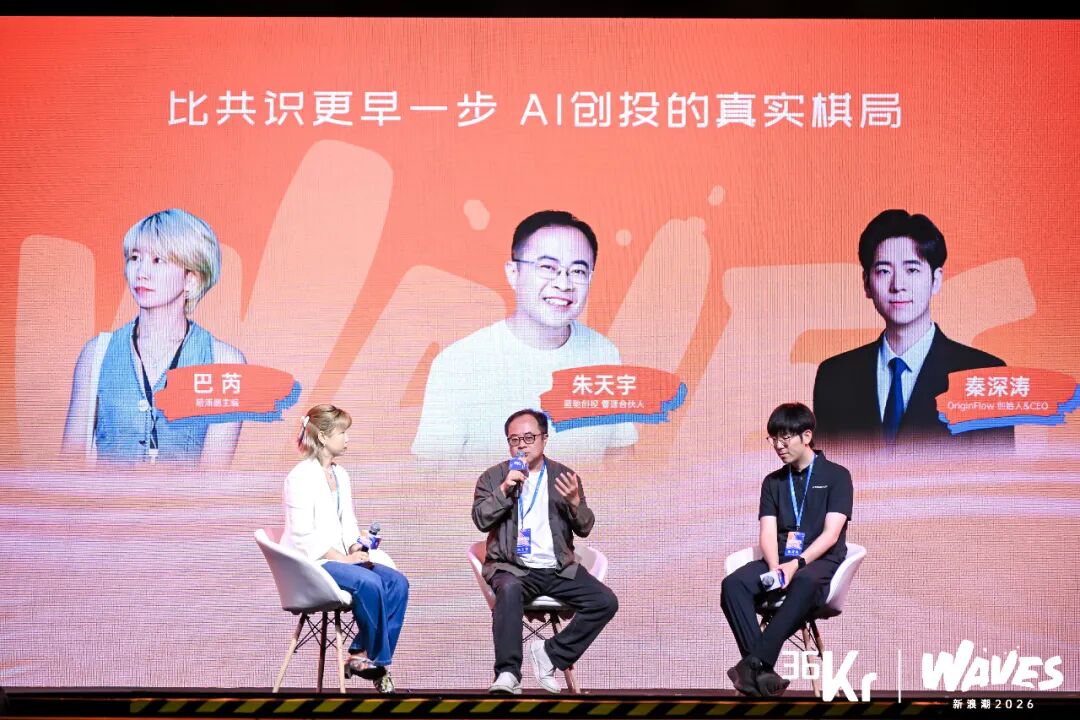

Moderator: I heard BlueRun sent a term sheet the same afternoon after a morning meeting, and that Terry actually made the decision to invest in just 30 minutes. What gave you the confidence to move this fast on this young man?
Terry Zhu: Why did I make the investment decision so quickly?
First, early-stage investing is not about making judgments based simply on the information and characteristics a project presents. It requires the investor to have developed some structured views on the challenges the world currently faces and the problems that need solving.
Roughly three to four years ago, around the time ChatGPT emerged, we articulated what we would invest in across several major cycles as "Three Waves Stacking" — three curves continuously叠加 together, corresponding to three driving forces: AGI, robotics, and 3D interaction.
As an early-stage investment institution, we can continue betting on these three driving forces as they叠加 over the next ten or even thirty years.
Shentao's research happens to align perfectly with these three driving forces. Electromechanical control and embodied intelligence are distinctly different: embodied intelligence mainly observes human hand movements and infers control through inverse kinematics from language. Shentao's team parses the data descending from the brain through electromechanical systems to understand the底层 control logic of human movement. From the perspectives of robotics, interaction, and AI intelligence, these angles perfectly match the key points we want to see, so this direction is extremely attractive.
Second, in that brief thirty-minute exchange with Shentao, I completely forgot his age. What I saw was a founder filled with passion for his chosen path, filled with problem-solving enthusiasm. Beyond that, his articulation of the industry and business, his judgment of people and things — his mental maturity far exceeded his years.
In those 30 minutes, Shentao made me feel at least two things: when describing the problem he wanted to solve, he started from the problem itself, not from "I want to be the first so-and-so" — the expression was fluid, the thinking thoroughly developed; additionally, we spent more time discussing the various choices he had made in life, and these choices to a great extent mapped what kind of person he is.
Later we invested across three consecutive rounds with substantial超额 investment, because after investing we discovered Shentao's exceptional ability in finding and converting talent, and recently a major hire joined — all important signals.
Investing in Shentao's company, the deconstruction of the thing and the deconstruction of the person, follows the same logic as when BlueRun invested in Li Auto and Moonshot AI. With Li Auto, we saw the direction of electrification and intelligence, realized third-party ADAS factories couldn't close the loop and only OEMs truly could, so we looked at it from the angle of intelligent data落地; with KIMI, because we had been following AI for over 10 years, paying attention to model companies from the 1.0 era before ChatGPT (3.5), continuously following at a deep and frontier level on the structural side of things. When this person and this thing appear before you, there is indeed a feeling of being struck — and it's exhilarating when that happens.
Third, Shentao's entrepreneurial direction fully leverages China's comparative advantages. This is the same underlying logic driving our fund's extensive布局 across multiple companies in the embodied intelligence space. China not only has advantages in talent density for artificial intelligence, but its comprehensive capabilities and industrial chain accumulation in manufacturing are self-evident. So from this perspective, from the angles of embodiment, data, and intelligence, using a软硬结合 approach to obtain data, inverse-engineer data, and understand the world — I think this is an extremely promising direction.
Moderator: Moving fast is no longer anything novel in today's primary market. You've said before that the real opportunity lies not in the speed of following trends, but in whether you can see structural changes earlier than others. Embodied intelligence has been so hot these past two years, and OriginFlow is right at the crest of the wave — 500 million in five months. In making the decision to invest in Shentao, how did you judge that you were seeing structural change clearly rather than being carried along by the hype?
Terry Zhu: The "Three Waves Stacking" framework I mentioned keeps pushing us to ask: what new opportunities will these driving forces catalyze?
For example, we've been looking at the embodied direction for a long time, and the data problem has always been a universally difficult point — as Shentao just said, everyone is looking for a better way to collect data.
Shentao's solution can naturally download the brain's stream of consciousness directly during human activity, beautifully achieving "making money while making data."
From another perspective, the biomimetic angle: humans are remarkably perfect machines. The entire brain processes so many complex problems on perhaps just 10 to 20 watts of power; the whole human body operates on just over 100 watts. Achieving such complexity with such extreme efficiency — biomimetics offers numerous perspectives we can draw upon to think about the value of achieving artificial intelligence.
So structural thinking both stems from the large framework we mentioned and comes from the habit of thinking with questions in mind.
Founders, in my view, fall into roughly a few categories. One type comes with labels: I want to be China's so-and-so, I want to be number one in such-and-such赛道, I want to build a 100-billion-market-cap company. Another type of founder often says: I discovered a problem, I think there's a category of user needs that aren't being met — they come from a problem-solving perspective, not chasing a label. These two types of founders have different starting points, which lead to different behaviors and choices across the board. I actually favor the latter.
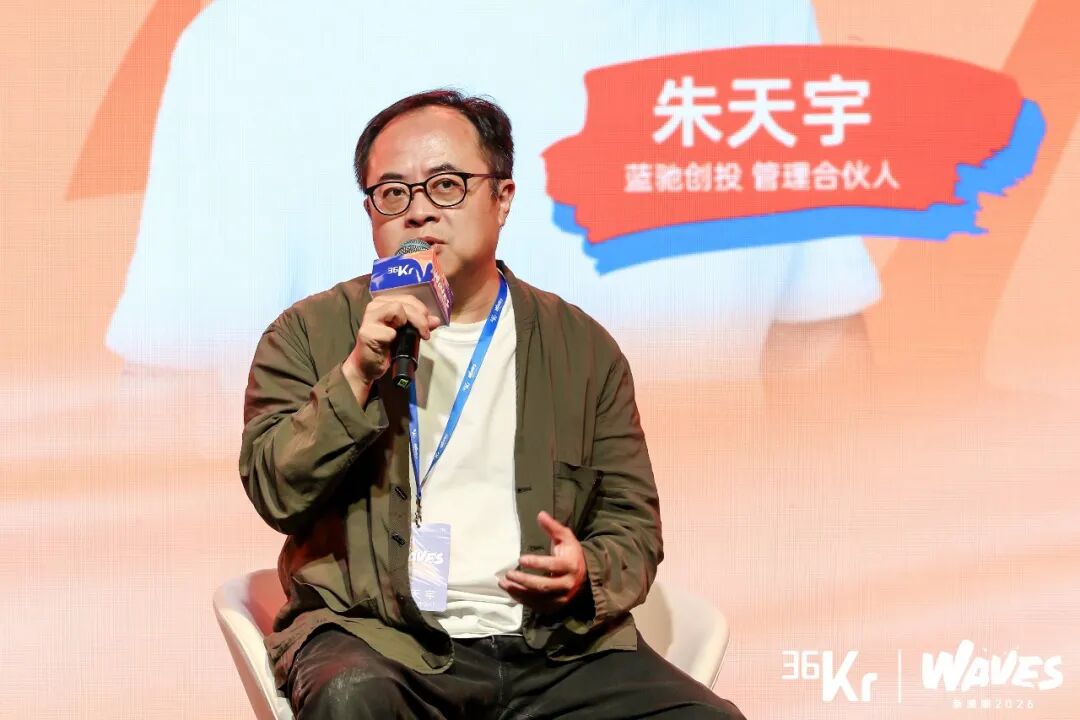

Moderator: Shentao, from your perspective, what does an investor's "speed" actually look like? Was there any moment when even you felt it was too fast? And how do you tell who truly understands versus who rushed in out of fear of missing out?
Qin Shentao: The AGI scaling law was performing strongly in 2026, and we realized it was not only a firm conviction but could potentially completely reshape every cash-flow-strong industry in the market, overturning the entire table — so people like me have received an extraordinary amount of attention. We're somewhat fortunate; AI is at an unprecedented moment in time, so we haven't encountered many substantive difficulties in the funding process.
But there's a problem — if money pours in with the expectation that "physical AGI will have a growth curve similar to AGI in the short term," and after entering they discover they're actually in a longer plateau than expected, the inflection point arriving later than anticipated, what happens when this mismatch between expectation and reality causes high-growth expectations to crash?
So from the founder's perspective, facing surging money, I ask myself this question in every funding round: if one day we discover the cycle is longer than imagined, will the traveling companion across the table still have sufficient patience, sufficient curiosity — even without my explanation, able to thoroughly understand this process? This is the key to how we choose traveling companions across multiple funding rounds.
When you choose who to travel with, you can distinctly feel the difference in their motivations.
Investors fall into two categories. One says, "I've been thinking about this problem, and after seeing the solution I was struck like lightning" — the happiest moment in an investment career, and once found, they will spare no cost to secure it. The second category says, "There's a structural window here, everyone is charging in, and if my fund isn't on it I'll be anxious, I'll FOMO."
When both types appear simultaneously, the difference is that the first type can fully recognize "left-side signals" — you don't need to explain to them how large the productization and commercialization space is; they've already thought of it ahead of you. And the endgame they've envisioned isn't one to three years of steep growth, but consecutive years of steep growth. They can realize that physical infra not only faces this scarce structural opportunity of the present but also addresses humanity's most fundamental three demands — health, interaction, control; on this point, China has the opportunity to take the lead in building entirely new foundation models, and use this as a node to enter an entirely new stage.
As I recall, before our formal exchange, they (BlueRun) had already been thinking about this problem for many years, continuously searching for solutions. So when that solution collides with the other party's long-term questing state, you feel that no matter what fluctuations occur in the future, this is the person who should be chosen to travel with.
I have a particularly deep impression: at the very beginning, BlueRun provided the first loan, and I said I needed to spend two to three million to buy GPUs — the team was just starting and was making a heavy bet on compute infrastructure, and BlueRun didn't hesitate at all, with zero additional communication cost throughout. At the time I had no money to pay salaries; all funds went into storage and compute. So for us, choosing true traveling companions means those willing to support us in spending every dollar efficiently on "technical slope acceleration."
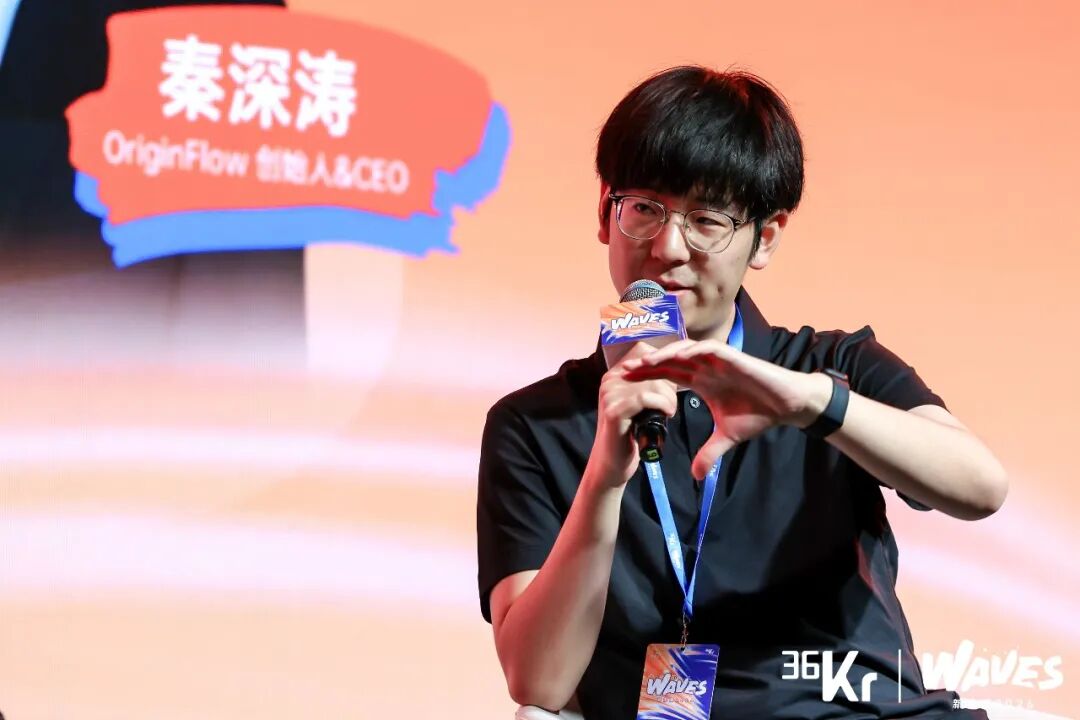

Moderator: Shentao, would you like to specifically introduce what your company does?
Qin Shentao: When we talk about AGI today, its development has mainly revolved around two modalities: text and video.
But what we face today is the third modality — enabling intelligent agents to make embodied interactions with the real physical world. True embodied intelligence has its core capabilities emerge after physical contact, which is fundamentally different from autonomous driving: autonomous driving is a typical contact-free scenario. Once physical contact is involved, you discover that how to precisely define and model "action" as a modality has not been deeply explored by the industry, and there is no mature facility capable of completing the corresponding upload.
Let me give you a simple data reference: there are 8 billion people globally, each awake for over 12 hours per day. If all human physical interaction data could be collected, it would generate nearly 100 billion hours of real physical interaction data daily. Meanwhile, the real interaction data currently used to train generative AI models may only amount to hundreds of thousands of hours — there is an order-of-magnitude gap between the two.
If we truly believe Physical AGI is the last industrial revolution in human civilization, then we must complete a solid底层基建 process: widening the data collection funnel and efficiently uploading the physical interaction data from human production and daily life. And this collection solution must be non-invasive — it must not interfere with natural human activity, must not affect normal production processes, and has extremely high requirements for collection tempo, precision, and long-term collection consistency. It must be a truly in-the-wild solution, not an in-the-lab solution.
Moderator: From the start of this year until now, the embodied intelligence field has been extremely hot, with funding exceeding 57.7 billion RMB, even more than all of last year. But more money has flowed toward robot hardware, large models, and algorithms, while you chose data collection, taking the relatively非主流 route of electromechanical signals. Many would say data collection is the hardest, most grueling work. What did you see that others didn't, that made you so determined to bet on this path?
Qin Shentao: We have a thesis today: in the wave of AGI, the value of a data company will be increasingly diluted, so after OriginFlow's founding it became more like an AI infra company (AI infrastructure company). The upstream of the entire embodied intelligence industry must be real industrial scenarios — they have clear needs for flexible production and efficiency improvement, urgently awaiting new technology to重构 production methods.
But from scenarios down to the model layer, there exists a critical missing link: how to abstract massive amounts of unstructured, high-precision-required, highly complex-detailed physical world information into high-quality prior features without interfering with normal production rhythms? This middle-layer technical supply is currently blank, and absolutely cannot be filled by simple data collection tools plus human operations.
The core question here is: in the process of data structurization, is the prior superiority of humans as experts fully preserved? Many current collection schemes have humans adapting to the machine's collection process, which in fact limits the fluency, proficiency, and skill ceiling of human physical interaction.
Today we see many so-called embodied robots that have supposedly landed in certain scenarios, whose actual operational capabilities are far inferior to an ordinary frontline worker — clumsy movements, low efficiency. Our goal is that AGI will ultimately achieve higher operational efficiency than humans in the same position, and leveraging the information transmission efficiency and bandwidth advantages of silicon-based systems, dramatically reduce the cost of flexible production. Therefore we cannot accept transitional solutions that compromise human skill ceilings to accommodate machines — this is the primary problem we must solve.
If we truly want to solve problems from the root rather than chase industry bubbles, we cannot use wishful-thinking solutions to alleviate problems; we must confront the problems themselves.
Confronting problems means extending the scope of work from seemingly elegant algorithm engineering to hardware, signal processing, non-standard scenario adaptation, production tempo, fine-grained control, data consistency — while also considering feasibility, completeness, and reliability of the solution. This is an extremely complex systems engineering project. This path is destined to be difficult, but it must be walked.
Second, this must be a full-chain, systematic engineering effort; single-point breakthroughs cannot solve fundamental problems.
This also determines that this company can be neither a pure AI hardware company, nor a motor neural interface company, nor a data operations company. It must be a Physical AGI (Physical General Artificial Intelligence) infrastructure company.
If downstream application scenarios are not thought through deeply enough, the middle-layer technical construction cannot close the loop. This is unlike many industry analogies; its ultimate form will be like the internet, like electric vehicles — a new tool deeply integrated into human production and life. Its product form may not be the terminal we are now accustomed to; just as the iPhone redefined the phone, we may need to跳出 the framework of existing forms.
Throughout this process, there is only one core thing to solve: how to continuously improve the system's signal-to-noise ratio through full-chain technical optimization across the chip side, infrastructure side, and model side. We have verified that signal-to-noise ratio follows scaling law in the development of foundation models, and motor parsing precision also follows scaling law. In-distribution parsing precision is comparable to any ground-truth scheme. And with continuous accumulation of data and technology, capabilities will further extend toward generalization — meaning we may for the first time reduce the cost of physical world data collection to zero, even achieving negative cost.
This is the ultimate solution for Physical AGI; any team that truly wants to solve problems cannot bypass this path.
Since it cannot be bypassed, we confront all the tedious, grueling engineering details in this process, and steadily solve problems from the root.
Terry Zhu: I'd like to add something here, as this is quite interesting.
You'll discover why OriginFlow quietly completed five funding rounds in just a few months. It appears to be neither a humanoid robot, nor a foundation model, nor anything describable by any familiar hot label — so why do people love this thing so much? In any major technology cycle, the big things that emerge start out looking highly controversial, highly different — like what we today call "non-consensus" — you can't tell what it is at first glance.
But if you apply the structural thinking I mentioned, strip away the labels, and look only at what problem it is truly solving, you discover it sits precisely at the intersection of the Three Waves Stacking: it has foundation model elements, robotics elements, 3D interaction elements.
This is precisely the future, so the possibilities it can grow into are extraordinarily broad. And precisely no one is doing this thing; only he is doing it. Putting this pressure in this place, it is highly likely to grow into something very interesting — perhaps in ten years people will know what to call it.
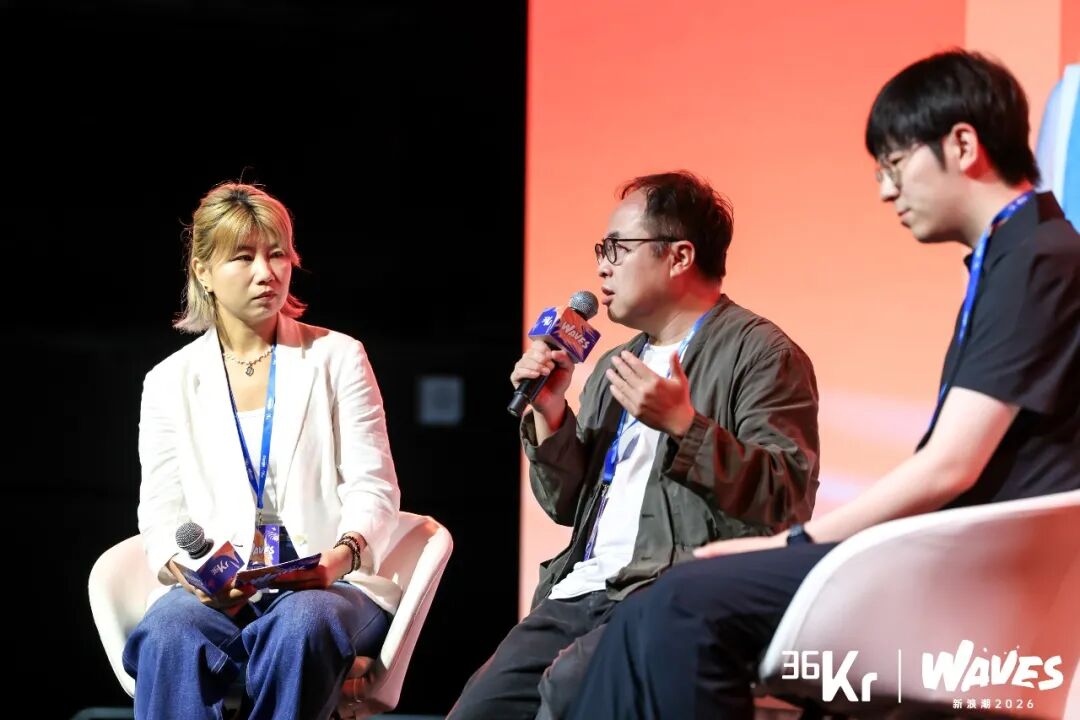

Terry Zhu: We've been partners for roughly half a year now. I want to ask Shentao: what has been your biggest personal change over the past six months?
Qin Shentao: Beyond expectations, there have been quite a few personal-level feelings. I was previously more of a tech-driven person; the company reached a scale of one to two hundred people in half a year. Below 100 people was the first phase — countless people were attracted by the thing itself, coming together without needing additional communication; beyond 100 people, because the business spans many domains, information barriers emerged between departments — content within professional domains was understandable, but cross-domain there were cognitive gaps. Yet this thing itself is a systematic engineering project, so getting people to spontaneously form consensus and coordination became extremely difficult.
And this difficulty wasn't just about differences in understanding the thing itself; to some extent it also concerned the organizational level of how to integrate and arrange people from different backgrounds. Anthropic's organizational model has a very classic role called Member of Technical Staff — whether you were previously CEO or CTO of a ten-billion-dollar company, here everyone has the same identity. There are no clear divisions of product, project, operations, marketing, R&D; everyone is a technical staff member. R&D personnel carry out work by writing code; product managers also carry out work by writing code; all output is delivered through code. This model forces everyone to view overall efficiency improvement from a systematic perspective.
We've made similar attempts internally — this is a part of organizational and human nature insight that I've had to deeply think about. We have an OriginBrain system internally, fully benchmarked against Anthropic's logic. On the other hand, to leverage industrialization advantages, we also have dedicated production line teams, completely delivery-driven, capable of攻坚 and落地 in very short timeframes. The pre-research team is very flat and agile, able to think about technical problems from an essential level. In organizational construction, our VP of People also has experience operating teams at the ten-thousand-person scale.
Terry Zhu: With so many heavy hitters joining, although everyone is attracted by your vision, could there be indigestion?
Qin Shentao: I find a particularly interesting point: when we bring in a heavy hitter, we don't attract them to join — we persuade them not to join. You repeatedly tell them this thing is very hard, the cycle is very long, very exhausting; it's not an opportunistic thing.
Terry Zhu: (laughs) Sounds like reverse PUA.
Qin Shentao: We always maintain honesty and transparency in recruiting. Compared to short-term compensation returns, we care more about whether we share consistent long-term direction. Many joining partners are already A9, A10-level senior experts; they are willing to devote the next three to four decades of their professional prime here, firmly believing that OriginFlow will ultimately reach the endgame of physical AGI — this is the traveling companion we seek.
Terry Zhu: You can reverse-screen executives — I'm even happier now.
Qin Shentao: I want to ask: ten years, thirty years from now, what is your vision for OriginFlow?
Terry Zhu: This can be said very big, and there are traces to follow. You happen to stand at the critical intersection of several future technology cycles; you can extend in any direction — this starting point itself is a blessing. The next Apple, the next Tesla are both possible, because you are in both artificial intelligence and 3D interaction, and every interface更替 redefines a technology revolution. But however many paths there are, the greatest challenge always lies in people — the truly core thing is your own and your organization's self-iteration.
Speaking of which, over the past six months, what was the hardest trade-off you've made — about people, or about the thing?
Qin Shentao: Not to be modest, I don't need trade-offs about the thing — my intuition about it is very accurate. The hardest trade-offs come from people. The most painful is when you have very close friends in the running process, and due to organizational growth and development, you have to temporarily part ways with them on the matter. This is certainly very difficult; it means you have made a separation between your personal self and your role as company CEO, and after this separation, as long as you make decisions as CEO, you must be very pure.
Terry Zhu: So OriginFlow is on the road, just beginning — this is the necessary path to becoming the next Apple, the next Google.
Qin Shentao: This is a very long but very fun journey, and have fun — because eventually we will be a game changer.


BlueRun's Jui Chan in conversation with BAAI's Wang Zhongyuan, Galaxy Universal's Wang He, and MiniMax's Li Dahai: Long-term Value and the Next Curve in the Large Model Era 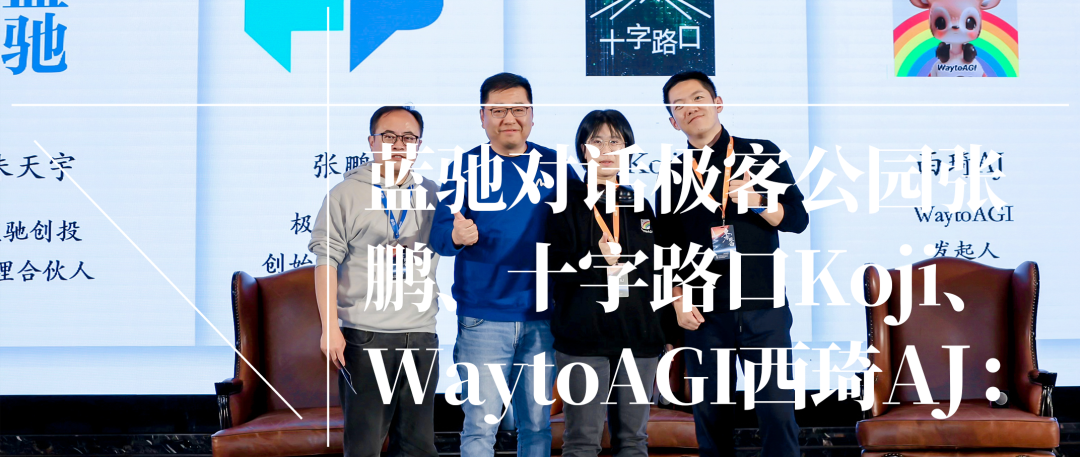
BlueRun in conversation with GeekPark's Zhang Peng, Crossing's Koji, and WaytoAGI's Xiqi AJ: "New Species" and "New Ecosystems" in the AI Wave 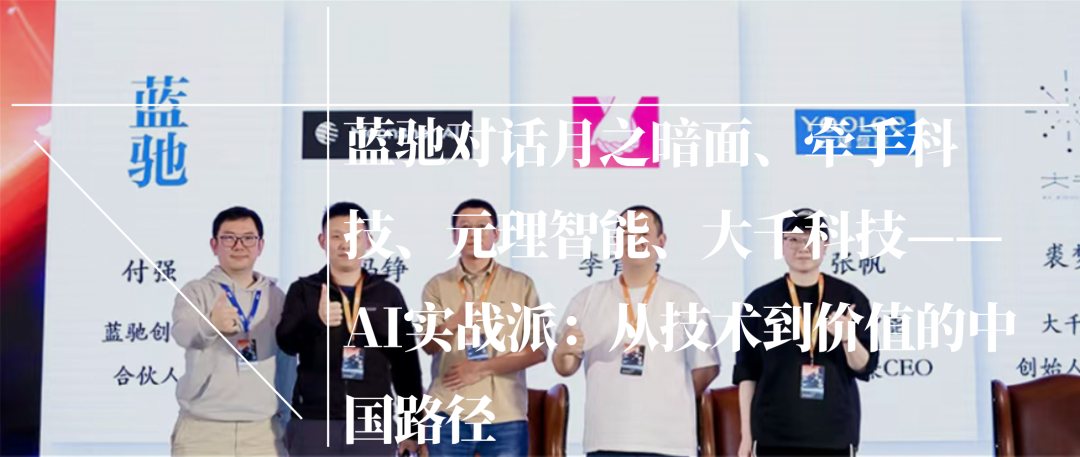
BlueRun in conversation with Moonshot AI, Qianshou Technology, Yuanli Intelligence, and Daqian Technology — AI Practitioners: The Chinese Path from Technology to Value