Peng Zhihui: The Most Robot-Like Human, Building Robots | BlueRun Ventures Family Headlines

Genius isn't a prerequisite for a career in robotics, but passion absolutely is.
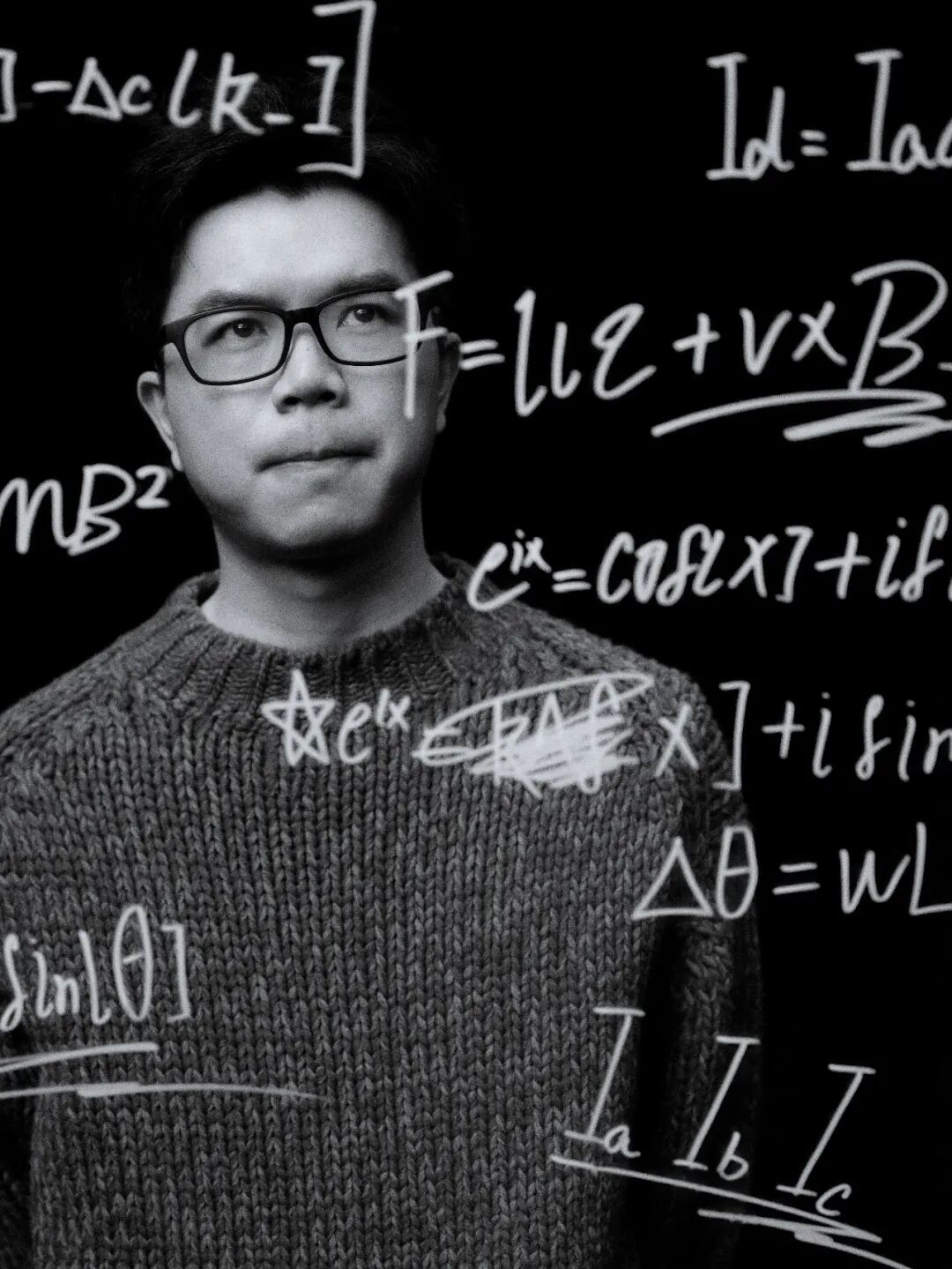
This article is republished with permission from Renwu (人物). By Xu Qing, edited by Zhu Liudi.
In the robotics race, AgiBot — the company founded by Peng Zhihui (aka "Zhiyuan Jun") — may be something of an "anti-common-sense" presence.
Founded in 2023, it entered the field later than many established robotics firms. Yet in just three years, it has rapidly risen to the industry's forefront. What's more unusual is that while most startups make trade-offs within complex technical systems and rely on supply-chain collaboration, AgiBot took a more "greedy" path: full in-house R&D across the board.
What drives this choice isn't purely commercial logic.
To many, AgiBot co-founder Peng Zhihui is a cool, rational geek. But dig deeper and you'll find a constant sense of urgency behind his actions — urgency about technology windows, about the pace of industry competition, even about the speed of human civilization's progress.
That urgency shows up in a nearly machine-like daily rhythm: eating just one dinner a day for years, sleeping only four to six hours nightly, and entering work mode within ten minutes of waking. He trains himself like he trains AI — logging experience, understanding principles, then attempting innovation.
Peng Zhihui hopes to be "the person willing to sacrifice everything to walk on the moon once again." In his view, "if no one pours their entire heart and soul into doing something they love, the world won't move forward."
BlueRun Ventures was an early investor in AgiBot and has continued to increase its stake in subsequent rounds. In a previous BlueRun annual AI outlook, Peng Zhihui noted that the key to future AI competition would no longer be just model scale, but "system-level intelligence" built from models, memory, tool use, planning and execution, and feedback learning.
We're republishing this in-depth interview from Renwu with the hope that AgiBot can truly achieve this "system-level intelligence."

The Most Robot-Like Human
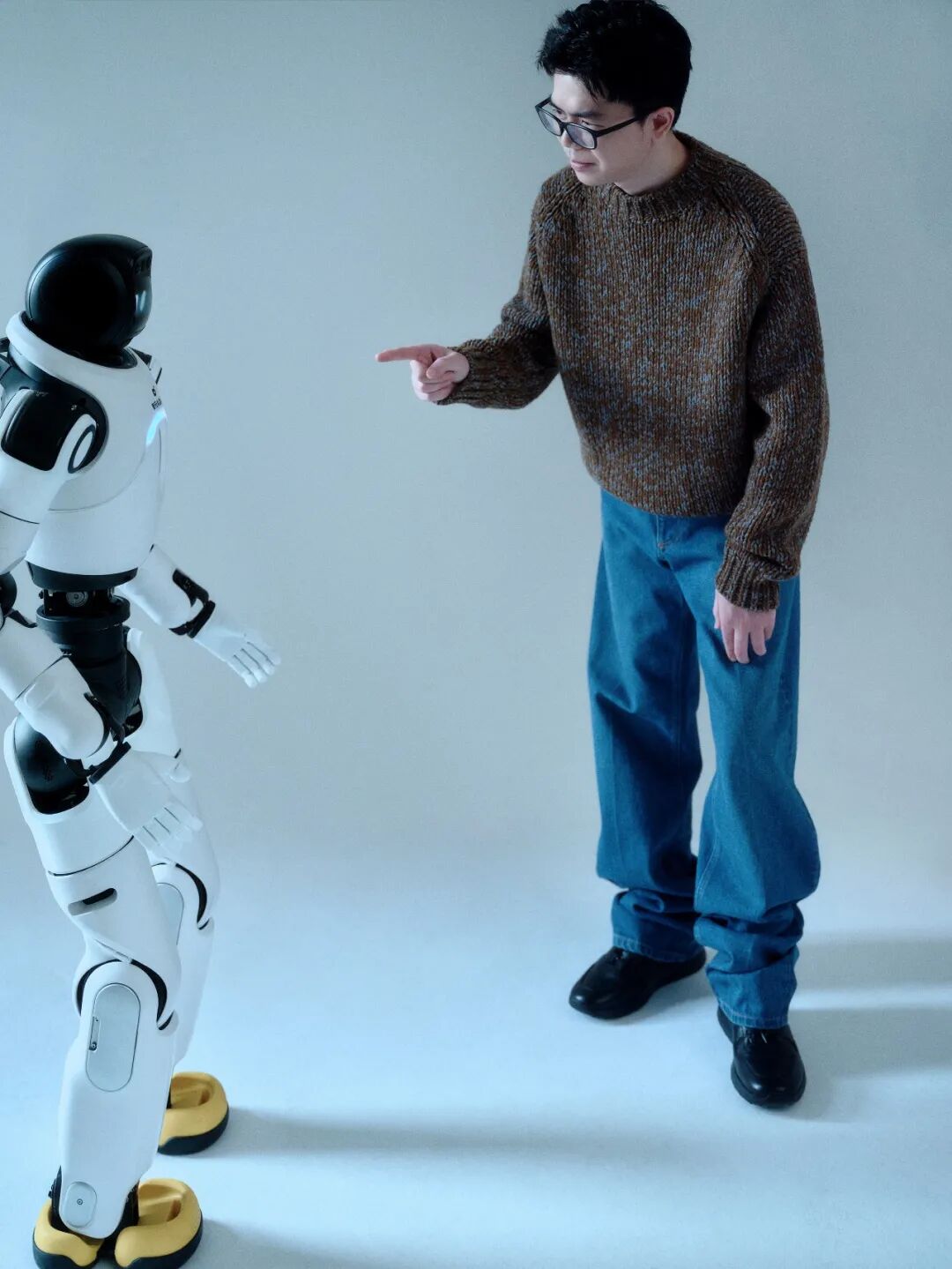
Zhiyuan Jun is 32 this year, of medium build. By nutritional standards, an adult male needs three meals daily, consuming 2,000 to 3,000 kcal. But on the day he met with Renwu, as usual, he planned to eat only one dinner. This habit began in college and continues to this day. Over nearly five hours, he participated in over an hour of filming, changed outfits three times, struck hundreds of different poses, then engaged in two hours of high-density conversation — about 35,000 words spoken. Throughout, he didn't eat a bite of food, drink a drop of water, or use the bathroom once.
Time is efficiency. When someone says this, it smacks of motivational cliché. But for Zhiyuan Jun, it's more statement of fact. In the eyes of his subordinate, the post-'95s boy Gai Hanfu, Zhiyuan Jun's day is different from ordinary people's: "He has 28 hours; he steals 4 extra hours from sleep." Gai has even discussed with others: Maybe Zhiyuan Jun has two bodies. Once one reaches its limit, "he goes to the nonexistent 10th floor of the company to swap in another body and keeps working" — bearing in mind that AgiBot's office building actually has only 9 floors.
The reason for saying this is that Zhiyuan Jun is in work mode from morning till night. No matter how late you message him, he's there. His WeChat replies are instant, even at 3 a.m. He handles R&D, management, and corporate representation at government events and industry conferences — yet still finds time to study the most cutting-edge technologies and knowledge. He has a body that never tires, one that's like a robot.
AgiBot's 79th employee, Bai Chunge, agrees. She once tried training robots in mapping capabilities. "Mapping" refers to robots automatically recognizing their environment and generating mental maps to guide action. After research, she discovered NVIDIA had released a new simulation platform where users could simulate robot states in software. Success in the software could then be deployed in reality, saving trial-and-error costs.
She made a PowerPoint and approached Zhiyuan Jun about this software, mentioning she hadn't used it yet: "This thing is very new; I'll gradually learn about it later." Originally, Zhiyuan Jun was focused on writing code. He immediately exited his program, found an icon on his desktop, double-clicked it, and said: "Take a look at how to use this."
That simulation platform had launched just days earlier; not many people in China knew about it yet. Bai was shocked. "He had this software on his computer and could open it directly — that means he'd used it at least twice." She considered herself "the person who's researched mapping algorithms the longest at the company," yet still lagged behind Zhiyuan Jun. She was baffled: where did he find so much time and energy to learn?
Beyond his body, Zhiyuan Jun's mental state also approaches that of a robot.
Two months after joining, Bai Chunge noticed that Zhiyuan Jun didn't seem to recognize her. Though he was the one who hired her and her direct supervisor, and she regularly reported to him in meetings and consulted him in the office, outside of work — whether in the elevator or other encounters — "he seemed like he didn't know me. I couldn't even greet him because his eyes were always cast downward, barely making eye contact, let alone conversation." In her view, this "robot" could only operate in pre-configured, specific environments.
Robots maintain emotional equilibrium at all times. Gai Hanfu says that no matter how difficult the problem, Zhiyuan Jun "has never even uttered a dirty word." Only three expressions appear on his face: calm; smiling; frowning while smiling. Gai once encountered "a truly bizarre problem" — despite every effort tried, the robot would suddenly lose power, collapsing to the ground like a person under anesthesia. When he fell into despair, his first thought was whether to change approaches. But Zhiyuan Jun calmly told him to keep trying: "It can definitely be solved. As long as it doesn't violate physics, there's no bug that can't be fixed."
Zhiyuan Jun's most frequently said phrase is "nothing escapes physics." It's like an incantation, a master key to all problems. "He analyzes rationally: if something follows scientific laws, it will be realized sooner or later — the process just might be a bit rough. He'd think, the sun must rise from the east; if it hasn't risen yet, it's because the time has not come. He has this conviction. Anyone might deceive him, but physics won't, logic won't, the laws of the universe won't."
Sub-human survival needs, formidable learning capacity, extreme rationality — these make Zhiyuan Jun appear to be a robot. On the interview day, when asked "do you think you're a robot," Zhiyuan Jun didn't answer directly. He paused, finally looked up, and frowned-smiled: "They might think so."
In fact, existing like a robot is both the natural selection of the endeavor he's undertaking — building robots — and his active choice in pursuing this path.
Zhiyuan Jun's company, AgiBot, is a unique presence in the industry. Founded in 2023, later than other leading robotics enterprises, it reached the forefront in just three years. AgiBot moves fastest and is the most "greedy." Robotics involves multiple sophisticated technologies; most startups pour limited resources into key directions and collaborate with suppliers for other parts to reduce R&D costs. But AgiBot demands full in-house development.
At this company, Zhiyuan Jun is not only co-founder and manager, but also its public face. His identities as "former Huawei Genius Youth" and "Bilibili Hundred-Up Host" draw media and netizen attention to his and AgiBot's every move. He's also the soul of the R&D team, AgiBot's CTO. The company's first prototype, "Expedition A1," was led by Zhiyuan Jun himself, with much of the code typed by his own hands. Inside AgiBot is X-Lab, an experimental lab exploring new technologies and ideas that emphasizes engineering culture, flat management, and no constraints — steered by Zhiyuan Jun. It was from this lab that Lingxi X2 emerged, now AgiBot's most mass-produced robot. By late 2025, Zhiyuan Jun gained a new identity — AgiBot acquired a listed company, and the 32-year-old became its chairman.

Losing Appetite and Sleep
At such a robotics company, Zhiyuan Jun has eliminated appetite and sleep from his life. He long-term eats only one dinner, ordering takeout and consuming it alone at his desk or in his car. His work and life have no boundary; his home is near the company, and within ten minutes of opening his eyes in the morning, he's in work mode. He consistently sleeps only 4–6 hours, catching naps during daytime gaps. On this particular day, during the 20 minutes of makeup preparation, he lightly dozed off.
Bilibili host Xikii Factory Owner is Zhiyuan Jun's good friend; everyone calls him Xiaoxi. In his impression, "Zhiyuan Jun's style is being urgent about everything, yet very planned... meaning once he says start, he starts immediately, and produces results quickly." Since 2017, Zhiyuan Jun would invent strange, hardcore products in his spare time: a TV the size of a coin, a mini robotic arm, a self-driving bicycle... building while filming videos, posting them to Bilibili. Netizens said his videos were too technical, beyond human imagination — "can only understand the beginning and end." Those videos brought him over 2 million followers and the title of Bilibili "Hundred-Up Host."
Xiaoxi also liked tinkering with strange, interesting things. Years ago, before any brand made mobile power banks, he built one himself. Around 2021, these two technology enthusiasts first chatted via Bilibili private messages, then added each other on WeChat, discussing "robotic arms," "workbenches," "six degrees of freedom on 3D joysticks" for long stretches.
Their first formal collaboration was when Zhiyuan Jun wanted to build a self-driving bicycle. At the time, Zhiyuan Jun had graduated just two years and was working at Huawei, busy with single-day weekends. Only during the May Day holiday could he concentrate on personal projects.
Time was limited. On April 25, Zhiyuan Jun messaged Xiaoxi on WeChat that he had no drawings yet, but parts had to arrive by May 1. "All custom parts, very troublesome." Every factory refused — the timeline was too tight, impossible to deliver. That's when he found Xiaoxi, who had opened a several-thousand-square-meter factory in Guangdong to more conveniently produce his keyboard products.
Xiaoxi thought about it and accepted: "I said alright, I'll help you sort it out, after all it's my own factory." He worked overtime to custom-produce parts for Zhiyuan Jun, finally catching SF Express's last departure truck at around 11 p.m. on April 30, shipping to Shanghai. On the first day of the holiday, Zhiyuan Jun received the package and began work. A month later, he posted the documentation video on Bilibili.
A screenshot of Zhiyuan Jun's 2021 autonomous bicycle video. Source: Bilibili
Before starting his company, Xiaoxi had discussed major life decisions with him — marriage, children. Zhiyuan Jun said: "Let's put that aside for now. Career first, family later." His personal life took a backseat to work. He frequently traveled to Shenzhen on business, yet rarely saw his parents who lived there, only calling them occasionally.
Zhu Jie, vice president of AgiBot, joined the company in early 2025. Her first collaboration with Zhiyuan Jun didn't happen inside the company, but at an important government inspection event. That day, Zhiyuan Jun was representing the industry to showcase the company's products and the sector's development level, and Zhu Jie accompanied him.
In the month leading up to it, Zhu Jie had asked him many times on WeChat: "Will the demo project work?" Zhiyuan Jun's final reply was: "Can I get back to you in two days?"
It was a robot soccer-kicking demonstration — extremely challenging by the industry's technical standards at the time. Zhu Jie didn't hold out much hope. "He's always been conservative, and didn't set my expectations too high." When she asked one last time, Zhiyuan Jun simply said offhandedly: "Should be fine."
Only later did Zhu Jie learn that, in order to present this new project at an extremely high-profile government reception and optimize it to the best possible effect, "he had been so absorbed that he probably pulled two all-nighters. Actually, when he replied to me, he had already finished developing it — his tech was already ready."
Zhiyuan Jun's disappearing appetite and sleep brought surprises to those around him. That video documenting the unmanned bicycle received 5.208 million views and 463,000 likes. Netizens commented that what would take a big company's team years to accomplish, Zhiyuan Jun had done alone — the origin of his other nickname, "full-stack overflow engineer."
And on the day of that important government event, Zhiyuan Jun uncharacteristically changed out of the hoodies and casual pants he wore year-round, putting on a complete suit, styling his hair in advance. The on-site demonstration went off without a hitch — their robot performed flawlessly.
The day before his interview with People, Zhiyuan Jun flew from Shanghai to Beijing. As deputy director of the humanoid robot standards committee, he attended an industry seminar at the Ministry of Industry and Information Technology. That evening after it ended, he flew back home to Shanghai, where he still spent some time coding. Early the next morning, he first went to the company for meetings, checking project progress with his subordinates, then came to the photo studio. After the shoot ended, he had to rush to his next work engagement.
This kind of schedule made him extremely sensitive to time. He repeatedly confirmed when the shoot would start and end, asking three times whether it could be compressed. That black digital watch on his wrist — he glanced at it every so often. Two minutes before our agreed end time, he looked down, apologetic yet clear: "Time's almost up."
Losing Emotion
Next to be stripped away was emotion.
August 18, 2023. At AgiBot's Shanghai headquarters, a product launch was underway. The robot named "Expedition A1" was about to take the stage. It was AgiBot's first product — 175cm tall, 55kg, with over 49 degrees of freedom throughout its body, capable of bearing 80kg, able to understand and execute human commands.
The launch of Expedition A1 was meant to boost team morale, and also, since AgiBot's founding, to prove for the first time to capital markets that AgiBot had sufficient strength. Below the stage, dozens of cameras were set up, livestreaming to millions of viewers, investors, and partners in real time.
Zhiyuan Jun was the first on stage. He wore a black T-shirt and black-framed glasses; the dark circles under his eyes had been carefully concealed by a makeup artist. In the months before this launch, Zhiyuan Jun had poured everything into the Expedition A1 project. Bai Chunge recalled that during that period, "the robot's physical form was already there, but circuit boards kept burning out, hardware was unstable." We might find it hard to understand, but the simplest human action — walking — turns out to be surprisingly difficult for robots. The R&D team worked hard to optimize motion control algorithms, hoping the robot could steadily walk on stage and perform specific movements.
Once the plan was set, "Zhiyuan Jun held meetings with everyone in R&D every morning, going over progress. Basically every small detail was tracked by Zhiyuan Jun. You could say he completely designed the robot, then broke down the work and distributed it to everyone."
Zhiyuan Jun walked to center stage. Facing the audience, he spoke rapidly, introducing Expedition A1's powerful capabilities. The event also played a video: Expedition A1 working on an automotive production line, assembling parts, wiring and gluing, moving materials; and at home, assisting elderly people with medication, tutoring children with homework.
If you listened carefully, there was a slight tremor in Zhiyuan Jun's voice. In fact, just before going on stage, he had received the worst possible news: several pre-prepared Expedition A1 units had fallen one after another, collapsing limply on the ground. A group of R&D personnel surrounded the robots like they were surrounding fainting children, performing emergency repairs. A colleague told Zhiyuan Jun: "Try to stall for time."
The cameras had started rolling, the livestream already begun. "Once on stage, there was no retreat. I still had to sell everyone on the vision online, making the live presentation sound great, while the robots were still being repaired backstage."
Zhiyuan Jun had mentally prepared for failure. For a launch this big, there was a Plan B: "Just play the video, don't let the robot on stage." He also knew clearly that at this point in 2023, the entire industry hadn't truly even gotten started. In less than half a year, building a team from scratch and assembling a complex humanoid robot that could actually work and walk was nearly impossible.
Until the 27th minute after he took the stage, a team member below flashed him an "OK" gesture. Zhiyuan Jun showed no expression, only thinking to himself: "That's my team." His face finally relaxed, and he said: "Let's welcome our robot and my R&D team to the stage with warm applause."
Next, Expedition A1 slowly walked on stage. Its pace wasn't fast, but it steadily made its way to Zhiyuan Jun's side. The audience erupted in cheers. AgiBot's R&D team gathered around, surrounding Zhiyuan Jun and Expedition A1.
The project succeeded, but under Zhiyuan Jun's leadership, no one indulged in the euphoria, no one went to celebrate. Everyone stayed at the company, analyzing why the robots had malfunctioned, checking code line by line. After that, nearly a month passed before Zhiyuan Jun gave out bonuses, time off, and organized a team-building event.
Zhiyuan Jun and the team at the Expedition A1 robot launch, August 2023. Source: Zhiyuan Jun's Weibo
Things didn't end there. Inventing and creating is different from entrepreneurship. Inside any company, there are shifts in power, tensions between commercialization and technology, disagreements over strategy and vision. Expedition A1 launched successfully, but internally, executives didn't see it as a successful product — only the most basic prototype. The reasons: it wasn't stable enough, wasn't standardized enough, didn't meet mass production standards.
This was brutal, yet necessary. A company's survival requires considering multiple dimensions: technology, commercial returns, mass production feasibility, market validation — none can be missing.
After Expedition A1, Zhiyuan Jun's R&D path wasn't smooth sailing either. The next-generation mass production model, Expedition A2, couldn't lock in its design for the longest time. Core components, the joints, failed to meet mass production requirements. The algorithms team even briefly lacked enough machines to debug. They also developed a wheeled robot, but "when they tried to navigate it, they found it couldn't even leave the lab, because there was a 2mm step at the lab door that the wheels couldn't get over." That wheeled robot had little possibility of mass production and was internally rejected again.
Zhiyuan Jun explored and reflected. He pulled his main focus back from Expedition A2, and in mid-2024 established X-Lab, taking his partners down a different path to develop new products and new features. Emotional pressure, frustration, anxiety — none of these ever appeared in Zhiyuan Jun's expressions. Bai Chunge remembered, "If you had to say how pressure manifested in Zhiyuan Jun, he might occasionally become a bit more talkative. It wasn't emotional venting — he would keep bringing up how to solve this problem."
When X-Lab was first established, there were only two people. Zhiyuan Jun invested enormous energy to develop a smaller robot — the Lingxi X series, with X standing for X-Lab, the place where this product was conceived. The first product was Lingxi X1. Internally, the company hadn't held high hopes, setting a production target of only 200 units.
But in just half a year, Zhiyuan Jun optimized and iterated Lingxi X1 into the more stable, better-performing Lingxi X2 — suddenly making it a hit. According to market research firm IDC's Global Humanoid Robot Market Analysis report, in 2025, AgiBot shipped 5,200 units, ranking among the top in market share, with over half of that volume coming from the Lingxi X2. Bai Chunge said, "Zhiyuan's iteration speed is terrifyingly fast." What drove Zhiyuan Jun was urgency — competitors were all moving forward. Without faster optimization and strategic decisions, AgiBot would fall behind.
What Zhiyuan Jun excels at most is finding the optimal solution within complex problems. There's a type of algorithm called optimization algorithms: constructing a value function to find the optimal value for the problem it solves. It's like a fluctuating curve with many local minima and one global minimum across the entire curve. The difficulty of optimization lies in jumping past local minima to find the true optimum.
Bai Chunge offered an analogy: "Facing a huge pond with many small depressions at the bottom, someone might think one small depression is the optimal solution. But he can keep jumping out of small depressions until he finds the biggest one — that's the true optimal solution. He jumps out of depressions faster than others."
Zhiyuan Jun had experienced failures, but in interviews, his narrative differed from external perspectives. He didn't see them as failures, because setbacks are阶段性 (phased); if the result is good, it's success. He quickly added: "I might have some selective memory. What I generally remember are the better, normal things, because accumulating too much negative stuff isn't conducive to continued progress. You need to treat life as a curve of constantly calibrating direction, not a real-time ledger of wins and losses."
Zhiyuan Jun at the Expedition A1 robot launch, August 2023. Source: Zhiyuan Jun's Weibo
Losing His Name
Long before he lost his appetite, his sleep, or his emotional equilibrium, the first thing Zhiyuan Jun lost was his own name. Zhiyuan Jun was born Peng Zhihui, and in the labyrinth of the internet, he replaced himself with two simple homophones. "Zhi" carries a childlike innocence; "Hui" holds the promise of light.
After becoming an up主, "Zhiyuan Jun" supplanted "Peng Zhihui." When he left OPPO and was selected for Huawei's "Genius Youth" program, doing research on Ascend AI chips and AI algorithms, the "Genius Youth" label then eclipsed "Zhiyuan Jun." And when he founded AgiBot, "Zhiyuan Jun" and "Genius Youth" began alternating or appearing simultaneously — the up主 identity and the genius halo trailing him everywhere.
They sometimes propelled him forward. When recruiting, for instance, his posts on social platforms could attract talent with dreams of building robots. Gai Hanfu and Bai Chunge had both been his Bilibili fans, moved by his founding declaration: "Ten years drinking ice, yet the hot blood runs undimmed." Investors who'd watched his videos, who understood what he'd built, were willing to trust his technical capabilities in robotics.
Sometimes they were shackles. His account inbox overflowed with private messages — not just admiration, but accusations that he "must have a team behind him." While at Huawei, someone found his phone number through the company OA system and called to harass him. Another time, a professor from the National University of Singapore phoned to ask if he wanted to pursue a PhD, though he'd never considered it and had no idea how his contact information had traveled abroad.
He Tongxue ("我叫何同学") and Xingxing Wang of Unitree were constantly compared to Zhiyuan Jun in the public discourse. Whenever He Tongxue released a new video, commenters would speculate how Zhiyuan Jun might have done it differently. In news coverage, Wang's pace and Unitree's moves were measured against Zhiyuan Jun and AgiBot.
For a period, the AgiBot PR lead's central mission was replacing "former Huawei Genius Youth" in headlines with "Zhiyuan Jun" or "AgiBot."
Even inside the company, fame became a nuisance. When AgiBot launched new products, some colleagues' first thought wasn't how to showcase the product's highlights, but how to use Zhiyuan Jun as a gimmick.
Cao Wei is a partner at BlueRun Ventures and one of AgiBot's early investors. He's a post-80s type — glasses, athletic wear, radiating a bit of the same student-like energy as Zhiyuan Jun. After investing in AgiBot, friends constantly asked him: Is Zhiyuan Jun really a genius? Once, he organized an entrepreneurship camp, inviting founders to share experiences and bringing Zhiyuan Jun along. The moment the session ended, everyone swarmed to take photos with him, "like seeing a giant panda — every single person wanted a picture."
Cao Wei believes people's fascination with genius, their uncertainty about whether Zhiyuan Jun qualifies, stems fundamentally from fear of complexity. "When people see a very successful outcome, they struggle to perceive the complex process behind it, yet they want to give that complex process a simple attribution — so they resort to simple descriptions."
Living in the spotlight, Zhiyuan Jun learned to coexist with public opinion. Early as an up主, he'd track traffic and comments; later, he dared not. He understood clearly: "No one can make everyone like them — there will always be negative voices. At this entrepreneurial stage, more traffic offers no substantive help anymore; it only amplifies problems. So I say the ideal state is at the edge of the spotlight, where I was two or three years ago — that was the best."
Zhiyuan Jun stepped outside himself to examine "Zhiyuan Jun." At certain moments he saw himself as "a part" of the enterprise, learning to deploy his own name and title: if something handled by Zhiyuan Jun could maximize company interests and achieve goals quickly, he would ultimately accept it.
After founding AgiBot, his personal projects went dormant. His Bilibili account became essentially company property — every new AgiBot product, every new move, featured him on camera, then posted. He remained as he first appeared: student-like, sincere yet playful, speaking and interacting with unseen netizens, showcasing the robots around him.
Everything about Zhiyuan Jun, after AgiBot's founding and its first humanoid robot launch, evolved into a portion of capital market trust. Unitree struggled to raise funds in its early years; AgiBot did not. Zhiyuan Jun recalled that for a long time, "the team's biggest challenge wasn't how to secure funding, but how to politely decline people."
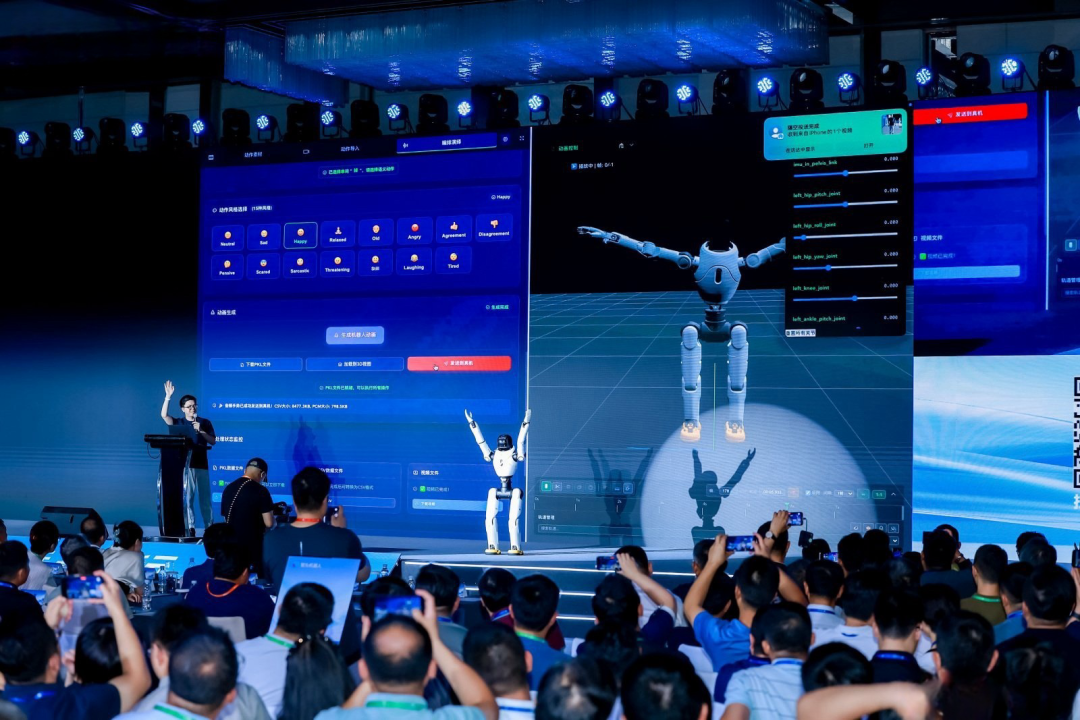
Zhiyuan Jun at an AgiBot product launch, August 2025. Source: Zhiyuan Jun's Weibo
Urgency
Was everything lost worth it? In a windowless makeup room, Zhiyuan Jun sat properly on the sofa, fresh from styling. He said: "The progress of human civilization and technology isn't automatic. People seem to think technology inevitably advances, eras inevitably progress — no. The last human moon landing was 1972, yet half a century later, no one has returned. Yes, without people devoting themselves wholeheartedly to things they love, the world doesn't progress."
What truly drives Zhiyuan Jun isn't achievement, profit, or anything else — it's an uncontrollable urgency. "I once agreed with the view that life's essence is slow combustion, because breathing is essentially slow oxidation, the same as burning. So for me, since it's burning, there should be something bright in the middle — that would be more meaningful. If a day passes without pushing forward on key problems, it feels wasted, and ultimately anxious."
On the timeline of human civilization, he wants to create maximum value within a limited life — a physically fragile human, doing a little foundational work for the birth of future intelligence. In the industry's reality, people, money, resources, and time are all finite; realizing visions quickly and doing them best attracts the most attention and leverages more resources.
Zhiyuan Jun's urgency mirrors AgiBot's exactly — they're racing to break industry records. He recalled: AgiBot's three years, 2023 was the R&D founding year, "proving we have a team that can build something"; 2024 was the mass production founding year, "we were the fastest in the industry to break 1,000 units"; 2025 is the commercialization founding year, "after building it, we must deliver value to customers and close the business loop"; 2026 will be the deployment founding year, "truly closing the loop in industrial manufacturing scenarios." Every task is completed at the industry's fastest speed, to the highest standard.
The deepest urgency stems from time's gap. Today's AI industry is led by young geniuses: Weng Jiayi, a core contributor to OpenAI's large models, is post-90s; Shunyu Yao, the chief scientist Tencent just poached from that company, was born in 1998; Yu Qiying of ByteDance's Seed team, first author on multiple important papers and currently most watched, is post-00s.
Compared to the previous era's entrepreneurs and geniuses, these young people were shaped and filtered by the internet and AI age, then amplified and remade. They accessed massive information early, understood how society operates, formed value judgments, found beloved careers. They are both the creators of artificial intelligence and those deeply influenced by AI's cognitive patterns — learning at superhuman efficiency, continuously evolving, then achieving enormous success.
Zhiyuan Jun still feels he started late. His parents were both cooks; the family wasn't well-off. They never guided him toward what to become, but gave him freedom to explore. If he overslept and was late for school, they'd drive him there — but he had to explain himself to the teacher. As a child, he was hands-on, scavenging materials from scrap yards to build inventions: "a cardboard box thing like a music box, but also a dragon that could move freely." Zhiyuan Jun understood early that he was responsible for himself; even with constraints, he had to find his own breakthroughs.
In college, his monthly living allowance was about 1,000 yuan — barely enough for food. He entered electronics competitions, winning countless awards that eventually caught HR attention from OPPO and Huawei at graduation. But the school required competing first, reimbursing costs later; initial startup funds came from his own pocket. His living allowance was often spent early on competition materials. In one extreme stretch, he survived nearly a week on just 12 yuan.
Like many children who grew up with limited resources: abundant curiosity and learning energy in childhood, but no guidance; only reaching college before systematically entering the field he loved.

Zhiyuan Jun in his university years. Source: Zhiyuan Jun's Weibo
On the day of our interview, the only emotion Zhiyuan Jun displayed was regret. He said: "If I'd encountered computers earlier, things might be better now." His greatest advice to young people: "Discover what you love as early as possible, then devote yourself to it."
This very regret fuels his urgency. He's acutely aware that compared to younger geniuses, he started too late. And of all resources, the easiest to mobilize is his own productivity.
He trains himself like training AI: referencing others' existing experience, first asking no questions, memorizing it, gradually understanding underlying principles, then actively innovating. He masters skills across domains, seeking correlations between them — something in one field might help explain a puzzle in another. He manages his time with an operating system's "preemptive scheduling" philosophy, dynamically prioritizing tasks. Not finishing one before starting another, but when something more important emerges, moving it to the front, completing it, then switching back. He does only one thing at a time, maintaining focus on each, thus maximizing time efficiency, pursuing results and effectiveness. He has gradually overcome human limited learning capacity, earning the nickname "full-stack overflow engineer" — from software to hardware, from AI algorithms to hardware materials, from chips to motors... his knowledge system spans multiple domains.
Such people are rare. "Engineering types rarely understand both software and hardware — software people may not know hardware well, hardware people struggle to grasp software," says Gai Hanfu. Zhiyuan Jun's knowledge breadth is "outrageously wide." One Bilibili fan once joked: Besides giving birth, what can't you do?
This ultimately constitutes Zhiyuan Jun's uniqueness among robotics entrepreneurs. Cao Wei was deeply impressed by AgiBot's Lingxi X2 product — its exterior isn't steel or alloy, but lightweight, environmentally friendly composite materials. Imagining himself as a user: "Very lightweight, giving a sense of security — bumps aren't so scary, you don't worry about it going out of control and hurting someone. You can imagine it becoming a member of the household."
At AgiBot, Zhiyuan Jun led the development of the "Lingchuang Platform." For most robots on the market, unlocking new skills required algorithm debugging — an extremely high barrier accessible only to university researchers and technical specialists, who also happened to be the most important consumer segment for robotics companies. But the Lingchuang Platform simplified this process. A person could simply stand before the robot, speak and gesture, and the robot would learn through its eyes and ears. Cao Wei assessed that the Lingchuang Platform dramatically lowered the barrier to collaboration, giving robots a real shot at entering ordinary households.
On the day the Lingchuang Platform launched, Zhiyuan Jun surprised everyone yet again. Zhu Jie remembered: "He hadn't mentioned it before. He only said it at the press conference — even we found out for the first time."
Genuine innovation remains rare in robotics. The industry is still in its infancy, and those building robots tend to follow well-worn paths — "find what's available in the supply chain, use whatever's there, copy what others do." But Zhiyuan Jun carved out a different route.
His inventions don't advance human civilization in the manner of a physicist's breakthrough. Rather, he learns the broadest possible knowledge and techniques within limited time, then like assembling Lego bricks, combines technology with user needs to create entirely new things. In Cao Wei's view, "He's an inventor without boundaries or constraints."
Zhiyuan Jun sees both similarities and differences between himself and Xingxing Wang. "He's also an extremely pure, execution-focused engineering entrepreneur. Where we're alike is our respect for the real world of engineering. Where we differ is that he tends to push engineering capability toward 'cheap and reliable,' while I'm more accustomed to first pushing system boundaries and technical possibilities far enough, then converging backward into engineering."
Passion Equals Pain
The thing one loves is a flame — it guides a person, circuitously, toward itself.
From a very young age, Zhiyuan Jun realized he was more drawn to what lay behind new things, or rather, to why something could happen at all. While others played games, he wanted to know how games were made; while others watched television, he wanted to know why screens could display images. He possessed an innate curiosity about the essential mechanics of how things work.
He joined Huawei not merely for the platform or better compensation, but because what it offered touched his curiosity — he felt Huawei was, at the time, the only company that had connected the full stack from底层 chips to middleware frameworks to application terminals.
Though Zhiyuan Jun recalls not knowing exactly what he wanted to do before actually starting his company, tracing back through his Bilibili account timeline reveals that as early as November 2017, he had attempted to build a "self-balancing robot." Thereafter, the word "robot" appeared with striking frequency in his video titles.
Xiaoxi also remembered that when he ran his factory, Zhiyuan Jun had said enviously, "If I had that much space, I'd build Gundams." By "Gundams," Zhiyuan Jun meant robots.
The longer Xiaoxi knew him, the more he noticed the difference between them. The things Xiaoxi wanted to make were all practical — like portable power banks, things you could actually use in daily life. Zhiyuan Jun's inventions followed no such utilitarian logic, yet they all related to robots. For instance, one video Zhiyuan Jun shared on Bilibili was about building a robotic arm — "A robot, at its most basic, can be understood as four robotic arms."
What triggered Zhiyuan Jun's entrepreneurship was a very small moment: In October 2022, Tesla released the prototype of its humanoid robot Optimus, with its black head and silver body, slowly waving and performing simple dance moves on stage. Some评价 that Optimus was the most human-like robot yet. It happened that shortly before this news broke, Zhiyuan Jun had already planned to leave Huawei and start his own company: "Tesla's launch made me more certain that the time had come."
Whether one can find that flame and make it burn more intensely depends on how much pain one can endure. Zhiyuan Jun has always felt that "People think if you love something, doing it must make you very happy, very joyful. But I don't think that's sustainable — you can't be happy forever. Willingness to endure some pain for it is true passion."
"The 'pain' here isn't emotional torment, but the real cost of repeated failure, slow progress, and delayed rewards that cannot be covered up by enthusiasm. What truly sustains you for many years is often something else — when you're already exhausted, when you can no longer see immediate feedback, you still can't let go."
As an extremely introverted person, management work wasn't his favorite thing. But as a leader, he couldn't avoid external expression: "No matter how brilliant your technology is, if you can't clearly articulate its value, logic, and potential, it's very difficult to attract the right talent, investment, or partners." When standing on stage to share his vision with everyone, he genuinely hoped to deliver on the "big promises" with them.
Bai Chunge observed that no matter the project, no matter how important or urgent, Zhiyuan Jun could rarely say things like other company bosses: "You must do this" or "You have to achieve that." He wasn't skilled at crudely wielding his authority, or perhaps was too embarrassed to do so. "He would occasionally ask, how's it going? Can we ship? This is already the limit, there's nothing more." Rather than pressuring others, he preferred when people proactively told him what they liked, what they wanted to do, and what support they needed.
At X-Lab and AgiBot, the employee survival logic is proactivity. "He won't force you. If you can immediately do what he wants, he'll keep coming to you. You deliver again, he comes again — you two keep communicating. But if your progress falls short of his expectations the first couple of times, he won't come to you anymore. Over time, that person knows they don't belong here and will want to leave," Bai Chunge said.
Xiaoxi felt he was Zhiyuan Jun's opposite. He too loved inventing and creating, but only the process of bringing a product into existence, that moment of success. Afterward — getting the product to market, managing supply chains, making money — held no interest for him. Unable to endure the subsequent pain, his factory struggled to turn a profit, losing money in recent years. The career he loved had, in some ways, trapped his present life. But Zhiyuan Jun kept enduring pain and walked much farther.
This became Zhiyuan Jun's standard for finding kindred spirits. When interviewing candidates, he would ask: If you were financially free, what would you do? Using "willingness to endure pain for passion" as his criterion, he筛选 employees, co-founders, and company investors.
Eight years ago, Gai Hanfu was a fan of up主 Zhiyuan Jun, working on trading systems at a Shanghai gold exchange, still in a contract position. He admired Zhiyuan Jun — how could one person have such imagination, such hands-on capability? He followed Zhiyuan Jun's open-source code and videos to teach himself. Over five years, he jumped from the exchange to a biomedical sensor company, self-studied embedded systems, collaborated with friends to develop a cycling computer, open-sourced it in the technical community, then sent his resume to the newly founded AgiBot. That open-source code was seen by Zhiyuan Jun.
Gai Hanfu enjoyed his work for two reasons: the sense of achievement — "No one else had it, I made it first, it runs, the code works, feels amazing" — and the joy of creation itself: "As a human being, to be able to create things that didn't previously exist in the physical world, through certain methods."
On his first day at AgiBot after receiving his offer, Gai Hanfu bought Black Myth: Wukong, then the hottest game. But he became so immersed in work that he never found time to play. "Now there's something more fun," he said — referring to his work at AgiBot.
In university, Cao Wei was also an esports champion, a national team member, carrying his mouse and keyboard to competitions everywhere. He'd win an NVIDIA graphics card in the morning and sell it at Zhongguancun that afternoon. Others marveled at his passion and talent for esports; he didn't think much of it. "I played games because I liked it, so I kept playing. Maybe because I played for so long, the people I used to play with stopped, and naturally I became number one."
But after becoming an investor, his gaming time dropped sharply, his cartridges gathering dust. Investing is composite work that sounds easy but actually consumes nearly all one's time and energy through learning, meeting people, research, and meetings.
The people around Zhiyuan Jun, like Zhiyuan Jun himself, endure pain, burn brightly, maintain passion. About the future of robots, Gai Hanfu often recalls agricultural channel programs: in a sugarcane field, farmers under scorching sun struggle to tear apart sharp leaves, pulling sugarcane from layered wrapping, easily cutting their hands. He thinks, "What kind of machine could go into the field and strip leaves? That's so hard. But humanoid robots could."
When Cao Wei speaks, he likes to push his glasses, as if adjusting the lenses lets him enter more distant and grand cosmic coordinates: "Humans are actually quite pitiful, right? Compared to other life forms, we may learn faster, but our bodies decay easily. Our planet exists for just a brief moment in the long river of cosmic history... But technology is actually the expression of humanity's ultimate desires — people don't want to work, so we need robots; people want to live forever, so everyone wants to develop brain-computer interfaces, send consciousness to the cloud, then download it into a robot carrier."
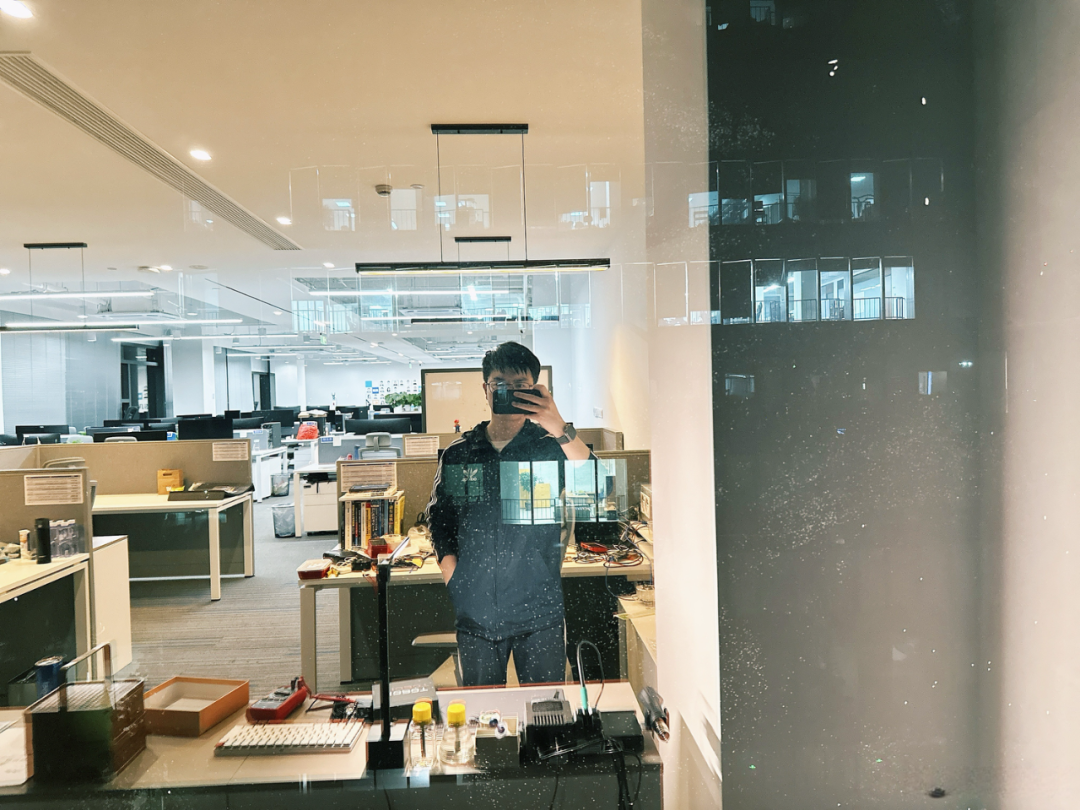
Late night, May 2023, Zhiyuan Jun at the company. Photo from Zhiyuan Jun's Weibo
The Breath of a Person
Yet at certain moments, Zhiyuan Jun still inevitably reveals a human气息 distinct from robots.
Though for a period after joining, Zhiyuan Jun wouldn't speak to or make eye contact with Bai Chunge, Bai Chunge recalled: "When did I realize he knew who I was? After the first press conference, he suddenly messaged me on Lark saying, you contributed to this project, here's a project bonus."
Zhiyuan Jun habitually observes quietly. He remembers what everyone has done, what they like. He knew Bai Chunge liked anime, so once when Bilibili held a gala and gave tickets to top hundred up主s, Zhiyuan Jun gave his ticket to Bai Chunge.
Last month, Zhiyuan Jun took 20 X-Lab members on a team-building trip. Though X-Lab had produced abundant results, the outing wasn't to celebrate anything — mainly because the company allots annual team-building budget that would reset to zero if unspent by year-end.
The 21 people were like students on an outing, walking to a nearby go-kart track. Once there, Zhiyuan Jun's competitive drive kicked in. Though no one let him win, everyone wanting victory, Zhiyuan Jun still finished first. He stepped out of his kart triumphantly. "How to put it? I felt like he couldn't suppress the corner of his mouth, but forcibly kept it down, not speaking, seeming to wait for compliments from those around him."
Whether as an up主 or as a company founder and chairman, Zhiyuan Jun maintains a natural equality toward people. When Xiaoxi's friend asked Zhiyuan Jun to help with a small circuit for a computer case fan, Zhiyuan Jun found time amid numerous obligations to make it for him.
Some time ago, when Lingxi X2 launched, Zhiyuan Jun contacted Xiaoxi again. Three years prior, when Xiaoxi's child was born, AgiBot had just been founded and the Expedition A1 was released; Xiaoxi's child had appeared as a young actor in that promotional shoot. Three years later, he wanted Xiaoxi's child to appear again.
There was no commercial calculus behind this collaboration. Xiaoxi's child received no payment for appearing on camera, and for Zhiyuan Jun, hiring a professional actor would have cost less than reimbursing airfare. But Xiaoxi understood perfectly: "He wants his growth, AgiBot's growth, and my growth and my child's growth to be intertwined — we're all witnessing this together. You had a child, and I had my 'child' too."
Amid the rapid burn, Zhiyuan Jun has rare moments of rest — when he's driving. When a project finally wraps up, he'll deliberately choose a distant restaurant just to have the drive. In the car, there's no work, no objectives, no anxiety — only flowing streetscapes and the hum of the engine, the world receding at a steady pace. Zhiyuan Jun presses pause on himself.
Zhiyuan Jun is certainly not a robot; he's simply the one who most resembles a robot. His existence upends many assumptions and raises many questions, but one thing is clear: genius is not a prerequisite for pursuing robotics, but passion absolutely is.
Robotics differs from pure large model research. This industry, spanning multiple disciplines and technologies, has only just begun, yet already faces the most demanding commercialization and market expectations, plus the fiercest competition. Those inside it are like performers juggling — stacking one irregular object atop another, finding balance, continuing to add, building higher and higher. Precisely because of this, the people building robots are not traditionally the most brilliant prodigies. Whether it's Zhiyuan Jun at AgiBot or Xingxing Wang at Unitree, neither came from Tsinghua or Peking University, neither won Olympiad gold, neither authored industry-changing papers — yet they've still gone remarkably far.
Looking back at his own path, Zhiyuan Jun always returns to one scene. He was born in a village in Ji'an, Jiangxi. When he was very young, his parents took him south to make a living in the city. There were no trains then; the long-distance bus took three days and two nights. He barely slept, just pressed against the window watching cars and pedestrians come and go, approach and depart. He himself wonders: "Why do I still remember those scenes?" But the feeling was like a bewildered child stepping into somewhere larger — and from that migration as foundation, he gradually found his way to center stage, in society and in life.
The next time he felt that way is now. The AI era blooms in riotous color. Inside the high-speed train of the times, large models were born and robots learned to dance. Someday, machines may become indistinguishable from humans, even surpass ordinary human intelligence. Zhiyuan Jun stands inside the train — both one of those driving it and an observer at the window. The child pressed against the window is still there; he's simply changed to a faster carriage. He watches, and he leads all of this forward.

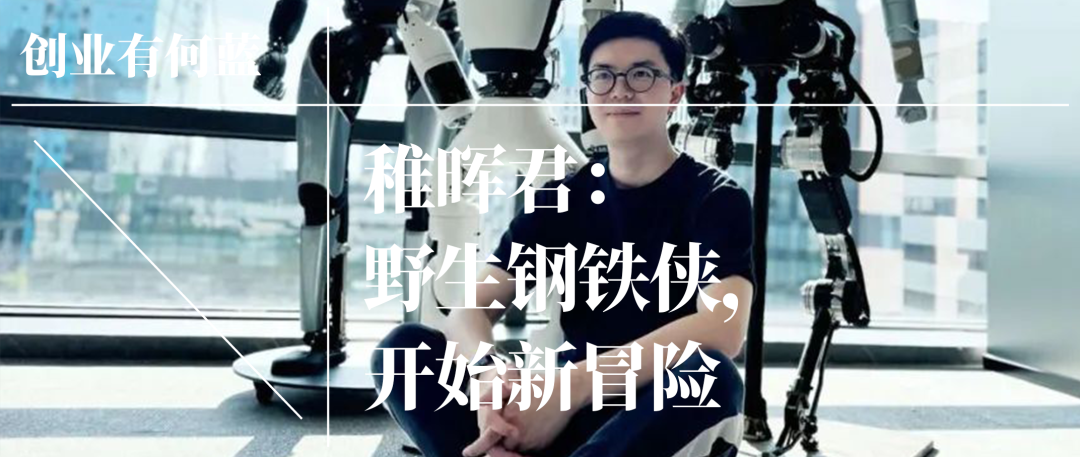 Zhiyuan Jun: The Wild Iron Man Begins a New Adventure | What Blue (You He Lan)
 Zhiyuan Jun in Conversation with BlueRun Ventures: Allowing Some Humanoid Robots to Enter Reality First | Booming Talk Coming Soon
 AI Shifts in 2026: How Will OpenClaw Affect AI Entrepreneurship? What New Changes for Models and Applications? | BlueRun Ventures Annual AI Outlook