PPIO's Wayne Wang: AIGC Triggers a Compute Demand Revolution, Edge Computing Will Profoundly Impact Audio and Video Generation

How Will Edge Computing Shape Our Lives Over the Next Decade
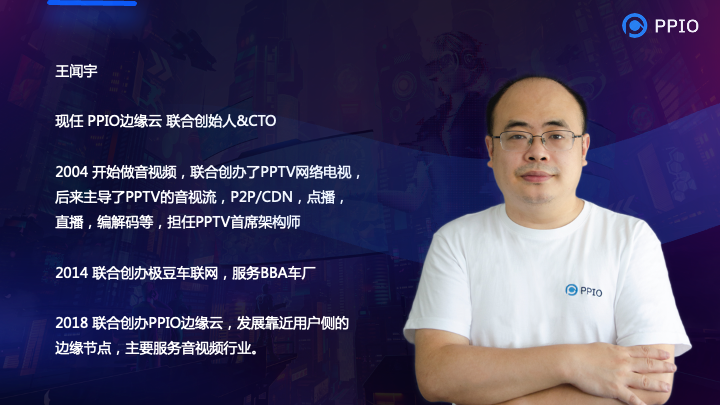
Recently, BlueRun Ventures portfolio company PPIO's co-founder Wenyu Wang was invited to TGO Kunpeng Society's "Face-to-Face with Big Shots" livestream, where he joined the host and Yameng Cao from Kingsoft Cloud to discuss the future of edge computing, real-world applications, and emerging paradigms.
During the conversation, Wang suggested that in the future, humans may achieve "what you think is what you get" through brain-computer interfaces and AIGC. In such scenarios, AIGC computing power would sit at the edge, 3D visual rendering would happen at the edge, and ultra-low-latency audio-video streaming technology would be essential. In other words, edge computing will play a crucial role in the AIGC era —
Q1: The Past and Present of Edge Computing
TGO Kunpeng Society: We've previously discussed SaaS-related technical topics, and today we'll explore edge computing. When it comes to edge computing, some call it decentralized computing, others distributed computing — what's the difference between them? Similar to metaverse, Web3.0 and other technologies, their underlying technology is blockchain. But how did edge computing emerge? What problems can it solve for us?
Wenyu Wang: Both distributed computing and edge computing relate to computing, storage, and transmission. I think edge computing is closer to decentralized computing, while distributed computing is typically used in scenarios like local area networks. The earliest edge computing project was SETI@home, a distributed computing project run by NASA in the United States that used idle computing resources from millions of home PC users to run SETI data analysis applications, searching for signs of extraterrestrial intelligence. Although the project ran for over 20 years, it failed to discover alien life — essentially because the most critical step was never taken: using the sun as a "super antenna" to amplify transmission power by hundreds of millions of times, broadcasting signals into the universe to attract the attention of other civilizations (here referencing The Three-Body Problem as a small joke).
Edge computing is a broad concept that involves not just computing itself, but also storage and transmission. Early on, CDN and P2P transmission were two representative products of edge computing. CDN improved webpage access speeds by deploying nodes closer to users; P2P transmission utilized network bandwidth and computing power between personal computers to achieve distributed file transfer and sharing. These forms of edge computing were relatively common before 2012. After that, the emergence of mobile internet and phone-centric internet usage made P2P transmission appear to decline on the surface.
Edge computing has now evolved to become further segmented and refined. Similar to cloud computing, various levels of services and application scenarios have emerged. Common edge computing services include SaaS, PaaS, and IaaS, each providing different levels of services and functionality. In the ToC domain, edge computing application scenarios are concentrated in the audio-video field, such as interactive livestreaming, real-time communication, cloud gaming, cloud VR, and AR.
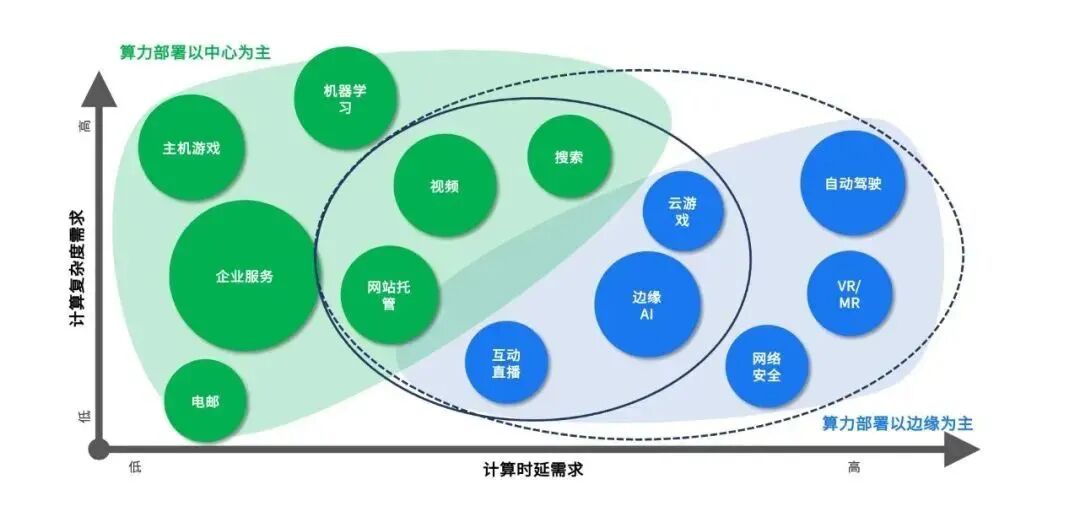
Yameng Cao: I'll talk about edge computing from a product perspective. I believe edge computing moves part of the client-side work to the edge to complete, rather than distributing services across server clusters. Edge computing is often placed under CDN teams because CDN technology is reverse proxy, positioned in the intermediate zone between server and client. As network speed and latency's impact on edge computing gradually decreases, edge computing has become increasingly popular — its edge nodes are not interconnected with each other. Beyond edge computing, there are other broad computing applications such as dynamic websites, dynamic content DNS, perimeter application firewalls, and dynamically accelerated content.
Q2: What Problems and Challenges Does Edge Computing Currently Face?
TGO Kunpeng Society: Early viewing experiences were constrained by server performance and reverse linking issues, as all network traffic went directly to servers before playback. With the emergence of P2P technology, these problems were somewhat alleviated. From the edge computing perspective, let's use PPTV's technology as an example to illustrate the evolution of P2P technology and its relationship with edge computing. This is similarly difficult to grasp as the relationship between blockchain, Web 3.0, and the metaverse. Could you both help clarify the current problems and challenges facing edge computing from the P2P technology angle?
Wenyu Wang: Although P2P transmission was a very hot topic before 2010, we rarely hear about its applications now. Instead, we more often hear about P2P in the financial sector. This is because P2P played a role in solving network congestion problems at the time, but other technologies have since emerged to address this issue.
The emergence of mobile internet is a primary reason for the decline in P2P transmission applications. When watching video on mobile devices, operating systems aren't as open as Windows — they can't keep background processes resident to upload data. Instead, mobile operating systems, whether iOS or Android, consider limited phone battery, storage wear issues, and device overheating problems, imposing many restrictions on background processes at the OS level. This makes it difficult for mobile devices to share data.
Meanwhile, the sharing economy model similar to P2P transmission has gradually evolved toward specialization. Thus, P2P transmission evolved from a "voluntary" sharing economy to a "commercialized" sharing economy. That is, it's no longer users transmitting data among themselves, but rather professional providers offering edge services, allowing ordinary mobile phone users watching video to only download without uploading. This gradually moved toward edge computing.
Speaking of which, edge computing faces the challenge of managing massive numbers of fragmented nodes, while also dealing with diverse demands and solving matching and scheduling problems. Here, we first adapted K8s into K8s@Edge to efficiently manage these heterogeneous and fragmented edge nodes, and developed AIDevOps@Edge technology using machine learning approaches. For different resource and task demands, intelligent scheduling and matching are needed to achieve optimal configuration, thereby reaching a balance of interests among all parties — this is the Nash equilibrium in mathematical game theory. Through this technology, we ensure all parties' demands are met and optimal configuration is achieved. If we get into details, this is quite similar to the matching algorithm Uber uses between drivers and passengers.
Yameng Cao: Enterprise users want to control the client side but lack the permissions and methods to do so. They can move applications to run on the edge to achieve control while avoiding piracy issues. The client gateway is just a player; actual processing happens at the edge.
I believe edge computing faces three problems: business returns, technical feasibility, and extreme performance optimization. For business returns, selling bandwidth or computing power through edge computing both have issues. Currently, selling bandwidth leads to customers driving prices down, resulting in low returns. Selling computing power hasn't found paying customers yet. Cloud gaming hasn't found a user payment model. For technical feasibility, moving clients up to the edge can avoid single points of failure, but edge computing nodes have limited negotiation with each other, possibly requiring more rigorous extreme performance optimization. It's worth noting that domestic client-side talent is scarce, and practitioners can pay more attention to edge computing technology and try new fields. For example, I encountered a problem two years ago: how to perform targeted synchronous updates of large amounts of game data in cloud internet cafes. This was difficult for some, but for us, it was simply solved using file systems and CF file systems. These are problems others will also encounter, so this is a great opportunity.
Q3: It's said that AIGC technologies like ChatGPT will trigger explosive computing demand — what impact will this have on edge computing in the future?
TGO Kunpeng Society: The recent emergence of AI technologies like ChatGPT has also sparked demand for computing power. Therefore, for technical practitioners, understanding and mastering edge computing and P2P technology will present great opportunities. Looking ahead, edge computing will have significant impact on computing power demand.
Wenyu Wang: In the short term, edge computing's role in AIGC development is still unclear, but the long-term outlook is optimistic.
ChatGPT is just a phenomenal product in the AIGC field for semantic dialogue. Beyond semantics, AIGC encompasses image generation, video generation, 3D generation, and more domains.
Within the next 5 to 10 years, it's undeniable that AIGC will have enormous impact on society. Although current computing power may still fall somewhat short, as technology develops, solutions will emerge such as model compression and multi-machine collaborative inference. More technical solutions will emerge that can compress models by 1 to 100 times.
From the edge computing perspective, I'm more concerned about the落地 (implementation) of audio-video AIGC projects, since audio-video scenarios more strictly demand low latency. There are two very popular image generation projects in Silicon Valley, Midjourney and Stable Diffusion, whose image generation effects are already stunning, even reaching the point of being indistinguishable from reality. However, AIGC technology in video and 3D modeling is still not mature enough — there aren't yet any products that truly amaze people. In the next 5-10 years, when audio-video can deeply integrate with AIGC, I believe edge computing will play a very critical role.
Imagine, ten years from now, if there were a "super metaverse-grade brain machine" that could directly read the images in a person's imagination through a brain-computer interface, then use AIGC to produce high-definition 3D animations in real-time, and feed them back to human vision and hearing with ultra-low latency — what a stunning effect that would be. Humanity would achieve an "idealist" world of "what you think is what you get."

Image: Midjourney automatically generated image
In this scenario, edge computing will play a very critical role: AIGC computing power at the edge, 3D visual rendering at the edge, plus ultra-low-latency audio-video streaming technology.
Yameng Cao: I'm glad to see this topic, but I don't believe ChatGPT and edge computing are strongly correlated. ChatGPT's dialogue technology can tolerate long latency, so placing it in large-scale data centers would be most efficient. The relationship between ChatGPT and edge computing isn't substantial, but it has raised model requirements for memory and datasets. Deploying ChatGPT at the edge requires massive data, which may not suit edge devices and could raise legal issues. However, ChatGPT's presentations have introduced various VR technologies, which will have higher computing power demands. Detailed deployment plans for ChatGPT services can help determine which modules can be split and deployed at the edge. Although current edge devices (like smart speakers and smart screens) seem too limited for ChatGPT, future edge devices could be designed to handle ChatGPT technology's low-latency response requirements.
Q4: In the Next Decade, How Else Will Edge Computing Affect Human Life?
TGO Kunpeng Society: We often talk about the future because our lives and work are future-oriented. In the next 10 years, edge computing will have major impact on our lives. For example, using edge computing in livestreaming can make data transmission faster and more stable. Wenyu also discussed AIGC and edge computing. In the next 5-10 years, in what ways will edge computing affect our lives?
Yameng Cao: From a product perspective, I'll discuss two topics: cloud desktops and cloud phones. Cloud desktops can turn personal computers into thin internet notebooks, leaving complex work to the cloud. If cloud remote desktop operation is as smooth as local operation, users won't need to buy high-spec computers. Additionally, domestic CPUs are promoting cloud services — for users, CPU and GPU brands don't matter. Cloud phones can make phones responsible only for screen, power, and signal, leaving complex computing operations to the cloud. Users can move storage-insufficient data to the cloud, but due to distance from cloud to user, certain latency will affect the operation feel. Therefore, cloud computing isn't suitable for edge-side tasks.
Wenyu Wang: In the next five years, "strongly interactive livestreaming scenarios" like cloud phones, cloud desktops, and cloud gaming will indeed become widespread. Additionally, VR/AR and other scenarios will also become prevalent.
Humans naturally pursue better rendering effects, and VR/AR devices will continue improving resolution, eventually reaching retinal-level visual experience (Pimax has already released the "8K X" VR headset with single-eye resolution reaching 3840x2160). Rendering at this resolution requires enormous computing power — high-end graphics cards like the 3090/4090 costing over ten thousand yuan per eye are needed. Yet such devices weigh 5kg, with heat output equivalent to a 1-horsepower air conditioner.
Meanwhile, Moore's Law is widely acknowledged to be approaching a bottleneck — we can no longer rely on smaller nanometer processes to improve performance, meaning it will be difficult to exponentially reduce single-device weight and heat to achieve headset-level portability. The only solution to this problem is to place rendering computing power outside the headset device. But the human brain has a 20ms M2P latency (motion-to-photon latency); to achieve very low latency, rendering computing power must be placed at edge computing nodes. I believe this is the inevitable future of edge computing.

** ** ▶ More Exciting Content ◀** **




Originating in Silicon Valley, BlueRun Ventures was established in 2005 and is a venture capital firm focused on early-stage startups.
Currently, BlueRun Ventures manages multiple USD and RMB dual-currency funds in China, with assets under management exceeding 15 billion RMB, making it one of the largest early-stage funds domestically. Its investment stage focuses on Pre-A and Series A rounds, covering hard tech and innovative interaction, enterprise technology, new consumption, and healthcare. It has cumulatively invested in over 150 startups, including Li Auto, Waterdrop, QingCloud, Guazi Used Cars, Qudian, Songguo Mobility, Ganji.com, Energy Monster, Yuntu Semiconductor, Machenike, Cloud Saint Intelligence, Anxin Network Shield, and BioMap.
BlueRun Ventures has been ranked #1 on Zero2IPO's "China Top 30 Early-Stage Investment Institutions," #1 on ChinaVenture's "China Best Early-Stage Venture Capital Institutions TOP30," and named among Preqin's Top 10 VC Fund Managers globally for sustained high-return performance.
Additionally, BlueRun Ventures has consecutively received honors such as "China's Best Early-Stage Institution of the Year," "China's Top Venture Capital Institution," "Most Entrepreneur-Friendly Early-Stage Institution of the Year," and "Most Influential Early-Stage Institution of the Year" from media organizations including Forbes China, 36Kr, Cyzone, Caixin Media, CBNweekly, and Jiemian.