PPIO's Wenyu Wang: A Deep Dive into Apple's First MR Headset and What It Means for Metaverse Tech Strategy | BlueRun Ventures

Humanity has taken a giant leap in this grand "metaverse moonshot."
Yesterday (June 6), Apple officially unveiled its MR headset, the Vision Pro, sending shockwaves through the industry. Today, we're sharing an article by Wenyu Wang, co-founder of PPIO, who offers an in-depth analysis of this milestone product —
Apple's much-anticipated MR device, the Apple Vision Pro, took center stage at WWDC 2023. Its single-eye 4K resolution, 23-million-pixel visual display, powerful M2 chip, cutting-edge eye-tracking technology, and astonishing 12ms M2P passthrough latency — all these technical achievements were within expectations. What exceeded my expectations, and far sooner than I anticipated, was how quickly it all came together. Humanity has taken a giant leap in this grand "Metaverse Moonshot." So, with such rapid hardware advances, where will the metaverse's technical trajectory lead next? Here are some personal reflections.
01
Introducing Apple Vision Pro
At the Apple WWDC keynote in the early hours of June 6, Apple formally unveiled its MR device, the Apple Vision Pro, set to go on sale early next year.
- The Apple Vision Pro is positioned as ushering in the era of spatial computing, marking humanity's transition from mobile computing to spatial computing.
- The Apple Vision Pro seamlessly blends digital content with your physical space. Its greatest breakthrough is unifying VR and AR — the defining characteristic of an MR (Mixed Reality) device. Through ultra-high-definition cameras, it captures the real world and displays it to your eyes with just 12ms of latency, while overlaying anything you want to see, creating an entirely new interactive environment. This is fundamentally different from previous VR (Virtual Reality), which uses computer-generated simulated environments to immerse users in an alternate world. Facebook's Oculus Quest series and ByteDance's Pico series domestically are all VR devices.
- The Apple Vision Pro can be operated simply using your eyes, hands, and voice. Crucially, no controllers are needed, dramatically simplifying interaction. Previous VR devices — the Oculus Quest series, Pico series, and others — all required holding controllers in both hands.
Here lies a key distinction. Previous VR devices, including the well-known Oculus Quest and Pico series, were essentially "game consoles" at their core — primarily for gaming and video, difficult to integrate into work and daily life. Many people bought them, but usage remained low; after the novelty wore off, they gathered dust, earning them the nickname "super gifts." This time, Apple's Apple Vision Pro is positioned more like the "smartphone" of the mobile era — you can see the real world, take it anywhere, use it for every aspect of work and life. Only this can lead humanity into a new form of existence.
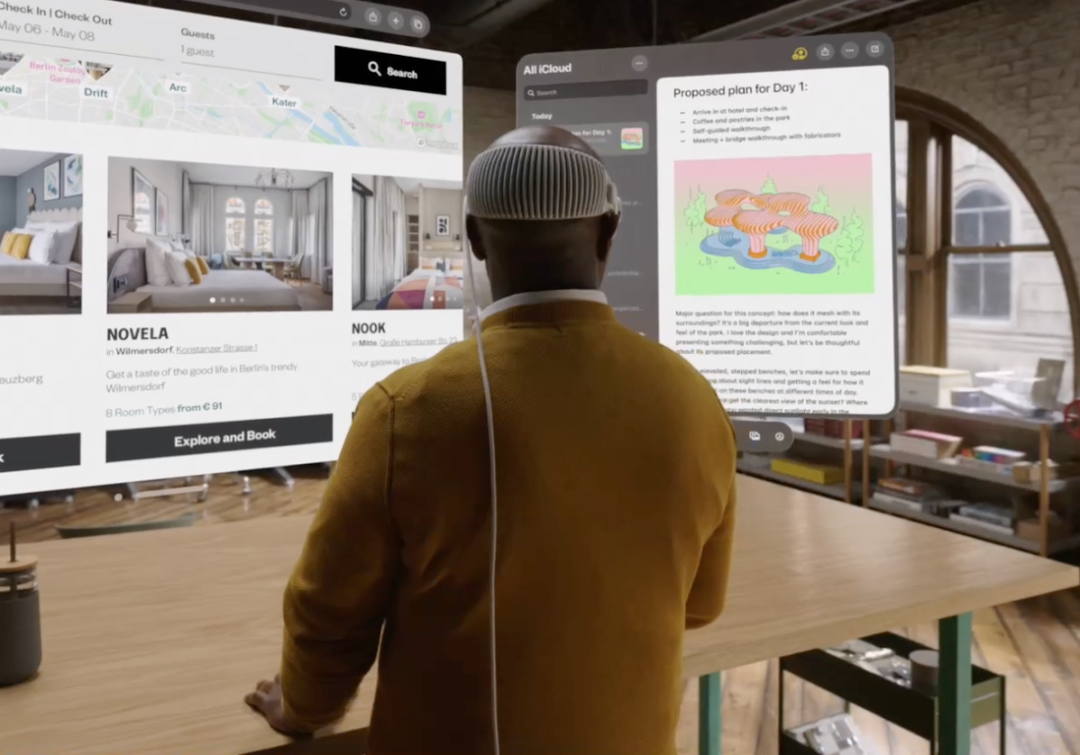
The only disappointment this time is the price — $3,499, roughly RMB 25,000. Not for ordinary consumers, but I believe in the pull of Apple's fanbase; plenty of people will still buy it. Also, this product is called "Pro," which by convention suggests a cheaper "Air" series may follow.
From the website, Apple remains visually oriented, prioritizing user experience:
- Apps, Unleash Your Desktop. Your apps follow you: your Apps exist in your space. With Vision Pro, you have an infinite canvas that transforms how you use your favorite apps. Arrange them anywhere at any size, making your dream workspace a reality while staying connected to the world around you. Browse the web in Safari, create to-do lists in Notes, chat in Messages, and switch between them seamlessly with a glance.
- Entertainment, The Ultimate Theater. Wherever you are. An immersive way to experience entertainment: Vision Pro can transform any room into your personal theater. With spatial audio, you can expand movies, shows, and games to the perfect size while feeling like you're part of the action. And with more pixels than a 4K TV for each eye, you can enjoy stunning content wherever you are — whether on a long flight or relaxing on your couch at home.
- Photos and Video, Relive the Moment. Your memories come alive: Vision Pro is Apple's first 3D camera. You can capture magical spatial photos and spatial videos in 3D, then relive those cherished moments with immersive spatial audio, feeling the magic like never before. Your existing photo and video library looks incredible at remarkable scale. Panoramas wrap around you, making you feel like you're standing right where you took them.
- Connection, Get on the Same Page. In the Same Space. Make meetings more meaningful: Vision Pro makes it easy to collaborate and connect wherever you are. FaceTime video tiles are life-size, and as new people join, the call simply expands in your room. In FaceTime, you can also use apps to collaborate with colleagues on the same document simultaneously.
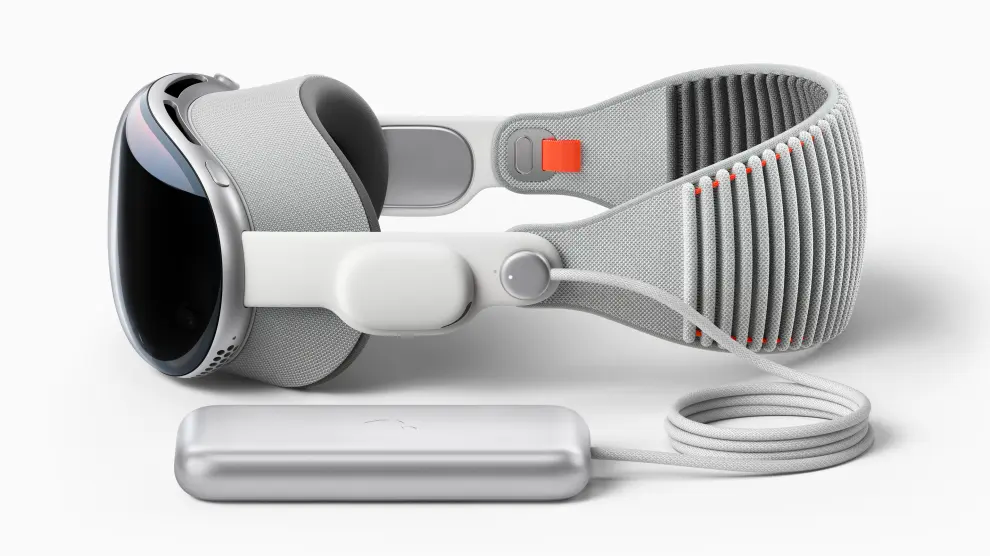
Now, from a design perspective:
Apple Vision Pro is the culmination of decades of experience designing high-performance mobile and wearable devices — Apple's most ambitious product ever. It packs extremely advanced technology into an elegant, compact form, delivering an astonishing experience every time you put it on.
- A unique three-dimensionally formed laminated glass serves as an optical surface for cameras and sensors to view the world. It flows seamlessly into a custom aluminum alloy frame that gently curves to wrap around your face, serving as an attachment point for the Light Seal.
And the operating system:
- VisionOS, Apple's first spatial operating system. Designed for spatial computing: built on the foundations of macOS, iOS, and iPadOS, visionOS enables powerful spatial experiences. You control Vision Pro with your eyes, hands, and voice — interactions feel intuitive and magical. Simply look at an element, tap your fingers together to select, and use the virtual keyboard or dictation to type.
- Apps come alive. In visionOS, apps can fill the space around you, extending beyond the boundaries of a display. They can be moved anywhere, scaled to the perfect size, react to room lighting, and even cast shadows.
- Stay connected to people around you. Vision Pro helps you stay connected to those around you. EyeSight reveals your eyes and lets others know when you're using apps or fully immersed in an experience. When someone approaches, Vision Pro simultaneously lets you see them and reveals your eyes to them.
02
Hardware Specs and the Ultimate Metaverse Experience
Now, let's talk about the Apple Vision Pro's hardware configuration (primarily sourced from the official website):
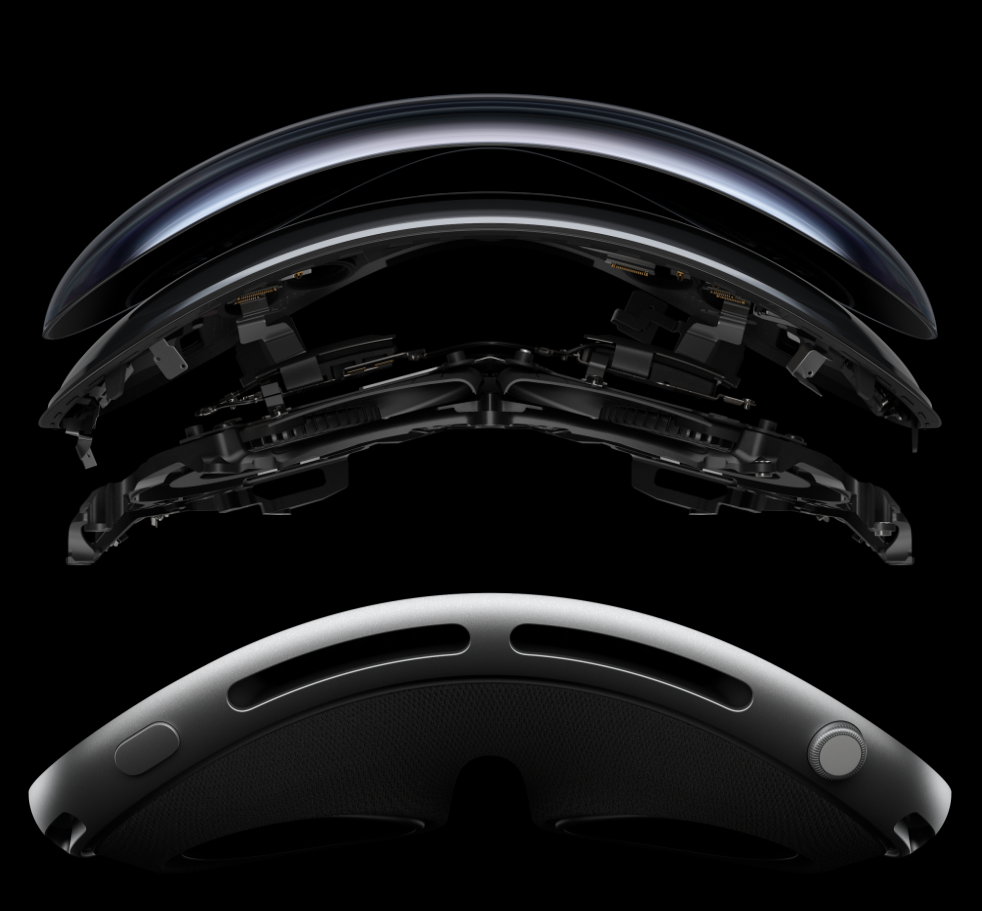
Pushing boundaries from the inside out, the spatial experiences on Vision Pro are only possible through groundbreaking Apple technology. Displays the size of a postage stamp with more pixels than a 4K TV for each eye. Incredible advances in spatial audio. A revolutionary dual-chip design featuring custom Apple silicon. A sophisticated array of cameras and sensors. All these elements work together to create an experience unlike anything you've ever seen.
- More pixels than a 4K TV per eye. A custom micro-OLED display system packs 23 million pixels into two panels the size of postage stamps, delivering stunning resolution and colors. A specially designed three-element lens creates the feeling of a display that's everywhere you look.
- Our most advanced spatial audio system yet. Dual-driver audio pods positioned next to each ear deliver personalized sound while letting you hear your surroundings. Ambient spatial audio makes sounds feel like they're coming from your environment. With audio ray tracing, Vision Pro analyzes your room's acoustic properties — including physical materials — to adapt and match sound to your space.
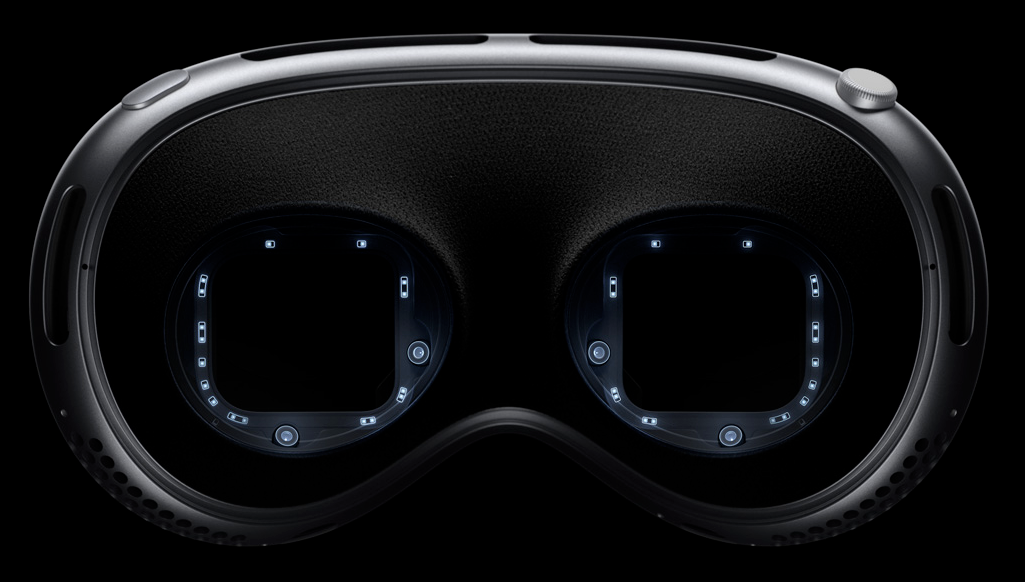
- Responsive, precision eye tracking. A high-performance eye-tracking system of LEDs and infrared cameras projects invisible light patterns onto each eye. This advanced system provides ultra-precise input without you needing to hold any controllers, so you can accurately select elements just by looking at them.
- A sophisticated sensor array. A pair of high-resolution cameras transmits over a billion pixels per second to the displays so you can see the world around you clearly. The system also enables precise head and hand tracking and real-time 3D mapping, while understanding your hand gestures from various positions.
- Revolutionary dual-chip performance. A unique dual-chip design makes the spatial experiences on Vision Pro possible. The powerful M2 chip simultaneously runs visionOS, executes advanced computer vision algorithms, and delivers stunning graphics, all with remarkable efficiency. The brand-new R1 chip is specifically dedicated to processing input from the cameras, sensors, and microphones, streaming images to the displays at 12 milliseconds for a nearly lag-free, real-time view.
- A LiDAR scanner and TrueDepth camera work together to create a fused 3D map of your surroundings, accurately representing your environment so Vision Pro can precisely render digital content in your space.
- A specially designed thermal system gently moves air through Vision Pro, so it can deliver phenomenal performance while staying cool and quiet.
- Infrared flood illuminators work with external sensors to enhance hand tracking in low-light conditions.
- Privacy and security: Built-in privacy and security. Like every Apple product and service, Vision Pro is designed to help protect your privacy and keep you in control of your data. It builds on existing Apple privacy and security features, leveraging new technologies like Optic ID, a secure authentication system that uses the uniqueness of your iris.
Based on these hardware specifications, the Apple Vision Pro brings humanity one step closer to the metaverse.
The most important element of the future metaverse experience is presence — completely enveloping human vision and hearing in an immersive world. The ultimate metaverse experience is for humans to see with the same clarity as the real world in a semi-virtual environment — essentially, retina-level visual quality.
To understand how to achieve this, we must first understand the structure of the human eye.
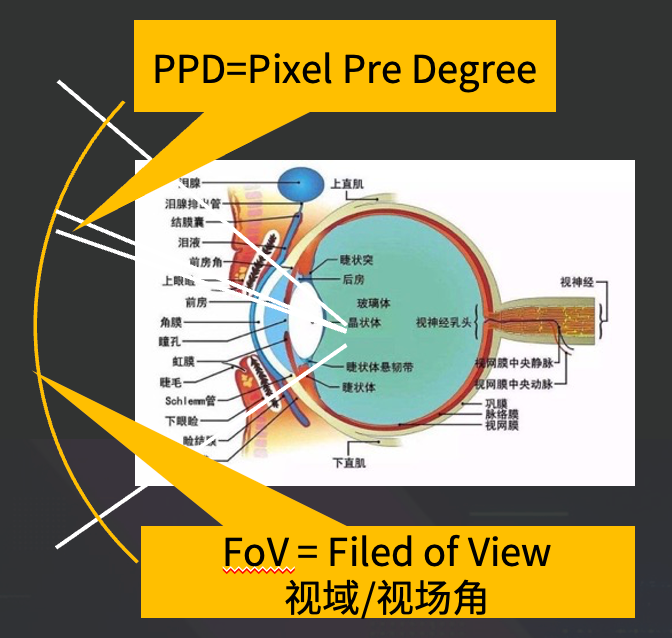
There are two important terms here:
- PPD (Pixels Per Degree): The number of pixels contained within each degree of the field of view. Higher PPD means higher image resolution and finer visual detail. This metric is measured from the user's perspective. What is the human eye's PPD? According to multiple experiments, retinal resolution is approximately 60 PPD — 60 pixels per degree.
- FoV (Field of View): The angular extent of the observable world visible through a VR device, typically including horizontal and vertical fields. A wider FoV provides a more expansive visual experience, making it easier for users to feel immersed.
But what is the human FoV? Experiments show that the human eye has multiple visual fields:
- Attention Field of View: The range of vision where the eye truly focuses and processes detailed information during a single visual experience. It corresponds to the area you can clearly see and focus on when looking at an object or scene. For example, as you read this text, your attention field is concentrated on the words you're currently reading.
- Comfortable Field of View for one eye: The range the eye can comfortably see without moving the eyeball.
- Typical Field of View for one eye: The range the eye can see with slight eye movement (without needing to turn the head or body).
- Maximum Field of View for one eye: The maximum range visible in extreme conditions — with the eyeball rotated to its limit plus peripheral vision.
Visual fields vary by individual physiology. The table below shows the resolutions and pixels corresponding to different fields of view:

Typically, VR/MR devices use the typical field of view for one eye as their standard. To achieve full retinal-level experience, you need roughly 8K+ resolution.
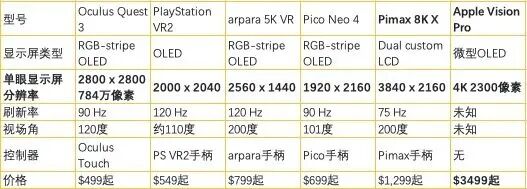
Apple hasn't publicly disclosed specific resolution and FoV numbers, but it has announced single-eye 4K at 23 million pixels. Other sources mention (the display system uses micro-OLEDs, allowing Apple to fit 44 pixels in the space of a single iPhone pixel. Each pixel is 7.5 microns wide, with 23 million pixels distributed across two postage-stamp-sized panels), which far exceeds the comfortable field of view for one eye and dramatically surpasses most competitors on the market.
Additionally, let's discuss eye-tracking technology — don't underestimate it; achieving excellent experiences requires quite a lot.
- Menu interaction: With eye tracking, you can perform actions like scrolling and selecting in a more natural, streamlined way.
- Foveated rendering: Eye tracking enables the area you're looking at to display clearly while de-emphasizing clarity in non-fixated regions. This dramatically reduces computational load. In fact, only the attention field of view demands very high clarity; other areas don't need to be as sharp. When highly focused, the human attention field is only about 10 degrees.
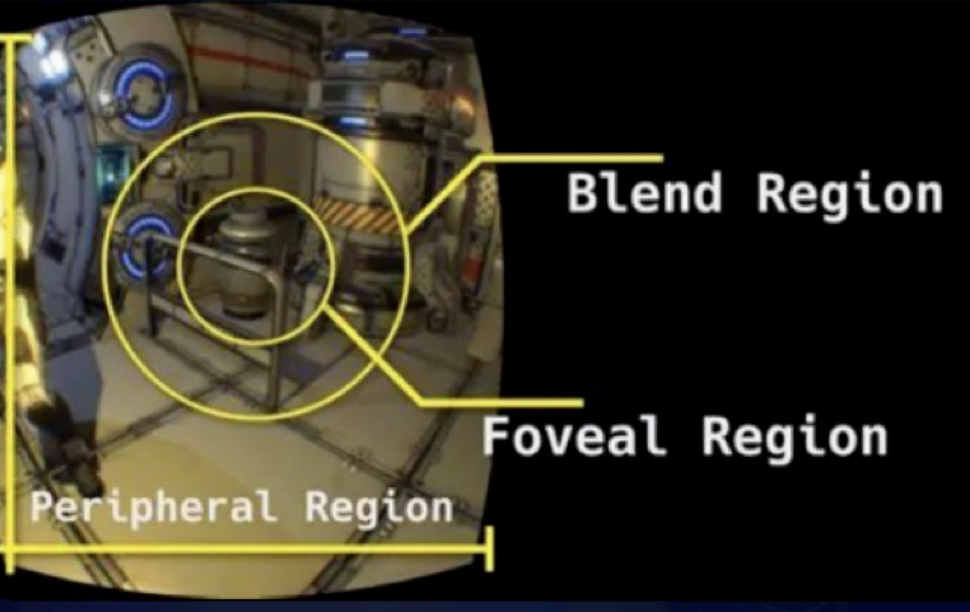
If combined with eye-tracking technology and attention-based rendering, rendering computational overhead can be greatly reduced. If using a cloud rendering solution, layered encoding techniques (similar to SVC encoding) can be combined during streaming transmission to significantly lower video bitrate.
03
Possible Future Technical Shifts for the "Metaverse"
This Apple Vision Pro uses the M2 chip for its main processing, the same compute chip found in Apple's MacBook and iPad Pro, with formidable performance. Since Apple's M2 chip integrates graphics processing, it can't be directly compared to traditional discrete GPUs by model number. The M2 generally delivers excellent graphics performance and efficient graphics processing, but its specs and performance differ from traditional discrete graphics cards. Yet even this powerful chip faces enormous challenges rendering dual 4K gaming-quality visuals.
From a GPU perspective, the NVIDIA GeForce RTX 3060 is a mid-to-high-end card with appropriate performance levels, but its dual 4K rendering capability is relatively limited. While the RTX 3060 handles 4K resolution well, simultaneous dual 4K rendering poses certain performance challenges. For dual 4K rendering, higher-performance cards like the RTX 3080 or RTX 3090 would be more suitable.
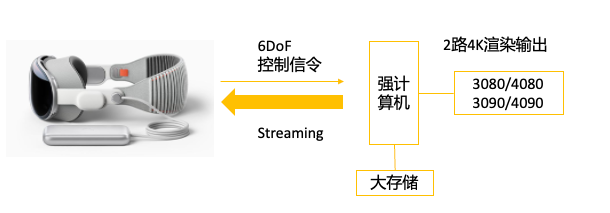
My thinking: cloud rendering remains essential for the ultimate metaverse experience. For detailed reasoning, see my previous article Exploring Metaverse Infrastructure Construction and Practices in Cloud Gaming.
I still stand by my previous analysis: even with the powerful M2 compute that Apple Vision Pro brings, displaying truly extreme real-time 3D imagery still requires cloud rendering solutions. Based on the M2's capabilities, significant technical optimizations are possible, and a hybrid approach combining cloud and local compute can achieve excellent results.
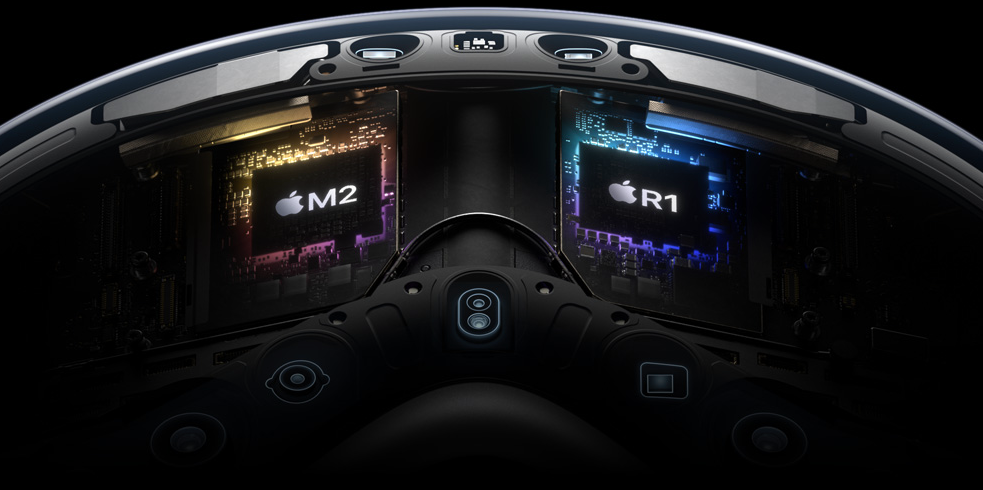
Let's examine the M2 chip's characteristics. The Apple M2 is Apple's second-generation custom silicon for Mac computers, built on second-generation 5nm process technology with 20 billion transistors. The M2's hardware support for AI deep learning manifests in several ways:
- The M2 features a 16-core Neural Engine capable of up to 15.8 trillion operations per second, over 40% more than the M1 chip. This means the M2 can process machine learning tasks faster — speech recognition, image processing, natural language understanding, and more.
- The M2 supports high-speed unified memory, double that of the M1. Unified memory allows the CPU, GPU, and Neural Engine to share data more efficiently, reducing memory copies and latency, improving AI deep learning performance and efficiency.
In the audio-video domain, the M2's local compute performance can be used to implement streaming audio-video super-resolution and frame interpolation:
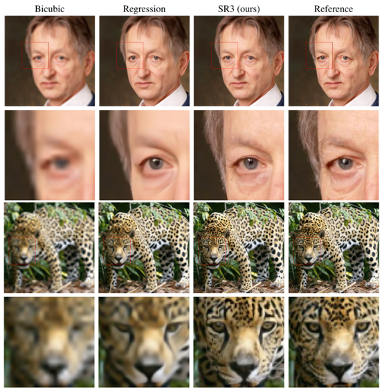
- Super-resolution technology: An image processing technique that constructs and learns higher-resolution images and video to improve low-resolution inputs. This can enhance images and video, generating clear, high-resolution output from blurry, low-resolution sources. In recent years, deep learning has been widely applied to super-resolution, becoming the mainstream approach. This typically uses neural networks (such as convolutional neural networks) to learn mapping relationships between low and high-resolution images. This method can generate higher-quality images but requires substantial computational resources and training data. In the future, the M2 chip's 16-core Neural Engine could be leveraged to design hardware-accelerated super-resolution algorithms supporting real-time super-resolution.
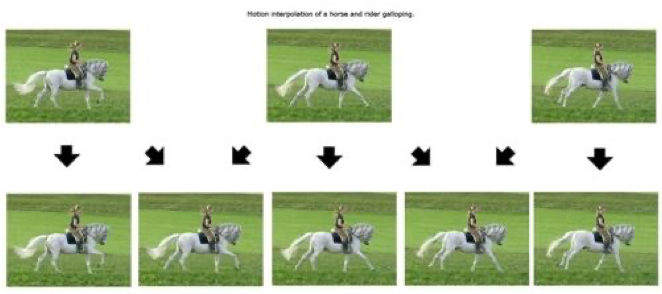
- Video frame interpolation: A technique that adds one or more frames between every two original frames, reducing display time between frames to improve video smoothness and clarity. In the future, the M2 chip's 16-core Neural Engine could be used to design hardware-accelerated frame interpolation algorithms supporting real-time super-resolution.
If local performance is fully utilized, whether for real-time cloud rendering streams or audio-video playback, it may be possible to achieve cloud output at (1080P, 60fps), then locally upscale to (4K, 120fps) through super-resolution and frame interpolation. This would dramatically save cloud compute and network bandwidth. Dual (1080P, 60fps) real-time rendering output is roughly achievable with a 3060-class GPU; additionally, the Apple M2 chip itself supports VVC hardware decoding (H.266). (1080P, 60fps) video in H.266 can generally achieve bitrates of 2.5–5 Mbps. For both eyes, that's 5–10 Mbps, significantly reducing bitrate. Compared to (4K, 120fps) audio-video streams, this dramatically lowers transmission bandwidth requirements.
Furthermore, if combined with the previously mentioned eye-tracking technology, attention rendering, and SVC encoding/decoding, cloud compute and audio-video transmission bandwidth can be reduced even further. This substantially lowers infrastructure requirements.
04
Compute and the Future
The most common problem with VR/MR devices is motion sickness, essentially the brain feeling "deceived" — issues including IPD (interpupillary distance), depth of field, but most difficult to solve is M2P (Motion-to-Photon) latency. When the head moves, can the display reflect that movement with sufficiently low latency? If too slow, the brain senses "deception," triggering motion sickness. Many benchmark figures show that in low-motion states, M2P latency must not exceed 20ms; in high-motion states, it must not exceed 7ms. Note that the Apple Vision Pro uses a brand-new R1 chip specifically dedicated to processing input from cameras, sensors, and microphones to capture what the eyes would naturally see, streaming images to the displays at 12 milliseconds — fully serving low-motion M2P latency requirements without causing motion sickness.
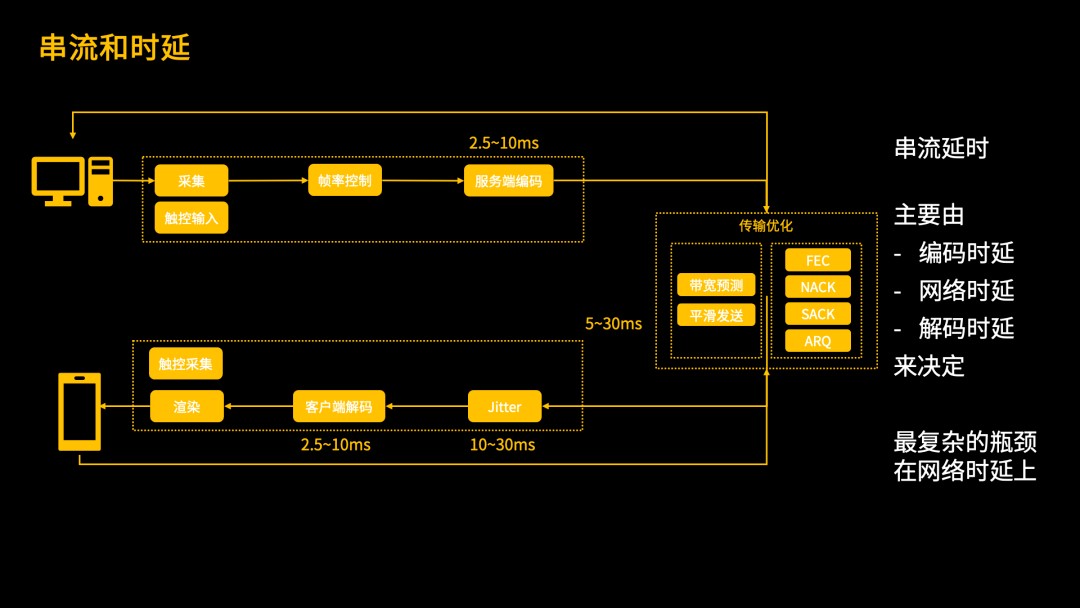
However, in cloud rendering solutions, there are many more involved stages — encoding, decoding, and transmission. Even at the极限, it's difficult to achieve 20ms response times, typically falling in the 30–100ms range. The most complex bottleneck is network latency, as it's tied to infrastructure and highly distributed network environment deployment — not something that can be improved through unilateral effort alone.
Therefore, edge cloud solutions are needed to address this — placing compute power close to users at the edge, where it can distributedly handle high concurrency, large bandwidth, and truly achieve low latency.
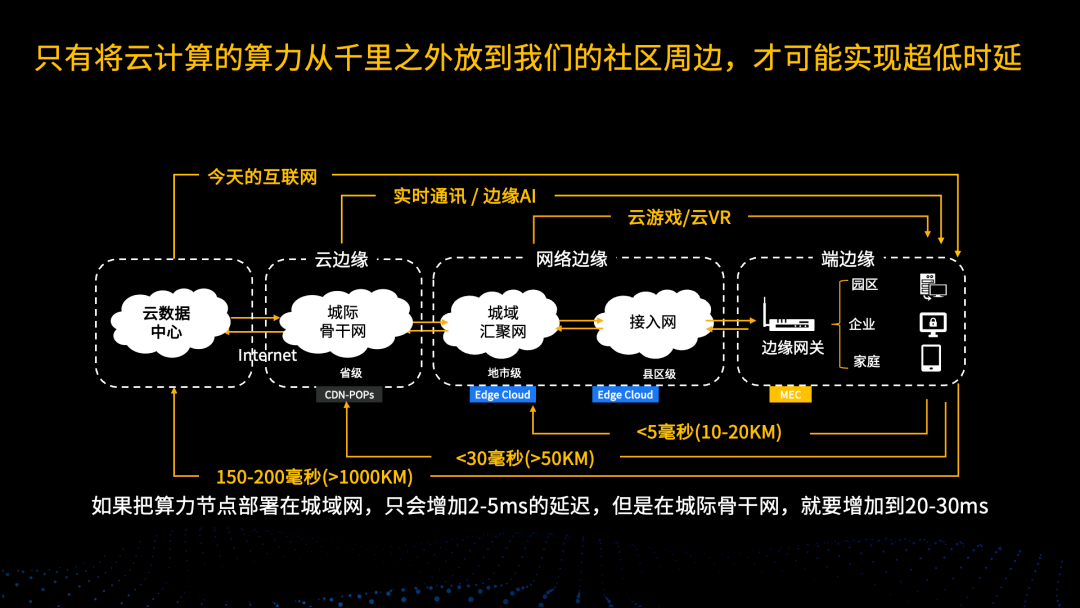
Only by moving cloud computing from thousands of miles away to the neighborhood can ultra-low latency be achieved.
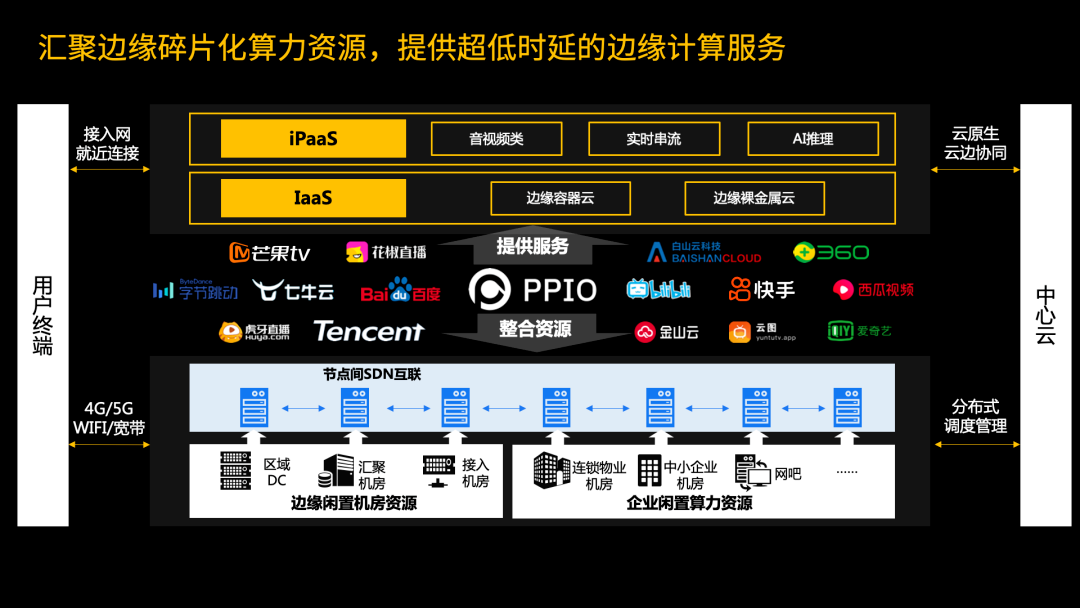
PPIO is aggregating fragmented edge compute resources to provide ultra-low-latency edge computing services. We aim to form effective synergy with central cloud — edge cloud is not a replacement for central cloud, but a complement that better solves customer needs.
I often contemplate the relationship between the universe, humanity, life, and technology. In the 5,000 years since human civilization began, who ever thought of creating universes (fully realistic metaverse worlds), creating digital life (digital beings with human intelligence)? Yet this great endeavor may well be achievable in our generation. Perhaps in the near future, we can truly build a "idealist world" teeming with vibrant life, where everyone can "create their world from thought alone."

Of course, whether creating universes or digital life, the foundational infrastructure is compute — endless, boundless compute. PPIO Edge Cloud's mission is to aggregate global computing resources and serve all of humanity. I look forward to collaborating with metaverse, VR/MR practitioners to contribute to building the future.
▶ More Exciting Content ◀




Originating in Silicon Valley, BlueRun Ventures was established in 2005 and is a venture capital firm focused on early-stage startups.
Currently, BlueRun Ventures manages multiple USD and RMB dual-currency funds in China, with assets under management exceeding RMB 15 billion, making it one of the largest early-stage funds domestically. Its investment stage focuses on Pre-A and Series A, covering hard tech and innovative interaction, enterprise technology, new consumption, healthcare, and other sectors. It has cumulatively invested in over 150 startups, including Li Auto, Waterdrop, QingCloud, Guazi.com, Qudian, Songguo Mobility, Ganji.com, Monster Charging, Yuntu Semiconductor, Machenike, CloudShen Intelligence, Anxin Netshield, BioMap, and others.
BlueRun Ventures has been ranked #1 on Zero2IPO's "China's Top 30 Early-Stage Investment Institutions," #1 on ChinaVenture's "China's Best Early-Stage Venture Capital Institutions TOP30," and named among Preqin's Top 10 Global VC Fund Managers with Sustained High Returns.
Additionally, BlueRun Ventures has consecutively received honors from Forbes China, 36Kr, Cyzone, Caixin Media, CBNweekly, Jiemian, and other media organizations as "China's Best Early-Stage Institution of the Year," "China's Top Venture Capital Institution," "Most Entrepreneur-Friendly Early-Stage Institution of the Year," and "Most Influential Early-Stage Institution of the Year."