NuMiao's Li Nan: The World Is Getting More Real, Everyone Wants to See the Real Thing | BuMing Brain Trust

What makes a product stand out?
As the year draws to a close, competition in the AI hardware market is heating up. On November 27, Alibaba placed a bet on a new user entry point, launching Quark AI glasses. On December 1, the AI assistant "Doubao" announced its entry into the smartphone space, rolling out a technical preview of the Doubao phone assistant. Earlier, OpenAI acquired the company founded by Apple's former chief design officer Jony Ive for over $6 billion, and numerous engineers from Apple's hardware division have become targets for OpenAI's poaching.
One year ago, at the Booming Camp, Li Nan, founder of NuMiao and former VP of MEIZU, served as a mentor and attempted to answer a question: In today's consumer electronics and hardware market, where AI giants are scrambling for dominance and competition has been pushed to extremes, what allows a product to stand out?
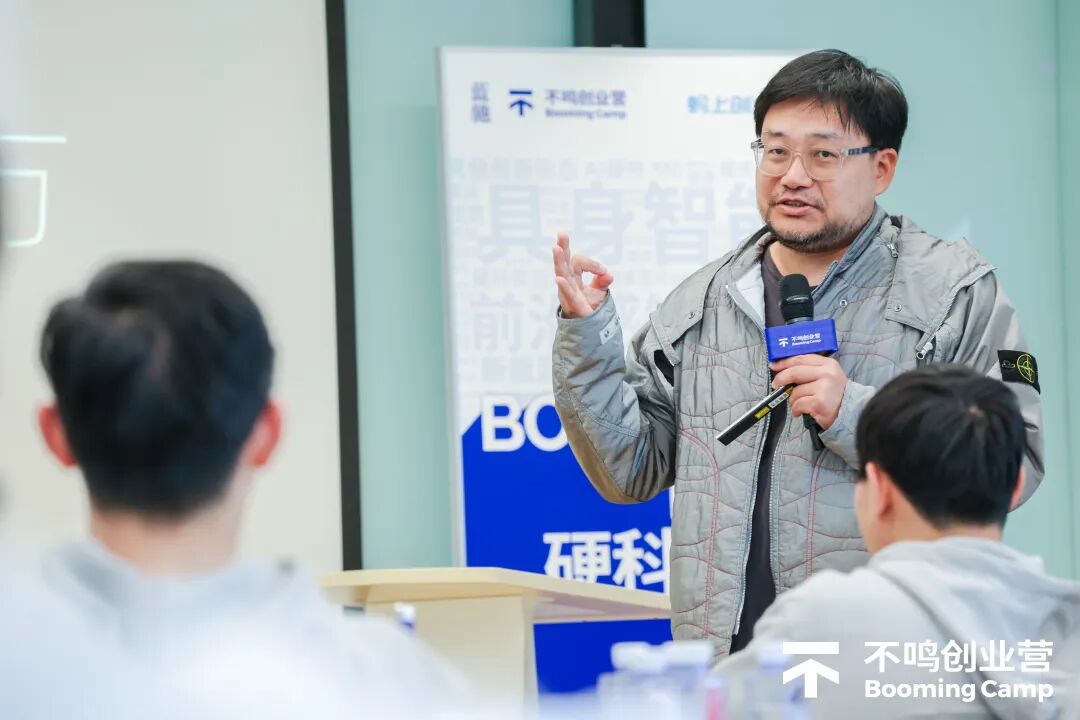
Li Nan's talk focused on five keywords: Real, Why, Demo, Agile, and 3%. In his view, everything rests on a foundation of authentic, direct, and ongoing dialogue between product and user. When traffic grows ever more expensive, specs become increasingly transparent, and technology iterates faster and faster, what truly constitutes a product's moat?
"Demo or get out," he said. This isn't tough talk — it's a new product philosophy. Moving from pursuing the "perfect launch" to "rapid validation"; from relying on "grand narratives" to "small but critical" innovations; from guessing at "killer features" to finding "1,000 people who love you."
This article is adapted from Li Nan's live presentation. It may not be a "product manual" in the standard sense, but it offers a practical framework for thinking — one that can help entrepreneurs find critical breakthrough points on what appears to be a bloody battlefield.
If you'd like to meet more Booming mentors like him, welcome to apply for the fifth cohort of Booming Camp. Booming Camp is a distributed co-creation community launched by BlueRun Ventures in 2023. We look forward to walking alongside more sharp young people with global vision, exploring the limits of AI and ourselves.
If you are an AI-native born after 1997, working deeply in native AI applications, hardware and software, or AI infrastructure, click the link below to apply:


I'd like to share five keywords for doing ToC products well. The first word is "Real." Why must product-making be Real?
The first main reason: DTC (Direct-to-Consumer) has become the dominant sales model, and when you communicate with users, you must be Real.
Consider this data: a rough comparison of 2023 sales volumes between Amazon and Shopify in the US market. Shopify's sales are already approaching half of Amazon's.
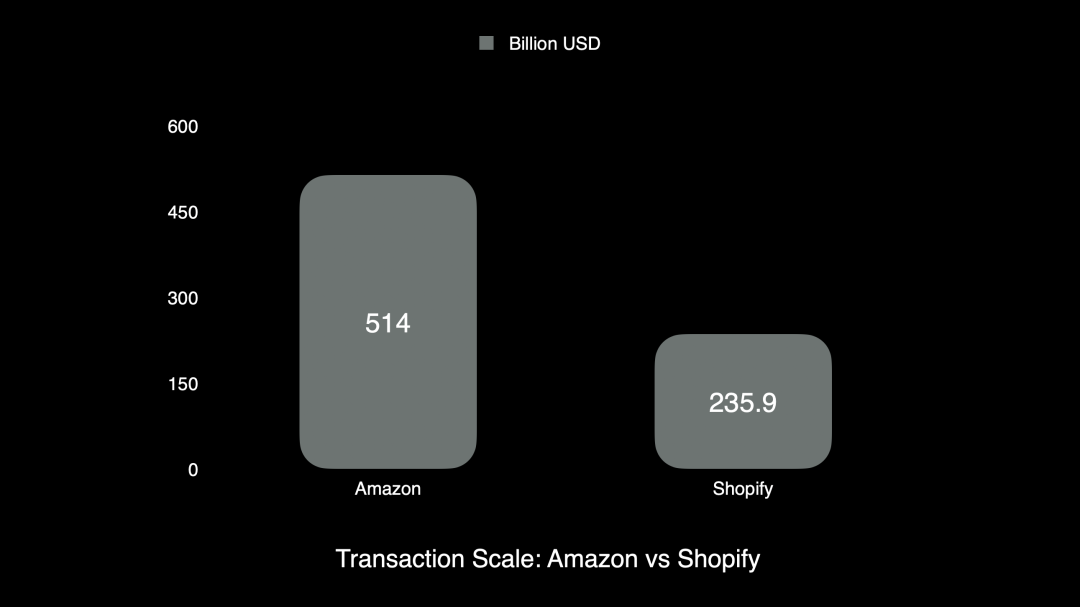
Image source: NuMiao
Amazon is the strongest shelf e-commerce platform in the US — roughly equivalent to "Tmall + JD.com + Pinduoduo" in China. That Shopify has reached half of Amazon's scale is already a force to be reckoned with.
So what's supporting this transaction volume equivalent to half of Amazon's? It's DTC brands — small brands selling directly to consumers and communicating directly with them. I believe these DTC brands supported by Shopify could eventually grow to be as large as Amazon itself. In this scenario, communication with consumers becomes extremely important; you simply can't afford not to be Real.
The US market has proven DTC's potential, and China may be heading in the same direction. DTC brands active on Douyin, Xiaohongshu, and WeChat have future potential of at least half the combined total of Tmall, JD.com, and Pinduoduo.
Second, being Real helps you capture traffic dividends.
Today, advertising fees on e-commerce platforms keep climbing, customer acquisition costs continue rising, and it seems internet traffic dividends have disappeared. But in reality, the dividend of personal distribution still exists.
For example, Joe Rogan once invited Donald Trump onto his podcast for a three-hour conversation. That episode hit 26 million plays in a single day, with cumulative plays exceeding 60 million. With roughly 150 million voting-age Americans, this means one podcast episode may have influenced nearly half of all potential voters — the power of personal distribution is "terrifying."
On this podcast, Trump didn't read from a script at all. It's this Real state that creates explosive distribution. When I used to hold product launches, I'd look at the teleprompter. Later, after Yonghao Luo reminded me, I tried going without it. It wasn't actually that hard, and the effect of communicating with users was better.
Staying Real creates the opportunity for personal distribution numbers to "explode," but it also carries the risk of saying the wrong thing, even facing PR crises. When you choose to be Real, you will inevitably face these problems — just apologize when you're wrong.
In 2009 and 2010, American pizza chain Domino's received lots of customer feedback saying their pizza was "disgusting" and "poor quality." Later, CEO Patrick Doyle came out and said: "If this chain wants to win back customers and their taste buds, we have no choice but to be honest... The old approach of trying to paper things over won't work anymore."
To address this crisis, Domino's launched a campaign called "Pizza Turnaround." The company shot a documentary-style ad. It first showed customers' negative reviews of the pizza, then cut to the company's test kitchen, where chefs and executives introduced new crusts, new cheese and sauce recipes.
They didn't choose a fancy, high-end conference room to respond to the controversy. Instead, they used an office that looked a bit messy, even dejected. But this was precisely Real. Consumers saw the CEO honestly acknowledging mistakes, showing the improvement process,公开配方, accepting criticism — and in the end, the brand's sales actually increased.
So mistakes aren't that scary; they won't necessarily hurt you. Once a problem arises, keep communicating with consumers, acknowledge the problem, improve it.
To summarize "Real":
-
DTC brands are on the rise, which means we must maintain direct, real-time communication with consumers. If you're not Real, if your product intentions aren't right, you can't continuously provide users with proper value.
-
Personal distribution still has dividends. While internet customer acquisition costs are rising, the energy of personal distribution is still exploding.
-
You must accept errors and failures in communication. It's fine if your product has problems; stand up, acknowledge them, improve them, and the brand may actually become more popular.
I hope at least 10% of you remember this: be Real in product-making, apologize when you should, it's no big deal. Whether it's Joe Rogan's podcast or Domino's Pizza, both prove this point.

The second key to doing ToC products well is "Why."
Most of you have probably heard of the "Why-How-What" model. Why refers to why we must provide this product or service to consumers in this market. How is what efforts we've made and what methods we've used for this Why. What is the final deliverable — its features, specs, appearance, and so on.
When making products, What is not the most important thing. What can be "copied." But Why is what truly determines a product's soul.
For example, what is Xiaomi SU7 actually selling? It's "a young person's first Porsche." Xiaomi never publicly said this, but fans said it for them — this Why is authentic. At over 200,000 RMB, users who wanted a Porsche previously had no such option, but today they can buy a Xiaomi SU7.
So Why matters; specs matter less. Then why do so many brands compete on specs? If you can push specs to the extreme, your product might sell well, but you'll probably barely make any money. Because there's always a competitor more "juan" than you, with comparable specs and lower costs.
The top product people all go find their brand's Why. For example, Elon Musk said in a 2017 TED talk that Tesla's Why was "achieving full self-driving, letting cars drive themselves from New York to Los Angeles." But later this Why changed. Now he says: Tesla is an "AI + robotics" company.
In 2024, Xiang Li repositioned Li Auto as an artificial intelligence company. Why doesn't he talk about how the Li Auto MEGA model is specifically made? Because Why matters more than the specific product. When your Why is clearly "being an AI company," users may naturally believe Li Auto's intelligent driving will be stronger, its smart cockpit smarter.
When you communicate Why to users, users feel: "This is my brand, the direction you want to go is exactly what I expect." So we must talk about Why, and we must get it right.
A brief summary of "Why":
-
Blindly pursuing specs may make you lose money. Unless you have extremely low capital costs and powerful supply chain resources, try not to get trapped in spec wars.
-
The best products need the truest intentions. You must give your brand a strong, clear Why. If you don't believe in this Why yourself, how can you convince your team and consumers?
-
Great companies keep talking about Why. Whether Tesla or Li Auto, founders repeatedly communicate Why on different occasions.

The third keyword for making products is Demo.
Stop talking nonsense, show the real thing. Demo or get out — this is the highest principle for making products in the consumer battlefield.
There's a saying: "Talk is cheap, show me the code." I can probably tell within a few minutes of talking to a product manager whether they're actually doing the work. If they open with: "Boss, we're excavating core scenarios..." "We're still researching killer features..." then this person probably isn't grounded.
Some might say: that's too arbitrary, surely there are people who genuinely know how to excavate core scenarios and develop killer features?
Let's look at Steve Jobs's example. The iPhone was the first truly landed, fully functional smartphone, pioneered by Jobs.
But a lesser-known story: Jobs didn't fully realize phones were the core product. He once had a meeting with the CEO of Handspring. At the meeting, Jobs said, your product is nice. Then he drew a Mac on the whiteboard, surrounding it with Handspring's phone, printer, PC... saying: "See, Mac is the core product."
The Handspring CEO panicked, moved the phone to the center and said: "No, the phone is the center." Jobs strongly disagreed at the meeting, but later made the iPhone. This story was told by the Handspring CEO himself.
If even Jobs couldn't accurately predict what the "core scenario" was before the smartphone explosion, what can we predict?
Directly produce an MVP, get the fastest usable thing into users' hands — only then can you possibly discover the real scenario.
Now about "killer features." I never quite bought into this concept, and now I doubt its meaning even more. With AI technology evolving so fast today, it's hard to predict what new capabilities AI will bring tomorrow. You grind away for three months, stock up, launch — then your competitor does it with AI directly, even better.
My advice: don't overthink it, just produce something. Find 1,000 users who truly love you. With these users, they'll immediately give you a pile of new demands. Stronger AI will stimulate stronger user desires, leading to more expectations for the product.
OpenAI CEO Sam Altman said back when he was doing investments: better to have 100 people who genuinely love you than 1 million people who know you.
Even if you're selling keyboards at 6,000 RMB a set, as long as you have 10,000 users who truly love you, they'll even scramble to buy.
Since MVP is so important and user interaction so critical, how specifically should you do product launches?
The most impressive companies today launch products by directly showing the product. Stop with the long launches, stop standing on stage rambling about how great your technology is or how strong your supply chain is — just show the product.
OpenAI doesn't even have launch events, let alone stage setups — they directly demo what the new GPT version can do. Tesla's launches: the car drives itself in from the street, done. SpaceX even livestreams product failures, rockets exploding again and again.
The world has become more Real, more direct. People have less patience; they want to see the real thing.
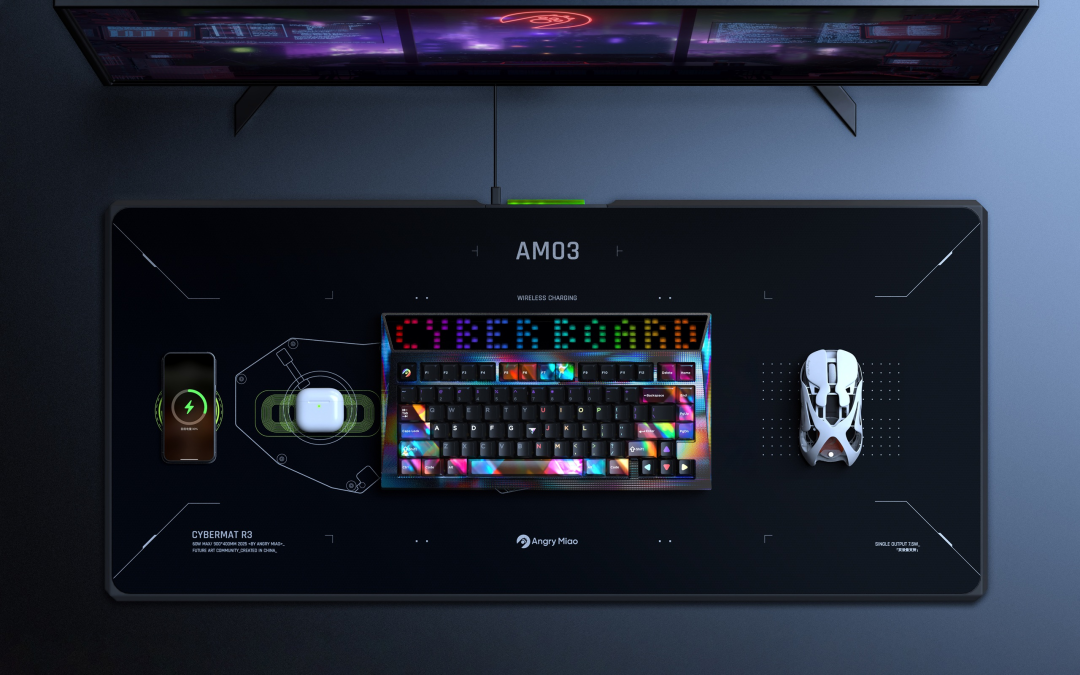
Image source: NuMiao
So, to summarize "Demo":
-
Forget scenarios, directly make an MVP. Don't overthink it; a minimum viable product doesn't take too much time or cost. Without something tangible, nothing else matters.
-
Forget killer features, first find 1,000 users who love you. They'll tell you what's right and what's wrong.
-
Forget traditional launches, directly show the product. Effective distribution time today might be 45 minutes, or even shorter — you don't need to say so much nonsense.
Demo may be more important than the previous two words, Real and Why. Without a Demo, no matter how Real you are or how good your Why is, so what?

"Agile" was originally a term from the IT industry for making software. Good products are all revised; software can easily be revised into a new version. Hardware isn't as simple, but we can reference software approaches to achieve smart, low-cost revisions. It's impossible for a product to be perfect from the start; all the most awesome products are revised.
So how specifically can we be agile?
The first low-cost improvement method is called IC (Interest Check). This term is very popular in tech circles; here IC doesn't mean integrated circuit, but interest check. The specific approach: find an industrial designer, spend two or three days drawing a render, write some copy, post it on social media and see how people react. If user feedback is poor, we revise.
For example, I once posted a screenshot of a new keyboard my team designed in a Reddit community — it was drawn very crudely, the copy was just two lines, but the engagement was quite good. IC is agile because you don't have to actually make the thing; one designer, one copywriter, can do many interest tests in a week, very quickly experimenting with different scenarios and directions.
The second method to accelerate product development speed is crowdfunding. Today, the platform Kickstarter is almost synonymous with crowdfunding. Crowdfunding accelerates iteration because it's "collect money first" — once enough is collected, place the supply chain order; if not enough, cancel the crowdfunding. This saves time, reduces capital占用, and slowly accumulates users.
A crowdfunding page is heavier than IC, usually with early-bird pricing, video, and complete feature descriptions. People who pay are people who genuinely support the product. The crowdfunding page also links to a Discord group, enabling faster consumer feedback.
In summary, the core of the Agile section is: the sooner a product sees people, the better. Applying for a design patent today can be done in as fast as two or three days. Every extra day, every extra week you delay, shows you haven't figured out what you want to do. The truly right state is: "I need to get this thing out quickly and show it to users."
We need to find early users who can accept imperfections, and through IC and crowdfunding, find that group of people willing to iterate with you, willing to wait for the second-generation improvement.

This is Virgil Abloh, founder of Off-White. His product design philosophy is completely opposite to Jobs's; Jobs was "Think Different and Change the World," while Virgil's genius with products lies in he only changes 3%.
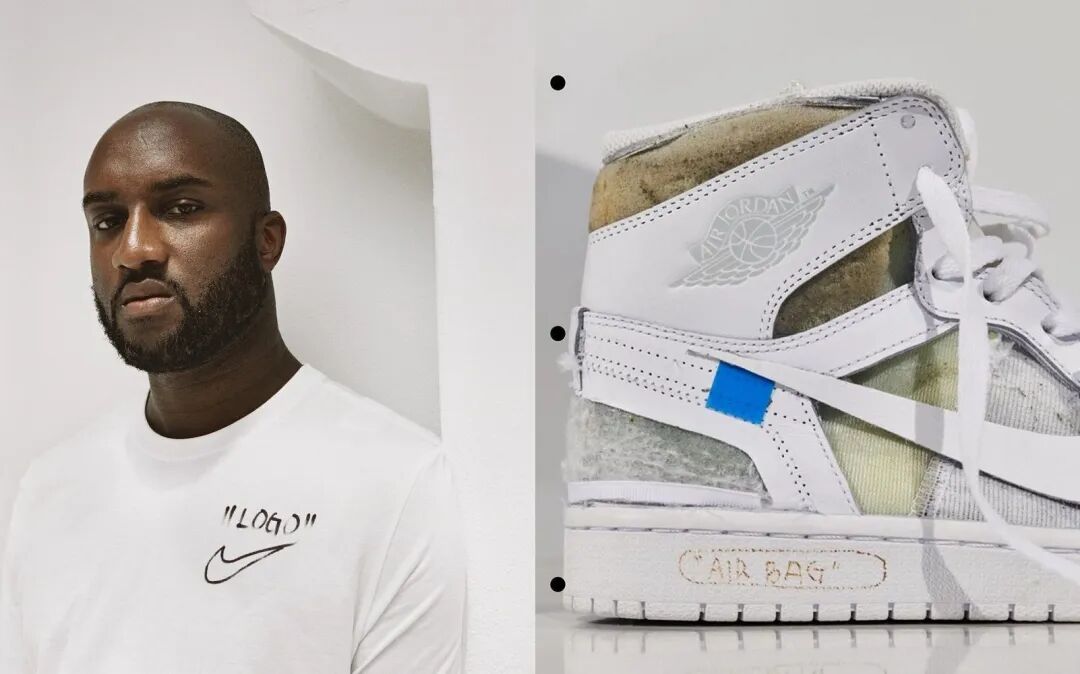
Image source: Off-White
Virgil worked in fashion. His most impressive skill: seemingly changing only 3%, but giving people the feeling of 100% change. Take the well-known Nike Jordan — that shoe is too classic; just changing the colorway wouldn't make it truly your version.
But Virgil exposed previously hidden "backstage" elements like foam, zippers, and tags to the front, using signature elements like "AIR" to make every shoe look like a work-in-progress — this is absolutely earth-shattering design.
This 3% change differs somewhat from our traditional understanding of "micro-innovation." Micro-innovation takes a product, collects negative user feedback, then fixes them one by one. But Virgil's 3% pursues greater effect: I only move a tiny bit, but give users the feeling of a complete transformation. Don't underestimate this 3%. I think the Off-White founder was no worse than Jobs; if he were still alive, he might even be more awesome than Jobs.
Finally, I hope everyone remembers this truly useful number for product-making: 3%. You must first find the most awesome, most top-tier product in the industry, then begin your micro-innovation.

When you have many wild ideas, or want to make a product demo, but aren't quite sure if the idea is solid, I'll offer you a way to check if a product is reliable. You need to consider three dimensions:
First is your own capabilities. Ask yourself: what skills do you have? How much money? What background knowledge? What kind of team can you assemble?
Second is consumer insight. Look at what trends are happening today. Are young people still skateboarding? Have they given up on surfing? Are young people no longer China's main consumer market?
Third is technology trends. Is AI on the rise? Are robotics and joint prices falling?
Product-making cannot depart from these three circles; you must find the optimal solution at the intersection of all three. This point is the best product you can make given your capabilities, understanding of tech trends, and consumer insight. Don't imagine things outside this intersection — you definitely won't be able to make them.
In this model, there are two variables you don't control — technology trends and consumer insight. Both are passive: without AI technology arriving, there's no better product to make; without population aging, you can't make care robots.
But there is one variable you do control: your own capabilities. When I invested in Shanji Technology, the founder was previously a MEIZU store manager. Why could he, in three years of entrepreneurship, increase his company's valuation several dozen times? Because his own capabilities kept changing.
So, your own capabilities are the only factor here that doesn't depend on anything else, and that can be changed through effort. Never take this diagram to your boss and say: "My capabilities are just this weak, so I can only make this kind of thing."
Welcome to apply for the fifth cohort of Booming Camp. If you are an AI-native born after 1997, working deeply in native AI applications, hardware and software, or AI infrastructure, click the link below to apply:

Winning the world's admiration with bare hands in the AI era | Booming Camp recruitment open
Before AGI arrives, this is the last night on Earth | Booming Night
What was said at that hottest AI hardware salon in Shenzhen last week | Booming Hub recap