Robotics Startups: The Race to Commercialization Hits a Critical Juncture | BlueRun Ventures Insights

The first step of idealism is to get your hands dirty.
Welcome to the BlueRun Ventures Observatory!
This is our informal space for sharing industry observations, published on an irregular schedule. Three ground rules for the Observatory: no macro abstractions, take a stance; insider perspective, exclusive viewpoints; we don't chase being right — we eagerly welcome pushback and being proven wrong.
For our first issue, we're focusing on the landing challenges of robotics startups. Rather than talking about dazzling futures and vast markets, we'd like to suggest: come back to the real world first.
We welcome your engagement — there's a surprise at the end!
Few people doubt that the robotics industry will eventually enter a golden age of explosive growth.
Returning to first principles, whether from a performance, cost, or policy perspective, "machines replacing humans" represents a definitive global trend for the foreseeable future. A view that has achieved broad consensus holds that, over the coming three-to-five-decade cycle, robots will enter a phase of vigorous development across service industries and industrial logistics.
But few people believe that "machines replacing humans" is happening right now.
Even in industrial, logistics, service, and home settings, the presence of robots has gradually gained public acceptance. Yet in actual deployment, whether due to product immaturity or industry and market inertia, robotics adoption across sectors remains a slow process. For robotics startups, having passed through the initial stages of fundamental research and product development, a new war has reached its decisive moment — the battle for landing.
Every robot or intelligent agent only has value and meaning if it can help humans solve the pain points and challenges of its specific scenario.
Since the second half of this year, robotics startups once trapped by landing difficulties have been breaking through with an increasing number of approaches. Whether through product form innovation, extending value chains, or expanding overseas, domestic robotics brands are steadily improving their coverage. In this issue of the Observatory, BlueRun Ventures focuses on these pioneers, attempting to offer some inspiration for the current industry.
Pursuing Undefined Products
In recent years, "product homogenization" has become a well-worn topic in the robotics industry, with voices both inside and outside criticizing the extreme convergence of different brands in product performance and appearance. The danger of homogenization lies in this: when innovation in product and technology is lacking, the industry often turns to channel and marketing involution, even descending into the quagmire of price wars.
But is there really no more room for evolution in today's robotics products? In fact, we may be far from reaching the perfect form. BlueRun Ventures has always sought to find undefined, trailblazing entrepreneurs, and the robotics companies in the BlueRun family have never stopped pushing forward with product innovation.
In broad lifestyle service scenarios, is the current robotic arm structure really the optimal solution? The very existence of this question proves that people are not satisfied with current robotic arm forms. In October, BlueRun family company Wisson Robotics announced the launch of its Nimbo™ series of compliant arms — a robotic arm completely different from anything that came before.
The Nimbo™ series employs flexible materials and bionic structural configurations, combined with self-developed high-precision micro-airflow drive control and compliant core control algorithms, achieving core metrics of "light self-weight, heavy payload, high flexibility, collision safety, and precision smoothness." Notably, beyond the industry-standard "degrees of freedom" dimension, this compliant arm introduces the concept of "muscle"; it is even more flexible than a human arm — capable of extending and contracting, and gently holding an egg in a bare hand.
The four-axis and six-axis robotic arms we commonly hear about use bearings to replace human joints, essentially a biomimetic approach. But it is not perfect biomimicry — it imitates joints but cannot imitate muscles. In fact, it is precisely because of the stretching action of muscles that humans can generate force far exceeding our body weight. Looking human is not what matters. Wisson Robotics's compliant arm attempts to break free from the "joint replacement" mindset, endowing robotic arms with muscles to create arms more suitable for complex scenarios than human arms.
This product form innovation is bringing more possibilities for robotic arm deployment. When Wisson Robotics previously won two 2022 iF Best Product Design Awards, the jury commented: the compliant robotic arm provides a revolutionary solution, achieving safety in human-robot interaction, lightweight design, and low cost... offering flexible, safe, and effective solutions for industrial, medical, and service scenarios.
Another category that had stagnated for years is home companion robots. Many products target the home, yet no consumer robot product that can truly be viewed as a companion has emerged to date. What exactly went wrong?
One important reason may be the absence of "vitality." Whether it's Boston Dynamics's robotic dog or Amazon's Astro, they may accomplish many functions, but their cold exterior and迟钝 responses to emotion make it difficult for humans to feel companionship.
BlueRun family company Keyi Technology (Cellrobot) attempted to solve this problem with its October launch of "Loona." Equipped with perception capabilities including face recognition, body detection, gesture recognition, 3D motion capture, object recognition, emotion perception, and logo recognition, Loona can express over 700 emotions, with subtle movements of its ears, eyes, and limbs, its gaze and expressions all displaying a pet-like vitality. Users can program software to set personalized characteristics for Loona — for instance, a ball-fetching puppy or a laser-pointer-chasing kitten.
However, Keyi Technology didn't stop at vitality. Beyond being a pet, Loona also provides camera, smart speaker, and respiration/sleep monitoring functions; going forward, Loona will gain the ability to control other home smart devices. Meanwhile, as an open platform capable of hosting content and interactive experiences, Loona can help enhance users' STEAM learning and content creation capabilities, achieving education through entertainment.
In complex market competition, a single innovation point is insufficient. Only by providing multi-dimensional value that gets users to start using and keep using can a product earn its ticket to compete.
Seeking Milk and Honey Overseas
By 2022, you couldn't find a robotics company that hadn't considered overseas markets.
In 2021, Chinese mobile robot companies achieved overseas sales of 2.5 billion yuan, representing 20% of the overall market. According to GGII statistics, over 45 robotics manufacturers went abroad in 2019 alone.
Going overseas is the overflow of industrial capability. Why can domestic robotics brands expand overseas? Because the trials they've endured have been doubly severe. In the process of China's manufacturing upgrading to high-end, domestic robotics companies have honed technology rivaling overseas peers; simultaneously, in what may be the world's most complex scenario market, they've gained stronger landing and case experience.
BlueRun Ventures's research found that overseas manufacturing firms in fact lack batch terminal application cases and practical experience. Whether from a cost perspective, product definition capability, or product iteration speed, few can match domestic manufacturers. BlueRun Ventures believes that within the next two to three years, Chinese service and industrial robots will sweep the globe, reaching every corner of the world.
Meanwhile, clear industrial opportunities have already emerged. With the surge in new energy and smart hardware, domestic and international 3C electronics and lithium battery companies have begun expanding production, driving explosive overseas demand for industrial mobile robots. Manufacturers urgently need to replicate mature landing experience from mainland factories to Southeast Asian plants.
Precisely seeing this opportunity, BlueRun family company Youibot focused this year on the Asia-Pacific region, primarily Southeast Asia, Japan, and Korea. In Vietnam, Youibot provided flexible logistics solutions for an Apple supply chain manufacturer, becoming a demonstration production line for fully automated industrial interconnectivity in Vietnam. While penetrating the Asia-Pacific market, Youibot has also made early-stage deployments in Germany, plans to deepen European investment next year, and is actively exploring the North American market. Currently, Youibot's products have been exported to over 30 countries including Japan, Korea, Singapore, Spain, Germany, and Italy.
Also in the BlueRun family, Gaussian Robotics is no slouch either — since its first cleaning robot landed at Singapore's Sentosa in 2015, Gaussian Robotics has been conquering overseas markets for six years. To date, Gaussian Robotics has deployed across 43 countries and regions globally, with over 1,500 clients spanning Asia, Europe, the Americas, Africa, and Oceania.
Observing these two companies' overseas strategies may offer some insights for robotics companies looking to develop international business:
- Localization capability and service response speed. On this major issue, partnering with quality channel and client partners provides tremendous help. Currently, two important paths for robotics companies going overseas are: leveraging key clients for overseas expansion, and building overseas channel networks through distributors. For overseas terminal clients, replacing an entire industrial logistics solution involves high costs and long cycles. The brand recognition, product stability, and pre- and post-sales service completeness that distributors can provide will significantly reduce the persuasion cost for domestic robotics brands.
- The purpose of partnership is to accelerate market coverage. Taking Youibot's "being integrated" strategy as an example, the essence is treating AMR products as one component of terminal solutions, deeply opening up products, industrial logistics management software, and customized solutions to partners, thereby accelerating the speed of reaching terminal clients and deploying across different scenarios to capture market share. When going overseas has become an unstoppable trend, prioritizing speed within a not-very-long opportunity window may initially establish the pattern for domestic brands overseas.
- Identify target market demands. To summarize: Southeast Asian demand focuses on semiconductor and electronics manufacturing; the European market concentrates on automotive parts and the emerging lithium battery industry; while most Japanese and Korean semiconductor companies sit in upstream material precision processing — Korea focuses on automotive, lithium batteries, and new energy, while Japan concentrates on precision electronics manufacturing and automotive parts.
Solving Clients' Real Problems
In entrepreneurship, what counts as a big matter? What counts as small?
Many industries may have a devastating tipping point, but robotics landing is achieved through day after day of solving the numerous and wildly varied small matters in scenarios.
BlueRun believes that clients need robotics products that solve problems more efficiently. Client demands cannot be separated from product quality and effectiveness — this is the first priority. Next comes the service system and after-sales guarantee. How to get clients from starting to use, to being unable to do without — this is worth manufacturers pondering. For robotics companies, it's impossible to demand perfect scenarios; rather, they must actively engage with clients' long-tail demands in the landing process, solidly solving one seemingly trivial problem after another.
In many demonstration videos of robots landing in factories and logistics warehouses, the environment is often presented as clean and bright, with goods neatly stacked, the robot simply needing to move things. But the reality is that robots frequently encounter non-standard situations during depalletizing and palletizing: irregularly placed bags, torn bags, textureless surfaces, overlapping, deformation, and so on. The ability to handle these non-standard situations is precisely an important criterion for whether clients will choose you.
In October, BlueRun family company Luxshare-ICT launched its new 3D structured light camera, the WUKONG series LXPS-HS3240. This camera was specifically developed for bag and soft-package depalletizing/palletizing, addressing precisely the situations described above. Through intelligent AI algorithms for high-definition imaging and 3D reconstruction of various bag stack shapes to calculate grasping centers, this camera's recognition algorithms can perform special optimized processing combined with camera data to obtain high-definition 3D data. This enables more precise recognition of grasping objects and rapid identification of the most stable grasping point. Meanwhile, Luxshare-ICT also designed a large field of view for this camera, compatible with most stack dimensions.
In fact, torn bags and scattered placement are common problems across most industries during搬运, depalletizing, and palletizing. Having solved these underlying pain points, this industrial camera can be widely applied to fertilizer, rice and flour, sugar production, cement, and new materials manufacturers.
Extending the product value chain is also an important client demand. In industrial, service, and other industries, human labor for cleaning,搬运, picking, and delivery forms long, continuous chains. If only a short value chain can be provided, robots still risk being "chicken ribs" for clients. This year, BlueRun family companies WoodAnt Robotics and Gaussian Robotics successively launched new products attempting to extend value chains and cover more scenarios.
WoodAnt Robotics's 2022 launch of an outdoor unmanned transport vehicle expanded unmanned forklift applications to outdoor group automatic搬运 scenarios. For unmanned forklifts, outdoor scenarios feature more complex road conditions and environments than indoor, with higher speed requirements, demanding broader range and higher precision in perception. But this also means a larger market space — currently, the outdoor搬运 market reaches trillion-level scale, while simultaneously having massive labor gaps.
Moving to outdoor scenarios, WoodAnt Robotics's F2-X unmanned vehicle series can be applied to cold chain logistics parks, outdoor logistics parks, agricultural and sideline product trading zones, wholesale markets, and other complex environments, providing in-park goods transfer services for park merchants. For trading park scenarios, WoodAnt Robotics is also building a platformized operating system on the software side, achieving scheduling of people, vehicles, and goods.
In commercial cleaning scenarios, Gaussian Robotics's new Huanying S1 expands the scenarios and coverage for the commercial cleaning robot category. Only when cleaning robots achieve a complete solution for all commercial flooring scenarios can industry standardization, digitalized scheduling and supervision, professional human-robot collaboration, and rational efficiency improvement and cost reduction truly become possible.
Therefore, Gaussian Robotics's Huanying S1 integrates the four major floor cleaning modes needed for office buildings and residential common areas: washing, sweeping, vacuuming, and pushing. It can not only adapt to different soft and hard floor types in scenarios, but also navigate special scenarios such as office desks and narrow corridors. These capabilities enable commercial cleaning robots to break through the technical challenge of being unable to clean scenarios with small single-floor areas, multiple floors, and compact spatial arrangements, making full-scenario robotic cleaning possible.
BlueRun has been following the robotics track since 2014, and favors investment opportunities in robotics with accumulated industry scenario know-how, underlying technology accumulation, effective human replacement, and efficiency improvement. We believe that robotics is the combination of underlying robotic foundational capabilities plus scenario know-how. Scenario know-how involves business foundation depth, data closed loops, upper-level innovation models, and the synergy between robotics experts and industry experts — requiring long-term polishing.
Polishing is undoubtedly a long and tedious grind, and this is precisely the truth of robotics entrepreneurship: there is no single knockout blow, no absolutely invincible advantage, only the winding of magnetic wires circle after circle, the testing of radars time after time. But when you steadily take every step beneath your feet, you'll find that beyond the mountain passes, the path lies flat.
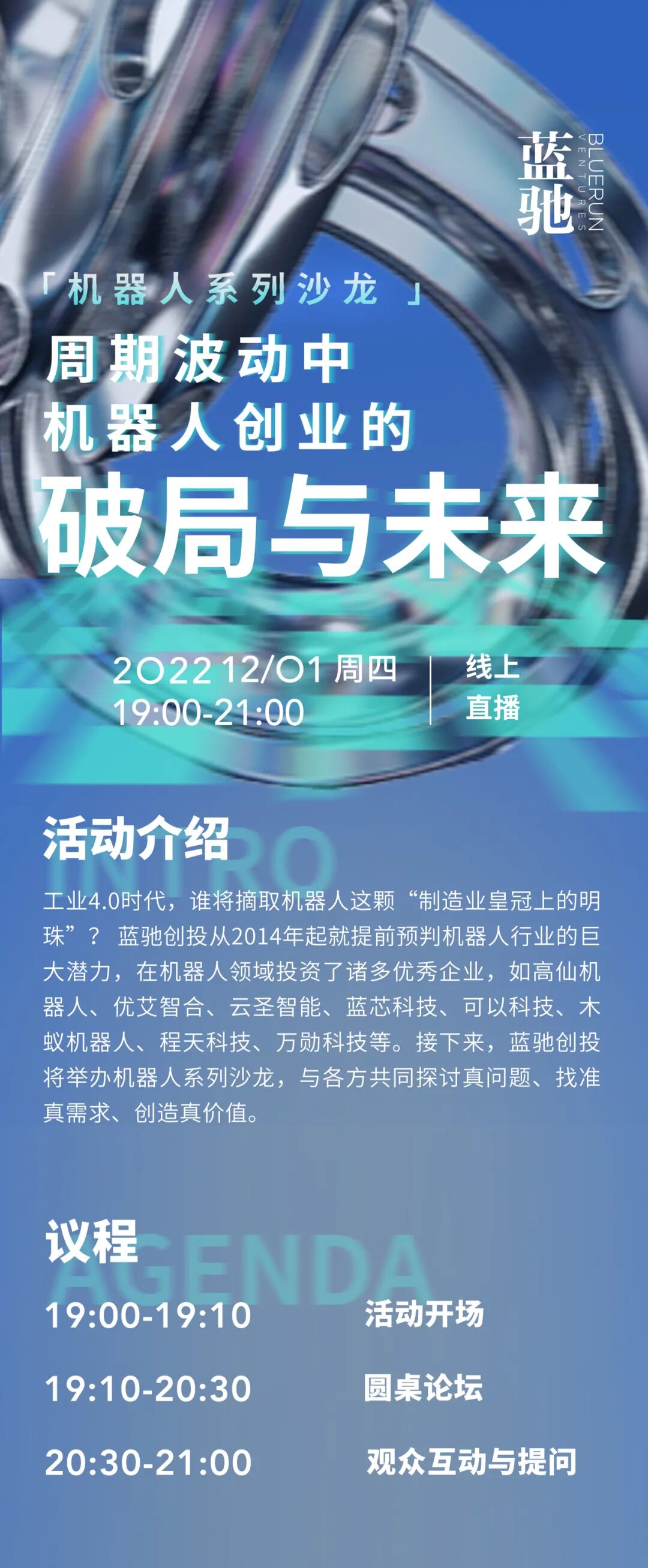
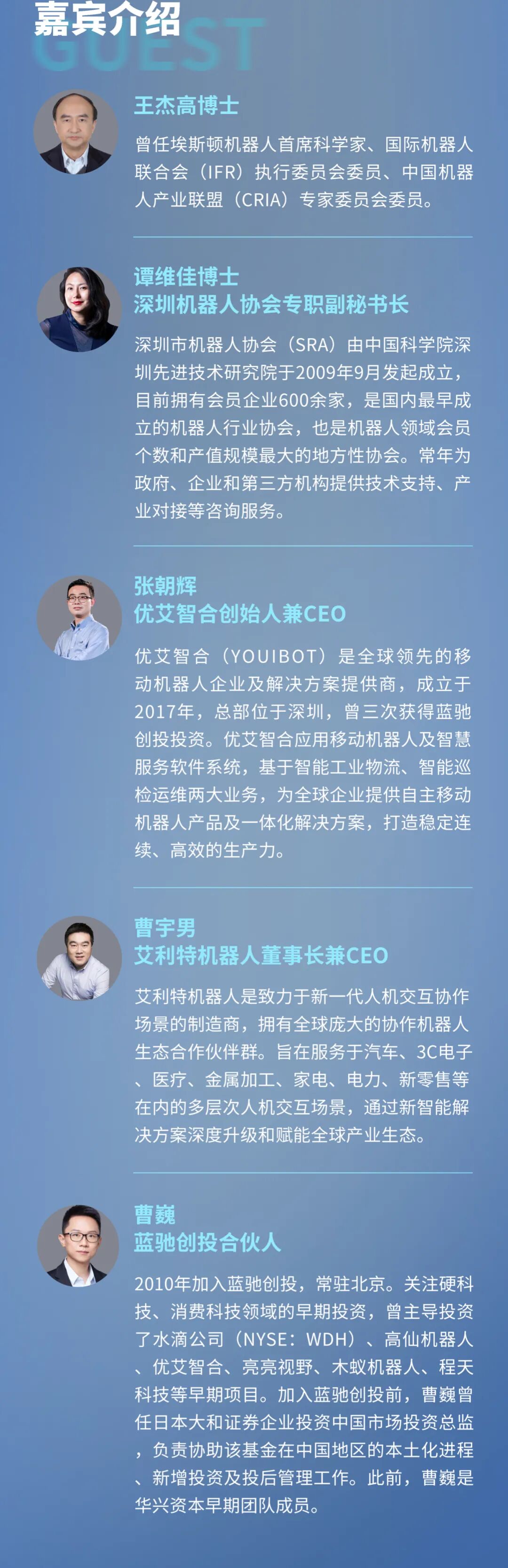
BlueRun will always climb with you. On December 1, BlueRun Ventures will host the first session of its robotics salon series**, inviting academic experts, industry associations, and startup leaders to discuss "Breaking Through Cycles: Robotics Companies' Path Forward". This salon will be held online; register via the image below↓

Interactive Surprise
What do you think are the real problems and real demands facing the robotics industry today? What questions about robotics entrepreneurship interest you most? Welcome to leave comments with questions for our guests — we'll select highly-upvoted questions to ask them during the salon. The top 5 most-upvoted questioners will receive one of two gift boxes prepared by BlueRun. Come leave a comment!
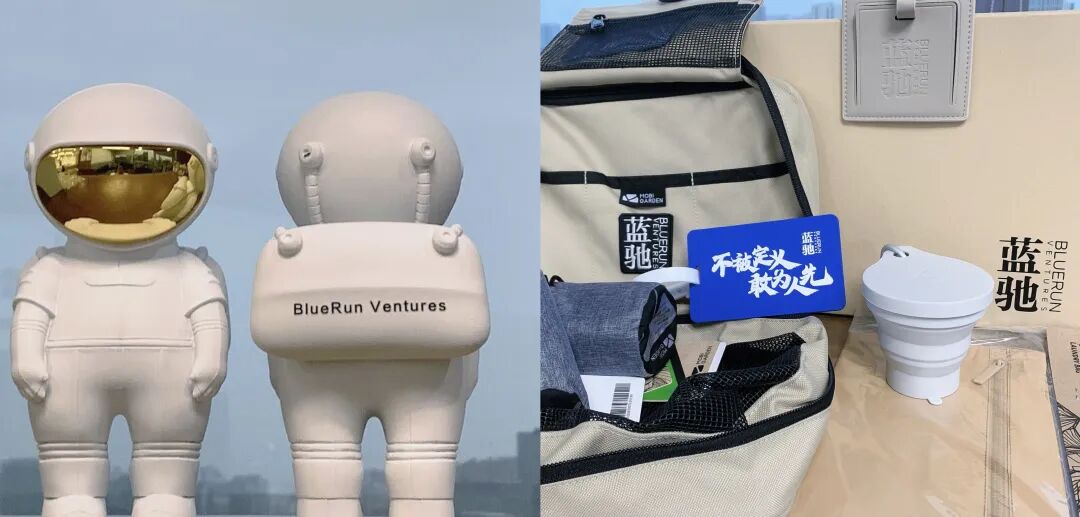
Submission deadline: 17:00 on December 1. Winners please reply with mailing information within 24 hours of receiving notification.
Reference articles:
- Recreating a Kickstarter blockbuster: Keyi Technology's new product Loona poised to become highest-grossing consumer robot crowdfunding campaign in history https://36kr.com/p/1970992295922565
- "Youibot's Overseas Journey": Seizing the golden window for going abroad, leveraging semiconductor industry know-how to unlock a ten-billion-yuan overseas market https://36kr.com/p/1844190553459593
- Industrial robots' "going abroad" reaches midpoint https://36kr.com/p/1852736436145543
▶ More Exciting Content ◀




BlueRun Ventures was established in Silicon Valley in 1998. BlueRun Ventures China was founded in 2005 and is a venture capital firm focused on early-stage startups.
Currently, BlueRun Ventures China manages multiple USD and RMB dual-currency funds, with assets under management exceeding 15 billion RMB, making it one of the largest early-stage funds domestically. Its investment stage focuses on Pre-A and Series A, covering hard tech and innovative interaction, enterprise technology, new consumption, and healthcare. It has cumulatively invested in over 150 startup companies, including Li Auto, Waterdrop, QingCloud, Guazi.com, Qudian, Songguo Chuxing, Ganji.com, Energy Monster, Yuntu Semiconductor, Machenike, Yunsheng Intelligence, Anxin Wangdun, and BioMap.
BlueRun Ventures has been ranked first in Zero2IPO's "China Early-Stage Investment Institutions Top 30" and ChinaVenture's "China Best Early-Stage Venture Capital Institutions TOP30," and was named among Preqin's Top 10 globally consistent high-return VC fund managers.
Additionally, BlueRun Ventures has consecutively received honors from Forbes China, 36Kr, Cyzone, Caixin Media, CBNweekly, Jiemian, and other media institutions, including "China's Best Early-Stage Firm of the Year," "China's Top Venture Capital Institutions," "Most Entrepreneur-Friendly Early-Stage Investment Institution of the Year," and "Most Influential Early-Stage Investment Institution of the Year."