Intelligence Surge: BlueRun Ventures' AI Portfolio Companies Launch Yet Another Wave of New Products | BlueRun Family Headlines

A day in AI, a year in the world.

That familiar feeling is back — one day in AI equals one year in the real world. Since the start of this year, BlueRun Ventures portfolio companies have been sharing news of new product launches with us on a regular basis. From foundation models to AI agents to embodied intelligence models, we've genuinely felt the acceleration of intelligence. So we've gathered recent AI product launches from the BlueRun family to bring you a frontline dispatch on AI innovation. There are too many new products to cover exhaustively — we welcome you to explore and keep following the BlueRun portfolio on your own.

On March 27, Xiang Li unveiled and released the open-source results of "Li Auto Star Ring OS." This makes Li Auto the first automaker in the world to open-source its vehicle operating system, with overall performance comprehensively surpassing the industry-leading proprietary AUTOSAR OS. Compared to closed-source alternatives, Star Ring OS reduces chip adaptation cycles to within four weeks and fully supports all automotive chip architectures on the market, truly achieving freedom of chip selection. As the automotive OS for the AGI era, Li Auto Star Ring OS integrates millisecond-level real-time control, high-compute autonomous driving, and intelligent interaction among other diverse functions, achieving deep cross-domain hardware-software collaboration with dual-layer security. Just ten days prior, Li Auto released its next-generation autonomous driving architecture MindVLA, successfully integrating spatial, linguistic, and behavioral intelligence — transforming the car from a mere transportation tool into an attentive dedicated driver that can understand, see, and find its way.
For users, MindVLA makes the car more than just a car — it becomes a "dedicated driver" that understands what you say, grasps what you need, and helps you solve problems.
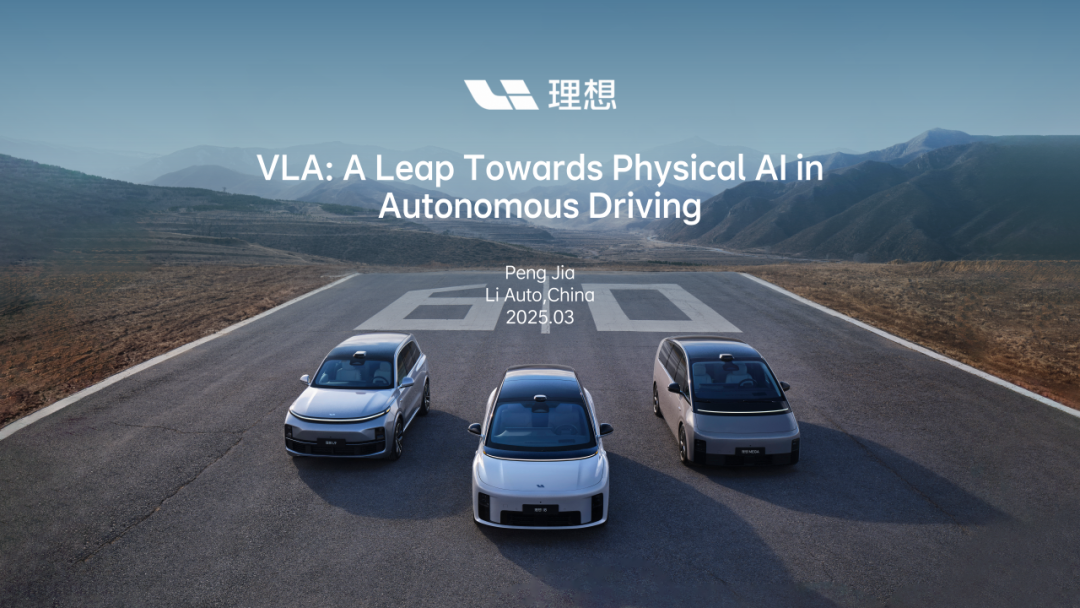
A car powered by the MindVLA model functions like an assistant, capable of communicating with users, understanding their intentions, and helping them accomplish more. For example, it can roam an unfamiliar parking garage to find a spot and autonomously complete parking; it can follow voice commands like "speed up," "slow down," "turn left," or "turn right"; and it can locate you based on a landmark photo you send it.

In January, the Moonshot AI Kimi team released the k1.5 multimodal thinking model. This followed the k0-math math model in November and the k1 visual thinking model in December — three consecutive months of major upgrades to the k-series reinforcement learning models.
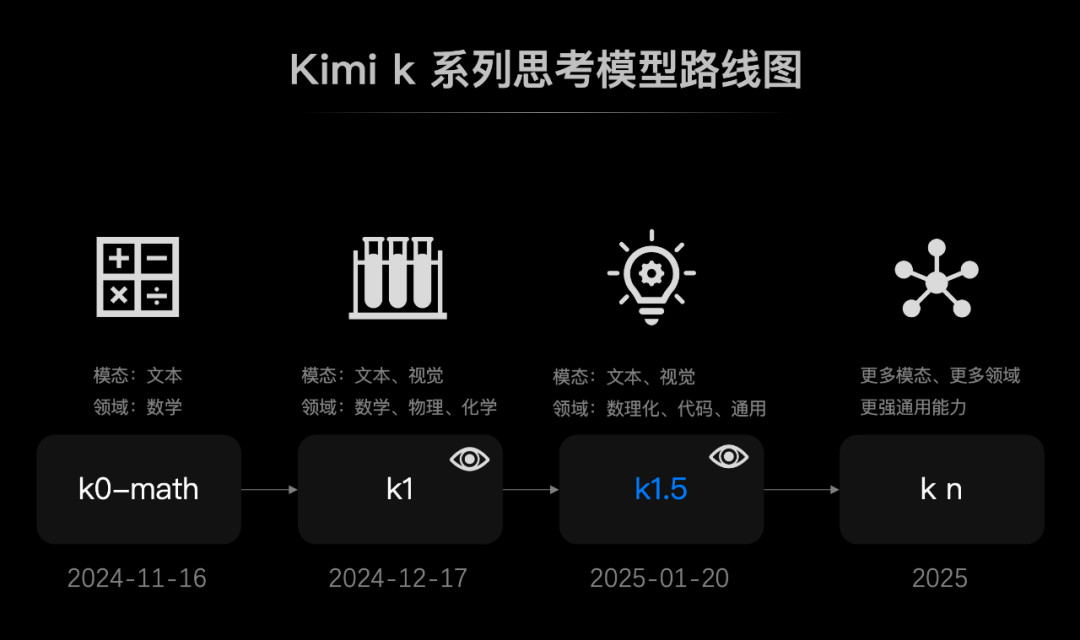
The newly released k1.5 model features a unique multimodal (text, vision) joint training architecture. Technical testing shows that in short-CoT mode, the model significantly surpasses GPT-4o and Claude 3.5 Sonnet in math, coding, visual multimodal, and general capabilities. In long-CoT mode, its math, coding, and multimodal reasoning capabilities match the official OpenAI o1 release, making it the world's first non-OpenAI multimodal reasoning model to achieve this performance benchmark.
In the detailed technical report released by the Kimi team, several key points about the k1.5 model design and training were highlighted: "Kimi k1.5: Scaling Reinforcement Learning with LLMs" (GitHub link: https://github.com/MoonshotAI/kimi-k1.5)
-
Long-context scaling: A breakthrough in extending RL context windows to 128k, with empirical results showing significant positive correlation between model performance and context length — context length is a critical dimension for continuous RL scaling through LLMs.
-
Improved policy optimization: Innovative derivation of long-CoT RL formulas, using a variant of online mirror descent for robust policy optimization. Algorithmic improvements achieved through effective sampling strategies, length penalty mechanisms, and data recipe optimization.
-
Multimodal capabilities: Through multimodal joint training, synergistic processing of text and visual information with exceptional performance in mathematics. However, geometric figure parsing capabilities remain limited by current input format constraints.

On March 10, AgiBot released its first general-purpose embodied foundation model — the Genie Operator-1 (GO-1), pioneering the Vision-Language-Latent-Action (ViLLA) architecture.
This architecture consists of VLM (Vision-Language Model) + MoE (Mixture of Experts), where the VLM gains general scene perception and language understanding from massive internet image-text data; the Latent Planner in the MoE acquires general action understanding from large-scale cross-embodiment and human operation video data; and the Action Expert in the MoE develops fine-grained action execution capabilities from millions of real robot data points. During inference, all three components work in synergy.
The GO-1 foundation model gives robots disruptive learning capabilities and enables generalization across different environments and objects, rapidly adapting to new tasks and learning new skills. It also supports deployment to different robot embodiments for efficient real-world implementation, continuously evolving through actual use. For more technical details, see: "From VLA to ViLLA: AgiBot Releases First General-Purpose Embodied Foundation Model GO-1"
On March 18, the AgiBot team further proposed a new data collection paradigm — ADC (Adversarial Data Collection) — significantly improving data information density and diversity. This reduces training costs while enhancing model robustness and generalization, achieving 2.7x the effect of traditional paradigms with only 20% of the data volume.
Paper: https://arxiv.org/abs/2503.11646
Project page: https://sites.google.com/view/adc-robot/home


Galaxy Universal recently collaborated with BAAI, Peking University, and The University of Hong Kong researchers to release the GraspVLA model — the world's first end-to-end embodied grasping foundation model.
GraspVLA training comprises pre-training and post-training phases. The pre-training phase uses purely synthetic big data at an unprecedented scale — one billion frame "vision-language-action" pairs — mastering generalized closed-loop grasping capabilities to achieve the foundation model. After pre-training, the model can directly Sim2Real to zero-shot test on unseen, highly varied real-world scenes and objects, globally demonstrating seven exceptional generalization capabilities for the first time, satisfying most product requirements. For specific needs, post-training requires only few-shot learning to transfer foundation capabilities to particular scenarios, maintaining high generalization while forming specialized skills tailored to product requirements. What constitutes true generalization? This time, Galaxy Universal has established seven golden standards that a VLA must meet to qualify as a foundation model: illumination generalization, background generalization, planar position generalization, spatial height generalization, action strategy generalization, dynamic interference generalization, and object category generalization. GraspVLA achieves all seven.
Additionally, GraspVLA demonstrates rapid adaptation and transfer capabilities for new requirements: quickly conforming to specified norms and "learning by analogy," rapidly mastering new vocabulary to expand categories, and swiftly aligning with human preferences.

On March 3, Lingchu Intelligence released Psi R0.5, an enhanced hierarchical architecture end-to-end VLA model based on reinforcement learning — just two months after the team's Psi R0 release last December. The new model shows significant improvements in complex scene generalization, dexterity, CoT, and long-horizon task capabilities. Meanwhile, the data volume required for generalized grasping training is only 0.4% of Helix's data volume, achieving global leadership in both generalized dexterous manipulation and training efficiency.
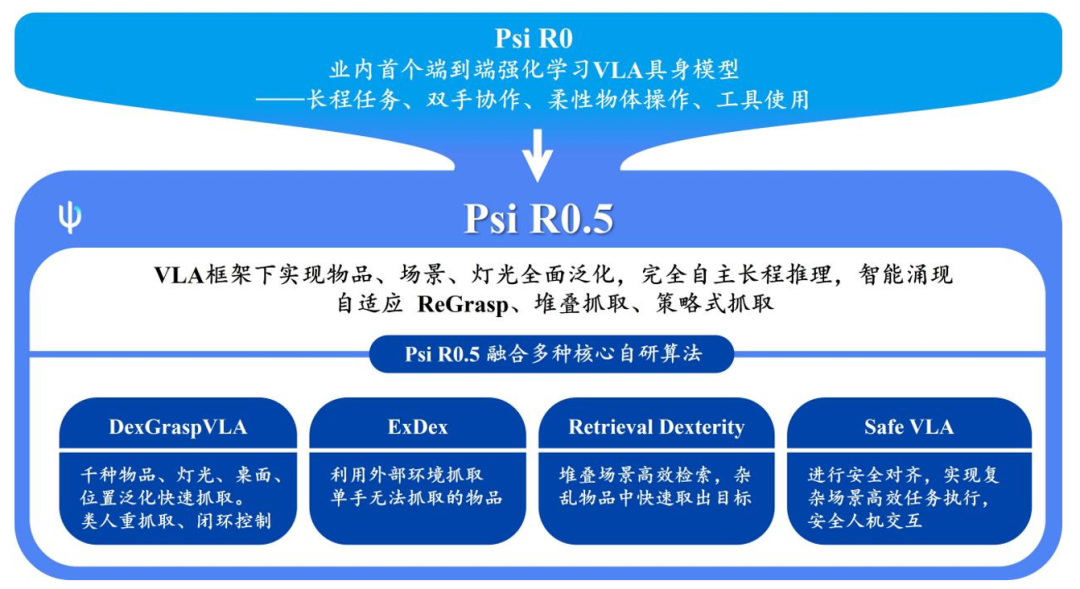
Psi R0.5 integrates four core self-developed algorithms:
-
DexGraspVLA: The first VLA (Vision-Language-Action) framework for dexterous hand general grasping, capable of intelligently emergent dexterous manipulation in variable environments through minimal training.
-
Retrieval Dexterity: An RL-based object retrieval strategy that addresses low efficiency in object retrieval and recognition in cluttered scenes.
-
ExDex: An innovative solution for extrinsic dexterity-based grasping that solves the problem of objects exceeding the robot end-effector's maximum opening width. Through reinforcement learning, ExDex demonstrates emergent autonomous strategy formulation, leveraging surrounding environments to grasp "impossible" objects.
-
SafeVLA: While VLAs are revolutionizing robotics, they leave certain safety concerns. SafeVLA puts human safety first, enabling robots to complete tasks safely and efficiently in complex scenarios through safety alignment.

On March 31, the Embodied Intelligence Robotics Research Institute, co-founded by Youibot and Xi'an Jiaotong University, publicly unveiled its humanoid robot matrix for the first time, debuting one wheeled humanoid robot — Xunxiao.
The "Tianyan" series comprises seven products with different positioning based on application scenarios, covering bipedal, wheeled, quadruped, and tracked forms. Among them, "Xunxiao" is designed for large-area complex indoor environments, featuring long endurance and high flexibility, already deployed in semiconductor manufacturing Sub-FAB operations and energy industry power distribution room operations.
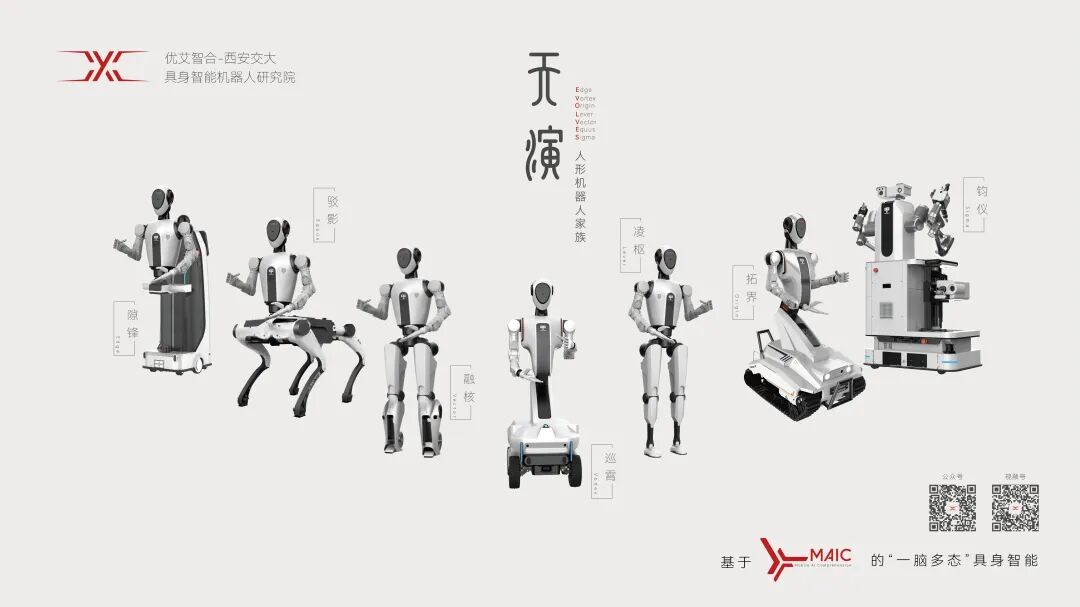
Based on scene adaptability characteristics, the team has built a "one brain, multiple forms" embodied intelligence foundation model, adopting a hybrid architecture of multimodal general foundation model + "one brain, multiple forms" edge embodied model, with preliminary scenario application validation completed.

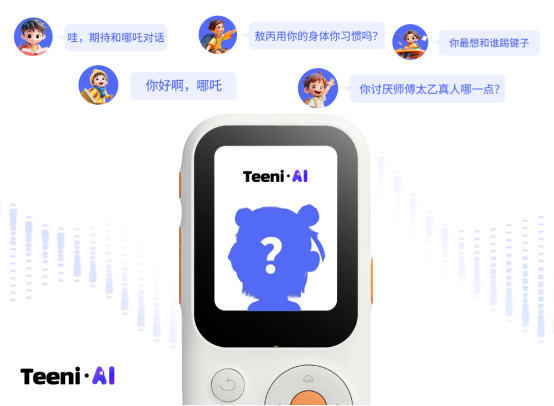
Based on the "AI agent" concept, TeeniAI has built a "personal portable intelligent agent" hardware product series for users aged 4-14. By 2024, cumulative TeeniAI product activations exceeded 500,000 units, with monthly retention over 55%, making it the youth terminal with the largest call volume for foundation models such as Tongyi.
In TeeniAI products, the team designed a complete AI system centered on child development. Beyond audiobooks and learning scenarios, TeeniAI can record users' growth events, forming a memory system unique to each user, while parents can periodically review weekly reports to enhance parent-child interaction efficiency. After the foundation model wave arrived, the TeeniAI team discovered significantly strengthened demand for AI companionship among teenagers, rapidly iterating to launch the X series positioned as a more advanced "AI companion." Based on built-in TeeniGPT, children can snap photos and ask questions on the spot, engaging in creative content creation.
In 2025, TeeniAI will launch Pocket Robot for the global market, enhancing multimodal capabilities with multi-angle photography recording and real-time translation.

This January, Jishi Design fully upgraded "the world's first AI website team" Wegic.ai. Simply give instructions, and three AI employees stand ready to serve your every need.
Website: https://wegic.ai/
Here's how they make website creation and management effortless:
- Simple conversation — describe your needs, and AI designer Kimmy builds your website from scratch in 60 seconds.
- Granular local edits — every element on the webpage can be clicked, selected, and modified. Want a style change? Want to add an animation effect? AI designer Kimmy will do her best to fulfill your requests.
- No coding or deployment needed — AI developer Timmy helps you publish your website with one click.
- Auto-sync content functionality — provide a source link just once, and AI operator Turi automatically updates your content for you.
- Create an AI digital twin for round-the-clock Q&A — smart companion Turi stands by 24/7, ready to answer visitors' various questions.
To date, Wegic users span 226+ countries and regions globally, having helped users create and manage 500,000+ websites. It also won runner-up in the No Code category at Product Hunt's 2024 Product of the Year awards, the world's largest product community.

Yueran Innovation's first AI hardware product "BubblePal" achieved first-launch results on Douyin, Xiaohongshu, and other emerging e-commerce platforms that far exceeded internal expectations.
BubblePal is based on AI-native and self-developed emotional models, providing plush toys with interactive dialogue capabilities for children, using AIGC to respond to every whimsical idea a child has. BubblePal integrates hardware and software, with hardware designed as a "magic bubble" full of childlike wonder. When a plush toy wears the bubble, it gains thinking and conversational abilities for bidirectional interaction.
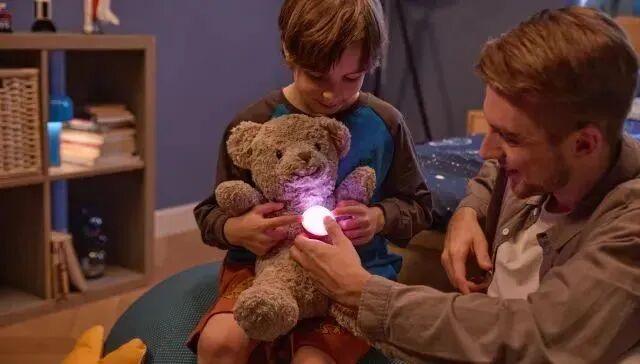
To make the product smarter and better suited for child companionship scenarios, Yueran Innovation adopts a large model + small model dual-layer approach in its technical roadmap: the large model provides generation and logical reasoning capabilities, while the small model delivers emotional value.
Currently, BubblePal has integrated ByteDance's self-developed Doubao foundation model, enabling complex text understanding, role-playing, and voice dialogue functions. Meanwhile, leveraging Volcano Engine's Ark platform for inference compute resources and complete toolchains, it embeds generative AI model capabilities into toys to produce new interactive content.

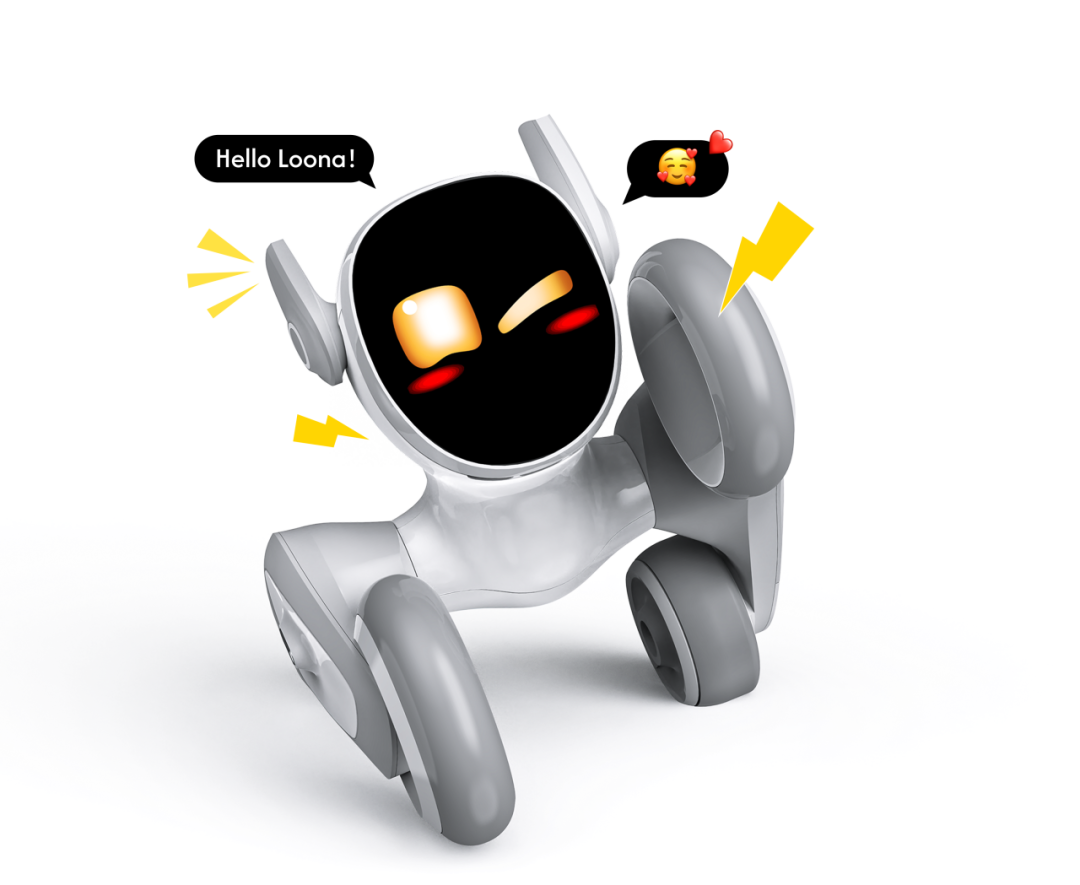
Earlier this year, Keyi Tech's pet robot Loona learned a new skill: dual-Loona interaction. Simply connect two Loonas to the same app and pair them via SN number to activate the interaction feature. It also features memory functionality — each pairing session is automatically saved, ensuring you and your Loona can continue enjoying exclusive interactions.

As generative AI technology gradually matures, Keyi Tech's second-generation product, the companion robot Loona, has shifted its functional focus to human-robot interaction. "We aim to build the next-generation robot intelligent decision-making machine through Loona. Through the intelligent decision-making machine, robots can smoothly express emotions through multimodal information, enabling robots to truly understand people."

While traditional fintech continues optimizing trading algorithms, RockFlow redefines investment boundaries with its revolutionary product Bobby — the world's first financial AI Agent with emotional perception capabilities. This intelligent agent breaks through traditional trading robot models, building a three-dimensional capability system encompassing market sentiment monitoring, personalized strategy generation, and dynamic risk management, deeply integrating natural language interaction into the full investment decision-making workflow.
Bobby's core innovation lies in establishing a "semantics-strategy-execution" intelligent closed loop. Users describe investment intentions through natural language, while the system real-time parses global market intelligence (covering news sentiment, social media volume, earnings data, and other multi-source information), automatically generating investment plans adapted to individual risk preferences and completing seamless trade execution. This compression of the "thinking-acting" chain improves conversion efficiency from intent input to order placement by three orders of magnitude compared to traditional systems.


BlueRun Ventures Leads $120 Million Angel Round for Tashi Zhihang, Launching New Embodied Intelligence Venture | BlueRun Portfolio
Making Cars Intelligent Agents: Li Auto Releases Next-Generation Autonomous Driving Architecture MindVLA | BlueRun Portfolio Headlines
Stop Just Talking About DeepSeek R1! Check Out Ten Entrepreneurs' Open-Source Model Battle Tests | BlueRun Perspectives
: When Embodied Intelligence Meets Reality | The Road to AG