What Does Car Consumption Look Like in the Lower-Tier Market of 1 Billion People? | BlueRun Ventures Dialogues with *Yimaiche*

Change the way Chinese people buy cars.
How many households in China still don't own a car? The answer is close to 60%.
The auto industry is deeply intertwined with the broader economy. Growth in car consumption requires not just policy support, but also more convenient and transparent circulation and transaction systems.
Beyond the 4S dealerships and direct-to-consumer stores in tier-one and tier-two cities, China has a vast lower-tier market home to one billion people. There, car consumption works very differently.
Founded in 2015 as a comprehensive auto service platform, BlueRun Ventures portfolio company Yiauto entered from lower-tier cities, leveraging robust supply chain resources, financing capabilities, fully mobile process management technology, and an efficient, trustworthy auto transaction service system to make real-time nationwide vehicle sourcing possible. For users shopping through Yiauto, it feels like browsing a "nationwide chain of auto supermarkets."
In this BlueRun conversation, we spoke with Bao Mulong, founder and CEO of Yiauto, about: What changes are happening in the auto market, especially the lower-tier auto market? And what could car-buying look like for Chinese consumers?
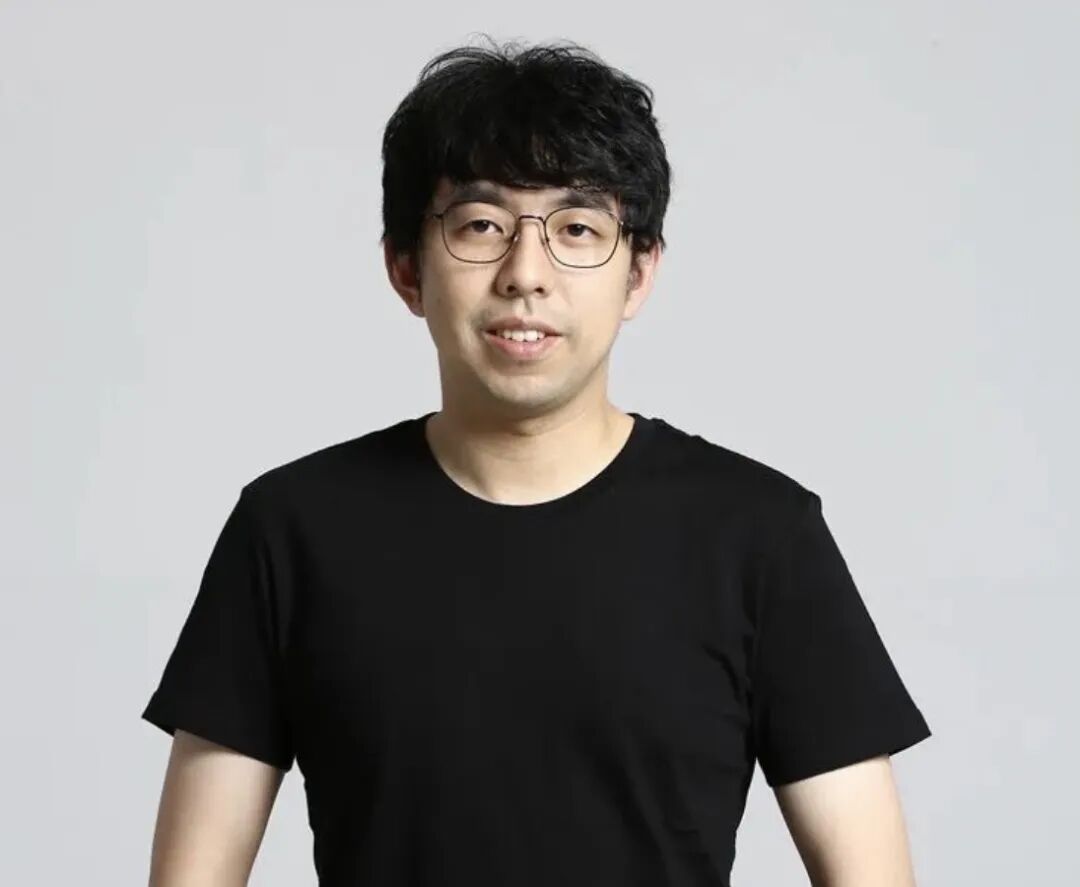
Bao Mulong, Founder and CEO of Yiauto
1
Spotting Opportunity in "Relationship Networks"
BlueRun Ventures: When you founded Yiauto in 2015, what demand and market conditions did you see?
Bao Mulong: At the time, we saw an opportunity in what we called a relationship-driven market. We believed there were numerous brokers in cities with extensive client resources, and these clients trusted the car-buying channels they recommended. Some of these brokers were moderators on Autohome forums, others were former 4S dealership employees, and some worked in auto detailing shops. We spotted this opportunity and dove in.
Around 2016 and 2017, we discovered that lower-tier cities were even more fundamentally relationship-driven. Residents there have more free time than their tier-one and tier-two counterparts, and their disposable income is relatively high—they invest considerable time in building relationships.
Lower-tier cities are also smaller in scale. In a county or prefecture-level city, basically everyone in a given network knows each other directly or indirectly, so trust runs deeper throughout the referral process.
2
Change Is Underway in the Lower-Tier Auto Market
Q: Could you talk about how vehicle sourcing, customer acquisition, and transaction scenarios have evolved in lower-tier cities in recent years?
Bao Mulong: The biggest change has been in vehicle sourcing. Before 2017, if we wanted to customize a model with a manufacturer or purchase vehicles in bulk, it was difficult—manufacturers basically refused to work with anyone outside their primary dealers, the 4S stores. But after 2017, manufacturers gradually became more flexible.
Two factors drove this. First, our growing scale made us impossible to ignore. Second, manufacturers began rethinking their relationship with dealers and their understanding of the lower-tier market. They're now considering how to reach consumers directly.
So starting in 2017, we began placing direct orders with manufacturers. By this year, we've secured exclusive customized models from several brands—for example, Geely created a special Yiauto edition of the Emgrand for us.
Going forward, as new energy vehicles claim a growing market share, many emerging OEMs have established their own channels in tier-one and tier-two cities, mostly through direct ownership. But they can't sustain a single direct store in lower-tier cities, so they desperately need offline showrooms or online channels.
Meanwhile, traditional gasoline car manufacturers are essentially riding the last wave of production line dividends, making them more open than ever before.
On the customer side, there have been notable differences. Before 2019, our broker-based, relationship-driven acquisition model—built on trust passed between acquaintances—remained highly efficient.
But after 2020, that efficiency plateaued for two reasons. First, as Douyin and Kuaishou grew, users became more receptive to KOL recommendations.
Second, in these cities, we saw an increasing number of existing customers whose satisfaction far exceeded our expectations. While we initially focused on serving users without constantly reaching out, ongoing engagement deepened their satisfaction. Now, under our operations, each completed customer refers approximately 2.5 to 2.7 new vehicles annually.
This has become a crucial growth engine for us. Our core growth in coming years will be driven by continuous referrals from existing users.
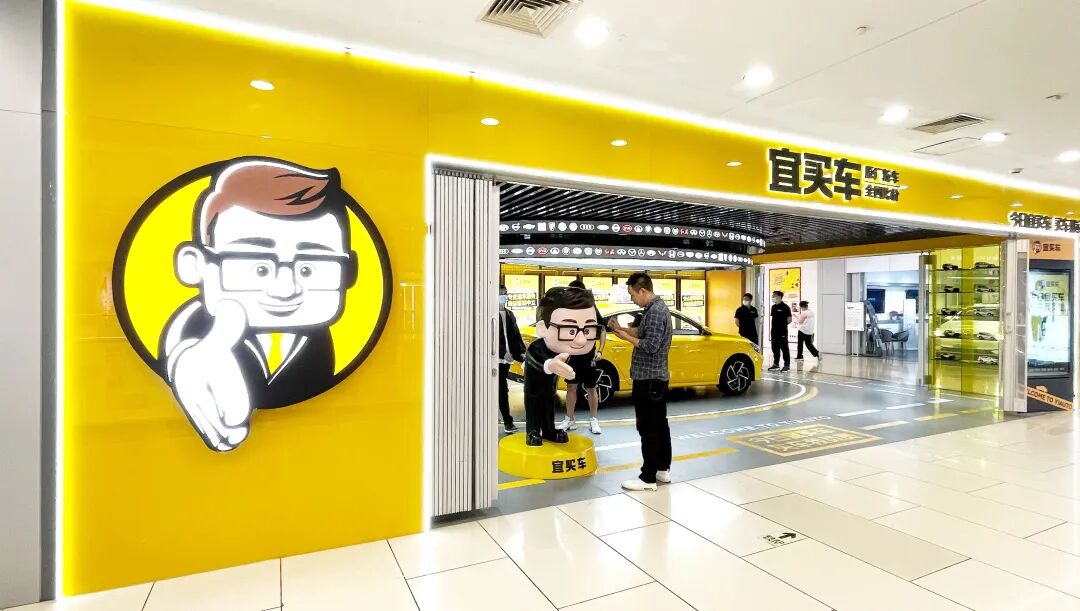
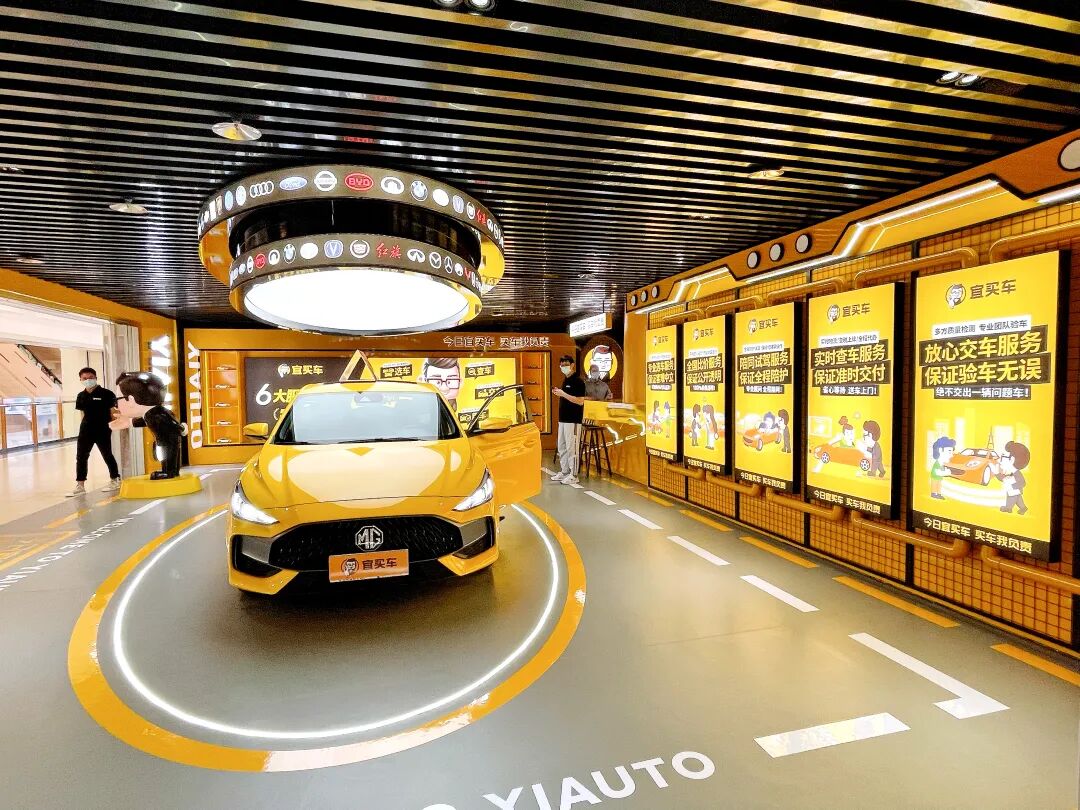
On the physical space side, we've gone through several iterations. Our earliest version assumed that trust in lower-tier cities could be transmitted purely through social relationships, so we opened in inconspicuous locations with minimal decoration for sales conversion and delivery. But as trust conversion and consumption attitudes in lower-tier cities have evolved, we're now building new-format stores in core shopping malls.
Additionally, as new energy vehicles gain share, our store formats have adapted. For NEVs, we've introduced twenty to thirty mainstream test-drive models, allowing users to test-drive everything in one stop.
Q: Any interesting observations about auto consumption in the lower-tier market overall?
Bao Mulong: Lower-tier auto consumption is a market with massive incremental growth, with compound annual growth rates exceeding 30% in recent years. Now 60% of China's annual auto sales already come from lower-tier markets. Tier-three cities and below represent an enormous market.
The existing auto distribution channels in these markets consist solely of mom-and-pop shops—tiny stores of a few dozen square meters, run by couples, relatives, or a few friends. There are over 100,000 such shops in China, selling roughly eight to nine million vehicles annually. They survive because they're essentially the only local auto distribution channel available.
4S stores can't penetrate these smaller cities because their single-model economics don't work. But their biggest challenge is talent. Their current staff are entirely "sit-and-wait" operators, not acquisition specialists. Building a lower-tier acquisition and integrated operations system from scratch means starting from zero, and they simply can't compete with locals. They've tried multiple times and failed every time.
To these mom-and-pop shops, we're a completely different system. Our sales and supply chain are digitized, so our salespeople have transformed into service staff. In traditional auto sales, the critical skill is understanding local market conditions and buyer psychology to negotiate and quote a price that closes the deal.
We don't see it that way. If we tried to replicate that model, scaling would be nearly impossible—you can't find that many skilled negotiators everywhere. It's a difficult skill to cultivate.
There's an industry saying: "Once you're in auto sales, you're in for life. Once you can sell cars, you can never leave," because it's the only thing you know. Many auto salespeople can't switch careers; at best they move to used car sales, but even that transition is tough because the skills differ.
Our salespeople aren't salespeople—we call them service guides, because they can't set prices. Our prices are system-determined: we sell at our cost plus a service fee, which still makes our total price 2-3% cheaper than mom-and-pop shops or 4S stores.
Our digital supply chain creates a fundamental difference from traditional sales. Our sales logic is service-based. We don't evaluate salespeople on profit or volume, but on customer satisfaction and service completion rates. The metrics are completely different, so the incentives are completely different.
3
Changing How Chinese People Buy Cars
Q: You covered industry changes. From the consumer perspective, what difference does Yiauto make?
Bao Mulong: We define our relationship with users as providing a fair way to buy a car. We give users a fully transparent, digitalized quote sheet. For any vehicle they want, our system rapidly calculates and delivers a quote based on big data plus algorithmic price prediction, or an accurate pricing digital system. Once the system generates the quote, salespeople cannot alter it.
You can even take these quotes to 4S stores for comparison, or simply close at the quoted price. We guarantee delivery within 24-48 hours at the quoted price. For most gasoline cars, users no longer need to see or test-drive the vehicle in person. I don't think it's necessary for cars under 500,000 RMB. This is a core pain point we've identified with gasoline vehicles.
Q: What's the future direction of Yiauto's business model?
Bao Mulong: Changing how Chinese people buy cars.
Our channel core has two pillars: price comparison logic for gasoline cars, and test-driving mainstream new energy vehicles, plus ancillary services like car washes. In the next two to three years, we aim to reach roughly 20,000 franchise stores and about one to two thousand direct stores.
At scale, in phase two, we'll do extensive OEM partnerships with manufacturers to create channel-exclusive vehicles. We've already begun this, and will expand significantly as our channel grows. NEV OEMs are collaborating with us very closely—we're in discussions with multiple manufacturers, with deeper cooperation and even co-branded models to come.
In phase three, once our user credit system matures and we've built substantial service and OEM capabilities, we'll explore subscription models. For example, vehicle swapping—consolidating your next 20 years of car usage with us. These are possibilities we're considering.
But for now, in phase one, we're staying focused on building out the channel.
Further Reading
Yiauto Closes $70 Million Series C, BlueRun Ventures Continues to Follow On
BlueRun Ventures Quarterly Investment Overview | 2022 Q2

BlueRun Ventures was established in Silicon Valley in 1998. BlueRun Ventures China was founded in 2005 and is a venture capital firm focused on early-stage startups.
Currently, BlueRun Ventures China manages multiple USD and RMB dual-currency funds, with assets under management exceeding 15 billion RMB, making it one of the largest early-stage funds in China. It invests primarily at Pre-A and Series A stages, covering hard tech and innovative interaction, enterprise technology, new consumer, and healthcare. It has invested in over 150 startups, including Li Auto, Waterdrop, QingCloud, Guazi Used Car, Songguo Mobility, Ganji.com, Energy Monster, Yuntu Semiconductor, Machenike, CloudSaints Intelligence, Anxin NetShield, BioMap, and others.
BlueRun Ventures has been ranked #1 on Zero2IPO's "China Early-Stage Investment Institutions Top 30" and ChinaVenture's "China Best Early-Stage Venture Capital Institutions Top 30," and was named to Preqin's Top 10 Global VC Fund Managers for Sustained High Returns.
Additionally, BlueRun Ventures has received consecutive honors from Forbes China, 36Kr, Cyzone, Caixin Media, CBNweekly, Jiemian, and other media outlets, including "China Early-Stage VC Firm of the Year," "China Top Venture Capital Firm," "Most Entrepreneur-Friendly Early-Stage VC Firm of the Year," and "Most Influential Early-Stage VC Firm of the Year."