Will AI Make Designers Obsolete? | A BlueRun Ventures Perspective

AI Won't Replace the Design Industry — It Will Make It Better
Recently, at Alibaba's 2022 UDesign Week, Jimmy Shi, investment partner at BlueRun Ventures, was invited to serve as a mentor for the Uwin Design Industry Accelerator, where he delivered a speech titled "AI and Cloud Computing: New Drivers for Design's Digital Upgrade," sharing insights on industrial innovation and digitalization with projects across consumer, design and art, enterprise services, and technology sectors. This article is adapted from Jimmy's remarks at the event.
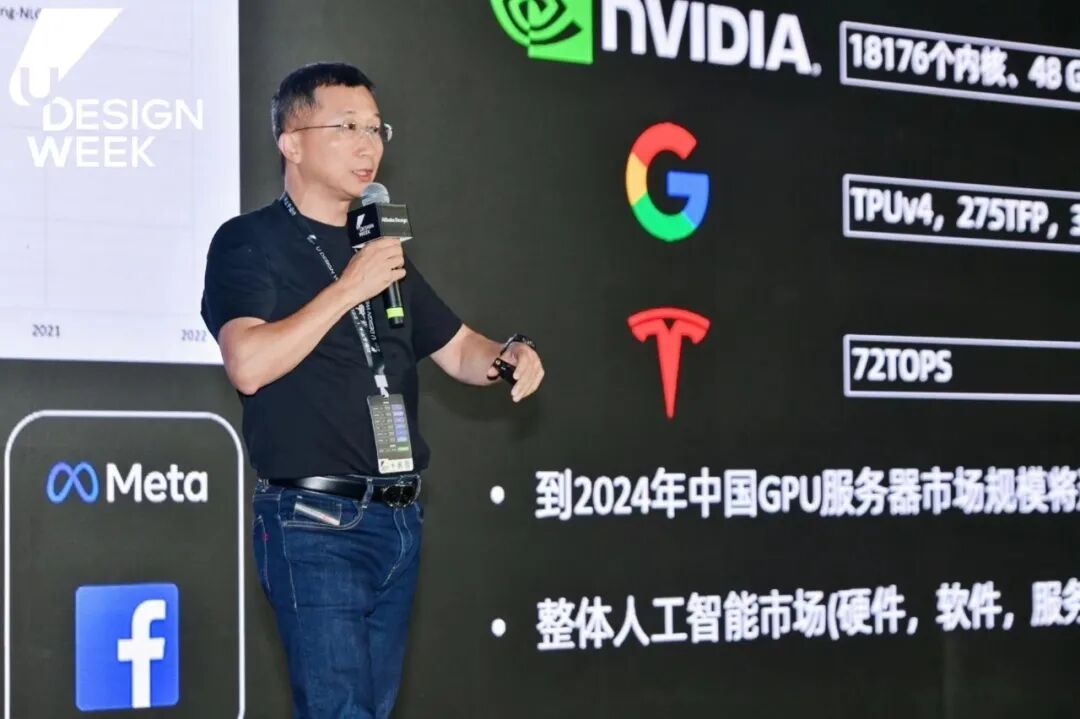
Jimmy Shi at the event
The design industry is labor-intensive. Design firms and architectural institutes are packed with people; walk into a game design studio and you'll see hordes of people doing repetitive work. While some of it is creative, much of it is still "manual labor."
From physical product design to digital world design, industry demand for talent keeps growing and the bar keeps rising, yet talent shortages are severe.
Forrester Research notes: "We expect the global design industry to reach $162 billion, with various design software growing more than 20% this year... Companies of all kinds are reforming or redesigning digital assets, and surging client demand means more designers are needed, but talent expansion hasn't kept pace."
The good news is that AI is changing how design work gets done. And not just design — as AI supply-side innovations emerge, workflows across many fields will transform.
01. Foundational Tech: Large Models and Compute Power Taking Off Together
Let's start with trends in underlying technology.
First, AI models. AI pre-trained large models have changed dramatically in the past year or two. OpenAI, DeepMind, Meta and others have poured enormous resources into model innovation and large-model training, giving the industry a strong push forward.
Some deep learning models worth watching:
- Transformer: Once training begins, every element in a Transformer can connect to or attend to any other element, rather than building from local to global as traditional models do (in language models, for instance, combining nearby words first). Transformer quickly became the leader for applications focused on analyzing and predicting text, such as word recognition.
- Attention: Through information-weighted fusion, the goal is to obtain better feature expression — concentrating limited attention on key information to save resources and quickly get the most effective information. The Attention mechanism resembles how humans look at images: rather than seeing everything, we focus on the focal points.
- MoE: Mixture of Experts, which leverages collective wisdom for decision-making; the final result is a probability-weighted output from multiple "experts."
- Pathways: Proposed by Google. In past models, all units needed to be trained together. Pathways enables multi-task, multi-state training of specific units as needed, with information sharing between smaller units — dramatically reducing compute and cost.
- GPT-3: A powerful language model. GPT-3 takes examples as direct input, using them to alter the model's internal state and generate the desired output. OpenAI released DALL·E based on GPT-3.
- Diffusion: Behind both OpenAI's DALL·E 2 and Google's Imagen. It skips the feature extraction step and generates higher-quality images than GANs.

A DALL·E 2 masterpiece: an astronaut riding a horse. Additionally, DALL·E 2 can now edit existing images based on natural language captions, adding and removing elements while accounting for shadows, reflections, and textures
Another major innovation is the shift from unimodal to multimodal intelligence. Traditional algorithms focus on training models from a single data source, while multimodal intelligence can fuse multiple senses — generating images from language, English from Chinese, or speech and video simultaneously from text. At this point, AI becomes closer to "how humans do things."
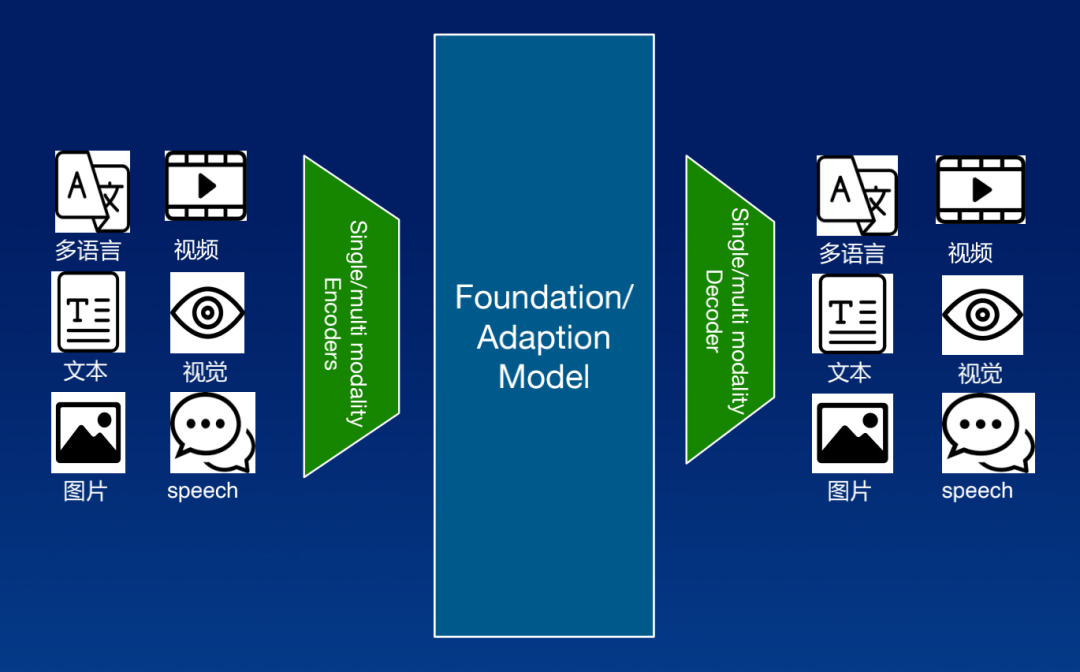
Multimodal AI provides computers with perception closer to human senses
Then there's more powerful compute. Without compute power, everything is a castle in the air. Google, NVIDIA and others have released chips setting new compute records.
GPU markets are exploding in both China and the United States. China's GPU market has a CAGR of 30%, projected to reach $30 billion in five years. Many domestic GPU chip startups are betting on this trend.
02. Opportunities: The Era of Creating Value with AI Has Arrived
What impact do these technologies bring?
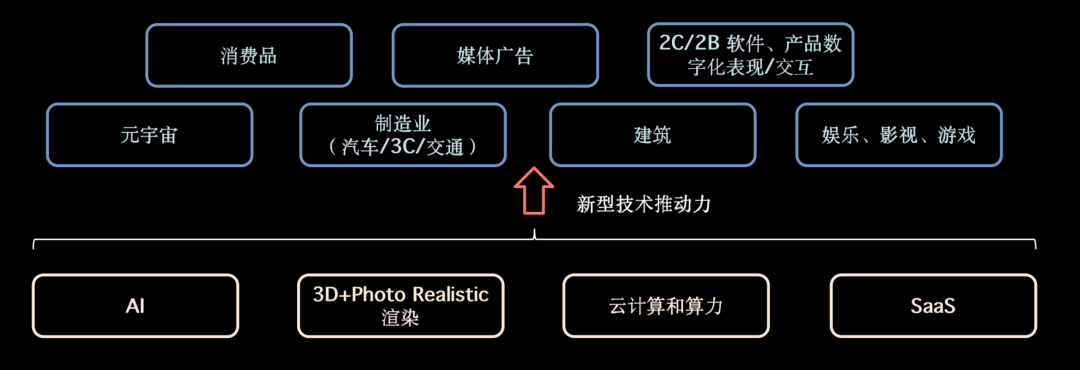
The effects are readily visible: consumer goods, media and advertising, digital interaction for software products, the metaverse, manufacturing (automotive/3C/transportation — remember, manufacturing is the largest design track), architecture, and entertainment, film, and gaming are all being transformed at the infrastructure level.
Many AI startups we've seen focus heavily on "efficiency gains," but AI can do much more now — it will actually provide more value creation, bringing greater impact and imagination to content creation and design.
For instance, describing a scene in words to generate relevant creative images will be hugely helpful for idea generation; future AI design costs will drop significantly — current compute costs are too high, latency is too long, and rendering takes over 10 minutes, which is unacceptable; future interaction will be second-level. There's also using AI to generate personalized copy, novels, essays, and more tailored to thousands of individuals.
Some specific opportunities include:
1. Open-source large models
In fact, open-source large models provided by major companies including Google and Meta are mostly "old versions," and many large models don't provide APIs at all. So entrepreneurial opportunities will emerge in developing more high-quality, open large models and building open-source large model ecosystems. Some companies that have already emerged abroad include stability.ai and EleutherAI.
2. Democratization of design tools
Design software penetrating every industry and scenario, becoming highly usable, accessible, and SaaS-ified, dramatically lowering barriers.
Collaborative design capabilities will be standard. Design is never solo work, especially within enterprises — it involves multiple roles, and these links need to be coordinated rather than operating in assembly-line fashion, which is bound to fail.
Whether in design, production, manufacturing, or development, collaboration enables people to create more valuable products.
Such as Jishi Design (即时设计), an early BlueRun investment, which filled the gap in domestic professional design software. It already combines robust Sketch foundational features with Figma's advanced capabilities in professional UI design, supports multi-user real-time online editing, and achieves livestream-level synchronization.
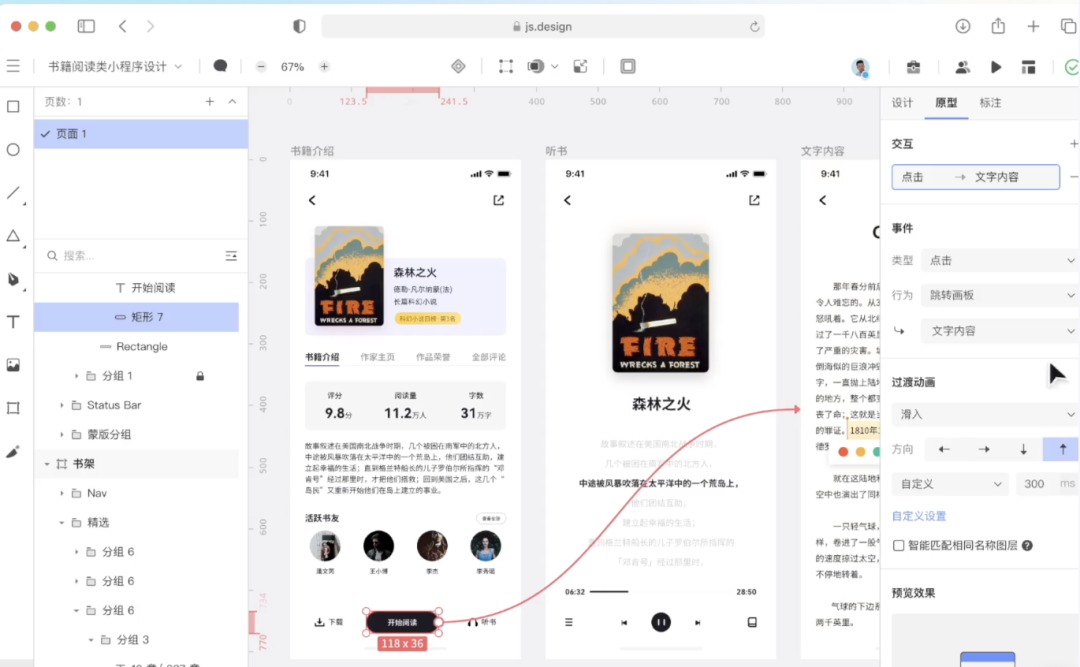
Jishi Design interface
Another early BlueRun project, Tangjike (唐吉诃德), is a commercial digital full-decoration provider using AI design technology that can design homes to "five-star quality." They automate human and material resources to address issues like inaccurate delivery timelines, high labor costs, and inconsistent craftsmanship in residential and commercial decoration.
3. Rich Applications
Future SaaS or browsers will increasingly trend toward rich applications. Previously, rich-client experience delivery was limited by DOM and JavaScript capabilities.
New technologies like WebAssembly can more lightly and efficiently support browser and server-side application deployment, or more cutting-edge Web GPU, which can unleash GPU capabilities to the web side, better supporting 3D presentation.
4. 3D+AR — Enhanced Real-World Interaction Design
3D models are what truly enable interaction with the virtual world. 3D structured data is the foundation for digitizing the real world, but historical accumulation of such data is minimal. Therefore, how to generate 3D data is a highly challenging problem.
Some approaches use dozens of cameras to generate one 3D model — the barrier is extremely high, viable for high-end manufacturing, but unsustainable if the goal is efficient, scalable 3D data generation. We believe better, more convenient, more accessible technologies will emerge to generate higher-quality 3D data.
5. Cloud rendering
Rapid development of cloud computing and infrastructure can support more devices with "unlimited" rendering capability, making full terminal-type coverage possible.
6. "Photorealistic simulation of a fully real digital world"
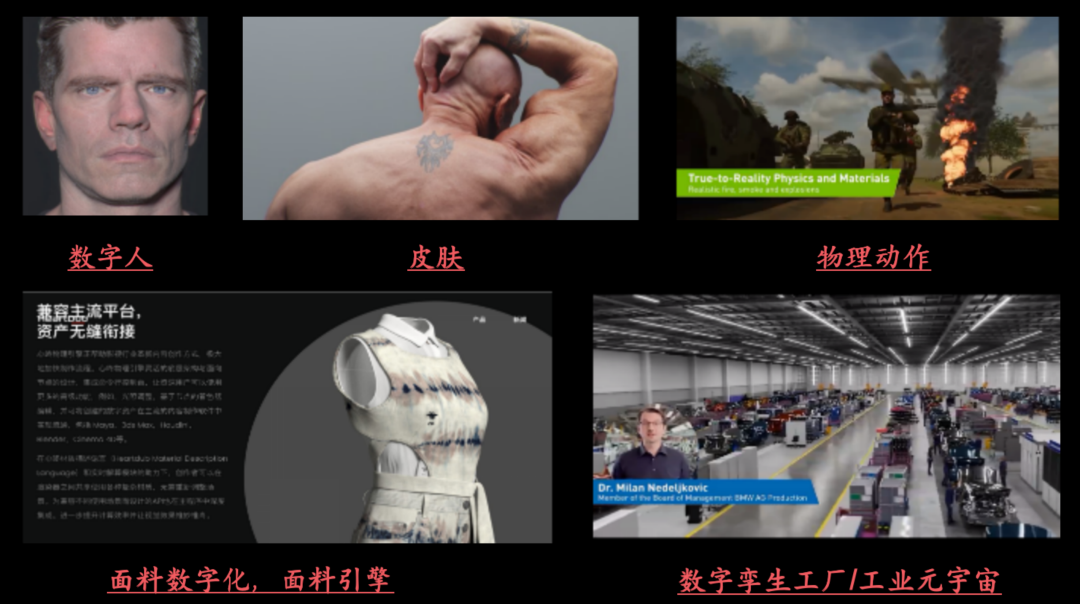
Current gaming exploration in this area is extensive, producing things indistinguishable from the physical world — including digital humans, skin, physical movements, material and tactile simulation, and more.
03. Future: A New Paradigm of Evolution Where "Speed Is Everything"
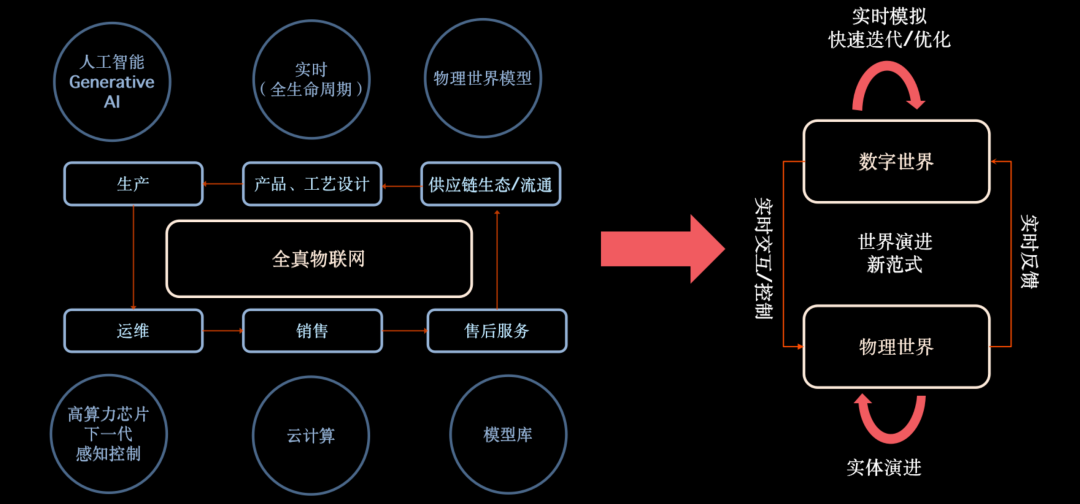
The future world is a fully real, digitally-physical converged IoT world. The fully real IoT will cover all stages from creation, design, and production to operations, after-sales service, and marketing.
The combination of technological innovation with application scenarios drives spiral iteration. In the future, a company's core competitiveness will lie in how efficiently it iterates: the digital and physical worlds interacting in real time, the physical world feeding back to the digital world in real time, entities evolving in the physical world while iterating and optimizing rapidly in the digital world. This will be the new paradigm of world evolution.
Iteration efficiency is everything, and efficiency must be driven by data + AI + science. For example, Tesla's autonomous driving iterates quickly because of its strong self-learning capabilities.
Finally, returning to what people often call "involution" (内卷) — involution is essentially scarcity, and scarcity mentality creates anxiety.
We can observe and identify segments in traditional industries that can be empowered by technology. When perspectives broaden, people won't engage in "cutthroat competition" in a single direction.
More than involution, startups need to cooperate with each other — otherwise they'll destroy themselves before even "walking out the door." Cooperating to form better interest communities and solve customer problems is how to gain some leverage against large companies.
Let's try a different angle: adopt an optimistic attitude that the world is abundant. With this belief, you can pursue highly differentiated competition, avoid homogeneous involution, and instead realize different kinds of value.
Be Abundance Believers, not Scarcity Practitioners.

Further Reading
BlueRun Ventures' Jui Chan: Investment Volume Won't Decrease This Year, Concentrating on Advantageous Projects
"Jishi Design" Raises Tens of Millions in B+ Round, User Growth Exceeds One Million | BlueRun Family

BlueRun Ventures was established in Silicon Valley in 1998. BlueRun Ventures China was founded in 2005 and is a venture capital firm focused on early-stage startups.
Currently, BlueRun Ventures China manages multiple USD and RMB dual-currency funds, with assets under management exceeding RMB 15 billion, making it one of the largest early-stage funds in China. It invests primarily at Pre-A and Series A stages, covering hard tech and innovative interaction, enterprise technology, new consumer, and healthcare sectors. It has cumulatively invested in over 150 startups, including Li Auto, Waterdrop, QingCloud, Guazi Used Car, Qudian, Songguo Mobility, Ganji.com, Energy Monster, Yuntu Semiconductor, Machenike, Yunsheng Intelligent, Anxin Wangdun, BioMap, and others.
BlueRun Ventures has been ranked #1 on Zero2IPO's "China's Top 30 Early-Stage Investment Institutions," #1 on ChinaVenture's "China's Best Early-Stage Venture Capital Institutions TOP30," and was named among Preqin's Top 10 VC Fund Managers Globally for Sustained High Returns.
Additionally, BlueRun Ventures has repeatedly received honors from Forbes China, 36Kr, Cyzone, Caixin Media, CBNweekly, Jiemian, and other media organizations, including "China's Best Early-Stage Institution of the Year," "China's Top Venture Capital Institution," "Most Entrepreneur-Friendly Early-Stage Institution of the Year," and "Most Influential Early-Stage Institution of the Year."