Can China's Low-Altitude Economy Replicate the EV Miracle? | A BlueRun Ventures Perspective

Electrification Is Redefining Mobility
You've probably heard the term "low-altitude economy" more times than you can count. But today, we want to explore a new question: Could low-altitude-related industries replicate the miracle of China's new energy vehicle sector?
One is a national industry that has already surpassed 20 million units in cumulative production; the other is an emerging track that has only recently cleared the product development phase. They hardly seem comparable. Yet BlueRun Ventures believes both share the same underlying logic: electrification.
On the surface, it appears that the low-altitude economy is simply developing rapidly in China. But at the foundational level, what's actually happening is the spillover of capabilities from China's NEV industry accelerating the electrification of aviation. Just as electric vehicles replaced internal combustion engines, eVTOLs and drones are completing the electrification of low-altitude aircraft. Their three-electric systems — motor, battery, and electronic control — can all draw from the R&D and manufacturing achievements of China's NEV power battery supply chain. And these three systems constitute the most critical components of the entire aircraft.
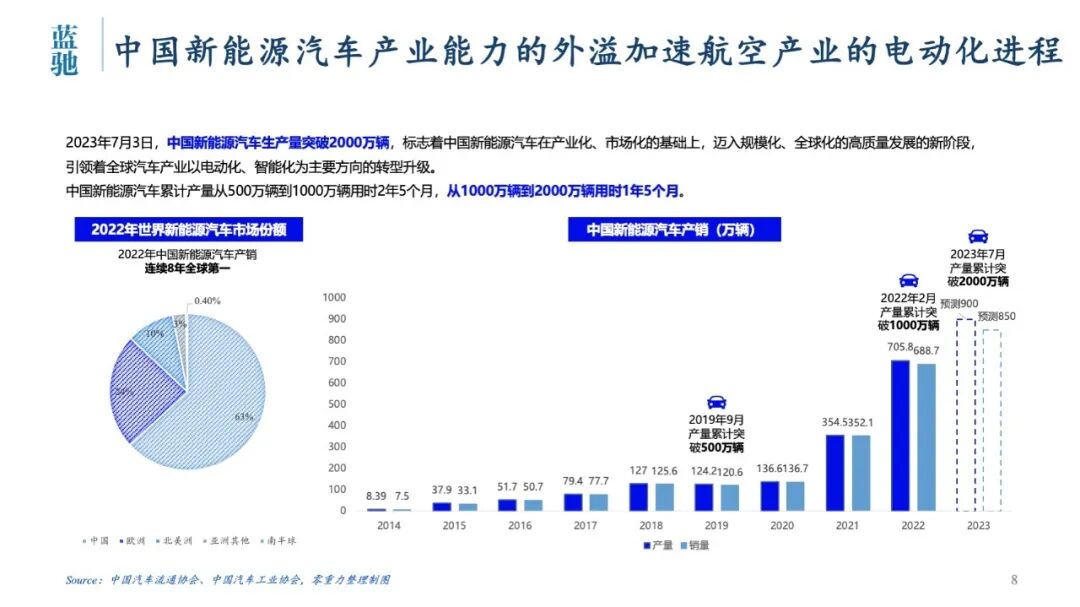
This is how technology industries always evolve: incomprehensible at first, impossible to catch once product-market fit is achieved. China's NEV cumulative production grew from 5 million to 10 million units in 2 years and 5 months, then from 10 million to 20 million in just 1 year and 5 months. Through multiple rounds of investment in Li Auto and systematic positioning along the NEV supply chain, BlueRun witnessed this miracle firsthand.
Starting in 2016, following the same mobility thesis, BlueRun began tracking and investing in the low-altitude sector. In eVTOLs, it backed TCab Tech and ZeroG Aircraft Industry; in drones, Skysys; and in flexible robotic arms, Wisson Technology, which partnered with DJI drones for aerial operations. After seven years of observation and analysis, BlueRun Ventures concludes:
Driven by electrification as the foundational force, China's low-altitude economy will, like the NEV industry, lead the global aviation industry's transformation and upgrade toward electrification and intelligentization.
Both eVTOL and drone sectors in the low-altitude economy have crossed the "valley of death" from zero to one, and will enter their commercialization元年 in 2024.
Electrification Redefines the Low-Altitude Economy
According to statistics, the global low-altitude economy market has already reached the hundred-billion-dollar level, with drones and aerial vehicles accounting for approximately 70% — becoming the new engine of low-altitude economic development.
Why does electrification matter so much for low-altitude industries? This is especially evident with eVTOLs.
eVTOL (electric Vertical Take-off and Landing) refers to electric aircraft capable of vertical ascent, descent, and low-altitude flight. Its primary distinction from traditional helicopters lies in its power system: replacing conventional fuel engines with electric propulsion. Nearly all of eVTOL's core advantages stem from this fundamental shift:
Low Cost: Reduced manufacturing, energy, and maintenance expenses
Humanity has long possessed helicopters, yet they haven't become commonplace for daily transportation for one simple reason — they're prohibitively expensive!
A twin-engine, five-seat helicopter sells for 50–70 million RMB. By contrast, TCab Tech's E20 tiltrotor eVTOL, a BlueRun portfolio company, is projected to cost roughly 7–8 million RMB at mass production. Naturally, the passenger fare will be substantially lower than fuel-powered helicopters. TCab Tech founder Yongwei Huang predicts that future eVTOL per-passenger, per-kilometer pricing could approach taxi levels.
Compared to helicopters, eVTOLs with electric propulsion systems inherently have lower energy costs and eliminate engine maintenance expenses.
Though eVTOL is an innovative product, it stands on the shoulders of numerous mature domestic industries. Its main components — airframe structure, electric propulsion system, energy system, integrated avionics, flight control system, and electrical systems — can all find precedents in the NEV and aviation supply chains. During China's C919 large aircraft development and across two decades of NEV industry evolution, sufficiently mature supply chains have emerged for eVTOLs to leverage. As power battery energy density improves and costs continue declining, eVTOL energy, maintenance, and operating costs will fall further.
High Safety: Distributed power systems, multiple redundancies, active safety
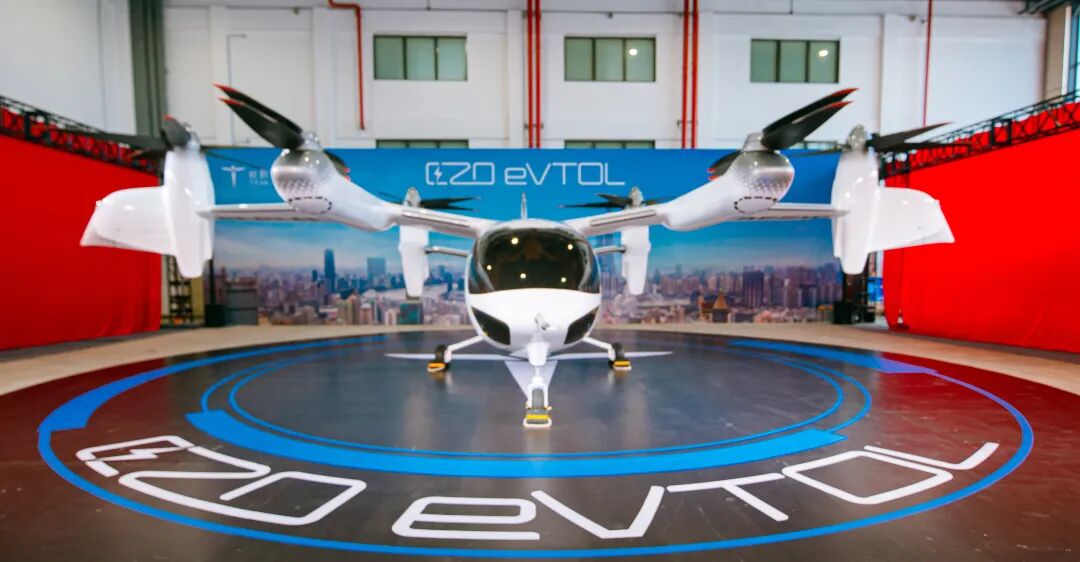
Safety is the core problem eVTOL must solve for passenger-carrying scenarios, typically addressed through "multiple safety redundancy" designs. Take TCab Tech's E20 eVTOL: it has six independent power units, and failure of any single unit won't affect normal flight. Even with multiple propellers shut down, it can land smoothly. Helicopters, by comparison, have only single or twin engines. In the multirotor takeoff configuration, all E20 propellers are positioned above passengers, ensuring boarding and deplaning safety.
Strong Intelligence: One-button flight, reduced pilot certification barriers, ordinary users flying aircraft
Electrification enables intelligentization for low-altitude-focused products. Simplified mechanical structures allow more precise control and faster response; and the electricity needed for electronic equipment comes directly from the power battery.
BlueRun anticipates that future eVTOL intelligentization will lower pilot certification requirements, potentially enabling one-button flight so ordinary users can operate aircraft.
Like automobiles and AMRs, eVTOL autonomous driving technology comprises perception, decision-making, and control — collecting and interpreting environmental data through multi-source sensors like LiDAR, planning flight missions and routes through autonomous systems, and flexibly adjusting subsystems based on low-altitude weather changes to achieve human-machine hybrid decision-making with human pilots primary. For large-scale eVTOL deployment, pilot barriers must be lowered so more people can qualify to operate. Intelligentization makes this possible.
For both eVTOLs and drones, electrification is simultaneously armor and Achilles' heel — endurance, the critical constraint, depends directly on electrification progress. "Previously, drones would run out of power after 20 minutes of flight, and operators had to carry large battery packs. So Skysys wanted to create equipment for automatic battery and sensor swapping, and we pioneered the fully automated airport, solving both power supply and unmanned operation simultaneously," Skysys co-founder and CMO Dr. Shengli Zhu once told media.
Scenarios & Configurations: The Right Pairing Matters
Discussions of aircraft often fixate on various performance-differentiated form factors. But from BlueRun's perspective, form should not be discussed in isolation — scenario compatibility should determine configuration selection.
Discussing configuration without scenario context has limited value; it's scenario fit that determines a configuration's viability. The low-altitude economy encompasses numerous scenarios with vastly different growth rates. Identifying which scenarios and aircraft configurations offer the highest growth velocity and momentum is where startups can differentiate themselves.
In the next 6–12 months, our core focus for the low-altitude economy: which eVTOL configuration achieves regularized, commercial flight in specific scenarios. This may represent eVTOL's PMF moment. Even without initial profitability, the business flywheel can begin turning.
Over the next 1–3 years, we'll focus more on: which companies achieve the highest shipment volumes? Which scenarios accumulate the most flight hours? These likely indicate the low-altitude economy's most critical growth directions.
Cargo Scenarios — Drones
Inspection & Patrol & Monitoring, Emergency Rescue
Case Study: Skysys
Founded in 2017, Skysys initially focused on the 0–500 meter low-altitude airspace, positioning itself as an ultra-low-altitude integrated air-ground operations service provider. Skysys drones carry multi-sensor payloads for fully autonomous low-altitude data collection, forming a product ecosystem combining four-dimensional intelligent ground surface layer, infrastructure layer, data perception layer, and intelligent central layer.
In terms of products, Skysys's high-performance industrial drones and fully automated airport products have achieved a complete product matrix spanning large, medium, and small form factors, along with ground inspection robots compatible with automated airports and four-dimensional holographic management platforms applicable across industries. The overall product ecosystem, through deep integration of digital twin, AI algorithm, IoT, and 5G edge-cloud fusion technologies, enables unified intelligent operations management across industry scenarios, supporting enterprise digital transformation and operational model innovation through high-frequency, normalized, unmanned autonomous inspection.
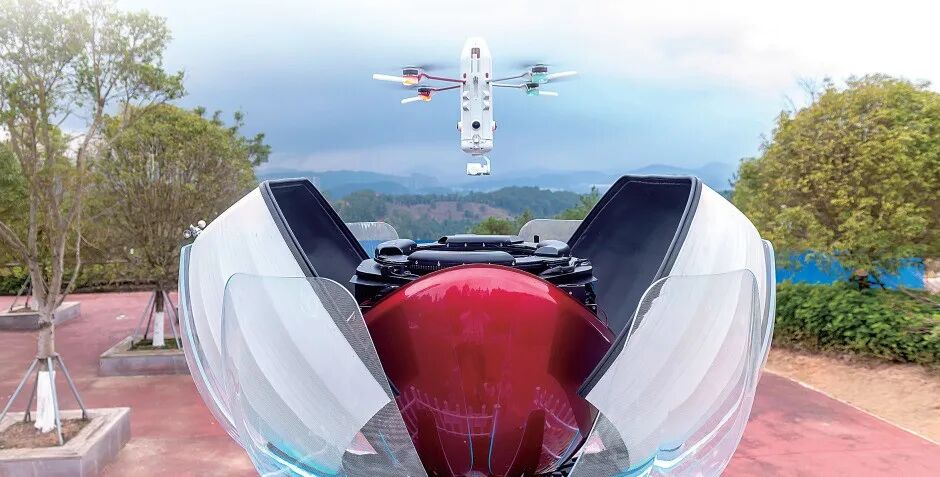
In industry exploration, to date, Skysys's fully autonomous drone inspection systems cover over 20 provinces and regions nationwide, widely deployed in power grid inspection, oil and gas inspection, new energy inspection, hydropower inspection, emergency rescue, forest patrol, smart cities, park security, construction monitoring, and other scenarios, helping industries improve work efficiency and practically address pain points and needs.
Aerial Operations
Case Study: Wisson Technology Orion Flexible Robotic Operations Platform
If drones had "arms," could they replace humans in hazardous scenarios while improving operational efficiency?
Wisson Technology's Orion Flexible Robotic Operations Platform aims to achieve exactly this. Its pioneering "intelligent flexible robot + drone" configuration equips drones with flexible, lightweight, high-capability operation modules, combining drone mobility with flexible platform operational dexterity — an industry first in achieving aerial precision composite operations.
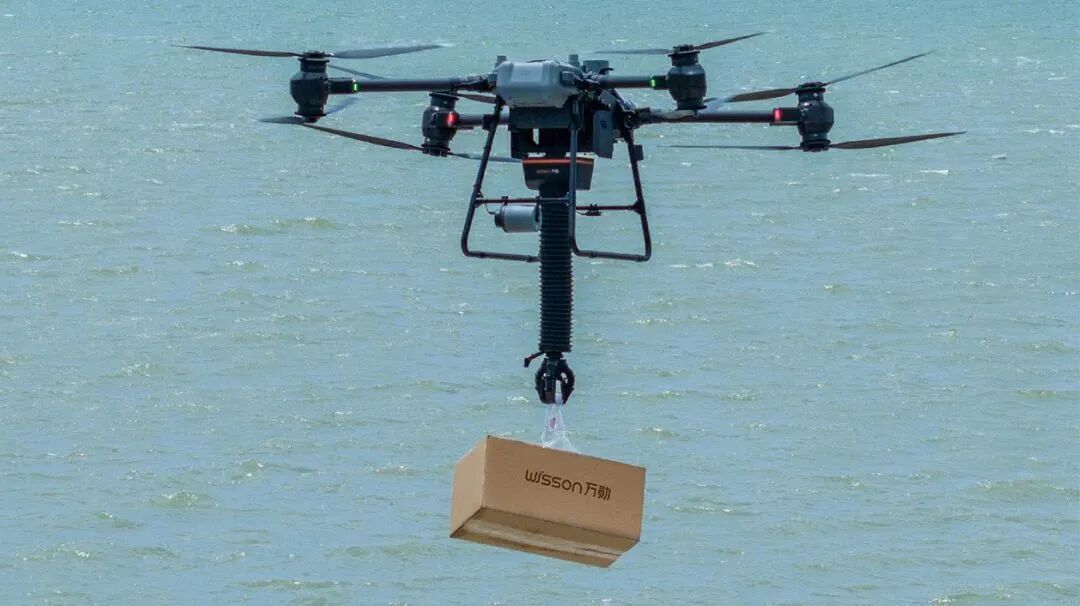
Orion combines "light self-weight, large payload, low power consumption, high flexibility, flexible adaptability, strong environmental resistance, and precision stability" as core metrics. Paired with drones, it enables omnidirectional aerial operations, aerial accurate grasping and transfer, cross-domain air-water-land precise deployment, omnidirectional high/low pressure spraying, contact-based press detection, and accurate sampling of gaseous, liquid, and solid materials — breaking through application scenario limitations.
Earlier this year, the Shanghai Yangtze River Waterway Bureau successfully completed its first-ever navigational aid light maintenance operation using the innovative "drone + flexible robot" approach — specifically Wisson Technology's Orion AP30-N1 Flexible Robotic Operations Platform paired with DJI's FC30 drone, achieving cross-domain aerial precision navigational aid maintenance.
Passenger Scenarios — eVTOL
eVTOLs currently have three main configurations: multirotor, compound wing, and tiltrotor. Each form has distinct strengths and weaknesses, but finding appropriate scenarios often allows advantages to shine while mitigating drawbacks. In urban transportation, general aviation travel, and sightseeing tourism, different configurations already have deployed cases.
Multirotor Configuration
Case Study: ZeroG Aircraft Industry ZG-ONE
This configuration uses multiple rotors to provide both lift and forward thrust during flight phases, with low entry cost enabling rapid commercialization.
Accordingly, ZeroG Aircraft Industry's multirotor ZG-ONE focuses on mass tourism and low-altitude flight sightseeing experiences. Designed for enclosed-scenario applications, it's an unmanned two-seat aircraft with 30km range, 25-minute endurance, 650kg maximum takeoff weight, and 125km/h maximum cruise speed. Its advantages include swappable battery architecture and top-mounted rotors, with whole-aircraft ballistic parachute and triple-redundant flight control computers for safety. Battery swapping improves operational turnaround efficiency.
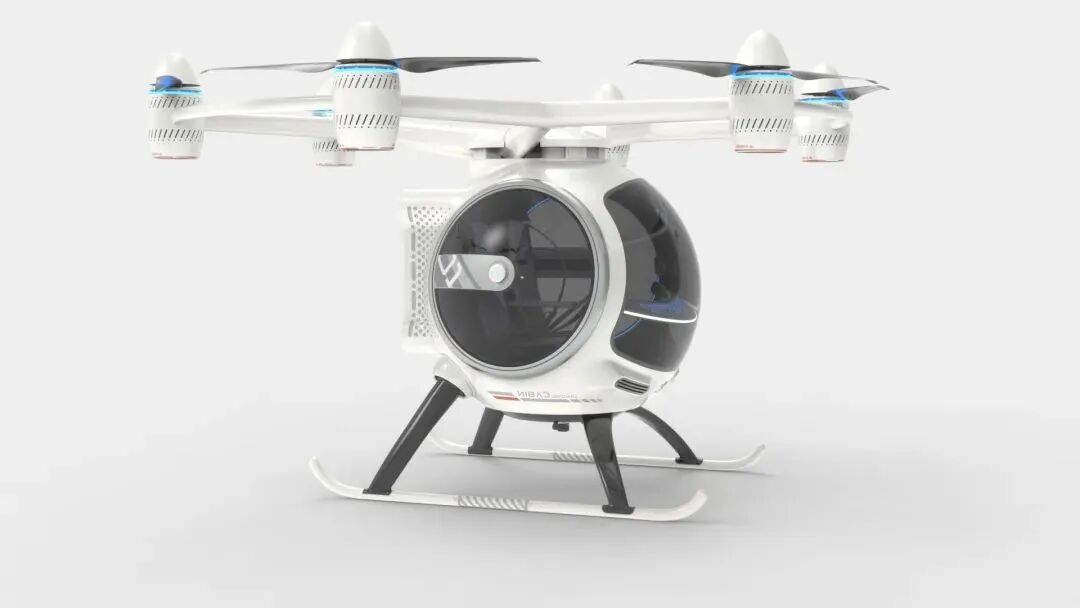
Currently, its 1:1 prototype has completed manufacturing and assembly, entering the productization phase, with over 200 letters of intent received. Small-batch delivery is planned for 2024, with airworthiness certification materials being prepared. Following TC (Type Certificate) acquisition, scaled commercial deployment will proceed.
Tiltrotor Configuration
Case Study: TCab Tech E20 eVTOL; ZeroG Aircraft Industry ZG-T6
Also known as vector thrust configuration, this design features rotors that flexibly transition: during takeoff, rotors provide lift like helicopter blades; in cruise, they tilt forward to provide thrust.
Research indicates that compared to other configurations, tiltrotor eVTOLs offer higher payload ratio — more passengers for equivalent takeoff weight — faster cruise speed up to 320km/h, and better economics — comprehensive costs at one-quarter of helicopters. For urban transportation and general aviation travel scenarios, this is currently recognized worldwide as the "ultimate configuration," with leading overseas OEMs like Joby and Archer selecting this approach.
TCab Tech's E20 eVTOL employs tiltrotor configuration. It has six propellers: during cruise, the front two don't tilt but feather to reduce drag; the rear four tilt to transition to fixed-wing mode for high-speed, high-performance flight. E20 uses the same power system for both vertical lift and horizontal thrust, with reusable power units for greater economy and lower future pricing. In development progress, TCab Tech has completed 1:1 prototype manufacturing and is actively pursuing certification.
ZeroG Aircraft Industry also has a tiltrotor eVTOL: the ZG-T6. According to ZeroG founder and CEO Yiheng Li, the ZG-T6 has a 2.5-ton design gross weight, six-seat single-pilot layout, 300km range, 90-minute endurance, and 300km/h cruise speed as a six-rotor tiltrotor aircraft, targeting future urban and intercity medium-to-long-distance transportation.
The ZG-T6 has completed full-scale verification aircraft assembly, with multiple prototypes conducting high-frequency flight tests at domestic test bases. Long-term plans target commercial use and mass delivery post-2028.
Compound Wing Configuration
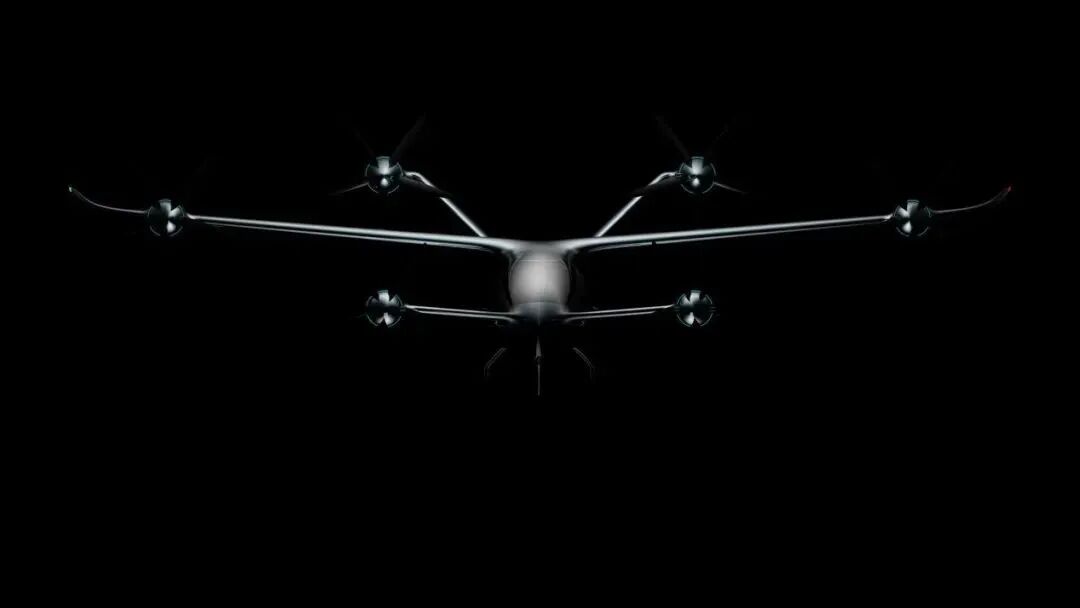
Compound wing configurations have two rotor sets: one for vertical takeoff/landing, another for cruise propulsion, operating independently. This approach has relatively simpler design and flight control systems, with regulators having familiar airworthiness pathways and compliance methods, making market access more permissive. Thus it can rapidly progress through R&D and manufacturing to commercialization. However, in cruise phase, the vertical takeoff/landing rotors become dead weight, adding drag without function.
What We Advise Entrepreneurs to Focus On...
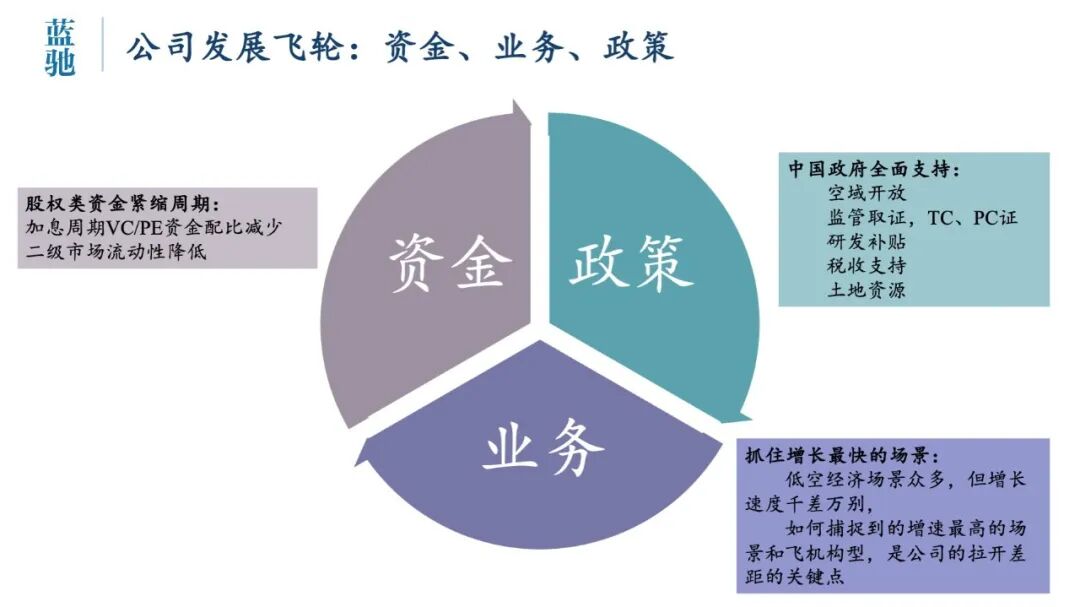
For companies committed to advancing low-altitude economy electrification, how to build their development flywheel at this stage? BlueRun Ventures believes entrepreneurs should focus on three core elements: capital, policy, and business.
Particularly on policy, two critical factors merit attention: first, the speed and rhythm of airspace opening; second, the regulatory certification progress for aircraft type certificates (TC) and production certificates (PC).
Airspace opening is a prerequisite for low-altitude economic development. We anticipate future low-altitude economy management will proceed along two directions: graded classification and fixed routes:
Drawing from consumer drone airspace management experience, initial airspace opening will likely concentrate on urban-rural fringe areas and prefecture-level city peripheries. BlueRun Ventures has observed eVTOL companies already staking claims to low-altitude airspace in these regions. To some extent, landing sites represent eVTOL companies' footholds. Suitable eVTOL landing sites in these areas are limited, and once first-mover advantage is established, remaining site opportunities diminish for competitors. Additionally, unlike roads that can be built, air corridors cannot be constructed, and eVTOLs are unlikely to travel arbitrarily like private cars. Fixed routes will likely be designated for effective regulation. Since eVTOLs typically have fixed navigation systems and can only fly designated routes, their regulation is considerably easier than automobiles.
Airworthiness certification for low-altitude aircraft also presents significant challenges.
The Civil Aviation Administration has specifically established Special Conditions (SC) for eVTOLs, with detailed requirements for structural design, powerplants, flight performance, and other aspects. Under the SC framework, leading eVTOL companies are advancing work in phases: PC (Proof of Concept) at conceptual design stage, TC (Type Certification) at preliminary design stage, AC (Airworthiness Certification) at final assembly stage, and OC (Operations Certification) at operational licensing stage.
According to plans, TCab Tech's E20 will complete TC and PC certification by 2026. Starting in 2025, demonstration operations will be developed, with commercial routes and low-altitude tourism projects launching concurrently upon certification.
Beyond this, overseas markets deserve greater attention from eVTOL companies.
Compared to China's comprehensive highway infrastructure, many sparsely populated or economically underdeveloped overseas regions — such as the Middle East, South America, and Africa — cannot afford dense high-speed rail or highway networks, making eVTOLs a more economical alternative.
On March 26 this year, TCab Tech completed a $20 million Series A strategic financing round led exclusively by a prominent overseas investment institution, with plans to develop "air taxi" application scenarios in the Middle East. Around 2027 or 2028, pending bilateral mutual recognition, TCab Tech aims to sell aircraft into overseas markets.
As TCab Tech's angel investor, BlueRun Ventures has also assisted the company in actively expanding overseas markets and securing funding support, accelerating TCab Tech's global capability growth.
Every era produces its great enterprises. The flourishing American auto industry of the 1960s created the "Big Three" — General Electric, Ford, and Chrysler. As mobility evolves from two-dimensional ground space to three-dimensional low-altitude airspace, what giants will emerge?
We look forward to BlueRun portfolio explorers continuing to consolidate industry advantages, driving the global commercialization of electric flight technology through technological innovation and global market expansion.
Established in 2005, BlueRun Ventures is a venture capital firm focused on early-stage startups. Currently managing multiple USD and RMB dual-currency funds in China with over 15 billion RMB in assets under management, it is among China's largest early-stage funds. Investment stages concentrate on Pre-A and Series A, covering technology, consumer, and healthcare sectors, with nearly 200 portfolio companies including Li Auto, Waterdrop, QingCloud, Guazi.com, Qudian, Ganji.com, Energy Monster, Gaussian Robotics, Songguo Mobility, Yuntu Semiconductor, Machenike, Skysys, Anxin NetShield, and BioMap.
BlueRun Ventures has been ranked first in Zero2IPO's "China Top 30 Early-Stage Investment Institutions," first in ChinaVenture's "China Best Early-Stage Venture Capital Institutions TOP30," and among Preqin's Top 10 global venture capital fund managers for sustained high-return performance.
Additionally, BlueRun Ventures has repeatedly received honors from Forbes China, 36Kr, Cyzone, Caixin Media, CBNweekly, Jiemian, and other media institutions, including "China Best Early-Stage Institution of the Year," "China Top Venture Capital Institution," "Most Entrepreneur-Friendly Early-Stage Institution of the Year," and "Most Influential Early-Stage Institution of the Year."