Into the Dalton Family | Biolid: Where Seeds Can Be "Tailor-Made"

A pile of seeds sits before you — which ones will sprout fastest? Which will yield the most? Which will have the best quality? Traditional breeding requires months of careful observation in the field, taking at least three months of "looking, smelling, asking, and examining" to find answers. But at Shijiazhuang Biolid Biotechnology, it takes just 7 to 14 days. How is this possible? Welcome to **Dalton Venture Family company Biolid**, as we explore how Biolid spent eight years breaking foreign technology monopolies to successfully develop liquid-phase chip detection technology, dramatically shortening seed [text cuts off]

Inside the Dalton Venture Family
Family Insights
A pile of seeds sits before you. Which ones will grow fastest? Which will yield the most? Which will have the best quality? Traditional breeding requires at least three months of fieldwork — observing, smelling, asking, examining — to find answers. At Shijiazhuang Biolid Biotechnology, it takes just 7 to 14 days. How? Welcome to Dalton Venture Family company Biolid, and the eight-year story of how it broke foreign technology monopolies, developed liquid-phase chip detection technology, and dramatically shortened seed selection timelines while improving accuracy.
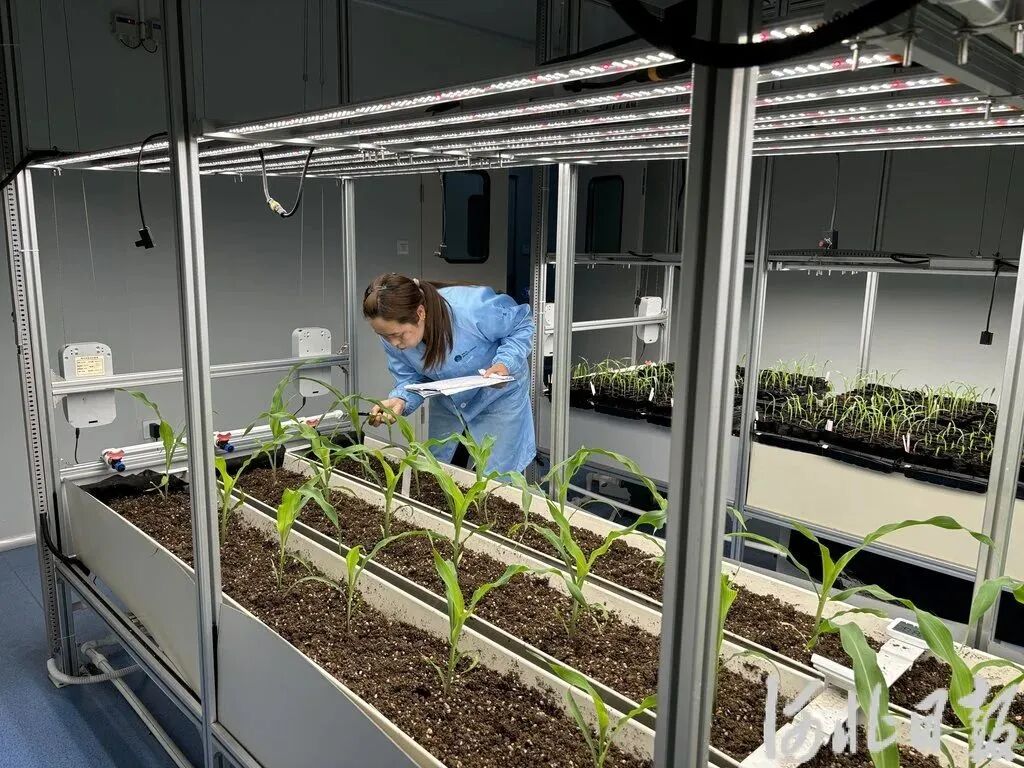
At Shijiazhuang Biolid Biotechnology, staff record crop growth conditions. Photo by Mi Yanze, Hebei Daily
01. Unblocking the Bottleneck in Breeding Chips
Biolid founder Jianan Zhang is grateful for the decision he made eight years ago.
Before founding Biolid, Zhang spent six years as a millet breeding researcher. Back then, they judged and selected seeds based on field performance — a traditional method like searching for a needle in a haystack, with high costs and heavy workloads.
"Actually, foreign countries had already adopted molecular breeding technology back then. You could directly determine at the genetic level whether a crop material had desirable traits, designing crop varieties like industrial products, shifting from experience-based breeding to targeted, efficient, and precise breeding, shortening the selection cycle from 8–10 years to 2–5 years," Zhang said. But domestically, the imported solid-phase chips used for genetic testing were prohibitively expensive and left China dependent on others, making molecular breeding technology difficult to popularize.
Zhang had previously worked on developing liquid-phase chips — genetic testing tools used in medicine — but they were costly. He had a bold idea: reduce costs and bring liquid-phase chips to agriculture.
In April 2017, he took leave without pay and founded Shijiazhuang Biolid Biotechnology. "Biolid" is a transliteration of "breeding"; the company's mission is to revitalize China's seed industry.
Although liquid-phase chips were already successfully applied in medicine, they were uncharted territory in agriculture. How to gain industry recognition?
Find authoritative breeding experts! After much deliberation, Zhang knocked on the door of Yunbi Xu, a pioneer in molecular breeding at the Chinese Academy of Agricultural Sciences' Institute of Crop Sciences.
Unexpectedly, Xu was very interested in their idea. The two sides agreed to start with corn breeding, collaborating to develop liquid-phase chips and verify technical feasibility, with a target of reducing costs from the then-market price of 500 yuan to under 200 yuan.
Zhang returned to his company excited and began focusing on the challenge. But reality threw cold water on his enthusiasm. The next eight months of experiments all failed. The liquid-phase chips performed poorly in testing, unable to even guarantee detection accuracy, let alone reduce costs.
Failure after failure, starting over again each time. Zhang and his team spent every day in the lab, improving bit by bit, but results still fell short.
By agreement, in mid-March 2018, Zhang was to report progress to Xu in person. "Would I have nothing to deliver?" The night before his departure, unwilling to give up, he decided to run one more experiment in the lab.
"Key site on-target rate: 57%." When the new data appeared, Zhang jumped up. Previously they had only achieved 10% at best — the new data was a massive leap. He roughly estimated that costs could be controlled under 200 yuan, with room for improvement across all metrics. Success was in sight!
They then increased sample testing and continued optimizing the product. Three months later, the first liquid-phase chip was unveiled. Compared to solid-phase chips, liquid-phase chip breeding had lower costs, shorter cycles, and higher accuracy. Currently, Biolid can help clients shorten qualified germplasm cultivation cycles by over 50% on average, improve selection accuracy by 20–30%, and reduce costs by over 90%.
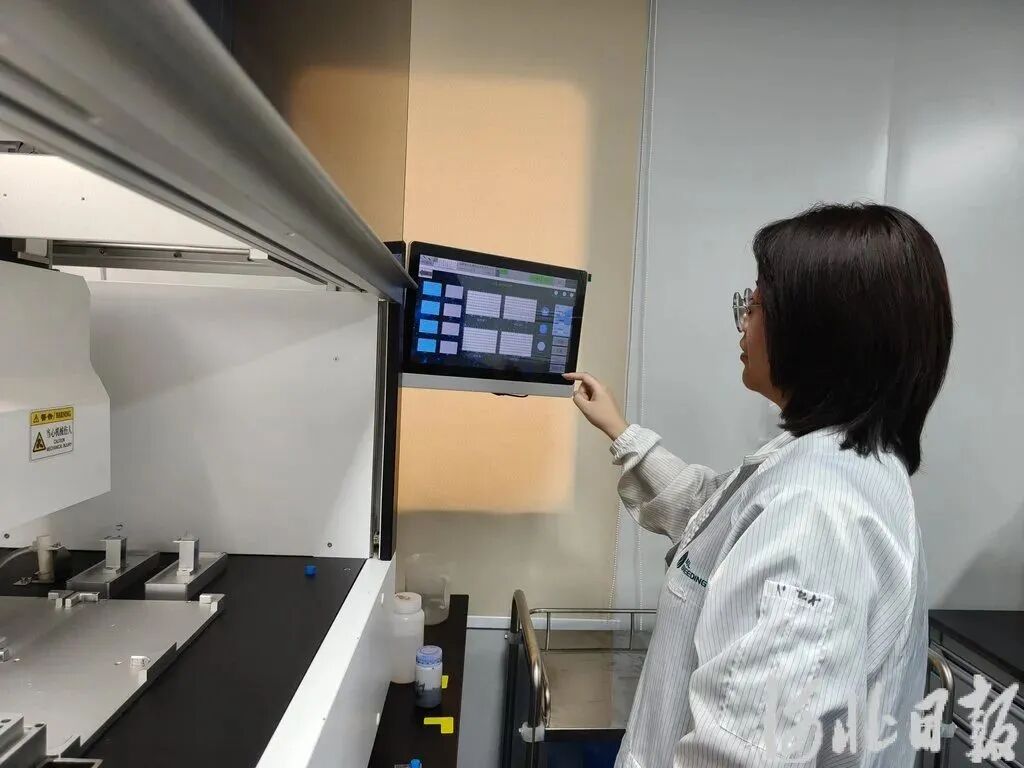
At Shijiazhuang Biolid Biotechnology, staff set parameters on a fully automated dispensing instrument. Photo by Mi Yanze, Hebei Daily
02. Annual R&D Investment No Less Than 15% of Revenue
Recently, reporters entered Biolid's molecular breeding smart laboratory and saw robotic arms dexterously removing samples from stacking stations and feeding them into testing instruments, completing DNA extraction, quality inspection, library construction, sequencing, and other processes.
The entire production line requires only one technician to replace consumables and reagents; all intermediate operation steps are transferred via robotic arms, with automated equipment completing tasks according to preset programs.
Lab staff member Zixuan Xu said the laboratory uses their self-developed unmanned molecular breeding smart laboratory system, which can meet the automation, informatization, and intelligentization needs of the entire breeding testing process and workflow. Output data can also be standardized, facilitating subsequent processing and analysis.
After developing its first liquid-phase chip, Biolid never stopped running. In 2019, although market demand hadn't yet reached the millions, Zhang saw further ahead: "As detection costs gradually decline, market demand will be unleashed." At the time, single-machine equipment efficiency was low, mainly relying on manual operation with limited output, so Biolid planned to build an intelligent high-throughput detection production line.
No ready-made equipment on the market? Co-develop with relevant equipment manufacturers.
Hardware still needs software systems? Build a team and tackle it step by step.
Equipment not fragmenting DNA effectively? Shift approach and develop liquid reagents.
...
In July 2023, the unmanned molecular breeding smart laboratory system went into operation, with annual sample testing capacity reaching 2 million. With the right tools, you can take on the toughest jobs. In 2024, Biolid tested 700,000 samples — equal to the total from 2019 to 2022.
"Our R&D staff account for 35% of total employees, and annual R&D investment is no less than 15% of revenue," Zhang said. In 2023, they began expanding overseas, establishing testing laboratories in the Netherlands, the UK, and the United States.
Currently, Biolid has independently developed over 580 liquid-phase chip products, covering more than 200 species in crops, livestock, and aquaculture, with cumulative testing exceeding 2 million samples. In 2024, Biolid was recognized as a national-level "Little Giant" specialized and innovative enterprise.
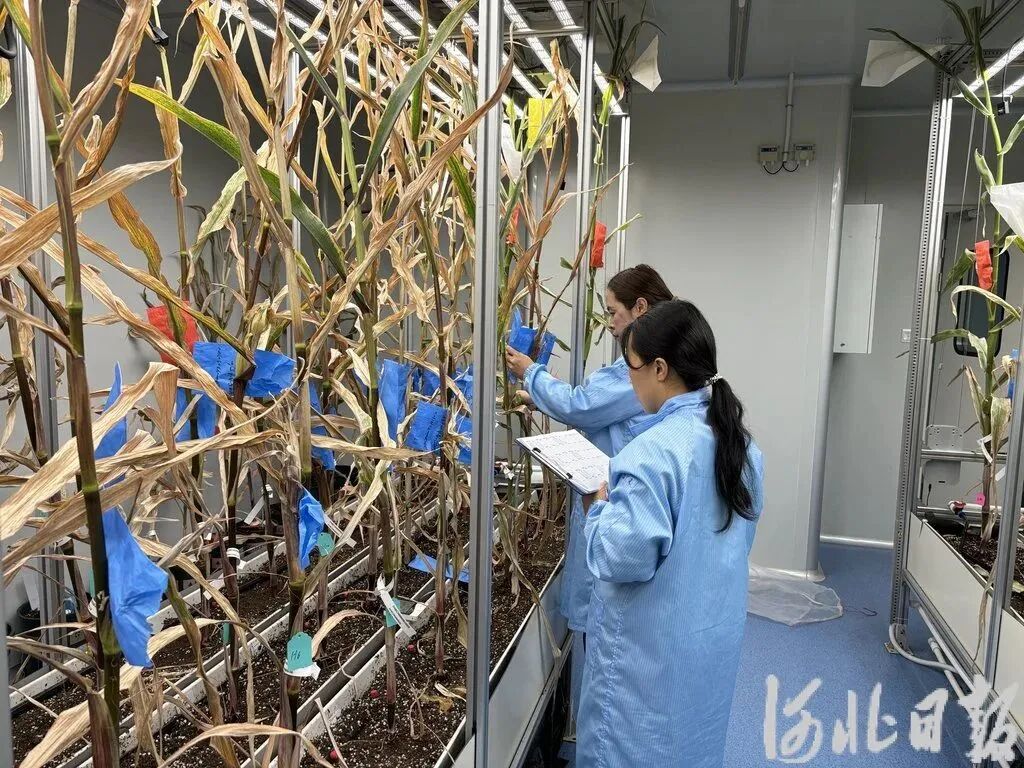
At Shijiazhuang Biolid Biotechnology, staff survey crop fruiting conditions. Photo by Mi Yanze, Hebei Daily
03. "Tailor-Made" Crop Varieties According to Customer Needs
Through the glass window of Biolid's rapid growth laboratory, reporters saw corn seedlings just sprouting, others knee-high, and some with yellowing leaves ready for harvest.
Why corn at different growth stages here? Zhang explained that they have begun expanding toward the CRO (Contract Research Organization) model, "tailor-making" crop varieties according to customer needs.
In 2023, during market research, they found that even with detection data in hand, some customers didn't know how to do molecular breeding. But Biolid had the technology, talent, and testing advantages, making molecular breeding more accessible.
Zhang pulled up a photo on his phone: on the left, corn leaves withered and yellow; on the right, lush green corn thriving.
In November 2023, Biolid received its first "tailor-made" order — adding resistance to southern corn rust to a high-yield, lodging-resistant corn variety.
While improving a new variety typically takes six years, Biolid's new technology bred a multi-resistant, stable, high-yielding disease-resistant new variety in just 18 months.
"The corn on the right is the new variety," Zhang said. In March 2024, they held an observation meeting in Hainan, inviting breeding experts and seed companies to observe the corn fields on-site, with many clients placing orders at the event.
"After the corn embryo is extracted, it can grow into seedlings on culture medium, saving nearly 20 days compared to traditional methods," said R&D center engineer Zixuan Wang. This also saves considerable time compared to the conventional process of corn threshing, drying, and then planting. In the laboratory, planting is not constrained by climate, enabling rolling planting and harvesting to achieve four corn growing cycles per year.
Previously, you had to wait for seedlings to grow and bear fruit before comprehensively judging whether they carried target genes — at least three months. Now, through Biolid's liquid-phase chip genetic testing technology, just one seedling leaf can accurately determine whether it carries target genes in 5–7 days.
Wang said this batch of corn seedlings in the rapid growth laboratory was selected from 1,500 seedlings based on recently completed test results combined with seedling growth performance. The data showed this generation already met target seed requirements.
Currently, Biolid has received orders for more than 50 variety improvements from over 20 clients, and their expanded 1,800-square-meter rapid growth laboratory is scheduled to come online this year.
Source: Hebei Daily
Reporters: Mi Yanze, Jia Nan


ID: daltonventure
Long press to follow
Recommended Reading