Inside the Dalton Family | Mu Liyue of Lanji Medical: From Silicon Valley Back to Xi'an, I Want to Build a Laser Product That Truly Matters to Medicine

Changing the World Through "Medicine-Engineering Integration"

Inside the Dalton Venture Family
Family Insights
When faced with comfort versus anxiety, how do people typically choose?
Do they follow the well-trodden paths of education and employment, falling from the ivory tower into the mundane world? Or do they follow their inner compass, stubbornly pursuing certain callings? Recently, Dr. Mu Liyue, chief scientist at Dalton Venture portfolio company Blue Laser Medical, shared his journey from intellectual to tech entrepreneur in the interview series "100 Xi'an Stories."
Most people's trajectories toward success follow predictable patterns of schooling and employment. Whether through university or advanced degrees, we all eventually tumble from the ivory tower into the real world. Some say the real meaning of a college diploma is simply that it helps you find a job, and the ultimate outcome of finding a job is working for someone else. In a sense, a diploma is just our special pass into the "salaried class."
It's hard to say whether, within these socially assigned roles, we can truly follow our preferences — choosing to persist in certain pursuits or discard things that don't suit us. Most people surrender to reality and live out ordinary lives. But a small minority refuses to follow convention. They actively leap out of fate's valley, repeatedly breaking through ceilings, writing remarkable and extraordinary stories of struggle. We call the latter entrepreneurs — the people who change the world.
Our protagonist today, Mu Liyue, is precisely such an entrepreneur. He transformed from intellectual to tech entrepreneur, using nearly three decades of entrepreneurial experience to honor both passion and idealism.
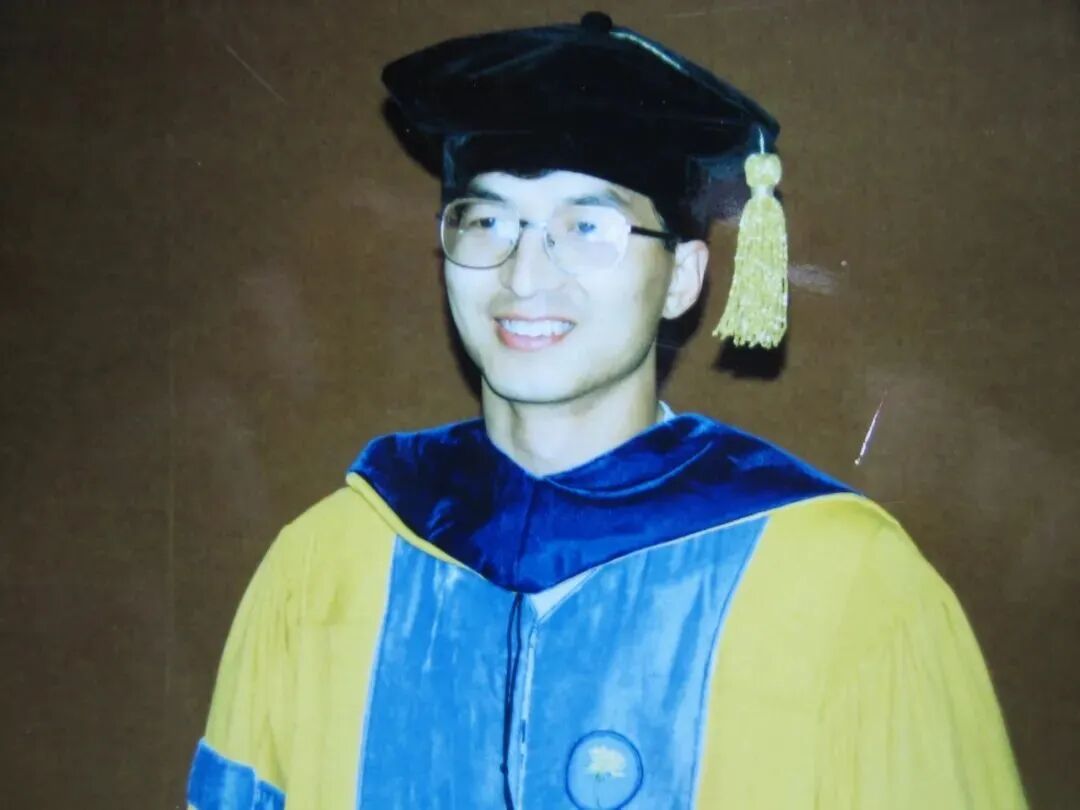
Photo of Mu Liyue after receiving his PhD from the University of Rochester in 1996
After graduating from university, he became a professor at a prestigious institution, earned his doctorate in the United States, and subsequently joined a top-tier company in Silicon Valley — completing what outsiders saw as an impeccable resume. Yet he remained unsatisfied with the comfort zones at each stage, choosing instead to apply his expertise through serial entrepreneurship, repeatedly turning impossibilities into realities from scratch while creating substantial value for society.
01
Walking Away from a Silicon Valley Salary
Choosing Entrepreneurship in the Prime of Youth
My name is Mu Liyue. I'm from Xi'an, born in 1962. My father was a professor at Northwest University, and my mother was a middle school teacher. Coming from such a scholarly family, my academic performance at each stage was decent enough.
I attended Xi'an No. 20 High School, now known as Xi'an High School. After the college entrance exam, I was admitted to the Space Physics Department at Wuhan University, where I also completed my master's degree in the same field.
After graduating with my master's in 1987, I was assigned to teach in the Physics Department at South China Normal University. Two years later, I entered the Mechanical Engineering Department at the University of Rochester. The University of Rochester is among America's best in laser research, home to the world-class Laboratory for Laser Energetics — known as the global center for optics. I chose to pursue and ultimately earned both master's and doctoral degrees in laser engineering.
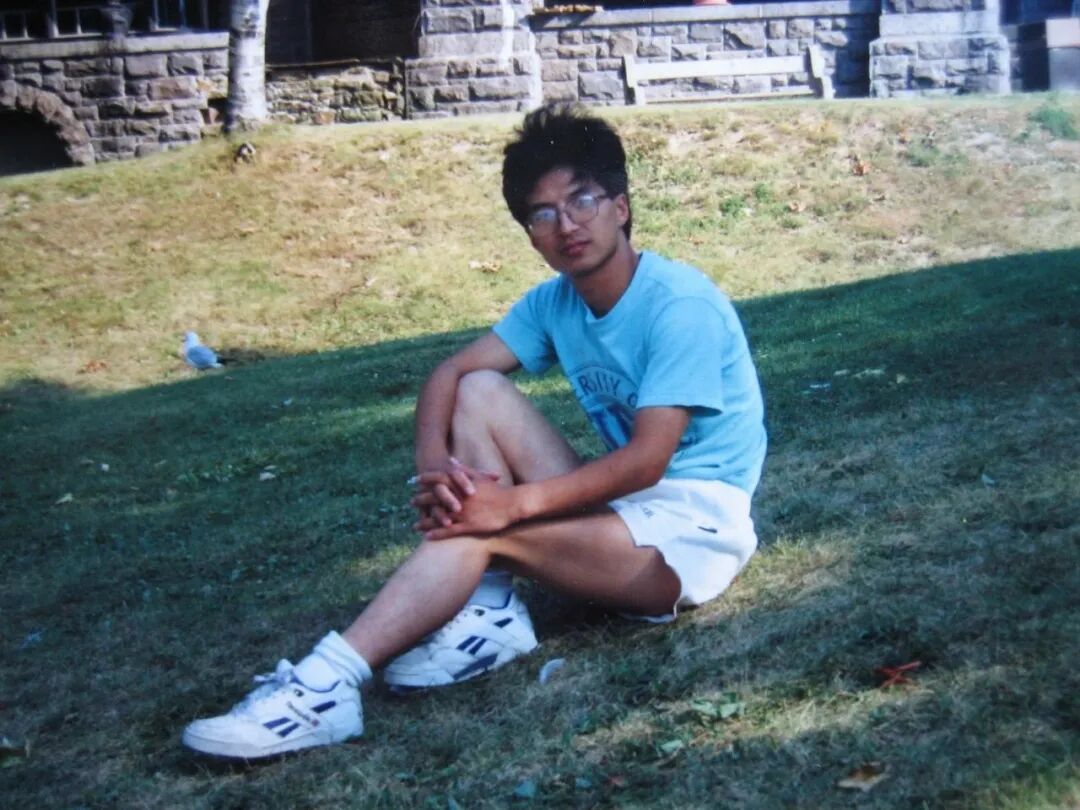
Photo of Mu Liyue studying at the University of Rochester around 1993
After completing my doctorate, I first worked at an American laser company for two years. I then joined a top-tier semiconductor wafer inspection equipment company in Silicon Valley, where rigorous training gave me extensive experience from laser technology innovation through commercialization.
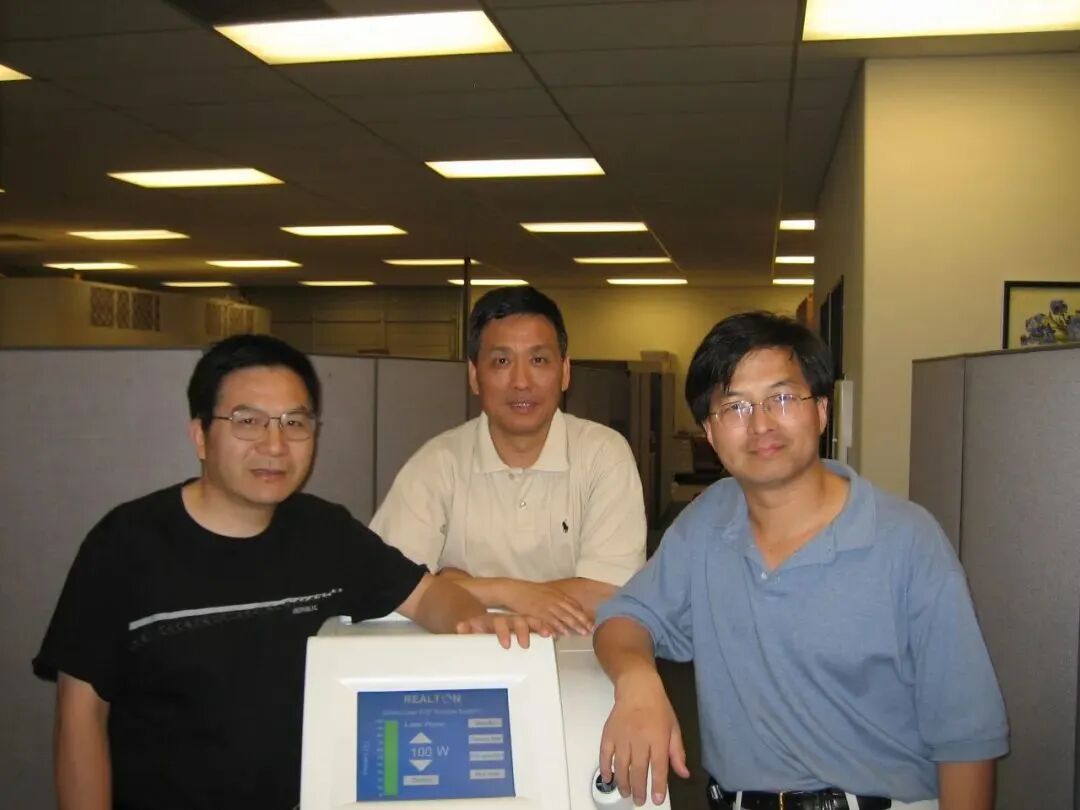
Mu Liyue (far right) with colleagues at Applied Harmonics Corporation (AHC) in Silicon Valley in 2004, with the green laser surgical system they developed
As the foundational support for the modern technological revolution, the importance of lasers hardly needs stating. Without lasers, there would be no modern semiconductor industry. At that time, laser engineering offered excellent career prospects, with talent in high demand and generous compensation from every company. As one of the few Chinese professionals in Silicon Valley, I earned the respect of foreign colleagues through my expertise and technical background while making many times more than I could in China — life seemed thoroughly satisfying.
But to me, this sense of accomplishment couldn't bring spiritual fulfillment. Instead, it felt unchallenging, with a career ceiling easily within reach. This panic and anxiety reminded me of my time teaching at university — at thirty, I could already see exactly what I'd look like at sixty.
Partly dissatisfied with this stable yet dull existence, and partly fueled by youthful audacity and drive, I voluntarily resigned from the company after two years to start my own business. My goal was to create the world's best laser products.
In 1999, I founded Applied Harmonics Corporation (AHC) in Silicon Valley. Our main business was developing and manufacturing laser products including green, ultraviolet, and solid-state lasers for semiconductor applications. Initially, our products performed well globally in terms of quality, performance, and specifications, but the market was too small. We later expanded our product lines into industrial and other sectors, with products eventually exported to the United States, Japan, South Korea, Israel, France, and elsewhere.
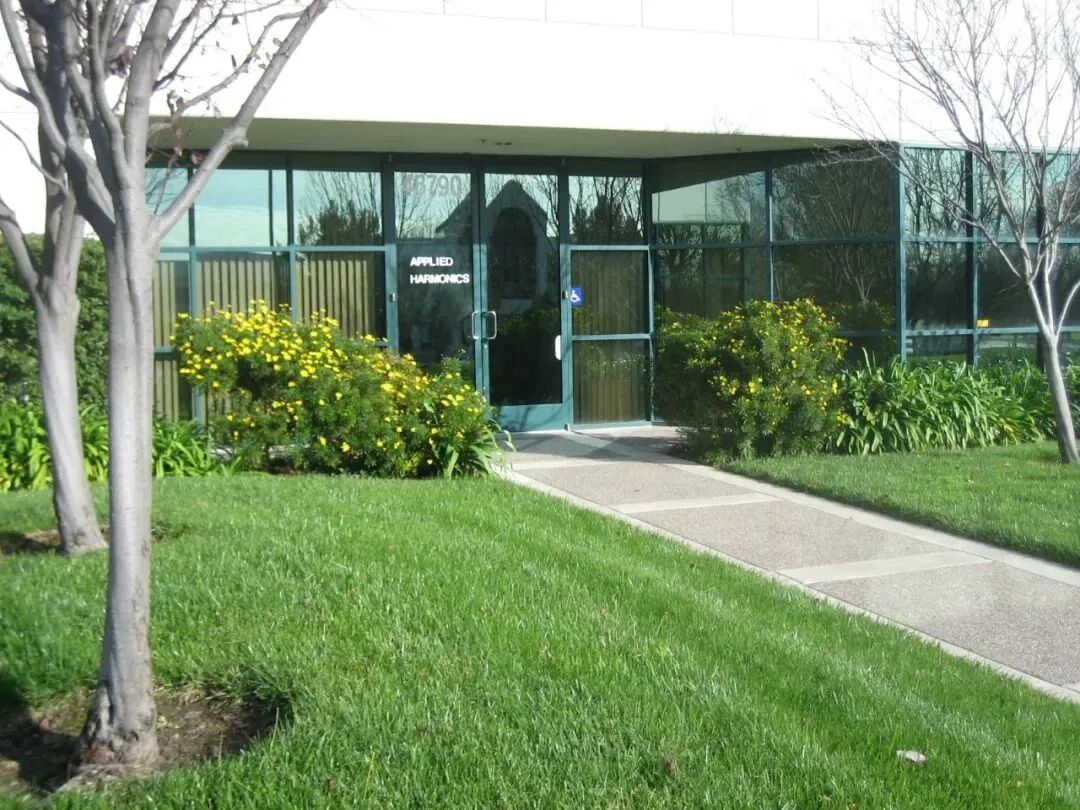
Photo of the entrance to Applied Harmonics Corporation
Of course, entrepreneurship proved far more difficult than I had imagined. Coming from a technical background, I held many misconceptions about technology commercialization in the early days. The result was that we created first-rate technology without market value. When founding the American company, I believed we had reached the top of our industry technically, so I approached the owner of an American laser company for partnership, hoping to sell our products through their channels. After reviewing our pitch deck with great anticipation, he bluntly dismissed us: "This isn't a product at all — it's just technology!"
This hit me hard. From that moment, I realized that entrepreneurship cannot worship technology above all else; it requires complete product thinking. Cutting-edge technical achievements without a market are nothing but blank paper — this is also why many engineer-founded startups fail.
Yet merely possessing technical foundations and product thinking doesn't guarantee entrepreneurial success. The greatest tragedy in entrepreneurship is running out of money before the product is finished. Product development continuously consumes capital, so during this process a company must constantly raise funds to ensure long-term cash flow. Both at my American company and later at my Beijing company, I encountered similar problems, with outcomes ranging from stalled R&D and departing staff to being constrained by investors at every turn.
These lessons taught me that technology entrepreneurs must first possess innovation capabilities while understanding product thinking and customer thinking — otherwise any innovation is meaningless. Additionally, in converting technology into products, you must run alongside capital; running too fast or too slow means missed opportunities, and only by matching pace can you ensure the company's survival. These painful experiences became principles we consistently upheld when later founding Xi'an Blue Laser Medical.
In 2006, while exploring markets, we discovered promising prospects for laser products in healthcare — for instance, lasers could provide effective treatment for conditions like benign prostatic hyperplasia in men. Although barriers to entry in healthcare weren't particularly high at the time, using lasers for prostate surgery remained completely uncharted in the domestic market. Combining our team's technical expertise, we decided to enter the medical field, simultaneously establishing a laser technology company in Beijing focused on producing green laser equipment for treating prostate diseases.
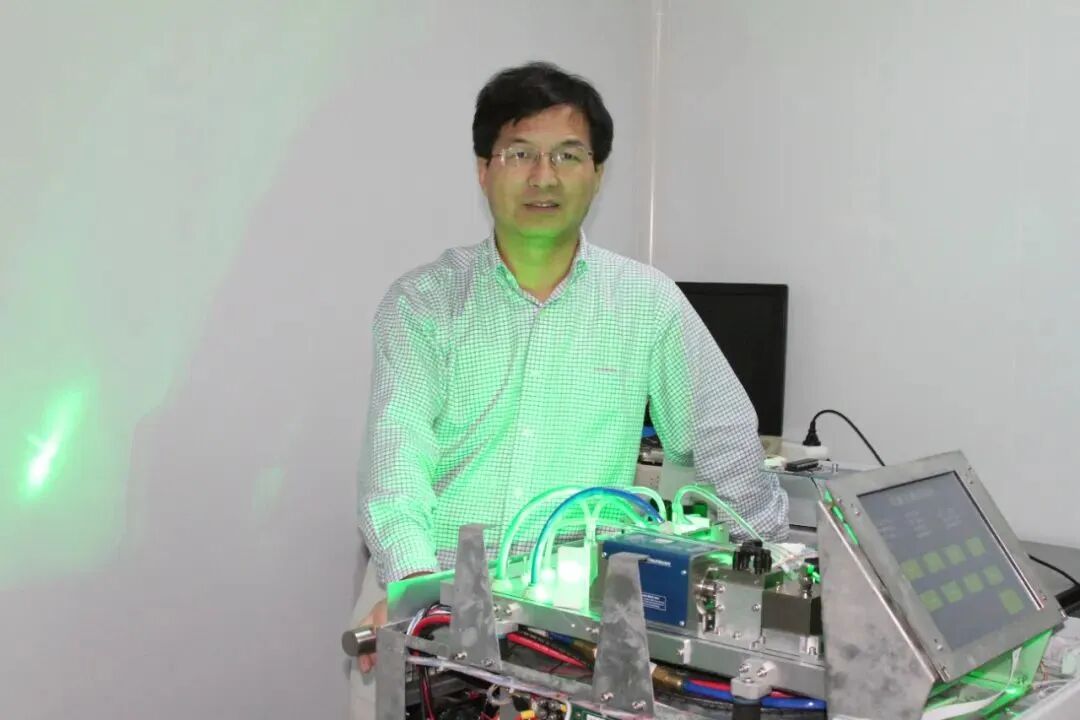
Around 2008, Mu Liyue at Beijing Realton Laser Technology Co., Ltd. with the green laser surgical system
From an industry development perspective, our product at the time was the first-generation domestically produced green laser device for prostate disease. Compared to traditional surgical methods, it offered significant improvements in operational convenience, surgical efficiency, and postoperative outcomes. However, inherent limitations of green laser technology made the equipment complex to manufacture and costly, making widespread market penetration difficult.
In 2010, while attending the National Urological Academic Conference, I met Professor He Dalin from the First Affiliated Hospital of Xi'an Jiao Tong University. Our shared Xi'an origins, combined with our professional connection, created an instant bond, and we soon became close friends. In 2016, during discussions with Professor He, we explored using laser technology to treat bladder tumors and benign prostatic hyperplasia, analyzing the pros and cons of existing green laser technology. He then posed a challenge — could we develop a new type of laser with lower costs and broader applications?
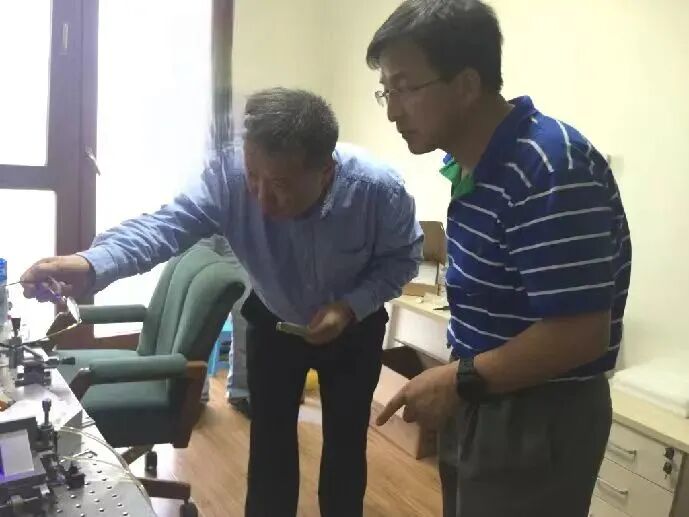
Interview subject Mu Liyue and Professor He Dalin discussing technology
Taking on this challenge, my team and I researched and discussed tirelessly day and night, ultimately deciding to develop a laser surgical device using blue laser technology. At the time, blue laser technology remained relatively immature, with primary applications in home theaters and large-screen displays — no prior integration with medical treatment existed. The stability and reliability of blue laser effects on human tissue required extensive scientific data and clinical trials to verify. But through comparison with green laser and other products, blue laser represented a qualitative leap in power, safety, and cost.
With Professor He Dalin's team and support, we started from technical fundamentals, gradually identifying underlying principles, and through countless experiments and research, ultimately confirmed blue laser's irreplaceable advantages in surgical cutting. Initially, we purchased equipment components, assembled products, and conducted experiments internally. Later, the Urology Research Institute at the First Affiliated Hospital of Xi'an Jiao Tong University provided an animal experimentation platform. After multiple experimental validations, we found blue laser effects remarkably significant.
02
Creating Industry-Disrupting Products
"Medicine-Engineering Integration" Changing the World
Of course, the broader context that ultimately brought Professor He Dalin and me together as entrepreneurial partners was the national push for innovation and entrepreneurship, with institutions including Xi'an Jiao Tong University encouraging researchers and scientists to launch ventures. As a medical expert and scholar, Professor He, combined with my background as a laser engineer, and building upon our prior friendly and deep collaboration, we jointly established Xi'an Blue Laser Medical Electronics Technology Co., Ltd. The company positioned itself to promote blue laser technology research and applications in healthcare through medicine-engineering integration, achieving industry transformation for social benefit.
When Blue Laser Medical was founded in 2016, blue laser remained entirely novel in the medical field, with immature technology and incomplete theoretical foundations. Though I had strong confidence in blue laser technology itself, I couldn't be absolutely certain about its clinical significance. In this regard, I'm deeply grateful to Professor He Dalin and the First Affiliated Hospital — their professional support in clinical trials allowed many of our innovative ideas and disruptive products to be validated through rigorous scientific medical methods, ultimately accelerating Blue Laser Medical's emergence in the industry.
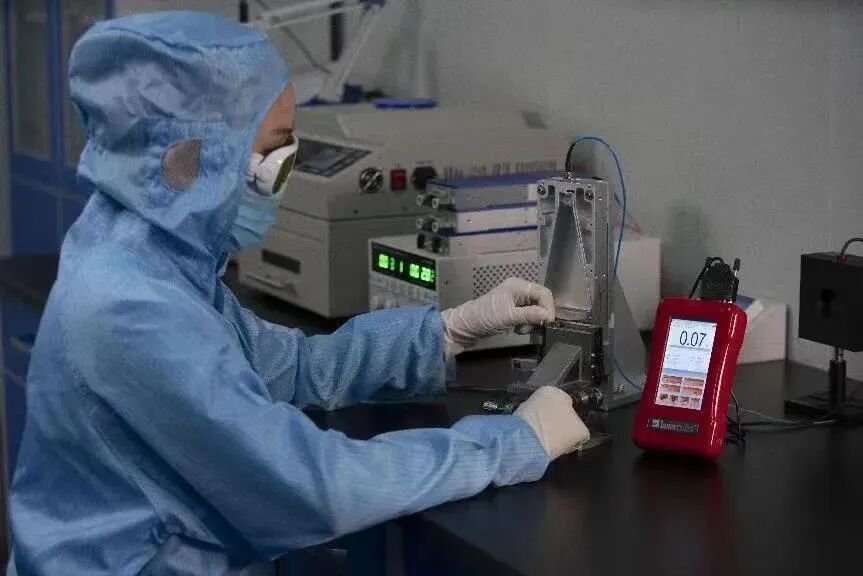
Photo of Blue Laser Medical's laboratory
From Blue Laser Medical's founding, we consistently pursued a technology-driven approach — steadily laying technical groundwork and clinical validation before gradually expanding markets and attracting investment. Fortunately, just over three years after our team's establishment, we secured angel investments from local institutions including CASSTAR, Xi'an Jiaotong 1896, and Shaanxi Venture Capital. Later, prominent institutions such as Qujiang Financial Holdings, Dalton Venture, and Naton also provided follow-on funding to Blue Laser Medical.
Thanks to the combined efforts of the Blue Laser Medical team and our investors, in November 2021 — after five years of technical攻关 — our team independently developed the 30W blue laser surgical device, which officially received certification and entered clinical use. This was the world's first 30W blue laser surgical device, a milestone in Blue Laser Medical's development.
After deployment in major hospitals nationwide, feedback from both hospital departments and patients themselves has been overwhelmingly positive. Compared to transurethral resection of the prostate, the gold standard for prostate surgery, as well as existing products like green laser and infrared laser, blue laser surgical cutting offers not only faster speed and better results but also ensures completely bloodless procedures for patients. More importantly, blue laser operates unaffected by environmental conditions, fully enabling same-day surgery — shortening patient treatment time while significantly improving hospital bed utilization rates, outcomes that exceeded our team's expectations.
Despite the excellent reception of our 30W device, we maintained our pace of technological innovation and product iteration, developing a strategic plan for a 200W blue laser surgical device. This idea emerged because existing high-power lasers, due to excessively long surgical times or technical complexity, couldn't be successfully and widely applied to treating male prostate diseases. Through extensive experimentation and clinical work, we found that 200W blue laser could overcome these limitations. However, existing high-power optical fibers couldn't withstand blue laser's uniquely high photon energy, resulting in fiber lifespans of only 1-2 minutes. We therefore had to develop an entirely new optical fiber to meet the demands of high-power blue laser surgery.
Taking on this challenge, we worked intensively for nearly a year, testing every technical approach we could conceive, ultimately achieving our breakthrough — improving surgical fiber lifespan from roughly one minute to several hours of continuous use. This not only made 200W blue laser surgery possible but also dramatically reduced surgical costs.
In April 2022, Blue Laser Medical's independently developed 200W blue laser surgical device successfully obtained national approval for clinical application. Clinical comparisons showed the 200W device offered even more pronounced advances in vaporization capability, hemostatic effect, surgical time, and operational difficulty. The product received widespread acclaim immediately upon launch, rapidly opening markets in northwest China and nationwide, while also helping the company secure a new round of financing in the following year from institutions including Zhonghe Opu and Shaanxi Investment Growth Fund.
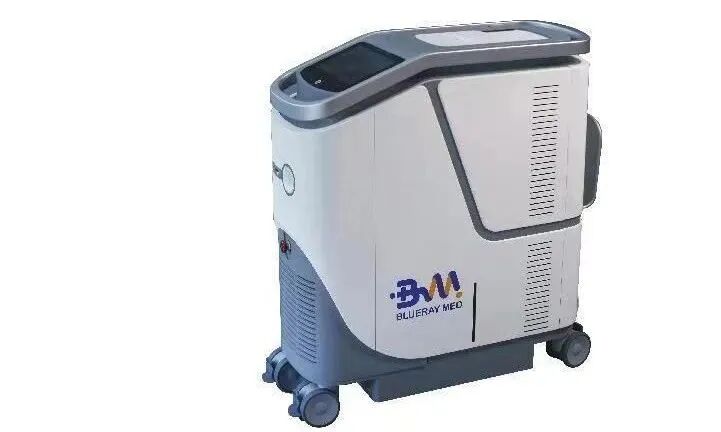
Blue Laser Medical's pioneering 200W blue laser surgical device
Currently, from initial tentative steps to gradually walking independently, Blue Laser Medical has entered the fast lane, with technological innovation, team capabilities, and market expansion all finding their rhythm. Yet we haven't stopped there. I've always believed that for long-term development, a company cannot rely on a single product — it must overcome the "second product dilemma" that plagues industry. How to successfully develop a second product represents Blue Laser Medical's greatest challenge at present.
Since last year, through ongoing discussions with Professor He Dalin and other team members, we plan to apply blue laser surgical equipment to early diagnosis of bladder tumors, simultaneously integrating early diagnosis, surgical treatment, and postoperative prevention into a complete workflow. We've already completed technical validation of this concept and design, with prototype development underway. I believe that with this project's ultimate implementation, we can create Blue Laser Medical's second medical laser product with broad market recognition.
Bladder tumor ranks among China's top ten cancers, with extremely high mortality. If we can truly solve these problems, I believe this will represent not only Blue Laser Medical's capability but also a major breakthrough for Chinese medicine.

Group photo of Blue Laser Medical's core team at a strategic development seminar in the Qinling Mountains
(Far left: Professor He Dalin; second from left: Mu Liyue; third from left: Blue Laser Medical General Manager Liu Haigang; far right: Deputy General Manager Meng Tao)
Beyond this, we've also expanded blue laser equipment into other disciplines, including dentistry, aesthetic dermatology, pain management, gynecological conditions, and male sexual dysfunction — with relevant supporting results including published research articles, patent applications, and clinical trial evidence.
From technical engineer to company founder, from Silicon Valley to Xi'an — over twenty years of entrepreneurship have taught me that technology entrepreneurs must persevere, like a camel dying of thirst in the desert, not knowing where water lies, perhaps finding an oasis just beyond the next dune. How to reach that oasis? First, basic research must guide direction; second, applied research matters — walking ten thousand li to verify truth, ultimately discovering where truth can create value.
Beyond this, entrepreneurs need lifelong learning. Though my background is in laser engineering, my interests span widely. From my student days, I've never been arrogant, constantly reminding myself that I'm merely slightly above average. I've maintained hunger for knowledge, learning throughout my life. Whether physics, medicine, or literature and history, I devote myself to studying each, ensuring I don't simply parrot others or be easily misled by certain viewpoints.
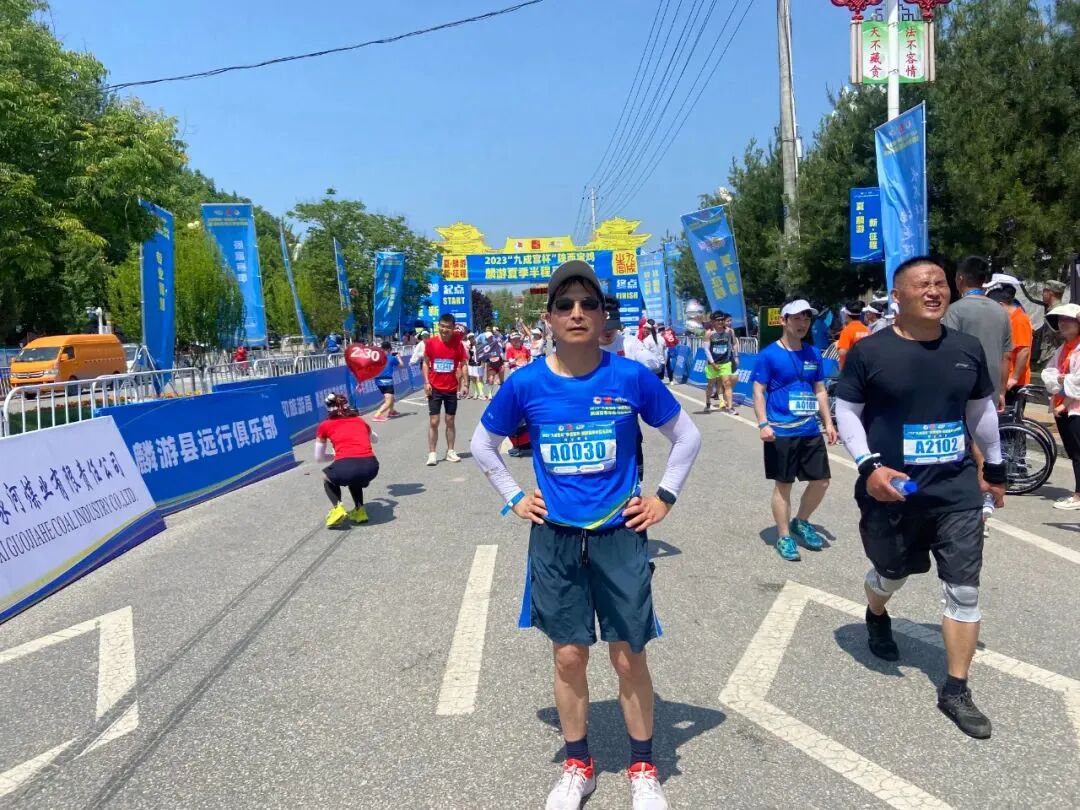
Mu Liyue after completing a half-marathon in Baoji, June 2023
Chinese people used to say that after thirty, one doesn't learn new trades. I'm now 61, yet remain on the path of learning. For entrepreneurs, beyond innate talent, emotional intelligence, diligence, and luck, lifelong learning is an essential capability. Learning supports us in keeping pace with the times and maintains our impulse to solve problems — solving problems that predecessors couldn't, realizing self-worth through changing the world.
Source: WeChat account "The Poet Dancing with a Sheep Whip" | "100 Xi'an Stories" Episode 20: Returning from Silicon Valley to Xi'an, I Want to Create Medically Meaningful Laser Products

ID: daltonventure
Long press to follow
Recommended Reading