The Essential GP Skillset Today: Reading Policy, Reading the Macro Trend, and Getting the Timing Right | Dalton Insight

China's past economic growth was bought with high-intensity input of production factors. The only way to break through going forward is to use technology to transform production relations and shift toward high-quality development.
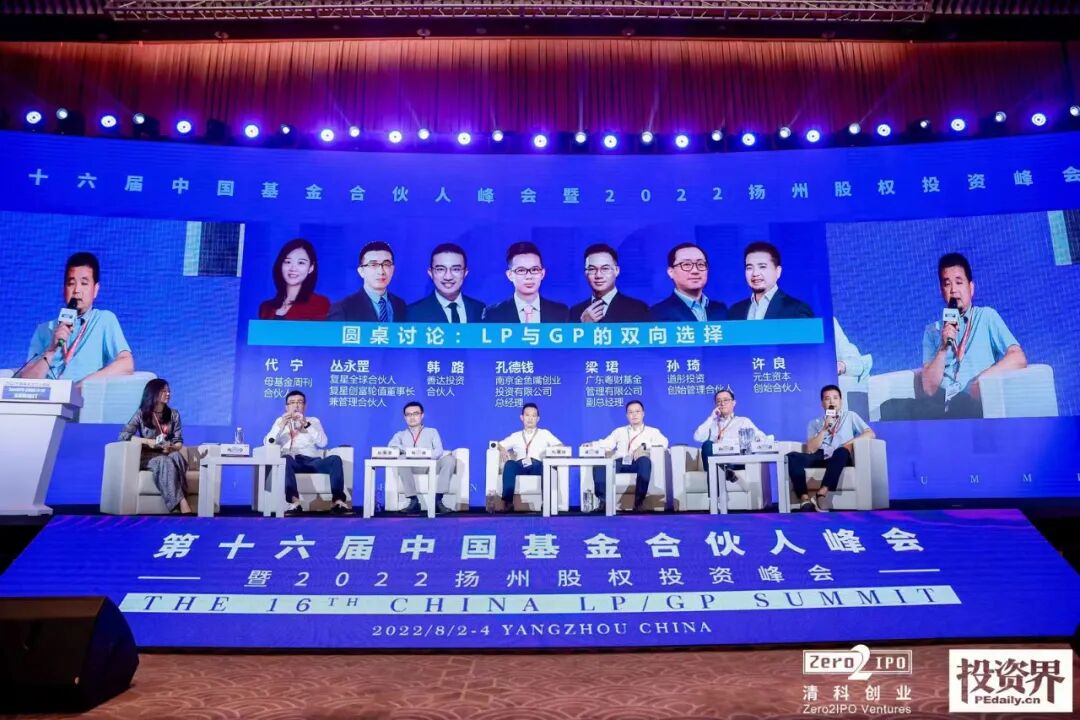
Zero2IPO and PEDaily co-hosted the "16th China Fund Partners Summit"
Panel Discussion: "The Mutual Selection Between LPs and GPs"
From August 2–4, 2022, at the "16th China Fund Partners Summit" co-hosted by Zero2IPO and PEDaily, Dalton Venture Founding Managing Partner Sun Qi joined the moderator and fellow guests for a candid conversation between LPs and GPs on the panel "The Mutual Selection Between LPs and GPs." Below are highlights from the discussion (excerpted and edited from event transcripts):

I'd like to talk about Dalton's distinguishing features from a different angle. First, strong performance — particularly standout DPI. We're in an era where performance is everything, and the tougher the market, the more important performance becomes.
Second, strong incubation capabilities. Over the past year, the primary and secondary markets for healthcare have been quite volatile. In such turbulent conditions, the most effective hedge against disruption is the ability to incubate projects. I believe incubation will become an increasingly critical capability for GPs going forward. Invest more when markets are healthy and valuations are normal; incubate more when valuations deviate from fundamentals.
Third, we have deep industry resources, but having resources and knowing how to use them are two different things. You need strong abilities to synergize and integrate resources. Our LP investors have all been very gracious, saying they want this, that, and everything — which on one hand reflects the difficult realities that state-backed LPs face, and as GPs we fully understand; on the other hand, the only thing we as GPs can change is ourselves. So we need to build our internal capabilities and find ways to adapt to the current fundraising environment. How? By learning more, and rigorously honing our ability to integrate and coordinate resources.
I'm sure everyone felt it deeply — 2022 was a year of profound uncertainty. Against this backdrop, GPs face new demands on their capabilities. Beyond professional expertise and the full investment-cycle skill set, what's absolutely critical is the ability to read policy correctly, grasp the macro trend, and get the timing right. If you can nail the timing and understand the big picture, you'll have more options and more room to maneuver.
Take Dalton as an example. We anticipated last year that this year's market would likely get colder. So we accelerated our follow-on rounds — the total follow-on funding our portfolio companies completed that year was equivalent to double our fund size. We exited seven projects last year: four full exits, three partial exits. Because we got the macro call right, we've been able to invest more calmly this year. We don't have to worry about our "children" (portfolio companies) facing funding crunches.
If LPs are working this hard, shouldn't GPs work even harder? Our headquarters is in Shanghai. I left Shanghai on March 21 and have been constantly on the road looking at projects, visiting 11 cities and issuing six term sheets. Beyond having the willingness and capability to invest, the main reason I can do this is that we made several right calls last year. This year we have no exit pressure, our portfolio companies are well-funded, so we can invest with composure.
Over the past three to four years, healthcare as a sector has been bombarded with capital. The technologies that could be bought have been bought; those that couldn't, need time to accumulate, settle, and develop. So what should people do now? This year in healthcare hard tech, investors are gravitating toward sub-sectors closer to monetization and commercialization — unlike a couple years ago, when you were almost embarrassed to raise funding if your technology wasn't "hard" enough.
Overall, pharmaceuticals are relatively cooler this year, while medical devices are hotter. Deep waters raise big fish; when the water shallows, the big fish suffer most.
True hard tech isn't about storytelling — it's about solving real clinical pain points. And these hard tech projects that genuinely address clinical needs remain remarkably resilient.
We hope LPs will have the courage to allocate counter-cyclically. The weaker the market, the more we hope LPs will dare to deploy. The logic is straightforward: in secondary markets, funds launched at lower points tend to deliver better returns. Primary market funds similarly need counter-cyclical allocation. Second, we hope LPs will exercise independent judgment and make differentiated allocations. Third, when GPs are fundraising, what we most hope for are cornerstone LPs — we look forward to more LPs stepping up as cornerstone investors.
As a GP, I think the most important GP capability is finding the right LP. LP is short for "laopo" (wife) — and finding a wife takes real effort to find the one best suited for you. Your strengths should be what she admires most; what she expects should be what you can deliver. The ideal is love at first sight, then a lifetime together (continuous re-commitment).
How do we view these LP demands? I think they're perfectly normal — money talks, and it's the same overseas. But mindset matters in how you meet them. Better to look inward for solutions. These demands have to be met anyway, so you might as well do the work happily.
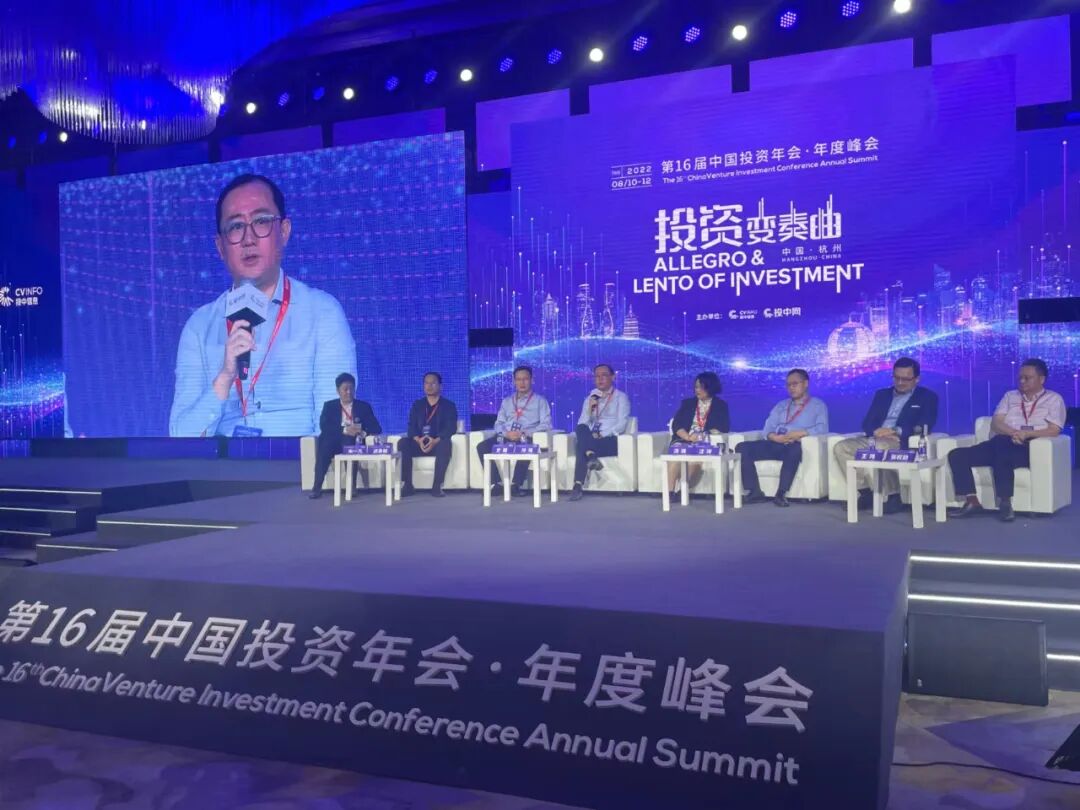
ChinaVenture and ChinaVenture.com co-hosted the "16th China Investment Annual Conference · Annual Summit"
Panel Forum: "Can Domestic Substitution Really Enable Corner Overtaking?"
At the "16th China Investment Annual Conference · Annual Summit" co-hosted by ChinaVenture and ChinaVenture.com, veteran VC/PE industry leaders engaged in spirited discussion on topics including domestic substitution. On the international expansion front, Dalton Venture Founding Managing Partner Sun Qi shared his views, expressing optimism about the prospects for domestic substitution companies going global. Below are highlights (excerpted and edited from event transcripts):
First, from a pharmaceutical perspective, the major domestic substitution wave has largely passed. Medical devices, however, are currently in an excellent window. Macroscopically speaking, device import dependence far exceeds that of pharmaceuticals — import penetration for large equipment in particular remains very high. Against this backdrop, in June 2021 the Ministry of Finance issued a directive effective January 1, 2022, requiring tertiary hospitals nationwide to meet a minimum 50% domestic procurement ratio for equipment; local governments could reference this for implementation. Previously, domestic equipment procurement rates at hospitals were 30–40%.
Second, from an industrial technology perspective, medical devices are an interdisciplinary field spanning materials, electromechanical systems, algorithms, and life sciences, among others. This means no single company can independently complete all components and critical supply chains. A country's overall industrial manufacturing capability, component supplier ecosystem, machining precision, and materials — these determine the extent to which domestic supply loops can be maximized. China's medical device manufacturing matured relatively late in terms of industrial technology. But with the national push for Made in China 2025 and Industry 4.0 in recent years, large numbers of high-grade CNC machine tools and industrial robots have been deployed, manufacturing precision has continuously improved, and bottlenecks in medical device manufacturing have been progressively broken. This has gradually made domestic substitution viable.
Third, the capital environment. The healthcare sector's primary and secondary markets are currently in a trough overall — making this an excellent time to selectively build positions. How to seize this opportunity window? In any healthcare sub-sector today, if you wait until the sector heats up to chase it, you've likely already missed the optimal timing. So decision-making needs to be forward-looking: anticipate and position ahead of time in the sub-sectors you're tracking.
Globalization in healthcare isn't simply about going overseas or exporting — it's about being "In global, For global": participating in the global division of labor, bringing in global talent, setting up R&D centers abroad, and manufacturing overseas. Last month, Dalton Venture's post-investment event, the "Tong Academy," was honored to have Liu Wenjing, chairman of Blue Sail Medical, speak on medical device internationalization. She offered a particularly incisive observation that I'd like to share: "Internationalization isn't about selling products overseas. It's about integrating into international rules through international talent and international innovation, to achieve international markets and higher-level innovative development for the enterprise!"
Active GPs, LPs, and entrepreneurs are the emblem of a nation's economic vitality — only a handful of countries can assemble all three groups.
China's past economic growth was bought with high-intensity input of production factors. Going forward, the only way to break through is to use technology to transform production relations and shift toward high-quality development.
Further Reading
Dalton Family | Deepwise Healthcare Lands Six Innovation Projects on Ministry of Industry and Information Technology and NMPA Challenge Lists
Dalton Family | SENSILICON SHC6686 Wins 2022 China IC Design Achievement Award for "Technical Breakthrough of the Year"
Dalton Family | Hanuo Medical Secures Follow-on Round from Mindray
Dalton Family | Our United Digital CybeRay Receives NMPA Approval!
Dalton Family | Nuopu Regenerative Medicine Named Among Top 20 Innovative Companies in Asia-Pacific
Dalton Family | Prominent Women's and Children's Healthcare Brand "Noah Medical" Acquired by New World Group
-
Dalton Family | China's First 3D-Printed Drug Product: Triastek T19 Receives NMPA IND Approval
-
Dalton Family | XuanYu Medical Closes 100 Million Yuan Series A, Completes First Patient Enrollment for Atrial Fibrillation PFA Ablation
-
Dalton Family | Hanno ECMO System Completes 10+ Clinical Trials
-
Dalton Family | World's First 200W Blue Laser Surgical Device Enters Clinical Use; Blaize Medical Secures Two NMPA Class III Certificates in Five Months
-
Dalton Family | Triastek 3D-Printed Drug Receives FDA IND Approval
-
Dalton Insight | Pharma Industry 4.0 Begins: 3D Printing Opens a New Era of Intelligent Drug Manufacturing
●Dalton Family | JunoBio's Self-Developed BCMA CAR-T Drug Doses First Patient, Completing Core R&D-to-Commercialization Chain
●Dalton Family | Vitrolife Bio's Two Sperm Processing Products Receive FDA Clearance
●Dalton Family | Vitrolife Bio Closes Series B, Joins Ranks of International ART Suppliers, Led by Dalton Venture
●Dalton Family | TIL Therapy Company Jinfeng Bio Announces Eight-Figure USD Series A, Led by Dalton Venture
●Dalton Family | Leading ART Company Vitrolife Bio Closes Nine-Figure RMB Series C, Led by CICC Qichen | Dalton Family
●Dalton Family | Deepwise Healthcare Closes Series C3