Dalton Venture's Sun Qi: Focus, Steady Rhythm, Multiple Paths — Actively Positioning Through the Cycle | Dalton Insights
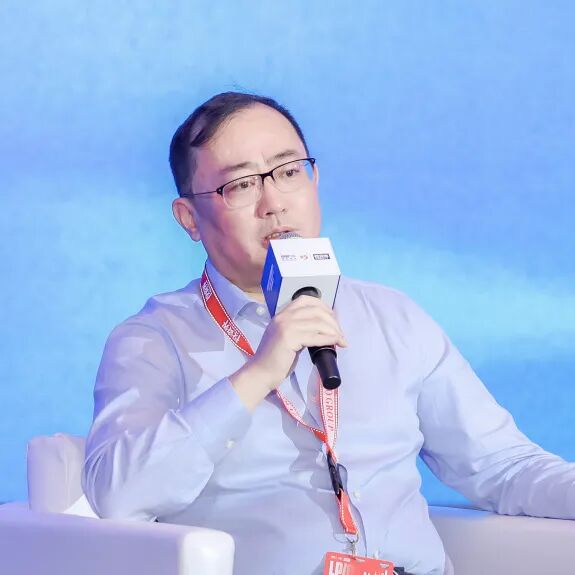
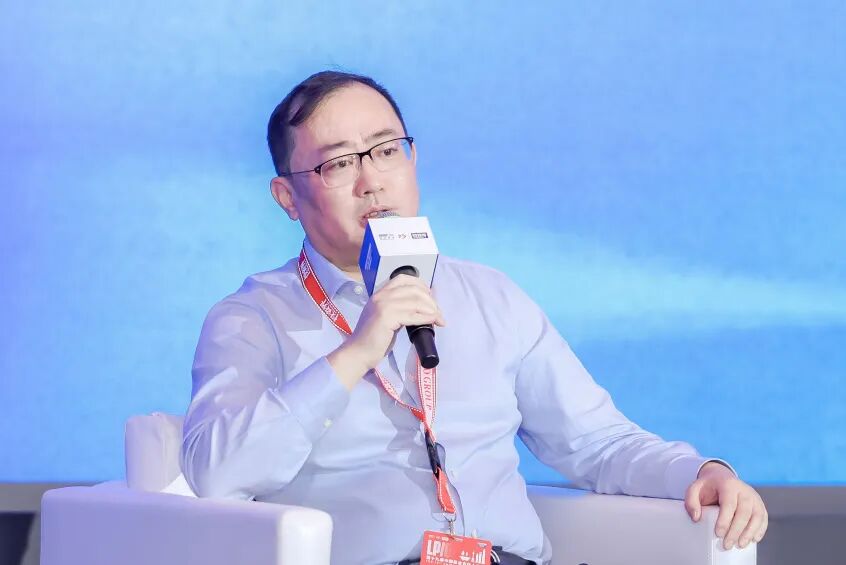
On July 3–4, 2025, **the 19th China Fund Partners Conference, co-hosted by Zero2IPO and PEDaily, was held in Shanghai**. This year's gathering brought together capital leaders to discuss industry trends, examine the latest dynamics in China's LP market, and explore the path forward for venture capital in a new cycle. **Dalton Venture founding and managing partner Sam Sun was invited to join the roundtable forum *"Cycle Positioning, Investment Strategies"*** to exchange views with fellow guests on the evolution of investment cycles and responsive strategies.

Background
On July 3–4, 2025, the 19th China Fund Partners Conference was held in Shanghai, co-hosted by Zero2IPO and PEDaily. The event brought together capital leaders to discuss industry trends, examine the latest dynamics in China's LP market, and explore the path forward for venture capital in a new cycle. Sun Qi, Founding Managing Partner of Dalton Venture, was invited to join the roundtable forum on "Cycle Positioning and Investment Strategy," where he and fellow panelists discussed shifts in investment cycles and how to respond.
Dalton Insights
On cycle recovery: Healthcare, hard tech, and related sectors are at the starting point of recovery, with secondary market activity beginning to flow into the primary market.
On investment direction: Building positions in key tracks such as biomanufacturing and biomaterials.
On strategy evolution: Moving from single-point bets to systematic portfolio construction, enhancing synergy and integration capabilities amid zero-sum competition.
On exit pathways: M&A policies continue to improve, and GP-led continuation funds have become an important supplementary tool for boosting DPI.
The following is edited from conference transcripts:
Cycle Recovery, Venture Capital Rhythm Returning
The healthcare industry has been stuck at the bottom of its cycle for years. But entering 2025, we're seeing clear changes. From the start of the year to now, the Hang Seng Healthcare ETF has risen nearly 50%, with many pharmaceutical stocks hitting new highs. As the secondary market heated up, the primary market began to "move" too — investors have become noticeably bolder compared to last year. Though the transmission still takes time, the shift in rhythm is already underway.
While it's hard to judge whether the bottom has truly passed, at least we can see that industry froth has largely dissipated. Just last week (late June), 41 companies had their IPO applications accepted overnight — a signal of what's to come. These changes are gradually rippling through and will materially affect the pace of the entire venture capital industry. Dalton Venture actually maintained a relatively high deployment frequency in 2024, not pausing because of the winter. That rhythm, we'll keep.
Fundraising remains difficult, but the upstream capital pool is growing. Shanghai has been particularly active lately — we also participated in the application for Phase II of the XianDao Fund and have been formally selected. In April this year, our device-focused fund held its first close and has already invested in four or five projects. Additionally, Dalton's biomanufacturing CVC M&A fund has been announced as closed, with outbound investments expected to begin around September or October.
We've also noticed that national-level funds of funds such as China Reform Holdings, China Chengtong, and the National Venture Capital Fund no longer have reinvestment requirements, signaling that the fundraising environment has improved compared to before. Restrictions tied to state capital backgrounds still exist, but the overall direction is trending positive.
Positioning in Biomanufacturing, A Broader Industrial Restructuring
We focused heavily on biomanufacturing last year and this year, completing four investments in the space in the first half of this year alone. It's important to clarify: biomanufacturing and synthetic biology are not the same thing. Synthetic biology focuses more on laboratory-stage technical breakthroughs, aiming to discover new molecules and new materials — its center of gravity is "new." Biomanufacturing's center of gravity is "manufacturing." In any industry, widespread acceptance of new products takes time; for food especially, the longer the supply chain, the longer that acceptance process. Biomanufacturing, by contrast, emphasizes optimizing existing materials (such as PET plastics) to make them cheaper and more environmentally friendly, thereby accelerating commercialization.
We believe biomanufacturing is a track with extremely broad downstream applications. Across chemical synthesis products covering food, clothing, housing, transportation, and more, we estimate that at least 20% to 30% could be re-done using biological methods. Domestically alone, this market potential approaches one trillion RMB; globally, it's a multi-trillion-dollar opportunity.
In the long run, compared to traditional biopharma, biomanufacturing is more adaptable to current market conditions — commercialization and regulatory approval happen faster, and the cycle to generate revenue and tax contributions is shorter, making it more attractive to local governments. This year's Two Sessions government work report listed biomanufacturing as the top future industry, even ahead of embodied intelligence and quantum computing — a clear indicator of its strategic priority.
In 2025, we're also continuing to watch investment opportunities in biomaterials. In medical scenarios, this generally focuses on devices. For example, with the currently hot brain-computer interfaces, the first problem to solve is flexible electrodes to avoid triggering immune rejection in the brain.
Beyond these two directions, we've also made medical-sector-aligned bets around AI and embodied intelligence — for example, investing in care robots for embodied intelligence, and in Shuimu Molecule for AI for Science.
Systematic Positioning, The Critical Path Through Zero-Sum Competition
This year's market is characterized by fewer incremental opportunities and intensified competition for existing share.
Since its founding, Dalton has focused primarily on early-stage investing, often coming in as the first or second institutional investor. As market conditions, fund characteristics, and IPO dynamics all shift, we too must adapt. This year, we've begun deploying a fund focused on M&A. From angel, to VC, to buyouts — Dalton is gradually building out a fund ecosystem for this space.
Over the past eight to ten years, a massive stock of biopharma portfolio companies has accumulated — some doing well, many struggling. "How to drive effective integration against this backdrop?" is now a critical question. At this point, investors can no longer rely on single-point judgment alone; they need to build systematic synergy within a sector.
On investment strategy, we believe high focus remains essential this year. Taking Dalton itself as an example: we've already invested in 11 projects in ophthalmology, and will complete our 12th and 13th this year. This concentrated positioning brings not just more precise investment decisions, but "initiative" in future exits and consolidation.
Over the coming years, the entrepreneurial environment will remain highly uncertain, market competition fierce, and profit margins across industries gradually compressed. In this context, we still need to back projects with high margins and the ability to achieve scaled production at significantly lower cost — say 30% or even 50% below existing processes — otherwise don't bother with the race. Only projects with revolutionary technological innovation, significantly divergent from traditional technical paths, can remain competitive over the next four to five years.
This also means project screening standards must become stricter. Previously, perhaps the top 20% or 30% could survive; now, maybe only 5% or 10% will truly thrive. Meanwhile, demands on founders are rising too — they must be well-rounded, adept at leveraging diverse resources. Pure technical brilliance is no longer enough.
No Universal Answer on Exits, But We're Actively Exploring
The market hasn't fully recovered yet, but LP demand for DPI is real. That's when we need to find new pathways — such as the continuation funds we're working on.
Last year, our first fund completed a continuation transaction, GP-led with a single foreign LP, which delivered DPI returns and allowed us to keep backing those quality companies.
We didn't sell our chips; we "moved them from the left hand to the right hand," continuing to believe in these businesses. This approach offers flexibility both for LPs seeking exit and for those wanting to continue reinvesting.
In today's capital market environment, achieving outstanding DPI isn't easy — it may still take time — but we'll push for diversified exit methods. GP-led continuation funds are one tool; M&A, as mentioned earlier, is another. M&A can be "nepotistic" in the best sense: if an IPO remains out of reach, consider acquisition. In later rounds, consciously and opportunistically bring in more strategic investors as shareholders — their attention to this aspect will be higher, and your exit options may multiply.


ID: daltonventure
Long press to follow
Recommended Reading