Dalton Venture's Sun Qi: Building Confidence Through Cyclical Swings, Riding Out Industry Ups and Downs | Dalton Insights
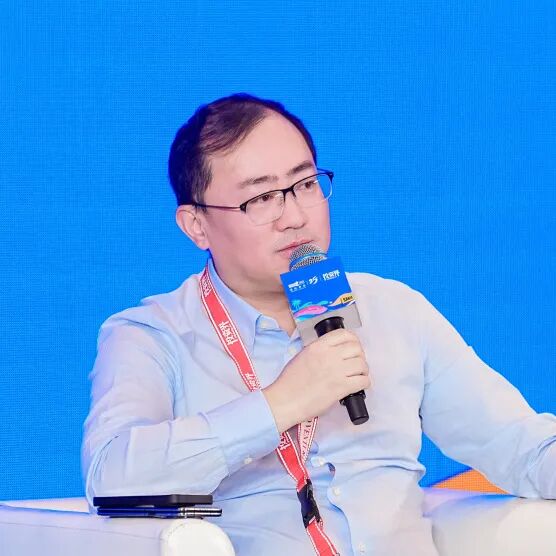
As winter fades and spring arrives, China's venture capital industry's annual opening gala convened as scheduled. On February 28, 2025, the "PEDaily 100" hosted by Zero2IPO and PEDaily took place in Sanya, bringing together the investment community to take the pulse of an unprecedented 2025. **Dalton Venture founding managing partner Sam Gao** was invited to participate in the roundtable discussion ***Healthcare Investment: Against the Current***, sharing Dalton Venture's positioning and thinking in the healthcare sector.

Background
As winter gives way to spring, China's venture capital industry gathers for its annual opening event. On February 28, 2025, the "PEDaily 100" conference, hosted by Zero2IPO and PEDaily, took place in Sanya. Investors converged to take the pulse of a different kind of 2025. Sun Qi, Founding Managing Partner of Dalton Venture, was invited to join a roundtable discussion on Healthcare Investing Against the Current, sharing Dalton's positioning and thinking in the medical sector.
Key Takeaways
Dalton Insights
-
Evolving Strategy Across Cycles: Deeply rooted in life sciences, continuously uncovering investment opportunities in counter-cyclical sectors beyond medical devices and biopharma.
-
"Healthcare + AI" Opportunities: When investing in healthcare AI, prioritize a company's ability to acquire data at low cost and the industry barriers to real-world implementation.
-
Investment Criteria: Focus on global vision and cross-disciplinary capabilities; increasing attention to young founders.
-
Innovative Transaction Structures: GP-led continuation funds that balance LP demands for DPI while creating win-win outcomes.
-
On Industry Recovery: Healthcare's long-term demand and R&D advantages remain intact, but patience is still needed for policy and market cycles to turn.
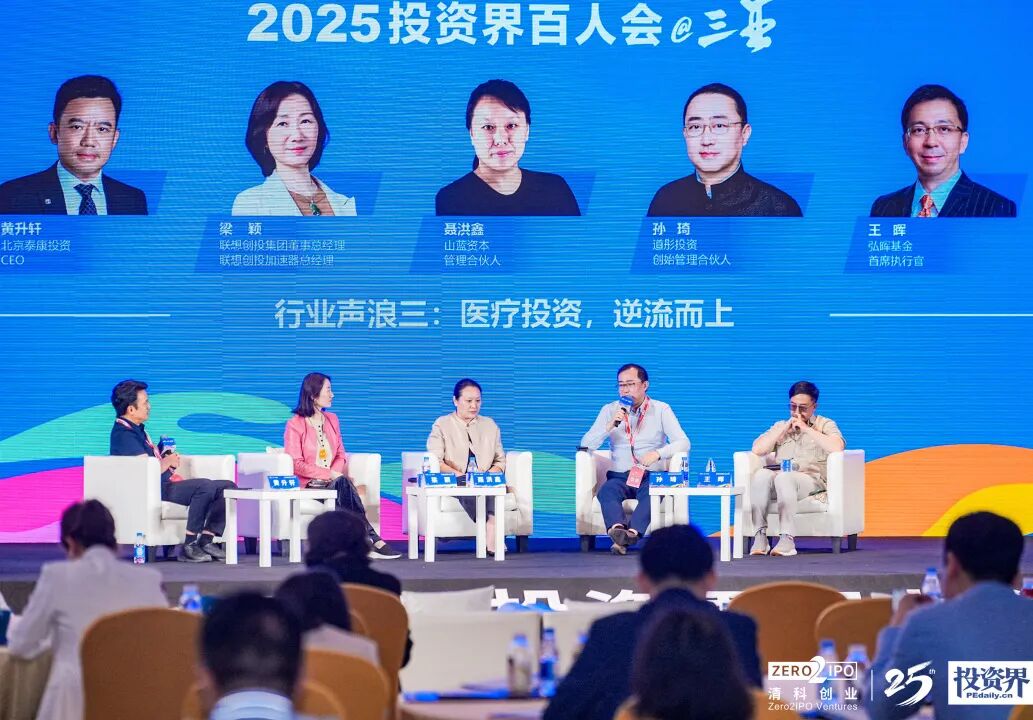
Panelists:
Huang Shengxuan, CEO of Beijing Taikang Investment (Moderator)
Liang Ying, Managing Director of Lenovo Capital and Incubator Group, General Manager of Lenovo Capital Accelerator
Nie Hongxin, Managing Partner of Shlan Capital
Sun Qi, Founding Managing Partner of Dalton Venture
Wang Hui, CEO of HLC
The following is a transcript of the live discussion:
Healthcare Investing: Seeking Certainty from Cycles

Q1
Huang Shengxuan: We're gathered in Sanya once again to talk about how things are going. The past few years have been pretty tough, both on the investment and fundraising sides. Recently there's been a sense of warming. In the context of healthcare, what have you been working on?

Sun Qi: Healthcare hasn't been the hottest sector these past two or three years. Fewer firms have been making moves, but we've maintained a relatively active pace — roughly ten-plus projects annually, and we kept that up last year. The pace has even picked up in the first half of this year. We've also been in ongoing conversations with LPs about building confidence through cycle volatility and riding out industry ups and downs.
I'll share Dalton's thinking and practice from four angles:
First, Dalton has traditionally focused on medical devices, with biopharma making up about one-third. Over the past two years, we've evolved our biopharma strategy, expanding into counter-cyclical industries driven by underlying biotechnology, such as seed breeding and nutraceutical ingredients. For example, we invested in China's largest seed CRO (Boruidi) and a leading domestic agricultural testing equipment service provider.
We've also been asking: beyond medical devices, what sub-sectors in life sciences merit deeper exploration? Many of us are bullish on consumer healthcare, but we haven't pulled the trigger. Typically, consumer healthcare depends more on brand, distribution, and marketing — not necessarily a medical fund's strength. But upstream nutraceutical ingredients are a different story. That plays to our core competency as healthcare investors: evaluating product technology, composition, purity, cost, and using those metrics to judge the product.
We've reduced pharmaceutical investments and increased exposure to broader life sciences, including synthetic biology and intelligent manufacturing. Looking back, the past two years have yielded solid results — that's my first takeaway from a pure investment perspective.
Second, on stage: there's an ever-growing pool of existing projects in the market, something founders can feel too. In winter, there are far fewer entrepreneurs than before; incremental opportunities have shrunk to some degree. How do you capture existing opportunities? We're doing buyout funds alongside listed companies — a listed company announced this in November. Given current market conditions, if the secondary market warms up, this opportunity looks quite attractive.
Third, today's agenda has extensive AI discussions. Dalton's stance on AI has always been to embrace it decisively. Years ago, when few healthcare GPs were deploying in AI, Dalton had already invested in the previous generation of healthcare AI technology, including multiple companies in AI pathology and AI imaging. As AI has evolved, we're now examining how new large models and generative AI impact what came before.
We just held a video call with portfolio companies a few days ago. Our sense, from a healthcare industry perspective, is that controlling access points, channels, and end users may matter more than relying purely on large models. But either way, you have to upgrade — actively embrace newer, more effective technologies. At the same time, we're making new bets, including embodied intelligence and humanoid robots, working at the intersection with the new wave of AI.
Fourth, our investment criteria have shifted subtly from before. Since the year before last, we've been emphasizing going global. A company's overseas capability is an important consideration when we invest. We want our portfolio companies — and those we're currently evaluating — to have international vision and certain cross-disciplinary abilities.
On the other hand, we're also more willing to back young founders. Young people aren't as anxious. They remain passionate about and imaginative toward the world. They have stronger capacity for technical iteration and learning, and greater adaptability to their environment. These criteria differ slightly from before.
That said, investment standards today are probably higher than in the past. Teams need stronger comprehensive capabilities — not just technical depth in one area, but also resource integration, government relations, fundraising ability, and so on.
AI + Healthcare: Where's the Breakthrough?
Q2
Huang Shengxuan: What's your view on AI applications and potential in healthcare? Which AI-healthcare combinations are you most optimistic about?
Sun Qi: To date, whether in the United States or China, foundational large model companies have had limited leverage in life sciences. Most healthcare data remains non-open-source — beyond research data, R&D data, operational data, and so on are all closed. No matter how powerful the technology or compute, without massive amounts of valid data, even the best compute can't deliver. To use a vivid analogy: it's like having someone with enormous strength, but if there's nothing heavy for them to lift when they arrive, how do they apply that power? Finding the right leverage point is critical.
Why did AlphaFold break through in protein folding research? Because the data its algorithm relied on was public. Whether you knew it before or not didn't matter — it just brute-forced the answer.
So when we as investors make healthcare AI investments, we must think carefully: in this scenario, can compute actually make a difference? In other words, does the large model or company you're investing in have the ability to acquire massive amounts of valid data at low cost — that's what allows compute to deliver. On the other hand, the company itself needs sufficient moats; it must genuinely understand application scenarios and industry needs — that's how you find where compute gains leverage, where it can truly reduce costs and improve efficiency in areas with real demand.
Another direction worth watching is embodied intelligence. Everyone's talking about it today as a very concrete carrier for AI. Returning to healthcare: in life sciences-related fields, there's plenty of text data, but operational data doesn't exist, data models don't exist either. This field remains in early exploration, but its potential shouldn't be underestimated and merits positioning.
Transaction Innovation: GP-Led Continuation Funds
Q3
Huang Shengxuan: Are there any innovative transaction structures for VC funds today?
Sun Qi: Biotech and healthcare have been in a relative trough these past two years. How do you balance LP demands for DPI? We structured a "healthcare + foreign capital" GP-led continuation fund — relatively rare in China. The logic: foreign capital remains bullish on Chinese assets, bullish on the China market, bullish on Dalton's asset management capabilities, and on our ability to continue driving subsequent growth potential from these assets. At the same time, it provides liquidity for earlier fund LPs and achieves higher DPI.
This structure can truly create win-win outcomes while balancing LP demands for fund DPI. I think this approach is quite interesting if you remain bullish on certain holdings but healthcare requires time for validation. It also tests a GP's transaction capability in structuring continuation funds.
Optimistic in Sentiment, Cautious in Action
Q4
Huang Shengxuan: Last year everyone was asking "Has the inflection point arrived? With bad news priced in, won't healthcare move toward a better recovery?" Another year has passed, and recovery signs seem more pronounced. What's your read? Are markets more optimistic, more proactive, or something else?
Sun Qi: I'd say definitely more optimistic than a few years ago, but still cautious in degree. Our clinical demand is right there. China's massive population base, the aging demographics — they're right there. Our R&D efficiency, our R&D cost advantages — they're right there.
We wait patiently. In China, industries basically run in three-year cycles; industry policies often do too. From June 2022 to this June, it'll be roughly three years. Let's see what changes after three years.
END


ID: daltonventure
Long press to follow
Recommended Reading