Yuantian Biotechnology Closes Nearly 100 Million Yuan Pre-A+ Round, Dalton Venture Bets on Enzymatic PET Recycling | Dalton News

Recently, **Yuantian Biotechnology (Tianjin) Co., Ltd. (hereinafter referred to as "Yuantian Bio") announced the completion of a nearly 100 million yuan Pre-A+ funding round, with Dalton Venture participating in this round** to support the company's kiloton-scale production line construction, product technology advancement, and market expansion.

Background
Recently, Yuantian Biotech (Tianjin) Co., Ltd. (hereinafter referred to as "Yuantian Biotech") announced the completion of a nearly RMB 100 million pre-A+ funding round, with Dalton Venture participating in this round, supporting the company's kiloton-scale production line construction, product technology advancement, and market expansion.
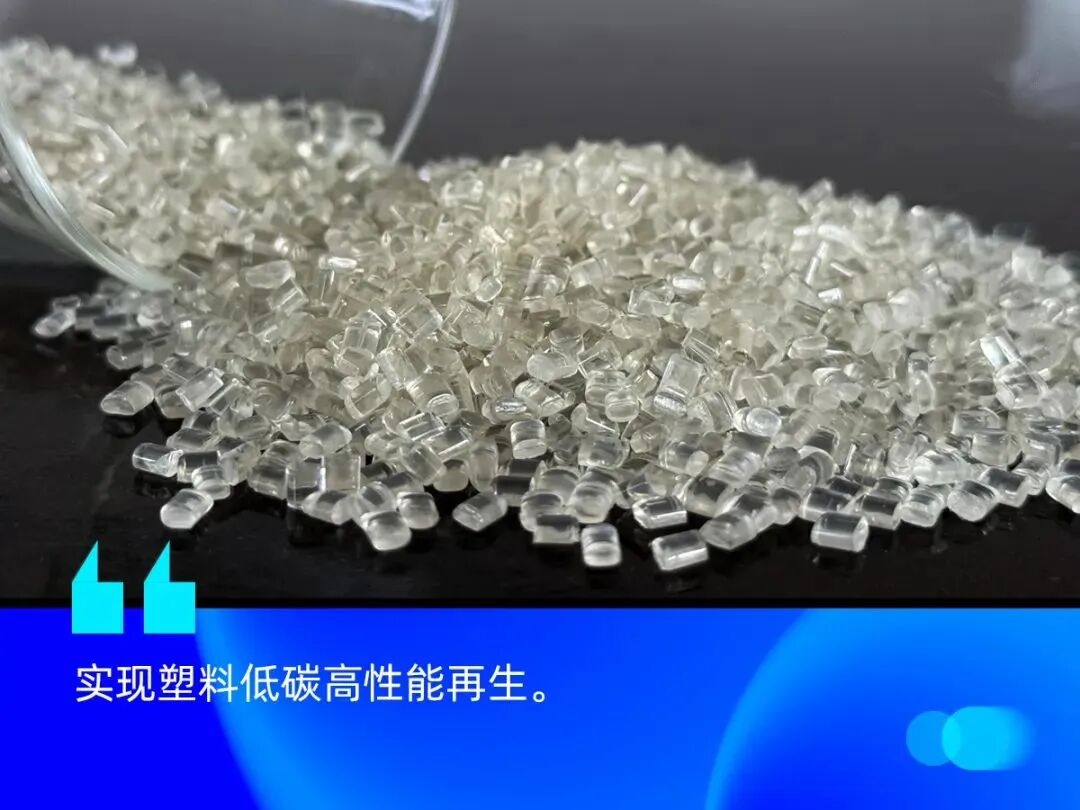
Founded in October 2022 and based in Tianjin Economic-Technological Development Area, Yuantian Biotech leverages Tianjin University's full-industry-chain bio-manufacturing platform and ton-scale pilot incubation base to develop enzymatic recycling technology for waste PET, achieving enzymatic production of regenerated rPTA and industrialization of Rb-PET.
Yuantian Biotech has completed product validation with multiple international brands and domestic listed companies, with customers spanning textile and apparel, home furnishings, food and beverage packaging, automotive, and aerospace sectors. The company has already begun product sales and signed kiloton-scale orders.
01
Enzymatic rPTA Achieves Hundred-Ton-Scale Mass Production
As one of the most common plastic varieties globally, PET has a wide range of applications. Its recycling can significantly reduce plastic pollution in oceans and soil, while decreasing dependence on non-renewable resources like petroleum, lowering production energy consumption and carbon emissions — making it critical for environmental protection and resource conservation.
Currently, the more mature PET recycling methods are primarily physical and chemical processes. Physical recycling technology is well-established, but mainly suitable for high-value feedstock like PET bottle flakes, with clearly insufficient processing capacity for low-value mixed materials like fibers. Feedstock is limited and recycled material properties degrade. Chemical recycling has shortcomings: large organic solvent usage, lengthy reaction processes, high temperature and pressure requirements, and high energy costs.
Biological methods, as an emerging technology in PET recycling, show promising technical potential. Dr. Shengping You, founder of Yuantian Biotech, explains that this technology utilizes hydrolase enzymes to achieve PET degradation and recycling, with three key advantages:
-
Feedstock adaptability: Stronger compatibility, capable of processing various PET-containing materials for full-category recycling;
-
Degradation products: Through biocatalytic deep degradation, produces rPTA and rMEG (regenerated ethylene glycol);
-
Final products: High-grade Rb-PET products applicable across a broader range of end products including fiber-grade, food-grade, and film-grade applications.
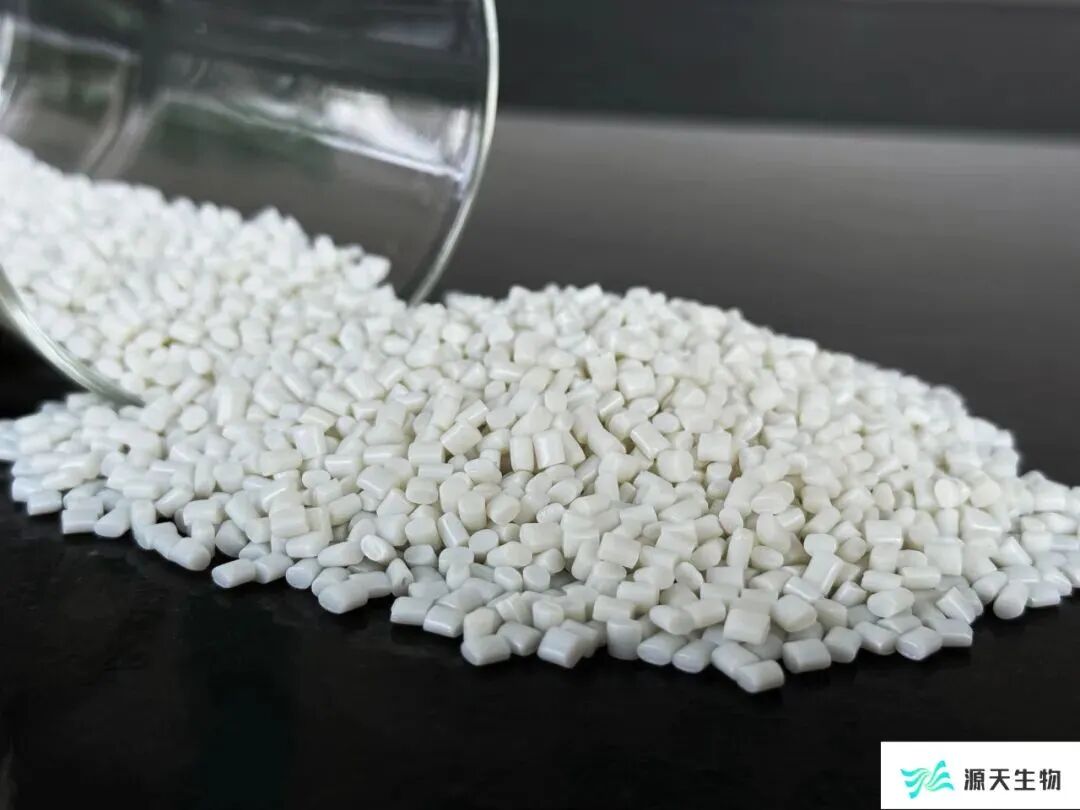
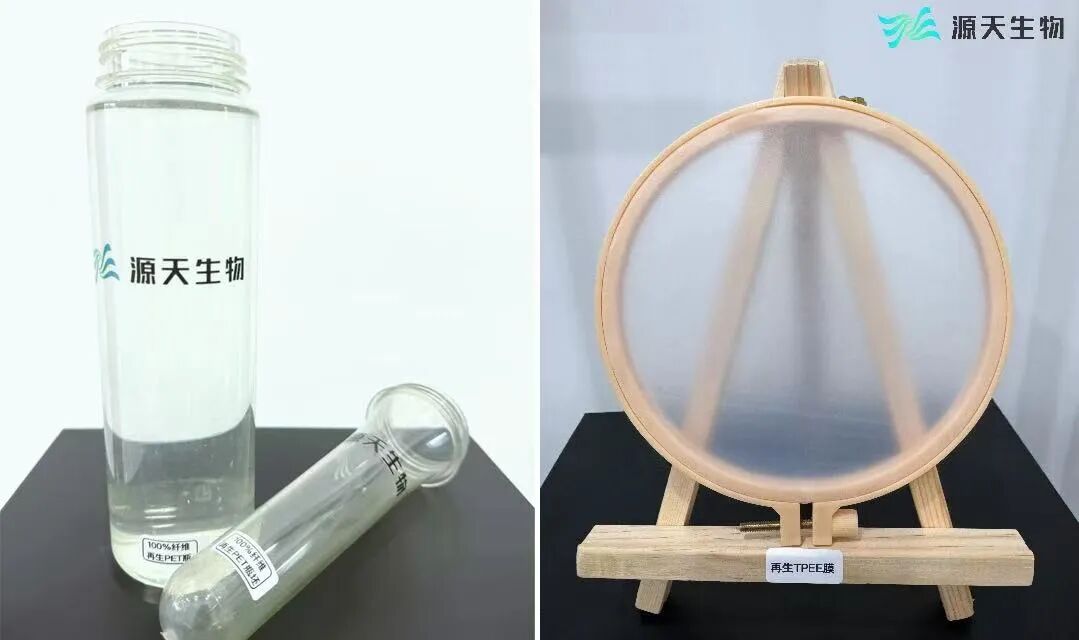
Yuantian Biotech Rb-PET products
"The core advantage of biological degradation lies in its technical essence — under ambient temperature and pressure conditions, the entire production process uses an all-aqueous system, giving it comprehensive competitiveness in safety. Whether in production safety, employee operational safety, or product application safety, we have significant advantages," You explains. The core challenge is how to scale this innovative technology from the laboratory to ten-thousand-ton production capacity.
The first challenge is the enzyme bottleneck. Natural enzymes have low activity, unstable structures, and sensitivity to reaction conditions, requiring relatively mild operating conditions and longer reaction times. In response, Yuantian Biotech has successfully developed high-performance PET enzyme mutants based on prior research: on one hand achieving single-enzyme hydrolysis, reducing enzyme preparation costs and simplifying PET enzymatic degradation steps; on the other hand using AI-driven creation technology to achieve tertiary structure reorganization of enzymes, creating new enzymes with 1920-fold increased activity and improved catalytic efficiency.
The second challenge is process scale-up. Yuantian Biotech's current 300-ton production line has been operating for over half a year, and a 5,000-ton line is under construction. Its self-developed systematic process package has become an important moat. You explains: "Unlike small-category products with low cost sensitivity and rough process management, bulk materials require pushing per-ton costs to the extreme. Even reducing costs by one yuan can significantly improve overall profitability, demanding meticulous refinement of the process package."
Cost is the frequently mentioned keyword from technology to process, and also the third challenge for large-scale application of biological degradation. Cost levels will influence market application choices. To reduce costs, Yuantian Biotech is pursuing economies of scale through continuous, automated, and intelligent large-scale production lines to lower unit costs, while also working on industry chain and technology iteration — promoting standardized cooperation with upstream waste collection enterprises and iteratively improving enzyme catalytic efficiency.
"We need to transform this innovative technology into scaled production capacity that permeates every aspect of life, reaching million-ton or even ten-million-ton production scale," You concludes.
02
High-Quality Regenerated Materials Gain Recognition from Downstream International Brands
According to Bizwit Research & Consulting data, the global regenerated PET market was USD 10.51 billion in 2024, expected to reach USD 13.817 billion by 2029. Currently, existing PET recycling technology routes cannot fully meet market demand.
From a market opportunity perspective, European and American markets have already driven rapid development of green materials through policy and consumer demand. The EU's Carbon Border Adjustment Mechanism imposes additional tariffs on high-carbon products, directly stimulating demand for low-carbon materials. Leading brands domestically and internationally, based on ESG principles, are actively embracing superior regenerated materials.
Jiang Gangwen, co-founder of Yuantian Biotech, notes that customer core demands include performance matching virgin materials, cost competitiveness, and environmental safety certifications — areas where Yuantian Biotech has competitive advantages. "Our customers are all top domestic and international brands, and they welcome us very much. Because our product quality can reach petroleum-based virgin material levels, client-side applications are completely problem-free — test it and it works immediately."
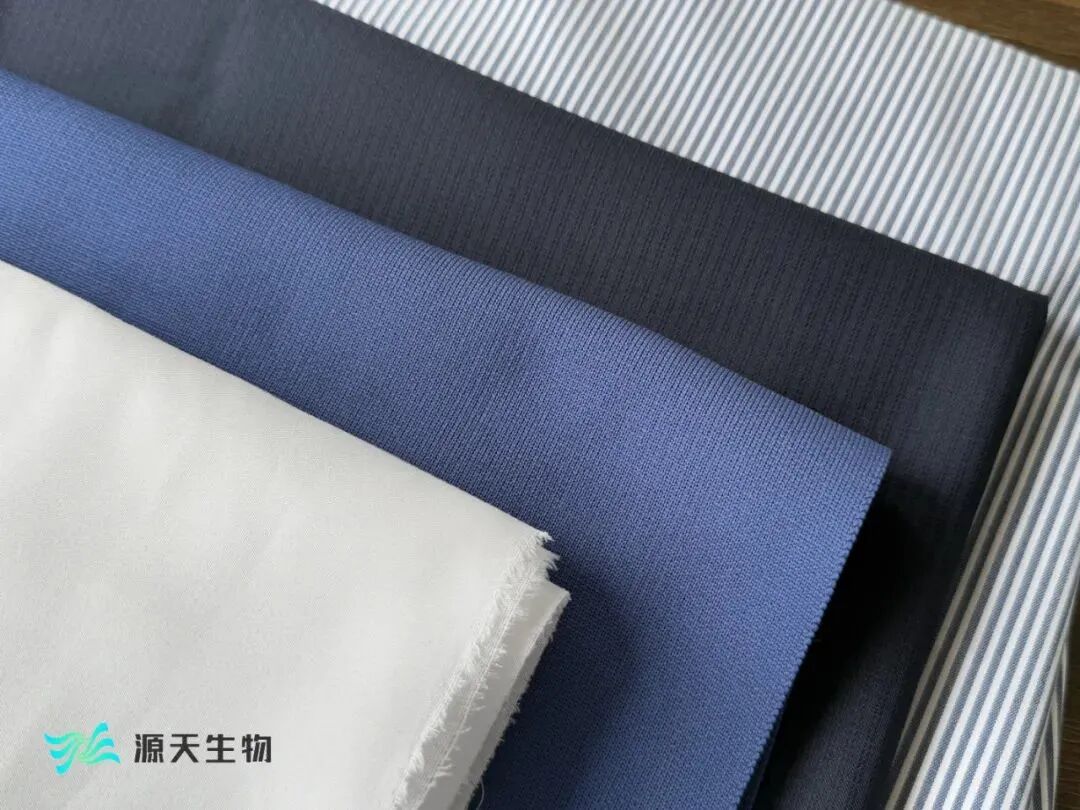
Yuantian Biotech regenerated material products
Beyond product partnerships, Yuantian Biotech is also conducting closed-loop recycling cooperation with partners: customers provide waste fiber and other raw materials, and Yuantian Biotech uses its enzymatic degradation technology to break them down into rPTA and rMEG monomers, then repolymerizes them into Rb-PET chips, achieving a complete Textile to Textile cycle. In May 2024, Yuantian Biotech successfully produced the world's first enzymatically regenerated T-shirt, sports shoes, PET bottle flakes, and PET film — a significant milestone for advancing the circular reuse of waste fibers and similar materials.
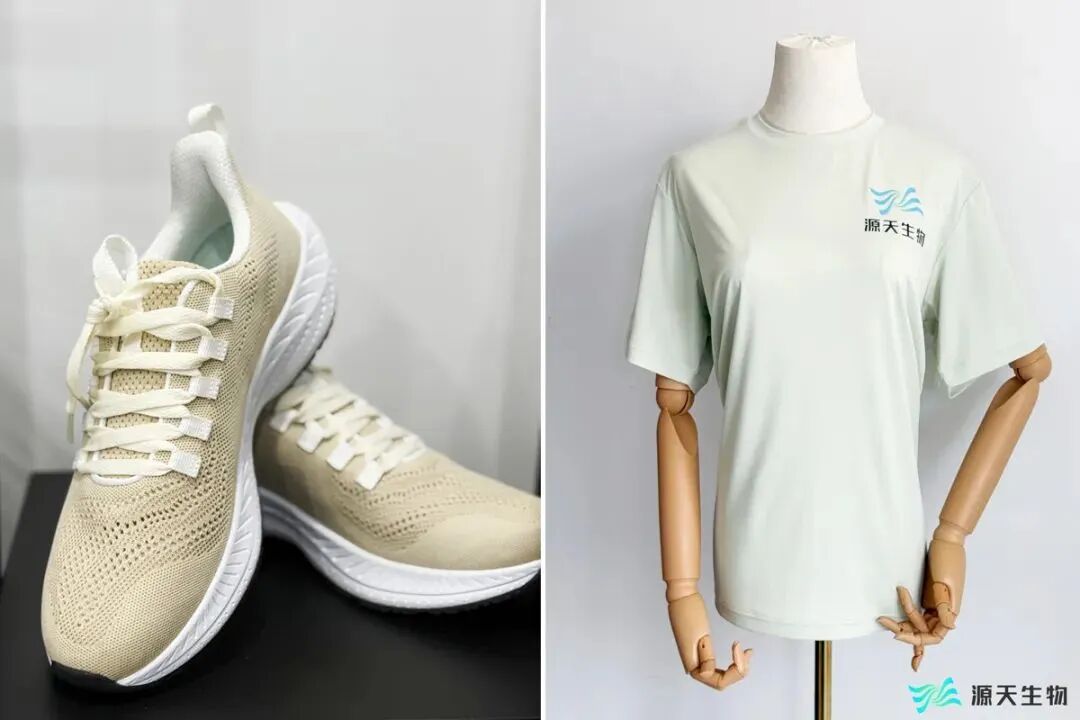
Yuantian Biotech enzymatically regenerated sports shoes and apparel
$2
However, it must be acknowledged that the biological degradation technology route remains in early stages. France's Carbios, a leader in the field, is also pursuing industrial scale-up. Its PET bio-recycling plant co-built with Indorama Ventures is under construction; upon completion, it will have annual processing capacity of 50,000 tons of post-consumer PET waste, equivalent to 2 billion bottles or 300 million T-shirts.
Meanwhile, unlike mature European and American markets, domestic PET recycling policies remain primarily encouraging rather than mandatory. Market demand growth requires more product and technology-driven push.
This is both an opportunity to leapfrog and a challenge for innovative enterprises. You candidly states that facing future million-ton production scale targets, Yuantian Biotech remains in the pilot stage. The next core task is constructing the 5,000-ton production line while landing more leading customer orders, sprinting toward RMB 100 million-level revenue.


ID: daltonventure
Long press to follow
Recommended Reading