VBData Exclusive | Dalton Venture: The Next Phase of Opportunities in Healthcare — "Technology + Safety" Is the Unavoidable Theme

In a turbulent environment, most investment firms have chosen to play it safe, pulling back on deal activity. Yet in 2023 — widely called a funding winter — Dalton Venture actually picked up its investment pace. How does the firm see 2024 shaping up? At the start of the new year, Sun Qi, founding and managing partner of Dalton Venture, sat down with VBData to share his outlook on healthcare trends for 2024 and his advice for founders.

Editor's Note
In a turbulent environment, most investment institutions have chosen to hold back and cut spending. During the so-called "winter period" of 2023, Dalton Venture instead accelerated its investment pace. What will Dalton Venture's outlook be for 2024? At the start of the new year, Dalton Venture founding managing partner Sun Qi sat down with VBData for an exclusive interview, sharing his views on healthcare industry trends for 2024 and advice for entrepreneurs.
In 2023, capital markets continued to clear out.
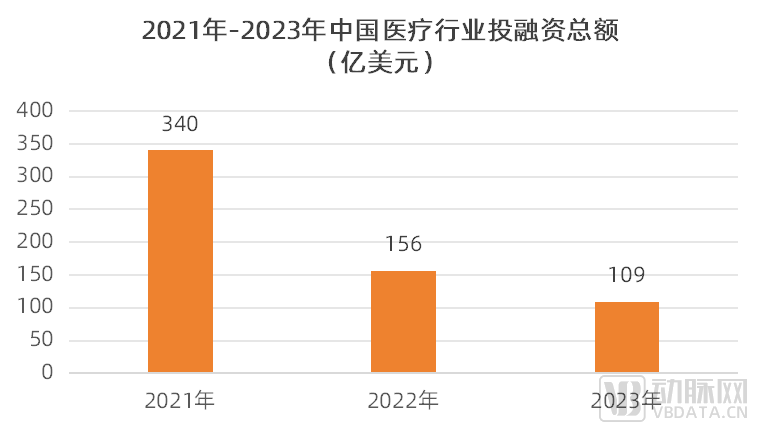
According to the 2023 Global Healthcare Investment and Financing Analysis Report, total healthcare investment and financing in China reached $10.9 billion in 2023 — a significant drop from $34 billion in 2021 and $15.6 billion in 2022.
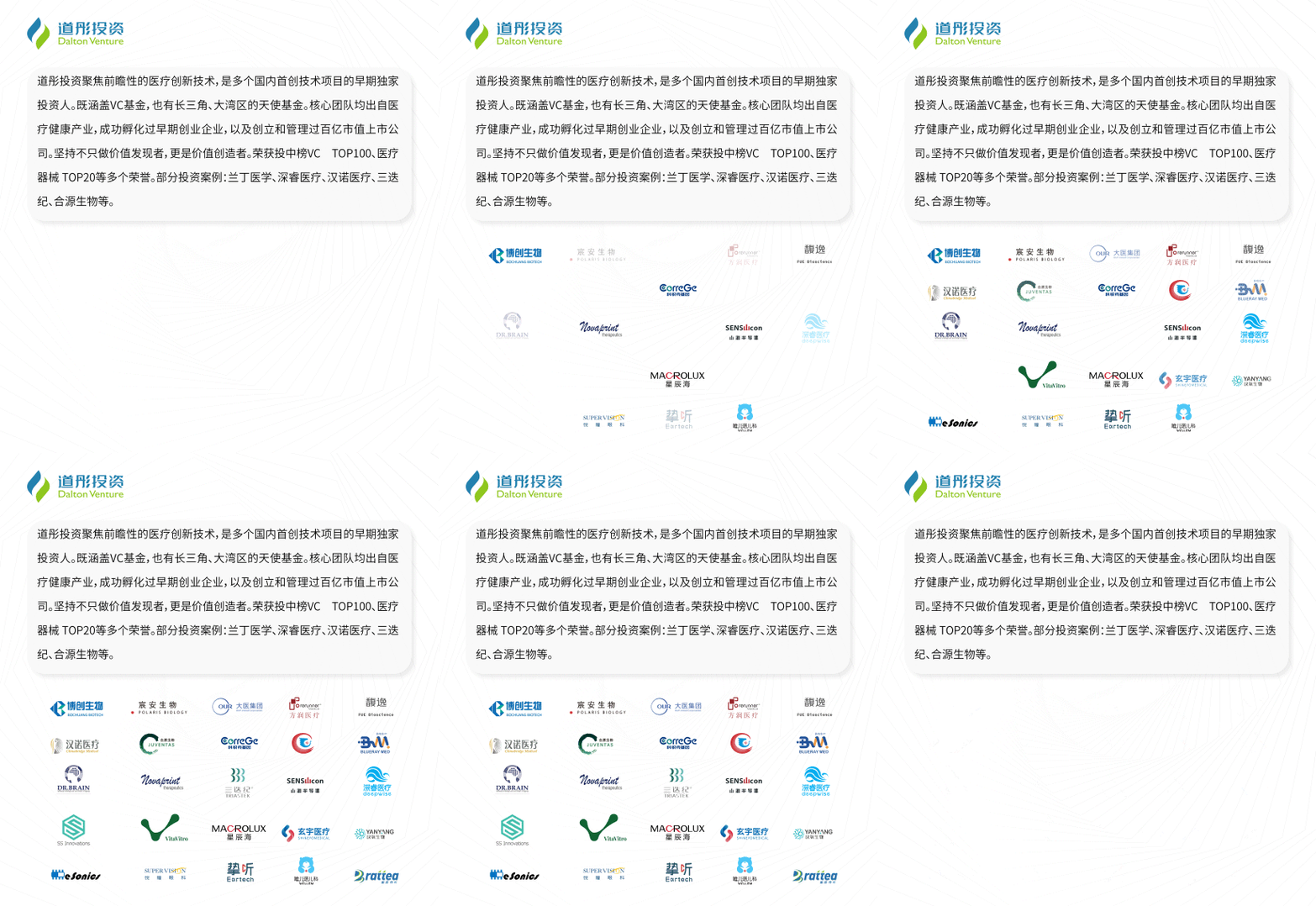
Unlike most investment institutions that chose caution, Dalton Venture accelerated its investment frequency in 2023. Compared to 2022, both the number of projects and total investment amount increased. According to statistics, Dalton Venture invested in numerous healthcare companies in 2023, including Starsea Medical, BioChuang, IceCrystal Intelligence, Freyee Medical,博瑞迪,瀚辰光翼,精勤智造, and Xiran Medical, spanning multiple innovative fields such as neurointervention, endoscopy, surgical robotics, seed technology, and ophthalmic surgical equipment.
Beyond quality projects, Dalton Venture achieved other gains. As the market cooled in 2023, quality resources gradually concentrated toward leading companies, and several early-stage innovative projects Dalton Venture had previously bet on completed financing rounds, validating its strategic vision. For example, Hanuo Medical, which it invested in in 2021, completed several hundred million yuan in Series D funding and over 100 million yuan in Series E funding in 2023; Triastek, invested in 2020, completed 150 million yuan in Pre-C funding in September 2023...
How does Dalton Venture assess 2024? What strategic adjustments will it make? In its interview with VBData, Dalton Venture founding managing partner Sun Qi shared his perspectives and insights.
The Industry Is at the Bottom; Accelerating Investment in Biopharma
Over the past two years, total healthcare investment and financing has dropped sharply, yet the number of companies seeking funding hasn't decreased. This means some companies will inevitably shut down.
Sun Qi offered a straightforward analogy: "Previously, there were three bottles of water on the table for three people — just enough. Now three people have only one bottle, clearly insufficient. Some people need to leave, meaning some companies need to fall. This is a natural clearing process."
As of now, the market clearing in 2023 wasn't thorough. Healthcare companies are surviving on previous funding while trying to save themselves through workforce optimization, pipeline cuts, and commercialization efforts. Meanwhile, against the backdrop of slowed capital market investment and financing, the market presents a stark contrast: top-tier projects attract more quality resources and capital, while mid- and lower-tier companies face greater difficulties. Therefore, Dalton Venture expects the healthcare industry to continue clearing in 2024.
Despite market volatility and challenges, Dalton Venture remains bullish on the healthcare industry long-term. The reasons lie in the fundamentals Dalton Venture sees:
First, China's aging demographic hasn't changed. As aging deepens, "elderly diseases" are expected to rise, and with them, healthcare market demand.
Second, government attention and support for healthcare hasn't changed. In recent years, government departments have frequently issued policies supporting innovative medical technologies and products.
Finally, China's healthcare industry has reached a critical point for going global. More companies are venturing overseas, seeking larger and broader stages. The future is expected to produce a batch of global healthcare giants from China.
Additionally, Dalton Venture believes: currently, the biopharma industry as a whole is in the bottom zone, with most risks already released.
Traditionally, Dalton Venture's focus has been on medical devices, with relatively limited exposure to biopharma. In 2024, Dalton Venture sees more opportunities in biopharma, particularly with large-scale innovative drug exports and MNCs scooping up domestic innovative drug pipelines, both bringing new development opportunities for domestic biopharma companies.
Sun Qi stated: "For Dalton Venture, now is precisely the time to position. Because the closer to the bottom, the more rational project valuations become, and the more investable projects there are. Moreover, unlike the secondary market, primary market positioning requires 12-18 months. Sharp institutions have already begun fully positioning and researching projects."
Investing Around "Technology + Security"; Global Capability Is Standard Equipment
"My actions already indicate my view of the future. In 2024, we still aren't choosing to lie flat," Sun Qi told VBData.
At this stage, capital and resources should prioritize allocation toward areas the country needs. Therefore, Dalton Venture's 2024 strategy centers on investing around "technology + security." Technology means hardcore innovative technology. Security refers to national priorities: "food security, energy security, supply chain security." Specifically in healthcare, this means life science technology and seed technology related to food security; and biomaterials, scientific instruments, and other industries related to supply chain security.
Sun Qi believes: "Seeds are the chips of food. Take soybeans as an example — if a new soybean variety could increase oil yield by 40%, soybean planting area could be reduced by 40%. This freed-up farmland could be used for staple crops, ensuring food security."
Beyond "technology + security," Dalton Venture also values innovative companies' global capabilities. Dalton Venture believes: with the development of medical technology, domestic companies have reached the right timing for going global. In the past, China's apparel, toy, home appliance, mobile phone, and new energy vehicle industries — after intense competition and internal rivalry — polished their products and cost-effectiveness to the extreme and successively moved toward exports. Now, the innovative drug and medical device industries have reached this stage.
Specifically, at present, domestic healthcare industry competition has intensified and the survival environment is harsh. Some high-cost or market-mismatched companies have already been eliminated. Those still active in the market are companies with significant competitiveness. These companies have clear advantages over overseas competitors in product performance, cost, and other aspects, giving them strong odds in overseas markets.
At the recent JP Morgan conference, numerous industry insiders shared the boom of Chinese innovative drug BD deals in 2023, all noting that Chinese innovative drug licensing prices were notably low. This means enormous upside and broad prospects for Chinese innovative drugs.
Therefore, Dalton Venture plans to treat global capability as standard equipment for portfolio companies. Management teams' global vision and overseas BD capability will become one of the investment evaluation criteria. "This is a standard configuration requirement, not a bonus item," Sun Qi said. "For already-invested companies, Dalton Venture will help them fill gaps and enhance global capabilities."
Regarding overseas markets, Dalton Venture has observed: in recent years, due to shifting international relations, Chinese medical products have been well-received in Eastern Europe, the Middle East, and other markets — Mindray, for example, has seen significant growth in the Russian market.
For innovative companies about to go global, Sun Qi advised: "First, don't overly rely on overseas personal connections. Medical product sales depend on channels, expertise, and product performance. Second, don't bypass agents from the start. In fact, even today, some successfully globalized companies still sell products worldwide through partnerships with professional agents. Third, what Chinese manufactured products are most recognized for is cost-effectiveness, performance-to-price ratio. Therefore, innovative companies can leverage cost advantages and product strengths to partner with agents and open markets."
In 2024, another Dalton Venture priority is staying close to industry. In recent years, national policy dividends have gradually tilted toward high-tech industries. In response, Dalton Venture chooses to embrace industry, directing limited resources toward serving national strategy and investing in projects that are "market-needed + country-needed."
Sun Qi said: "Embracing industry isn't empty talk. We'll embrace industry across fundraising, investment, management, and exit, engaging in deep communication and strengthening cooperation with industry leaders."
With IPOs temporarily tightened, M&A has become another important exit channel. "Currently, listed companies hold massive cash flow, but only a small portion flows to real industry. As the investment and financing market cools and innovative project valuations become rational, listed company M&A is expected to further unlock. This opens another door for exits," Sun Qi shared his views on industry M&A trends during the interview.
In 2024, the market environment remains complex. Dalton Venture believes cross-boundary expansion is a form of self-rescue. At this stage, with scarce resources and R&D cycle constraints, healthcare companies will face significant difficulties without cross-boundary moves. Once a company masters an underlying technology, it can explore multiple application scenarios.
Amid crisis, Dalton Venture continues to focus on innovation. For the future, Dalton Venture's expectation is to "all in AI."
Sun Qi said: "If there's a systemic variable in the healthcare industry over the next decade that excites people, what we see now is AI. It will bring massive change to all industries. AI isn't just ChatGPT — AI will profoundly impact the industry. In healthcare, beyond serving medical imaging and surgical navigation, AI products can also empower medical device and drug R&D."
Which Sectors Look Promising in 2024?
In 2024, Dalton Venture continues to focus on the medical device field while also watching investment opportunities in pharmaceutical upstream, scientific instruments, biomaterials, and other niche markets.
Today, the capital frenzy has receded and the era of incremental growth has ended, but the stock era also holds opportunities. Nationwide, there are nearly ten thousand innovative drug companies, which will bring structural opportunities to pharmaceutical upstream companies. Previously, pharmaceutical equipment and consumables were dominated by imported brands, but as market conditions change, companies urgently need to reduce costs and increase efficiency. Additionally, based on supply chain security considerations, domestic innovative drug companies will also consider domestic pharmaceutical equipment and consumables. However, all this will take time.
Scientific instruments and biomaterials are also promising markets. Currently, both markets are dominated by overseas brands, with domestic products in an absolutely weak position. Yet from a supply chain security perspective, domestic companies must break through in scientific instruments, biomaterials, and upstream core components to solve the bottleneck problem.
For how innovative companies should face 2024, Dalton Venture's advice is "persist, focus, innovate."
Persist means facing challenges head-on, surviving the winter, not retreating, not giving up. Focus means companies need to concentrate on areas they excel in and where demand exists, cultivating deeply without casually expanding into unfamiliar territories. Innovate means companies need to seek new business growth opportunities and internal model innovation.

ID: daltonventure
Long press to follow
Recommended Reading