Vol.1 Finding a Switch for That Chronic Pain You've Endured for So Long | Column · The New Era's Unicorns

In 2025, the global chronic pain treatment market will grow to 500 billion yuan.


Opening
As the wave of hard tech sweeps across industries, as breakthroughs "from zero to one" become the defining challenge for entrepreneurs, we keep asking: What kind of company can survive cycles and grow into a true "unicorn" that shapes the future?
Over ten years of deep involvement in life sciences and hard tech investing, Dalton Venture has witnessed countless innovators persevering from lab bench to commercialization, and has seen firsthand how quality projects break through with capital and resources. Today, we are officially launching a new column, "Unicorns of the New Era," in partnership with Pencil News — no chasing flashy traffic, no piling up empty concepts, just a sharp focus on companies rooted in frontier fields like biomanufacturing, brain-computer interfaces, biotechnology, and eldercare tech — using technology as shield and industry as spear to reconfigure their sectors.
This isn't a routine company profile. It's a deep dissection of "unicorn DNA": we'll speak with founders and core teams, analyze their pivotal choices in breaking through technical bottlenecks, examine the underlying logic of balancing innovation with commercialization, and explore "what combinations of technology, team, and model can truly meet the demands of the new industrial era."
We believe that unicorns of the new era are never accidental lucky breaks. They are the inevitable outcome of "hard technical capability + industrial insight + long-termism."
"Unicorns of the New Era" — we invite you to witness every breakthrough, record every stage of growth, and discover the forces that will ultimately define China's hard tech future.
For our inaugural piece, we spotlight NewCloud Medical — a rapidly rising innovator in pain management that is redefining patient experience and industry standards through cutting-edge neuromodulation and intelligent medical technology.
And in the future, more "pre-unicorns" like NewCloud Medical will be unveiled here.
Interview by Zou Wei and Song Ge, Pencil News
1
A History of Pain Relief: The Millennia-Long Contest From Witchcraft and Herbs to Neuromodulation
Pain is not merely a physiological sensation. It is a complex experience shaped by emotion, memory, and social environment. It is a wordless darkness that isolates people on their own islands.
The philosopher Nietzsche suffered for years from migraines, gastrointestinal illness, and neuralgia — tortured by his body nearly every day. He wrote in his notes: "Pain is my most faithful companion."
Humanity's struggle against pain has run through nearly all of civilization. From witchcraft and herbal remedies to opium and alcohol, then anesthetics and modern pharmaceuticals. Humans have sought a way to rapidly and durably suppress chronic pain.
Only toward the end of the twentieth century did humanity begin trying another approach: rather than continuing to search for more potent drugs, directly intervene in the nervous system itself. Spinal Cord Stimulation (SCS) was born from this line of thinking. By placing electrodes within the spinal canal, faint electrical pulses interfere with pain signals, causing the brain to "misread" messages from the body, thereby alleviating chronic pain that has long tormented patients.
Beijing-based NewCloud Medical is making a name for itself in SCS therapy. Founder Zhao Yun spent eight years working in hospitals, where accumulated experience gave him sharp foresight into the future of chronic pain. In 2016, as China pushed to establish pain specialty medical consortiums, he entered the chronic pain treatment track and gradually moved into niche areas like closed-loop SCS, making NewCloud Medical one of the few domestic companies focused on innovative chronic pain devices.
NewCloud Medical hopes to use technological innovation to implant novel neuromodulation devices in patients' bodies, providing precise around-the-clock analgesic stimulation so they no longer have to endure refractory pain such as postherpetic neuralgia.
"A retired famous athlete — excellent conditions in every respect, but plagued by pain for years. Sports injuries from youth became increasingly pronounced with age. Later he found us, learned there was a specialty dedicated to diagnosing and treating pain, had his condition confirmed through diagnosis, and after targeted treatment, his pain was quickly relieved. He said it felt like getting back to how he was 20 years ago." Zhao Yun spoke of the meaning of pain treatment.
Meanwhile, chronic pain is not only an individual predicament but a societal challenge. By one estimate, this problem imposed an annual economic burden of roughly $722.8 billion on the United States in 2021.
Healthcare systems worldwide are paying increasing attention to pain treatment. In China, the former Ministry of Health (now the National Health Commission of the People's Republic of China) classified "pain medicine" as a clinical first-tier discipline as early as 2007, a move that spurred systematic construction at major hospitals. Today, public tertiary hospitals generally have pain departments, with diagnostic and treatment scope covering trigeminal neuralgia, postherpetic neuralgia, cancer pain, and chronic lower back and leg pain. However, the industry still faces challenges including insufficient patient awareness and limited treatment modalities. With accelerating population aging, China adds roughly 10 to 20 million chronic pain patients annually, and this pressure is becoming increasingly pronounced.
Zhao Yun believes that domestically, with the widespread establishment of pain departments and medical insurance coverage for diagnostic and treatment items, patient demand is刚需. This is precisely the enormous market gap. In the US market, patient awareness of pain treatment is widespread, willingness to pay for new products is strong, and exporting advanced SCS devices presents new opportunities.
In 2025, the global chronic pain treatment market will grow to 500 billion yuan.
Recently, NewCloud Medical completed its B+ round of financing, led by Dalton Venture with follow-on investment from Taizhou Angel Fund, Qianfeng Investment, and others. Since its founding, NewCloud Medical has completed six rounds of financing in total.
Below are highlights from the conversation between the interviewers and Zhao Yun.
2
Pain Treatment: From Drugs to Devices
Q: Why did you choose to start a business in pain medicine?
Zhao Yun: I entered a hospital somewhat by chance, responsible for clinical pathway design and overseas device import, so I had a good understanding of how hospitals operate.
Later I collaborated with some pain specialists and came into contact with pain medicine. In 2016, the state happened to be preparing pain specialty medical consortiums, and I participated in that — it was an important catalyst.
Pain not only affects sleep and mood, it also impacts work and income, and consequently the quality of life for the entire family. Left untreated long-term, it can even lead to serious consequences. Pain is divided into acute and chronic; we focus on chronic pain — patients with continuous or recurrent pain for more than three months. Compared to chronic diseases like diabetes, pain treatment results are more visible, and patients more readily perceive efficacy.
Europe and America are far ahead in this area. Their demands for quality of life are high, and pain tolerance is low. As domestic living standards rise, pain issues are gradually gaining attention.
Europe and America previously relied on painkillers, but these are prone to addiction and have significant side effects. Later they shifted toward minimally invasive or physical treatments, driving development of related devices. The United States calculated in 2016 that pain's social burden reached seven to eight hundred billion dollars.
Domestically, statistics show roughly 300 million chronic pain patients. The earliest treatment might rely on drug therapy. If ineffective, auxiliary physical methods like acupuncture, massage, physiotherapy, and massage devices might be used, as well as psychological therapy, and further along is the direction we focus on: minimally invasive interventional procedures and implantable devices, mainly neuromodulation.
Q: Were there any relatively mature companies or teams domestically at that time?
Zhao Yun: There was a huge gap. In the early days without pain departments, patients might be diverted to orthopedics, neurosurgery, rehabilitation, and other departments. Most pain department doctors came from anesthesiology, and treatment plans were basically assembled from various departments, so for a long time people didn't think there was a market here. Whether in diagnosis or treatment, research and products were very scarce.
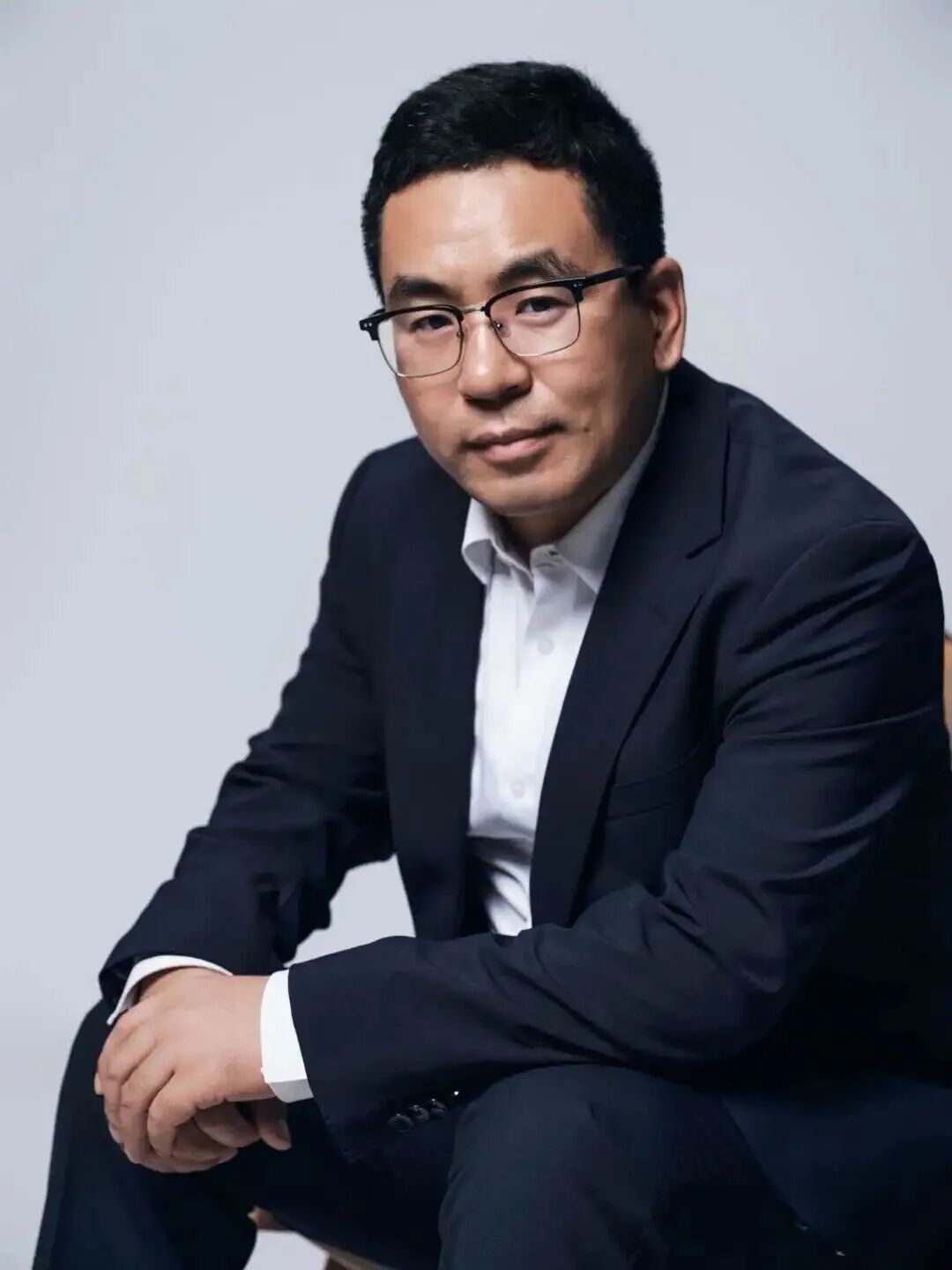
NewCloud Medical founder Zhao Yun
Q: What are your "pain relief" products?
Zhao Yun: Our core product line is mainly divided into two categories: minimally invasive interventional and active implantable.
First, minimally invasive interventional. A very common clinical pain is spinal-origin pain, such as lumbar spinal stenosis, and minimally invasive interventional is an effective solution for this type of disease.
The second category is active implantable products, namely neuromodulation devices. These mainly target neuropathic pain, such as postherpetic neuralgia, diabetic neuralgia, phantom limb pain, and so on.
Pain departments admit many patients, but have developed for too short a time, lacking their own device ecosystem. Orthopedics has orthopedic robots, various instruments, but pain departments have never had dedicated devices. This is precisely the gap we aim to fill.
3
Market Education for Pain Treatment
Q: As a startup, how do your products differ from those of large manufacturers?
Zhao Yun: This is the key question. Many people ask, since the industry already has similar products, why are new solutions needed? The reason is that traditional products have clear limitations.
I'll give an example: after electrodes are implanted in the epidural space of the spinal cord, traditional systems provide a fixed-parameter stimulation protocol. At rest, the effect may be good and patients are satisfied. But people need to move — once walking or running, electrode position shifts. This causes overstimulation or understimulation, leading to paresthesia and decreased efficacy. Most seriously, when coughing or squatting, electrodes can move and cause "stimulation dropout," potentially rendering the treatment ineffective. And pain is 24/7, which keeps traditional solutions' efficacy rates (pain relief rates) mostly around 50%.
Our closed-loop system was designed to solve this problem. It uses AI to collect spinal neural signals in real time, adjusting stimulation intensity and area on a millisecond scale. Patients barely perceive it, but remain in optimal pain relief state.
According to existing literature data, closed-loop systems improve efficacy rates (pain relief rates) from 50% to 80%, with some cases even reaching 90%. It's like autonomous driving: the system always maintains optimal trajectory, automatically correcting when deviation occurs, avoiding "running off course." Meanwhile, because our electrodes have 24 contact points with multiple combination possibilities, this avoids tolerance issues like those with drugs.
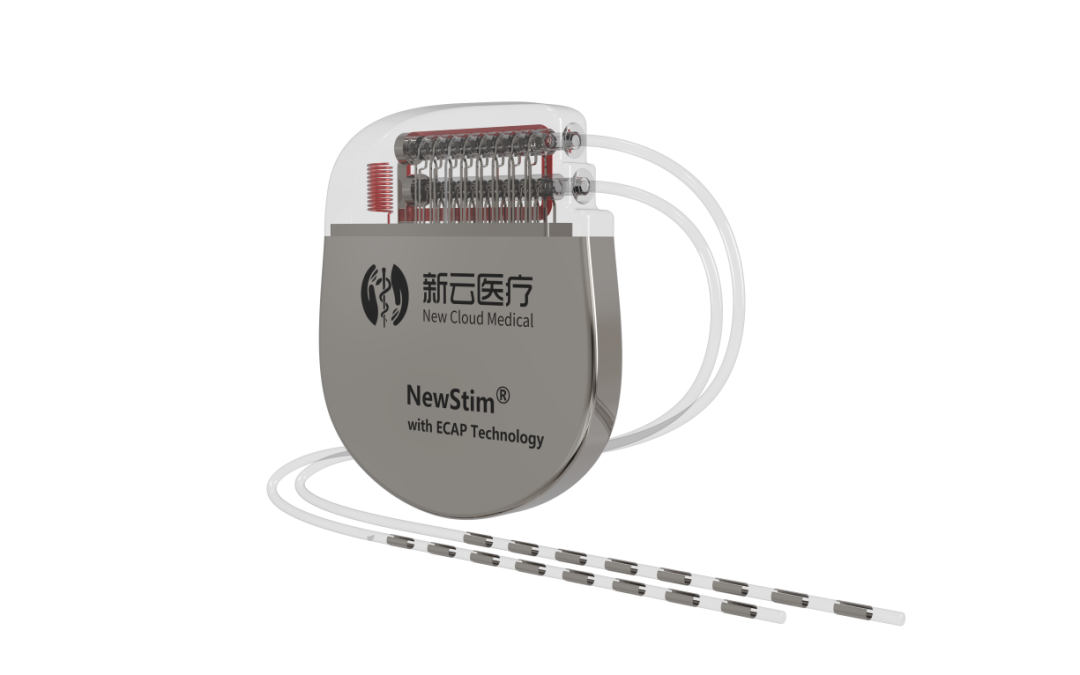
AI closed-loop implantable rechargeable spinal cord stimulation system NewStim
Q: NewCloud's brand recognition can't match Abbott or Medtronic. How do you cultivate advantages in the market?
Zhao Yun: This is precisely where our latecomer advantage lies.
First, we collaborate with pain departments at multiple renowned domestic and international hospitals, making our products align with clinical needs.
Second, our product project has entered Beijing's Science and Technology Plan program, one of the few hardware innovative devices in the 2024 "AI + Health" special initiative.
Third, our products have independent intellectual property rights, with key technologies under autonomous control.
Our R&D model — combining research, academia, and training — we call the "industry-university-research-medical-application" integrated innovation model. This way, the medical community may already be familiar with our products before they even hit the market. Future clinical trial results can also be quickly presented to the entire industry.
Another point: innovative devices have green channels in China. For example, after entering the Zhongguancun Innovation Catalog, hospitals may prioritize them in procurement. Additionally, such products themselves have medical insurance payment catalogs; we are doing functional upgrades based on these catalogs. You could understand it as going from feature phones to smartphones — with existing price items, but potentially superior efficacy, which facilitates clinical promotion.
Q: What is your current market coverage?
Zhao Yun: Our minimally invasive surgical instruments (PILD surgical instruments) have just entered the clinical phase, with a focus on covering top-tier hospitals. Basically, many of the top 10 hospitals on the Fudan ranking (editor's note: the China Hospital Pain Specialty Reputation Ranking) are our clinical collaboration partners. We start from major tertiary hospitals, so that surgical methods and efficacy are validated, then gradually promote to smaller hospitals. Meanwhile, we will organize academic conferences in various locations, focusing on training and surgical teaching, so more doctors can master these techniques. Because introducing new surgical methods to pain departments itself enhances their diagnostic and treatment capabilities.
Q: In the pain treatment field, what market education still needs to be done?
Zhao Yun: Market education still has a long way to go. But the concept that "chronic pain is a disease that must be treated" is being popularized — CCTV has a slogan: "Enduring pain is not a virtue."
Changes are also happening at the doctor level. Previously, pain departments were often managed concurrently by anesthesiologists; in fact, anesthesiologists are most skilled at lumbar puncture, and lumbar puncture is precisely the foundation of minimally invasive spinal surgery. All our techniques are minimally invasive, with no open surgery. Training thresholds are greatly reduced, and they can be mastered in relatively short time.
Pain departments' status within hospitals is rising. For example, some hospitals' pain departments have entire buildings of office resources, some have two wards with 92 beds, some even have dedicated pain department operating rooms.
Another point is hospital revenue structure. Pain departments can adapt to DRG/DIP payment models, which favors their development. Plus with policy pushes like tertiary hospital accreditation, pain departments have become standard equipment at many hospitals. Current registration systems at many hospitals have pain clinics, and quite subdivided ones at that: lower back and leg pain, cancer pain, trigeminal neuralgia, neck and shoulder pain, diabetic neuralgia, and so on. These conditions cover virtually all body pain, with very broad application scenarios.
Q: What are treatment costs roughly? Could there be situations where patients want treatment but can't afford it?
Zhao Yun: Our minimally invasive surgical instrument fees basically won't exceed existing comparable surgical products. Our fees are also based on the latest clinical standards and economic conditions, so pricing is reasonable and scientific.
Medical insurance also has clear guidance prices, fully covered within the medical insurance guidance price range, so minimally invasive surgical instruments basically don't have an "unaffordable" problem. Compared to AI software products, hardware products have clearer fee pathways.
4
New Opportunities in Pain Treatment
Q: What new opportunities have emerged in the pain treatment track in 2025?
Zhao Yun: Opportunities have actually always been there, but now they're clearer. First is demand driven by population aging, with 10 to 20 million new patients added annually — this is a huge patient population.
Second is choice of treatment modality. The drug track already has many companies; we chose the device path. Pain treatment remains a "practical science" to this day — that is, efficacy is validated through clinical practice, then mechanisms are reverse-engineered. Globally, interpretation of spinal signals is still in its early stages, not yet fully explained.
Our company has added another layer to its development path: beyond common product iteration (R&D generation, clinical generation, market generation), we've added a "mechanism research generation," hoping to drive next-generation treatment through deeper basic research.
Pain treatment will move toward personalization and long-term management. For example, using AI models to help patients self-manage post-surgery. Overseas, this is billable, so we're also planning international products, such as dual US-China registration. This can accumulate more data, then drive personalized treatment.
Looking ahead, we will not only upgrade in the existing electrical stimulation direction, but also explore multiple neuromodulation methods including sound, light, and heat, launching entirely new products for different indications.
Q: How are preparations for going overseas?
Zhao Yun: We are preparing to initiate registration in the United States. Overseas markets are mainly Europe and America, especially the United States.
Q: In European and American markets, how do you compete with large medical device companies?
Zhao Yun: First, intellectual property is not an issue — we've already passed FTO (Freedom to Operate, i.e., confirming our products won't infringe on existing local patents). Second, what we're doing isn't simple replication, but entering new细分 markets with differentiated competitive products.
Overseas, two situations may emerge: one is cooperation with large enterprises, the other is that they might explore new treatment methods based on our technical approach, but direct replication is unlikely. Unlike the domestic "involution" logic, the US market respects differentiation and localization.
Moreover, overseas promotion must be localized. In the future we'll establish R&D teams locally, developing products combining cultural and clinical needs. For them, this actually adds employment and choices. Chinese companies going overseas already have cost-performance ratio as an advantage. We may not necessarily be lower-priced, but at equivalent prices our product performance is better.
Currently no Chinese company has truly established a brand overseas in the pain electrical stimulation therapy field. If we go out first, we have the opportunity to become first-tier.
Q: What help and improvement has artificial intelligence brought to pain treatment?
Zhao Yun: For example, remote management. Our devices are implanted in the body, and patients are closely bound to us for ten years or even longer in the future. Previously after surgery we didn't know patients' real conditions, but AI has enabled real-time connection with patients. Through desensitized data transmission, patients get better experiences, and we get continuous feedback to constantly optimize products. In the past, iteration frequency for such implantable products was very low; in the future, through AI learning and analysis of feedback, iteration efficiency will greatly improve.
AI has made pain management a reality. Pain is a subjective experience; previously it relied on patient scoring, such as smiley face or crying face scales. But the same pain might be rated level 3 or level 6 by different people — very subjective. Now using AI, we can obtain both subjective patient feedback and combine it with objective data for calibration. AI transforms this information into objective indicators through large-scale data modeling and automated analysis, allowing doctors to judge and adjust treatment plans more accurately.
As more devices are implanted and data grows richer, treatment effects will get better and better. This was unimaginable in the past.
Q: Could you share a story about pain?
Zhao Yun: There are many stories about pain. Two left the deepest impression on me.
The first is the Nobel Prize. In 2021, two American scientists won the Nobel for their research on pressure pain receptors and capsaicin receptors. A seemingly ordinary pain phenomenon, once scientifically explained, became Nobel-level breakthrough. This shows that in pain mechanisms, every discovery has the potential to change the world.
The second is a patient's story. A retired famous athlete — excellent conditions in every respect, but plagued by pain for years. Sports injuries from youth became increasingly pronounced with age. Later he found us, learned there was a specialty dedicated to diagnosing and treating pain, had his condition confirmed through diagnosis, and after targeted treatment, his pain was quickly relieved. He said it felt like getting back to how he was 20 years ago. This is the true value of pain treatment.
Some patients, because of pain, can't sleep at night at all, afraid to move their entire body. This is not only an individual problem but also brings huge impact to the entire family. Improvement in mental state is very important for both patients and family members. Even people who have enjoyed access to much high-quality medical care can equally fall into困境 where pain cannot be resolved.
About Pencil News
Pencil News is a new media outlet focused on technological innovation and entrepreneurship, dedicated to discovering and cultivating unicorns. Since its founding in 2015, Pencil News has consistently practiced a "no lies" content philosophy, truthfully reporting on over 16,000 innovative enterprises, deeply influencing and advancing the domestic mass entrepreneurship and innovation wave. It has currently accumulated 1.5 million entrepreneur readers, with content reaching a peak of 16 million people in a single week.