How to Invest in Brain-Computer Interfaces? Dalton Venture's Lin Zhengcheng Breaks Down the Underlying Investment Logic at WAIC

**During the 2026 World Artificial Intelligence Conference (WAIC), Lin Zhengcheng, Partner at Dalton Venture, was invited to join Observer Network's *Zhi Guan WAIC 2026* livestream for nearly an hour of in-depth discussion on frontier technologies including brain-computer interfaces and AI for Science.** Rather than chasing industry buzzwords, Dalton Venture hoped to use this opportunity to present a long-developed research framework: as artificial intelligence continues to push toward the frontiers of science, the life sciences

Background
During the 2026 World Artificial Intelligence Conference (WAIC), Dalton Venture partner Zhencheng Lin was invited to join the Observer Network's WAIC 2026 Insights livestream for nearly an hour of in-depth discussion on frontier technologies including brain-computer interfaces and AI for Science. Rather than chasing industry trends, Dalton Venture saw this as an opportunity to share a long-developed research framework: as artificial intelligence pushes deeper into scientific frontiers, how life science becomes foundational to understanding a new generation of hard tech; and why brain-computer interfaces deserve sustained attention as one of the most consequential directions in this wave of technological change.
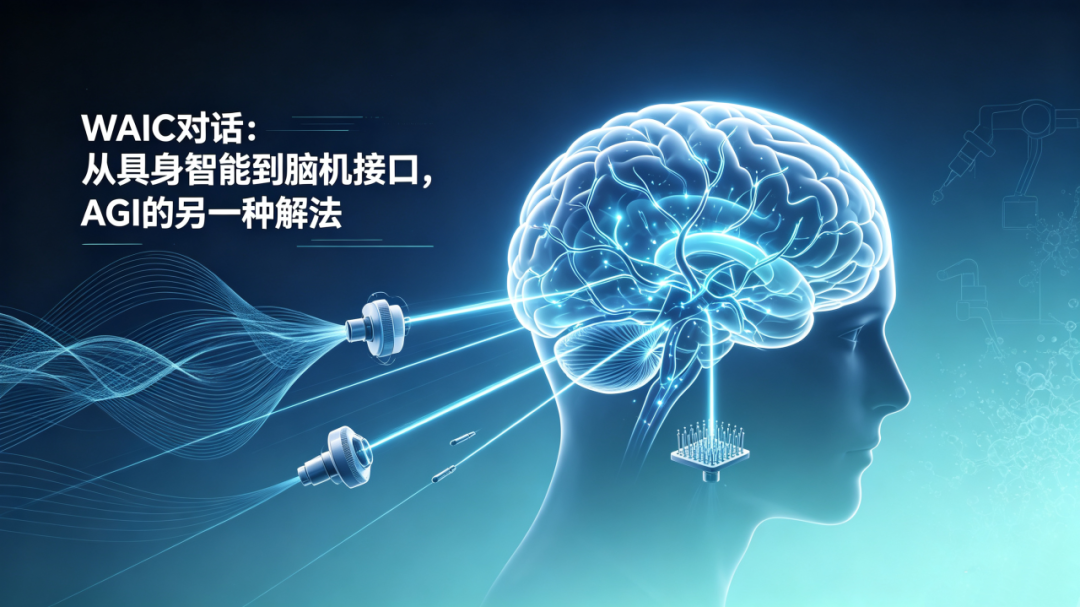
The following is an edited transcript of the interview.
Understanding Life Is the Starting Point for Understanding Hard Tech
For more than a decade, Dalton Venture has remained deeply rooted in life science. Whether in innovative medical devices, biomanufacturing, or brain science-related technologies, we have consistently focused on innovations built upon scientific breakthroughs rather than simply chasing industry hotspots.
In recent years, as AI has penetrated deeper into scientific research, an increasing number of hard technologies have begun reaching industrialization. From brain-computer interfaces to intelligent medical equipment, from AI-driven new materials R&D to AI for Science, technological innovation is showing increasingly pronounced trends of cross-disciplinary convergence.
From Dalton Venture's perspective, this is not a pivot in investment direction but a natural extension of research capabilities. Because what truly determines the future of these industries is not algorithms alone, but the life science, neuroscience, materials science, and complex systems science behind them. For investors, understanding life science means not only understanding disease, but understanding the underlying logic of future hard tech.
Brain-Computer Interfaces Were Never a "Choice of Approach"
When brain-computer interfaces come up, the most common industry question tends to be: invasive or non-invasive?
But from Dalton Venture's view, this is not an either/or question. Brain-computer interfaces are fundamentally a technological system composed of different physical mechanisms. Invasive electrodes, alongside non-invasive approaches using sound, light, magnetic fields, and electricity — each path has distinct methods of information acquisition, stimulation, and physical boundaries, and therefore different medical value.
Accordingly, what Dalton Venture focuses on internally is not "who will win," but building a more foundational research framework: how different physical mechanisms act upon the nervous system; and which technological capabilities are suited to which disease scenarios.
For brain-computer interfaces, there is no universal approach that can cover all applications. What truly matters is achieving the best match between current technological capabilities and clinical needs.
Different Physical Mechanisms, Different Technological Value
If brain-computer interfaces are understood as an interdisciplinary field, the differences between technological approaches fundamentally stem from different physical mechanisms.
Invasive Electrodes: Currently the Highest Signal Acquisition Precision
Invasive electrodes can directly record neuronal firing, with millisecond-level temporal resolution and cellular-level spatial resolution, making them one of the highest-precision signal acquisition approaches currently available.
Because they can directly record neuronal firing, they possess millisecond-level temporal resolution and cellular-level spatial resolution, making them particularly suitable for scenarios requiring high-precision neural control such as motor function reconstruction, language recovery, and visual restoration.
At the same time, the invasive approach continues to evolve. For example, electrode channel counts are advancing from 1,024 channels toward tens of thousands, to capture broader neural activity maps; and frontier research continues to make breakthroughs on engineering challenges such as scar effects caused by protein adsorption after implantation (a biocompatibility challenge) and electrode drift caused by micromotion in the brain. From high-channel-count electrodes, flexible materials, neural decoding algorithms to systematic improvements in biocompatibility, each technological advance continuously expands the boundary of information exchange between humans and the nervous system.
These seemingly microscopic materials and engineering breakthroughs are pushing invasive brain-computer interfaces from "functional" toward "practical," clearing obstacles for their long-term application in complex neurological diseases.
Magnetic: One of the Most Mature Non-Invasive Brain Modulation Technologies
Compared to other non-invasive technologies, transcranial magnetic stimulation (TMS) has a longer development history and is currently one of the most clinically mature brain modulation technologies.
Magnetic fields can penetrate the skull to stimulate specific brain regions, and have already accumulated extensive clinical experience in treating depression, sleep disorders, and certain neurological diseases.
More importantly, the development of magnetic stimulation has proven something: effective brain function modulation can be achieved without implanted electrodes. This not only validates the development direction of non-invasive brain-computer interfaces, but also leads the entire industry to reconsider the technological boundaries of brain-computer interfaces.
Of course, magnetic stimulation has its own characteristics — for instance, stimulation precision still has room for improvement, and its ability to read information from complex neural networks is relatively limited. But its mature clinical validation pathway makes it an important bridge connecting basic research with medical applications.
Ultrasound: Opening a New Window for Understanding the Whole Brain
In recent years, ultrasound brain-computer interfaces have become an important global focus, not merely because it is a new technology, but because it simultaneously possesses several highly promising technical characteristics.
First, non-invasiveness. Without requiring craniotomy and implantation, it can achieve detection and modulation of brain tissue, meaning natural advantages for future clinical adoption, long-term use, and patient acceptance.
Second, simultaneous "read" and "write" capabilities. Ultrasound can not only sense brain activity but also precisely stimulate specific brain regions, making it both an information acquisition tool and a potential medium for future brain information interaction.
More importantly, ultrasound has a natural advantage in accessing deep brain regions. Compared to some approaches that can only cover the cerebral cortex, ultrasound can act on deeper brain tissue, offering new possibilities for studying network connections between different brain regions. This means it can not only focus on neuronal cell information, but also help researchers understand how entire brain networks coordinate their work.
As technologies such as array ultrasound, beam control, and artificial intelligence algorithms continue to develop, ultrasound's spatial resolution is also steadily improving. It has already reached sub-millimeter scale and is expected to further approach cellular scale. This means future observation of brain networks will become more refined and closer to the brain's actual operating state.
From Dalton Venture's perspective, ultrasound's true value lies not merely in being a new brain-computer interface technology, but in its potential to become important infrastructure for brain science research, providing new tools for understanding complex brain networks in the future.
Of course, ultrasound brain-computer interfaces still face engineering challenges such as signal attenuation caused by skull scattering and time delays from indirectly measuring electrical signals through blood flow — but this precisely indicates enormous room for innovation.
Investing in Brain-Computer Interfaces Is Fundamentally Investing in Brain Science
The development of brain-computer interfaces has never been merely an engineering technology. This long-term research framework is also reflected in Dalton Venture's sustained deployment in the brain-computer interface industry.
Since last year, Dalton Venture has conducted systematic research and investment in brain science and brain-computer interface directions, covering different technological approaches and application scenarios, including non-invasive ultrasound brain-computer interfaces and neural modulation.
Among these, Gestalt Technology focuses on ultrasound brain-computer interface technology, with Dalton Venture as one of its early investors accompanying the company's growth; its latest funding round set a new domestic record for brain-computer interface financing scale. Additionally, Dalton Venture has invested in companies including Kongshan Ci, Maike Wei, and Zhudong Technology, covering areas from brain signal acquisition and neural modulation to clinical applications of motor, visual, and emotional brain-computer interfaces.
In these investment practices, Dalton Venture's focus is not on short-term competition between single technological approaches, but on how different physical mechanisms can push the current boundaries of brain science cognition, and how these technologies can truly serve clinical needs and human health.
It integrates neuroscience, medicine, materials science, physics, electronic engineering, and artificial intelligence, among other disciplines. Therefore, Dalton Venture's study of brain-computer interfaces is not simply comparing individual companies or products, but first understanding how different physical mechanisms interact with the nervous system, then determining which technological paths can truly solve clinical problems and advance brain science.
For the present stage, medicine is one of the most clearly defined and most rigidly demanded application scenarios for brain-computer interfaces. Clinical needs such as motor function recovery, neurodegenerative diseases, psychiatric disorders, and sleep disorders not only drive continuous iteration of brain-computer technology, but also continuously advance human understanding of brain science itself.
Dalton Venture has always believed that what truly deserves long-term attention is not just products, but the underlying technologies that can continuously deepen scientific understanding.
From Understanding Life, to Understanding the Future
Today, artificial intelligence is advancing into scientific research frontiers at unprecedented speed. And life science is becoming an important foundational discipline connecting medicine, artificial intelligence, materials science, and multiple other fields.
For Dalton Venture, extending from life science into hard tech directions such as brain-computer interfaces and biomanufacturing is not a change in capability boundaries, but a natural extension of accumulated long-term research.
Going forward, Dalton Venture will continue to take life science as its foundation,持续关注那些建立在科学规律之上的技术创新。因为真正改变产业的,从来不是概念,而是科学;真正决定未来的,也不仅是技术本身,而是我们理解生命、理解科学的深度。
Watch highlights from this conversation:


ID: daltonventure
Long press to follow
Recommended Reading