Infinity Aerospace Raises Nearly 100 Million Yuan in Series A for Orbital Transfer Vehicles to Solve Satellite Deployment's Last-Mile Problem | Unity Ventures Portfolio

The company plans to conduct its maiden flight verification in the fourth quarter of this year, timing it according to market conditions.
Unity Ventures angel-round portfolio company Infinite Aerospace has announced the completion of a nearly RMB 100 million Series A funding round. This round was led by Dingfeng Sci-Tech Innovation, with follow-on investments from Yunding Capital and Taiya Investment. Existing shareholders Shenzhen Guarantee Ventures, Songhe Ventures, and Shouren Co-Creation continued to increase their stakes.
The proceeds will be primarily used for the maiden flight verification of its "Space Bus" series orbital transfer vehicles (OTVs), development of subsequent models, engineering iteration, and scaling up manufacturing capabilities — accelerating the product lineup and advancing the company from technology validation to commercial operations.
Founded in 2023, Infinite Aerospace is an infrastructure provider for orbital transportation and on-orbit services targeting commercial satellite constellations. Its core team comprises senior experts and engineering talent with extensive experience in major national space programs, averaging over 15 years in the aerospace industry. Founder Li Jian previously participated in the development of the world's first active space debris removal spacecraft and completed related flight experiments.

As low-Earth orbit satellite constellation deployment accelerates and rideshare launch models increasingly become the mainstream in commercial space launch services, how to more efficiently complete satellite deployment has become a new focal point in the aerospace industry chain. In recent years, orbital transfer vehicles (OTVs) have gradually moved from technology validation toward commercial application, becoming one of the important directions in international satellite deployment services.
Traditional rideshare launches typically deliver multiple satellites to the same initial orbit, after which the satellites must rely on their own propulsion systems to perform subsequent orbital maneuvers to reach their target orbits. An OTV essentially adds a "space transportation segment" — after delivery to a baseline orbit, it uses its own propulsion system to perform orbit raising, inclination adjustment, phasing maneuvers, and other operations, delivering multiple satellites to their respective target orbits. This solves the "last mile" problem in satellite deployment, reducing the complexity of satellite platform design and overall lifecycle costs.
In overseas markets, OTV commercialization is accelerating. Impulse Space, founded by SpaceX co-founder and first employee Tom Mueller, had completed three flight missions as of November 2025 with an order book reaching $200 million. Italian company D-Orbit's ION satellite carrier has also flown on multiple Falcon 9 and Vega missions, completing numerous payload deployments and offering services including heterogeneous orbit release and payload hosting.
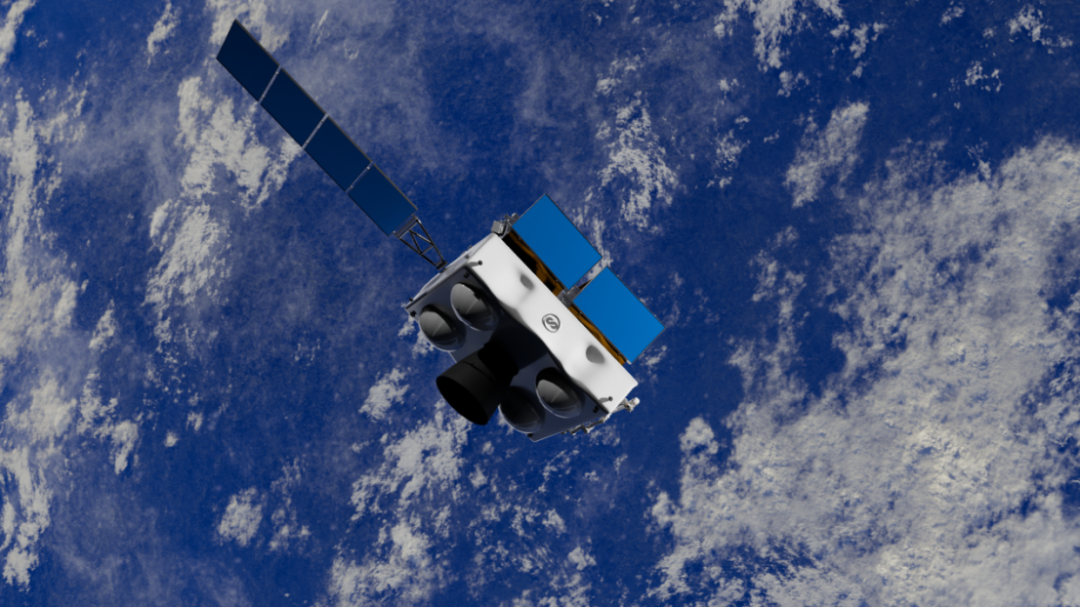
Infinite Aerospace's self-developed "Space Bus" series OTV provides space transportation services for orbital altitudes ranging from 200 km to 36,000 km, enabling heterogeneous orbit satellite deployment, multi-satellite rideshare launches, and intelligent constellation deployment — improving the efficiency and cost-effectiveness of satellite access to target orbits. Additionally, leveraging its long-term orbital endurance, the "Space Bus" can continue performing on-orbit validation, maintenance, and refueling services after completing deployment missions.
Technically, Infinite Aerospace has built a core technology chain around propulsion, control, and space operations capabilities. Among these, the company's orbit-changing engines and attitude control engines employ regenerative cooling technology — the first 300N engines in China to adopt this technical approach — with performance indicators reaching domestic leading levels and earning recognition as an outstanding achievement in Beijing's 2024 commercial aerospace and application technology innovation awards.
The company's self-developed high-precision GNC system features capabilities for large-range orbital maneuvers, adaptation to significant mass changes, and future expansion for rendezvous and docking. Concurrently, the company is developing space operations capabilities including a self-developed space robotic arm, with systems engineering capabilities featuring tight coupling of propulsion, control, and structures.
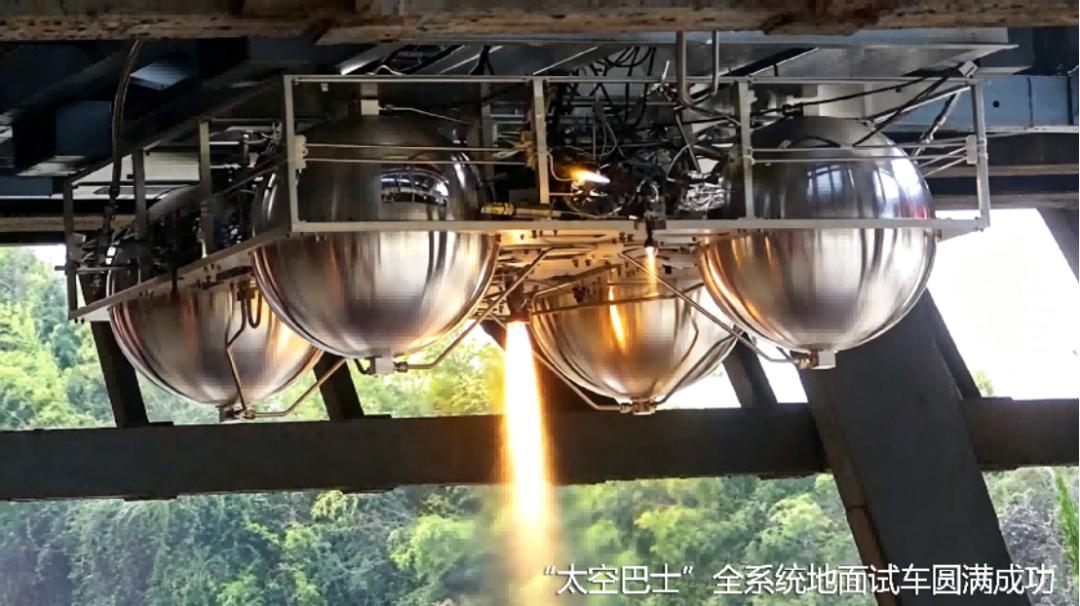
In March 2025, Infinite Aerospace completed full-system hot-fire testing of "Space Bus-1," becoming the first OTV in China to pass comprehensive ground testing and achieve flight-ready status. Full-system testing involves ground validation of complete prototype hardware, simulating on-orbit procedures including orbital maneuvers, attitude adjustment, and orbit transfer on a test stand to verify overall system reliability. Following the tests, the company performed further iterative optimization based on experimental results.
In the next phase, Infinite Aerospace will advance joint verification of the control and propulsion systems, completing coordinated validation of these two core systems. The company plans to conduct maiden flight verification in the fourth quarter of this year.
Below are excerpts from Hard Kr's interview with Infinite Aerospace founder Li Jian:
Q1
In your engagement with satellite prime contractors, how strong is market demand for orbital transfer services?
Li Jian: Overall, market demand for orbital transfer services is quite clear, especially as commercial aerospace enters a stage of scaled development and satellite deployment methods evolve. We currently have several commercial partnerships in progress, with some entering the scheduling phase.
In fact, demand for orbital transfer services isn't limited to satellite customers — it also includes rocket companies.
Commercial launch still faces a practical problem: the efficiency of matching payloads to target orbits. A single rocket launch typically provides only one primary orbital condition, while different satellites have varying requirements for orbital altitude, inclination, and orbital plane. If a satellite's target orbit differs significantly from the rocket's orbit, that satellite cannot fly on the upcoming launch, leading to underutilized rocket capacity.
An OTV provides "last mile" service after launch, connecting the standardized transportation capability that rockets provide with satellites' personalized orbit insertion requirements. Therefore, some rocket companies actively partner with us to expand the range of orbits their launch services can reach and improve overall mission efficiency through orbital transfer services.
Q2
How does the "Space Bus" solve the problem of underfilled rideshare launches through its heterogeneous orbit transfer capability?
Li Jian: Rocket launches remain fundamentally a "point-to-point" transportation model — a single rocket typically delivers payloads to one specific orbit, while satellite customers actually have diverse target orbit requirements.
We can use ground transportation as an analogy. Without a taxi system, an airplane can only deliver passengers to the airport, and after disembarking passengers would have to walk to their destinations — severely limiting the area the airport can effectively serve. But with taxis, the airport becomes connected to the entire city.
The "Space Bus" plays a similar role. Previously, for a satellite to ride a rocket into space, it needed to find "fellow passengers" with similar target orbit altitudes, inclinations, and other conditions. For example, if a rocket reaches a 500 km orbit, only satellites targeting orbits near 500 km would be suitable rideshare candidates, while satellites targeting 600 km, 700 km, or different orbital planes would struggle to join the same launch.
Heterogeneous orbit transfer capability restructures this transportation model: the rocket efficiently delivers satellites in bulk to a baseline orbit, and the "Space Bus" then performs subsequent orbit adjustments and precise deployment according to each satellite's mission requirements.
This creates a connection between the rocket's transportation network and satellites' application needs, substantially improving launch resource utilization efficiency and making future large-scale constellation deployment more flexible.
Q3
What factors will drive growth in orbital transfer and on-orbit service demand going forward?
Li Jian: First, the demand shifts brought by scaled development of the aerospace industry.
As rocket reusability technology matures, the cost of access to space will further decrease, and satellite launch volumes and space infrastructure scale will continue growing. In the future, the bottleneck in space development will no longer be simply "how to get things up there," but rather "how to more efficiently operate and manage these space assets."
One of the core logics of commercial aerospace cost reduction is reuse. In the past, rocket recovery solved the problem of reuse in the launch segment; what we aim to solve is the sustained utilization of space assets and space resources. For example, an increasing number of satellites now require active deorbit capability, but due to cost, mass, volume, and technical complexity factors, some satellites still cannot autonomously perform end-of-life disposal. At this point, external on-orbit service capabilities are needed to help complete orbital cleanup and improve space environmental sustainability.
Meanwhile, premium orbital resources themselves will become increasingly valuable. A stable, efficient orbital position is fundamentally a finite space resource. If defunct satellites remain in orbit long-term, they not only increase space debris risk but also affect the development of subsequent space activities.
Therefore, we believe on-orbit services in the future aren't merely about solving specific individual missions, but about building space infrastructure systems oriented toward the future. Beyond assisted deorbit, services like on-orbit refueling, on-orbit repair, on-orbit life extension, and space transportation are all fundamentally about improving the utilization efficiency of space assets — transforming satellites from disposable consumables toward maintainable, operable space assets.