Momenta Goes Public: A Decade Together, the First Physical AI Stock

Congratulations on Momenta's IPO — together toward a physical AI future
On July 8, 2026, Momenta — an early portfolio company of Unity Ventures — officially listed on the Main Board of the Hong Kong Stock Exchange (stock code: 06880.HK), marking the birth of the "first physical AI stock." The IPO was priced at HK$295.6 per share, giving the company a market capitalization exceeding HK$70 billion.
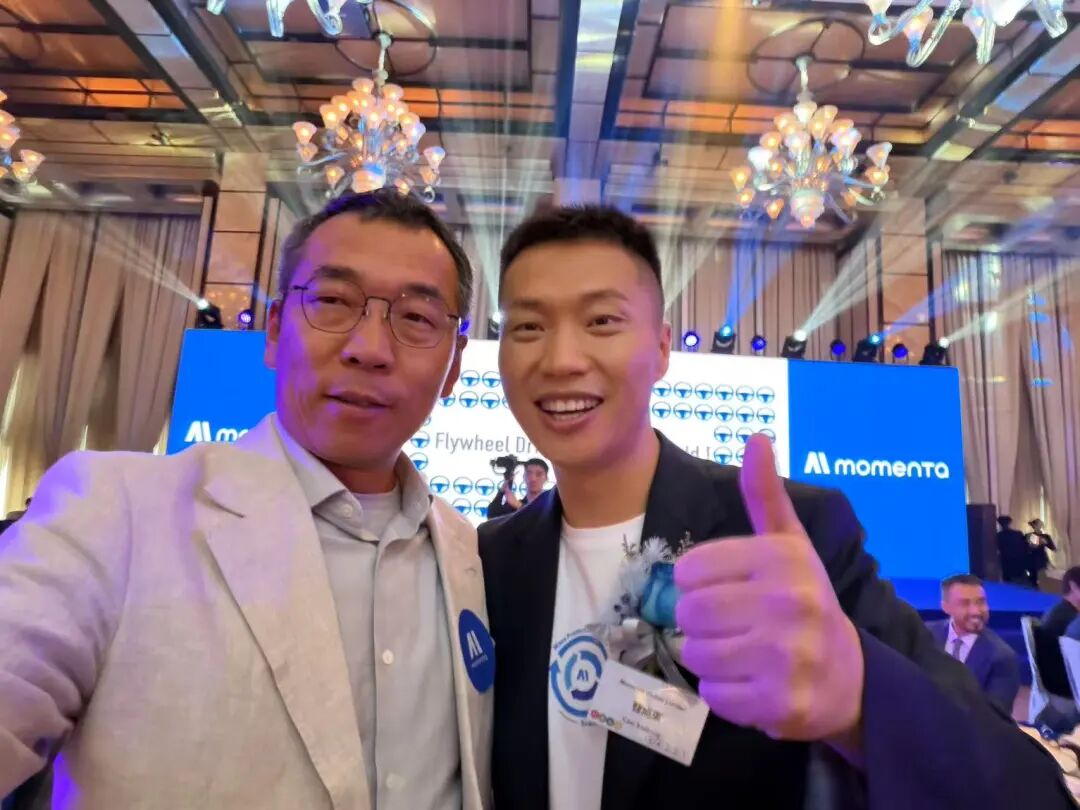
As an early investor in Momenta, Unity Ventures made its investment in 2017, just months after the company was founded.
Over the past decade, we have watched Momenta founder Xudong Cao lead his team, using a "data flywheel" and a two-legged strategy of "mass production business + scalable autonomous driving business," to transform from a contrarian challenger into the undisputed "leader in physical AI."
Our heartfelt congratulations to Momenta on reaching this new milestone!
Looking back today, this decade was not a stroke of luck in betting on the right trend, but the convergence of three things: a contrarian conviction, a decade of unwavering commitment, and an ever-expanding physical AI roadmap. And Momenta itself has become a case study in our understanding of "how tech entrepreneurship actually succeeds."
Conviction: Deciding to Invest at First Meeting
In the summer of 2016, Xiao Wang, founder of Unity Ventures, met with Xudong Cao, who had just left SenseTime and was about to start his own company, at the Crowne Plaza Beijing Sun Palace next to the Bird's Nest.
It was an era dominated by demos, where the mainstream narrative painted visions of fully autonomous driving in one leap. But sitting across from Wang, Cao spoke with unusual specificity: how to collect data, how to train models, how to close the loop, and a judgment that sounded unsexy at the time — that a graded approach to deployment was essential, that mass production had to come first before scalable autonomous driving, and that the path forward lay in "camera sensing + data + deep learning."
During that hour-long meeting, Wang said on the spot: we must invest in this project. Unity Ventures subsequently became the first institution to issue a term sheet to Momenta.
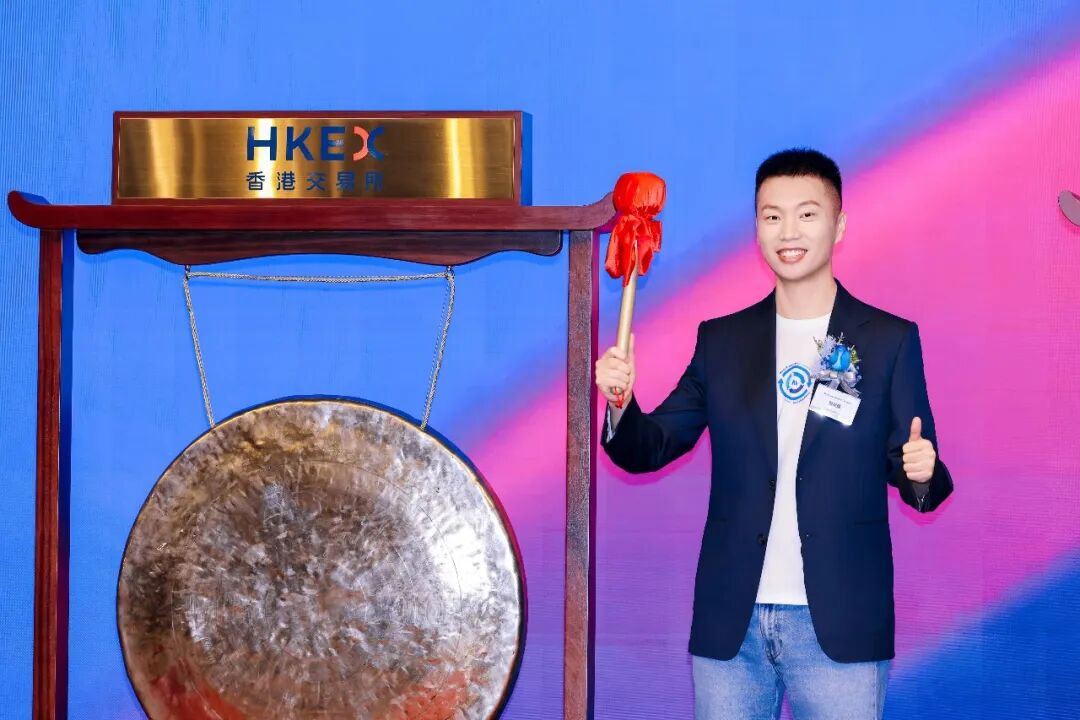
Momenta CEO Xudong Cao
"This is fundamentally a 'data + algorithms' logic," Wang said. "Its moat has an algorithmic threshold, but also a dynamic ecosystem — the more users, the more edge cases encountered, the richer the data, and the deeper the competitive advantage. Momenta's data flywheel philosophy aligns closely with Unity's understanding of data intelligence."
The other half of the conviction was timing sensitivity. In 2012, ImageNet had catalyzed a qualitative leap in computer vision; in 2015, ResNet solved the challenge of training deep networks. AI was accelerating along a steep curve — and that meeting took place less than a year before the Transformer architecture would emerge.
At the time, society was broadly skeptical of autonomous driving, but Wang was resolute about two things: that AI technology would inevitably break through and explode, and that autonomous driving as a concrete application scenario for AI would certainly succeed. What Unity saw was an approaching technological singularity, and a person who was both ambitious and pragmatic enough to seize it.
This is the hardest part of early-stage investing: betting before consensus forms.
Commitment: A Decade of Unwavering Support, Witnessing the "First Physical AI Stock"
From day one, Momenta's "one flywheel, two legs" strategy carried controversy — mass production business and scalable autonomous driving business running in parallel, sharing the same algorithm architecture and data format. To believers in the orthodoxy at the time, this was "insufficiently pure technological idealism."
The substance of this disagreement was never a dispute over route, but rather divergent answers to "where does intelligence come from?" The one-leap camp believed intelligence came from stronger algorithms and better demos; Unity believed that intelligence came from the continuous feeding of massive real-world data, and that massive data could only come from mass-production vehicles being driven by millions of households.
Even during the industry's coldest moments, Unity never wavered — because what we were judging was not whether things were hot right now, but whether the endgame was correct, and the answer to that endgame pointed to data.
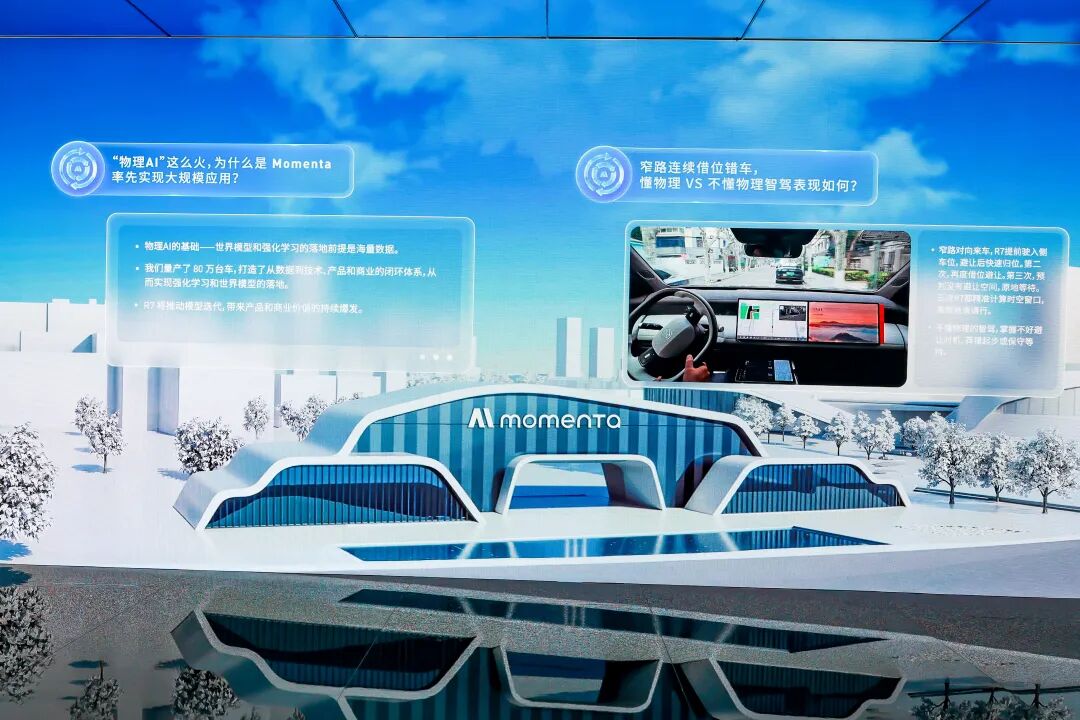
After a decade-long marathon, time has given Momenta its answer.
In 2025, annual revenue grew to 2.413 billion yuan, tripling in three years. As of the end of 2025, the company's cash reserves exceeded 10 billion yuan.
In the third-party supplier market for urban NOA (Navigate on Autopilot), Momenta holds a 65% market share, ranking first.
Momenta has currently established partnerships with 24 global automakers, including nine of the world's top ten. The cumulative number of mass-production vehicles equipped with Momenta's systems has surpassed 1 million.
In the "scalable autonomous driving business" realm, Momenta's other leg has also begun to stride forward, with partnerships established with Uber, Grab, Lumo, Xiangdao Chuxing, and Mercedes-Benz, with deployments across Asia, Europe, and the Middle East.
Momenta's Moat and Three Lessons for Tech Entrepreneurs
Momenta today possesses formidable competitive advantages, with a moat built from three layers of barriers:
First, world models and algorithm architecture. The R7 world model, which launched in mass production in April 2026, elevated algorithms from "imitating human driving" to "understanding physical laws and simulating world evolution" — powered by over 12 billion kilometers of real-world driving data and over 100 million segments of golden data, evolving through self-play via reinforcement learning. This is leadership in capability.
Second, the data flywheel. Over 1 million mass-production vehicles continuously generate real-world data, feeding back into algorithm iteration, spinning ever faster. This is leadership in scale.
Third, and the hardest layer — the time barrier of supply chain integration. Entering an automaker's mass-production supplier system is a lengthy, high-threshold process that cannot be accelerated with money. A vehicle takes years to go from project initiation to mass production; once a solution is selected, it becomes deeply embedded in vehicle development, and replacing it midstream is essentially equivalent to scrapping a half-built car. This means that once installed, the entire vehicle model lifecycle generates ongoing revenue proportional to installation volume. Momenta spent ten years embedding itself into the mass-production systems of global mainstream automakers — this has become its deepest moat.
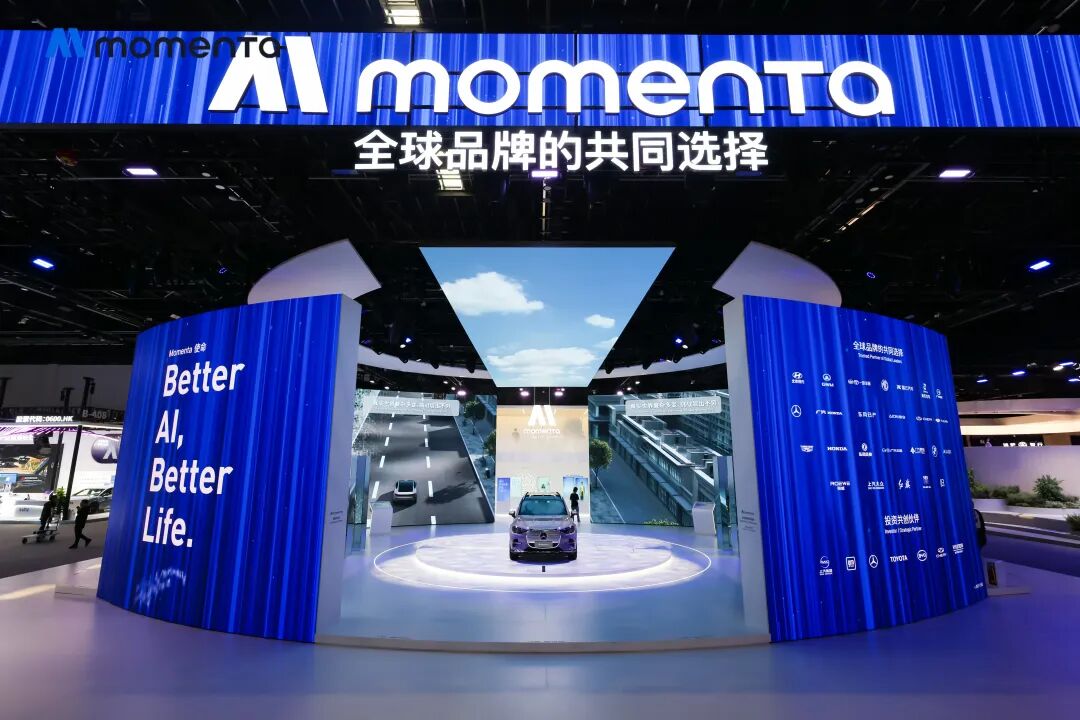
Looking back over ten years, Momenta is an exemplary case of combining "technological idealism" with "business pragmatism," and offers a startup template for Chinese tech companies today. It illustrates three things:
First, combine technological idealism with technological pragmatism. Cao set fully autonomous L4 as the endgame, but insisted on first stepping forward with the left leg of mass production — idealism sets the direction, pragmatism ensures survival. Most tech companies die at two extremes: either becoming lost in narrative without execution, or being held hostage by short-term revenue and losing sight of the horizon. Momenta proved that both can be two ends of the same leg.
Second, being contrarian is not about being different for difference's sake, but about understanding the fundamentals first. The "two legs" strategy was mocked as impure back then, but behind it lay conviction in the fundamental principle that "intelligence comes from data." True contrarian judgment is not about being different for its own sake, but about seeing, one step earlier than others, what will eventually become consensus.
Third, crossing cycles depends on business model. Momenta's revenue doubling was not achieved by cutting R&D, but by a model that generated continuously rising income.
These three lessons carry direct relevance for every entrepreneur today in hard tech, physical AI, and Embodied Artificial Intelligence. This is also why Unity Ventures is willing to tell Momenta's story — it is a transferable methodology.
From One Momenta to an Entire Physical AI Map
Momenta's listing is not only an embodiment of Unity Ventures' early-stage investment philosophy of "starting from contrarian conviction and crossing cycles with commitment," but also the starting point of Unity's investment in physical AI.
Ten years ago, while most people's attention was focused on the digital world — processing information flows on screens — Unity was contemplating a more fundamental question: the vast majority of human economic activity does not happen on screens, but in the physical world — so the physical world, too, should have an entirely new set of hardcore infrastructure.
Since 2016, Unity Ventures has directed its investment compass toward physical AI.
- Mobility: Momenta, the first stop in the physical AI map and also the most complex perception scenario.
- Manipulation: Moying Technology, a mobile collaborative robotics company — the "first pair of hands" for the physical world, already in scaled commercial deployment in 3C electronics, semiconductor packaging and testing, and optical module processing.
- Embodied Artificial Intelligence: General-purpose embodied intelligence large-model company Independent Variable Robotics and humanoid robotics company Noetix Robotics. Independent Variable Robotics recently announced four consecutive funding rounds, with post-money valuation exceeding 20 billion yuan.
- Foundation and Perception: Chuhang Technology, specializing in spatial intelligence perception and multimodal millimeter-wave radar, and D-Robotics, providing general-purpose software and hardware infrastructure for robots.
- Causal World Models: Aether AI, focused on causal world models — when AI needs to make decisions in complex physical worlds, it must understand causal mechanisms, enabling machines to reason, predict, and decide in complex environments.
"The carriers of physical AI are constantly evolving," Wang summarized. Autonomous driving solves the mobility problem; Embodied Artificial Intelligence solves the mobility and manipulation problems; world models endow machines with reasoning and prediction capabilities. How to compress the expensive laws and intelligence of physical space into different carriers — this is the ultimate path for humanity to achieve AGI.
Ten years ago, we invested in a contrarian conviction. Today, we see the era of physical AI arriving. And Momenta is the beginning of this transformation. Congratulations once again to Momenta!