Selling Shovels in the Gold Rush, D-Robotics Aims to Become the "NVIDIA of Embodied AI" | Unity Ventures Portfolio
The "Intelligent Foundation" Behind Robots
WRC 2026 and the second World Humanoid Robot Games have both wrapped up. Beyond the robots' "highlight moments" on the competition floor, what people really want to know is how far they still are from real industrial and home scenarios. As embodied intelligence moves toward application, the robotics industry is entering a period of accelerated infrastructure build-out.
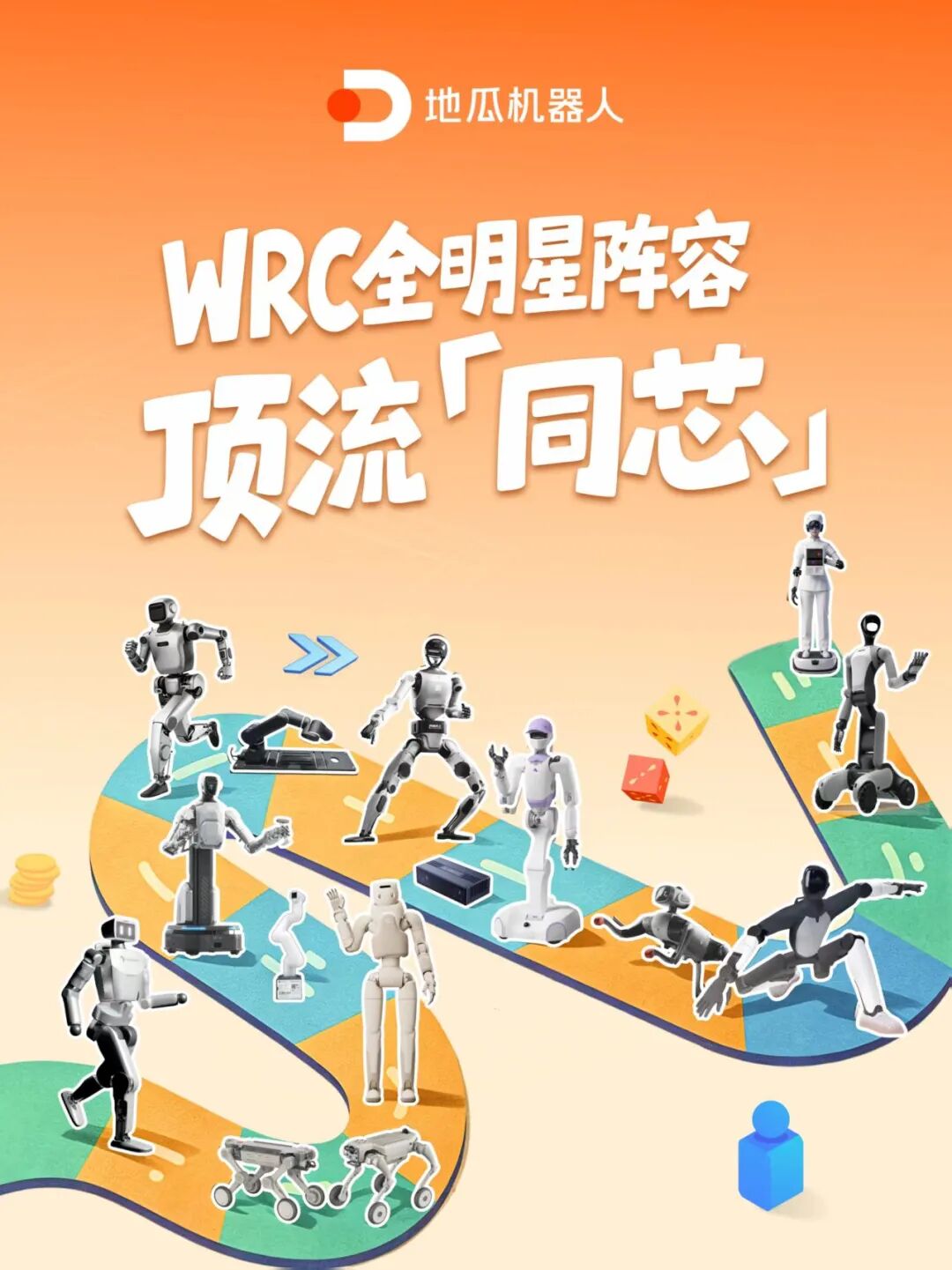
At WRC, nearly 20 client products powered by D-Robotics' Sunrise intelligent computing chips were on display. From full-size humanoids and industrial wheeled humanoids to quadruped robots, collaborative robotic arms, and robotic dogs — robots of all shapes and sizes were running on the intelligent foundation that D-Robotics provides.
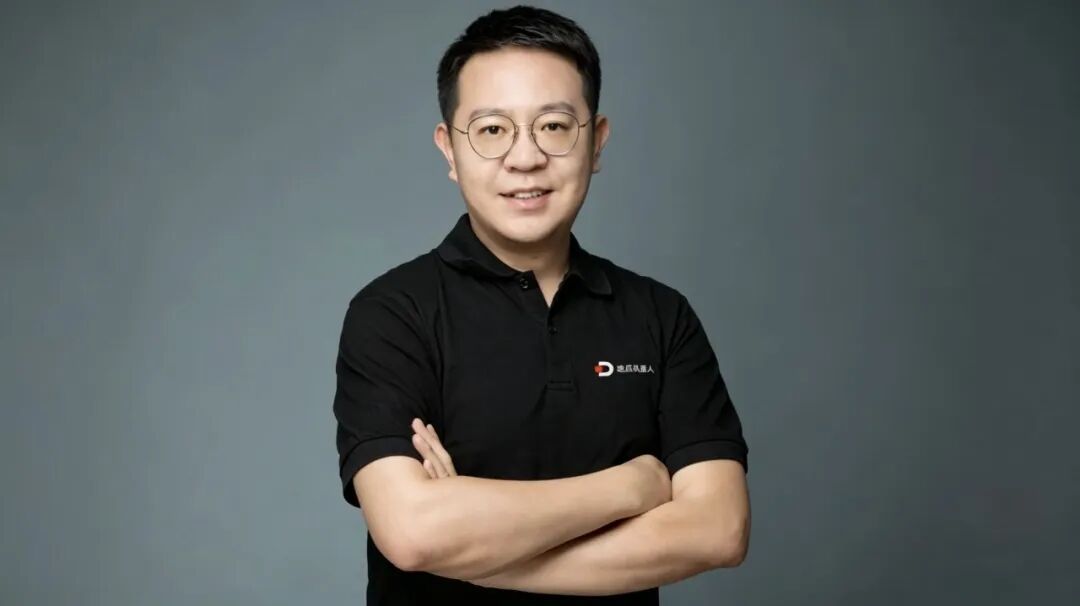
D-Robotics CEO Cong Wang recently sat down with China Entrepreneur magazine to share his thinking on how to build a developer ecosystem and relentlessly pursue commercialization on the fast-iterating embodied intelligence track.
China is no longer a "follower" in the traditional sense in embodied intelligence — China and the United States are essentially at the same starting line. Who will become China's "NVIDIA of embodied intelligence"? D-Robotics is working on its own answer.

"In this industry, if you're not number one, what are you even doing?" said Cong Wang. "The chip business has always been this way — second and third place rarely see meaningful growth."
During the interview, Wang wore a dark brown leather jacket, an unavoidable reminder of Jensen Huang — same industry, same ruthless conviction that it's first place or nothing.
Decisive as he appears, Wang likes to debate with employees, and they aren't afraid to push back. Still, he admits there isn't enough of this. "I'm actually a hardcore introvert, but in front of customers I can switch to full extrovert mode. I say what the situation calls for."
Xiao Wang, founder of Unity Ventures and an early investor in D-Robotics, assessed Cong Wang this way: "His execution is excellent, quite decisive. He says what he means, reacts fast, and gives you the sense he can get things done swiftly." On a track like embodied intelligence that demands rapid iteration, this style may be precisely why D-Robotics has managed to break through.
D-Robotics spun out from Horizon Robotics in early 2024 as a general-purpose robotics software and hardware infrastructure provider, focused on building foundational infrastructure for embodied intelligence. The company has constructed a product system spanning chips, algorithms, and software, with core offerings including the Sunrise series chips and the RDK robotics developer kit, supporting computing needs for humanoids, quadruped dogs, home service robots, companion robots, logistics AMRs, and more — a critical "pick-and-shovel" player on the embodied intelligence track.
D-Robotics: The "Melon" from Horizon Robotics
In 2015, Cong Wang, then pursuing his PhD at Wright State University in the United States, chose to drop out and start a company. He felt academic research wasn't what he truly wanted or excelled at; he preferred to build products connected to everyday life that could actually ship.
He and several Chinese friends hit it off, starting out in a partner's garage. They would code and test whatever came to mind. Six months later, they raised funding and returned to China to expand.
Their direction was "natural language processing + finance." Wang managed domestic technical, sales, BD, and product teams. But after three years, he saw the business for what it was: clients were mostly financial institutions, AI occupied a tiny fraction of their overall systems, projects were heavily customized with little standardization, and essentially they weren't selling AI at all — just small tools held together by relationships. They had wanted to build platform-level products but remained trapped in a premium outsourcing model. After three years, Wang left.
Looking back, Wang considers the most valuable takeaway a fundamental insight: "Whether choosing an industry or a business model, you need to be clear from the start about what the commercial essence is." This entrepreneurial stint accelerated his growth and planted the seeds for his later return with D-Robotics.
From late 2017 to early 2018, Wang kept circling one question: How could AI become a standalone product? He observed that Chinese AI companies at the time had roughly two paths: vertical solutions, becoming integrators going deep in specific industries; or going底层, meaning chips, building platform-level standardized products. Pure algorithm companies, meanwhile, were basically either being integrated or replaced by clients' in-house R&D.
With this framework, Wang spoke with many AI companies around 2018 and ultimately chose Horizon Robotics, believing it had the best shot at reaching an endgame.
In 2018, Wang officially joined Horizon, working in the strategy department on market exploration for AIoT.
In 2019, Horizon made a major pivot, deciding to focus entirely on intelligent vehicle assisted driving chips. The AIoT department shrank from a peak of 400 people to just over 30.
Though their sensing of the robotics field was still vague, interactions with ordinary clients had already revealed clear demand and promising opportunities. Wang judged that the AIoT division wasn't necessarily unviable — it just needed strategic adjustment.
In early 2020, Wang messaged Horizon founder and CEO Kai Yu on WeChat, asking to take over the AIoT division. Yu agreed.
After taking over, there were client deliveries to wrap up on one hand, and the need to steady the remaining "old brothers" on the other — nobody was sure what would happen. In retrospect, the first year's targets weren't eye-catching, but business quality was actually better than when the team had 400 people.
Meanwhile, Wang kept searching for direction. He believed that while chips could be used across industries, there had to be a primary track — one that would long-term influence product definition, R&D direction, and brand perception. So he and his team kept looking for an industry that matched their capabilities and where AI demand would continuously evolve.
As a startup, he believed, the only opportunity lay in finding edge domains where giants invested little and cared less — where their marginal internal departments couldn't secure resources and would be first abandoned when conflicts arose. This was where startups could compete.
From this angle, the robotics track caught his attention: it was bound to AI long-term, with AI demand that would keep rising; and there was no chip giant equivalent to Qualcomm in phones or Intel in PCs, leaving ample market space. By 2021, the industry could foresee robots becoming ubiquitous in 10 or 20 years, even if the process would be slow. Wang's team already had some client foundation, and industry standards were still ununified — "which for us meant opportunity."
By late 2021, the business focus began shifting to robotics.
With direction set, next came product refinement and client cultivation. Looking back, many original client relationships were built starting from 2022.
But one thing held them back: resources. As an under-resourced marginal department, every resource request became a prolonged tug-of-war. Department performance was growing, but from this marginal position inside a large company, efficiency was simply too low.
Then in October 2022, Tesla publicly unveiled Optimus for the first time, and Elon Musk began loudly telling the humanoid robot story, igniting industry attention overnight. The timing was ripe, the business needed external resources to accelerate, and the division spinout formally surfaced.
Wang began preparing the spinout: "Corporate structure, explanations to existing shareholders, employee arrangements, new company management — every piece had to be thought through thoroughly."
After nearly half a year of preparation, Wang's team kicked off fundraising in late 2023, naming the new company "D-Robotics" (Digua, meaning "the melon from Horizon Robotics"). In January 2024, D-Robotics was formally registered, with the original division team setting out on their second entrepreneurial journey.
Accelerating Product Pace, Fundraising From Hard to Easy
The initial fundraising proved harder than expected.
At the time humanoid robots had just caught fire, investors generally felt they should prioritize investing in robot body companies first, then supply chain — chip suppliers held little interest. Most of the first investors to commit were Horizon's existing shareholders.
As a new investor, Unity Ventures decided quickly; Xiao Wang finalized the investment after talking with Cong Wang for less than an hour.
In Xiao Wang's view, D-Robotics' logic was clear: "The biggest story is that in the future everyone will own robots, billions of devices will need embodied intelligence, and each will require computing power adapted to its working scenario. On the team side, D-Robotics had already incubated inside Horizon for two to three years, with chip technical capabilities and team磨合 in place — not starting from zero."
By the third funding round, the situation had completely changed. D-Robotics' valuation growth kept accelerating, and the core driver behind this valuation surge was performance.
On September 20, 2024, D-Robotics released the Sunrise 5 intelligent computing chip (10 TOPS) and RDK X5 developer kit, simultaneously launching the RDK OS operating system and tool chain. From release to mass production took only 8 months; by February 2025, Sunrise 5 was shipping in ECOVACS' GOAT series robotic lawn mowers. In May of the same year, the company announced completion of a $100 million Series A round.
As capital accelerated, product pace also quickened. In November 2025, after more than a year of refinement, the flagship high-computing platform RDK S600 (560 TOPS) was released, with official launch in Q1 2026. D-Robotics' clients rapidly expanded into embodied intelligence; to date, the company has established partnerships with over 20 embodied intelligence-related companies including Independent Variable Robotics, Tashi Zhihang, Spirit AI, Zhi Zai Wu Jie, UBTECH, Paxiini Perception, Beijing Humanoid Robot Innovation Center, Humanoid Robot (Shanghai) Company, and Xiaoyu Intelligent Manufacturing.
In 2025, D-Robotics' annual shipments grew 180% year-over-year, with client numbers up 200%.
Xiao Wang believes D-Robotics' business and fundraising have formed a positive loop: raise funds to accelerate business, then raise again on stronger business. Cong Wang noted in an interview that recent rounds averaged about two months each. His headache shifted from struggling to find money to figuring out how to turn away investors coming to him. Starting from the Series B, they met with 50-60 investors and rejected at least 20-30.
In April this year, D-Robotics announced completion of a $150 million B2 round, with cumulative fundraising approaching 1.8 billion RMB.
Preemptive R&D Layout, Relentless Commercialization Focus
With fundraising solved, what lay before Cong Wang was the even tougher bone of "commercialization." In fact, he had already been grinding away at commercialization even before spinning out from Horizon.
Fortunately, the robotic vacuum cleaner industry was then looking to upgrade with AI. "Our team happened to be the most AI-savvy in the chip circle. If we had hit the industry's cost-down volume phase, we probably couldn't have even gotten in the door," Wang said.
Major clients' validation of a new company's chips was nearly brutal. "They would test our chips inside and out, not letting a single detail slip." Wang also admitted they made quite a few small errors at the time, but ultimately found ways to resolve them all.
In 2021, D-Robotics landed its first client — ECOVACS. With such a benchmark client as endorsement, subsequent client expansion went much more smoothly.
In November 2025, D-Robotics released its flagship high-computing product RDK S600, formally entering the embodied intelligence field. Yet the team had begun laying out R&D more than a year earlier.
Wang noted that at the time, the embodied robot market's technical requirements were still quite fuzzy — how to define and build the chip was extremely challenging. During this period, they had to look at client needs on one hand, figuring out what clients truly needed, while not only listening to clients since their stated needs weren't necessarily accurate; on the other hand, they studied competitors, understanding rival specifications to find the "sweet spot."
Wang believes each product must have clear阶段性 historical value: the S100 helped the team establish a foothold, while the S600 was about formally taking the stage to compete head-on with giants. "Though humanoid robots are the future, we can't expect one chip to capture the entire market," Wang said.
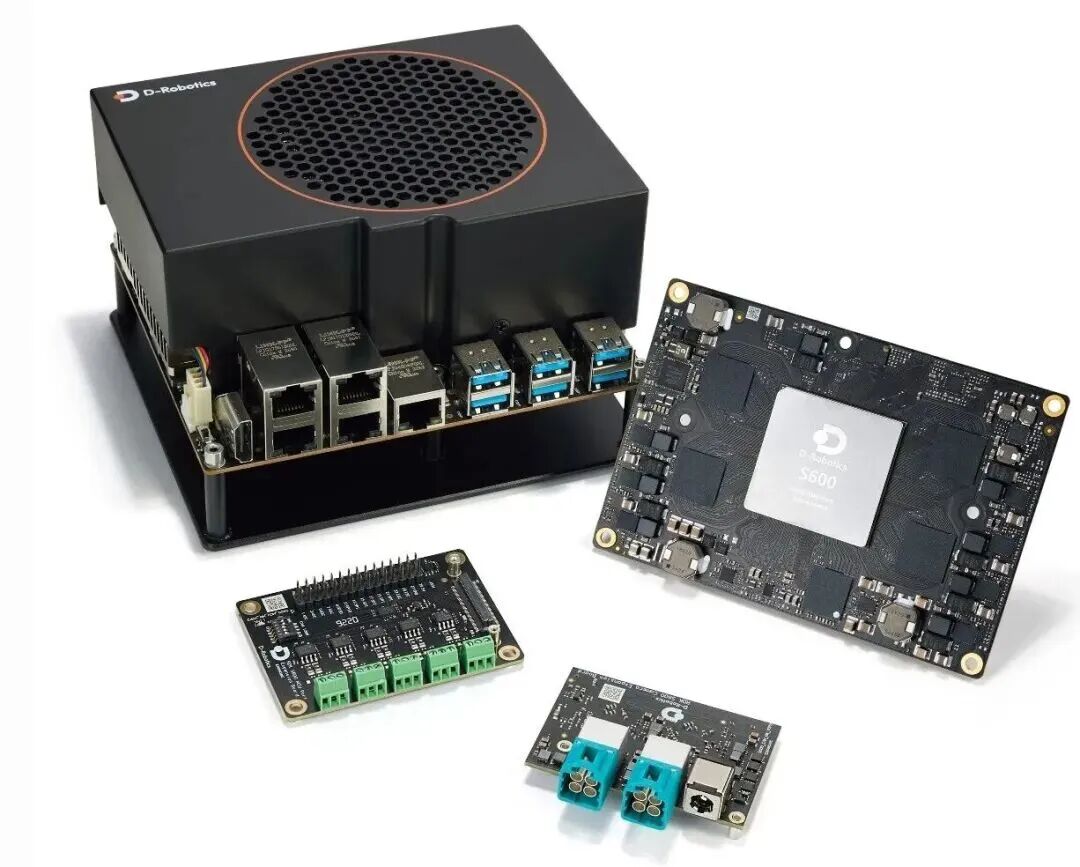
He also candidly stated that the immediate priority is differentiation, finding gaps competitors have left — either better performance or lower prices. NVIDIA plays at the ultra-high end; D-Robotics will first break through the sub-ultra-high end.
To strengthen its moat, D-Robotics has built a software-hardware integrated developer platform, with self-developed chips, operating system, and tool chain, enabling developers to complete the full process from algorithm validation to product launch in one place.
The platform's total developer base has reached 100,000, with substantial growth expected in 2026. The company plans to reach more early-stage teams in 2026, including OPC teams and various robotics startups, with a target of expanding the ecosystem to four to five hundred startups.
Cong Wang had already figured out the necessity of building a developer ecosystem back in 2022. In his view, digital semiconductors are fundamentally about letting others run software on top. "As embodied robots' software proportion keeps growing, digital chips' core competitive advantage lies in software ecosystem. You must have a usable toolset that lets clients develop software smoothly on your chips to build stickiness." He further emphasized, "The essence of B2B isn't selling things — it's selling into where clients have the most budget."
Wang cited NVIDIA as an example: manufacturers are willing to spend big on NVIDIA GPUs not because of the chips themselves, but because algorithm engineers are accustomed to developing on NVIDIA's software ecosystem, and they have the budgets too, making NVIDIA their first choice for procurement.
"If we can lock in these people, we hold the advantage. But if we're only selling small components that one purchasing person can decide on, you might get replaced tomorrow when purchasing changes. So you need to bind with the link in the client's R&D chain where budget investment is greatest. As software's proportion rises and software departments gain more voice, D-Robotics' tools are meant to serve these algorithm engineers well, making them dependent — that's the essence of building a platform," Wang said.
In Xiao Wang's view, Cong Wang is someone with strategic thinking who also stays "grounded" — frequently in the field, familiar with founders of these hardware manufacturers, able to clearly judge trends while also accurately grasping real user needs.
Currently, some clients' infrastructure is already running and gradually achieving batch delivery. Wang stated that industrial, service, and elder care sectors will all see commercialization cases supported by D-Robotics chips.
D-Robotics is currently one of the largest chip suppliers in the embodied robot field, but Cong Wang's ambitions go further.
Wang believes a CEO ultimately manages just two things: "First, rhythm — don't fail to invest when it's time to invest; second, don't let organizational management get ahead of itself, stay objective and calm about internal problems."
While laying out the embodied robot field, D-Robotics is simultaneously positioning in consumer innovation categories, especially AI + intelligent hardware innovation projects.
According to Wang, at the 2026 CES exhibition, roughly half of the 200+ Shenzhen exhibitors were using D-Robotics chips. "These companies haven't hit volume yet, the scale hasn't exploded — we're very much looking forward to that happening soon."


Unity Ventures Portfolio Company @ World Robot Conference | WRC Preview