Morning Star | Jieti Medical: The Value of Brain-Computer Interfaces Is Greater Than Imagined, Aiming to Rival Elon Musk's Neuralink

To capture this hundred-billion-yuan brain-computer interface market, system development must be application-value driven, implemented according to clinical standards, and ultimately achieve commercialization.

Editor's Note: Qiming Venture Partners portfolio company Jieti Medical previously announced that its self-developed invasive brain-computer interface (BCI) system had successfully completed China's first-ever prospective clinical trial for an invasive BCI system in the first quarter of this year at Huashan Hospital, affiliated with Fudan University.
Jieti Medical founders Zhengta Zhao, Ph.D. and Xue Li, Ph.D., both researchers at the Chinese Academy of Sciences' Center for Excellence in Brain Science and Intelligence Technology, shared insights in an interview on the subsequent goals of this prospective clinical trial, as well as why the company chose the highly challenging path of "invasive brain-computer interfaces." Regarding future standards and dominance in the BCI industry, Dr. Zhao emphasized that being first to market with truly broadly valuable products will be critical; he also shared his outlook on future trends in the BCI field. Dr. Li outlined Jieti Medical's phased goals for the next five years from the perspectives of core product R&D and advancement, technical capabilities and production capacity enhancement, and team building.
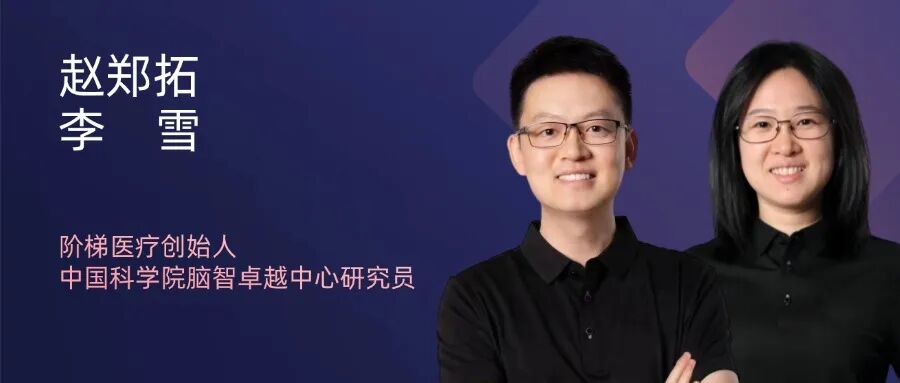
Jieti Medical founders Zhengta Zhao, Ph.D. (left) and Xue Li, Ph.D. (right), researchers at the Chinese Academy of Sciences' Center for Excellence in Brain Science and Intelligence Technology
Inside Huashan Hospital, affiliated with Fudan University, a quadruple amputee patient is controlling a cursor on screen through thought alone, performing simple game operations. What appears to be an ordinary scene of daily life represents a profound transformation at the intersection of technology and medicine. After receiving an implant of Jieti Medical's invasive BCI system — a Qiming Venture Partners portfolio company — the patient achieved functions such as playing chess and racing games with just two to three weeks of training, reaching a level comparable to an average person controlling a computer trackpad. "Now I can control the computer with my own thoughts. It feels like my mind is directly connected to my movements," the patient remarked. This is not merely a technical breakthrough, but a restoration of the patient's confidence in life. No longer entirely dependent on others, he is filled with hope for the future.
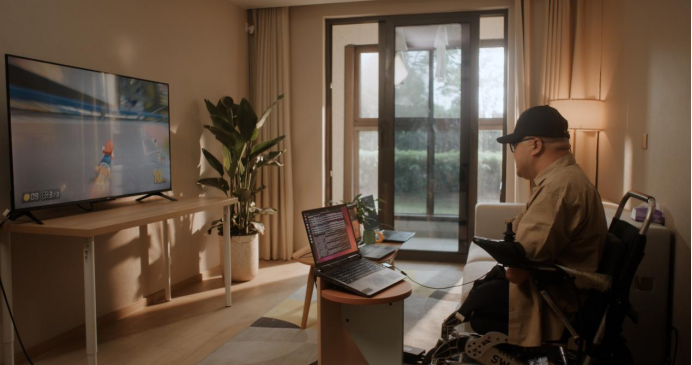
China's first wireless invasive BCI system prospective clinical trial subject playing a racing game via brain control one month post-surgery
This scene captures Jieti Medical's milestone on March 25, 2025 — the first domestic prospective clinical trial for an invasive BCI system registration at Huashan Hospital, affiliated with Fudan University. Conducted under the guidance of China's pharmaceutical regulatory system with regulatory requirements equivalent to formal medical device registration clinical trials, this prospective trial's outcomes will accelerate the progress of subsequent formal registration clinical trials. This means Jieti Medical holds the most advanced registration progress domestically and is positioned as the invasive BCI company most likely to reach commercial application first.
Jieti Medical has taken a solid step toward realizing its vision of benefiting human health through BCI technology innovation. Currently, Chinese enterprises in the BCI field stand at the same starting line as their global counterparts. Companies including Jieti Medical are actively participating in international innovation with distinctive technical advantages and clear development strategies, gradually building a globally influential "China solution." The smooth progress of this trial marks Jieti Medical as the second company worldwide and the first in China to enter the clinical trial phase for invasive BCI (following Neuralink, founded by Elon Musk in the United States).
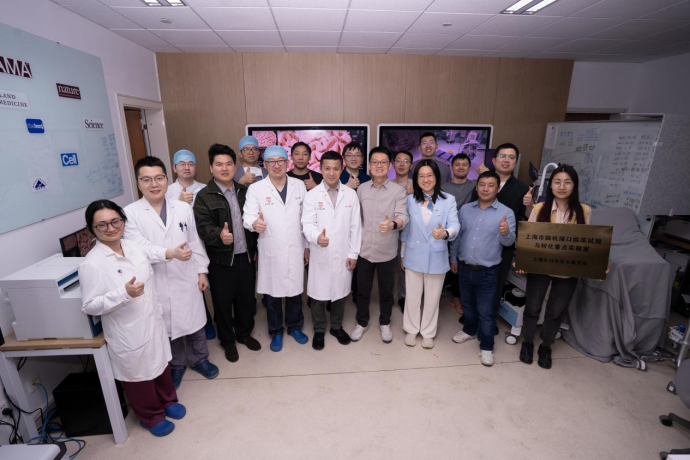
Group photo of the project team after China's first wireless invasive BCI system prospective clinical trial surgery
In fact, the successful execution of this prospective clinical trial stems partly from Jieti Medical's rigorous control of technical safety and efficacy. The company worked closely with the Shanghai Center for Medical Device Testing and Evaluation to actively participate in establishing testing and evaluation standards for flexible microelectrodes and implantable BCIs. Additionally, every technology in the company's products — from the ultra-flexible design of neural electrodes to the miniaturization of implants — has undergone repeated verification to ensure long-term stability and safety within the human body. This prospective clinical trial fully validates product safety and core functionality, laying a solid foundation for subsequent large-scale multi-center clinical trials.
"Brain-computer interfaces are not merely an engineering challenge — they are supported by foundational theories in neuroscience, and require the collection and integration of innovative clinical scenarios and medical demands," emphasized Zhengta Zhao, Ph.D., Jieti Medical founder and researcher at the Chinese Academy of Sciences' Center for Excellence in Brain Science and Intelligence Technology. "So we will leverage our collaborations in Shanghai with institutions such as Huashan Hospital, affiliated with Fudan University, to create greater value through integration and cross-disciplinary collaboration."
01/ Subjects Regain a "Sense of Control"
The National Medical Products Administration has attached great importance to and provided strong support for the development and registration of implantable BCI products. Its open and inclusive attitude and professional guidance reflect national policies encouraging innovative medical devices. Related work has also received support from Shanghai's municipal major science and technology special project "Key Technologies and Core Components for Brain-Computer Interfaces," the Shanghai Municipal Science and Technology Commission's strategic frontier BCI special project, as well as institutions including the Chinese Academy of Sciences' Center for Excellence in Brain Science and Intelligence Technology, Huashan Hospital affiliated with Fudan University, and the Shanghai Key Laboratory of Brain-Computer Interface Clinical and Translational Research.
For Jieti Medical, this first prospective clinical trial represents authoritative recognition of its technical strength and R&D capabilities. It proves that the company's years of accumulation in key technologies such as neural interfaces, signal transmission and processing, and neural decoding have reached clinical application standards. Through this trial, Jieti Medical not only obtained valuable human data but also further optimized product design and surgical protocols, providing strong support for subsequent product development and market promotion.
Dr. Zhao stated: "The prospective clinical trial is an important milestone toward clinical application. Through this trial, we obtained complete product certainty with a small sample size. The main work going forward is increasing the number of patients to achieve statistically significant results. At the same time, we conducted exploratory research during the prospective clinical trial to unlock the product's potential and provide guidance for defining the form and functionality of next-generation products."
"Invasive brain-computer interfaces represent the most difficult direction in the entire BCI field, but also the one with the highest ceiling," noted Xue Li, Ph.D., Jieti Medical founder and researcher at the Chinese Academy of Sciences' Center for Excellence in Brain Science and Intelligence Technology. "We believe that for China's industry as a whole, invasive BCIs are the most challenging, but potentially the path that goes furthest. So we chose a more challenging but also more promising road."
According to enrollment criteria, subjects were either quadruple amputees or severely paralyzed individuals with high-level spinal cord injuries and very serious motor function impairment. Dr. Li described the subject's intraoperative and postoperative conditions: "Because the surgery was performed under local anesthesia, the patient was fully conscious and had a very positive experience with the procedure. His body recovered in about three days, and his condition was good. To be cautious, the doctors kept him under observation for another two to three days before letting him return to his residence. Currently, from external appearance, he looks basically the same as before, with only minimal surgical traces remaining."
Dr. Zhao added that this patient previously struggled tremendously with electronic devices essential for daily life — for instance, needing to hold a stick in his mouth to operate a computer, or using his lower lip to control his phone over long periods. But now the patient can control a computer through his own thoughts. "Training has only been going on for two to three weeks, and his control efficiency is still improving. But the subject is very satisfied with the trial's progress, describing a feeling of his mind directly connecting to his movements, and expressing relief that he no longer needs to be one hundred percent dependent on others. He feels this will reduce the burden on his family and children in the future, and is now physically and mentally at ease."
02/ Building a Globally Influential "China Solution"
As the first enterprise nationally approved to conduct invasive BCI prospective clinical trials, Jieti Medical has keenly seized the strategic opportunity for the industry to overtake competitors on the curve, building strong competitiveness in the market.
Compared with internationally renowned BCI enterprises, Jieti Medical holds a leading position in neural interface technology. Jieti Medical's brain-control implant has a diameter of 26mm and thickness of less than 6mm, making it the world's smallest brain-control implant — roughly the size of a coin, about half that of Neuralink's product. At the same time, its compact size facilitates arranging more channels within the body for high-throughput signal acquisition and complex function control.
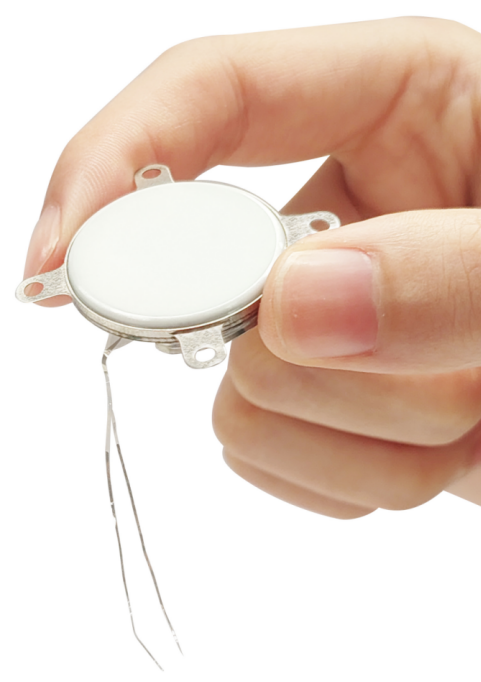
Jieti Medical's implant, with a diameter of 26mm and thickness of less than 6mm, is the world's smallest brain-control implant — roughly the size of a coin
Its developed ultra-flexible electrodes are extremely small, only about 1/100 the diameter of a human hair, with excellent biocompatibility and mechanical properties. They effectively reduce tissue damage and immune reactions after implantation, making long-term stable neural signal acquisition possible.
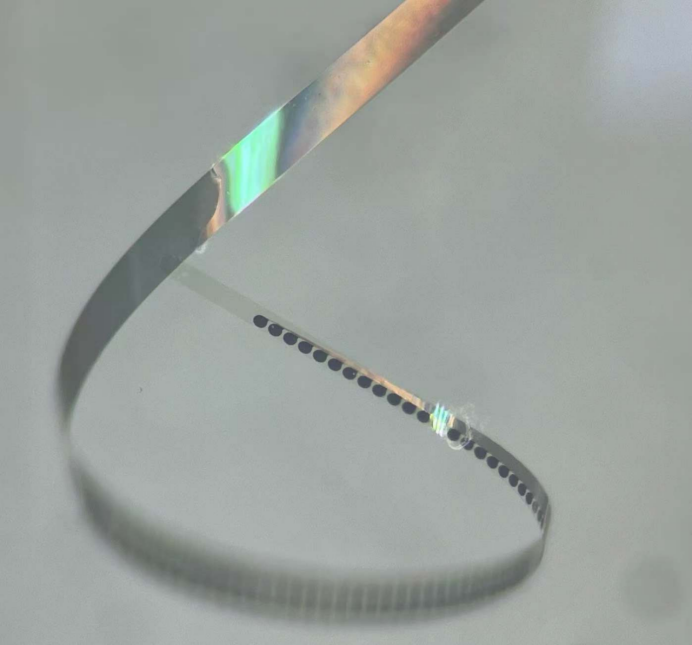
Jieti Medical's developed ultra-flexible electrodes are extremely small, only about 1/100 the diameter of a human hair
"Our miniaturized design requires only a 3-5mm puncture hole in the skull, implanting the sensor approximately 5-8mm deep into the brain. This minimally invasive surgical approach reduces post-implantation foreign body sensation, lowers surgical risk, shortens patient recovery time, and improves the clinical acceptability and application scope of BCI technology," Dr. Li explained.
Furthermore, the company's vascular interventional BCI solution innovatively combines the surgical friendliness of craniotomy-free procedures with high-precision signal quality, potentially further expanding the application boundaries of invasive BCIs. These technical innovations give Jieti Medical strong competitiveness in international markets, enabling it to provide global patients with superior and safer BCI products.
Based on its significant clinical trial progress and technical advantages, Jieti Medical has also attracted considerable capital interest. Not long ago, Jieti Medical received recognition and support from top-tier investment institutions including Qiming Venture Partners, with cumulative financing reaching several hundred million RMB — currently the largest publicly disclosed financing in China's implantable BCI industry.
This capital injection has provided powerful momentum for Jieti Medical's rapid development. Speaking of phased goals for the next five years, Dr. Li shared three dimensions: first, core product R&D and advancement, including iterative development of the brain-control product line, and building platform technologies for BCI recording and stimulation. Through these efforts, the company hopes to extract various product lines from these platform technologies to develop medical device products for different indications, such as neuromodulation for depression and epilepsy, as well as artificial vision and artificial hearing products.
Additionally, building a MEMS electrode processing platform to further enhance the company's technical capabilities and production capacity. Dr. Zhao noted: "The construction of a MEMS electrode processing platform is crucial for the future development of BCI technology. It will help us achieve large-scale production of neural electrodes, improve product quality and consistency, reduce production costs, and thereby provide strong support for product marketization."
To maintain technical leadership, Jieti Medical is also actively recruiting top talent and strengthening team building. Dr. Li emphasized: "We believe that professional people accomplish professional things. Only with an excellent team can we achieve greater breakthroughs in the BCI field. We hope to attract the most outstanding talent and build a professional, stable, and efficient BCI team."
In recent years, the Chinese government has attached great importance to BCI technology development, listing it as a national strategic emerging industry and incorporating it into national key R&D programs. Local governments have also successively introduced relevant policies supporting BCI technology R&D and industrialization. For example, Beijing and Shanghai have issued future industry cultivation action plans for BCIs, providing policy guarantees for BCI technology development.
According to Global Market Insights projections, the global BCI market will exceed $25 billion by 2030, with a compound annual growth rate (CAGR) exceeding 15%. Medical applications dominate at approximately 60%, encompassing motor function reconstruction, neuromodulation, sensory restoration, and other fields.
Dr. Zhao emphasized that to capture this hundred-billion-level BCI market, system development must be application-value-oriented, implemented according to clinical standards, and ultimately achieve commercialization.
Not long ago, the National Healthcare Security Administration issued pricing guidelines for nervous system medical services, covering three directions: implantation and removal of invasive BCI surgery, as well as fitting for non-invasive procedures. Meanwhile, Shanghai's brain-computer interface future cultivation action plan released in January also explicitly included BCI in the medical insurance charging catalog.
In Dr. Zhao's view, these payment measures have already clarified the direction of the policy compass. "Although specific policies from the National Healthcare Security Administration have not yet been issued, we can see that similar products may potentially be included in medical insurance in the future — this is the general trend. Such national policy layout represents tremendous positive momentum for industry development. It can reduce patient expenditures on product procurement and surgical fees, providing direct benefits to patients, and also standardize the entire product promotion process. With these policy incentives, we believe that after obtaining registration certificates, BCIs will be able to accelerate significantly toward market launch and gain greater market share."
The "Definer" of Standards
Currently, domestic BCI enterprises in China are generally in the early stages of development within the global industry chain. At the technical level, while some core technologies have achieved breakthroughs, gaps remain compared with international leading levels. At the market level, although China's BCI market started late, it is growing rapidly with enormous potential, and domestic enterprises are gradually increasing their market share and influence globally.
Dr. Zhao noted that domestic BCI enterprises follow broadly similar technical paths as international companies such as Neuralink and Synchron, but lag slightly in clinical progress. Neuralink reached the registration clinical stage around February-March of last year, and Synchron began clinical trials even earlier, while Chinese enterprises currently have relatively slower overall clinical progress.
Although domestic BCI original innovation capabilities need further strengthening, domestic enterprises have already demonstrated their own innovations in certain core technologies and product designs. For example, domestic enterprises have developed world-leading neural electrodes, and their product designs emphasize extreme miniaturization, distinguishing them from Neuralink's approach. Moreover, leading domestic enterprises represented by Jieti Medical also emphasize forward design, aiming to explore theories of information transmission between brain and machine through neuroscience principles, in order to maximize patient needs while minimizing surgical trauma.
Dr. Zhao emphasized that domestic enterprises hope to secure a place in defining technical paths and standards. He believes that future standards and dominance in the BCI industry will depend on who can first introduce products with truly broad market value. Domestic enterprises are committed to developing solid products that can be implemented and create value, in order to gain more voice in the future industry chain.
At the same time, Jieti Medical is keenly aware that the complexity of BCI technology means breakthroughs cannot be achieved by enterprises alone — increased R&D investment and collaborative攻关 are needed. On one hand, domestic enterprises must continue increasing R&D investment in core BCI components such as electrodes and chips, enhancing independent innovation capabilities. For example, through its self-developed ultra-flexible neural electrode technology, Jieti Medical has achieved electrode miniaturization and high-precision signal acquisition, providing strong support for improving core component autonomy and controllability.
On the other hand, closer collaboration with universities, research institutions, and hospitals is needed to jointly tackle key challenges. Accordingly, the company actively cooperates with various sectors, building an integrated innovation model combining industry, academia, research, and medicine. Dr. Zhao and Dr. Li both come from the Chinese Academy of Sciences' Center for Excellence in Brain Science and Intelligence Technology, bringing rich research experience and deep technical accumulation in neural interfaces, implantable BCIs, and other fields. By translating research achievements into clinical applications, Jieti Medical has achieved seamless connection from laboratory to bedside, accelerating the process of technological innovation and product落地.
Dr. Zhao identified two development trends in the future BCI field: The first trend is a spiral advancement process from academia to industry, then back to academia, and again to industry. Taking Neuralink as an example, its technology originated from academic research. When products advanced to clinical application, they generated massive data. This data prompted academia to deeply investigate the underlying principles and value, thereby driving further product optimization and enhancement, achieving mutual promotion and common development of academia and industry.
The second trend is a cycle from clinic to laboratory, and back to clinic. BCIs are closely tied to clinical needs, with development oriented toward clinical value. Problems discovered in clinical practice are brought back to the laboratory for research and solution, then the results are applied to clinical validation, continuously iterating and optimizing to form sustained progress and development.
For Jieti Medical, in the near term, the company will focus on medical scenarios, continuously optimizing existing products and expanding indication ranges such as neuromodulation and sensory restoration. In the medium term, the company plans to improve human-machine interaction efficiency, develop next-generation BCI products, and explore possibilities for consumer-grade applications. In the long term, Jieti Medical is committed to achieving deep brain-machine integration and building a future of human-machine collaboration and symbiosis between carbon-based and silicon-based life forms.
Dr. Zhao展望道: "In the next ten years, brain-computer interfaces will create substantial value in China's medical market. In the medium term of three to five years, BCI technology will generate full value in clinical severe cases or patient groups with serious functional impairments, helping them replace lost functions or assisting them in normal living. In another five to ten years, as various minimally invasive technologies develop, BCI technology will enter people's lives in pan-clinical and consumer scenarios."
Source | Compiled from multiple media reports
Previous Highlights

Founded in 2006, Qiming Venture Partners currently manages 11 USD funds and 7 RMB funds, with total assets under management reaching $9.5 billion. Since its establishment, the firm has focused on investing in outstanding early and growth-stage companies in the Technology and Consumer (T&C) and Healthcare sectors.
To date, Qiming Venture Partners has invested in over 580 high-growth innovative companies, of which more than 210 have gone public on the New York Stock Exchange, NASDAQ, Hong Kong Exchanges and Clearing Limited, Shanghai Stock Exchange, and Shenzhen Stock Exchange, or exited through mergers and acquisitions. Over 80 companies have become recognized unicorns or super-unicorns in their respective industries.
Many Qiming Venture Partners portfolio companies have grown into the most influential companies in their fields, including Xiaomi (01810.HK), Meituan (03690.HK), Bilibili (NASDAQ:BILI, 09626.HK), Zhihu (NYSE:ZH, 02390.HK), Roborock (688169.SH), UBTECH (09880.HK), WeRide (NASDAQ:WRD), Gan & Lee Pharmaceuticals (603087.SH), Tigermed (300347.SZ, 03347.HK), Zai Lab (NASDAQ:ZLAB, 09688.HK), CanSino Biologics (688185.SH, 06185.HK), Schrödinger (NASDAQ:SDGR), MicroPort EP MedTech (688617.SH), Sanyou Medical (688085.SH), Amoy Diagnostics (300685.SZ), Berry Genomics (000710.SZ), GenScript ProBio (688520.SH), Yuanxin Technology, ClinChoice, Belief BioMed, Biren Technology, among others.