WeRide Teams Up With Lenovo Vehicle Computing to Globally Debut 100% Automotive-Grade HPC 3.0 Computing Platform Powered by NVIDIA DRIVE Thor

Going forward, WeRide will also apply the HPC 3.0 platform to its other L4 autonomous driving products, including autonomous minibuses and sanitation vehicles, making autonomous driving technology accessible across all urban scenarios and serving more customers and users.

Recently, Qiming Venture Partners portfolio company WeRide (NASDAQ: WRD) officially launched the HPC 3.0 high-performance computing platform, co-developed with Lenovo's vehicle computing division and powered by NVIDIA's latest-generation DRIVE Thor X chip, with initial deployment on the company's all-new Robotaxi GXR. With this, the WeRide GXR becomes the world's first Robotaxi equipped with the NVIDIA DRIVE Thor X chip. The 100% automotive-grade HPC 3.0 computing platform reduces the GXR's autonomous driving suite costs by 50%, accelerating its path to large-scale commercial deployment.
The WeRide HPC 3.0 platform is built on Lenovo's L4 autonomous driving domain controller AD1, trained on NVIDIA DGX accelerated computing infrastructure, and features a dual-core NVIDIA DRIVE AGX Thor configuration running safety-certified DriveOS. It delivers 2,000 TOPS of AI computing power, making it a world-leading automotive-grade computing platform.
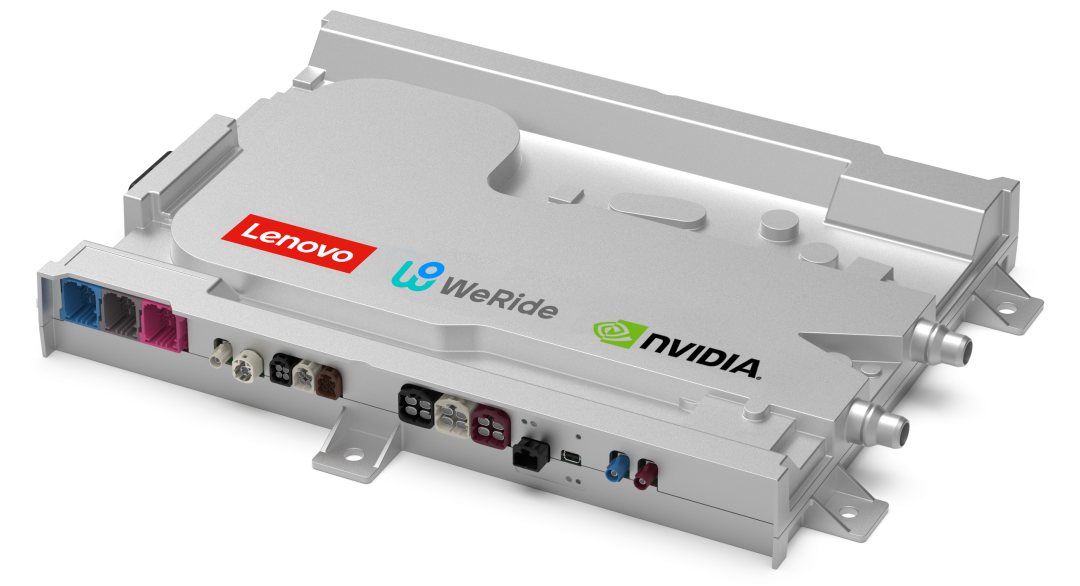
Beyond its core upgrade, WeRide's HPC 3.0 reduces mass-production costs to one-quarter of its predecessor through improved system integration, driving a 50% decrease in autonomous driving suite costs. The HPC 3.0 also highly integrates Ethernet gateway, CAN gateway, inertial navigation positioning, collision detection, and other functional modules, achieving simultaneous reductions in both production and after-sales maintenance costs. The platform's total cost of ownership (TCO) over its full lifecycle drops 84% compared to the previous generation.
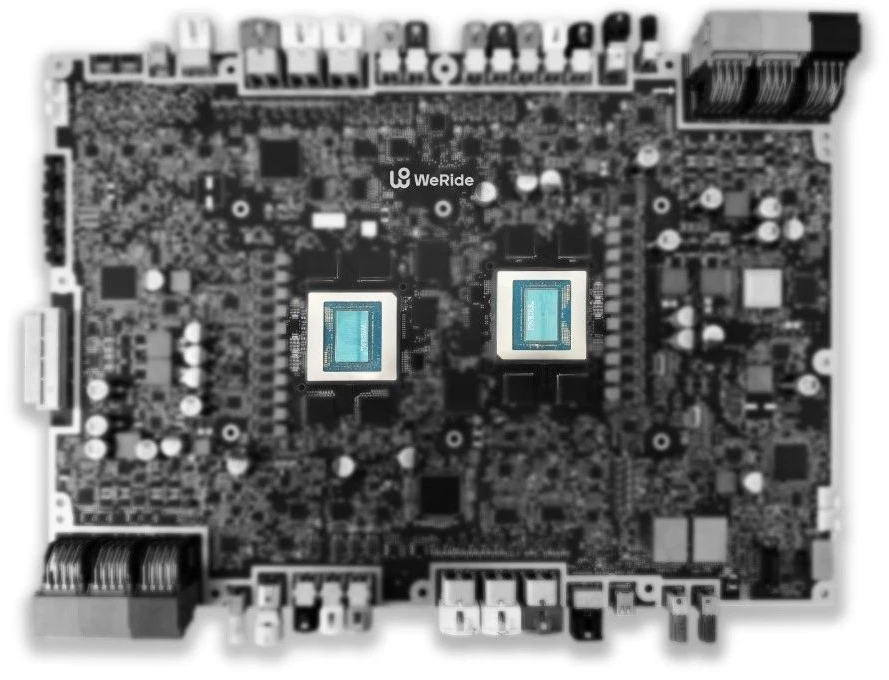
WeRide HPC 3.0 platform internal architecture diagram
As a 100% automotive-grade platform, the WeRide HPC 3.0 has passed multiple automotive certifications including AEC-Q100, ISO 26262, and IATF 16949. It employs multi-layer redundancy design to meet ASIL-D safety requirements, with a failure rate below 50 FIT (Failure In Time, a unit indicating failures per billion hours) and an MTBF (Mean Time Between Failures) of 120,000–180,000 hours. Its design lifespan reaches 10 years or 300,000 kilometers. The platform also withstands extreme environments (-40°C to 85°C), passing comprehensive tests including high-temperature aging, mechanical shock, and salt spray corrosion, while meeting global VOCs environmental standards. It can be widely deployed in international markets including the Middle East, Southeast Asia, and Europe, supporting WeRide's global scaling of Robotaxi operations to truly "run everywhere in the world."
Tony Han, WeRide's founder and CEO, stated: "This deep collaboration with Lenovo's vehicle computing division and NVIDIA has enabled critical breakthroughs in computing power, system architecture, and cost control. The application of the HPC 3.0 platform on the GXR not only enhances the reliability and response speed of WeRide's Robotaxi but also significantly reduces our commercial deployment costs. Going forward, we will also apply the HPC 3.0 platform to our other L4 autonomous driving products, including autonomous minibuses and sanitation vehicles, making autonomous driving technology accessible across all urban scenarios and serving more customers and users."
Tang Xinyue, Vice President of Lenovo and head of Lenovo's vehicle computing division, said: " We are thrilled to see the world's first automotive-grade, L4 autonomous driving domain controller platform, AD1, successfully deployed on WeRide's Robotaxi GXR. This represents an important step toward standardization and scaling of L4 autonomous driving technology, a exemplary case of advanced AI technology merging with the mobility industry, and a successful application of large model technology in the real economy. Our collaboration with WeRide on the GXR is accelerating innovation in mobility technology and business models, and we look forward to seeing more outstanding autonomous driving solutions achieve commercial application globally."
Ali Kani, Vice President of NVIDIA's automotive business, said: "Robotaxi is reshaping urban mobility, and we are very pleased to witness the progress WeRide and Lenovo's vehicle computing division have made in deploying L4 autonomous driving systems trained on NVIDIA accelerated computing and DriveOS. Their achievement is an important milestone in our journey toward safe, scalable, and efficient autonomous transportation."

WeRide Robotaxi GXR equipped with the new HPC 3.0 platform, adapted to various environmental scenarios
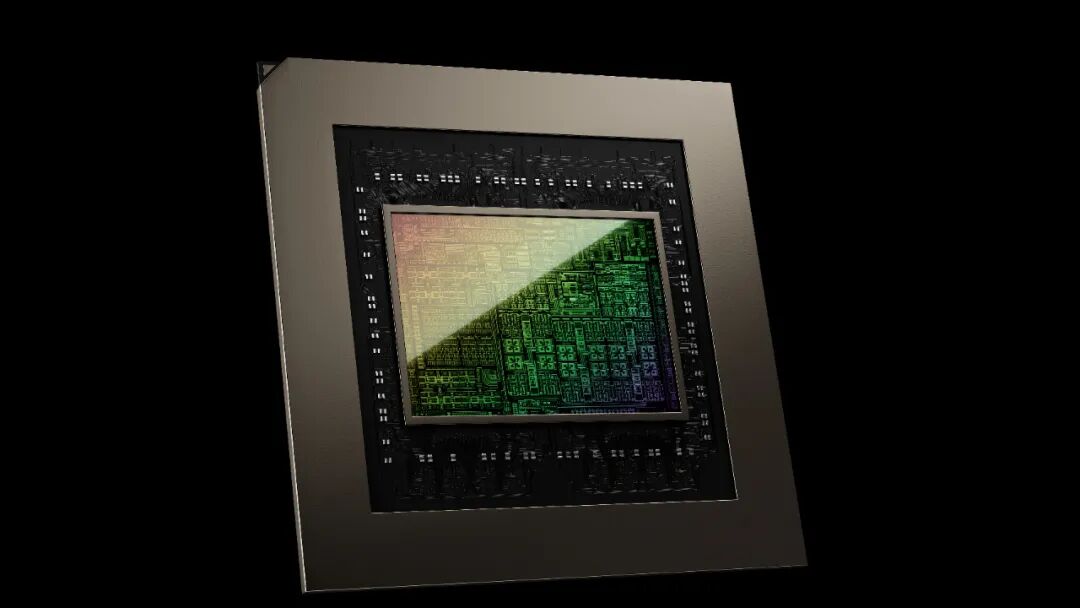
The NVIDIA DRIVE Thor chip is based on the NVIDIA Blackwell architecture, optimized for the most demanding processing workloads including generative AI, vision language models (VLM), and large language models (LLM). WeRide has developed an end-to-end L4 autonomous driving system from cloud to vehicle, leveraging powerful NVIDIA accelerated computing to run WeRide's proprietary audio-visual software stack. Its advanced AI architecture enhances generalization capabilities, reduces latency, and improves safety.
As the world's first publicly listed general-purpose autonomous driving company and the first listed Robotaxi company, WeRide has safely operated Robotaxi on public roads for over 2,000 days, continuing to lead the commercialization of autonomous driving. Going forward, the company will work with more partners to drive technological evolution and cost optimization, delivering safe, efficient, green, and more cost-effective autonomous driving products and services to users worldwide.
PAST HIGHLIGHTS
Qiming Star | WeRide Launches Fully Driverless Autonomous Minibus Operations in Singapore, a First in Southeast Asia Qiming Viewpoint | Qiming Venture Partners' Duane Kuang: Now Is the Time for Chinese Technology to Go Global Qiming Star | Nearly 10 Qiming Venture Partners Portfolio Companies Selected for 2024 Beijing Digital Economy Benchmark Enterprises Report

Founded in 2006, Qiming Venture Partners currently manages 11 USD funds and 7 RMB funds, with total committed capital reaching $9.5 billion. Since its inception, the firm has focused on investing in early- and growth-stage outstanding enterprises in Technology and Healthcare sectors.
To date, Qiming Venture Partners has invested in over 580 high-growth innovative companies, of which more than 210 have gone public on the New York Stock Exchange, NASDAQ, Hong Kong Exchanges and Clearing Limited, Shanghai Stock Exchange, and Shenzhen Stock Exchange, or exited through M&A and other means. Over 80 companies have become recognized unicorns or super-unicorns.
Many Qiming Venture Partners portfolio companies have grown into the most influential companies in their respective fields, including Xiaomi (01810.HK), Meituan (03690.HK), Bilibili (NASDAQ: BILI, 09626.HK), Zhihu (NYSE: ZH, 02390.HK), Roborock (688169.SH), UBTECH (09880.HK), WeRide (NASDAQ: WRD), Insta360 (688775.SH), Gan & Lee Pharmaceuticals (603087.SH), Tigermed (300347.SZ, 03347.HK), Zai Lab (NASDAQ: ZLAB, 09688.HK), CanSino Biologics (688185.SH, 06185.HK), Schrödinger (NASDAQ: SDGR), MicroPort EP MedTech (688617.SH), Sanyou Medical (688085.SH), Amoy Diagnostics (300685.SZ), Berry Genomics (000710.SZ), Sinocelltech (688520.SH), Yuanxin Technology, Insilico Medicine, MediLink Therapeutics, LaNova Medicines, Zhipu AI, StepFun, Biren Technology, and others.