Qiming Venture Partners' Alex Zhou: A 'Super AI App' Will Likely Emerge This Year
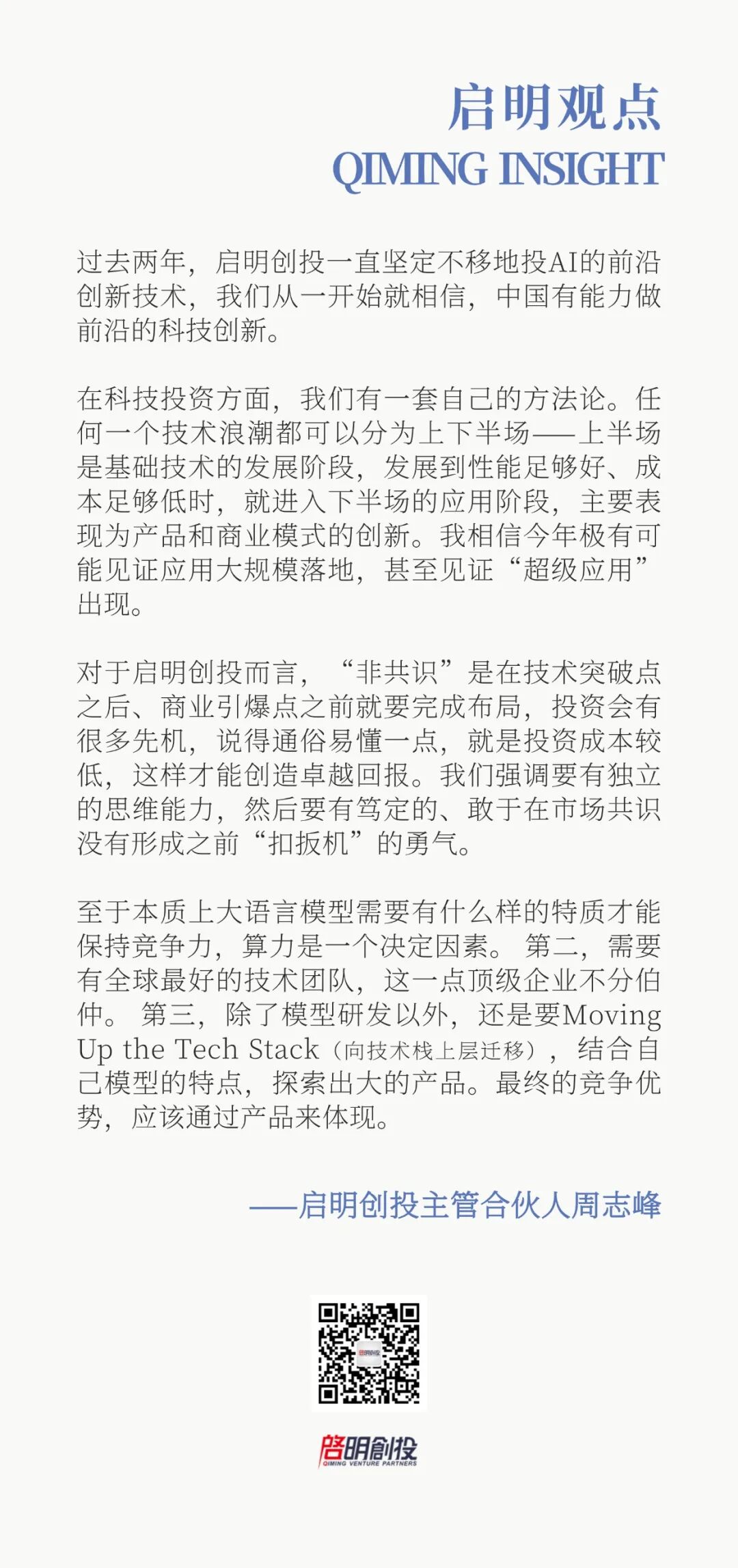
Use trend anticipation to gauge which stage a technology wave is currently in and what opportunities exist, positioning yourself ahead of the market before the technology's development prospects become widely recognized.

Editor's Note: Recently, Alex Zhou, Managing Partner at Qiming Venture Partners, sat down with Wealth for an interview. He discussed how Qiming's AI investment strategy has evolved this year, analyzed what enables the firm to identify "non-consensus" opportunities, and emphasized that investment institutions must position themselves after the technology breakthrough but before the commercial inflection point — with the conviction and courage to "pull the trigger" before market consensus forms. Zhou also predicted the defining characteristics of the next "super AI application": innovative user experiences in highly digitized, high-labor-cost industries.
This article is republished with authorization from Qiming Venture Partners' WeChat official account.
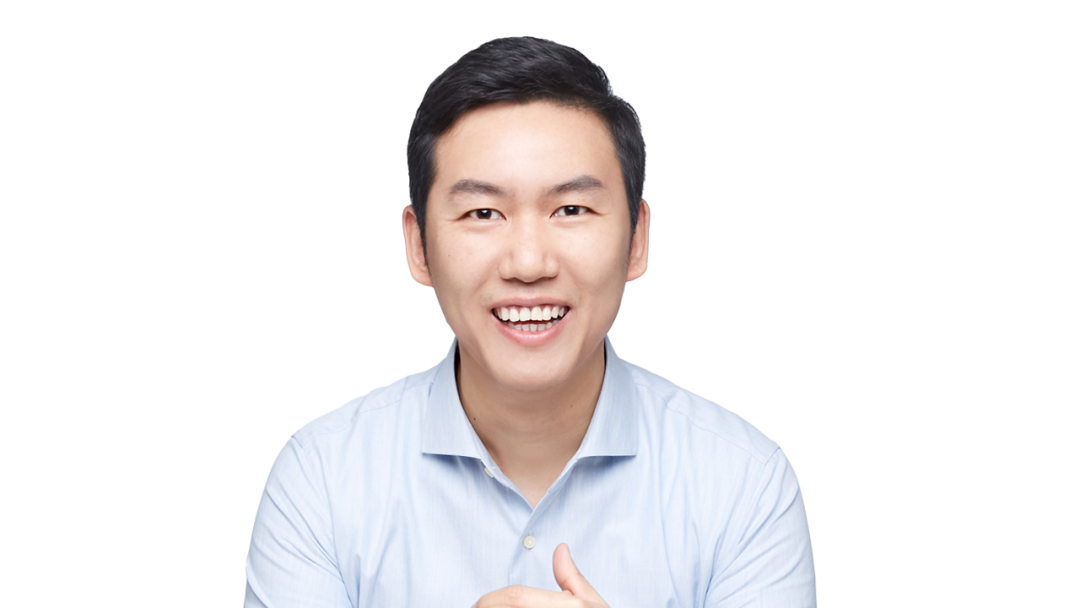
Alex Zhou, Managing Partner at Qiming Venture Partners
61 days.
Alex Zhou remembers this number precisely — the time elapsed from when DeepSeek began gaining traction among the general public to the day of the interview.
The managing partner at this renowned venture capital firm had just returned to his Beijing office from a trip to the Middle East. Over the past several days, he had averaged roughly one country per day. "Half the time, the other side wanted to talk about DeepSeek," he said.
At Qiming, Zhou oversees technology and consumer investments, with artificial intelligence as a key focus area.
DeepSeek's emergence at the beginning of the year disrupted sentiment across multiple sectors, including venture capital. Some investors developed severe FOMO. One prominent investor stated that if DeepSeek opened for funding, they would participate regardless of the amount. Others began hunting for related or similar projects.
Their concerns ran deeper. DeepSeek's technical breakthrough triggered a fundamental restructuring of AI's underlying logic: a shift from hardware hegemony to software innovation, from capital accumulation to technical optimization, from closed monopoly to open-source symbiosis. These shifts in turn challenged the established investment frameworks of VC institutions.
Amidst this ongoing frenzy, Zhou — regarded by industry observers as one of the "most active investors" in China's frontier technology space — tends toward neutrality and calm.
From a technical standpoint, he views DeepSeek's emergence as a classic case study of China's distinctive model of technological development: a significant innovation advancing in the direction OpenAI pioneered, but not, across several dimensions, a revolutionary paradigm shift comparable to the release of the GPT-3.5 model and ChatGPT three years prior.
Moreover, Zhou believes that within the next year or two, the rankings among the roughly dozen first-tier global large language model companies will seesaw back and forth.
In the days following our conversation, a flurry of corporate announcements seemed to validate this view. During its "Open Source Week," DeepSeek released five core code repositories covering multimodal capabilities and inference optimization; Anthropic launched Claude 3.7 Sonnet, its first model integrating hybrid reasoning technology, which the company billed as its most intelligent version to date; OpenAI released the "massive and expensive" GPT-4.5, while Sam Altman's "crazily high-IQ tool," GPT-5, is expected to arrive in late May.
Additionally, riding DeepSeek's momentum, several major quantitative funds have entered the AI fray.
"In this industry, there is no eternal king," Zhou said.
From an investment logic perspective, Zhou argues that DeepSeek's emergence actually validates his long-standing approach. He insists that DeepSeek has not overturned Qiming's original, somewhat "non-consensus" philosophy in the AI space.
Zhou divides technology waves into first and second halves: the first half is about underlying technology development; the second half is the application phase, featuring innovations in various business models. He believes China's venture capital and entrepreneurship essentially began in the second half of the internet era.
In fact, over the past two to three years, Qiming has invested in multiple Chinese companies still in the "first half" — model-side innovators. "We believe Chinese teams can also lead the first half, that China can achieve world-class technological innovation. DeepSeek's emergence is a nice validation for us."
But Zhou revealed that Qiming will also ride the momentum this year to push harder in the "second half," as DeepSeek serves as a massive accelerant for AI application deployment.
He candidly admitted that he previously took a "slow and steady" approach at the application layer, but now must consider how to position there this year. "Before, I looked more and shot less. This year, I might appropriately fire a couple more shots."
"I believe this year will likely be when applications fully land or a super-application emerges."
The following is an edited transcript of the interview.
01
A "Great Victory"
Wealth: When ChatGPT appeared, you considered it a "paradigm shift." Does DeepSeek evoke the same feeling?
Alex Zhou: Qiming has been tracking DeepSeek's parent company, High-Flyer Quant, since late 2022, so we know it quite well. Our team even met with the DeepSeek team last week. Interestingly, while our colleague was waiting in the ground-floor café, many foreigners rushed over asking: "Are you a DeepSeek employee? We want to collaborate." Numerous media outlets were also waiting downstairs for interview opportunities. The company is certainly hot right now.
Despite our deep admiration for DeepSeek's innovative achievements, we don't believe a paradigm shift has occurred.
On November 30, 2022, OpenAI released ChatGPT — the first AI large model application to generate massive public response. The GPT model behind it represented a genuine paradigm shift. We can examine this across three dimensions.
First, the parameter dimension. The AI 1.0 era began in 2012, characterized primarily by deep learning. Back then, the largest models had millions of parameters, but the GPT-3.5 model behind ChatGPT reached hundreds of billions. So from the perspective of this quantum leap in parameters, it was unquestionably a paradigm shift.
Second, from the model's actual effects and capabilities, the GPT series achieved the transition from pattern recognition to content generation. From when the concept of AI was first proposed in the 1950s through 2020, AI was essentially capable of pattern recognition — image recognition, speech recognition. It wasn't until ChatGPT appeared that we saw not just pattern recognition but content generation. The new GPT models could generate text, text-to-image, code, and more.
Third, in the AI industry there's a term called "overfitting." For instance, a facial recognition model might already have high accuracy, but move it to another scenario — say, distinguishing between a bichon frise and a husky — and it fails. One model can only satisfy one narrow scenario or task. This is overfitting. GPT's main breakthrough was generalization. ChatGPT didn't receive additional training for Chinese, English, or other languages, nor for science, literature, law, or other domains — yet it could answer questions across all of them.
So across these three dimensions, ChatGPT and the GPT-3.5 series behind it were certainly a paradigm shift.
DeepSeek's breakthroughs manifest as follows: first, it achieved results comparable to or approaching American leaders in a relatively short time. Second, it achieved these results at ultra-low cost. We conducted an internal alignment comparison: DeepSeek's training costs are roughly one-third to one-fifth of those for major market participants in both the U.S. and China. Inference costs are even lower — one-twenty-fifth to one-twenty-eighth.
So DeepSeek achieved enormous breakthroughs, but not yet a paradigm-level, revolutionary breakthrough. It is a major innovation advancing in the direction OpenAI pioneered — or, to put it another way, another great victory or classic case study of China's distinctive model of technological development.
Wealth: Why was DeepSeek able to achieve this "great victory"?
Alex Zhou: Specifically, we believe DeepSeek's success rests on five factors.
The first two I just mentioned: first, sufficiently high performance; second, sufficiently low cost.
Third, the DeepSeek App released this January, based on its R1 model, was the first to let hundreds of millions globally experience next-generation reasoning capabilities and online search capabilities. Before this, only ChatGPT's premium paid users could access reasoning models, with numerous restrictions. The DeepSeek App was free, displayed its reasoning process, and was highly eye-catching.
Fourth, open source. Including Turing Award winner Yann LeCun, some industry heavyweights have long harbored skepticism toward closed-source large model developers like OpenAI, believing this "black box" approach hinders technological progress.
DeepSeek open-sourced under the most permissive MIT license — like a top martial arts master finally letting everyone see what their skills are actually about. In wuxia novels, the Eastern Heretic, Western Venom, Southern Emperor, and Northern Beggar duel at Huashan, but the public never truly witnesses their supreme techniques. This time, the Eastern Heretic, DeepSeek, has laid out their fist manual and inner cultivation methods for all to see — let's see if they're really that impressive. So its open-source posture gained recognition worldwide, especially in the West. Major American tech companies including Microsoft, NVIDIA, and Amazon all actually deployed the DeepSeek model and gave very positive evaluations — a persuasive demonstration of Chinese innovation.
Fifth, coverage by overseas media, primarily American outlets. When DeepSeek released the R1 model on January 25, American media characterized the release as a "Sputnik moment," producing multiple special reports that sparked intense public curiosity about DeepSeek.
So we believe these five factors made DeepSeek so explosive, many of them non-technical.
02
"Firing a Couple More Shots" This Year
Wealth: You mentioned you began tracking DeepSeek's parent company in 2022. What caught your attention? Do you regret missing DeepSeek?
Alex Zhou: Actually, you can't say we missed DeepSeek — it never raised external funding. As early as late 2022, we noticed that High-Flyer Quant's investment in AI computing power exceeded that of most tech leaders. Because we had already positioned in several large model companies including Zhipu AI by late 2021, we well understood the significance of possessing large-scale computing power.
When DeepSeek released its first-generation model at the end of 2023, we thought it was decent but didn't pay particularly close attention. It wasn't until the V2 model launch last May that it triggered exceptional notice from AI industry practitioners and ourselves alike, because V2's inference cost was remarkably low.
Wealth: Has DeepSeek's emergence given you new thoughts on investment logic?
Alex Zhou: DeepSeek's emergence actually validated that many of our previous views were correct, including some ideas where we held non-consensus positions against the market.
Over the past two years, Qiming Venture Partners has steadfastly invested in frontier AI innovation technology. From the very beginning, we believed China has the capability to do cutting-edge technological innovation. DeepSeek proved that China can indeed achieve world-class technological innovation. Yet many of our peers stated they wouldn't invest in frontier technology or AI large models, only AI applications, or that they would wait until AI product business models became clear.
In technology investing, we have our own methodology. Any technology wave can be divided into two halves — the first half is the foundational technology development phase. When performance becomes good enough and costs low enough, it enters the second half, the application phase, characterized mainly by product and business model innovation.
I believe China's venture capital industry took shape starting from the second half of the internet era. We didn't catch the first half of internet foundational technology innovation, so many investment peers and predecessors came to believe that investing in the first half of technological innovation carried too much risk, that China had no shot, that the U.S. was leading and we should just wait. But as among the most active AI investors, we invested in many Chinese model development companies during the first half of the AI wave.
We believe that in the early stages of AI development, "intelligence is the product." In the first half, as long as the technology is sufficiently innovative and the model's intelligence level high enough, the model itself can become a product — without requiring much product optimization, operations, or advertising spend to attract users.
DeepSeek's app has remained the #1 download in the AI category globally on both the Apple App Store and Google Play since its January launch.
This is precisely why we invested heavily in model innovation companies over the past 2-3 years. Some investors prefer a different type of AI enterprise — one that builds products based on open-source models, doesn't invest heavily in AI R&D itself, but excels at product and operations. I deeply respect this investment logic; it's just that we believe in the early stages of the AI technology wave, we should invest in technological innovation.
The AI technology wave is entering its second half. DeepSeek provides enormous acceleration for AI technology landing. Before the release of DeepSeek's R1 reasoning model and OpenAI's o1 reasoning model, all models including OpenAI's GPT-4, Zhipu AI's GLM-4, and StepFun's Step-1 scored roughly equivalent to 80 on human IQ tests. Forrest Gump in the movie had an IQ of 75. This is actually why so many people complained over the past year that the AI market was so hot, so much money was invested, yet the general public couldn't see any "killer apps" — because previous large models' intelligence levels were merely approaching average human capability, optional to use, and required extensive "training" to use at all.
OpenAI's o1 reasoning model and DeepSeek's R1 reasoning model have reached IQ levels of 120, already smarter than 75% of people. Such intelligence levels will powerfully advance AI applications. Only when models surpass human capability will they be adopted across all industries and improve productivity.
I believe this year we are extremely likely to witness large-scale application landing, and possibly even the emergence of a "killer app." And subsequent new models may well reach IQ levels of 140.
Wealth: With investment logic unchanged, has Qiming Venture Partners adjusted its AI investment strategy for this year?
Alex Zhou: Our investment framework is divided into the infrastructure layer, model layer, and application layer.
Previously in the first half, we focused more on laying out the AI technology infrastructure layer and model layer, taking a more gradual approach to the application layer. I used to often tell colleagues that in early AI development, "seeing more" mattered most — only by seeing enough entrepreneurial projects and products could one sense where AI would prove disruptive and where the next "killer app" would emerge.
I was previously conservative about investing in AI applications without technological moats. My biggest change now is that this year we're more actively positioning in the application layer. For applications, I previously wanted to look more and shoot less; this year I'll appropriately fire a couple more shots.
The large language model, foundational model race has entered its final round. The players still on the field worldwide number only about a dozen or so — five or six each in China and the United States, one in Europe. More among these dozen will continue to leave the field, but it's highly unlikely any new players will join. Among the so-called "Six Little Tigers" of large models, we've invested in several. For generative models in modalities beyond language, we'll continue investing — music generation models, 3D model generation models, and so forth.
The infrastructure layer will certainly also present many investment opportunities. Infrastructure technology, also called enablement technology, serves as the bridge between models and application landing. From PC and internet technology's creation to large-scale landing, over 300,000 software programs worldwide were born to enable technology adoption. The AI era will also need and give birth to many enablement technology hardware and software companies.
Wealth: Viewed this way, it seems not just the AI industry — entrepreneurial barriers in many industries are lowering.
Alex Zhou: They will certainly continue to decrease. Since the Industrial Revolution, humanity has experienced so many technology waves, large and small. Microprocessors, personal computers, the internet, AI — these are foundational waves that can support and stimulate innovation across all industries. Some waves are vertical and relatively smaller, such as many clean technologies. I believe AI development will certainly make the barrier to innovation increasingly low, enabling more and more people to use AI technology to generate all kinds of new ideas.
Wealth: Is spring coming for venture capital?
Alex Zhou: In Stefan Zweig's The World of Yesterday, there's a line: "The greatest happiness of a person is to discover the mission of his life in the middle of his journey, in the prime of his creative years." I adapt this to: The greatest happiness of an investor is to encounter a major technology wave in the middle of his journey, in the prime of his creative years.
We have no reason not to work hard, no reason to "lie flat." We're still actively investing, still on the market's front lines, still riding the wave. So I think we are fortunate.
Of course while feeling fortunate, one must face the occasional DeepSeek-like events that emerge in the AI industry bringing great shock and much noise. One must work to build unwavering conviction, and on that foundation continuously refresh and elevate one's understanding — this is also quite challenging.
"Non-Consensus" Opportunities
Wealth: When evaluating AI companies, how can you see things others haven't yet — what you call "non-consensus" opportunities?
Alex Zhou: From Qiming Venture Partners' founding, our founding managing partner Duane Kuang proposed the philosophy of "anticipating trends, positioning ahead" — simply put, three words: half a step fast. An institution must have some unique methodology; otherwise how does it become a leader in any field? Investing certainly can't follow the crowd or rely on luck — no one can catch the bride's bouquet every time in a crowd.
So we use trend anticipation to judge which stage a technology wave is currently in and what opportunities exist, positioning ahead before the market broadly recognizes that technology's development prospects.
We believe every technology wave follows a similar development pattern. For investment institutions, the core is to capture two points. One is the technology inflection point. This point matters greatly. If you invest before the technology inflection point, even if the direction is right, you may wait many years to reach commercialization — that is not successful investing.
Many technologies, such as controlled nuclear fusion, although many institutions invest in them, I personally believe have not yet reached their technology inflection point. The sign of not having reached it is: everyone agrees the technology direction is right, but R&D pathways are highly divergent. I believe this stage should not have market intervention; it should be pursued by research institutions, universities, plus a very small number of exploration labs at major tech companies.
Reaching the technology inflection point means that after long exploration, suddenly one exploration pathway becomes clearly faster than others, and everyone begins to recognize this path as correct. Taking large models as an example: large models belong to a branch of AI connectionism. Since the 1950s, over these 70-plus years there has been constant debate over whether AI should develop along symbolic or connectionist lines. Until one day, people stopped arguing and all pushed in one direction. In mid-2020, we considered OpenAI's release of GPT-3 as the technology inflection point, marking the pre-trained large model direction represented by GPT as mainstream.
The other point is the commercial inflection point. After the technology inflection point, typically some technical leaders in the industry believe it's time to explore this technology's productization possibilities, and emerge to start companies, exploring a few products. Until one day, suddenly one product makes not just industry insiders but ordinary people see this technology's enormous value — this is the arrival of the commercial inflection point. For example, OpenAI's release of ChatGPT, reaching 100 million global users in 40 days, was the commercial inflection point for large models. Only after the commercial inflection point does market consensus form, and large numbers of investment institutions begin positioning in this field.
For us, "non-consensus" means completing positioning between the technology inflection point and the commercial inflection point. Investing then offers many first-mover advantages — put plainly, lower investment cost, which enables exceptional returns.
If positioning only after this point — for example, looking at OpenAI investment opportunities in 2023 at a nearly $100 billion valuation — returns are indeed limited.
So we emphasize having independent thinking ability, and then having the conviction and courage to "pull the trigger" before market consensus forms.
Beyond the "half a step fast" methodology, mental fortitude also matters. If you truly believe in AI, you won't lie flat.
Wealth: In what domain will AI's next "killer app" emerge?
Alex Zhou: This is an excellent question, but to be completely honest, I cannot predict the specific domain. If I knew, I would most likely leave Qiming Venture Partners tomorrow to start a company.
A famous American investor once said: Great innovations or "killer apps" are never predicted; they are iterated. I deeply believe this. So I can only share with you which domains I think "killer apps" might emerge in, or what they should look like and what characteristics they should have.
First, industries where killer apps can emerge must have very high digitalization, with abundant high-quality data. Today's AI models have already proven that completing high-IQ deep reasoning requires very high-quality professional domain data.
Second, this industry's existing practitioners must have relatively high salaries, high costs. This way the math works well when using AI to assist people. If it's already an industry with low-cost labor, using AI to transform it but not saving much cost, then the willingness to transform is low. Industries like healthcare, finance, and gaming all have relatively high salary levels for practitioners.
Finally, AI must be able to inject something new into this industry — such as new user experiences or new content formats.
That might sound abstract, so let me give an example. In education, there's long been an "impossible triangle" — any successful startup in this space could only pick two of the three: personalized instruction, high-quality instruction, and low-cost instruction.
But AI can break this impossible triangle. AI can truly deliver on the ideal of "teaching students in accordance with their aptitude, and leaving no one behind." Regardless of a family's ability to pay, everyone can access AI-generated personalized, high-quality education. Seen this way, AI is clearly the optimal solution for education. I'm very willing to invest in AI + education.
The Value of Investing in Chinese Technology Innovation Companies
Wealth: Qiming Venture Partners has invested in multiple Chinese companies working on large language models, multimodal models, and embodied intelligence models. How has DeepSeek's emergence affected these portfolio companies?
Alex Zhou: This is a question we've been getting a lot lately in the industry.
As I mentioned earlier, DeepSeek's popularity has been driven by some factors beyond just technology. I believe the real difference between DeepSeek and China's top-tier large model companies comes down to just one thing: DeepSeek is singularly focused on pursuing AGI, without getting distracted by commercialization. The other large model companies in the market are inevitably trying to "have it both ways" — pursuing both technological innovation and commercial breakthroughs. They need to keep creating new milestones in both areas to keep attracting investment.
If DeepSeek were to open up for external funding now but maintained its approach of only pursuing AGI without considering commercialization, I suspect market-driven investors probably wouldn't invest either, because investment returns still need to be realized through a company's commercial success.
As for the impact on our large model investments, some of it has been positive. First, DeepSeek serves as excellent motivation for peers, encouraging everyone to boldly pursue innovation. Model developers in China and globally are seriously studying DeepSeek's open-source models, examining their algorithmic innovations and engineering optimizations, and extracting lessons they can apply themselves. I believe this was precisely DeepSeek's intention in open-sourcing its models.
Second, DeepSeek's open-source approach has pushed more Chinese large model companies to open-source as well. Our portfolio company StepFun officially open-sourced two multimodal models at the Global Developer Pioneer Conference in Shanghai — including a video generation model and a voice interaction model — receiving strong reviews from the global AI community.
Third, DeepSeek has shown many global investors the value of investing in Chinese technology innovation companies. Previously, many overseas investors wouldn't look at Chinese large model companies, only positioning themselves around American companies like OpenAI. But after DeepSeek's rise, more and more people have recognized the strength of Chinese AI and the potential of Chinese AI companies. An MIT Technology Review article also noted that beyond DeepSeek, four other Chinese AI companies deserve attention — Zhipu AI, StepFun, Infinigence AI, and ModelBest — all backed by funds including Qiming Venture Partners.
Wealth: Enterprise adoption of DeepSeek has become a major trend, covering the entire ecosystem from chips and compute providers to AI users to end users. But there are certainly plenty of followers jumping on the bandwagon. What do you make of this phenomenon?
Alex Zhou: I think following trends is fine — everyone should give it a try. AI is still in the early stages of a major wave, and it's not yet mature. But if you wait until it's fully mature to try it, your competitors may have already seized the initiative. When it's not that mature yet, trying it out gives you direct experience. When Jeff Bezos founded Amazon, the underlying internet technology wasn't mature — connection speeds were only 14.4Kbps. But if he had waited until broadband connections exceeded 1Mbps to start his company, the first-mover advantage would have been gone.
We're often invited by major enterprises to share perspectives on AI's development. One thing I always say is: rather than spending a lot of time discussing how AI will land in your industry, please just start using AI yourselves. Today I'm talking about ChatGPT, DeepSeek, image generation, video generation — if everyone is just listening to these as stories, it'll be very difficult to truly feel the potential of these technologies.
I recently presented at an insurance company's executive meeting, and afterward, their CIO started talking about the company's AI implementation practices, which surprised me. Their three pilot AI applications already had very large user bases across the company. Those three scenarios might not have been revolutionary or disruptive applications, but they represented particularly sensible AI technology deployment. As someone from a technical background, I know the technical implementation of these applications wasn't particularly difficult, but they genuinely found fertile ground for good AI technology deployment.
Wealth: Competition in AI is intensifying, and capital is pouring in. But technology iteration in this space is rapid — today's leaders may be overtaken tomorrow. What kinds of AI companies will have relatively sustainable advantages in the future?
Alex Zhou: Indeed, for large language models, I think for at least the next 1-2 years, the rankings of the roughly dozen companies in the global finals circle will keep alternating.
As for what fundamental qualities are needed to maintain competitiveness, starting with the most obvious: compute power is a deciding factor.
Second, you need one of the world's best technical teams. At the top tier, leading companies are fairly evenly matched on this.
Third, beyond model R&D, you still need to move up the tech stack, combining your model's characteristics to explore major products. Ultimately, competitive advantage should be demonstrated through products.
The winners in 5 to 10 years will definitely need innovation at the technical level, but they must ultimately deliver a super app.
Wealth: So we need a cautiously optimistic attitude toward the DeepSeek phenomenon, because who knows who will emerge tomorrow.
Alex Zhou: We have immense respect for DeepSeek — a young team that has produced so many important innovations. On the other hand, we have a relatively objective understanding: don't overhype them as China's absolute king in AI. There is no permanent king in this space.
05/
Ethics, Education, and Ultimate Questions
Wealth: From the AI 1.0 era to today's 2.0 era, new AI ethics issues have emerged. Which one concerns you most?
Alex Zhou: When it comes to ethics issues, my biggest personal concern comes from data.
On one hand, pre-training, post-training, and other stages all require increasingly more data, but the speed at which the internet generates new data can't keep up with large models' hunger for more data. So more and more teams are using private data, and when doing so, data privacy must be fully considered. Second, among Chinese-language internet data, low-quality data accounts for too large a proportion. If this type of data isn't properly handled, users of models trained on it will be affected — for example, minors encountering harmful content outputs when using AI products.
However, I personally belong to the "techno-optimist" camp. I believe that as technology develops, it can continuously find new methods to solve problems and challenges. I'm confident most problems can definitely be solved.
Wealth: We're seeing many elementary school students already using generative AI to do homework, but some worry that the proliferation of AI tools will lead to degraded thinking abilities. For the next generation, will AI be an opponent that eliminates them, or a weapon for them to conquer the world?
Alex Zhou: I very much hope the education system pays close attention to this, starting by fundamentally understanding what AI's impact on education really is.
If AI is simply treated as a tool, I don't think it's a major problem — educators just need to clearly figure out what specifically to prohibit and what to allow. Technology has always been used by humanity, and the same applies in education. Educators need to refine their approach to AI tool usage. I remember when I was in school, there were very clear rules about which course exams allowed the use of calculators or Excel spreadsheets and functions.
More important is educational philosophy — and I don't have the answer to this. In the business world, an assistant's job is to handle many trivial, time-consuming things I'm not good at for me. Isn't AI essentially humanity's digital assistant? If every student has an AI assistant, do we still need to learn rote memorization content? I was something of a rebel among good students growing up — I did fine academically but loved playing rock music, and my least favorite thing was memorizing. But in a future where AI and humans coexist, AI is better at memorization than I am. Should I still spend time on rote memorization? When I need to access accurate information, I'll just ask my AI assistant, and AI will tell me — while I do some deeper thinking.
Should future education cultivate higher-dimensional human intelligence — capabilities that AI cannot possess? Some say that in the future, what children should learn isn't memorization or even reasoning, but rather the ability to better empathize with and feel the world. I think that's quite an interesting perspective.
Wealth: This is a huge topic: What is the future of education? What should we teach children?
Alex Zhou: The ultimate question is: for humanity, what is the most important thing in this world?
Source | Fortune China
Author | Xie Jingwei
Previous Articles

Qiming Venture Partners was founded in 2006. Currently, Qiming Venture Partners manages 11 USD funds and 7 RMB funds, with total assets under management reaching $9.5 billion. Since its establishment, it has focused on investing in early and growth-stage outstanding companies in the Technology and Consumer (T&C) and Healthcare industries.
To date, Qiming Venture Partners has invested in over 580 high-growth innovative companies. More than 210 of these have gone public on exchanges including the NYSE, Nasdaq, Hong Kong Exchanges and Clearing Limited, the Shanghai Stock Exchange, and the Shenzhen Stock Exchange, or have exited through M&A and other means. Over 80 have become recognized unicorns or super-unicorns in their industries.
Among Qiming Venture Partners' portfolio companies, many have grown into the most influential players in their respective fields, including Xiaomi (01810.HK), Meituan (03690.HK), Bilibili (NASDAQ: BILI, 09626.HK), Zhihu (NYSE: ZH, 02390.HK), Roborock (688169.SH), UBTECH (09880.HK), WeRide (NASDAQ: WRD), Gan & Lee Pharmaceuticals (603087.SH), Tigermed (300347.SZ, 03347.HK), Zai Lab (NASDAQ: ZLAB, 09688.HK), CanSino Biologics (688185.SH, 06185.HK), Schrödinger (NASDAQ: SDGR), MicroPort EP MedTech (688617.SH), Sanyou Medical (688085.SH), Amoy Diagnostics (300685.SZ), Berry Genomics (000710.SZ), SinoCellTech (688520.SH), Yuanxin Technology, ClinChoice, Belief BioMed, and Biren Technology, among others.