Qiming Venture Partners' Duane Kuang: Hong Kong Has Become a Key International Financing Channel for Hard-Tech Companies
Today, if companies are "born global," investment firms must evolve into institutions that are "born global" too.

Editor's Note: Recently, Duane Kuang, Founding Managing Partner of Qiming Venture Partners, sat down with 21st Century Business Herald during the 2025 Hong Kong FinTech Week to discuss the financing value of Hong Kong's capital markets for China's new generation of tech companies, industry development trends, Qiming's investment strategy in hard tech, the innovation ecosystem of the Guangdong-Hong Kong-Macao Greater Bay Area, and perspectives on Chinese companies going global. On Hong Kong's core role, he noted that with its deep market foundation, the city is becoming an important channel for international financing for a new wave of tech enterprises. Looking ahead, Kuang emphasized that today's companies are "born global," and investors themselves must possess international capabilities to help founders build a global vision from the earliest stages.
This article is republished with authorization from Qiming Venture Partners' WeChat official account.
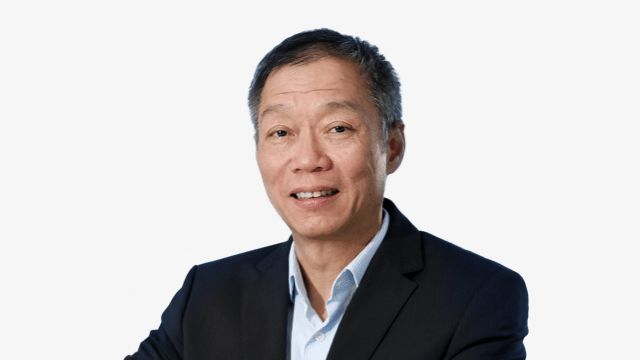
Duane Kuang, Founding Managing Partner of Qiming Venture Partners
"In the past year, we have been very pleased to see Hong Kong's capital market provide an excellent international financing channel for China's new generation of tech companies, especially those excelling in hard tech fields including artificial intelligence," Duane Kuang told 21st Century Business Herald during the 2025 Hong Kong FinTech Week.
Data from the Hong Kong Stock Exchange shows that in the first ten months of 2025, 81 companies listed on the exchange, up 50% year-over-year. Among them, strategic emerging industries such as healthcare and information technology accounted for over 70% of listings, becoming the main force in the IPO market. As of November 3, Hong Kong IPO fundraising reached HK$216.474 billion, surging 203.5% year-over-year and ranking first globally.
Notably, "the large number of excellent companies listing in Hong Kong has not put pressure on valuations or liquidity, which demonstrates the depth of Hong Kong's market foundation — this is an important expectation that mainland innovative companies have for Hong Kong," Kuang pointed out.
As a seasoned investor who has long been active on the front lines, Kuang has spent over 25 years in venture capital. In 2006, he co-founded Qiming Venture Partners, a leading Chinese VC firm. Qiming has invested in more than 580 high-growth innovative companies, of which over 210 have successfully gone public or exited through M&A, and more than 80 have grown into recognized unicorns or super-unicorns.
Among Qiming's portfolio companies are numerous influential players in their respective sub-sectors. In the recent AI wave, Qiming has also seized the opportunity, having invested in over 100 AI projects to date. Kuang noted, "In the early stages of technological development, slightly higher investment enthusiasm isn't a bad thing — what matters is whether this field can ultimately produce significant value and great companies."
On the Greater Bay Area's innovation ecosystem, Kuang pointed out that the region's tech industry has entered a critical phase that requires continued "problem-solving." It needs to further enable the flow of talent and technological advantages across the region, while cities within the GBA must think about their positioning as an alliance and integrated whole.
According to the World Intellectual Property Organization's latest Global Innovation Index 2025 published this September, the "Guangzhou-Shenzhen-Hong Kong" innovation cluster topped the global top 100 innovation clusters ranking for the first time, achieving a historic leap from five consecutive years at second place. Over the past year, the Greater Bay Area added 349,900 new technology innovation enterprises, becoming one of China's most active regions for tech startups.
"How do we remove existing barriers so that a tech company founded in Hong Kong Science Park can quickly scale up, expand its R&D team, and leverage the capabilities of mainland cities like Shenzhen, Dongguan, and Guangzhou? How do we make this work smoothly and thoroughly? I think we still need more collective wisdom on this," Kuang said.
On companies going global, Kuang stated, "Right now, a major theme of our investments is based on Chinese companies already having sufficient capabilities to compete globally and achieve leadership." He pointed out that today's companies are "born global," and investment institutions must also upgrade themselves to become "born global" organizations.
01/
Chinese Companies Are Now "Born Global"
21st Century: Qiming Venture Partners has recently been quite active in supporting its portfolio companies' global expansion — for example, WeRide's Robotaxi service launch in Saudi Arabia with Uber, and Hyperstrong's large-scale energy storage project in the Philippines. What factors do you see behind these successful global cases?
Duane Kuang: We no longer simply refer to the global expansion of excellent Chinese companies as "going overseas." A major theme of our current investments is based on Chinese companies already having sufficient capabilities to compete globally and achieve leadership — these enterprises are inherently global companies.
Chinese innovative companies have significant inherent advantages: first, the massive domestic market allows companies to rapidly validate products at the startup stage. Increasingly, companies no longer wait to scale up before "going overseas" — they possess global capabilities from inception. After product launch, they can quickly test in the domestic market while simultaneously targeting several key global regions as first-priority markets.
This new trend sets higher requirements for early-stage investors. VC firms need to help companies build an international vision from the earliest stages of growth, and investors themselves must possess international capabilities.
In the past, Chinese companies typically refined themselves thoroughly in the domestic market before building international capabilities, placing lower demands on investors to "enable globalization from birth." Now that companies are "born global," investment institutions must also upgrade themselves to become "born global" organizations.
Second, China's deep talent pool and market represent another inherent advantage that many smaller countries lack. Leveraging this, Chinese companies can quickly establish competitive moats globally.
Of course, beyond domestic talent, companies also need to recruit international talent early on — both technical talent and people familiar with target markets. For example, expanding into the Middle East requires teams familiar with local markets, while entering Southeast Asia demands teams with regional expertise.
So on one hand, Chinese companies' own capabilities continue to improve; on the other hand, investors also need to provide more support to companies in these areas.
02/
Hong Kong Empowers Hard Tech Companies
21st Century: As an international "super-connector," what systematic support can Hong Kong's unique financial, legal, and talent environments provide to help tech companies navigate regulatory and cultural differences across markets?
Duane Kuang: In the past year, we have been very pleased to see that Hong Kong's IPO market and stock market liquidity, among other aspects, have provided an excellent international financing channel for China's new generation of tech companies, especially those excelling in hard tech fields including artificial intelligence.
Notably, the large number of excellent companies listing in Hong Kong has not put pressure on valuations or liquidity, which demonstrates the depth of Hong Kong's market foundation — this is an important expectation that mainland innovative companies have for Hong Kong.
Second, many companies begin their internationalization process early on and urgently need legal support along the way. Hong Kong has certain advantages in international legal systems and legal talent reserves, whether in trademarks, intellectual property (IP) disputes, or litigation.
As investors, we maintain close communication with internationally authoritative law firms and can connect companies with Hong Kong legal resources. Startups often don't think to hire quality IP lawyers early in their founding, but because we've encountered similar cases in different regions, we can serve as a bridge.
21st Century: Hong Kong introduced mechanisms such as the "Tech Enterprise Dedicated Line" this year, designed to more flexibly facilitate tech company listings. How do you think such financial innovation systems will better attract venture capital and support tech startup development? From a venture capital perspective, where else can Hong Kong break through to better evaluate and sustain the long-term value of hard tech companies?
Duane Kuang: These initiatives have significance on two levels. First, in terms of overall atmosphere and signaling, they send a very positive message to the market that Hong Kong welcomes tech companies to list.
While specific measures may not be applicable to every company, the series of "combo moves" by Hong Kong's financial regulators has sent positive signals to mainland tech startups, strengthening their confidence in considering Hong Kong as a listing destination.
Second, at the operational level, some companies with strong tech attributes and core IP may have previously worried about disclosing technical details too early in the IPO application process. Now, new policies allow certain companies to conduct confidential filings, enabling them to engage with the Hong Kong Stock Exchange earlier.
If the timing isn't right, companies can continue refining themselves without prematurely disclosing key information. When both sides feel the timing is mature, they can then disclose necessary information to the public. These specific measures are genuinely very helpful to companies.
On this foundation, Hong Kong still needs to focus on maintaining market liquidity — especially after this year's "DeepSeek moment" prompted global investors to reassess Chinese tech assets. How Hong Kong can attract more international long-term funds is something that venture capital, private equity institutions, and companies alike are looking forward to. We also hope that companies perform well after listing in Hong Kong, further strengthening investor confidence.
03/
Focusing on AI Application Sub-Sectors
21st Century: You previously predicted that the AI application layer would see explosive growth after 2025. When screening projects in these areas, beyond the technology itself, what other criteria does Qiming Venture Partners use? What types of AI entrepreneurs and teams do you prefer?
Duane Kuang: This is also phase-dependent. At the current stage, for AI and AI-related application startups, we tend to favor teams with deep AI understanding and technical backgrounds.
Because AI technology has not yet matured to become a public service as accessible as "water and electricity," teams still need deep technical understanding to explore applications that others haven't imagined. Therefore, we place great emphasis on whether entrepreneurs possess AI Native cognitive capabilities when screening.
At the same time, we believe China already has more than enough teams dedicated to large model underlying technology R&D. If a company focuses solely on developing the next generation of large models, we may have some concerns. We believe good companies must have deep understanding of AI technology while also having sufficient knowledge of the domains they aim to disrupt or innovate in.
Qiming Venture Partners has substantial fund scale and market influence — we don't care whether a company is a capital-intensive large project or a lightweight application development team. As long as the team is excellent and capable, we're willing to invest.
21st Century: At the AI application level, what other key focus areas does Qiming Venture Partners have?
Duane Kuang: Our areas of interest are quite diverse. One of them is embodied artificial intelligence — autonomous driving is one direction of embodied AI, and also a true physical-world application of artificial intelligence.
Beyond humanoid robot systems and their vertical domain applications, we're also interested in key upstream components such as dexterous hands. Additionally, data collection and other infrastructure are very important links in the development of embodied AI. Within this broad direction, there are many sub-sectors.
What we need to determine is: whether these sub-sectors represent businesses that can ride the industry wave to make some money, or whether they can truly become enterprises that grow into large, very successful companies. This is something we pay very close attention to when evaluating upstream component and ecosystem companies.
21st Century: The market has seen "AI bubble" narratives and skepticism about humanoid robot development prospects. How do you view these perspectives?
Duane Kuang: In the early stages of technological development, slightly higher investment enthusiasm isn't a bad thing — what matters is whether this field can ultimately produce significant value and great companies.
As for embodied AI, it's difficult to precisely measure whether current enthusiasm is at the right level. If 10 points represents the ideal state, whether we're currently at 8 or 15, 13 or 7 — that's hard to gauge.
But I believe this direction is correct. Even if in a particular funding round, a company's valuation is slightly higher due to market optimism, this won't affect our commitment to the broader direction. I remain bullish on the development prospects of this field.
Source | 21st Century Business Herald
Author | Yuan Sijie
Editor | Li Yanxia
Past Reviews

Qiming Venture Partners was founded in 2006. Currently, the firm manages 11 USD funds and 7 RMB funds, with total assets under management reaching $9.5 billion. Since its inception, Qiming has focused on investing in outstanding companies in the early and growth stages of Technology and Healthcare.
To date, Qiming Venture Partners has invested in over 580 high-growth innovative companies, of which more than 210 have listed on the New York Stock Exchange, NASDAQ, Hong Kong Stock Exchange, Shanghai Stock Exchange, and Shenzhen Stock Exchange, or exited through M&A and other means. Over 80 companies have become recognized unicorns or super-unicorns in their industries.
Many of Qiming's portfolio companies have grown into the most influential companies in their respective fields, including Xiaomi (01810.HK), Meituan (03690.HK), Bilibili (NASDAQ:BILI, 09626.HK), Zhihu (NYSE:ZH, 02390.HK), Roborock (688169.SH), Hesai Technology (NASDAQ:HSAI, 02525.HK), UBTECH (09880.HK), WeRide (NASDAQ:WRD, 00800.HK), Hyperstrong (688411.SH), Insta360 (688775.SH), Unisound (09678.HK), Gan & Lee Pharmaceuticals (603087.SH), Tigermed (300347.SZ, 03347.HK), Zai Lab (NASDAQ:ZLAB, 09688.HK), CanSino Biologics (688185.SH, 06185.HK), Schrödinger (NASDAQ:SDGR), MicroPort EP MedTech (688617.SH), Sanyou Medical (688085.SH), Amoy Diagnostics (300685.SZ), SinoCellTech (688520.SH), Hope Medicine, Yuanxin Technology, Insilico Medicine, MediLink Therapeutics, LaNova Medicines, Zhipu AI, StepFun, Biren Technology, and others.