Qiming Star | ZuoYi Tech CEO Zhang Chao: Using AI Doctors to Fill the 'Blank Spaces' in the Healthcare Ecosystem

Zuo Yi Technology's future roadmap centers on "proactive artificial intelligence." An AI doctor should not merely be a tool that responds passively, but rather an active health partner that intervenes on its own initiative.

Editor's Note: Recently, Qiming Venture Partners portfolio company Zuoyi Technology partnered with Chongqing Medical University Affiliated Children's Hospital to launch a next-generation "AI Pediatric Family Doctor." This product achieves true multi-scenario, multi-modal interaction capabilities — it can not only read text and recognize medical reports, but also automatically recommend educational videos and provide appointment booking services as needed.
In an interview, Zhang Chao, founder and CEO of Zuoyi Technology, discussed the positioning of the "AI Pediatric Family Doctor," the social value of the pediatric evidence-based knowledge base, and Zuoyi Technology's research expansion path. Zhang noted that in the fiercely competitive AI healthcare space, Zuoyi has chosen a differentiated development path, with future plans centered on "proactive artificial intelligence." He emphasized that AI doctors should not merely be passive response tools, but active health partners that intervene proactively.
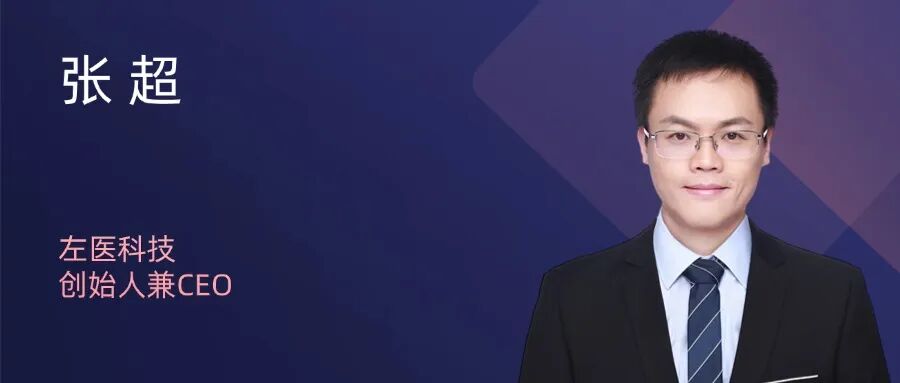
Zhang Chao, Founder and CEO of Zuoyi Technology
The global theme for World Health Day 2025 is "Healthy Beginnings, Hopeful Futures," while China designated its 2025 focus as "Protecting Maternal and Infant Health, Nurturing the Nation's Future." On this special occasion of April 7, World Health Day, Chongqing Medical University Affiliated Children's Hospital and Qiming Venture Partners portfolio company Zuoyi Technology jointly announced the launch of the "AI Pediatric Family Doctor" and the industry's first pediatric evidence-based knowledge base designed for large model applications — bringing new hope for children's health across society and demonstrating both parties' commitment to advancing intelligent pediatric care, while offering mothers and children higher-quality, safer, and more accessible healthcare options.
Through the integrated intelligent diagnosis and treatment experience of the "AI Pediatric Family Doctor," parents can receive professional and thoughtful advice in real time, significantly narrowing the information gap between doctors and patients. According to reports, this AI system features a "Visible Thinking" interactive consultation mode that makes the reasoning behind each Q&A transparent and visible, ensuring users can better understand the AI's judgment basis at critical moments. Meanwhile, through "Automated RAG" technology, the system can dynamically access the latest medical standards and treatment knowledge, providing parents with detailed instructional videos and offering children safe, reliable, and easy-to-understand health guidance.
Zhang Chao explained that this "AI Pediatric Family Doctor" is built on years of accumulated high-quality data and Zuoyi Technology's "Bidirectional Adaptation" training mechanism, successfully achieving precise understanding and responses to common childhood diseases and healthcare needs. At the same time, alongside this AI product came the debut of China's first pediatric evidence-based knowledge base specifically designed for large model applications, providing authoritative and real-time knowledge support for the "AI Pediatric Family Doctor" and helping the model retrieve and access the most effective and accurate pediatric evidence-based literature at any time.
In the industry's view, this collaboration represents a two-way convergence of real healthcare needs and technological development. Zhang believes the core value of medical AI lies in improving the accessibility and equity of healthcare resources, but he also emphasizes that AI doctors should complement rather than replace the medical ecosystem. Zuoyi Technology's core value lies in building proactive AI that makes quality healthcare accessible, better serving the "blank spaces" overlooked by traditional healthcare systems.
01/ From "General Practice" to "Pediatrics"
"Pediatrics is a high-frequency usage scenario because children inevitably get sick during their growth and development, and most cases involve common diseases. Our philosophy aligns closely with Chongqing Medical University Affiliated Children's Hospital, and last year we jointly released a pediatric AI model called 'Qian Yi Hui Er,'" Zhang said, noting this background as an important catalyst for the current partnership.
According to reports, the focus of the "AI Pediatric Family Doctor" is to create a family doctor serving out-of-hospital patients while integrating into the existing diagnosis and treatment services of Chongqing Medical University Affiliated Children's Hospital — specifically including integration of knowledge and workflows. "Knowledge integration mainly manifests in the hospital providing us support, including clinical knowledge bases and doctors' approaches to handling various patient cases. Workflow integration mainly shows in the hospital providing each doctor's characteristics and department introductions to our backend, where the robot informs patients and helps them find relevant doctors and provides medical visit procedures. Additionally, throughout the AI doctor construction process, clinicians continuously evaluate the backend, assessing how well the model responds, promptly feeding issues back to our algorithm engineers, and through constant iteration making the model increasingly better."
Notably, alongside this AI product came the debut of China's first pediatric evidence-based knowledge base specifically designed for large model applications, providing authoritative and real-time knowledge support for the "AI Pediatric Family Doctor" and helping the model retrieve and access the most effective and accurate pediatric evidence-based literature at any time.
Reportedly, this knowledge base was built collaboratively by expert teams in pediatrics, with every piece of content verified by professional physicians, hierarchically split and annotated, while retaining clear and traceable citation sources. Thanks to this rigorous system, when "large models" face knowledge blind spots or detailed uncertainties, they can quickly access and invoke authoritative evidence, avoiding operating in a vacuum or making arbitrary guesses, significantly reducing the risk of so-called "AI hallucinations" in medical applications. This not only makes AI diagnosis more reliable but also lays a solid foundation for subsequent traceability verification and periodic upgrades.
The social value of this evidence-based knowledge base is equally significant. It serves not only as the core supporting force for the "AI Pediatric Family Doctor," but is also open to all pediatric doctors, becoming an always-available, continuously updated auxiliary diagnostic resource. Clinical doctors across regions who need to reference the latest domestic and international pediatric guidelines or retrieve high-level medical papers can log in and use this knowledge base for rapid verification. In today's increasingly fast-paced clinical environment, such collaborative sharing is tantamount to equipping pediatric doctors with an "intelligent external brain," thereby effectively improving medical staff efficiency and confidence while maintaining diagnosis and treatment quality, and positively driving the overall improvement of pediatric healthcare standards in society.
In fact, Zuoyi Technology has been deeply rooted in the medical AI field for many years, following a research expansion path from general practice to specialty to expert-level.
"We started with a general practitioner, then moved to important specialties like pediatrics and maternal-child health, and next comes collaboration with experts — such as working with Peking Union Medical College Hospital allergy specialists to create more granular, authoritative, and personalized diagnosis and treatment recommendations." In Zhang's view, the general practice model serves as the foundation, covering common disease diagnosis and treatment logic; specialty models focus on specific domains requiring professional data support from top-tier hospitals; while expert models pursue the digital replication of top-tier diagnostic and treatment capabilities.
It is understood that Zuoyi Technology's team previously launched a general practice AI doctor pilot project in Zhongwei City, Ningxia. This small northwestern city became a testing ground for intelligent healthcare, driven by profound practical considerations. Since going live, the AI doctor has rapidly become residents' trusted health management assistant through its efficient and convenient services. From daily health consultations to chronic disease management, from symptom inquiries to medication guidance, Zuoyi Technology's AI doctor is transforming health management for Zhongwei citizens through efficient, precise, and round-the-clock service. To date, the AI doctor has accumulated over 500,000 registered users, covering more than 35% of Zhongwei's residents, serving hundreds of citizens daily, with total response count exceeding 187,410.
02/ Technology-Driven End-to-End Training Reshapes Medical AI
Behind the newly released Zuoyi Technology "AI Pediatric Family Doctor" lies a complex and sophisticated technical system. Its core lies in the innovative application of end-to-end training and dynamic interaction modes, enabling AI to truly think like a doctor rather than simply execute preset instructions.
Currently in the market, there are mainly three approaches to implementing AI doctors: prompt-driven, workflow-driven, and end-to-end AI Agent-driven. The prompt-driven approach is simple and direct but lacks deep processing capabilities for complex problems; workflow-driven relies on manually designed rules, which can improve accuracy to some extent but has limited scalability. Zuoyi Technology's chosen AI Agent-driven mode gives the model autonomous thinking and decision-making capabilities. It can not only dynamically adjust the consultation path based on patient descriptions but also call external tools, such as querying disease control data or retrieving medical literature, to provide multi-dimensional support for diagnosis.
During training, Zuoyi Technology employs a unique three-step method of "adding knowledge, performing tasks, and integrating feedback." First, by incorporating textbooks, private knowledge bases, and medical record data, the model is infused with professional medical knowledge. Second, by focusing on medical tasks such as diagnostic analysis, medical record generation, and prescription review, the model's professional capabilities are strengthened. Finally, expert feedback is integrated into reinforcement learning to ensure model outputs meet professional standards. This training approach not only improves model accuracy but also equips it with professional expression and thinking patterns in the medical field.
The "Visible Thinking" interaction mode is Zuoyi Technology's innovative hallmark. By visualizing the AI's reasoning process, patients can clearly understand the diagnostic basis, thereby enhancing trust in the AI. For example, when a patient describes cough symptoms, the AI dynamically adjusts its questioning direction based on details such as whether there is phlegm and its color, while conducting comprehensive analysis incorporating environmental data such as pollen concentration. This deep interaction not only improves diagnostic precision but also makes patients feel valued and understood.
To avoid information overload and contradictions, Zuoyi Technology is meticulous in knowledge base construction. Through collaboration with top-tier hospitals, core specialty literature is identified, and an authoritative knowledge network is built based on literature citation relationships. Meanwhile, literature undergoes deep processing, being split into independent knowledge fragments to ensure efficient model access. This refined treatment of knowledge significantly reduces the risk of AI hallucinations, making diagnosis more reliable.
At the same time, Zuoyi Technology has developed a transcription robot that has become the company's unique weapon for data accumulation over the years. It not only helps doctors efficiently write medical records but also incorporates high-quality doctor-patient dialogues into training corpora through authorized and de-identified processing. These dialogues, after being organized and optimized by medical personnel, become important material for the model to learn expert thinking patterns. Through this approach, Zuoyi Technology has infused its AI doctor with dynamic learning capabilities in real-world scenarios.
In the fiercely competitive AI healthcare field, Zuoyi Technology has chosen a differentiated development path. Zhang explicitly stated that Zuoyi Technology's goal is not to replace doctors but to complement the medical ecosystem. Its core value lies in serving the "blank spaces" that traditional healthcare systems overlook, including grassroots regions and weak links in diagnosis and treatment workflows.
Zuoyi Technology's differentiated positioning stems from profound insight into uneven healthcare resource distribution. In Zhongwei City, Ningxia, Zuoyi Technology's AI doctor has already served over 35% of the permanent resident population, reducing unnecessary outpatient visits due to common diseases by 41%. These figures demonstrate that AI healthcare can not only improve efficiency but also effectively alleviate healthcare resource shortages.
Zuoyi Technology is also building competitive moats through scenario-based services. Its AI doctor is embedded not only in hospital official accounts and government promotion channels but also deeply integrated with medical scenarios that patients trust. For example, in its collaboration with Chongqing Medical University Affiliated Children's Hospital, the AI doctor not only provides consultation services but can also directly guide patients to make appointments, enhancing patient trust.
Zuoyi Technology's future plans center on "proactive artificial intelligence." Zhang proposed that AI doctors should not merely be passive response tools but active health partners that intervene proactively.
In terms of business model, Zuoyi Technology adopts a strategy emphasizing both B2B and B2C. On one hand, it provides AI tools and information software for hospitals, serving 40 of the Top 100 hospitals and over 200 tertiary grade-A hospitals. On the other hand, it serves C-end users through low-cost subscription models, with reported repurchase rates exceeding 30%. This dual-wheel drive model not only ensures revenue stability but also provides sustained momentum for technology iteration.
Zhang described his ultimate vision for AI healthcare as making medical resources accessible while remaining warm and human. He emphasized that Zuoyi Technology's mission is not to make machines smarter but to make healthcare warmer. In a world where medical resources will always be scarce, Zuoyi Technology is weaving a universal health protection net with technology, connecting the knowledge systems of top-tier hospitals with the bedside of grassroots patients, carrying both rational brilliance and the warmth of life.
Over the next five years, Zuoyi Technology will continue to deeply cultivate the blank spaces of the healthcare ecosystem, becoming a healthcare service supplement for special scenarios through technological innovation and scenario expansion. Whether through the popularization of bedside health monitoring terminals or the promotion of grassroots intelligent family doctors, Zuoyi Technology will remain patient-centered, driving the leap of medical AI from tool to intelligent partner, and injecting more possibilities into the global healthcare ecosystem.
Source | Compiled from multiple media reports
Past Reviews
Qiming Stars | Zuoyi Technology Raises 100 Million RMB in Series B Led by Qiming Venture Partners Qiming Perspectives | Qiming Venture Partners' Jin Gao: The Core of Investing in Healthcare Services Lies in Brand-Based Differentiated Competitive Capability Qiming Headlines | Qiming Venture Partners and Portfolio Companies Win Multiple Awards Including ChinaVenture's 2024 Top 5 Best VC Firms

Qiming Venture Partners was founded in 2006. Currently, Qiming Venture Partners manages 11 USD funds and 7 RMB funds, with total assets under management reaching $9.5 billion. Since its establishment, it has focused on investing in early and growth-stage outstanding enterprises in Technology and Consumer (T&C), Healthcare, and other industries.
To date, Qiming Venture Partners has invested in over 580 high-growth innovative companies, of which more than 210 have listed on the New York Stock Exchange, NASDAQ, Hong Kong Exchanges and Clearing Limited, Shanghai Stock Exchange, and Shenzhen Stock Exchange, or exited through mergers and acquisitions. Over 80 companies have become recognized unicorns or super-unicorns in their industries.
Among Qiming Venture Partners' portfolio companies, many have grown into the most influential companies in their respective fields, including Xiaomi (01810.HK), Meituan (03690.HK), Bilibili (NASDAQ:BILI, 09626.HK), Zhihu (NYSE:ZH, 02390.HK), Roborock (688169.SH), UBTECH (09880.HK), WeRide (NASDAQ:WRD), Gan & Lee Pharmaceuticals (603087.SH), Tigermed (300347.SZ, 03347.HK), Zai Lab (NASDAQ:ZLAB, 09688.HK), CanSino Biologics (688185.SH, 06185.HK), Schrödinger (NASDAQ:SDGR), MicroPort EP MedTech (688617.SH), Sanyou Medical (688085.SH), Amoy Diagnostics (300685.SZ), Berry Genomics (000710.SZ), GenScript ProBio (688520.SH), Yuanxin Technology, ClinChoice, Belief BioMed, Biren Technology, and others.