Qiming Stars | GYENNO Science CEO Ren Kang: Using AI to Cut Through the "Thousand Faces, Thousand Cases" Fog of Parkinson's Disease
In the field of neurodegenerative diseases, true technical breakthroughs don't come from the elegance of any single algorithm, but from the systematic deconstruction and reconstruction of the disease itself.

Editor's Note: Recently, Qiming Venture Partners portfolio company GYENNO Science launched GYENNO Intelligence, a full-scenario medical AI system for Parkinson's disease. Notably, GYENNO Science holds the world's only complete closed-loop diagnosis and treatment system in the Parkinson's disease field.
Ren Kang, founder and CEO of GYENNO Science, previously gave an interview to China News Service, where he discussed the heterogeneous characteristics of Parkinson's disease, the challenges of traditional diagnosis and treatment, and shared the company's original positioning — which led to building a moat encompassing "disease understanding-technology translation-clinical deployment." He also shared updates on GYENNO Science's progress in hospital markets, patient markets, industry partnerships, and global expansion.
The following is republished with authorization from the Qiming Venture Partners WeChat official account.
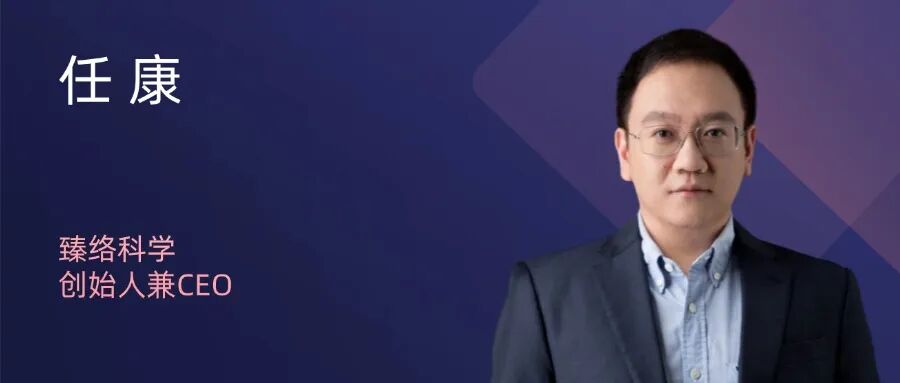
Ren Kang, Founder and CEO of GYENNO Science
While the global medical AI industry remains preoccupied with algorithmic competition, Qiming Venture Partners portfolio company GYENNO Science has spent 12 years carving out a distinctly different path — by building a full-chain closed-loop system covering screening, diagnosis, treatment, and rehabilitation, it has established a "digital foundation" for Parkinson's disease diagnosis and treatment grounded in clinical practice at over 700 tertiary hospitals. This Chinese medtech company's work reveals a critical insight: in the field of neurodegenerative diseases, true technological breakthroughs lie not in the elegance of single-point algorithms, but in the systematic deconstruction and reconstruction of disease itself.
According to WHO statistics, there are approximately 10 million Parkinson's disease patients worldwide, with prevalence among China's population aged 60 and above already reaching 1-2%. As the world's second most common neurodegenerative disease, Parkinson's complex pathological features and dynamic variability pose enormous challenges to traditional diagnosis and treatment models — from the difficulty of early screening to high misdiagnosis rates, from insufficient personalization in treatment to scarce rehabilitation resources, every stage presents a seemingly insurmountable gap between patients and effective care.
However, the rapid advancement of artificial intelligence is injecting new vitality and hope into this field. Through full spatiotemporal monitoring via intelligent medical devices, precise analysis of multimodal data, and tailored personalized treatment plans, AI is gradually breaking through the limitations of traditional diagnosis and treatment, bringing unprecedented light to Parkinson's patients.
On the eve of the 29th World Parkinson's Day in 2025, GYENNO Science released GYENNO Intelligence, a full-scenario medical AI system for Parkinson's disease and related disorders — leveraging large language models, deep learning, and classical machine learning to continuously absorb domain medical knowledge and expert experience, deeply mine data patterns, and perpetually self-evolve, integrating into various embodied carriers across full spatiotemporal scenarios both inside and outside hospitals to assist clinicians and patients.
01/
Breaking Through the Medical Maze of "A Thousand Faces for a Thousand People"
Parkinson's disease is like a "chameleon" in the nervous system — each patient's tremor, bradykinesia, postural imbalance, and rigidity, along with a range of non-motor symptoms, manifest unique temporal and spatial characteristics. This high degree of heterogeneity makes traditional diagnosis and treatment akin to groping in fog — the standardized clinical guidelines and individual patient specificity remain separated by an unbridgeable gap.
Ren Kang, founder and CEO of GYENNO Science, points out that throughout the disease cycle, every stage of Parkinson's — from screening to diagnosis, treatment, and rehabilitation — presents various challenges, including difficult early screening, high misdiagnosis rates, insufficient treatment personalization, and scarce rehabilitation resources. Moreover, the disease progression is irreversible; as time passes, symptoms gradually worsen, patients' quality of life continuously declines, and the caregiving burden on families grows increasingly heavy.
For instance, early screening for Parkinson's disease is difficult because early symptoms such as bradykinesia are often mistaken for normal aging, causing patients to delay seeking medical care. Traditional screening methods rely on subjective judgment and struggle to capture subtle symptoms, making missed diagnoses common. Meanwhile, Parkinson's shares symptoms with multiple system atrophy (MSA), progressive supranuclear palsy (PSP), and other conditions, yet treatment protocols and prognoses differ substantially. Traditional diagnosis depends on imaging and other tests, subjective motor assessments, and clinical experience, frequently leading to misdiagnosis.
"Different patients exhibit vast differences in symptoms and progression — Parkinson's is known as a 'thousand faces for a thousand people' disease, yet existing treatment protocols are largely experience-based, making truly personalized diagnosis and treatment difficult to achieve. There are also resource scarcity issues in the rehabilitation stage, as domestic rehabilitation resources are insufficient and lack Parkinson's-specific rehabilitation strategies, making it hard to meet patients' long-term needs. Additionally, dynamic management is missing — Parkinson's patients spend over 90% of their time outside hospital settings, and traditional models cannot achieve dynamic monitoring, causing treatment outcomes to deviate from actual patient needs," Ren explained.
02/
Medical-Engineering Crossover Builds Internal and External Moats
The founder's academic background established GYENNO Science's unique DNA. This CEO, with both engineering training and medical-engineering crossover research experience, anchored the company from its inception to a precise entry point: "Parkinson's disease has the characteristics of being incurable, progressively developing, and multidimensional in symptoms, with unmet clinical needs at every stage." Ren felt that if he could address this disease through scientific research or technological means, it would be socially meaningful on one hand, while genuinely solving practical problems faced by clinical patients on the other.
It was precisely this understanding that drove GYENNO Science to establish its moat of "disease understanding-technology translation-clinical deployment." Ren told reporters that this moat can be interpreted from internal and external dimensions. Internally, GYENNO Science possesses profound understanding of Parkinson's disease, with end-to-end capabilities spanning academic research to product definition, engineering technology translation, and full commercialization, maintaining years of medical-engineering crossover collaboration with China's top Parkinson's disease experts. These factors make GYENNO Science, whether from a product or solution system perspective, currently the only company globally with the most complete structure. Externally, all of GYENNO Science's technology products have been deeply deployed clinically, having evolved from concepts to applied technologies, and even to tools habitually used in daily clinical work.
The aforementioned end-to-end capabilities are particularly evident in the evolutionary trajectory of the GYENNO Intelligence system. As the world's first full-scenario AI system for Parkinson's disease, its technical architecture displays a distinctive hybrid-driven characteristic: training algorithmic models through large volumes of high-quality multimodal data generated by multiple research institutes, while encoding the latest medical guidelines and expert experience into knowledge graphs. This "data + knowledge" dual-engine model enables the system to achieve clinical usability in screening, diagnosis, assessment, monitoring, and other dimensions, while maintaining quarterly iteration capabilities that incorporate new clinical evidence.
Over 12 years, GYENNO Science has conducted 13 national-level research projects, published over 40 SCI papers, and had its research findings incorporated into the Chinese Guidelines for the Treatment of Parkinson's Disease. These projects covered multiple key stages of Parkinson's diagnosis and treatment, from early screening to rehabilitation management, allowing GYENNO Science to accumulate not only rich theoretical knowledge but also lay a solid foundation for subsequent technology translation.
03/
China's Solution Benefits the World in the Globalization Process
Through artificial intelligence technology, GYENNO Science has not only improved diagnosis and treatment efficiency but also expanded service scenarios, providing patients with continuous management combining in-hospital and out-of-hospital care.
In the hospital market, GYENNO Science has covered over 700 tertiary hospitals, providing AI diagnostic and assessment equipment and/or multimodal data management and analysis systems. These devices and systems have become integral components of hospital diagnosis and treatment workflows, helping doctors diagnose diseases more accurately and formulate treatment plans more scientifically. Their presence makes hospital diagnosis and treatment work more efficient and precise, bringing better medical experiences to patients.
In the patient market, GYENNO Science directly serves patients through intelligent medical devices (such as the "RuiCan" anti-tremor spoon, "RuiXing" freezing gait assistance system, etc.) and AI remote assessment and remote rehabilitation systems, meeting out-of-hospital management needs. These intelligent medical devices and systems represent not only the crystallization of technological innovation but also the embodiment of humanistic care for patients. They allow patients to receive professional help at home without frequent hospital visits, greatly improving convenience and quality of life.
Meanwhile, GYENNO Science collaborates with global pharmaceutical companies including Roche, Sanofi, and Luye Pharma to promote the application of digital clinical trial endpoints. This cooperation model provides pharmaceutical companies with entirely new perspectives and methods for R&D work, accelerating the drug approval process and bringing more effective treatment options to patients.
GYENNO Science's footprint now spans 38 countries and regions globally, with its products entering healthcare reimbursement systems in Germany, Australia, Finland, and other countries. Behind this progress lies the company's deep understanding and precise grasp of global market demands. Different countries have varying healthcare systems, regulatory policies, and cultural backgrounds, but the suffering of Parkinson's patients is universal. GYENNO Science meets the essential needs of global Parkinson's patients through medical devices embedded with AI algorithms.
The keys to its global success lie in demand-driven solutions, data advantages, and localization strategies. Providing solutions for core symptoms such as tremor and gait disorders, iteratively optimizing algorithms based on clinical practice, and flexibly adjusting product positioning according to different countries' medical regulations and payment systems. This tailored approach has enabled GYENNO Science's products to gain broad acceptance and application worldwide.
Ren revealed that the company's evolutionary logic has always revolved around two unchanging cores: continuous deconstruction of the essence of Parkinson's disease diagnosis and treatment, and firm commitment to medical-engineering crossover methodologies. When asked about the future relationship between AI and healthcare, this founder offered a measured assessment: "The ultimate evolution of technology is not to replace doctors, but to augment the boundaries of human capability — enabling the 70% of undiagnosed patients to receive timely diagnosis and treatment, and ensuring every treatment decision is data-informed." This philosophy is becoming reality — among the 200,000 patients covered by its system, AI and fused sensing technologies enable early screening, assisted diagnosis and differential diagnosis, provide quantitative assessment and continuous monitoring, predict disease progression or drug responses, and thereby deliver quantitative evidence needed for personalized diagnosis and treatment.
Recent literature indicates that global Parkinson's disease patients will exceed 25 million by 2050. In this battle defending humanity's cognitive frontier, GYENNO Science's practice reveals a fundamental proposition: when technological innovation truly takes root in the intrinsic logic of disease evolution, AI can transcend its tool attributes to become a searchlight illuminating medicine's uncharted territories. The diagnosis and treatment closed-loop system it has built represents not only the embodiment of Chinese innovative strength but also an important signpost in the evolution of global medical AI — here, every tremor is precisely measured, every symptom fluctuation is transformed into a cornerstone of medical understanding, and every patient becomes a participant in advancing humanity's fight against disease.
Source | China News Service
Author | Li Jiajia
Editor | Li Qiuying
Past Reviews

Founded in 2006, Qiming Venture Partners currently manages 11 USD funds and 7 RMB funds, with total assets under management reaching $9.5 billion. Since its establishment, the firm has focused on investing in outstanding early and growth-stage companies in the Technology and Consumer (T&C) and Healthcare sectors.
To date, Qiming Venture Partners has invested in over 580 high-growth innovative companies, of which more than 210 have listed on the New York Stock Exchange, NASDAQ, Hong Kong Exchanges and Clearing Limited, Shanghai Stock Exchange, and Shenzhen Stock Exchange, or exited through M&A and other means. Over 80 portfolio companies have become recognized unicorns or super-unicorns.
Many companies in Qiming Venture Partners' portfolio have grown into the most influential players in their respective fields, including Xiaomi (01810.HK), Meituan (03690.HK), Bilibili (NASDAQ:BILI, 09626.HK), Zhihu (NYSE:ZH, 02390.HK), Roborock (688169.SH), UBTECH (09880.HK), WeRide (NASDAQ:WRD), Gan & Lee Pharmaceuticals (603087.SH), Tigermed (300347.SZ, 03347.HK), Zai Lab (NASDAQ:ZLAB, 09688.HK), CanSino Biologics (688185.SH, 06185.HK), Schrödinger (NASDAQ:SDGR), MicroPort EP MedTech (688617.SH), Sanyou Medical (688085.SH), Amoy Diagnostics (300685.SZ), Berry Genomics (000710.SZ), Genrix Bio (688520.SH), Yuanxin Technology, ClinChoice, Belief BioMed, Biren Technology, and others.