Qiming View | Duane Kuang: AI Is the Priority for Tech Investment, China's Engineering and Design Products Reach Globally
AI still has many niche areas and business models left to explore, and Qiming Venture Partners remains bullish on this direction in 2025.

Recently, at the "Investor 100" conference hosted by Zero2IPO and PEDaily, Duane Kuang, Founding Managing Partner of Qiming Venture Partners, joined the "Investor Talks: 2025, What VCs Have to Say" panel as a guest. He shared insights on Qiming's AI investments, its investment plans and directions for this year, and expressed continued bullishness on artificial intelligence in both technology and consumer sectors for 2025, with investment decisions made from the perspective of the AI ecosystem. He also noted that Chinese engineering and design products have earned their place on the global stage.
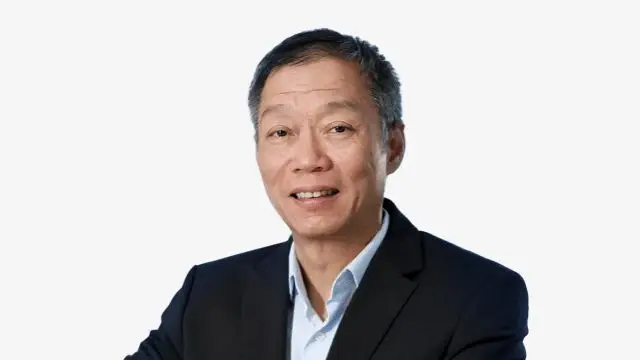
Duane Kuang, Founding Managing Partner of Qiming Venture Partners
The following is an edited transcript of the conversation.
Moderator: Please introduce your firm.
Duane Kuang: Hello everyone. First, I'd like to thank Zero2IPO for hosting this gathering every year, giving us a chance to review the past year early in the new year and share ideas with old friends. I'm Duane Kuang from Qiming Venture Partners. We focus on investing in two major sectors in China: technology and consumer, and healthcare.
Moderator: Thank you. The first topic we can't avoid is DeepSeek. First, what's your understanding and interpretation of DeepSeek? Second, after DeepSeek's emergence, what has changed and what hasn't in terms of coordinating past investments and envisioning future ones?
Duane Kuang: DeepSeek is indeed a topic we've been discussing constantly lately — daily, even monthly. I have two views on this: First, Qiming Venture Partners has invested in quite a few AI companies. In the large model space, we invested in Zhipu AI, plus some AI infrastructure and education applications. Over the past two years, we've been very active in AI investments. Recently, many friends have asked me about this. On one hand, Chinese AI has stood out; the subtext, however, is — with all these companies you've invested in, is there still hope?
DeepSeek's emergence is a very positive development for China's AI industry. Over the past two years, we've been steadfastly investing in outstanding domestic Chinese AI companies. In fact, a single funding round by one large American model company can exceed the combined valuation of most Chinese large model companies. Our Chinese scientists and engineers have the ambition and capability — can't we tackle this field with a "millet plus rifles" spirit? DeepSeek answered that question.
From DeepSeek-R1's open-source announcement to its becoming a phenomenon, roughly two weeks passed. During those two weeks, many American data centers ran the open-source model and produced genuinely impressive results. Microsoft's CEO brought this topic to the international stage for the first time at Davos.
So for those of us continuing to invest in domestic Chinese AI companies, we have even more confidence. DeepSeek proved that we can reach the world-class tier with far less computing resources.
Second, DeepSeek also represents the current state of Chinese AI development. This isn't something unattainable for China's other "six little dragons" — many companies are in the same tier as DeepSeek, they just haven't broken through to mainstream awareness. So for companies and investors continuing to work in the large model space, I believe DeepSeek is a positive catalyst, and there remain many opportunities to explore in niche segments and different business models. China won't have just one large model company; there are still many investment opportunities ahead. We remain bullish on this direction in 2025.
Moderator: Second topic — Nezha said "my fate is mine, not heaven's." In investing, is it fate or heaven? Will your 2025 investment plan be higher, flat, or more cautious compared to the past two years? What are the reasons?
Duane Kuang: In 2024, we invested in over 70 projects, with more than 30 new investments. We expect 2025 to be roughly at the same level.
Moderator: Flat in number — will amounts be more aggressive?
Duane Kuang: About the same. I recall last year's amounts weren't very different from 2023.
In terms of direction, it remains technology and consumer, and healthcare.
First, AI is our heaviest-weighted sub-sector in technology. We're thinking about how to invest from the perspective of the entire AI ecosystem.
Second, Chinese engineering and design products are now radiating globally. This includes familiar consumer products from Qiming portfolio companies like Xiaomi (01810.HK) phones, Roborock (688169.SH) robot vacuums, and Insta360 panoramic cameras — all with very high international revenue shares. Now many Chinese B2B equipment companies are also becoming increasingly competitive internationally.
Moderator: Has your firm begun a succession and transition plan? If so, how do you think about succession in the venture capital industry?
Duane Kuang: That's a great and important topic. Qiming Venture Partners has been around for 19 years now; next year will be our 20th anniversary.
Succession and transition mechanisms need to run through the entire development of the firm, not be something you scramble to put together when transition day arrives. Qiming has always been a partnership, with managing partners having equal rights. There's consensus that a new generation of successors should step up while the older generation steps back. With that consensus, the actual mechanisms have always been in place.
Recently one partner retired, and two partners were promoted — one of whom became co-head of our healthcare practice. We generally pair senior and junior partners, with experienced partners mentoring younger ones in the same group. Every transition takes enormous effort; none are easy. I believe that for some time to come, these two partners — one new, one seasoned — will stably and sustainably lead the healthcare team.
My colleague and I will continue leading the technology team for a while. At some point, my position will transition to another managing partner, and by then the recently promoted partner may have gained enough experience to mentor other managing partners.
Moderator: Thank you for sharing — establishing a transferable system first, rather than improvising when transition comes. Based on public information, you've begun both succession and an investment in an A-share listed company. Within what can be publicly disclosed, please share your rationale and thinking behind investing in a listed company.
Duane Kuang: Since this involves a listed company, there's some information I can't disclose — that's what I've been learning most about lately. There was indeed an announcement, but the transaction hasn't been completed yet. To be precise, we're not currently the controlling shareholder of the listed company.
As for background and thinking, it comes down to two points. First, we've always worked in primary market investing and have developed some expertise in backing companies. In recent years, we've noticed national policy encouraging listed companies to find new growth points, even ones different from their core business.
Regarding growth points, we certainly wouldn't invest in sunset industries — we invest in emerging companies. I've been doing this for some twenty-odd years; I'm quite confident in this area and very eager to try new things.
Against this macro backdrop and direction, we have the expertise and capability to help a company find new growth points. Whether through injecting portfolio companies into a listed company or other forms of empowerment to help listed companies discover new growth avenues. What we lack is direct, hands-on operational experience — something we need to keep strengthening and learning about in the coming period.
Second, as Mr. Ni mentioned at the opening (editor's note: Ni Zhengdong, founder and chairman of Zero2IPO, and CEO of Zero2IPO) — across industries and the primary market, policies this past year have been full of earnest hope. We're trying to do better and make the capital market healthier. Perhaps when policies came out, there was too much worry and not enough peers willing to actually act. They encouraged cross-border M&A, so we went and did it. Overall it's moving forward smoothly and positively, and we have high expectations for this. Based on feedback from various quarters, I'd suggest fellow investors with similar ideas to take a look and consider it.
Moderator: Thank you for being the first to eat this crab. Wishing you a successful completion of the transaction, creating value for all parties under this quality-asset new model and setting an example for the industry.
Source | PEDaily
Previous Coverage
The World Is Embracing Chinese Tech
Qiming View | Duane Kuang: Two Major Investment Opportunities Worth Anticipating
In the Innovation Economy, How to Let VCs Stand Firm in the "Lead Investor" Position

Founded in 2006, Qiming Venture Partners currently manages 11 USD funds and 7 RMB funds, with total assets under management reaching $9.5 billion. Since inception, the firm has focused on investing in early and growth-stage outstanding companies in technology and consumer (T&C), and healthcare sectors.
To date, Qiming Venture Partners has invested in over 580 high-growth innovative companies, of which more than 210 have gone public on the New York Stock Exchange, NASDAQ, Hong Kong Exchanges and Clearing, Shanghai Stock Exchange, and Shenzhen Stock Exchange, or exited through M&A and other means. Over 80 portfolio companies have become recognized unicorns or super-unicorns.
Many Qiming portfolio companies have grown into the most influential companies in their respective fields, including Xiaomi (01810.HK), Meituan (03690.HK), Bilibili (NASDAQ:BILI, 09626.HK), Zhihu (NYSE:ZH, 02390.HK), Roborock (688169.SH), UBTECH (09880.HK), WeRide (NASDAQ:WRD), Gan & Lee Pharmaceuticals (603087.SH), Tigermed (300347.SZ, 03347.HK), Zai Lab (NASDAQ:ZLAB, 09688.HK), CanSino Biologics (688185.SH, 06185.HK), Schrödinger (NASDAQ:SDGR), MicroPort EP MedTech (688617.SH), Sanyou Medical (688085.SH), Amoy Diagnostics (300685.SZ), Berry Genomics (000710.SZ), SinoCellTech (688520.SH), Yuanxin Technology, ClinChoice, Belief BioMed, Biren Technology, among others.