Qiming Perspective | Qiming Venture Partners' Kan Chen: China's Innovative Drug Exports Hit Record Highs, Where Is Innovative Drug Investment Heading?
Beyond its homegrown efficiency advantages, China's biotech sector must also seize the opportunities presented by global collaborative clinical development in the years ahead — leveraging strengths across different regions worldwide to maximize biotech value creation.

Editor's Note: The 2025 PMC Pharmaceutical Investment and Financing Conference, guided by the Shanghai Center for Biomedical Technology and Industry Promotion and hosted by PharmCube, was recently held in Shanghai. Kan Chen, Partner and Co-Head of Healthcare at Qiming Venture Partners, shared his insights on the historic progress of China's biomedical innovation, various overseas expansion models for innovative drugs, the efficiency advantages of Chinese innovative drugs, and development strategies. He noted that going forward, biotech companies should seize the opportunity of global synchronized clinical development to maximize their value.
Reprinted with authorization from the Qiming Venture Partners WeChat official account.
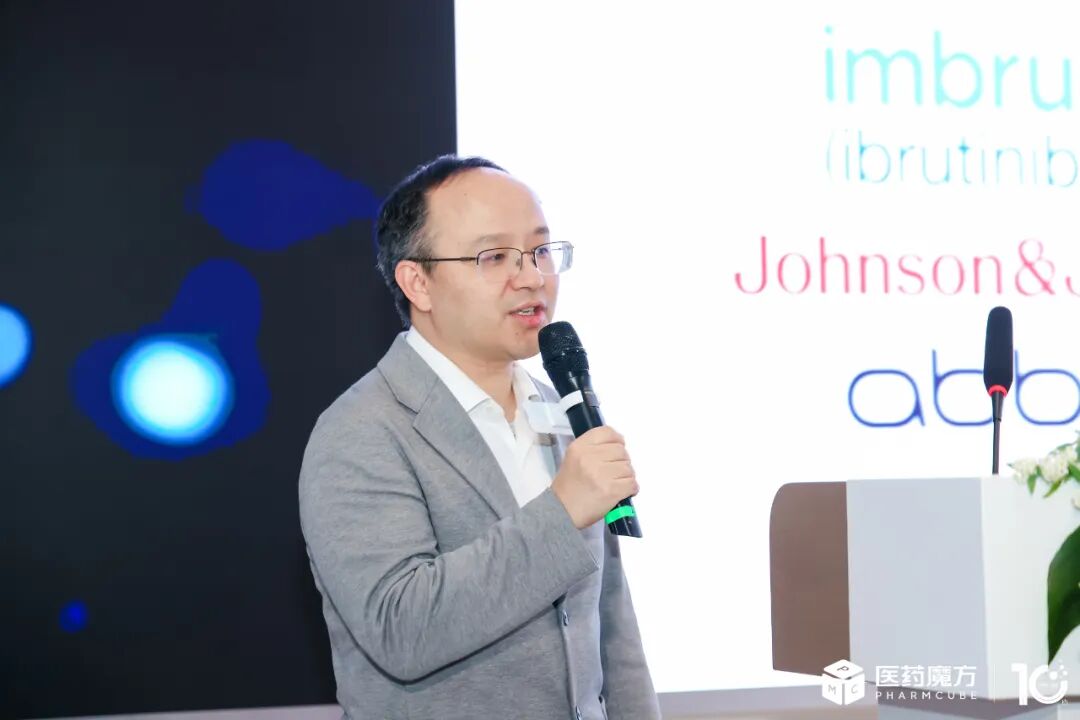
Kan Chen, Partner and Co-Head of Healthcare at Qiming Venture Partners
"The investment logic for innovative drugs shifts almost every year, and under the current macro environment, opportunities in innovative drug investing look different." At the 2025 PMC Pharmaceutical Investment and Financing Conference hosted by PharmCube, Kan Chen, Partner and Co-Head of Healthcare at Qiming Venture Partners, made these remarks.
BD frenzy becoming the norm and irreversible changes to biotech funding structures are the clearest "trends" in China's biomedical industry today. According to PharmCube's NextPharma database, in Q1 2025 (January–March), there were already 41 innovative drug license-out deals from China, with a total value of $36.929 billion — in just three months, approaching the full-year 2023 level and exceeding the total transaction value of H1 2024.
Moreover, the total upfront payments for Chinese innovative drug license-outs in Q1 reached nearly $900 million, already surpassing total primary market financing: PharmCube's InvestGo database shows 48 financing events in China's primary market from January to March 2025, totaling 5.065 billion yuan.
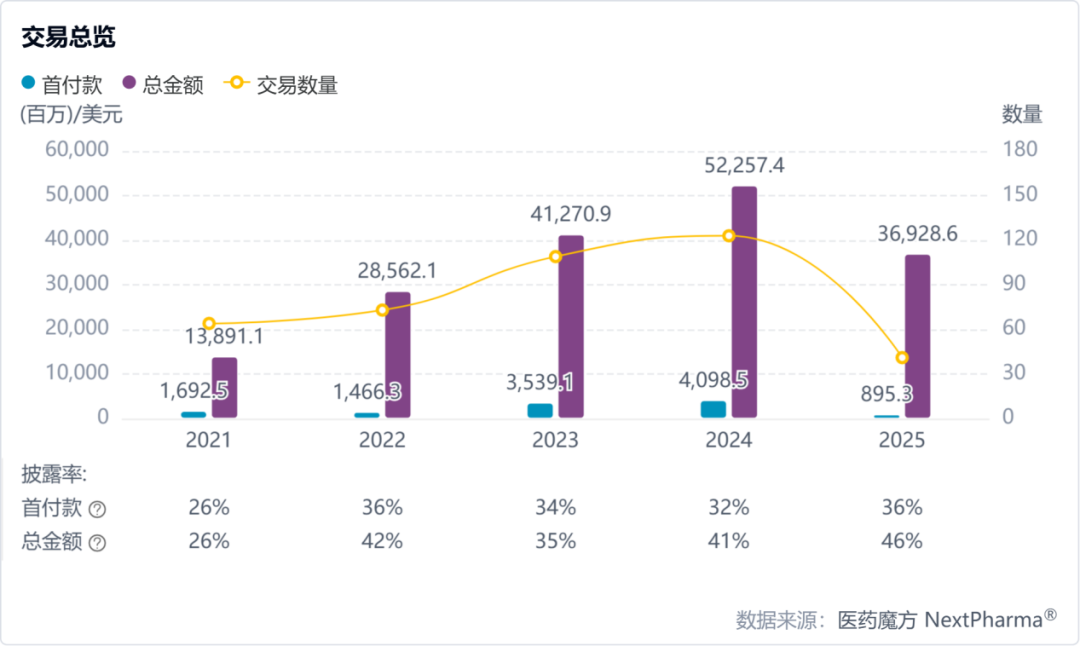
Chinese innovative drug license-out transactions, 2021–Q1 2025
As biotech companies actively "go global" to survive, many investors remain cautiously on the sidelines, seeking investment strategies for the "new normal." As a leading "hunter" of Chinese innovative drugs, Qiming Venture Partners has navigated the past year's turbulence with nearly 40 investments and over 20 lead rounds, ranking first in primary market investment — particularly through its deep investment in LaNova Medicines and facilitation of its blockbuster BD deal with Merck & Co. At the conference, Chen shared his insights on current investment opportunities in China's biomedical innovation.
Below is an edited transcript of his presentation.
01/
Investing in Chinese Innovative Drugs with Global Best-in-Class Potential
In 2024, one-third of pipelines licensed in by major foreign pharmaceutical companies came from China — five years ago (2019), this figure was zero, showing rapid growth. This is a fairly direct reference point. Our preliminary assessment is that global biomedical innovation is currently distributed roughly 40% in the United States, 30% in China, with the remainder in Japan and Europe.
In recent years, China's biomedical innovation has made historic progress. Through head-to-head trials against international "gold standard" drugs, an increasing number of Chinese innovations have demonstrated global best-in-class potential.
For example, in 2022, BeiGene's BTK inhibitor zanubrutinib beat the then gold standard — ibrutinib from Johnson & Johnson/AbbVie — in a head-to-head trial, setting a record; Legend Biotech's self-developed BCMA-targeting CAR-T therapy cilta-cel, through cross-trial comparison, surpassed Bluebird/BMS's Abecma; last year, Akeso's PD-1/VEGF bispecific antibody ivonescimab single-handedly beat Merck & Co.'s Pembrolizumab in a head-to-head trial — very significant.
We're seeing more and more such cases. Among Qiming Venture Partners' own portfolio companies, 2-3 head-to-head trials are currently underway. Beating America's "gold standard" drugs in head-to-head trials means American doctors will prioritize recommending a drug from China when treating patients.
The Akeso and Summit Therapeutics deal is a classic case. Summit Therapeutics was originally focused on antibiotics, with its stock once falling to $0.70 per share. In 2022, Summit Therapeutics licensed Akeso's PD-1/VEGF bispecific antibody; ivonescimab's approval in China boosted its stock price, and after beating Pembrolizumab head-to-head last year, the stock skyrocketed nearly 50-fold.
This clinical trial success also boosted Akeso's stock price from around HK$40 to around HK$70. Whether in U.S. or Hong Kong stocks, such significant developments are already driving stock price reactions, though the U.S. market responds more strongly than Hong Kong.
The story continues: this clinical success catalyzed two additional Chinese biotech deals — BioNTech's acquisition of Biotheus, and Merck & Co.'s purchase of LaNova Medicines' PD-1/VEGF bispecific antibody. LaNova Medicines is also our portfolio company, with Qiming Venture Partners as its largest shareholder.
Additionally, Seagen's former CEO David Epstein founded a new company also working on PD-1/VEGF bispecific antibodies, which raised $140 million in funding last year. As you can see, Akeso has set a global trend in this field — something almost unimaginable five years ago.
In other areas, Chinese biotech companies currently hold relatively leading positions.
For instance, in the TCE space, Merck & Co. acquired Tron Biotech's CD3/CD19 bispecific antibody; GSK acquired Enmab Therapeutics' CD19/CD20/CD3 trispecific antibody; and Candid acquired B cell-targeting CD3 bispecific assets from Genor Biopharma (editor's note: a Qiming Venture Partners portfolio company) and EpimAb Biotherapeutics' NewCo, in which we also participated in incubation;
In the GLP-1 space, in 2023, AstraZeneca licensed Eocenta's oral GLP-1; our portfolio company Structure Therapeutics (NASDAQ: GPCR) was that year's largest NASDAQ IPO; and this year, Bain Capital formed a NewCo with Hengrui Medicine's GLP-1 asset portfolio, completing a $400 million Series A;
In autoimmune antibodies, Aobo Capital and Keymed Biosciences formed an overseas NewCo for its bispecific antibody assets; Aclaris licensed Biosion's TSLP antibody and TSLP/IL-4R bispecific antibody through a "upfront + milestones + royalties + equity" structure.
Similar stories are playing out repeatedly. Chinese biotech companies have evolved from mere followers to increasingly standing at the forefront of scientific waves.
02/
The Many Faces of Chinese Innovative Drug Global Expansion
Everyone in the industry is talking about license-outs and M&A, but if you look closely, these transaction models are quite diverse, and each has different implications for founders and investors.
First, the much-touted license-out — the model international big pharma prefers most, as it allows them to terminate development at any time, fully accounting for development risks and strategic adjustments. The downside is that this model affects their profit margins, so upfront payments tend to be relatively high.
For biotech companies and investors, the advantages are cash generation with minimal or no equity dilution, and if the upfront is substantial — say $150-200 million or more — dividend distributions to investors may be considered, converting to LP returns.
However, under this model, biotech companies cannot enjoy upside from product revenue; typical sales royalties hover around 10%, and investors don't view this as particularly meaningful returns. Moreover, lacking core assets means no path to IPO.
So every Chinese biotech must think carefully when doing license-outs: if aiming for a NASDAQ listing, you need to retain at least 40-50% of global rights; if listing on A-shares or Hong Kong, you need to retain at least China rights.
Another increasingly discussed model is asset purchase — for example, Merck & Co.'s acquisition of Tron Biotech's bispecific antibody, GSK's acquisition of Enmab Therapeutics' trispecific antibody, and Roche's purchase of Regor Pharmaceuticals' next-generation CDK inhibitor. This model resembles M&A but only buys assets, without taking on employees, platforms, or other matters. The benefit for big pharma is that it doesn't affect net profit, but they'll only do it for strategically meaningful assets.
For biotech companies and investors, this model generates substantial cash but fully transfers the asset. Whether the company's other pipelines will share this money with investors also requires negotiation.
Another model is co-development — both parties share costs and split sales revenue. This has happened twice in Chinese biomedical history: once with Legend Biotech and Johnson & Johnson co-developing cilta-cel, and again with Sichuan Baili Pharmaceutical and BMS co-developing its bispecific ADC.
This is big pharma's least favorite model, requiring extensive communication with the partnering biotech, where alliance management becomes a major challenge. For biotech companies, yes, you own half the rights, but can you afford the development costs? That's a big question. For investors, the benefit is that this asset can go public, but the capital requirements are also substantial.
There's also the NewCo model — licensing Chinese pipelines and having Western investors and executives run them. We've done two NewCos and are currently advancing more.**
We're quite familiar with this model. NewCo serves three purposes: first, pipeline spin-off, since 80-90% of a biotech's valuation is determined by its lead pipeline, with other pipelines' value difficult to realize in the parent company; second, when the parent company's valuation is historically inflated, NewCo allows resetting valuation; third, bringing in Western executives who have advantages in Western capital markets and BD transactions.
Finally, IPO and M&A. If a biotech wants to go public on NASDAQ, it first needs an offshore structure; second, its pipeline must have global competitiveness; third, its most advanced pipeline must be fully owned or at least half-owned, with American executives needed. Most difficult is that these companies need pre-IPO/crossover rounds before IPO, bringing in well-known U.S. specialist life science funds early — otherwise, going straight to IPO will result in very poor post-listing liquidity.
There have been several acquisitions in recent years, including Genmab's acquisition of ProfoundBio, AstraZeneca's acquisition of Gracell Bio, and BioNTech's acquisition of Biotheus. But we don't think cross-border acquisitions will be particularly common going forward, as these companies had special circumstances — they wanted R&D in China, but most Western companies don't have strong needs in this regard.
03/
Leveraging China's Efficiency Advantage
Seizing Global Development Opportunities
Domestic first-in-class target catch-up is accelerating, which also proves Chinese innovative drugs' efficiency advantage. At the same time, we see intense competition in China's TOP30 targets receiving CDE acceptance for Class 1 new drugs — over 70 companies for PD-1, over 700 GLP-1 applications, with more than 50 GLP-1s expected to launch within 5 years; 5% of hot targets account for 44% of innovative drugs. From this perspective, domestic competition is indeed fierce, even somewhat brutal.
The "non-competitive" side, similar to how DeepSeek ignited the global AI field, is also happening in China's biomedical sector. We often see companies quietly working on first-in-class products in some corner, with truly significant clinical value.
For example, before the bispecific ADC concept became hot, Sichuan Baili Pharmaceutical's HER3/EGFR bispecific ADC innovative drug reached a major co-development partnership with BMS; RemeGen created the Baff/April dual antagonist concept first, with Alpine Immune in the U.S. developing similar products, and Vertex acquiring that company for $4.9 billion last year.
Biotech success or failure hinges on clinical trials. Whatever the theory, trial results have the final say. Therefore, the faster and cheaper you can run clinical trials, the greater your advantage. Whether Chinese innovative drugs are "competitive" or "non-competitive" also depends on how this advantage is applied.
Beyond domestic efficiency advantages, we believe Chinese biotech companies must also seize the opportunity of global synchronized development, fully utilizing advantages across global regions to maximize biotech value.
Specifically, early drug discovery work can be conducted in China, where costs are low and efficiency and quality are high. For dose-escalation phases, consider doing them in China, where patient enrollment is typically faster than in the U.S., or in Australia or New Zealand, where early clinical costs are relatively controllable and can demonstrate efficacy and safety in Western populations.
For dose expansion and pivotal trials in later-stage clinical development, consider focusing on the U.S., ideally in partnership with major international pharma companies — on one hand, U.S. investors value U.S. clinical data more; on the other, FDA applications are more direct.
Finally, while Chinese innovative drugs are currently very hot, we can still see some weaknesses. In foundational technology — such as mRNA, gene editing, bispecific antibodies, etc. — breakthroughs often originate in the U.S. first, with Chinese companies following; they accomplish 0-to-1, while we accomplish 1-to-10 or 1-to-100.
Additionally, there's insufficient capability in first-in-class target discovery, and inadequate translational science capabilities going from clinic back to R&D. Indication selection, clinical pharmacology modeling, and other clinical translation and development capabilities also need strengthening.
Source | PharmCube
Previous Articles
Qiming Venture Partners was founded in 2006. Currently, Qiming Venture Partners manages 11 USD funds and 7 RMB funds, with total assets under management reaching $9.5 billion. Since its inception, it has focused on investing in early and growth-stage outstanding enterprises in Technology and Consumer (T&C), Healthcare, and other sectors.
To date, Qiming Venture Partners has invested in over 580 high-growth innovative companies, of which more than 210 have listed on the New York Stock Exchange, NASDAQ, Hong Kong Exchanges and Clearing Limited, Shanghai Stock Exchange, and Shenzhen Stock Exchange, or exited through M&A and other means. Over 80 companies have become recognized unicorns or super-unicorns in their industries.
Many Qiming Venture Partners portfolio companies have grown into the most influential companies in their respective fields, including Xiaomi (01810.HK), Meituan (03690.HK), Bilibili (NASDAQ:BILI, 09626.HK), Zhihu (NYSE:ZH, 02390.HK), Roborock (688169.SH), UBTECH (09880.HK), WeRide (NASDAQ:WRD), Gan & Lee Pharmaceuticals (603087.SH), Tigermed (300347.SZ, 03347.HK), Zai Lab (NASDAQ:ZLAB, 09688.HK), CanSino Biologics (688185.SH, 06185.HK), Schrödinger (NASDAQ:SDGR), MicroPort EP MedTech (688617.SH), Sanyou Medical (688085.SH), Amoy Diagnostics (300685.SZ), Berry Genomics (000710.SZ), Sinocelltech (688520.SH), Yuanxin Technology, ClinChoice, Belief BioMed, Biren Technology, and others.