Qiming Star | Ark Biosciences Announces Latest Research Results for First RSV-Specific Antiviral Drug Ziresovir Published in The Lancet Child & Adolescent Health | Bilingual
This study, the world's first Phase 3 clinical trial covering RSV-infected infants under six months of age, successfully fills the evidence gap for targeted treatment approaches in this high-risk population and provides critical evidence for building a comprehensive RSV disease management system.

Swipe Left for the English Version
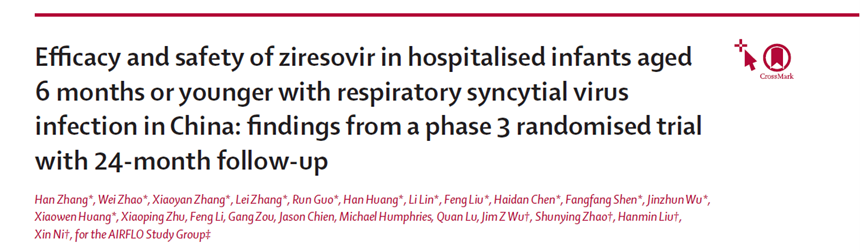
Ark Biopharmaceutical, a portfolio company of Qiming Venture Partners, recently announced that The Lancet Child & Adolescent Health — a top-tier international journal in pediatric and adolescent medicine — has published online the Phase 3 clinical trial results of ziresovir, the first RSV-specific antiviral drug. The paper, titled "Efficacy and safety of ziresovir in hospitalised infants aged 6 months or younger with respiratory syncytial virus infection in China: findings from a phase 3 randomised trial with 24-month follow-up," marks the second time this Phase 3 study has been featured in a leading global medical journal, following its initial publication in The New England Journal of Medicine in September 2024.
01/
RSV: An Urgent Unmet Medical Need
Respiratory syncytial virus (RSV) infection is a "silent killer" in infant and child health, ranking among the leading causes of pediatric hospitalization and mortality. Globally, millions of infants suffer from RSV infection each year, placing a heavy burden on families and society. Current treatment options for RSV remain extremely limited, consisting mainly of symptomatic and supportive care with no approved targeted antiviral therapies. This means physicians are often left managing symptoms rather than attacking the virus at its source. Infants under six months are particularly vulnerable due to immature immune systems and underdeveloped airways, facing significantly higher rates of hospitalization and intensive care needs compared to older age groups. Against this backdrop, the Phase 3 ziresovir study represents the first clinical validation of antiviral efficacy in hospitalized infants under six months, while also revealing long-term benefits in reducing recurrent wheezing and asthma.
The study was a multicenter, randomized, double-blind, placebo-controlled Phase 3 clinical trial conducted at 30 centers across 28 hospitals in China. It was structured in two parts: Part 1 evaluated safety; Part 2 confirmed efficacy and safety. Patients were randomized 2:1 to receive ziresovir (dosed by body weight at 10, 20, or 40 mg twice daily) or placebo for five days, with follow-up extending to 24 months. This publication presents subgroup analysis of patients aged under six months and the 24-month follow-up results.
Key findings:
1. Marked Efficacy
Significant bronchiolitis improvement: By Day 3, the treatment group showed a 3.5-point reduction from baseline in Wang Bronchiolitis Clinical Score (WBCS) versus 2.2 points in the placebo group — a 54.5% difference (p<0.001). Subscores for respiratory rate, wheezing, and retractions were all significantly superior to placebo (p<0.05).
Rapid viral load decline: By Day 5, viral load decreased by 2.51 log10 copies/mL from baseline in the treatment group versus 1.87 log10 copies/mL in the placebo group, representing an additional 0.64 log10 copies/mL reduction (p=0.024), indicating clear antiviral activity.
Accelerated symptom resolution: Time to wheezing relief (HR=1.53, p=0.021) and retraction relief (HR=1.49, p=0.018) were significantly shortened. While hospitalization duration and oxygen therapy needs showed no statistically significant difference, improvement trends were observed.
2. Favorable Long-Term Safety
Good safety profile: Treatment-emergent adverse events (TEAEs) occurred in 18% of the treatment group versus 11% in the placebo group, with no severe drug-related adverse events or deaths.
3. Reduced Wheezing Risk
Significantly lower wheezing and asthma incidence: Annualized wheezing incidence was 3.6-fold lower in the treatment group (0.18% vs. 0.65%, p=0.0048); wheezing episodes were reduced 2.6-fold (1.2 vs. 3.1 episodes); asthma diagnosis rates were also lower in the treatment group (3% vs. 5%). These findings suggest early antiviral treatment may exert protective effects on long-term pediatric respiratory health, including recurrent wheezing and asthma.
02/
A New Era in RSV Treatment
Current RSV management focuses on symptom control; ziresovir offers clinicians the first targeted antiviral option. For infants under six months — who face the highest risk of severe disease and have the weakest immunity — rapid viral load reduction with ziresovir can effectively halt disease progression. Moreover, this trial provides the first long-term follow-up evidence that ziresovir reduces wheezing-related risks, likely through mechanisms involving viral load control and attenuated inflammatory response. This finding not only expands the clinical value of antiviral therapy but also offers new directions for preventing RSV-associated chronic respiratory diseases.
This March, at the 13th International RSV Symposium held in Brazil, Dr. Jim Wu, CEO of ArkBio, presented these original findings in a keynote address, drawing broad attention and recognition from international peers. Ziresovir's repeated appearances at global conferences demonstrate the innovative capabilities of ArkBio and Chinese clinical experts in pediatric drug development — a leap from the laboratory to the world stage that offers a "China-innovated medicine" solution to the global challenge of respiratory diseases.
Prof. Xin Ni, President of Beijing Children's Hospital, Capital Medical University, stated: "RSV infection represents a critical unmet need in pediatrics. The prolonged absence of targeted therapies has not only posed severe threats to infant health but also strained pediatric healthcare resources. As the world's first Phase 3 clinical trial covering RSV-infected infants under six months, this study successfully fills the evidence gap for targeted treatment in this high-risk population and provides crucial evidence for building comprehensive RSV disease management systems. The clinical translation of these results will transform the previous paradigm of passive supportive care, propelling RSV diagnosis and treatment into a new era of precision medicine. Following the core Phase 3 data's publication in The New England Journal of Medicine last year, this in-depth analysis has now been accepted by The Lancet Child & Adolescent Health — a testament to international academic recognition of original clinical research from China. I am deeply proud of our team's achievement and look forward to ziresovir's timely approval, bringing this groundbreaking therapy to RSV-affected children in China and worldwide."
The Lancet Child & Adolescent Health Publishes Phase 3 Trial and 24-Month Follow-Up Results of Ziresovir for RSV in Infants Under 6 Months
The Lancet Child & Adolescent Health, a leading international journal in pediatric and adolescent medicine, has published the Phase 3 clinical trial results of ziresovir, a novel RSV-targeted antiviral drug developed by Shanghai Ark Biopharmaceutical Ltd, a portfolio company of Qiming Venture Partners.
The article, titled "Efficacy and safety of ziresovir in hospitalised infants aged 6 months or younger with respiratory syncytial virus infection in China: findings from a phase 3 randomised trial with 24-month follow-up," presents detailed subgroup analysis of infants under six months of age, following the primary results published in The New England Journal of Medicine in September 2024.
01/
RSV: An Urgent Unmet Medical Need
Respiratory syncytial virus (RSV) is a leading cause of hospitalization and mortality in children under six years old. With millions of cases annually worldwide, especially among infants under six months, RSV imposes a significant burden on families and healthcare systems. Current treatments are limited to symptomatic and supportive care, with no approved direct-acting antiviral therapies available.
Ziresovir's Phase 3 results mark a significant milestone, representing the first clinical validation of an antiviral's efficacy in hospitalized infants ≤6 months, and demonstrating long-term benefits in reducing recurrent wheezing and asthma.
Study Design
This multicenter, randomized, double-blind, placebo-controlled Phase 3 trial was conducted at 30 sites in 28 hospitals across China. The trial included two parts: Part 1 assessed safety and pharmacokinetics and Part 2 evaluated clinical efficacy and antiviral effects.
Infants were randomized in a 2:1 ratio to receive ziresovir or placebo for five days, with a 24-month follow-up. The latest publication focuses on infants aged six months or younger.
Key Findings
1. Significant Efficacy
Improved Bronchiolitis Symptoms: By Day 3, ziresovir-treated infants had a 3.5-point reduction in Wang Bronchiolitis Clinical Score (WBCS), compared to 2.2 points in the placebo group — a 54.5% difference (p<0.001). Improvements in respiratory rate, wheezing, and retractions were also statistically significant (p<0.05).
Rapid Viral Load Reduction: By Day 5, viral load decreased by 2.51 log10 copies/mL in the treatment group, versus 1.87 log10 copies/mL in the placebo group (p=0.024), confirming ziresovir's antiviral activity.
Faster Symptom Relief: Time to wheezing resolution (HR=1.53, p=0.021) and retraction relief (HR=1.49, p=0.018) were shorter in the treatment group. Hospital stay and oxygen use showed a reduction trend, though not statistically significant.
2. Long-Term Safety and Respiratory Health Benefits
Favorable Safety Profile: Treatment-emergent adverse events (TEAEs) occurred in 18% of the treatment group vs. 11% in placebo. No drug-related severe adverse events or deaths were reported.
Reduced Risk of Recurrent Wheezing and Asthma: Wheezing incidence was 3.6 times lower in the treatment group (0.18% vs. 0.65%, p=0.0048); wheezing episodes were reduced by 2.6 times (1.2 vs. 3.1 episodes); asthma rates were also lower (3% vs. 5%).
These long-term benefits suggest early antiviral intervention may reduce the risk of chronic respiratory conditions.
A New Era in RSV Treatment
Unlike existing RSV treatments focused solely on symptom relief, ziresovir is the first RSV-targeted antiviral therapy with demonstrated clinical efficacy in infants under six months — those most at risk of severe complications. These findings introduce a new therapeutic paradigm for RSV treatment and prevention of long-term sequelae.
The results were presented by Dr. Jim Wu, CEO of ArkBio, at the 13th International RSV Symposium in Brazil, receiving recognition from the global RSV research community.
Prof. Xin Ni, principal investigator of the Airflo study and professor at Beijing Children's Hospital, Capital Medical University, commented: "This pivotal Phase 3 trial provides the first solid evidence of an effective antiviral treatment for RSV in high-risk infants. Following our initial publication in The New England Journal of Medicine, this deeper analysis in infants under six months published in The Lancet Child & Adolescent Health further validates ziresovir's safety, efficacy, and long-term benefit. We are proud of our team's commitment and look forward to bringing this drug to patients in China and worldwide."

Qiming Venture Partners was founded in 2006. The firm currently manages 11 USD funds and 7 RMB funds, with total assets under management reaching $9.5 billion. Since its inception, Qiming has focused on investing in early and growth-stage companies in Technology and Consumer (T&C) and Healthcare sectors.
To date, Qiming Venture Partners has invested in over 580 high-growth innovative companies, with more than 210 exiting through listings on the NYSE, NASDAQ, Hong Kong Exchanges and Clearing Limited, Shanghai Stock Exchange, and Shenzhen Stock Exchange, or through M&A. Over 80 portfolio companies have become recognized unicorns or super-unicorns.
Many Qiming portfolio companies have grown into the most influential players in their respective fields, including Xiaomi (01810.HK), Meituan (03690.HK), Bilibili (NASDAQ:BILI, 09626.HK), Zhihu (NYSE:ZH, 02390.HK), Roborock (688169.SH), UBTECH (09880.HK), WeRide (NASDAQ:WRD), Gan & Lee Pharmaceuticals (603087.SH), Tigermed (300347.SZ, 03347.HK), Zai Lab (NASDAQ:ZLAB, 09688.HK), CanSino Biologics (688185.SH, 06185.HK), Schrödinger (NASDAQ:SDGR), MicroPort EP MedTech (688617.SH), Sanyou Medical (688085.SH), Amoy Diagnostics (300685.SZ), Berry Genomics (000710.SZ), Sinocelltech (688520.SH), Yuanxin Technology, ClinChoice, Belief BioMed, Biren Technology, and others.