1 AI Agent = 4 Veteran Factory Engineers? | A Conversation with Xiaopu Wang on Time-Series Foundation Models and the ToB Agent Business
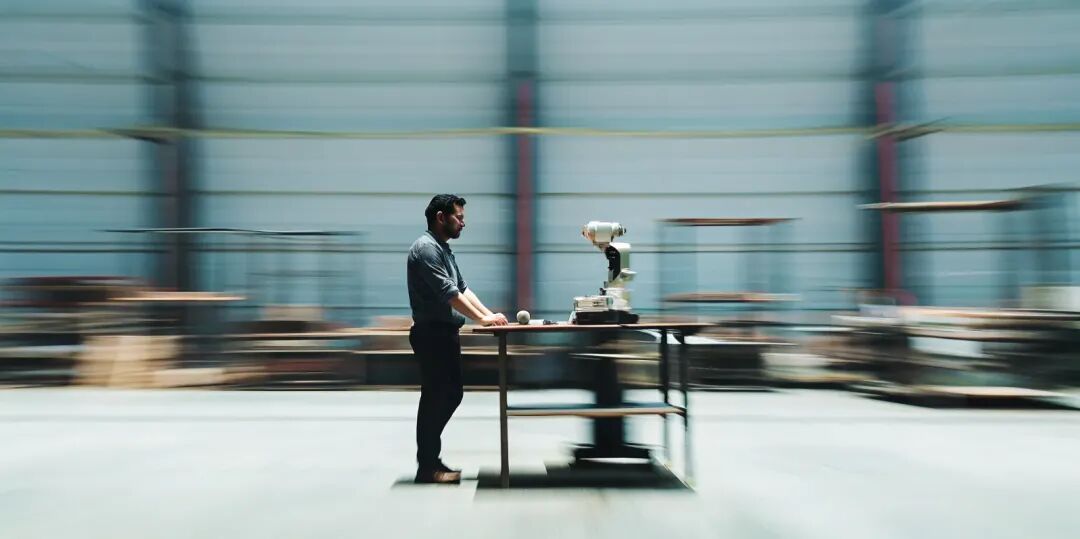
Human workers' roles will be redefined.
The roles of human workers will be redefined.
👦🏻 Podcast interview: Koji, Ronghui
🥷 Edited by: Starry
🧑🎨 Layout: NCon

This year we've covered a lot of consumer-facing Agent products. This week, we're talking about B2B Agents — and there's a good chance Agents will create far more commercial value in enterprise than in consumer markets.
At the end of August, AI Agent was written into the "Opinions on Deepening Implementation of the 'AI+' Initiative" issued by the State Council. Many see this as another pivotal moment for frontier technology to integrate with industries across the board, much like when "Internet+" was proposed a decade ago and transformed our lives through food delivery, ride-hailing, and other Internet+ services.
In the coming weeks, Crossing will publish a series of related content.
This week, we're looking at how Agents are transforming industrial applications. We've invited Xiaopu Wang, founder of startup Jifeng Technology, which developed the time-series foundation model Geegobyte-g1 and the industrial intelligence platform "River Valley," to talk about what time-series foundation models are, how they differ from large language models, and specific use cases. We'll also discuss how they train an Agent and sell it to enterprises for deployment in production workflows. We hope this helps you understand how AI Agents are being applied in industrial manufacturing.
Listen on WeChat:
Listen on Xiaoyuzhou:

Rapid-Fire Q&A
👩🏻 Ronghui
Let's start with a rapid-fire round with Xiaopu. Age?
👦🏻 Xiaopu Wang
Born in 1988.
👩🏻 Ronghui
Alma mater?
👦🏻 Xiaopu Wang
University of Science and Technology of China.
👩🏻 Ronghui
MBTI and zodiac sign?
👦🏻 Xiaopu Wang
Never took a proper MBTI test, but definitely an I — not sure about the rest. Scorpio.
👩🏻 Ronghui
One sentence about your company and product.
👦🏻 Xiaopu Wang
We dispatch digital workers — Agents — to factory clients, replacing human technical workers to manage and control production lines.
👩🏻 Ronghui
Funding status?
👦🏻 Xiaopu Wang
We closed an angel round in the tens of millions RMB right after founding last year, and we're preparing a Pre-A round this year.
👩🏻 Ronghui
Revenue and profit?
👦🏻 Xiaopu Wang
Total order volume is in the tens of millions. Profit margins are relatively high compared to AI companies generally, but R&D investment is also substantial.
👩🏻 Ronghui
Team size?
👦🏻 Xiaopu Wang
Nearly 30 full-time employees currently.
👩🏻 Ronghui
What were you doing before starting this company?
👦🏻 Xiaopu Wang
Before becoming a happy corporate employee, I led an R&D team developing AI + industrial digitalization products and delivering projects. Before that, I did foundational algorithm research, including computational neuroscience and brain science.
Time-Series Foundation Models Aren't Another ChatGPT
👩🏻 Ronghui
Let's start with time-series foundation models. Xiaopu, give us the basics — what is a time-series foundation model?
👦🏻 Xiaopu Wang
Time-series means data recorded over time. We encounter massive amounts of time-series information in daily life — stock price fluctuations, running trajectories, and so on. Time-series data has sequential order and causal relationships: the past influences the present, which in turn shapes the future. The goal of time-series models in AI is to predict what might happen next based on what has already occurred, helping us make optimal or near-optimal decisions.
Time-series modeling has been around for decades — research goes back to the 1970s. It's tightly integrated with everyday life. For example, when you navigate to a destination, it selects routes, avoids congestion, and estimates arrival time — usually quite accurately.
By now everyone is familiar with large language models. They're developed through massive parameters, vast datasets, and large-scale training to achieve generalization — translating text, writing code, and so on. Time-series foundation models share a similar goal: using pre-trained models to perform time-series prediction and decision-making. Once you have a pre-trained model from large-scale training, it can work across industries and scenarios. That's why we're building time-series foundation models.
👩🏻 Ronghui
They're quite different from large language models though.
👦🏻 Xiaopu Wang
Absolutely. While both are foundation models, their training data differs. Large language models train on corpus information, text, and publicly available internet data. Their objective is generation — producing language or images. Time-series models train on data with temporal characteristics. Their objective is predicting the future and generating more reference material for decision-making.
So we often say: large language models "speak with people," while time-series foundation models more often "speak with the future" — making the future predictable, manageable, and optimizable.
👩🏻 Ronghui
Where do you see the widest applications right now?
👦🏻 Xiaopu Wang
Time-series foundation models are extremely broadly applicable. In transportation, they predict arrival times. Summer is peak electricity season — residential power usage follows temporal patterns: people come home and turn on air conditioning at night, workplaces consume more during the day. So grid energy dispatching also uses time-series models for prediction, helping allocate energy where it's needed and stabilize supply. In healthcare, ECG monitoring is another major application.
👦🏻 Koji
You're talking about time-series models in general here, right?
👦🏻 Xiaopu Wang
Yes, time-series foundation model applications. Currently in industry, marketing, and supply chain management, companies domestic and abroad are using this technology to enhance products and add capabilities.
👩🏻 Ronghui
Can you give an example? You mentioned marketing just now.
👦🏻 Xiaopu Wang
For instance, analyzing user behavior requires predicting development trends. Which products will see demand increase from advertising and exposure, which won't — this needs time-series model analysis. At the marketing level, it helps target product promotion more precisely; market placement also uses this "looking into the future" approach to support present decisions.
Going deeper, anticipated future product sales and order volumes also affect factory production scheduling. If a particular shampoo sells exceptionally well, and mint scent might perform best going forward, production orders for mint increase while underperforming variants get reduced. This is supply chain using time-series prediction to pull production planning.
Time-series foundation models serve the same function as time-series models, just at greater scale. Why go bigger? Because larger parameter counts and scale enable better performance across domains without developing small models for each specific area. One general-purpose large model can generalize to solve problems across industries. This is the path toward AGI, and it's the trajectory both large language models and time-series foundation models are following.
👩🏻 Ronghui
What companies domestically and abroad are doing similar work? What results are already close to ordinary people's lives?
👦🏻 Xiaopu Wang
Finance, education — there are applications. In industry and manufacturing, many companies use time-series foundation models. Both startups and established companies, domestic and international.
Abroad, there's a UK startup called Applied Computing, a team from Imperial College London that just completed a seed round of nearly 100 million RMB. Their foundation model Orbital targets energy, chemicals, oil, and petrochemicals in industrial production processes, doing process management, control, and optimization.
Domestically, Huawei has released numerous Pangu large model products and technologies. One branch is the Pangu Prediction Model, or Pangu Time-Series Model, applied to prediction tasks in steel, non-ferrous metals, cement, meteorology, and other fields — this is a very mature application case.
👩🏻 Ronghui
A 100 million RMB seed round — is that typical for the time-series foundation model space?
👦🏻 Xiaopu Wang
That would count as a relatively large seed round.
In recent years, especially in the UK and European context, industrial production concerns extend beyond efficiency to pollution. Whether in China or Europe, countries are focused on how to produce more while reducing carbon emissions and air pollution. This is a crucial derivative topic. So capital's focus on low-carbon industry is a core reason these teams are attracting attention.
👦🏻 Koji
That does have commercial value.
Why Do This?
👩🏻 Ronghui
We've seen media coverage of Jifeng Technology's industrial intelligence platform "River Valley." In previous conversations you mentioned that your core work is essentially replicating factory workers' capabilities onto an Agent — creating a "digital technical worker." That process sounds quite interesting. But first, could you describe for listeners what industrial scenarios you're targeting, to give everyone a mental picture?
👦🏻 Xiaopu Wang
I usually explain this using a familiar reference: the AI + industrial scenario is a bit like J.A.R.V.I.S. from Iron Man. What does J.A.R.V.I.S. do for Tony Stark? He's essentially an all-purpose personal assistant, but one of his most important jobs is helping Stark build the suits.
Say the boss (Iron Man) puts in a request: "I need a suit that can withstand extreme cold and corrosion in space, and here's what weapons I want." J.A.R.V.I.S. then starts designing — everything from the exterior to the movement structure, the power system, and the software. This is essentially AI-assisted industrial design. Many players in the industry are now using large models combined with simulation technology to let AI automatically complete industrial design.
But design alone isn't enough; the suit still needs to be built. So J.A.R.V.I.S. takes control of all sorts of flashy production equipment to fabricate the Mark 3, Mark 4, Mark 5 suits for Stark. Tony himself can go do other things while production runs entirely through J.A.R.V.I.S. This process is essentially production process management and control.
So the key scenarios where Jifeng Technology applies AI are: forming industrial products based on industrial design, with an emphasis on process control. Unlike many companies focused on robotic motion control, we're more concerned with how to manage and control the production process itself. Our scenario is driving production line equipment to process raw materials into the products enterprises need.
👦🏻 Koji
So this is the continuous production domain, right?
👦🏻 Xiaopu Wang
Right. We call it process industry, commonly seen in metallurgy, chemicals, new energy materials, and similar fields.
The J.A.R.V.I.S. example I just gave actually maps more closely to another production model — discrete manufacturing. Take Xiaomi, NIO, or Li Auto's vehicle production: chassis first, then the four doors and two covers, then engine, motor, and so on, assembled step by step. Because there are many models, complex processes, and complicated management (orders, BOMs, raw materials), but the manufacturing processes themselves are relatively simple — that's discrete manufacturing.
The process manufacturing we focus on has a distinct characteristic: once the production line starts, it doesn't stop. Raw materials go in continuously, products come out continuously. It doesn't emphasize planning management, but rather stability, efficiency, and quality of the production process.
In other words, we're not helping Iron Man assemble the suit — we're helping him produce the raw materials for it, like iron, aluminum, copper, those basic building blocks.

👩🏻 Ronghui
When people talk about smart manufacturing, they often describe it as a cost-reduction and efficiency-improvement process. So in the previous approach, what problems existed that require today's technology to solve?
👦🏻 Xiaopu Wang
Speaking specifically of process manufacturing, the processes themselves are extremely complex, often simultaneously involving physical reactions, chemical reactions, and energy inputs — the overall process is relatively unstable. Traditional industrial process solutions tend to fall short in these scenarios.
If you rely entirely on automated production lines to handle complex processes, you run into problems. Automation is mostly rule-based; once production conditions change, it can lead to declining product quality, increased energy consumption, raw material waste, and so on. These issues are very common in process industries.
So how do you compensate for the rigidity of automation? The answer is people. Technical workers bring flexibility — they can react on the spot, combining knowledge and experience to make judgments that fill the gaps in the production line. So in process manufacturing, we've long relied on technical workers to participate in production management and control.
👩🏻 Ronghui
So you're trying to build a "digital technical worker" — that sounds very difficult.
👦🏻 Xiaopu Wang
Yes, but I think it's absolutely necessary.
Human workers' greatest strengths are flexibility, tool use, knowledge accumulation, and communication. A new worker can learn from a master, understand instructions, and apply them on the floor. But humans also have limitations:
- People get tired: in chemical production, for instance, a moment of inattention can lead to serious safety incidents. In fact, much inefficient production happens during lunch breaks or night shifts, when worker fatigue causes attention to drop.
- Knowledge transfer is inefficient: technical worker training mainly relies on apprenticeship, with experience passed down inefficiently and not at scale.
So we hope to use agent + large model to crystallize human strengths, amplify them, and even surpass them. That's the development goal of the "digital worker," and the core value of our product.
👩🏻 Ronghui
So which domains are these digital workers best suited for?
👦🏻 Xiaopu Wang
In the industrial sector, everyone is trying different applications: within industry, different segments are all attempting to use AI to replace existing human labor. Take industrial design — previously dependent on knowledge from design institute experts, now gradually shifting from AI assistance to AI replacement. On the shop floor, technical workers directly participate in production, and we're pushing digital workers to replace them in operations, maintenance, safety, planning, energy dispatch, and other roles — the path is also "first assist, then replace, ultimately surpass."
So it's not targeting a single point, but covering the entire process. Previous automation was often single-point optimization, but local optimization ≠ global optimization. The digital worker's goal is global collaborative optimization of the entire process from raw materials to finished product.
👦🏻 Koji
What's the relationship between your industrial agent platform "River Valley" and your time-series large model?
👦🏻 Xiaopu Wang
You can analogize it to the relationship between general agent platforms and large models today.
The "River Valley" agent platform is a configurable agent workflow platform; our time-series large model is the "intellectual source" behind the key agent nodes in that platform.
👦🏻 Koji
Is this platform open to customers, or do you use it internally?
👦🏻 Xiaopu Wang
This is where our thinking differs from some other toB agent vendors. Industrial scenario workflows involve direct intervention in production processes, requiring professional knowledge and experience to configure parameters, so we believe users would find it very difficult to configure directly.
Our judgment is: in toB scenarios, it's more about delivering pre-configured intelligent agent applications to customers rather than having customers configure them themselves. Because in a factory, it's hard to find a suitable user role to configure an agent.
So why build an agent platform at all? Two reasons:
- Technical value: a single model can't solve for process stability and observability; you need an agent platform to integrate.
- Team efficiency: our 23 full-time employees have to simultaneously support 7 industries and 15 process segments. Without configuration and modularity, we'd be back to customized delivery — too inefficient.
So "River Valley" serves not just technical logic, but our own R&D productivity needs.
This also highlights how we differ from many current toB agent vendors. Industrial scenarios involve direct intervention in production flows, requiring very strong expertise and parameter-tuning experience. My judgment is that most toB agents will eventually be delivered to customers as pre-configured intelligent agent applications, not as self-configuration tools.
The reason is simple: in a factory, it's hard to find a clear configurer. Chief engineer? Process expert? Frontline worker? Who takes this role? If there's no clear answer, it means users don't currently need to configure agents themselves. For us, we handle this part.
More importantly, our team has only 23 full-time employees, yet simultaneously supports R&D and delivery across 7 industries and 15 core process segments — extremely high demands on human efficiency. If we can't atomize industrial processes into configurable components, can't rapidly combine models while guaranteeing generalization performance, we'd have to fall back to traditional customized delivery — very inefficient.
Therefore, we must make configuration possible. For customers, this means reusability and scalability; for us, it directly determines engineer productivity and whether products can launch quickly. This is the logic behind building our agent platform — it aligns with technical trends and with our own R&D and delivery needs.
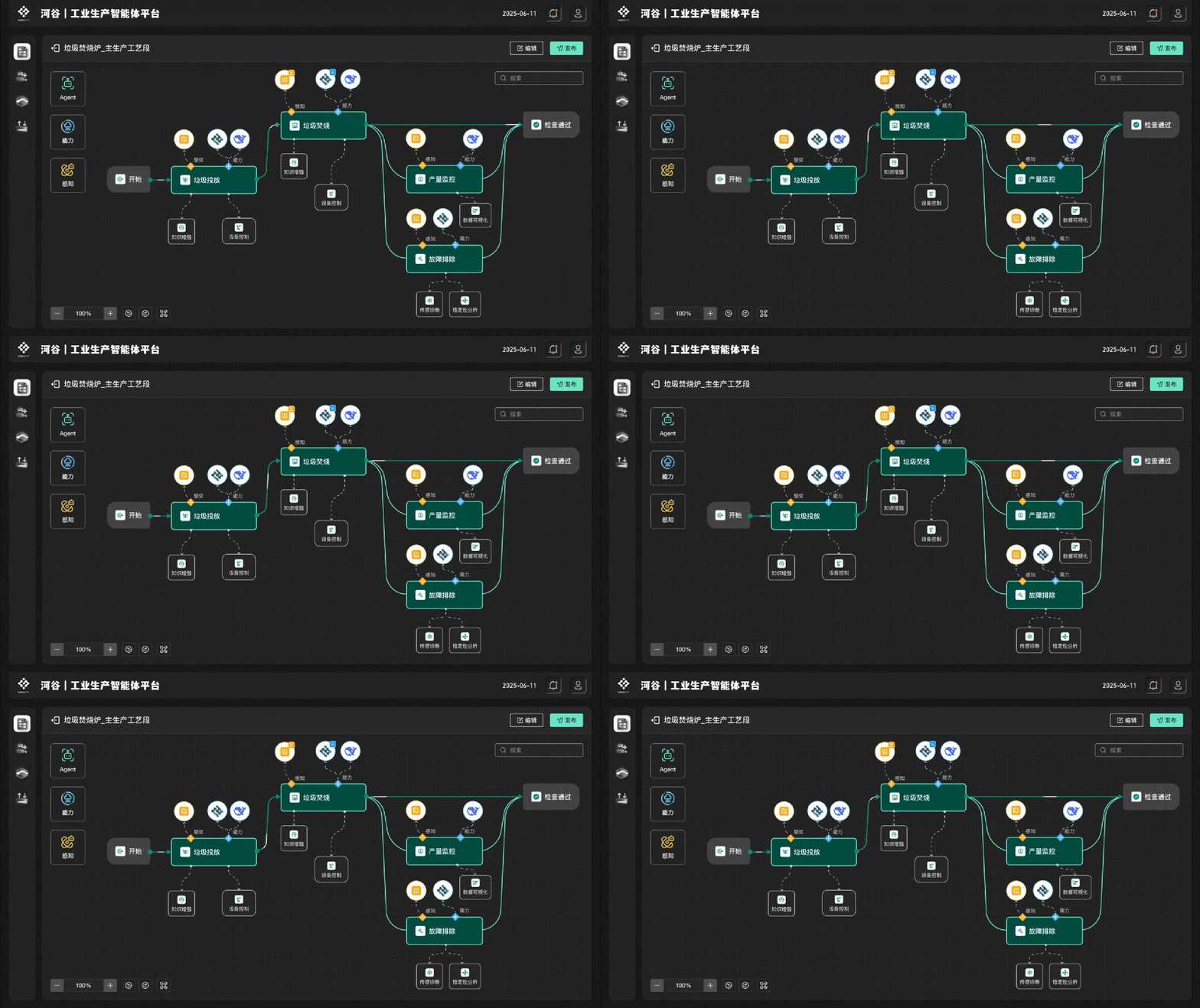
(River Valley Industrial Agent Platform — for rapid configuration and construction of AI agent workflows in factory scenarios)
How Do You Do It?
👩🏻 Ronghui
How do you actually build this "digital technical worker"? For instance, how long does the whole training take? It needs to understand the entire production process, and also internalize the experience in veteran workers' heads — including the mature judgments they make when improvising on the fly. What does this process actually look like?
👦🏻 Xiaopu Wang
To replicate a human worker and turn them into a digital entity or intelligent agent capable of filling a role, you're essentially replicating their on-the-job characteristics. Summarized, humans have four key traits:
First is observation and perception. When a worker starts their shift, the first thing they do is look at production indicators on monitoring screens. Not just data — many factories, production lines, and equipment now have intelligent monitoring, even equipped with high-definition cameras resistant to high temperatures and corrosion that can directly film the reaction process. Workers combine video streams and data streams to assess the situation.
Second is thinking and reasoning. If temperature drops suddenly, or equipment slows down, they need to figure out why. They might recall principles learned in school, or experience passed down from their master, and synthesize these to make a judgment.
Third is decision-making. Once the assessment is complete, they need to decide how to intervene: adjust which parameter? Stop which equipment? Activate which segment?
Fourth is execution. Humans' greatest trait is being decisive and acting on it. Workers directly intervene in equipment control loops through upper-level control systems and lower-level electrical systems, affecting production actions.
So what we need to replicate are these four actions, and their corresponding cognitive flows and behavioral logic. It's like building a "brain" for the digital worker, with different "brain regions":
- Knowledge and language processing: handled by the large language model, fine-tuned for specific scenarios so it can parse industrial knowledge, understand information, and generate instructions.
- Pattern recognition and prediction: handled by the time-series large model, responsible for causal reasoning, numerical response, and future condition prediction.
But a "brain" alone isn't enough. Human behavior patterns are closed-loop, so we need agents to organize the workflow:
- Memory: short-term memory records what happened yesterday; long-term memory stores experiences from months ago.
- Controllability and interpretability: through agent workflow, the input and output of each segment are observable, so when problems arise, you can pinpoint causes.
Ultimately, we use an agentic workflow to express a digital worker's routine work process — only then do you get a true digital worker.
(Jifeng Technology's minimalist AI Agent workflow interface — client side)
👩🏻 Ronghui
During development, do you ever clash with the veteran workers?
👦🏻 Wang Xiaopu
Veteran workers make up only about 6.5% of the total workforce. They've had higher education, mostly in process engineering or electrical automation. They have strong technical understanding — there's no "not getting it" problem. As long as you explain the logic clearly, they're generally open-minded and can recognize the value.
But communication between people has distance; no one pours their heart out right away. So when deploying our product, we don't over-rely on interviews. Language always loses information. If you try to replicate operations purely through conversation, you end up with an operations manual — and you're back to rule-based approaches.
So we focus more on the patterns within the process itself. Combustion, electrochemistry, polymerization, hydrogenation, cracking — these all come back to first principles of physics and chemistry. At the same time, we rely on data — data doesn't lie. The responses from factory production lines are real. We use the evolution of data as a powerful fulcrum to form the initial version of the digital worker.
The veterans' experience certainly has value, but that value manifests more in the short-term and long-term memory after the digital worker is deployed — used to gradually correct and improve.
👦🏻 Koji
How exactly is this implemented?
👦🏻 Wang Xiaopu
What we just discussed is the growth problem of agent products. After deployment at a customer site, it must have a continuous growth process, not just stay at its initial state. This means the agent needs accumulation of long-term memory, just like a person gradually maturing.
Actually, our own product has gone through a process from early exploration to gradual maturity. Back around 2023, when the "agent" concept hadn't even been proposed yet, many foundational large model companies were directly building end-user applications on top of large models — things like "generate a PowerPoint for me" or "translate this paragraph." The results were often unstable: mediocre PPT quality, translation lacking polish. We went down a similar path at the time, connecting time-series large models and large language models to existing information systems, producing results through multi-input, multi-output approaches.
But we quickly found limitations: this approach faced the same predicament as foundational large models — uncontrollable results, uncontrollable quality, black-box decision-making with no clear workflow. In industrial scenarios, this uncertainty is completely unacceptable. And early on, lacking Chain of Thought (COT), the decision process was neither observable nor adjustable. You gave it something, it gave something back — hard to optimize.
So we introduced agents to solve this. The first breakthrough was improving observability. At every step, what the agent is thinking, what it's doing, what it's basing decisions on, what it might do next — all of this can be displayed through natural language interaction. The second was growth. Now many agent Infra companies are focused on memory — how to store and manage an agent's short-term and long-term memory. This is especially important in industrial scenarios.
Human growth isn't static. The capabilities of someone just starting out are completely different from someone with several years of experience. Digital workers need this kind of growth too. They need to learn to filter from short-term memory — what to retain to improve near-term performance, what to convert into long-term memory to guide future work.
👦🏻 Koji
So how do you do it?
👦🏻 Wang Xiaopu
At first we tried some general agent memory solutions, including open-source ones, but found in practice they couldn't fully meet our needs. We deal with time-series data streams, which aren't the same as language model memory patterns. So we chose to build on top of some mature open-source frameworks, doing customized R&D specifically to solve short-term memory retention and long-term memory conversion.
Currently we retain some key recent events and convert them into long-term memory to guide workflows. It's not fully mature yet, but it already meets our current needs. In the future we hope to collaborate with more specialized agent Infra companies in the industry.
Industrial scenarios have different memory requirements than internet applications. We don't have high demands for network stability, sandboxing, concurrency — our environment is mainly industrial Ethernet. But we care intensely about "memory":
First, memory must be effective, with reasonable conversion between short-term and long-term;
Second, memory must be visibly manageable.
Right now, many large models' memory is black-box — you don't know what it remembers. In industry this is dangerous, because it might remember things it shouldn't. So we pay close attention to visual management of agent memory. This is an important direction for future product optimization.
Another key focus is multi-agent collaboration. In factories, workers need to call each other, communicate, make decisions together. Similarly, agents must collaborate too. But industrial scenarios have special requirements: they can't rely on "voting" for decisions like general scenarios, because the latency is too high — production lines need millisecond-level response.
So we use a "centric agent" model. A core agent coordinates, with execution agents cooperating to complete tasks. This ensures timeliness while maintaining accuracy, safety, and stability in decision-making.

👩🏻 Ronghui
You mentioned agent growth. If we analogize to human growth, people grow through practice and learning. But before delivery, it can't practice — how is this solved?
👦🏻 Wang Xiaopu
This is where the value of first principles comes in. The reason our company's delivery model emphasizes large models is because large models have extremely strong generalization capabilities. Our goal is process-level generalization.
For example, before going to a customer's site, I'll first understand what your core process is. Currently we cover processes including combustion, metallurgy, new energy, chemicals, and more. For instance combustion reactions, electrochemistry directions (non-ferrous metal electrolysis, water electrolysis for hydrogen), synthesis and polymerization processes — these have wide applications in materials and chemicals.
So before the model "starts work," its long-term memory isn't targeted at one specific factory, but comes from accumulated experience in similar or identical process scenarios. In other words, its knowledge comes from cross-scenario, cross-industry long-term memory. This is like a medical student studying various subjects in university, then entering different departments for internships. Through this approach, we enhance the model's generalization across identical processes at the first principles level. This is also the core significance of time-series large models: being fully prepared before entering the customer site.
Another significance lies in solving the data scarcity problem in industry. Large language models can crawl massive amounts of text, but industrial data can't be obtained this way. For example, waste incineration or chemical ammonia synthesis — if you rely solely on one factory's data accumulation, the cycle might be 6-8 months, with extremely poor cost-effectiveness. Industrial data is scarce and hard to centralize, so we must maximize use of existing data, abstracting them to the first principles level. For instance, metallurgical process combustion data and waste incineration combustion data can both serve the same baseline model. This is also the core reason we build large models.
👩🏻 Ronghui
But are veteran workers really willing to hand their experience over to a model? After all, it might replace their jobs — why would they teach it?
👦🏻 Wang Xiaopu
First, we don't rely on veterans' oral experience as a basis for modeling — this is fundamental logic. Because in the same scenario, Master A, Master B, and Master C might say completely different things, with conflicts. So we rely on first principles and actual data, not on masters passing down experience.
But the ultimate users of our product are indeed these frontline workers, so we must consider their acceptance. A good toB agent product should naturally embed into workers' workflows, not impose high learning costs on them. The problem with many toB large model products is that users need to learn prompts, build workflows — the barrier is too high for frontline workers and managers.
Our approach is "shadow running." Initially, the digital worker doesn't directly control equipment. Like an intern, it stands next to the master, watching the same screens, hearing the same data, and giving decision suggestions. The master judges whether it's "basically reliable" through comparison. Over time, the system gradually switches to actual production, but the master still supervises throughout, sitting at the post as before — just without needing to manually operate.
Gradually, workers find the system runs stably, their attention naturally decreases, they slowly entrust trust to the digital worker, even going to handle other work. This process smoothly integrates the digital worker into daily workflow, with no additional training cost.
So we've never encountered workers complaining that it "brings trouble." On the contrary, they feel more relaxed and efficient. This is the true value of a toB agent product.
👩🏻 Ronghui
Then if errors occur during the initial trial run phase, whose responsibility is it?
👦🏻 Wang Xiaopu
This is a question of responsibility attribution. Management rules at industrial sites are extremely strict. Unlike autonomous driving where responsibility boundaries are fuzzy when accidents happen, in industrial scenarios every step has clear records and traceability mechanisms.
Our agent completely records its thinking process, decision results, and actuator feedback while working. Production-side rules have strict management systems, and we have clear responsibility boundaries to determine which link had a problem. Meanwhile, industrial sites have safety instrumented systems and equipment fuses as fail-safes. So far, there have been no serious accidents caused by digital workers. Even if problems occur in the future, there will be clear responsibility division and attribution mechanisms.
👩🏻 Ronghui
As you said, the end users of digital technical workers are the veteran masters, but the ones paying are the factories. But a classic toB problem is: "the person you're selling to isn't the one who ultimately uses the product." How do you sell to factories?
👦🏻 Wang Xiaopu
Indeed, the decision-maker isn't the end user. During the 2025 Spring Festival, DeepSeek exploded in popularity. Everyone was discussing large language model capabilities, and industrial customers were all paying attention too, wrapped up in this breakout news. So in early 2025, large numbers of factory enterprises were seeking ways to solve production problems using domestic large language models.
Many of our clients had already purchased integrated hardware solutions — Huawei Ascend computing platforms bundled with DeepSeek — before coming to us. But after actually deploying them, they found that while use cases like enterprise knowledge graph construction, automated meeting transcription, or repetitive chart generation for finance teams were helpful, they hadn't yet felt any direct impact on their bottom line.
So when these clients first reached out, they pigeonholed us as just another large model vendor, roughly equivalent to someone selling integrated hardware boxes or knowledge graphs — all lumped together as "the AI and LLM crowd." They assumed we were there to solve those same problems. Initially, they weren't exactly resistant, but they were skeptical about efficacy. Their unspoken question: "Is this just a showcase project, a vanity project for leadership, rather than something truly integrated with production?"
That's why the most important thing we do on site isn't telling decision-makers and managers that we're a large model company or an agent company. We tell them: we're here to solve actual production problems. We need to flip the purchasing logic from a cost center to an investment logic — you invest in this "digital worker" product, when do you recoup your costs? And not just break even, but keep generating returns. Most enterprise decision-makers think in terms of ROI; that's their fundamental management logic. So throughout the engagement, we need to communicate in those terms.
👦🏻 Koji
You mentioned DeepSeek just now — what base model are you currently using?
👦🏻 Wang Xiaopu
We've used DeepSeek, and we've also used Qwen. We primarily rely on large language models to process unstructured documents — things like daily work reports, process package documentation — deconstructing them into structured information to support production-line decision-making and reasoning.
We care deeply about two things:
First, semantic understanding and output quality, especially professional accuracy. Hallucinated answers are unacceptable; the client experience would be terrible.
Second, stability of small-parameter models. Our terminal hardware has limited VRAM, so we can only run quantized versions — 4-bit or 8-bit models.
We currently use Qwen 14B and smaller-scale DeepSeek models frequently. These models don't have massive parameter counts, but as long as they're stable and reliable on target tasks, they meet our needs well. That's our core expectation for large language models.

👦🏻 Koji
Then for the core temporal large model in your production process — did you train it completely from scratch, or is it based on open-source models?
👦🏻 Wang Xiaopu
Research on temporal large models started gaining attention around 2021. The earliest representative was Informer, followed by Google's TimesFM, which was mainly applied in retail, electricity, and other scenarios for zero-shot transfer forecasting. A Tsinghua University team also released TIMER-XL earlier this year, with strong performance in weather and energy domains. Essentially everyone is building variants based on Transformer architectures.
We've drawn on these academic achievements. But industrial data differs significantly from data in finance, transportation, energy, and other domains. Industrial processes are often large-lag systems. For example, when you set your air conditioning to 24°C, the temperature doesn't reach it immediately — it drops from 26°C to 25°C, then to 24°C. Once it hits 24°C it might feel too cold, so you adjust back up. This kind of lag is extremely common in industry.
Therefore, the model must be able to capture features and correlations across time series, handling situations where multiple variables and slanted variables intertwine. This places very high demands on vertical domain adaptation. We reference the design logic of existing open-source models, but ultimately we have to combine the characteristics of industrial scenarios and train our own temporal large model from scratch. That's the direction of our current G1 model R&D.
What Results Have You Achieved?
👩🏻 Ronghui
You mentioned waste-to-energy incineration plants just now — could you use them as an example? For instance, how did you sign the contract with them? What was their situation before using your product? And what changed afterward?
👦🏻 Wang Xiaopu
This industry might feel somewhat distant from daily life, so let me first explain what they do. Municipal solid waste in China is basically no longer landfilled; instead it's incinerated, converting the waste's calorific value into electrical energy. From waste to temperature, from steam to turbine, ultimately generating electricity that becomes part of the energy we use every day.
The reality is that there's not enough waste to burn. The power grid needs stable supply, so the driving force for waste incineration enterprises is how to burn waste thoroughly enough to convert every bit of calorific value into energy. This means they'll collect all kinds of waste to burn.
But because waste sorting in China isn't strict enough, most waste is burned mixed together. Kitchen waste has very low calorific value, while construction debris has relatively high calorific value. The weight of waste fed into the incinerator each day is the same, but the calorific value fluctuates enormously.
For these enterprises, the pain point is how to organize and control the combustion process given daily fluctuations in calorific value — burning the waste completely and thoroughly, converting more of it into energy. Waste incineration is just one stage in the power generation process, but this stage involves large numbers of operators, energy administrators, safety officers, and other personnel, working in four-shift rotations — very labor-intensive.
So the industry's core problems are two-fold: first, can we reduce dependence on manual labor and free up human work hours; second, can we convert limited waste into energy more efficiently.
After clients come to us, we bring our combustion-focused temporal large model G1 to the site as a baseline model, then adapt and fine-tune parameters based on a small amount of new data to match actual operating conditions. Because parameter ranges differ across scenarios, you can't directly apply the original model. For example, we previously worked on natural gas and coal gas combustion where the feedstock was stable; but waste combustion has highly variable feedstock, requiring additional adjustments.
Although our team had no prior experience in waste incineration operations, within less than three months our first AI worker was deployed and running stably. The "worker" here refers to an AI agent — it can handle routine conditions as well as temporary emergency situations. A position that previously required four veteran workers in rotating shifts is now covered by one agent on 24/7 duty. The client calls this "unmanned operation," but we prefer to call it "digital worker on duty."
Currently the agent's online rate exceeds 99.9%, requiring virtually no human intervention. Because it doesn't rest or get distracted, incineration efficiency is higher. Main steam flow per ton of waste has increased by 5% — in industrial terms, that's a very significant improvement.
Converted based on power generation volume and grid electricity prices, this adds 4–5 million RMB in annual revenue for the client. Beyond labor reduction, this brings them additional profit, so the collaboration has been very positive. They've also made repeat purchases, buying more digital workers to gradually cover various positions.
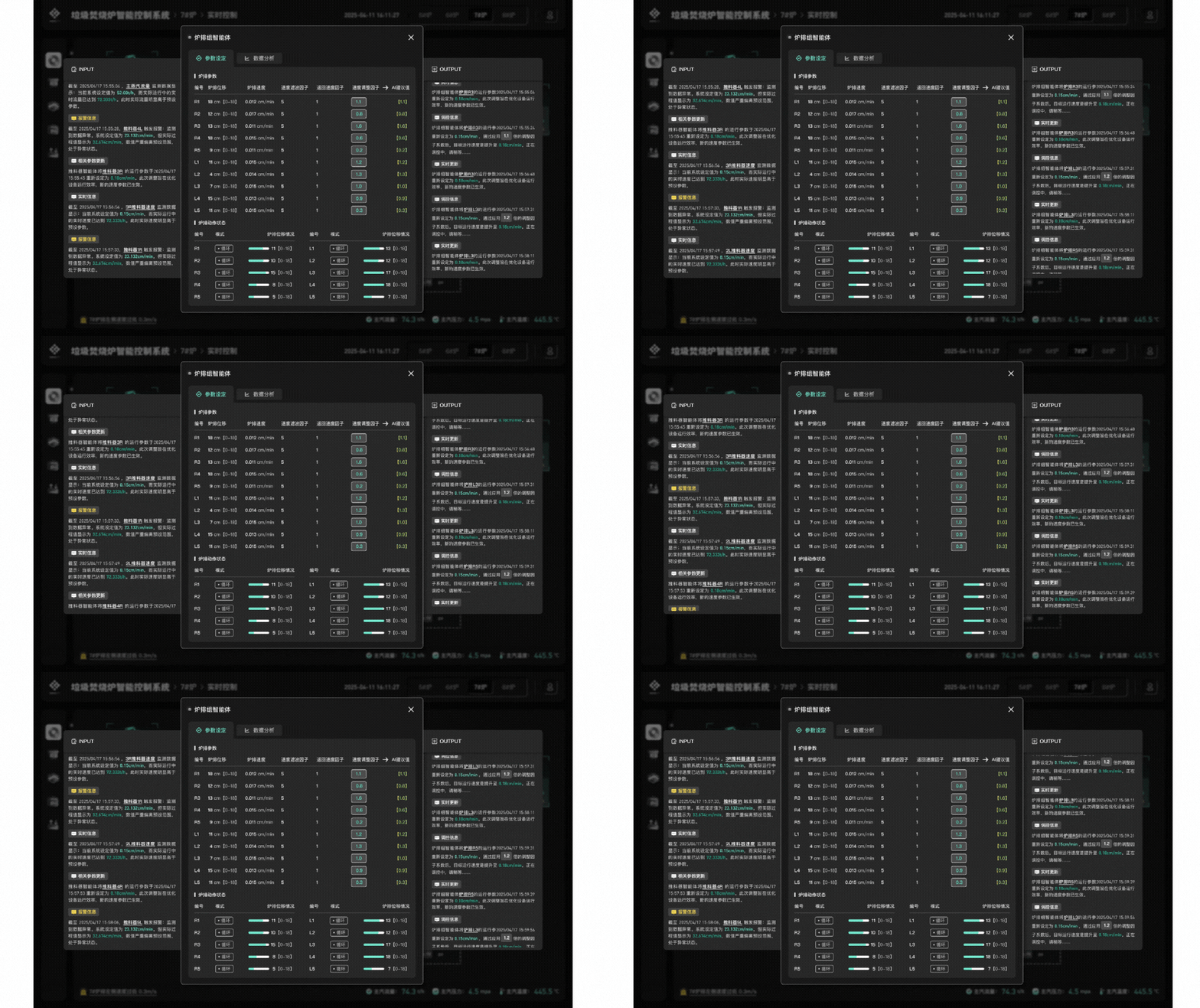
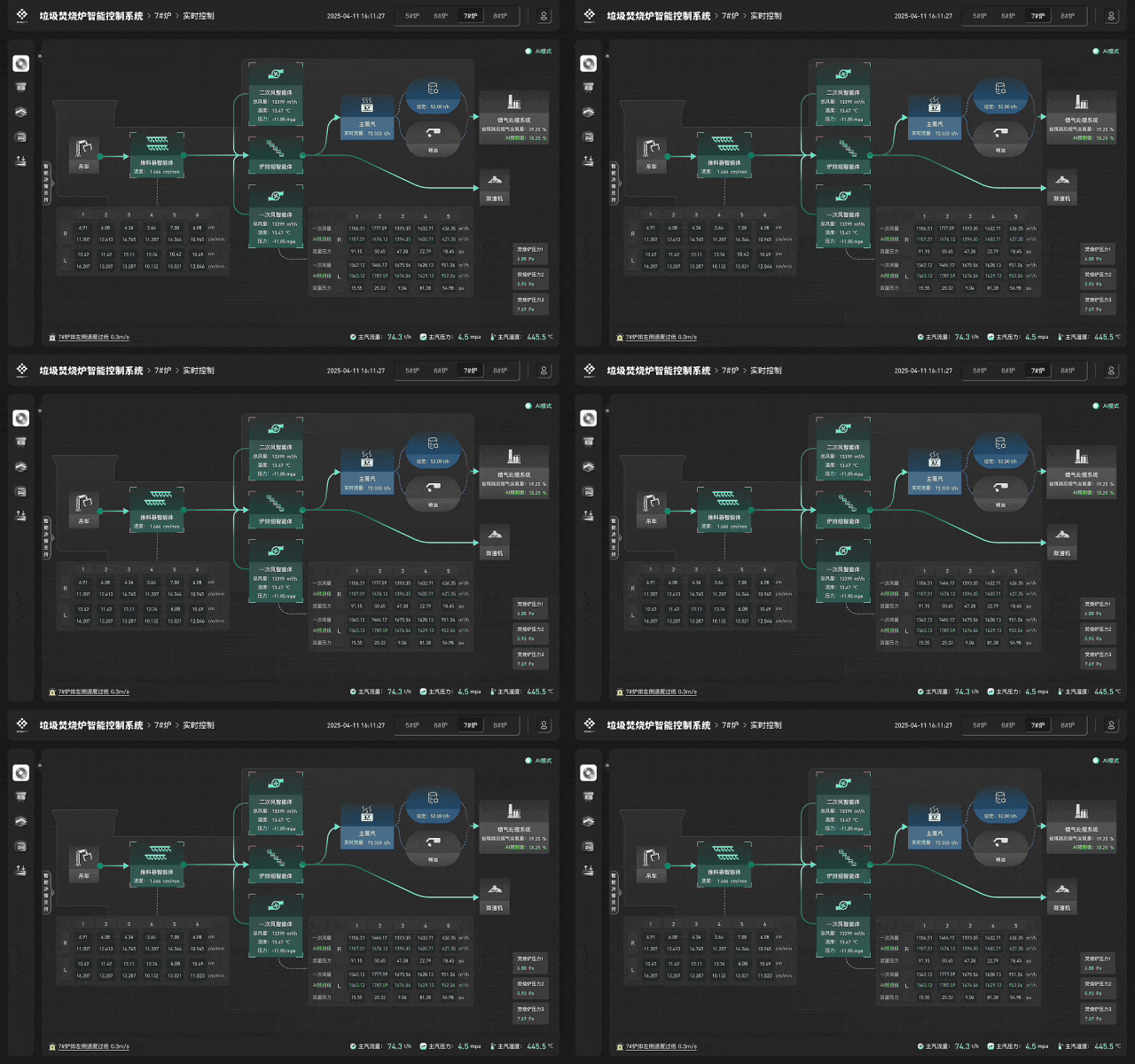
(Jifeng Technology's agent imitating human worker reasoning process: expert knowledge reserves in the center, with information acquisition through decision output on left and right)
👩🏻 Ronghui
The four workers you mentioned — does that mean one digital worker replaced four people?
👦🏻 Wang Xiaopu
Yes. Continuous production runs around the clock, requiring manual shift changes — typically one position needs 3–4 workers rotating through shifts. But digital workers don't need shift changes; they can provide complete coverage.
👩🏻 Ronghui
Have you observed the reactions of those veteran workers watching your digital worker operate?
👦🏻 Wang Xiaopu
We have. Skilled workers have a certain level of professional discernment; they'll evaluate the digital worker professionally, much like a master appraising an apprentice.
I remember at one chemical plant, we were still in the "shadow running" phase — the digital worker was in its probationary period, with decisions requiring validation. One of our team members had a computer science background and knew nothing about chemical production; he was just on-site debugging the shadow-running terminal GPU. But in the client's eyes, he represented our company — he was the digital worker's "boss."
One time, a veteran worker directly challenged him to operate, saying "Aren't you guys supposed to be so impressive? You do it." He was extremely nervous, because chemical production equipment is expensive and involves safety risks. But we believed in our product, believed the agent's decisions could ensure production safety and stability. So he sat at the control panel and manually operated the equipment based on the agent's reasoning results, going four straight hours without drinking water or using the bathroom, so tense he was practically frozen.
At first, the veteran worker was standing behind him supervising, worried something would go wrong. Later the veteran worker stepped out for a smoke, and our colleague quietly messaged on internal chat: "The master's gone, it's just me, I'm so scared." We reassured him: "Don't panic, hold steady." Four hours later, he successfully handed off his shift.
This was quite interesting, and made us feel that the veteran workers' scrutiny of the digital worker is the most rigorous test of all. Once you earn their trust, they tend to become very supportive of us.
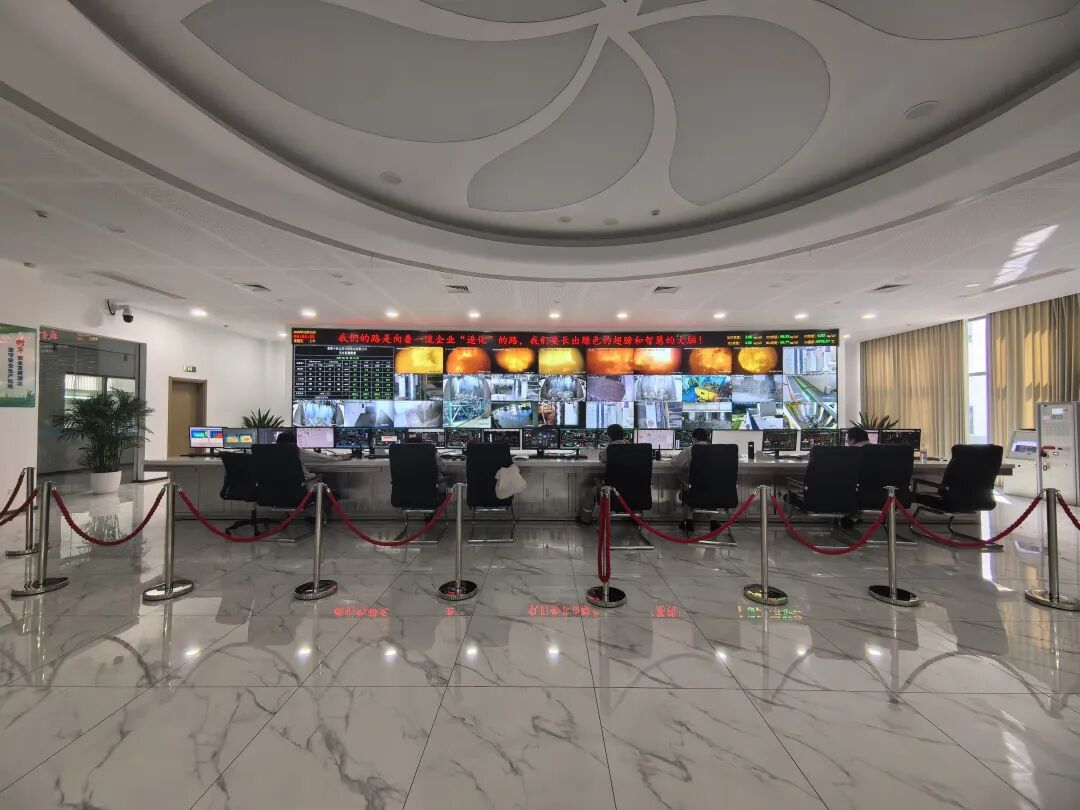
(Jifeng Technology AI Agent operator at waste incineration plant client site — the center screen on the desk shows the AI technical worker operating interface)
👩🏻 Ronghui
I'd like to ask a question about sales. How is selling digital workers different from traditional toB product sales methods? I understand that for some toB companies, typically you first identify the key decision-maker, they'll give you a pilot project, you produce results first, then gradually push forward. How do you do it? In the AI era, what changes in sales approach when selling digital workers to industrial enterprises?
👦🏻 Wang Xiaopu
I think there will be major changes. It's not just digital workers — the agent product form itself will bring changes to toB sales business models. This is closely tied to the product's technical boundaries, form factor, and service model.
There was previously a concept called RaaS (Result as a Service), where results themselves are the service. For example, generating a PowerPoint, image, or video for you — if the result meets expectations, you pay. Validation in these scenarios is quick. But in industrial contexts, evaluating results is far more complex.
Take process optimization products or equipment — how do you rigorously demonstrate how much energy savings or capacity improvement it delivered? When clients pay, they need scientific causal论证. But in reality, outcomes often have multiple causes — for example, capacity improvement might be due to purchasing better raw materials, not entirely attributable to our product.
So RaaS is very difficult to implement in industrial scenarios. Our business model is closer to a "labor logic." Human workers receive monthly salaries—as long as they're on duty and meet their KPIs, they get paid. Mapped to digital workers, this becomes "online service time." This is absolute and undeniable. When a digital worker is on duty, we can bill for their hours.
Moreover, a digital worker's wages are certainly lower than the combined wages of the 3-4 workers it replaces, making it financially easy for enterprises to accept. This logic ensures controllable costs for clients while allowing suppliers to sustainably recoup returns, making it easier to land deals.
👩🏻 Ronghui
Do you think this model will be widely adopted by the industry?
👦🏻 Wang Xiaopu
I believe so. For clients, the upfront investment is low and the risk is small—they don't need to throw in 1 or 2 million upfront to retrofit systems and wait for results. For us suppliers, it guarantees stable, recurring revenue. It's a balance point between client and supplier. If it can be scaled, it will become industry consensus.
👦🏻 Koji
Are there competitors now?
👦🏻 Wang Xiaopu
There are competitors in practice, but they take different forms. For example, traditional industrial automation companies—familiar names like Siemens, Honeywell International Inc., Schneider, as well as well-known domestic players like Zhejiang University's Supcon and HollySys. These companies have been deeply rooted in industrial automation for many years, pioneers of many technologies, and are also seeking technological evolution and product iteration.
From their perspective, the industrial process management and control solutions they provide are more dominated by advanced process control technology—a different product logic. Their goal is to make electrical automation control more automated, precise, and efficient, not to replicate a human being. The interface they manage is the one originally covered by automation, a complete solution set.
Another category is the general-purpose platform players familiar to everyone, like Huawei Cloud and Alibaba Cloud. Taking Huawei as an example, when providing overall solutions for industry, they not only have the Pangu large model, but also S-layer modifications to the Ascend computing platform. I can sell computing infrastructure, or sell the Pangu large model R&D platform, then do joint construction based on your actual applications, or bring in ecosystem partners to help you. They don't just do production process management and control, but also enterprise operations management optimization, providing full-suite services.
For enterprises, if they want to do overall intelligent transformation driven by large model technology, especially factory clients, choosing this path is better. In terms of influence and technology coverage, the advantages are obvious. But if it's just solving a specific problem on the shop floor, doing it in a targeted, vertical way, then choosing us would be faster, more cost-effective, with better ROI and faster returns.
The third category is large model agents we've encountered, including startups. For example, StepFun, 4Paradigm which is transitioning, as well as industry-renowned names like MiniMax and Zhipu Qingyan. We don't consider them competitors on the same battlefield, because they use general agent platforms to empower enterprise operations management.
👦🏻 Koji
So enterprises could adopt them, or adopt you?
👦🏻 Wang Xiaopu
It depends on which problem you're solving. If it's office-level group operations management optimization—like supply chain optimization, industrial design optimization, knowledge base construction—these lean toward where general agent suppliers have more advantage. This is outside the workshop.
If you want to solve problems inside the workshop, our products can solve problems they can't. Because it requires direct interaction with production lines, dealing with electrical automation and equipment, the agent platform affects production process management and control. At this point clients will naturally choose our products. Because those products can't solve it, so this is an interface mismatch problem. They can't be called competitors, only suppliers working in the same direction.
What about the future? Will AI bring industrial revolution-level change?
👩🏻 Ronghui
Going forward, what fundamental changes might happen to how work is done in your field?
👦🏻 Wang Xiaopu
We're talking about reorganization of the entire production process. I think our product will bring a very big change. Originally, division of labor in the workshop was very clear: process experts were responsible for design, process technicians were responsible for managing and controlling the production process, and machines were responsible for automated execution—this was the traditional production organization form.
If digital workers can be embedded into this production landscape, future production organization forms will change dramatically. The dynamic management and control processes that previously required workers to complete mechanically, repetitively, and with high attention every day will be taken over by digital workers.
Human workers' positions will be redefined, from simple managers and operators to designers, supervisors, and innovators. This is a very big transformation. Technical workers were already scarce; they will be placed in positions requiring more creativity, bringing very big changes to industry.
For example, we have a client that does hazardous waste disposal. Hazardous waste is polluted, dangerous waste generated during industrial production, including medical pollutants like bed sheets, needles, etc., that need to be disposed of. Some are directly destroyed, some are used as raw materials to produce other things. This client extracts elements from hazardous waste, does elemental recombination, and produces products. They mainly produced ammonia water, but recently iodine prices are high and market demand is strong, so they want to produce iodine.
To do this, technical workers need to research how to extract iodine from hazardous waste, and purchase equipment to form a production line to produce it. Without human workers involved, they would miss this opportunity and lose profits. But if human workers are freed up to invest in the R&D process as experts, the incremental revenue for the enterprise is very substantial. This is a local change.
At a bigger level: today we're talking about one digital worker working at one station; tomorrow if we continue R&D, multi-agent collaboration becomes possible, more digital workers effectively collaborating in the factory, and coverage will become increasingly broad.
In the future, if industrial network security and production safety are guaranteed, with upstream and downstream of an industrial chain connected by digital workers, the response process will be faster. For example, if terminal sales need a certain product, every upstream production factory can promptly adjust production plans and capacity, strengthening production. The change brought by this kind of connection may be industrial revolution-level change.

👩🏻 Ronghui
Then what do you think college students should study in this field?
👦🏻 Wang Xiaopu
Actually, I think the national education system has responded very quickly. We previously communicated with many universities and found great innovation in higher education curriculum design. For example, chemical engineering has opened a new disciplinary direction—intelligent chemical engineering. Students not only learn chemical engineering process knowledge, but also big data and AI technology, combining these technologies into process design, production line design, equipment design, and production process management and control.
This way students learn comprehensive, interdisciplinary knowledge. Entering the workplace in the future, they'll be like today's software development engineers. Our software development colleagues already extensively use code Copilots, even some code generation tools. Similarly, industrial technical workers will gradually learn to use large model products like digital workers to help them complete daily work, assist and free them. I think this is the future development trend.
👦🏻 Koji
If there are high school friends listening to our program, or friends whose children are in high school, when filling out applications they can pay more attention: today some disciplines are already very tightly integrated with AI. Consider going to more advanced schools to study, and you may be able to access AI and the future earlier than others.
👩🏻 Ronghui
To get a bit personal—if you time-traveled today, already knowing what happens in the future, back to when you were in college, at the University of Science and Technology of China, what biggest change would you demand of yourself? Or, what is the one thing you would definitely tell your past self to do?
👦🏻 Wang Xiaopu
I think now as an entrepreneur, in the company I not only do technology R&D and management, but also overall enterprise operations management. As a CEO, a very important capability is being able to articulate requirements, describe requirements, and refine requirements. This is needed whether using large models to write prompts or assigning work to employees. This capability is best cultivated starting from school.
Before doing research, before wanting to get results, you need to be able to clearly describe what the essential requirement of something is, and perceive its first principles. I think this is something all young people need to have in the future.
👩🏻 Ronghui
Last question—what new reflections has this entrepreneurship brought to your future work, or more broadly to life, in this AI era?
👦🏻 Wang Xiaopu
First, some changes in thinking about the industry. Previously we did industrial informatization and digitalization products and projects for a long time. In this process, our perception of industry clients was: bring a completely new product, and have clients adapt to, learn, and use it. But this process has difficulties, especially with large B-end clients, where there are cognitive barriers or thresholds, so the process isn't smooth.
But after this entrepreneurship, I found that the agent product form is relatively flexible. In process configuration, function configuration, and the generalization and model adaptability as a thinking hub, it's better than the informatization software of the previous era. On this basis, product logic needs to shift—not having clients adapt to the product, but having the product adapt to clients, integrating into clients' own professional workflows.
This is also a trend we've seen in B-end products over the years, especially for agent products. In the future, our relationship with clients is no longer a simple甲方乙方 relationship, but a symbiotic relationship. The more the product is used, the more it fits actual work, the better it becomes to use. This is a relatively big change in my industry cognition during the entrepreneurship process.
For me personally, during my first entrepreneurship, many seniors told me that the advantage of startup teams is to deeply cultivate one industry, do it thoroughly, form high barriers, and make large enterprises unable to threaten your product company. But in practice I found that vertical domain focus is certainly necessary, but you can't only focus on one industry. Otherwise you'll be affected by industry development patterns. For example, if serving Industry A long-term, if Industry A declines, the company's risk resistance is very poor.
So while focusing on one type of scenario problem, you need to leverage large model and agent product capabilities to maintain generalization and flexibility across different industries and scenarios with the same processes. I think this is a new cognition for toB agent enterprises, especially startups. Picking the right industry is important, but you can't just burrow into one industry and never come out, not looking at others. The product logic of agent products or large model-based products itself should take generalization capability as an advantage.
👦🏻 Koji
Like when Wen Jiabao came to Beihang University to inscribe for students: "Be down-to-earth, yet look up at the stars."
👦🏻 Wang Xiaopu
Yes, that's also a capability.
Another aspect is embracing more agent products. For example, at our company, our pre-sales team and product design team — from Canva to Figma to all kinds of AI plugins — we basically adopt them all. Silicon Valley often talks about "one-person companies," where one person wears many hats. It's the same for our team of 20-plus people; everyone needs to be a generalist.
Whether it's pre-sales, product design, R&D, or company management, everyone is aggressively experimenting with exploratory products, including agent products. So I think the organizational form of companies will definitely change in the future — no longer clear role divisions, but blurred boundaries. This will also bring new thinking to company management. That's all for now.
👦🏻 Koji
Thanks for sharing, Xiaopu. Welcome back to "Crossing" anytime.
👦🏻 Wang Xiaopu
Sure thing, thanks for having me.
Appendix:
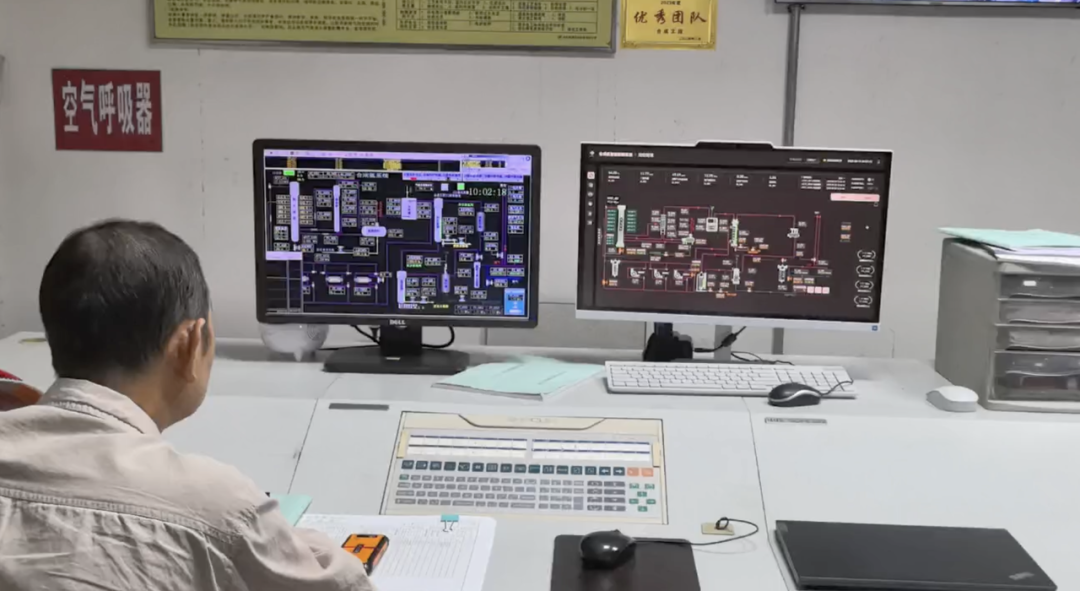
Jifeng Technology AI Agent operator deployed at a synthetic chemical client's site
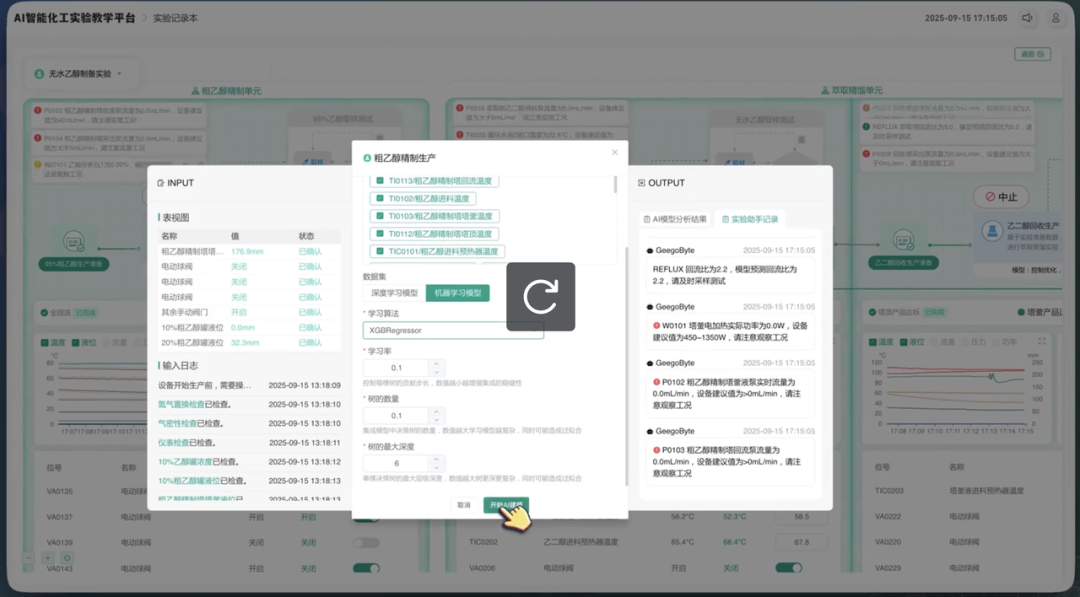
Jifeng Technology AI Agent process expert applied in ethanol production
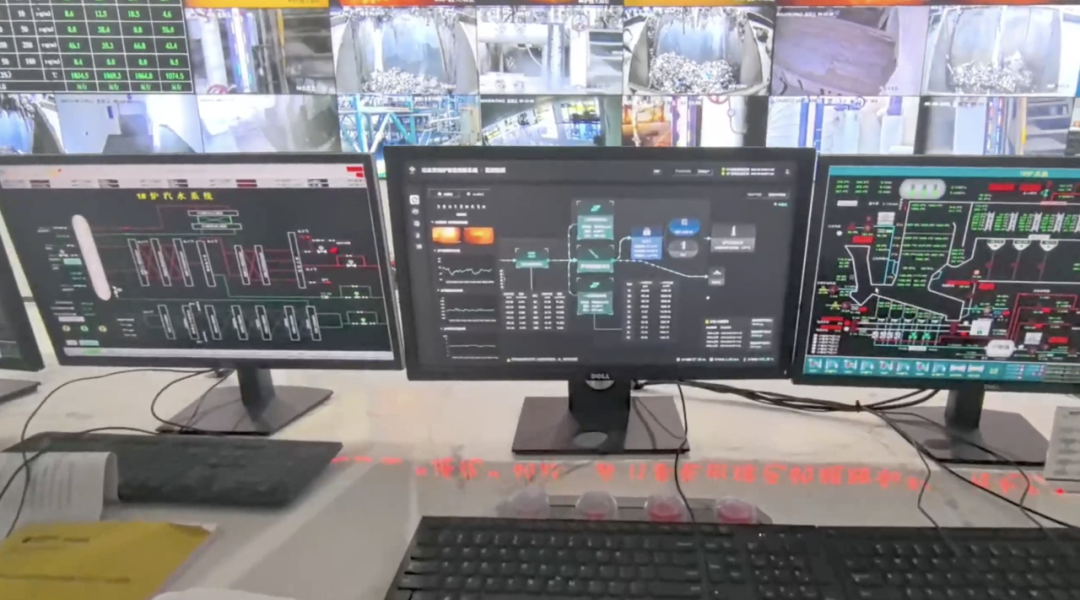
Jifeng Technology AI Agent operations expert applied in combustion scenarios
🚥