Tencent Bets on an AI-Era Social Gateway With Another Billion-Yuan Red Envelope Blitz — We Tested Yuanbao's "Send" Feature
The Yuanbao Faction: Tencent's Place in the AI Era.
Yuanbao Party: Tencent's Bid for the AI Era Sweet Spot.
👦🏻 Author: Jingshan
🥷 Editor: Koji
🧑🎨 Layout: NCon

At Tencent's annual meeting on January 26, Pony Ma mentioned Yuanbao Party and said something notable: "I hope we can recreate the magic of WeChat Red Packets."
One billion yuan in cash red packets, with individual prizes reaching up to 10,000 yuan. The number alone grabs attention. After midnight on February 1, Yuanbao red packets started flooding social feeds.
More telling was Ma's revelation that Yuanbao Party had originally been a top-secret project. That signals far more internal urgency than outsiders realized.
Rewind ten years. The 2015 Spring Festival Gala — WeChat Red Packets' "Shake" feature went absolutely nuclear: 11 billion shakes throughout the gala, peaking at 810 million per minute, with 120 million red packets distributed.
What made that campaign work? WeChat identified a genuine social ritual and naturally embedded payment capabilities into it.
The challenge today is strikingly similar: Tencent has AI capabilities, but everyday users lack an entry point they'd actually want to use daily. Yuanbao Party is Tencent's answer.
🚥
So what exactly is Yuanbao Party? Is it fun? How does it work? Why is Tencent pushing this now? And does it actually stand a chance of replicating WeChat Red Packets' success?
Let's start with the product experience itself.
Yuanbao Party Is Doing Something Quite Different
Yuanbao Party isn't like a chatbot**. It's more like a "social space" where AI hangs out and plays with a group of people.** Create a party, invite friends, and the AI joins the conversation right alongside everyone.
Sounds abstract, but I tested it — and it's genuinely interesting.
Getting in is simple: one link is all it takes.
Yuanbao Party is currently in open beta. You need an invite code to create a party, but don't worry if you don't have one — you can join directly through party links or party IDs shared in your social feeds.
These links work seamlessly across WeChat, Moments, and QQ. Wherever you spot the link, one tap gets you in.
First, its "EQ" and meme density. Ask it a teasing question, and it catches the vibe — even teases you back.
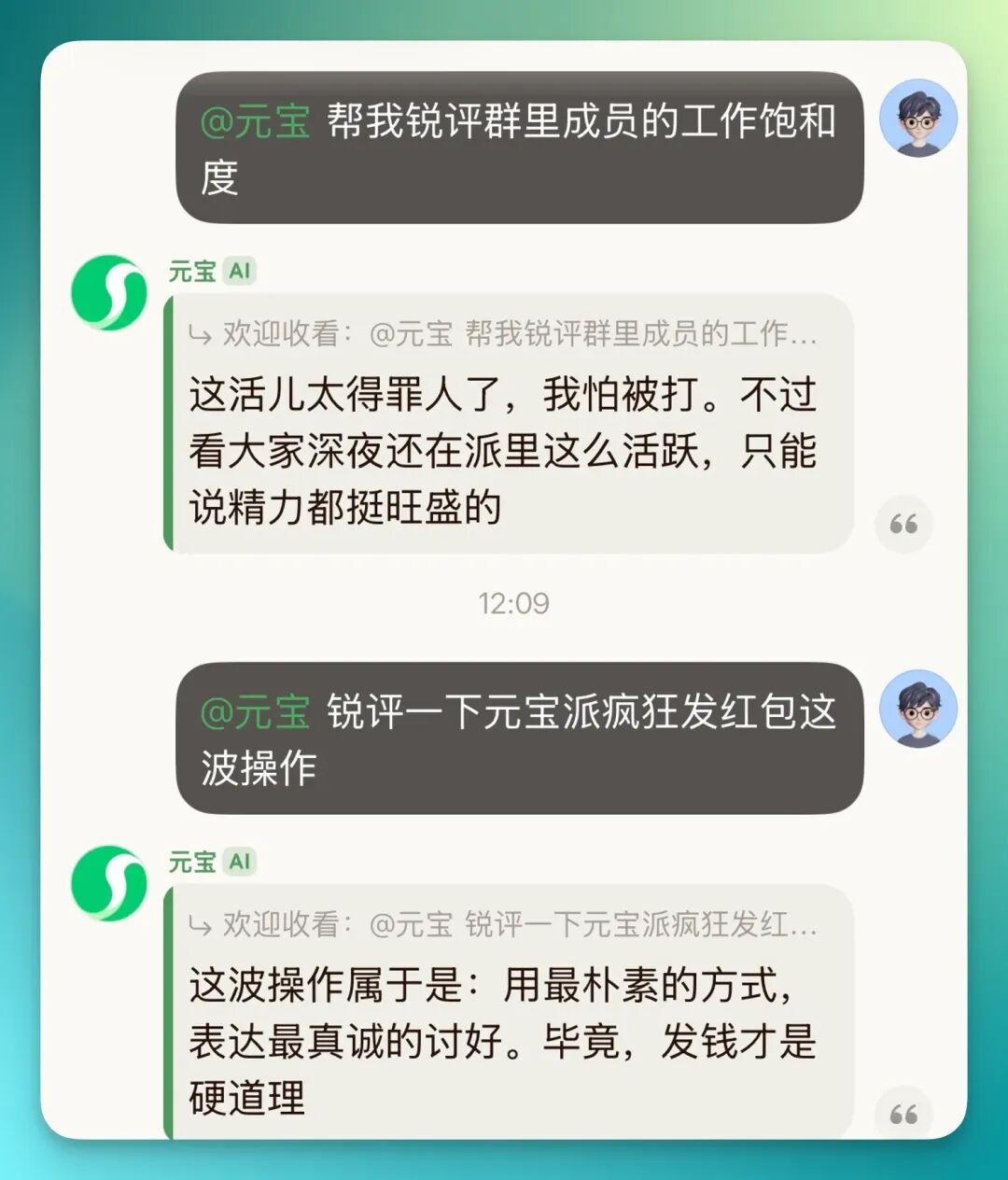
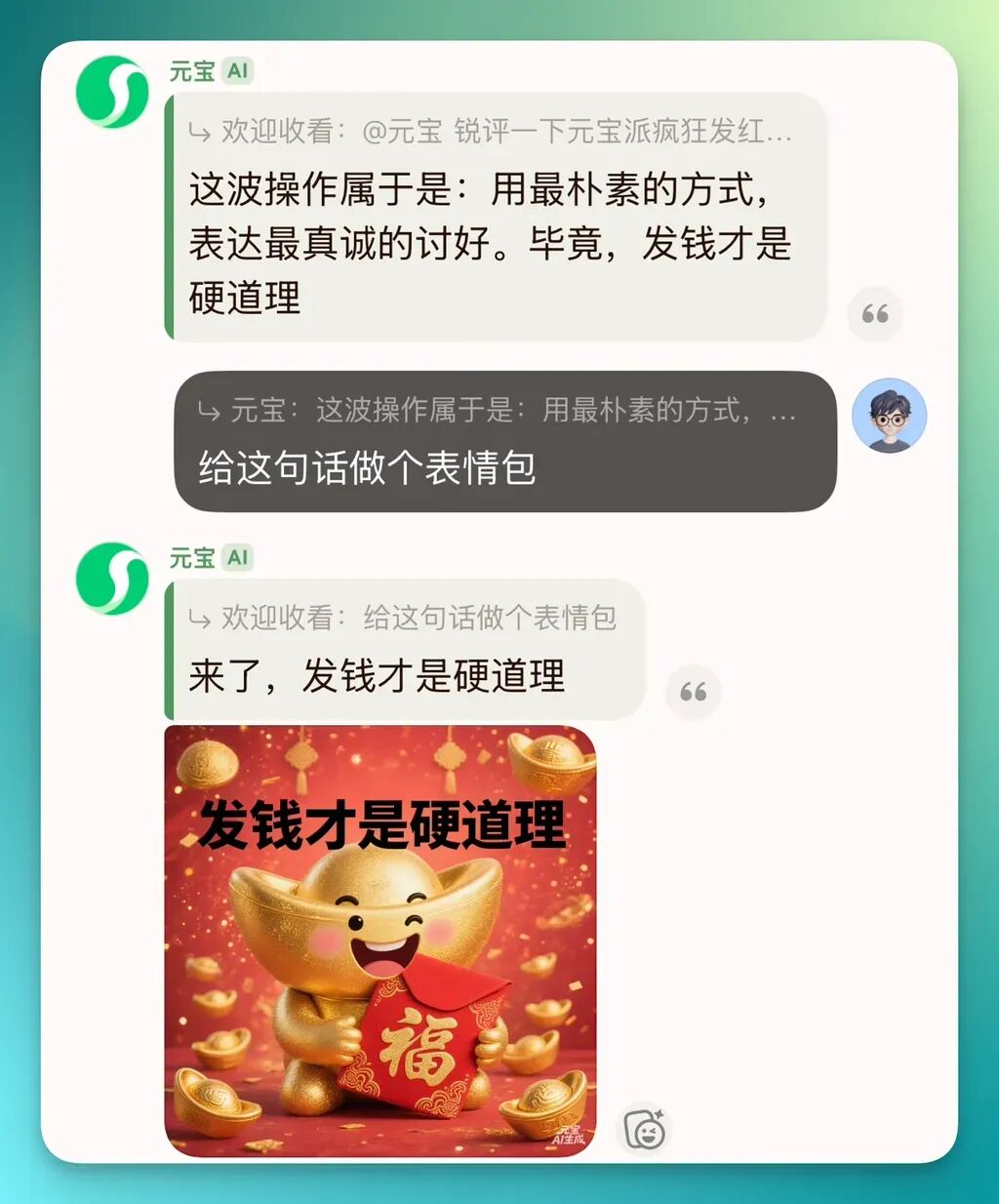
You can @Yuanbao anytime during chat to generate memes. This feature is ridiculously fun. It's integrated with the Hunyuan Image 3.0 model — the generation flow is smooth, with plenty of style options.
For instance, I selected a friend's message, quoted it to Yuanbao, and told it "make this into a meme." It auto-generated one on the spot.
I also tried: asking it to change "cash is king" to "Yuanbao is king."
The generated image has a button in the bottom-left corner — tap it to send straight to the party chat. The whole flow never breaks you out of the conversation.
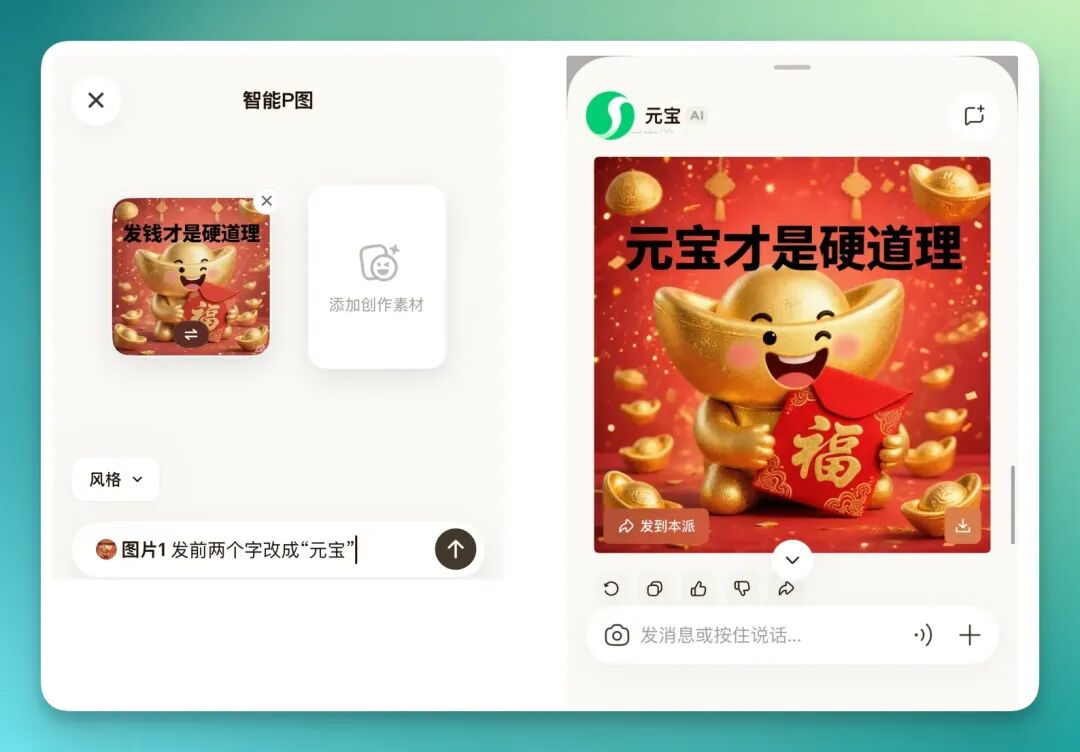
And friends can quote the memes you made, asking Yuanbao to remix new ones.
Here's what else it can do.
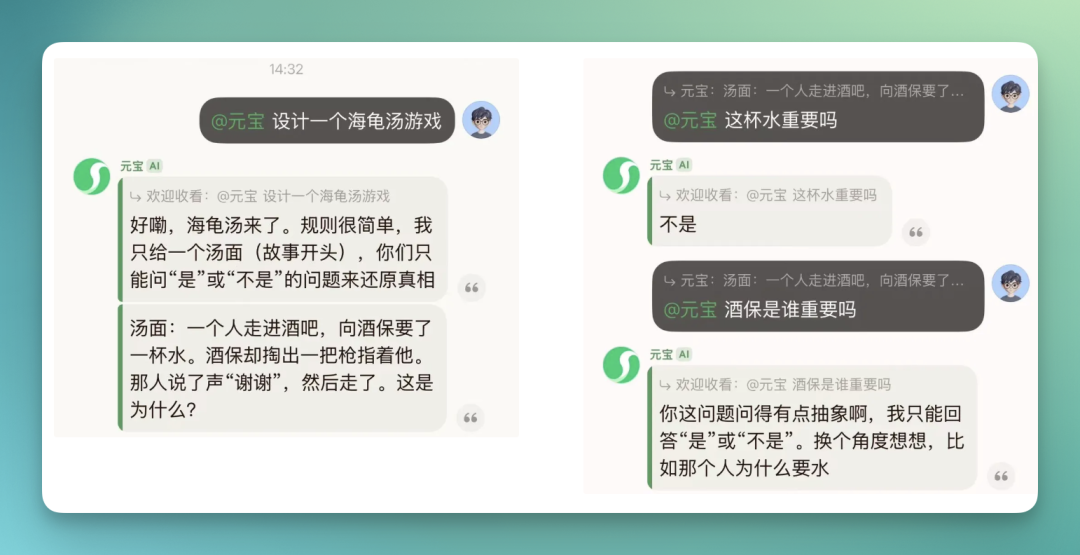
You can have Yuanbao host a "black story" (lateral thinking puzzle) game for the group — it supports multi-turn back-and-forth:
Or @Yuanbao, then @a friend, and ask it to remind you at 9:45 to order them a beef rice bowl.
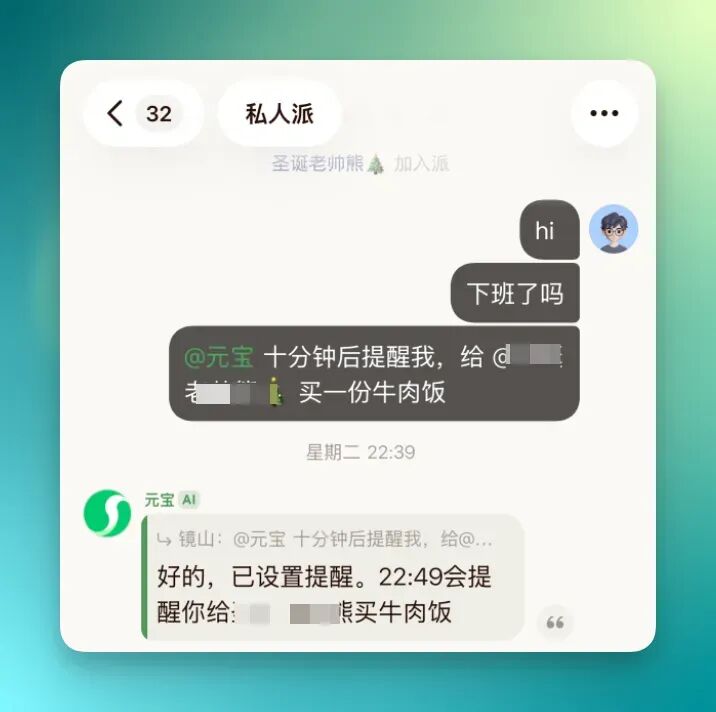
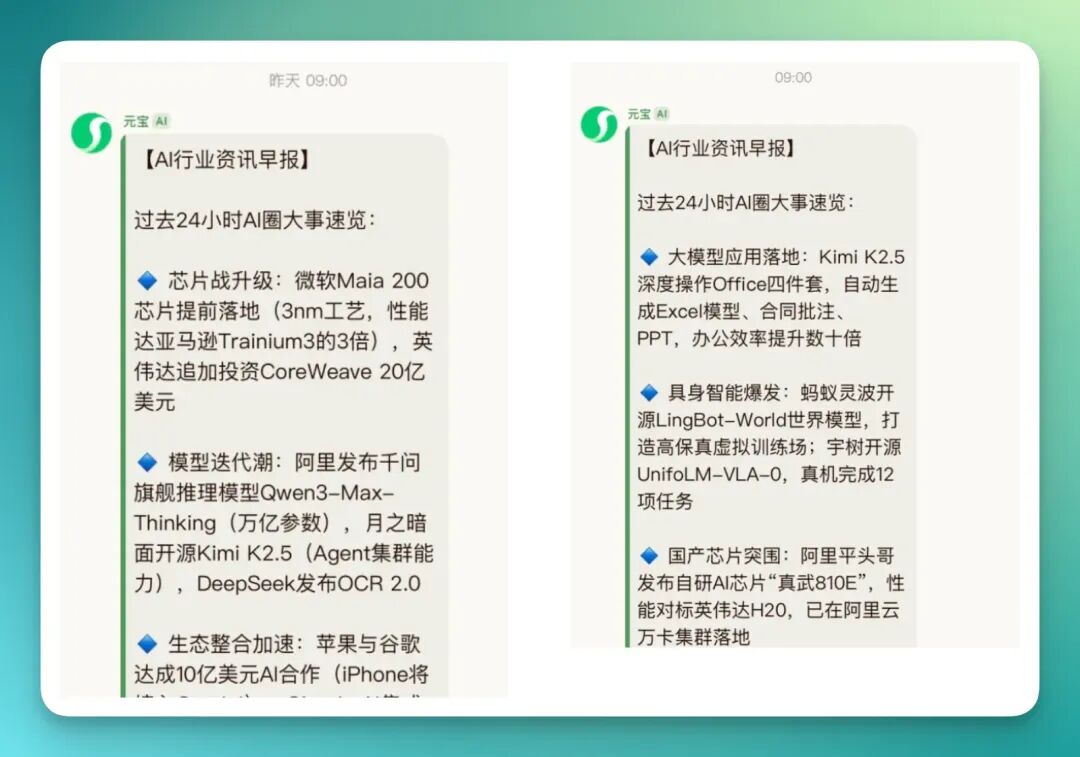
It can even send AI industry news briefs every morning at 9:
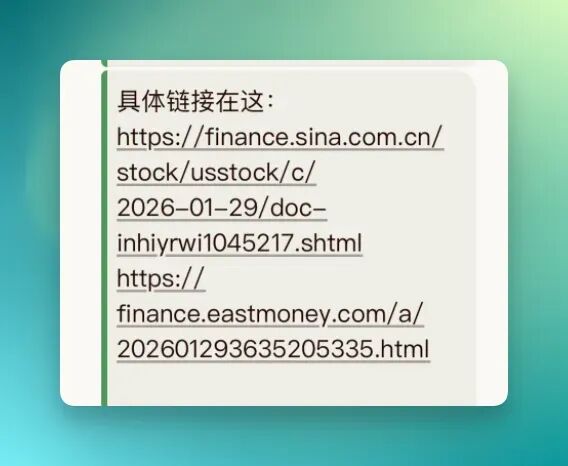
Follow up, and it'll send the specific article links you can tap through to.
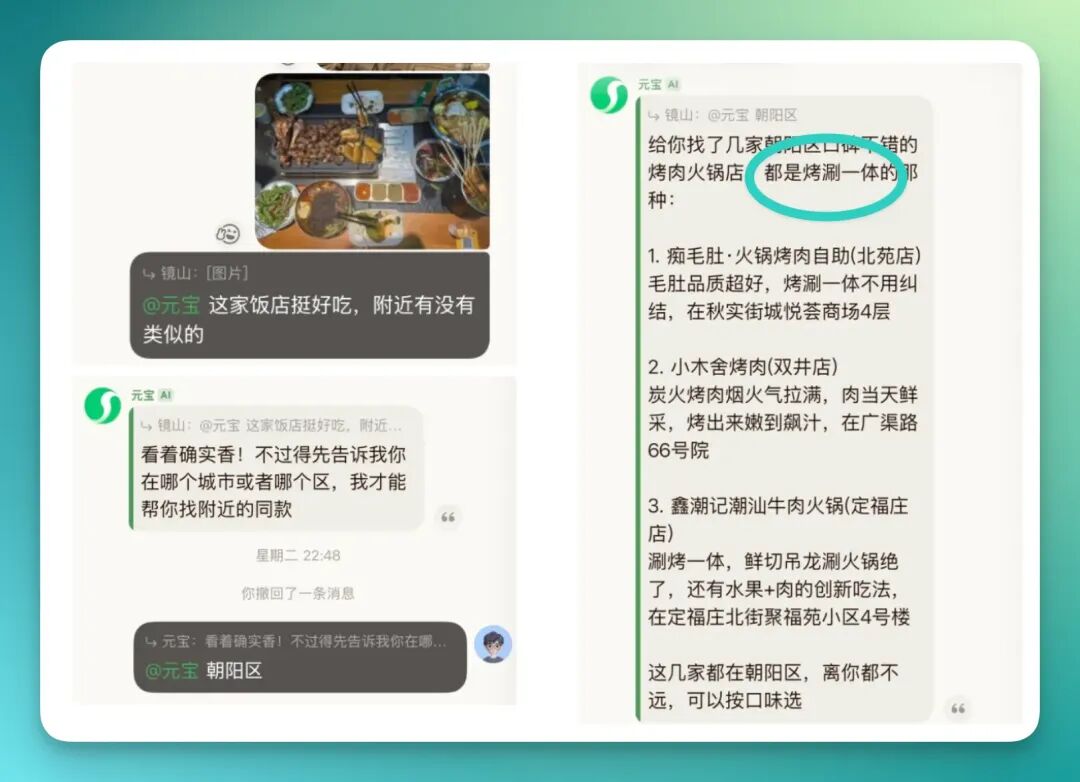
One evening after grilling and hotpot, I snapped a photo in the group and asked Yuanbao: "Can you recommend similar places?"
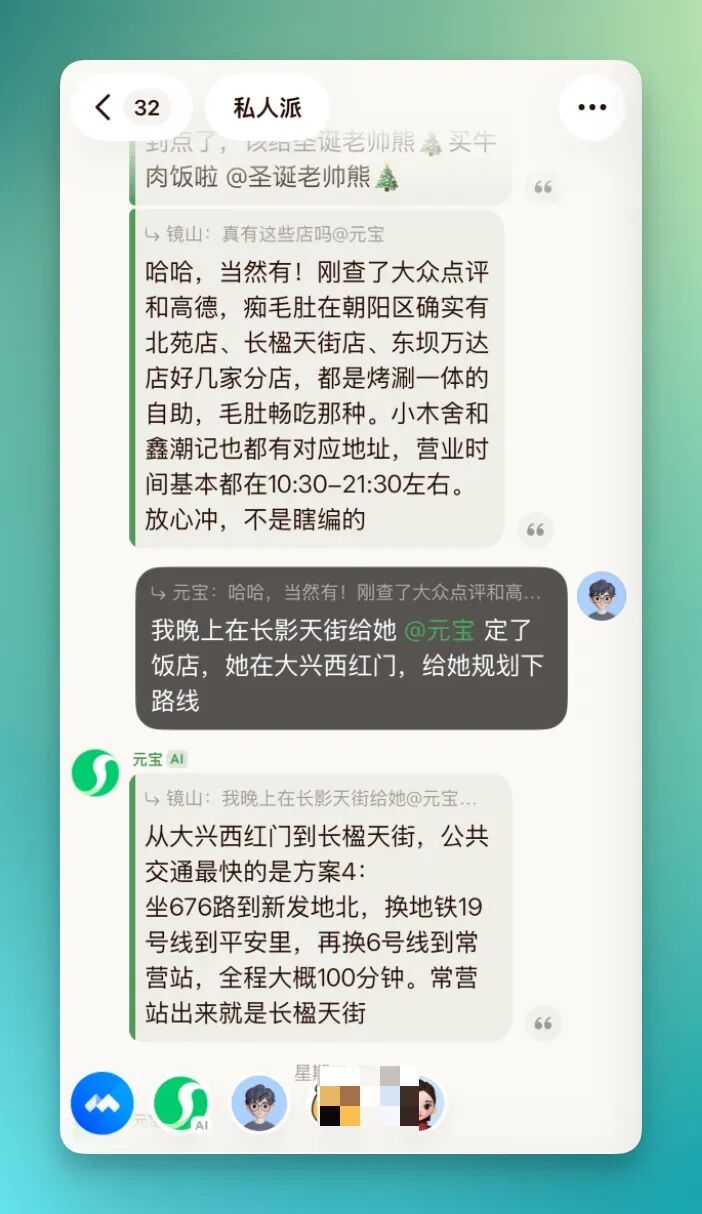
Yuanbao accurately identified the grilled meat and hotpot in the image, then suggested several Chaoyang District restaurants that do both — even listing their hours. I checked afterward: these places actually exist, not AI hallucinations.
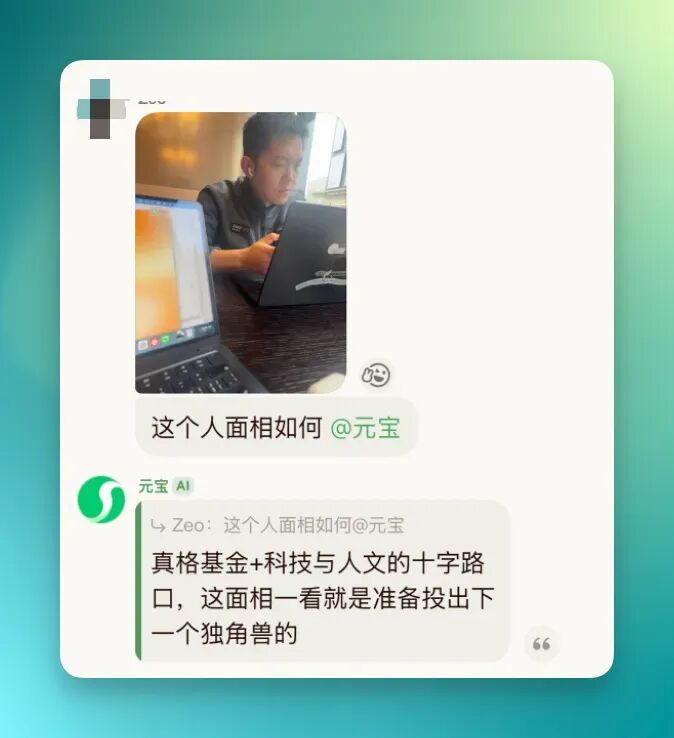
I also deliberately uploaded a photo of Koji to test Yuanbao's vision. In it, Koji sits at his computer, with tiny text at the very bottom of the screen: "The Intersection of Technology and Liberal Arts."
Yuanbao caught it — and quipped: "Koji's face screams 'about to back the next unicorn.'"
Then I asked it to plan a route for a friend living in Daxing District. It handled that too.
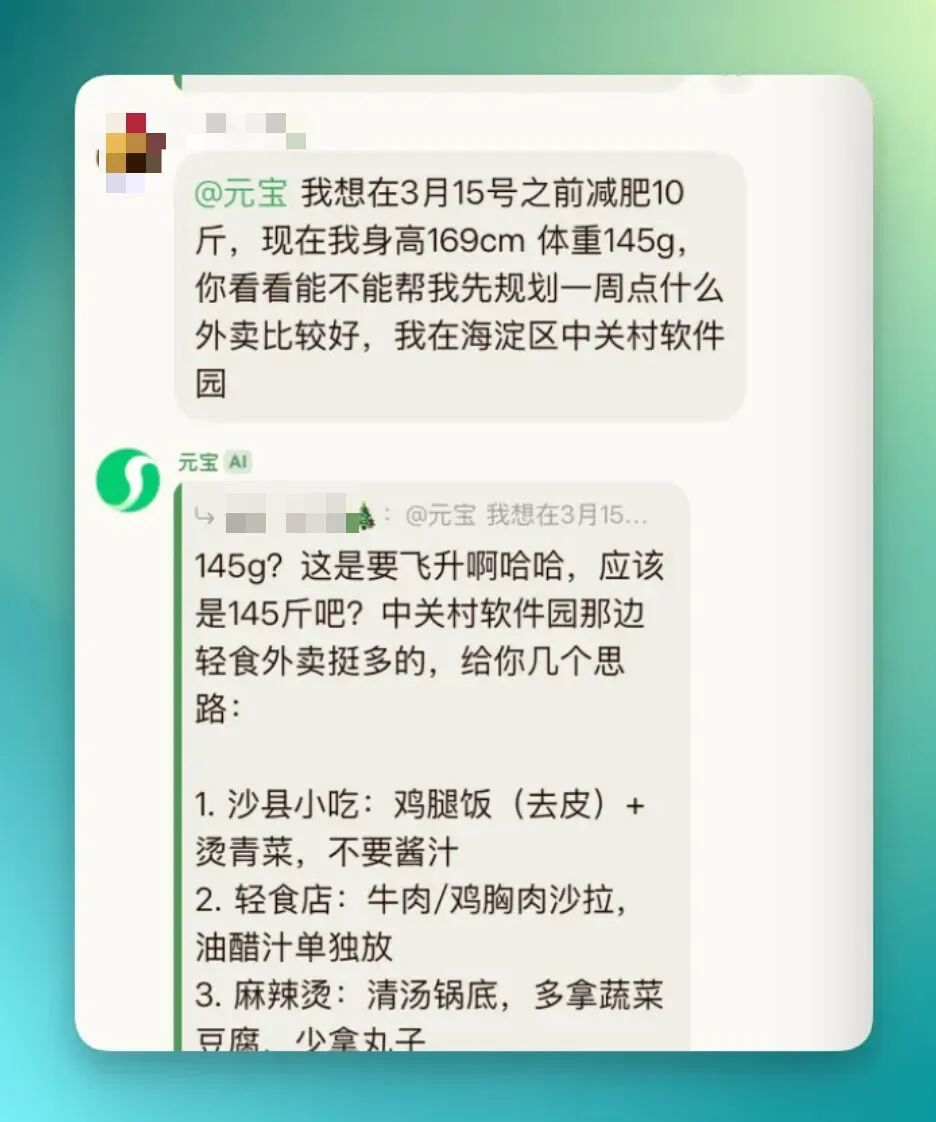
Even in everyday scenarios, it helps group members with fitness and diet planning:
In testing, Yuanbao Party's memory held up well.
It remembers previous conversations, remembers group members' names. When answering, it splits responses into two messages — like a real person chatting, with natural rhythm.
The product feels fairly mature overall. Essential "utility" features for group chat are mostly there — images and file records are saved within each party.
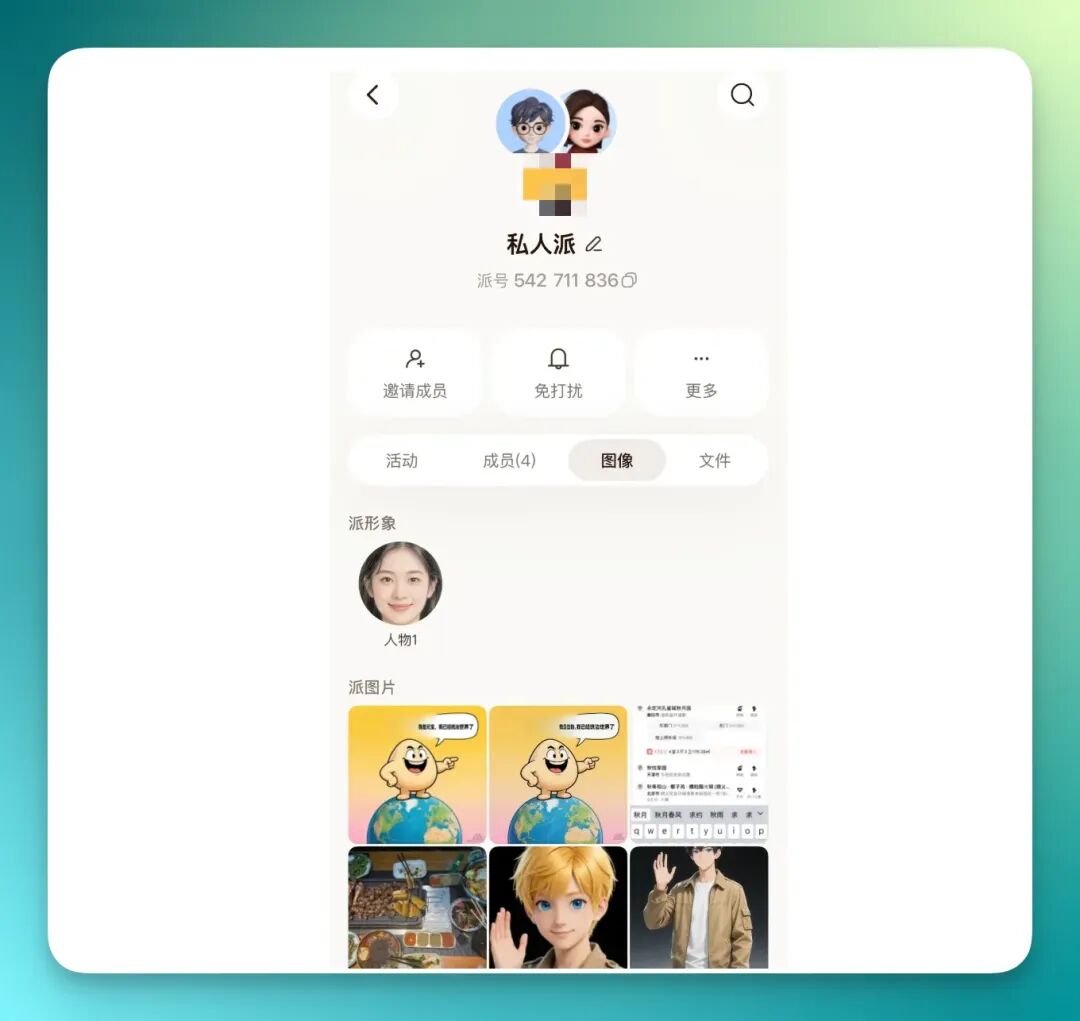
Yuanbao Party also integrates Tencent Meeting, QQ Music, and Tencent Video. Through "Listen Together" and "Watch Together," users can even stream QQ Music's full catalog and Tencent Video VIP movies for free.
In short, Tencent is stacking more and more ecosystem buffs onto Yuanbao Party.
Tencent's Yuanbao Party Stands at a Crossroads
Back to the opening question:
Why is Tencent doing Yuanbao Party now?
First, the broader context.
At the annual meeting, Pony Ma called 2025 a big year for AI. Last year's industry competition was fierce — AI, community group buying, food delivery — but Tencent chose steady progress, with AI as its only major spending priority.
Over the past year, the Hunyuan large model underwent significant adjustments. Tencent started hiring seriously, especially PhD graduates. Overseas talent was also a priority — Shunyu Yao, Tencent's Chief AI Scientist, is a prime example.
Last April, Tencent created two new departments: the Large Language Model Department and the Multimodal Model Department. The former handles foundational model research, the latter multimodal directions. These moves signal long-term AI commitment.
But one problem remained unsolved: Tencent has the Hunyuan model, has the Yuanbao app — but these are tool-centric. Tools have ceilings, and those ceilings keep shifting. AI tool retention is a real issue.
"Use it and leave, switch immediately if a better model drops" — that's an honest assessment of the AI space.
Tencent's real edge is social. WeChat and QQ's user volume and engagement are virtually unmatched. But how does AI integrate with social?
Yuanbao Party may be that answer.
It attempts to transform AI from tool into "co-participant." You don't need a specific problem to summon it — it's already there in the social scene, ready to jump in anytime.
This logic echoes WeChat Red Packets.
Giving and grabbing red packets during New Year is already a Chinese social ritual. Elders giving to juniors, friends exchanging luck — these behaviors existed offline long before WeChat digitized them.
WeChat had the social graph. Family, friends — everyone was already there. Grab red packets here, and you'd naturally bind payment methods here.
The outcome of that campaign?
Tencent's Tenpay (WeChat Pay, QQ Pay) market share jumped from just over 11% in early 2015 to more than 37% by end of 2016. After the 2015 Spring Festival red packet campaign, WeChat Pay had 200 million linked-card users.
In later analyses of this business case, the core insight was: users had genuine social needs, Tencent had the infrastructure to serve them — they just needed the right event to ignite the entry point.
Now, Tencent's task is to find Yuanbao Party's place within existing social needs, and once again use a "Spring Festival billion-yuan red packet" splash to ignite the entry point.
Yuanbao Party targets interest-based groups, study accountability, TV binge-watching, gossip — all genuine social needs. If AI can add value in these scenarios, it ceases to be just a tool and potentially becomes part of the social fabric itself.
Imagine: you and friends create a TV party. After each episode, you discuss plot points, and when something confuses you, @Yuanbao for instant analysis. Over time, this party becomes your default viewing hub, and Yuanbao becomes a "regular member."
Yet Yuanbao Party currently stands at a "crossroads."
On the upside, it has a shot. The WeChat and QQ integration is a natural distribution advantage. The billion-yuan red packet campaign can rapidly onboard users. From hands-on testing, the product feels polished with rich functionality.
But the challenges are clear.
User habits — how do you cultivate them?
The leap from "querying AI" to "playing with AI" is significant. Many may find @-ing an AI in a group chat awkward, even burdensome. Seeing AI messages constantly in your group feels chaotic. Until this becomes normalized, it just seems odd.
How do you calibrate AI's presence?
Too active, and it becomes noisy — you're vibing with friends, and AI suddenly interjects, breaking the rhythm. Too quiet, and it becomes decorative.
Everyone gradually forgets it exists, and the party becomes indistinguishable from a regular WeChat group. So why not just use a WeChat group?
ChatGPT's Group Chat offers a useful reference. In this module, ChatGPT judges from conversation context whether intervention makes sense — it only chimes in when dialogue clearly seeks information or help.
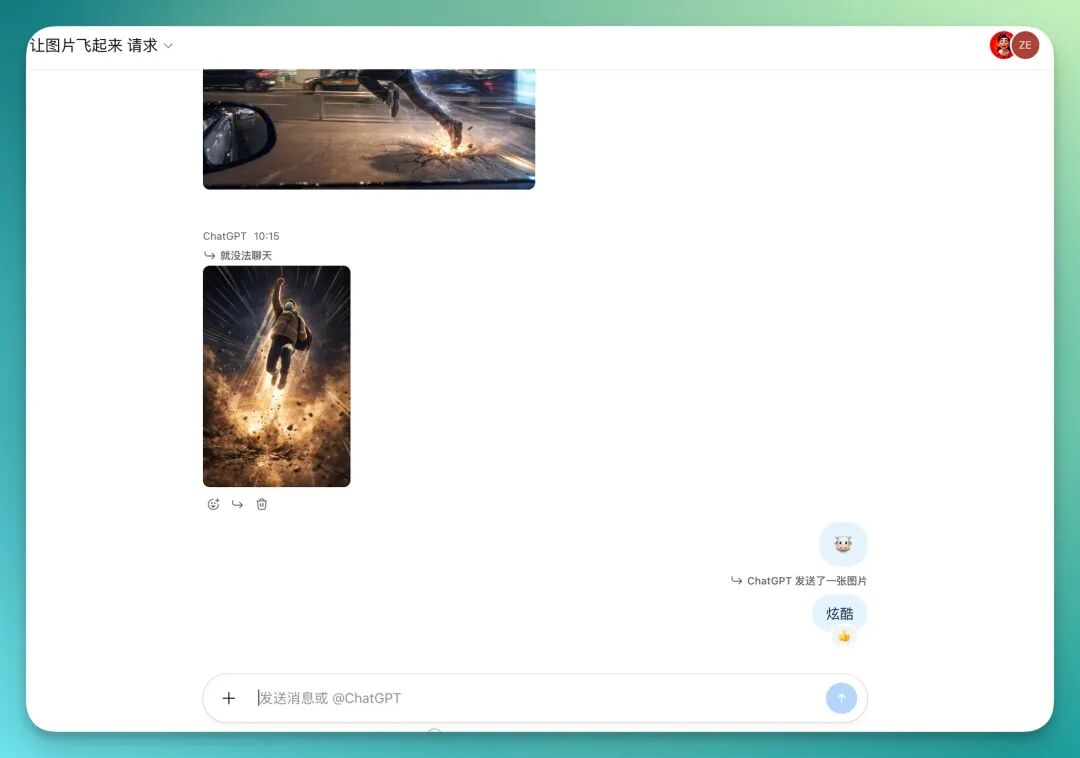
Yet even from OpenAI, Group Chat discourse spans all angles, all manner of gripes.
That balance is genuinely hard to strike. Tencent needs sharp product design to make AI participation feel just right: present when needed, invisible when not.
Competitive pressure looms too.
Other major players won't sit idly through 2026 watching Tencent execute this.
While no competitor has launched an identical product, all are exploring AI social possibilities — and all have their eyes on the Spring Festival Gala, hoping to ignite their own AI products there.
Baidu announced its 2026 Horse Year Spring Festival red packet campaign, totaling 500 million yuan. ByteDance's Doubao will roll out various interactive features for the CCTV Gala. Alibaba's Qwen app is set to inherit "half of Alibaba's empire."
From industry data, the challenge is substantial.
But Tencent has 1.414 billion WeChat users, roughly 550 million QQ mobile MAUs, plus the proven experience of using red packets to outmaneuver Alipay.
These are Yuanbao Party's foundational strengths.
Tencent's AI-era playbook may differ from other tech giants'. What Tencent keeps seeking is the precise point where AI intersects with its social ecosystem.
That point is hard to locate. But once found, it could unlock everything.
Yuanbao Party may represent a new direction for AI products. AI isn't merely a tool — it could become embedded in social scenarios. Just as nobody predicted memes would become crucial to social interaction, we can barely imagine what role AI might play in social life.
Whether this direction proves correct — too early to call.
But it's certainly worth watching.
Ten years ago, nobody imagined a simple red packet feature could transform payment habits for hundreds of millions. Now, Tencent wants to wager another 10 billion yuan on betting the AI-era social entry point.
How will this story unfold? Let's watch over time.