Can Xiaohongshu Didi AI, which has "devoured" 1 billion posts, outflank traditional search?

DianDian took a different path — it never tried to become a "god that can do everything."
After establishing itself as a bellwether for young people's lifestyles, Xiaohongshu appears poised for a new milestone. Recently, rumors of a US IPO have resurfaced, with a valuation as high as $20 billion.
Behind this figure lies Xiaohongshu's status as the only breakout consumer internet product in China since 2015.
As a result, every product move Xiaohongshu makes is scrutinized under a spotlight.
With China's highest-quality and most real-time image-and-text content, plus a highly engaged base of premium users, everyone is curious what products and achievements Xiaohongshu will deliver in the AI space.
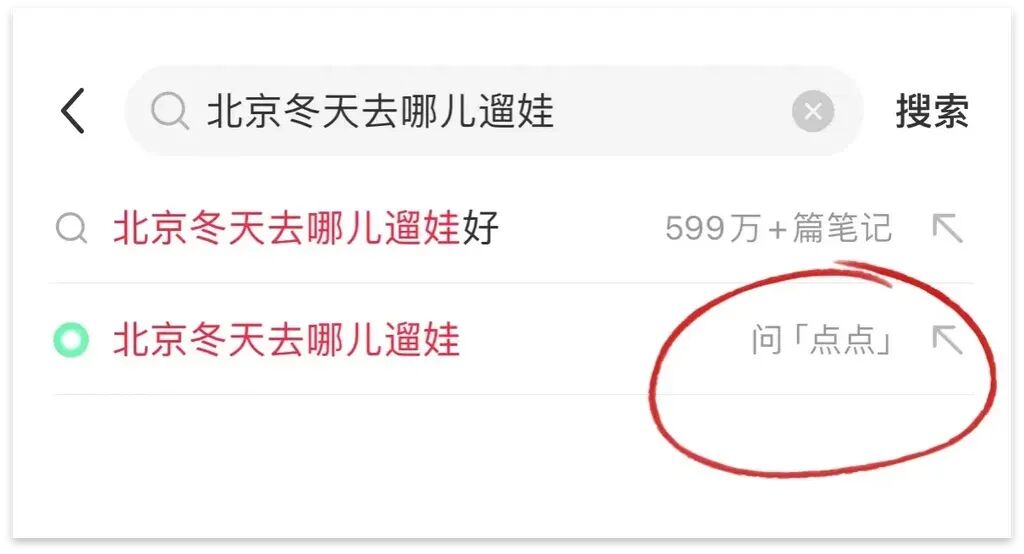
And lately, when you type a question into Xiaohongshu's search bar, you may notice a new "Ask Diandian" button on the results page. Click it, and you can start a conversation with this AI assistant.
Unlike general-purpose AI, Diandian's unique advantage is that it draws entirely from Xiaohongshu's community content, delivering not just information but real-world experience and advice drawn from actual users.
As a community-based product, Xiaohongshu enjoys a formidable data advantage. The massive volume of user-generated content covers not just traditional categories like beauty, fashion, travel, and food, but extends to professional domains including workplace issues, education, and finance. Most of this content has been filtered by the community, making it far higher quality than typical internet content.
What kind of chemical reaction occurs when this high-quality content meets AI technology?
The Community Search Disruptor: Why Diandian Was Born
If search engines are the navigation system of the internet, then everyone now carries at least two different types of navigators in their phone: general-purpose ones like Baidu, and lifestyle-oriented ones like Xiaohongshu, each serving different information retrieval scenarios.
Whether for purchasing decisions or life dilemmas, more and more people are choosing to search on Xiaohongshu first. This trend is especially pronounced among younger generations, who trust authentic user experiences more than the commercialized results offered by traditional search engines.
As Xiaohongshu's AI assistant, Diandian launched only in late December 2023 — a latecomer to the AI wave. But arriving late doesn't mean arriving weak. On the contrary, Diandian can stand on the shoulders of those who came before while leveraging Xiaohongshu's unique community data advantage to carve out a differentiated path.
Diandian is integrated with the DeepSeek-R1 large model and has "digested" over 1 billion Xiaohongshu posts. What does that number mean?
If a person read 100 Xiaohongshu posts every single day without rest, it would take 273 years to finish that volume. Diandian processed this Everest of information in just a few months.

Diandian was designed from the start as a "community navigator," guiding users to the content destinations they need. Traditional search engines are more like a library's index system, while Diandian aims to be a librarian who knows your taste — not just telling you where a book is, but recommending related good reads.
Xiaohongshu can rely on its community's exclusive reservoir of experiential content, embracing the rich ecosystem of quality notes from nearby and everyday life. In theory, its search service — especially when enhanced with AI — should have an unassailable competitive advantage.
So the question becomes:
Has Diandian made good use of these advantages, or squandered them?
Putting Diandian to the Test
1. Community Knowledge
(1) A Guardian for Personalized Travel Experiences
Traditional search tells you "what's there"; Diandian can tell you "what's suitable for you to do there."
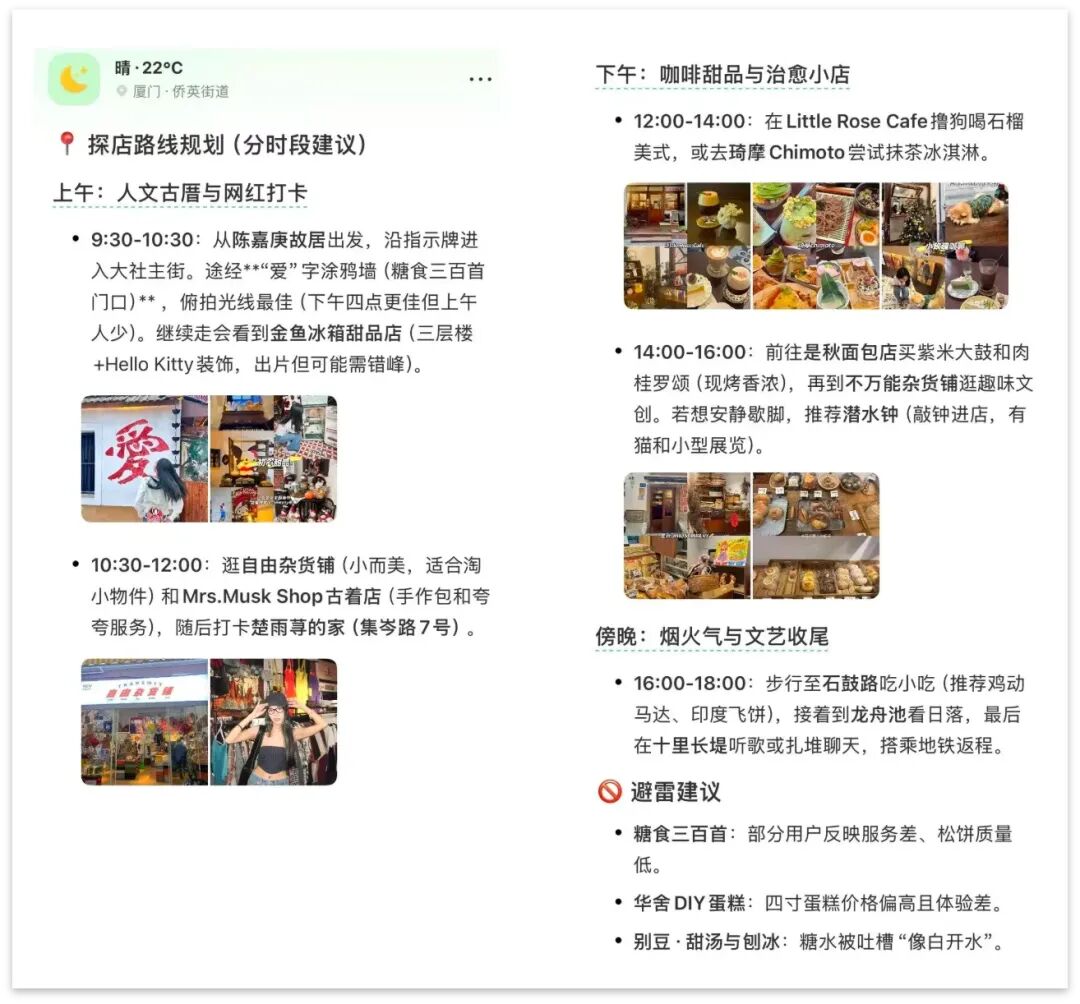
When a user searches for "city walk routes nearby," Diandian doesn't just recommend routes — it factors in current weather, traffic conditions, and crowd levels to suggest the optimal outing.
(2) A Shopping Advisor From Selection to Evaluation
In the labyrinth of purchasing decisions, Diandian plays a smarter guide than traditional search engines. It doesn't just tell you "which product is good" — it analyzes "which product suits you" based on your specific needs and context.
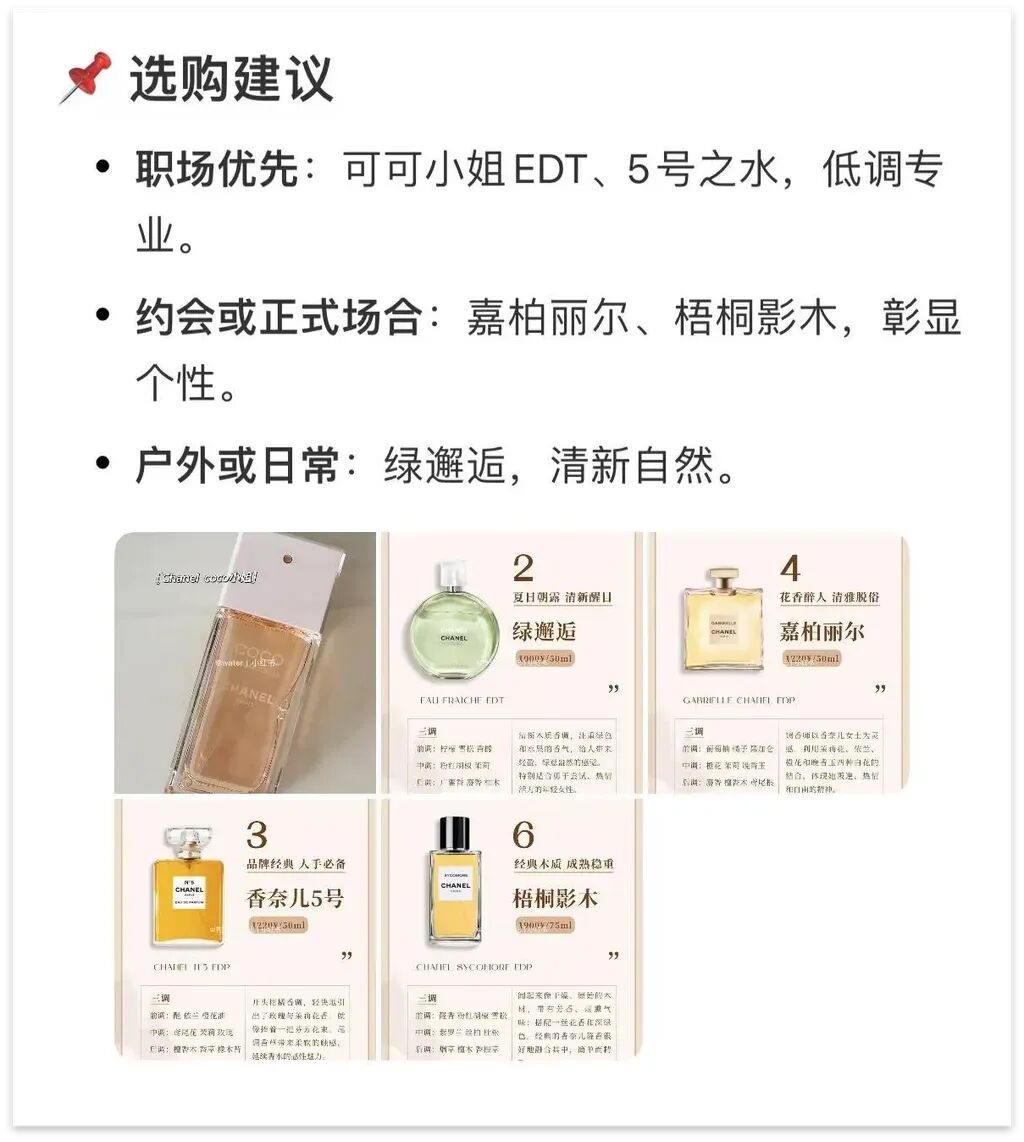
When a user asks about "perfume for my girlfriend," Diandian doesn't simply list popular brands. Instead, it digs into the context. For instance, one user described his girlfriend as preferring "elegant but not overpowering scents, with a minimalist style in black, white, and gray, occasionally accented with bright colors," who "works in finance and enjoys outdoor activities and café outings on weekends."
Diandian immediately grasps the lifestyle implications for perfume selection.
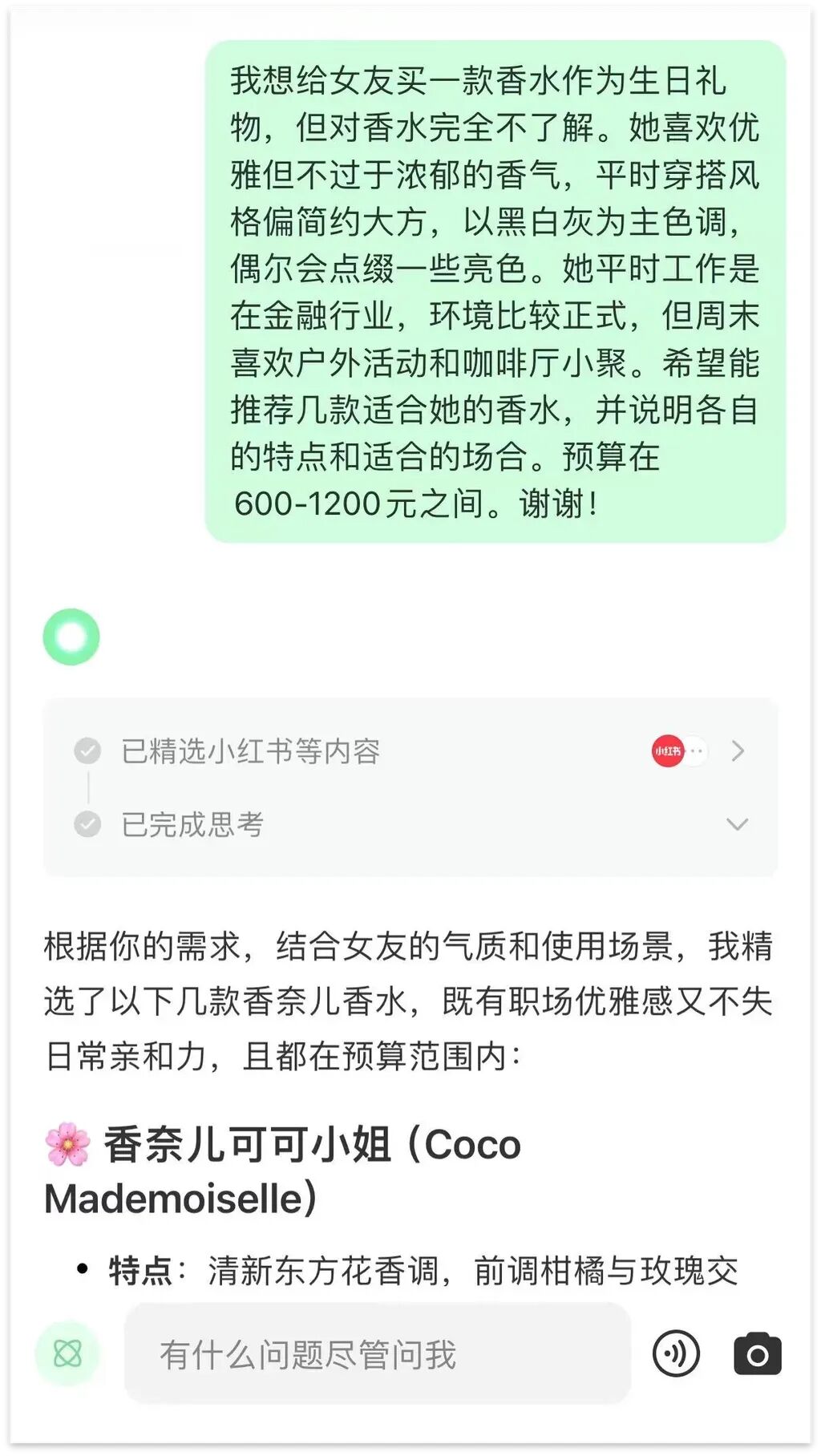
It doesn't mechanically push ads, but matches by scenario: "For the workplace: Coco Mademoiselle EDT or No. 5 L'Eau, understated and professional; for dates or formal occasions: Gabrielle or Bois des Iles, expressing individuality; for outdoor or casual settings: Chance Eau Fraîche, fresh and natural."
This scenario-based recommendation lets users make more precise choices based on different use environments — far more practical than a simple list.
(3) Comparing the "Famous Doctors"
As everyone knows, beyond product recommendations, the other major daily activity in the community is avoiding pitfalls. This represents another irreplaceable dimension of Xiaohongshu user content — informal comparison.
I looked up two top-tier doctors in cataract treatment, wanting to use Diandian's community knowledge to compare them. Of course, at this level of expertise, the comparison likely goes beyond pure technical skill to encompass surgical experience, innovations, and even patient reviews and reputation.
After all, a core user search motivation is seeking resonance.
When I entered the query:
Compare Dr. Li Zhaohui and Dr. Zhu Siquan
Diandian automatically leverages its large model to search and synthesize information from multiple sources including Baijiahao, Baidu Health, Baidu Baike, websites, and Xiaohongshu.
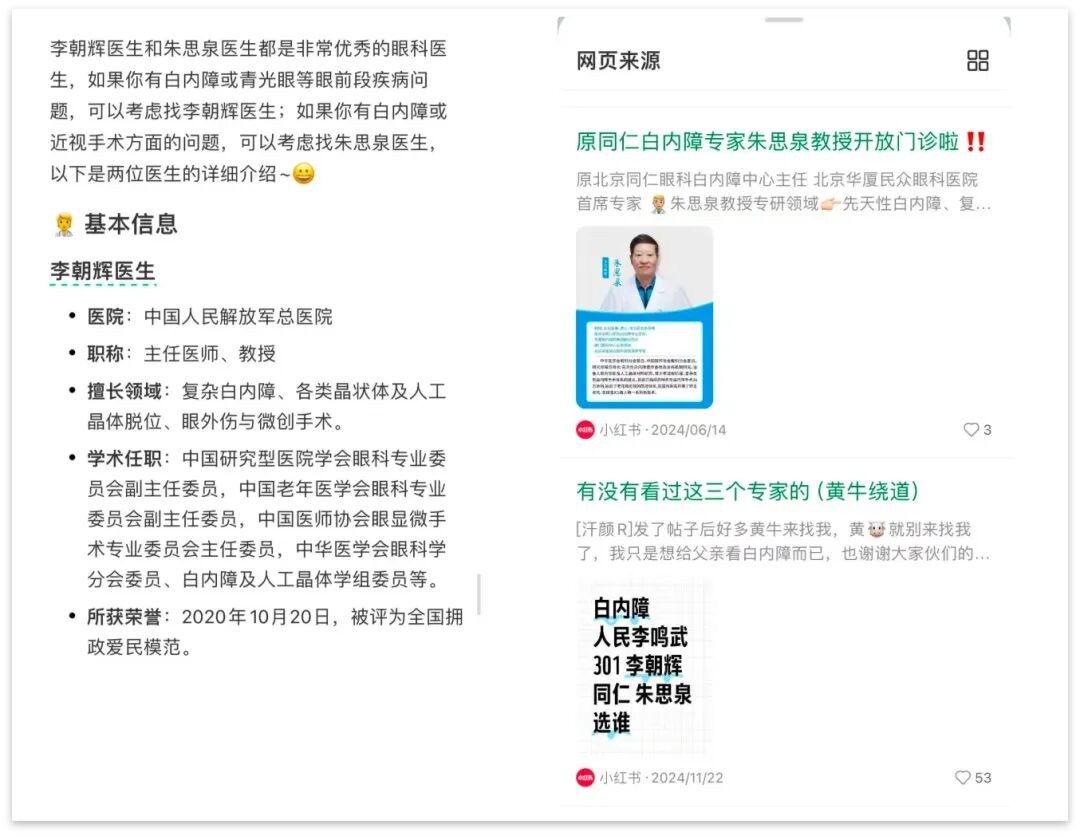
When synthesizing this information, Diandian provides not just objective background on both doctors, but also real voices from the community.
For example, someone on Xiaohongshu mentioned "Dr. Li Zhaohui is conscientious and responsible," while another said "Dr. Zhu Siquan has good surgical outcomes."
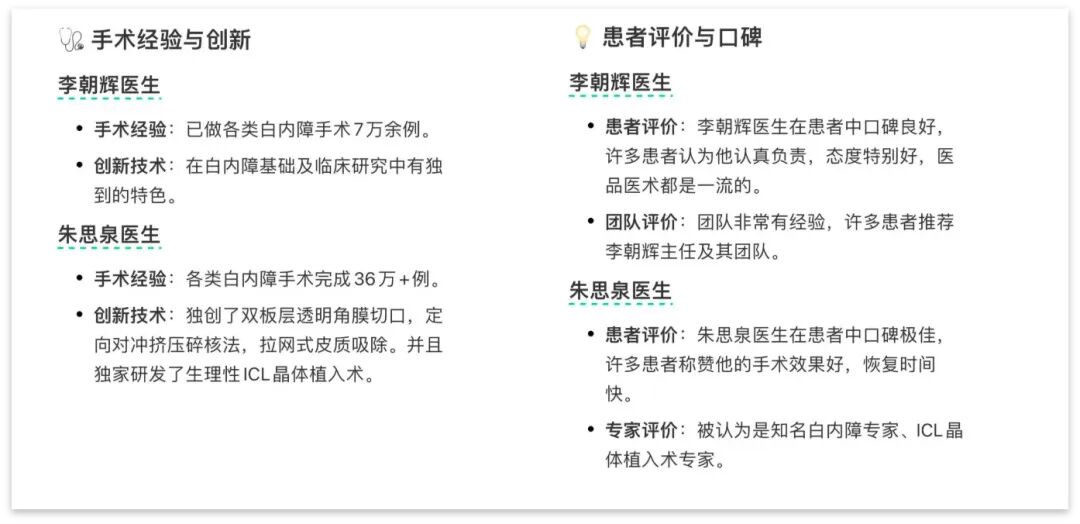
This informal comparison lets users evaluate from both technical and emotional dimensions, finding the answer that best fits their needs.
Often, users don't just want to choose between 0 and 1 — they want to weigh both sides and see what others think.
This is a human need.
2. Community Wisdom
The task that best harnesses the collective wisdom of ordinary community members is: "ideas that don't follow conventional logic" — and this is precisely where ordinary people hurt the most, because outside the community, such issues are rarely addressed systematically.
(1) The Rigidity of Official Guides vs. the Agility of Community Wisdom
Official attraction guides always seem to be disciplining you from every angle: arrive on time (three hours early), use this entrance, and so on. But real-life situations are endlessly variable — that's when you need a little wisdom and creativity from the community.
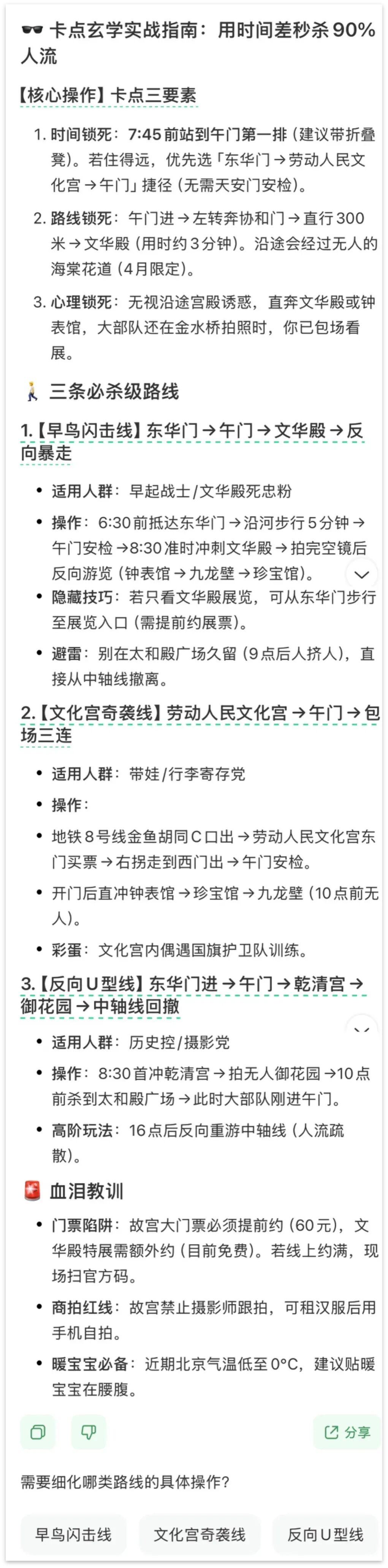
When a "P-type" personality needs to cut it close and searches for "Forbidden City strategy," Diandian recommends based on historical visitor data and weather forecasts, and lists other users' "hard lessons" to help you avoid pitfalls in advance.
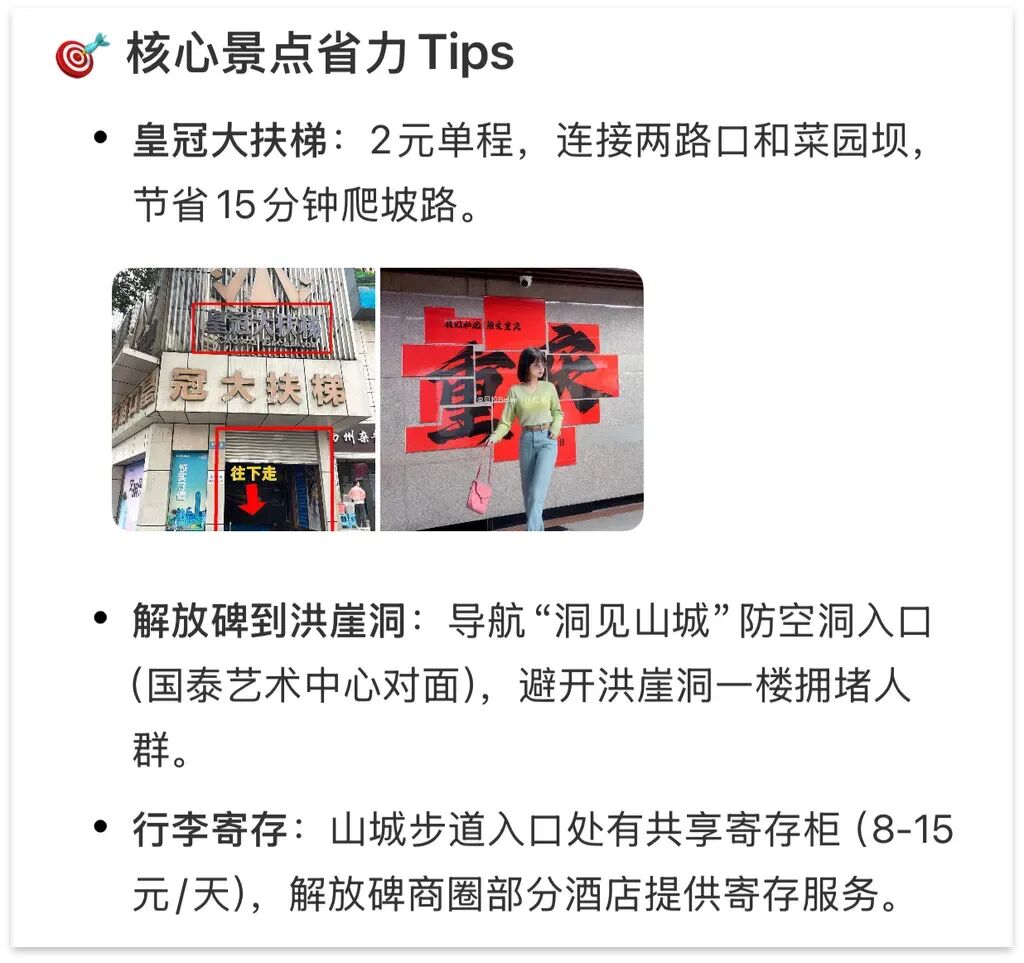
And in a mountain city like Chongqing, Diandian can recommend energy-saving routes based on terrain: "The Crown Grand Escalator goes directly to Jiefangbei, saving 15 minutes of climbing; the underground entrance to Hongyadong has half the crowd of the main gate."
These suggestions come from local users' actual experience — more grounded than generic maps.
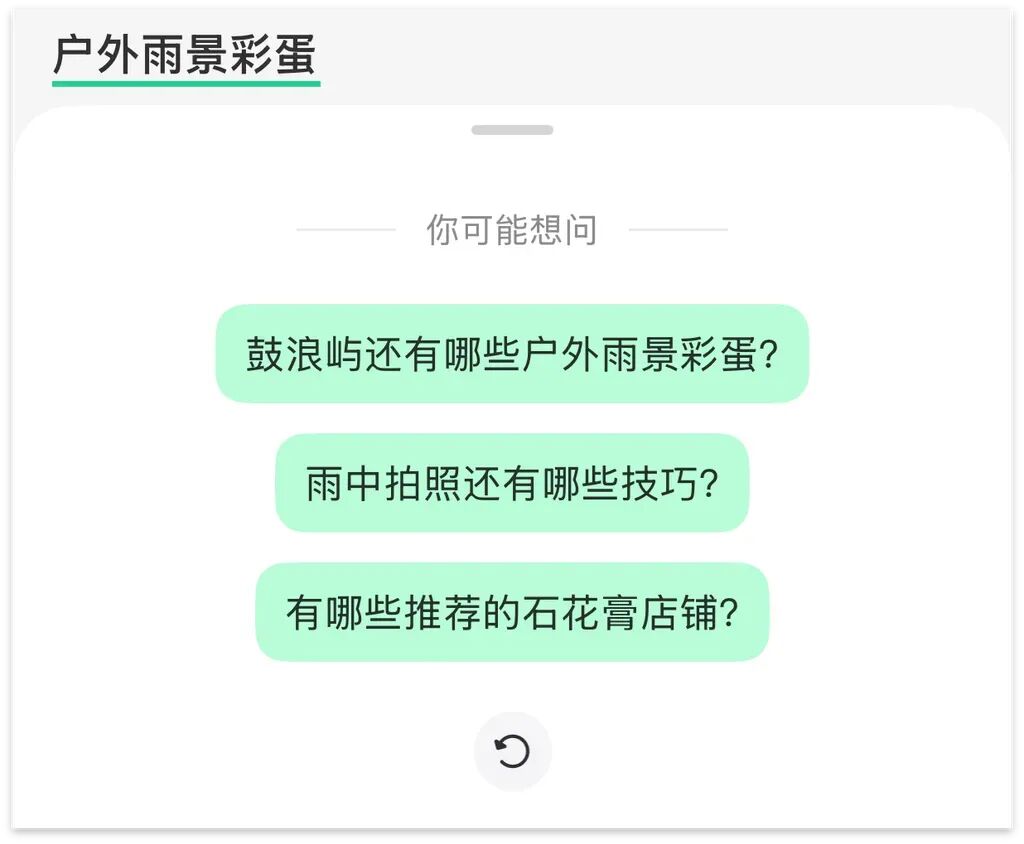
When emergencies strike, it becomes an instant rescue manager: flight delayed? Reorganize your day's itinerary immediately. Stuck on Gulangyu in the rain?
Diandian generates a rain photography guide + rainy scenery Easter eggs in 5 seconds.
(2) How Do Ordinary People Navigate Social Situations?
Awkward social moments or workplace response scripts are pain points for many, and Diandian provides practical support here.
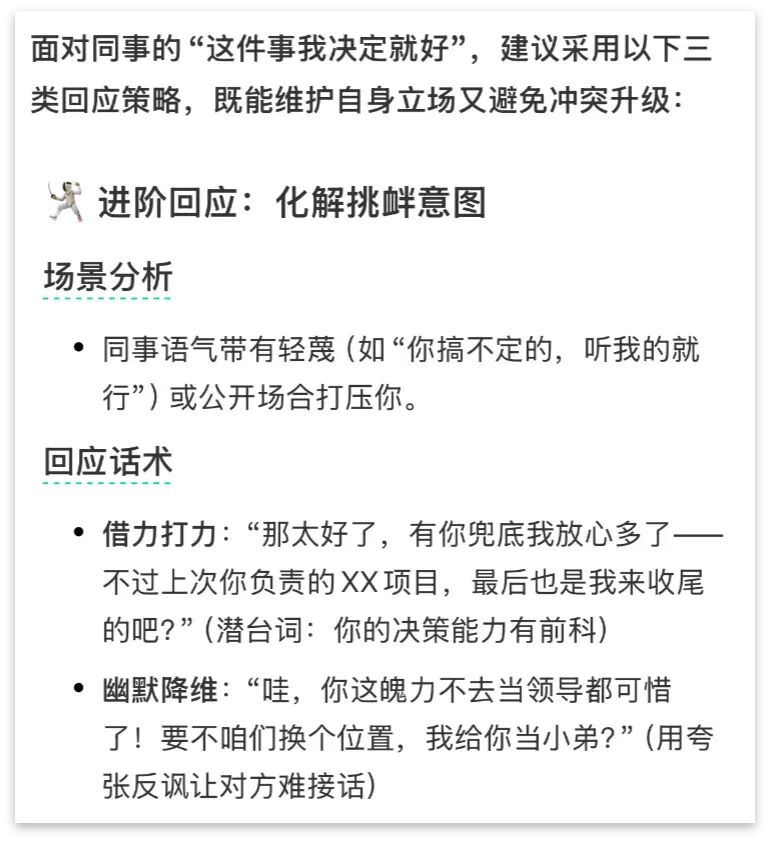
For example, when facing a colleague's "you decide" — a tricky situation — Diandian instantly matches millions of conversation samples and immediately offers three contextual analyses — buck-passing / testing / genuine delegation — with corresponding script packages.
Enter "my boss is switching companies, should I go too?" and Diandian won't give a simple yes/no answer. Instead, it analyzes numerous real workplace cases and outputs a "three-dimensional evaluation model": your own career needs / boss reliability / new opportunity risk analysis, helping you craft a response that maximizes your interests — providing a comprehensive decision framework.
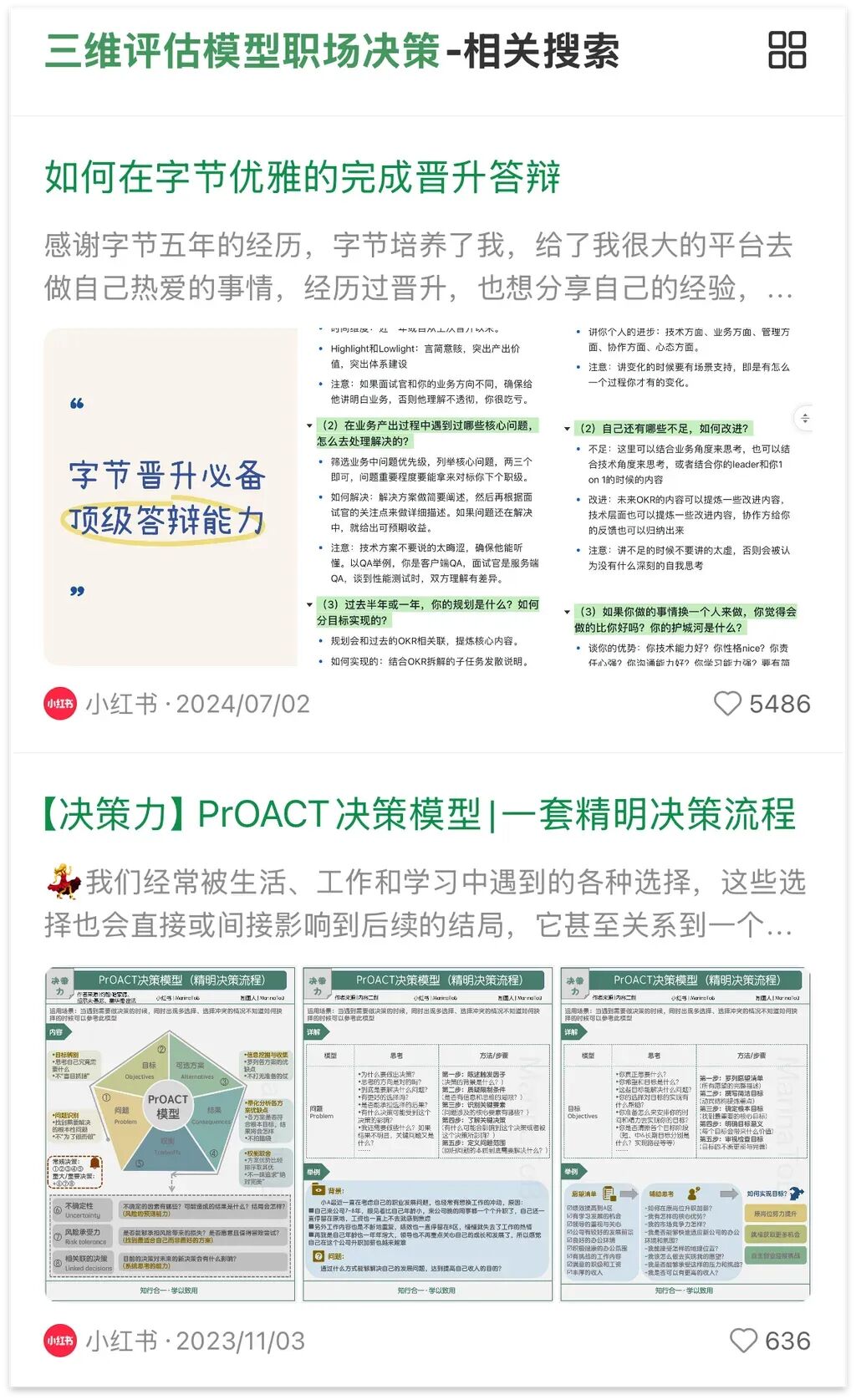
This systematic analysis based on real cases helps users break free from emotional decision-making, seeing the full picture to make more rational and personally advantageous choices.
Unlike other career advice, Diandian doesn't simply "recommend following" or "recommend staying," but guides users to make the best decision based on their own situation.
When facing tricky situations like "how to deal with relatives showing off their kids' grades at family gatherings," Diandian doesn't just provide simple scripts, but deeply analyzes the entire social context.
It automatically connects this issue to broader social phenomena like "parenting comparison culture on social media," "invisible competition among working parents," and "traditional expectations of multi-generational family gatherings," offering comprehensive coping strategies.
(3) I Need an "Unconventional" Teacher
Often, users' needs aren't so absolute. A very down-to-earth scenario: as grad school prep season arrives, students of all ages will head to their study environments, and many need one or several test-prep teachers.
The answer space that traditional search prepares is usually "the user needs a teacher with excellent credentials whose students score high."
But reality is often that many students need a teacher who lectures vividly and engagingly, doesn't put them to sleep, and can help them gradually understand the material — or someone who explains test-prep concepts in a grounded, accessible way.
This actually reveals the community wisdom that Diandian unleashes: ordinary people's needs are wildly varied, because ordinary people themselves aren't all cut from the same cloth.
For example, enter the query "which grad school teacher should I follow? Who lectures in an interesting way that won't make me sleepy?"
Diandian's answer is absolutely refreshing, because what many ordinary people need is to connect themselves to the community.
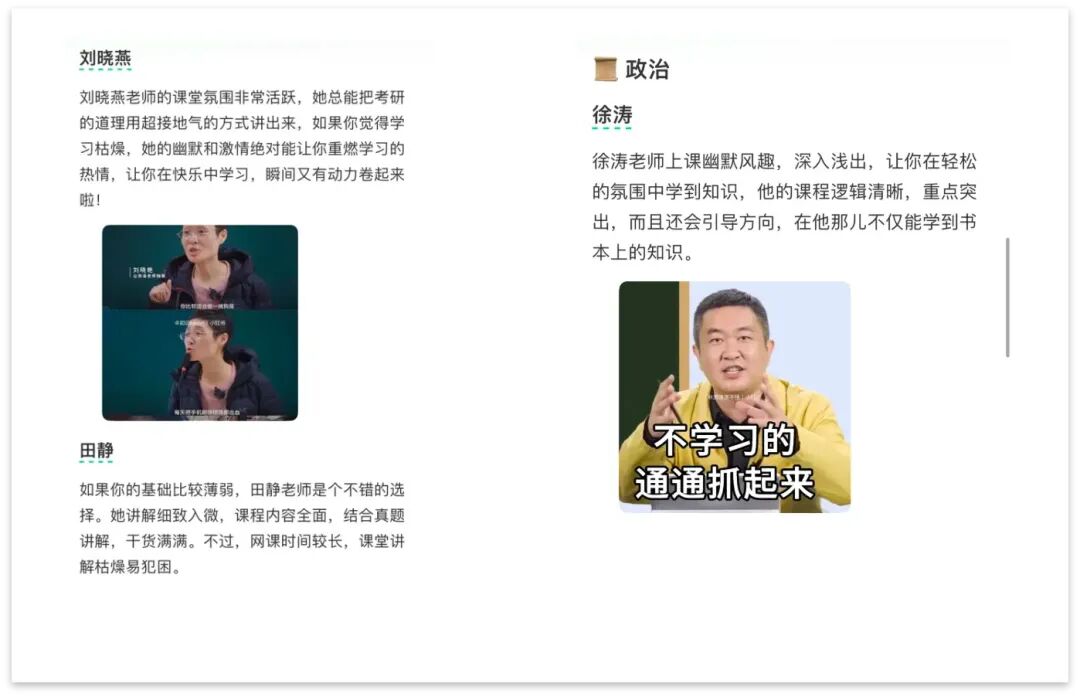
The networked wisdom of the community has, historically, been incredibly difficult to synthesize. The web sources in this Diandian AI search result also confirm Diandian's "community wisdom."
Ordinary people's problems within the community are solved with the community's own wisdom.
In real life, users' thoughts are rarely absolute or singular, but full of flexibility and personalized expectations.
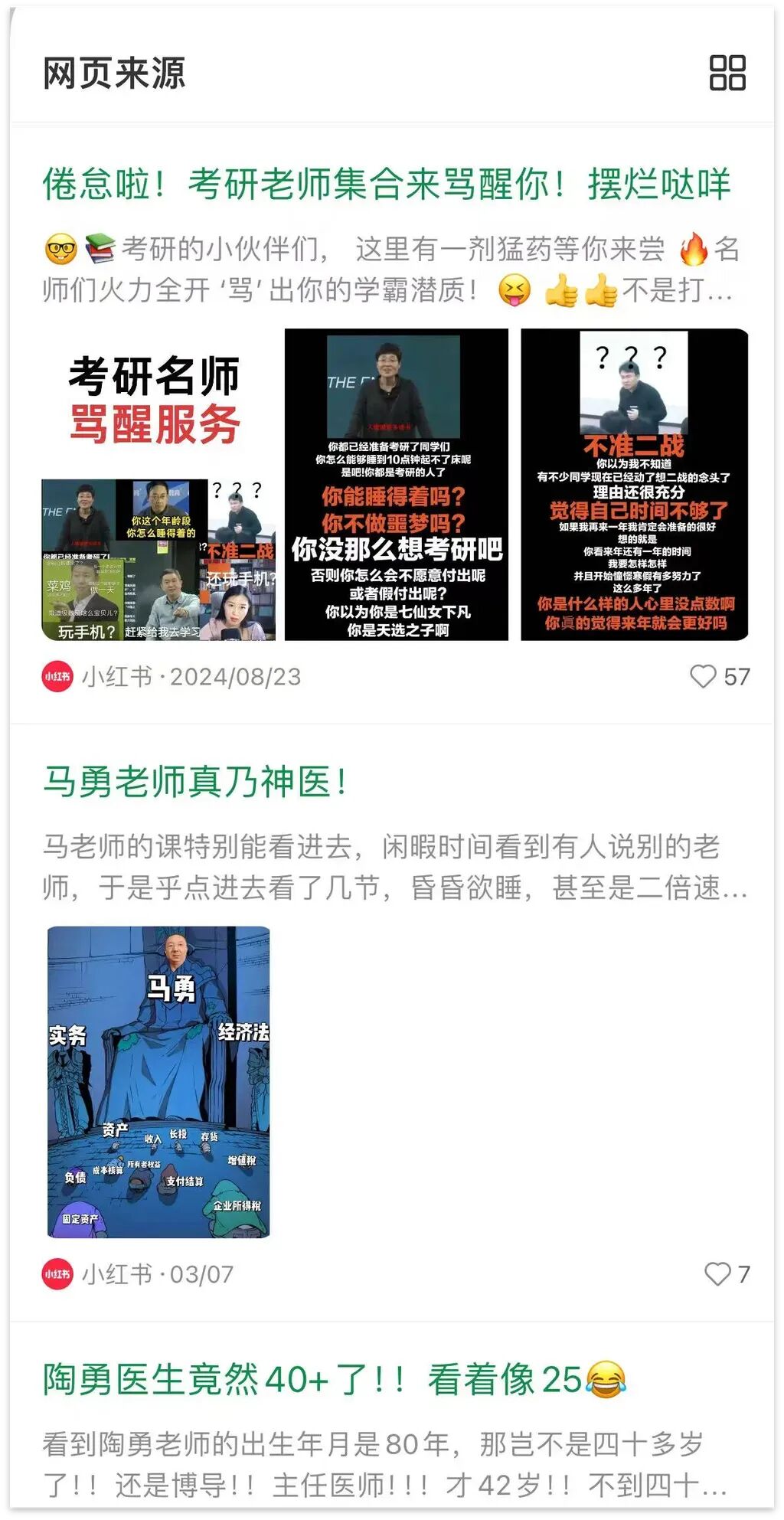
Official guides' rigidity tries to box variable life into standardized templates, while community wisdom's agility lies in respecting every ordinary person's uniqueness.
(4) Connecting to the Community
Another interesting case vividly demonstrates the originality of community wisdom — meme collection.
Memes, as the emotional expression superweapon of the internet era, have long transcended mere image functions to become an indispensable part of community user communication.
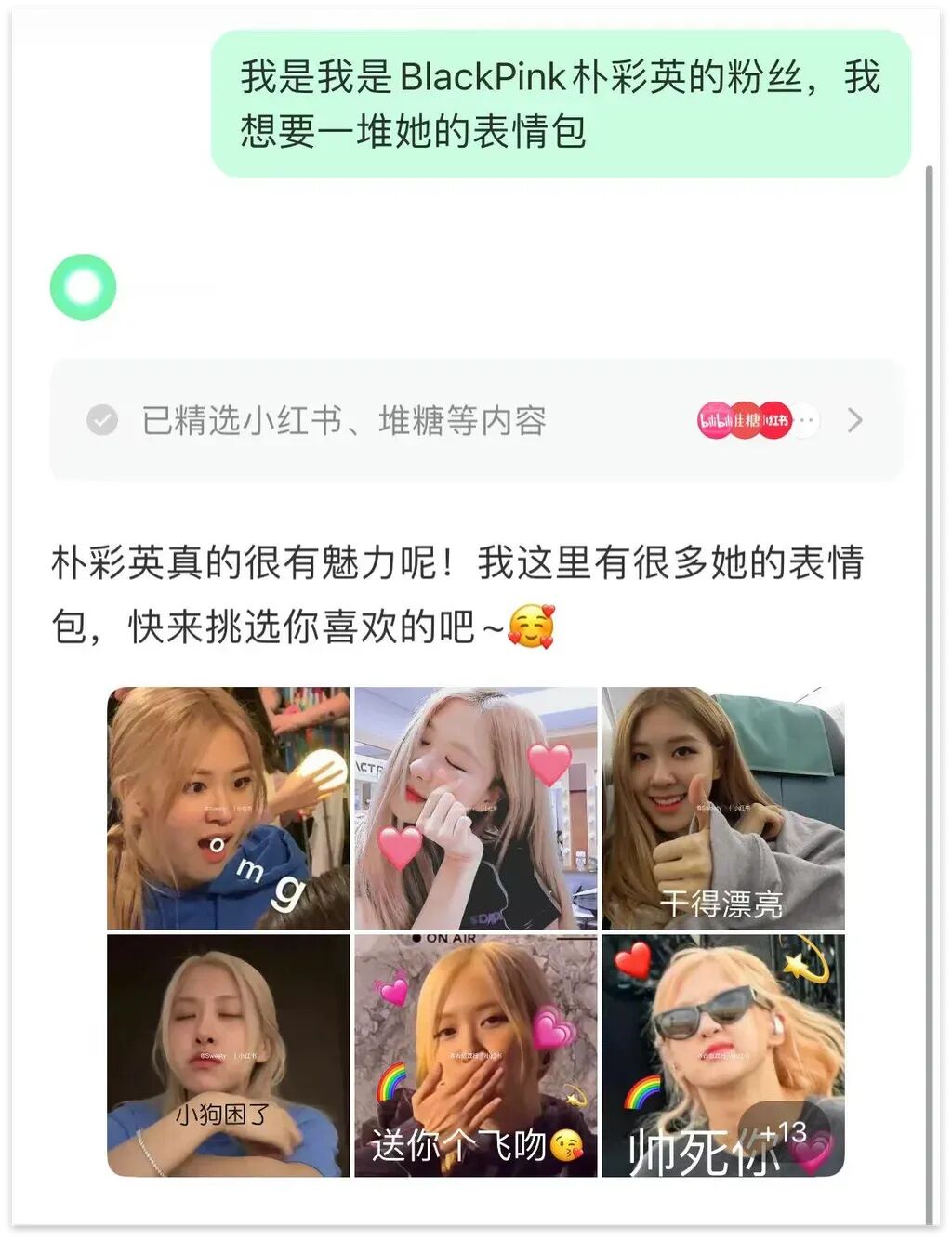
Community-driven meme collection is so vividly original because behind it are countless ordinary people's creations based on their own experiences.
This is also a major manifestation of Diandian's focus on community user needs, connecting ordinary people to community wisdom.
The AI Amplifier of Community Wisdom
Diandian's uniqueness lies in not creating content from thin air, but serving as an AI amplifier of community wisdom — systematically integrating and personally delivering the dispersed user experiences and wisdom scattered across every corner of Xiaohongshu through AI technology.
This model respects original content creators' contributions while enhancing content discoverability and utility.
This model also creates positive incentives for content creators — when they see their content discovered and applied by more people through AI, they're more motivated to create high-quality content, forming a virtuous cycle:
Users create content → AI learns from content → Provides more precise search results → Attracts more users to create content.
This data flywheel effect is Diandian's core advantage over traditional search engines. Diandian's success also provides a template for vertical-domain AI development.
Rather than general-purpose large models trying to solve everything, Diandian focuses on domains where the Xiaohongshu community excels — lifestyle, purchasing decisions, aesthetic expression — delivering more precise and warmer service in these vertical scenarios.
This focused strategy lets Diandian achieve differentiated competition with limited resources, avoiding all-out confrontation with tech giants and instead building a moat in specific domains. This offers useful lessons for other vertical platforms hoping to find their place in the AI wave.

Despite Diandian's many bright spots, as a newborn product, it also faces challenges and room for improvement. Some users have reported issues with the operational experience of Xiaohongshu's new AI features, finding the search page design confusing.
Some users complain of "forced adoption," pointing to the mandatory insertion of AI entry points in the search interface.
As a new-generation search tool, Xiaohongshu AI Diandian — this youngster — is competing with established search giants on its own terms.
- In search depth, Diandian hasn't yet reached the academic resource thickness of Zhihu's "Zhihai" (when searching quantum computing, the latter can access 2.7 million paper abstracts), but Diandian breaks through with "contextualized knowledge graphs" — search "camping guide" and it automatically links to gear rental maps + weather disaster warnings;
- In response precision, compared to Baidu's ERNIE Bot's generality, Diandian shines in youth-oriented verticals — "three-style fashion" search accuracy reaches 91% — though cross-domain retrieval occasionally shows information gaps; in data freshness, though it lags behind Douyin's real-time hot topic capture speed, it leverages "UGC content fermentation prediction" to detect trend seeds 48 hours in advance.
From a broader perspective, Diandian is not just a technology product, but represents the direction of content community exploration in the AI era.
Of course, as a young AI product, Diandian is still growing, with room to improve in professional depth, cross-domain understanding, and multi-turn dialogue. But it's precisely this quality of continuous learning and improvement that keeps Diandian innovative and full of growth potential.
As people's demands for digital life grow increasingly diverse, AI assistants like Diandian that can understand context, perceive emotion, and provide precise, practical advice undoubtedly represent the future direction.

In this track full of possibilities, Xiaohongshu is leveraging its unique community data advantage to build an AI product that understands both technology and people. Diandian's emergence is also forcing traditional search engines to evolve.
Among the web sources that Diandian draws upon from the Xiaohongshu community, what's most precious is "ordinary community members' views on the meaning of life."
This may be Diandian's unique value — not telling us the standard answer, but presenting diverse perspectives for us to find our own inspiration.
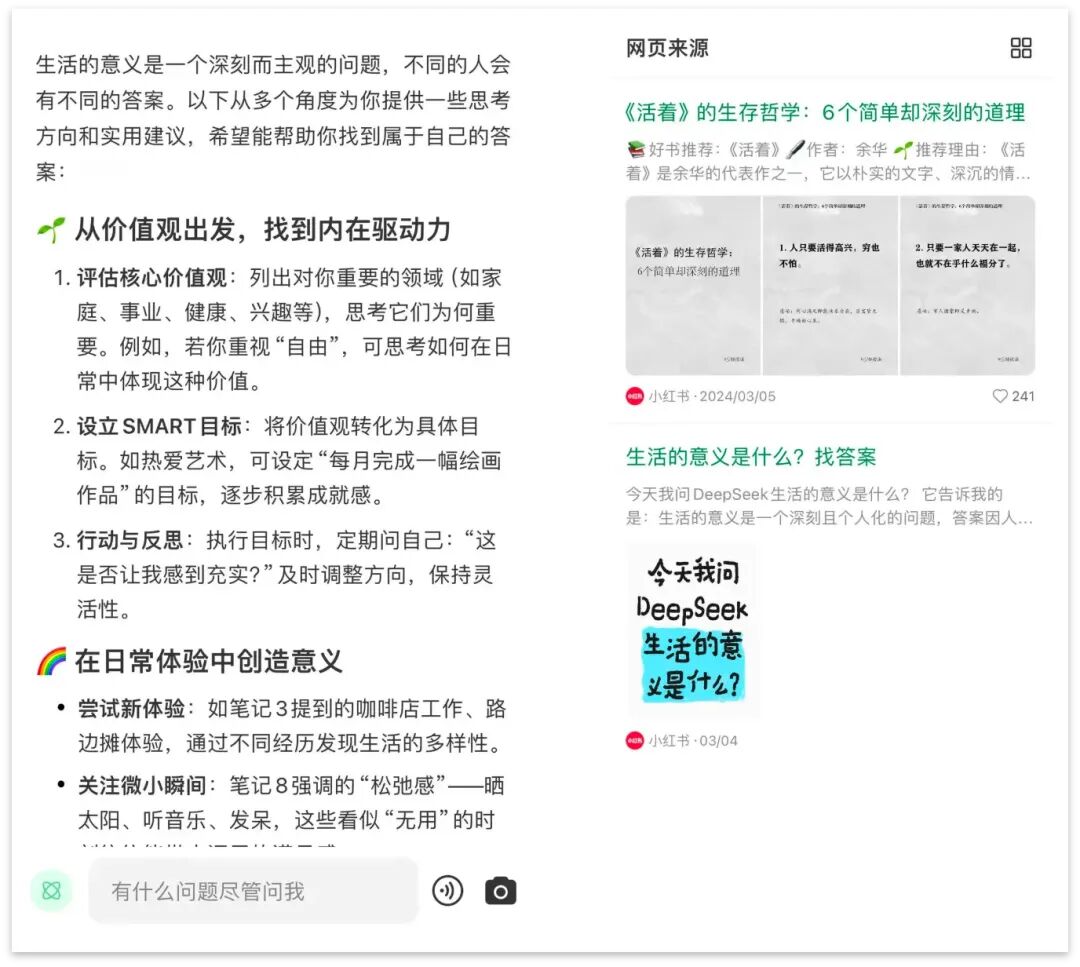
Users can also input commands via voice or image upload at the bottom.
If thinking mode is activated, Diandian leverages its large model to enter "empathetic human" mode, combining the query with geolocation in its reasoning.
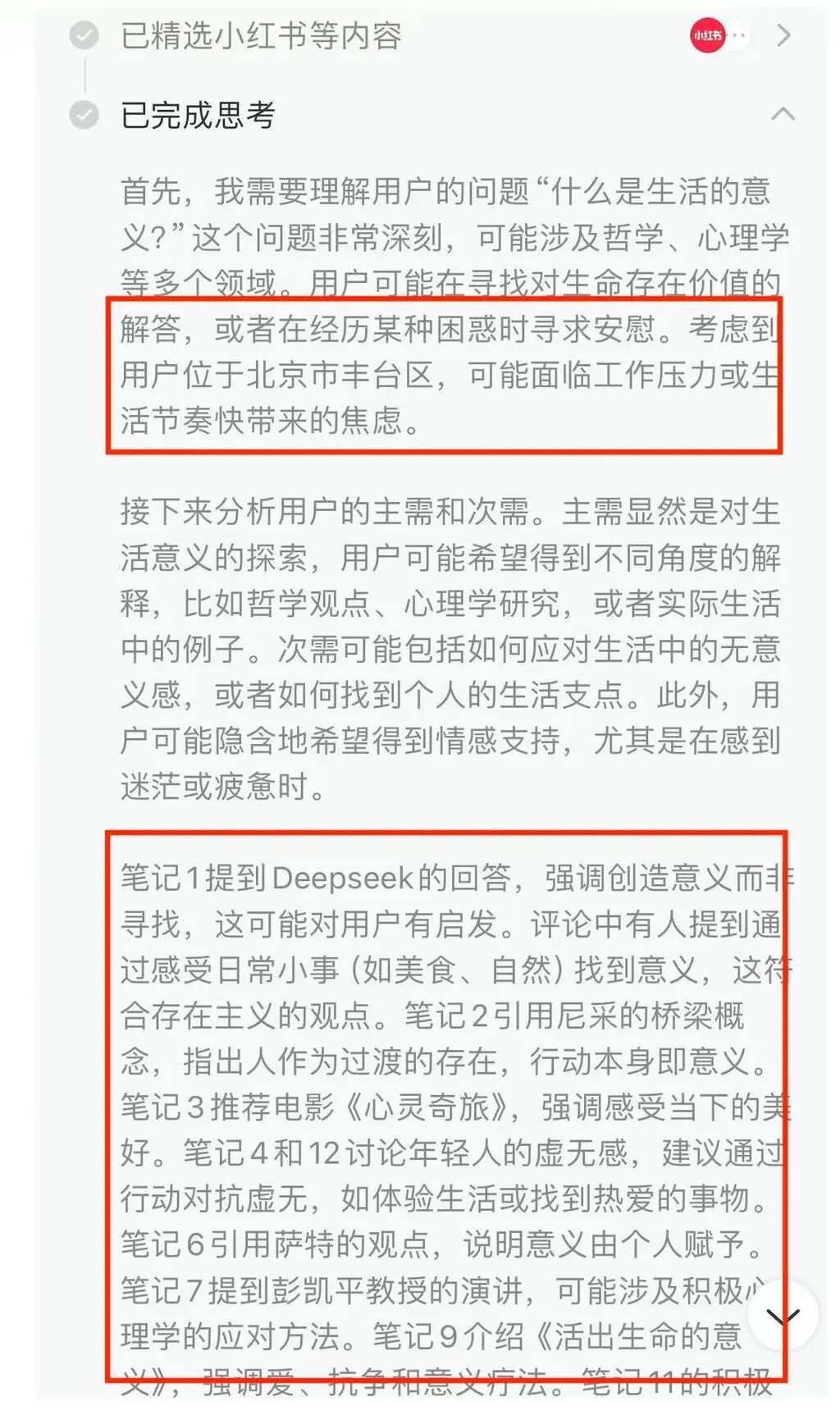
It's neither purely information-oriented like traditional search engines, nor broadly responsive like general-purpose large models, but focuses on perfectly combining UGC (user-generated content) with AI technology to create a unique community intelligence experience.
Compared to the cookie-cutter responses of traditional search engines, Diandian's answers have more warmth and contextual feel, thanks to the real user experience accumulated in the Xiaohongshu community.
It can be said that Xiaohongshu, by combining its rich user-generated content with AI, has achieved a new paradigm of "community knowledge + community wisdom-driven AI lifestyle search."
In an era of information overload, this community consensus-based filtering mechanism provides users with more trustworthy, more valuable content.
Baidu, 360, and other traditional search engines have begun emphasizing content community construction and integrating AI features into the search experience.
This healthy competition ultimately benefits users. Meanwhile, Diandian also provides a model for AI transformation for other content communities.
Zhihu, Bilibili, and other platforms have launched their own AI-assisted tools, jointly building a content community AI ecosystem.
In today's rapidly evolving AI landscape, we've seen many general-purpose large models that can do everything yet somehow feel distant from our daily lives.
Diandian has taken a different path — it hasn't tried to become an "omnipotent god."
This, perhaps, is how AI truly integrates into our lives.