11 Doers, 11 Answers in Progress | Crossing AI Open Mic

Last Saturday, the 23rd "Crossing" AI Open Mic returned to the AI Hacker House in Shanghai's Caohejing district.

We're in the final quarter of 2026, and the AI world still hasn't slowed down. New opportunities and questions keep surfacing, and the answers only come from getting your hands dirty. This time, our theme was: Keep going, builders!

The Crossing AI Open Mic in action
The open mic is a signature format of Crossing's offline salons. Each speaker gets about ten minutes to talk about a product they're building, a recent insight, or an experiment without a clear answer yet. This time, eleven friends took the stage. In his opening, Koji explained why he keeps doing open mics: the new generation of AI founders needs inspiration and opportunity, but also companionship and connection.
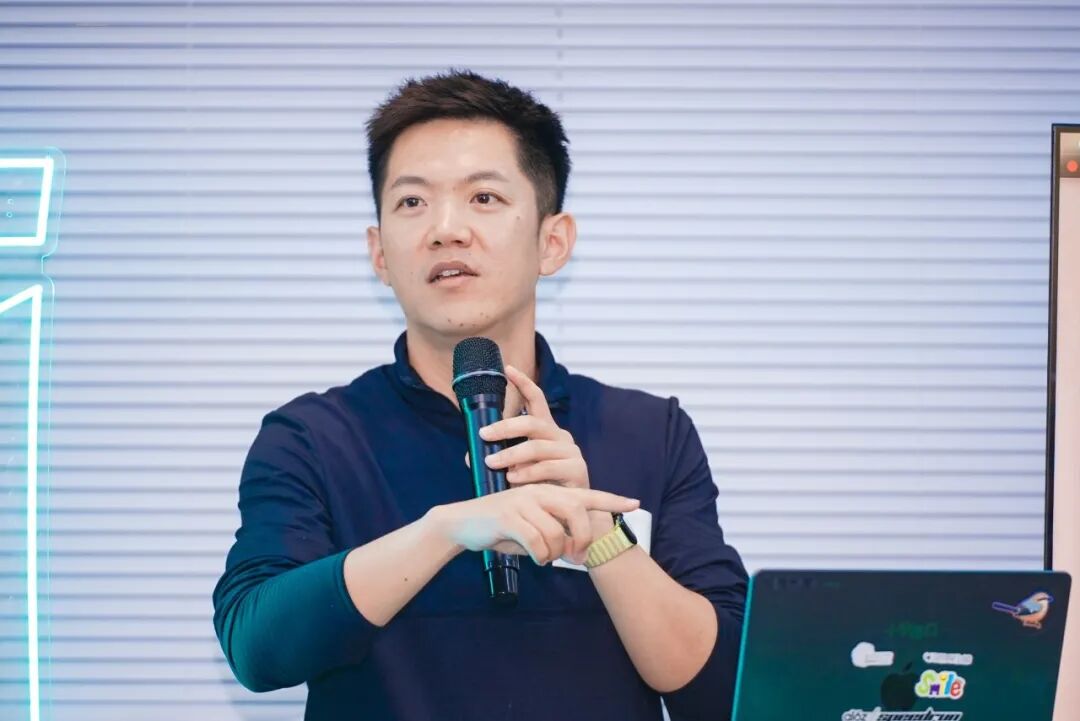
Koji hosting the event
That evening's talks covered personal agents, AI editing and collaboration tools, as well as hardware, games, and growth experiments. Some shared new products, others dissected choices they'd gotten wrong, and some brought attempts that hadn't quite worked yet.
Here are the eleven talks.
Ao Te, Founder & CEO of ego (lite)
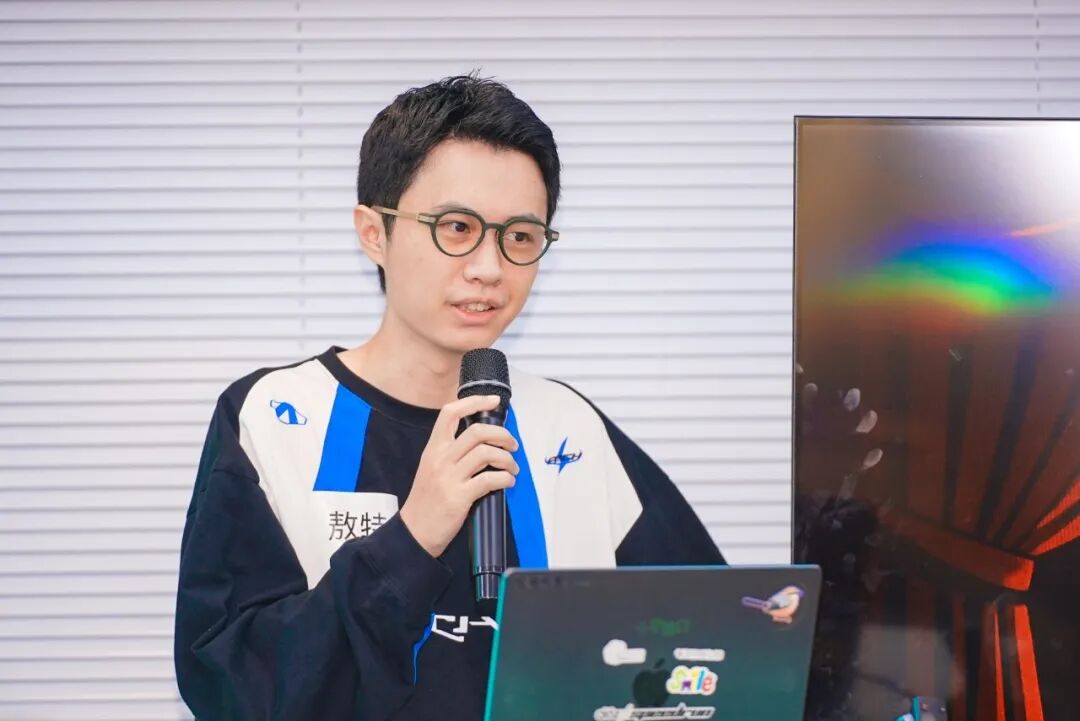
Ao Te
Iron Man needs JARVIS, but an ordinary elementary school kid like Nobita might need Doraemon.
Ao Te used these two characters to explain why he believes in Personal Agents. Today's products tend to demo scheduling flights and booking meetings, but people's need to be helped, understood, and accompanied runs much wider than these business tasks. The ratio of efficiency value to emotional value differs from person to person.
He's already launched the AI browser ego (lite), with the full ego still in exploration. This time, he wanted to focus on where the real moat for personal agents might emerge.
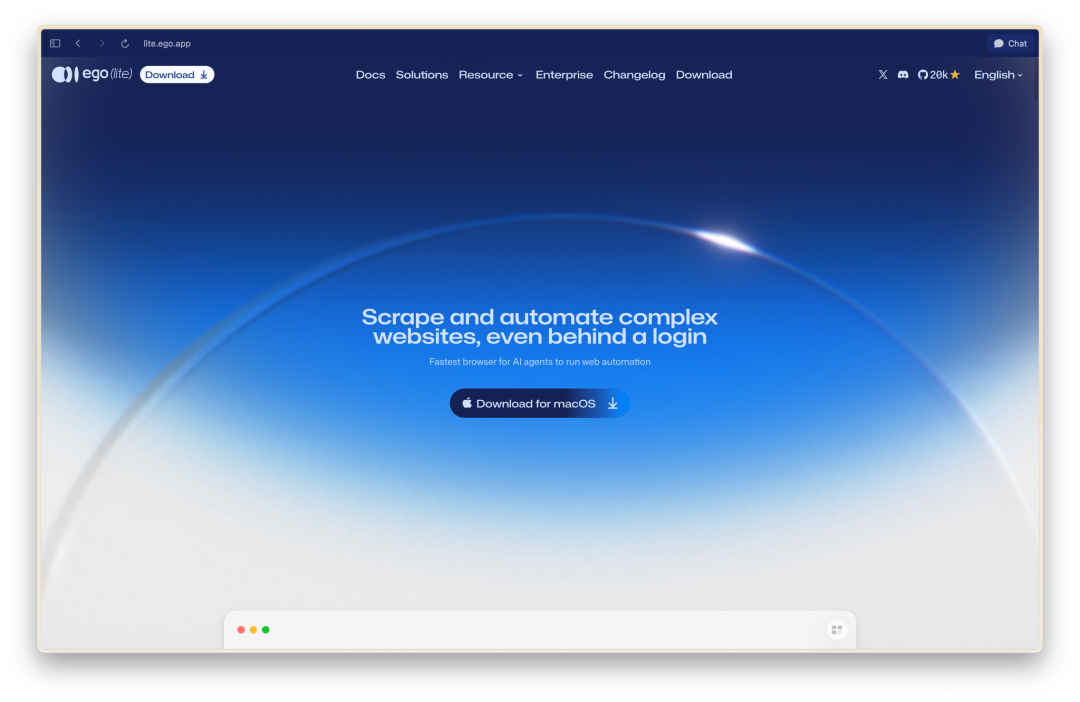
ego (lite) website | lite.ego.app
If memories are saved as files, you can take them with you when switching agents. If every agent has an email and phone number, products from different companies can communicate with each other. In that case, memory and relationship chains may not lock users in as much as imagined.
Beyond building a great personal agent itself, he sees another major opportunity: redesigning the network for information exchange and service access for a world with massive numbers of agents.
Kaiwen, Founder & CEO of ChatCut
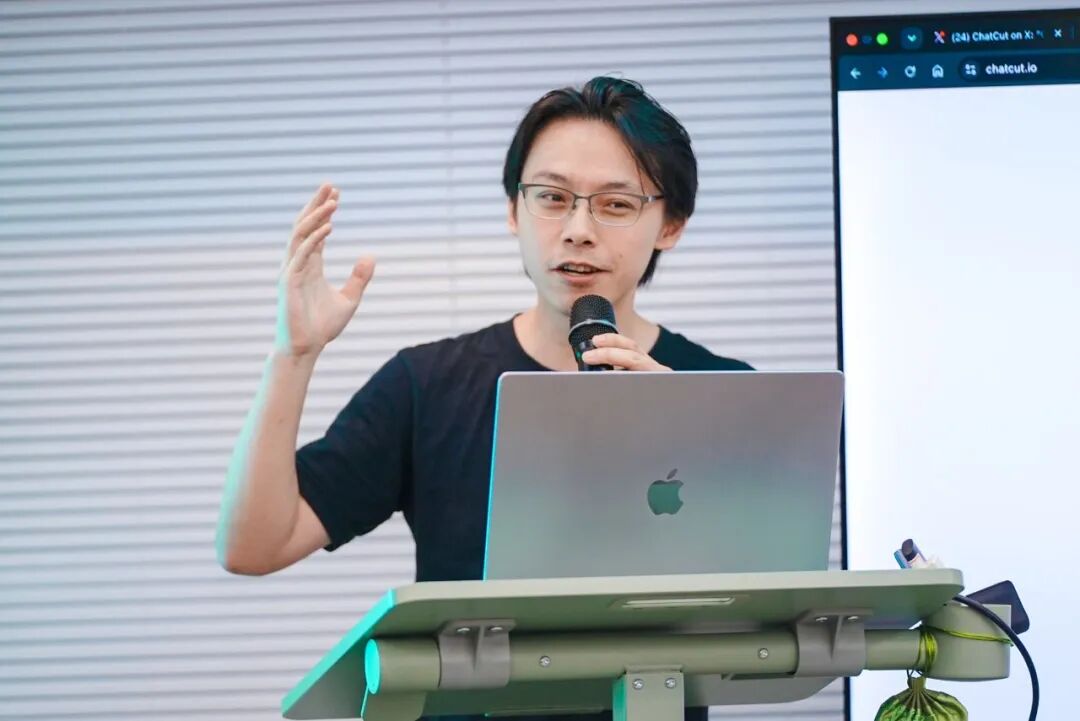
Kaiwen
Kaiwen, formerly an advertising director, uses the "cup and handle" metaphor for products: you might have made a decent cup, but you still need to find a handle that makes people want to pick it up.
ChatCut went through exactly this. Looking back, when they launched the web version in May, user response was limited. In June, after letting users access ChatCut inside Codex, the feedback started to shift.
The editing capabilities were the same. What changed was the entry point. Users were already working in Codex; now they could call ChatCut directly to complete video production.
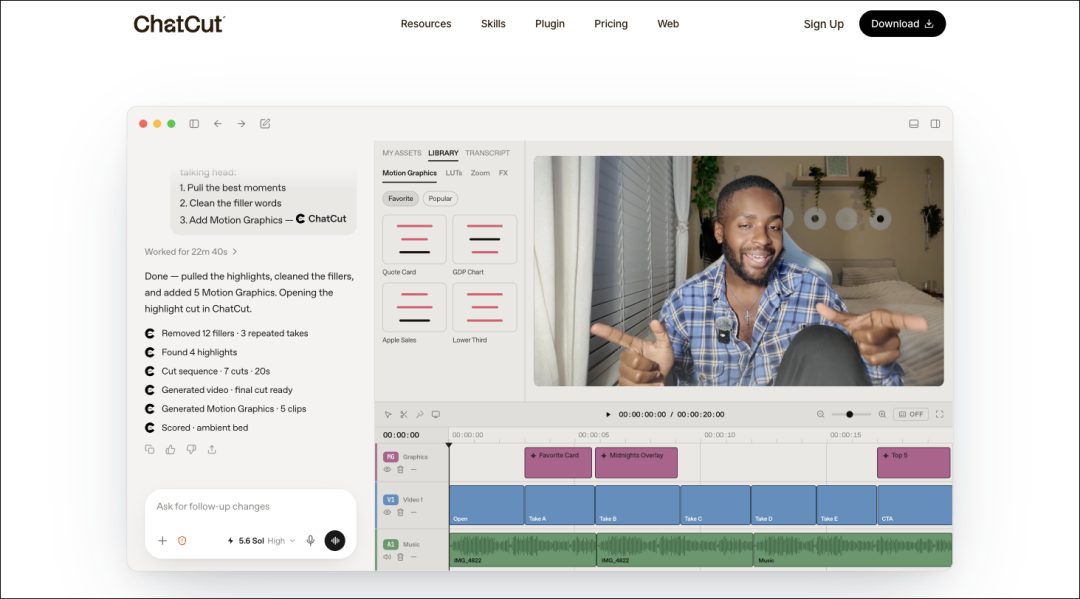
ChatCut Codex Plugin | chatcut.io/chatgpt-plugin
What surprised him more: some features that wowed users during demos were things the team had built long ago. Capabilities the team later invested heavily to crack weren't necessarily the first to get noticed.
How professional capabilities get discovered and invoked is worth refining as much as the capabilities themselves. A beginner's simple request may require sophisticated editing judgment behind the scenes; AI's opportunity is making these capabilities easier to use.
Kaiwen also encouraged everyone to run more reversible experiments. If a new entry point offers a better experience, just try it.
Gao Ce, Co-founder of Today AI
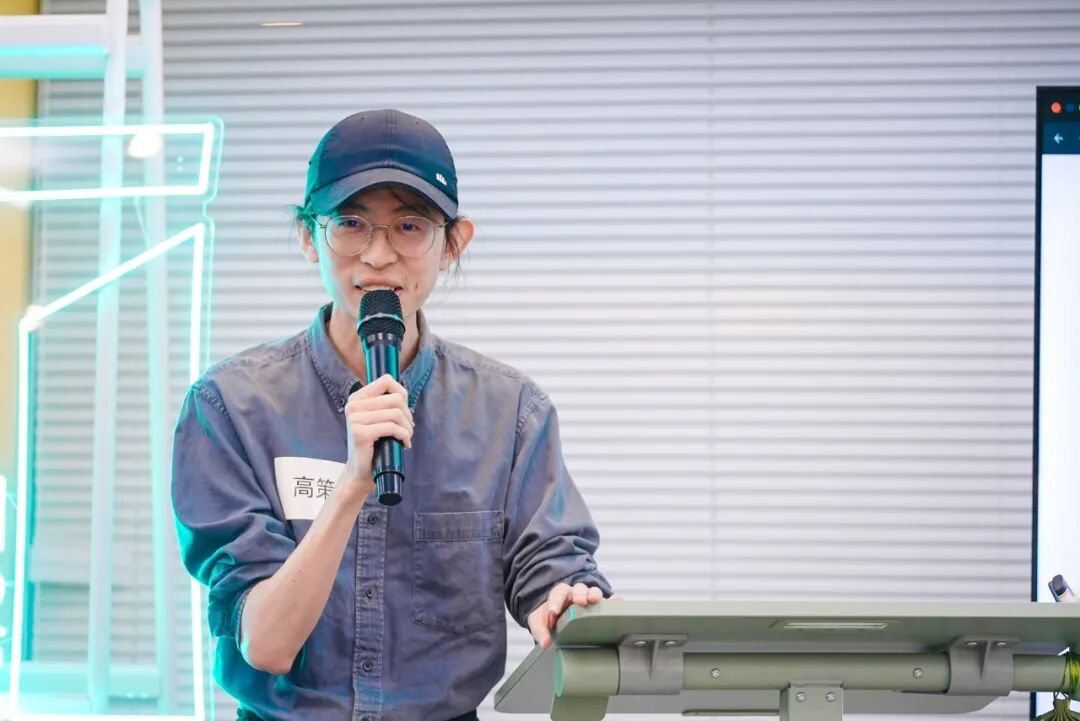
Gao Ce
Gao Ce recently discussed something deeply personal with AI: besides his main job, what else could he do? Like, become a content creator.
Based on what it knew about him, AI recommended some short-video formats that might more easily gain traction — even gesture dances. But Gao Ce found that while these suggestions made sense, he wasn't particularly inclined to follow them.
This small experiment surfaced a question: between AI knowing your background and AI helping you make choices you're willing to accept, there's still a gap.

Today AI website | todayai.cn
He also used this process to rethink content creation. When people read an article or share a perspective, sometimes they're acquiring information, sometimes they're expressing "who I am" and "who I want to become." His example: how reading and sharing Crossing reinforces his own identity as an AI practitioner.
Gao Ce hopes personal agents can become a kind of advisor: knowledgeable about a domain but also attuned to this particular person's preferences and concerns, making suggestions that align with the life they actually want to live.
And when AI frees up more time for people, that time can go toward games, writing, dancing, or documenting life. The meaning of creation can also be simply making yourself happy.
Gloria, Chief of Staff at Soku AI

Gloria
After building a product, how do you more quickly know if anyone needs it?
Gloria observed that when founders talk growth, they're often happy to discuss SEO and influencer content, but hesitate around paid ads. Yet for early teams, advertising can also serve as a market experiment: using limited budget to test which audience, which message, and which use case gets a response.
The value of paid acquisition includes shortening the time to validate product-market fit.

Gloria's presentation | Ads are cool again: Accelerating growth with paid acquisition
She shared several practical points. Change only one dimension per experiment to isolate what's driving results. Budget according to the conversion action and acquisition cost you want to observe. Beyond ad platform data, keep watching what users actually do after entering the product.
Some ads bring cheap users who don't engage deeply with the product. That low cost doesn't mean you've found the right people.
Soku AI wants to hand repetitive work like ad research, campaign setup, creative rotation, and data review to agents, freeing people for strategy and judgment. After automating execution, teams still need to answer: what did we learn from this experiment, and what should we validate next?
Kabi, Founding Team Member at Raft AI
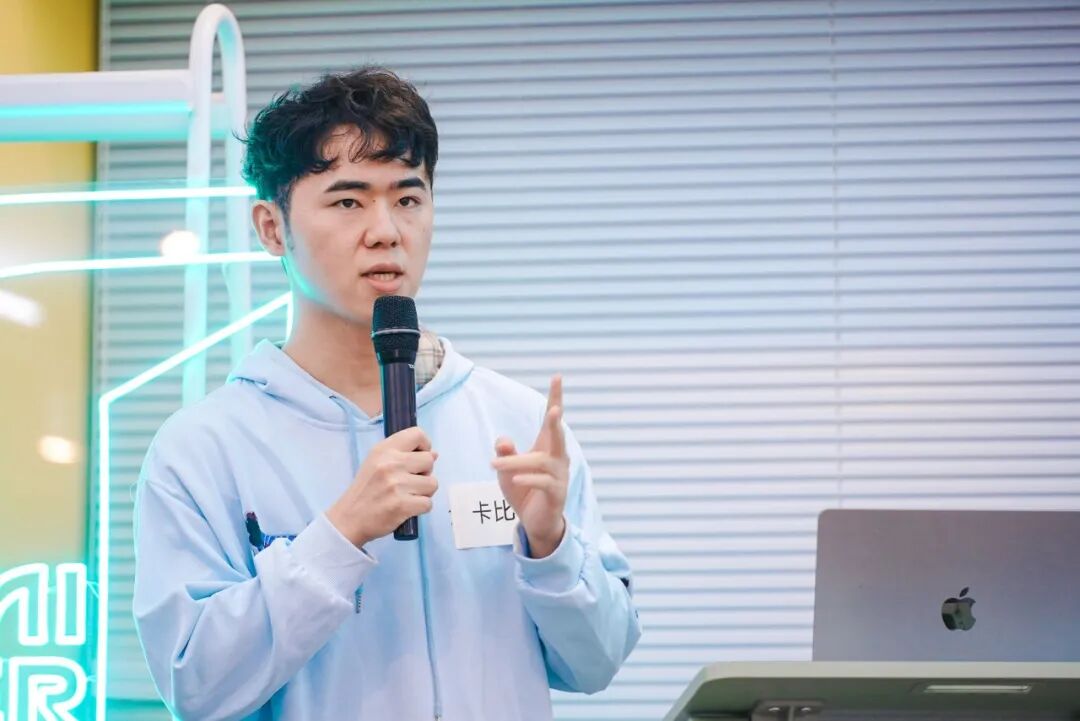
Kabi
If an agent is to become a colleague, what kind of work environment does it need?
Kabi introduced the shared workspace Raft AI is exploring for humans and agents. Here, agents have persistent identity and responsibilities, can take on testing, operations, and other roles, and accumulate context around tasks.
He shared one team experience: while CTO Zhuang Binyi was on a flight, he pulled Raft's agent and ScopeDB's engineer into a group chat, and after authorization, had them push forward joint development together.

Kabi's presentation | How agents decide whether to join a conversation
For this kind of collaboration to work, many seemingly small questions actually matter. When a message comes in, must the agent respond? How many agents should join a task? After finishing work, can it exit the discussion on its own?
Raft designed a "peripheral vision" mechanism for this: agents can see what's happening in the group, accumulate context, then decide whether to participate. Kabi noted that a group might have 50 agents, but a particular task might only need 3 of them.
Being able to participate in work, and also judge when not to speak, gets closer to a colleague you can actually work with. For humans, the workspace should make delegating tasks, granting authorization, checking progress, and accepting deliverables more seamless.
Zheng Jiajun Mike, Head of Startup Channels & Ecosystem at Google Cloud

Mike
Mike started by showing what he'd recently built with AI: recording tools, video production workflows, documents, and various small apps. By his count, he'd made over 30 apps in just over a month.
He'd also revived his WeChat Channels presence. Scanning news, initiating tasks, and letting AI handle subsequent video production had become part of his daily routine.
The more he used it, the more clearly he felt the shift in task patterns: starting with occasional questions and code snippets, moving to daily-running automations, and eventually to agents working continuously.
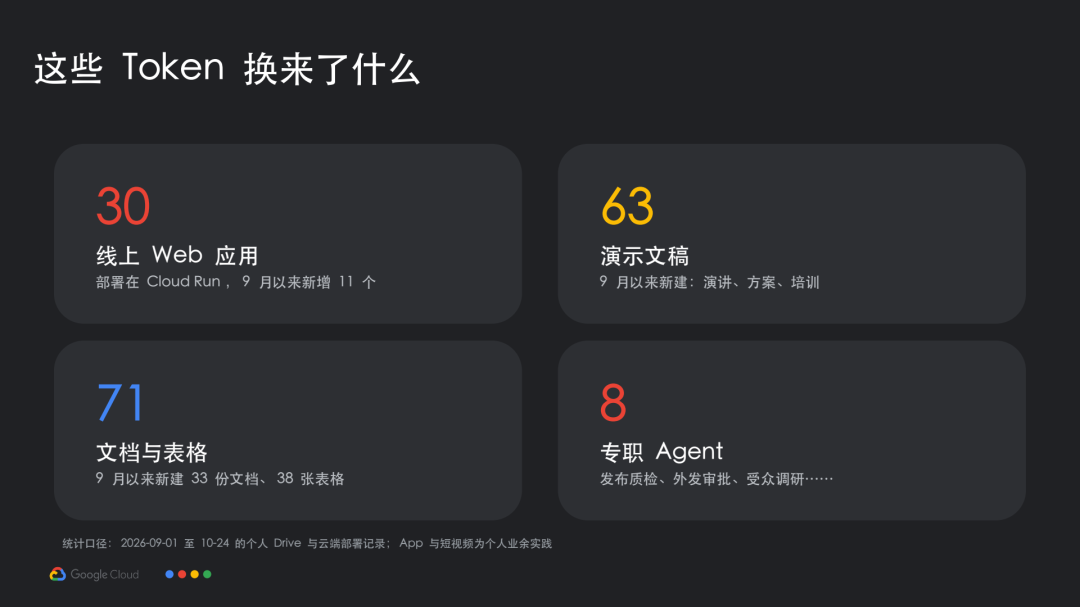
Zheng Jiajun Mike's presentation | Personal AI application practice
After becoming a heavy user himself, models, tool connections, and costs all became concrete problems he encountered daily.
On Google Cloud's capabilities, Mike particularly highlighted video understanding and audio. For example, with long videos, if a model can understand them directly, you could find a specific shot with a single sentence — skipping manual tagging and text-transcription-then-search steps. Real-time voice, ambient sound, and multimodal input can also help products break out of the text chat box.
Finally, he introduced the Google Startup cloud resource support program for eligible startups.
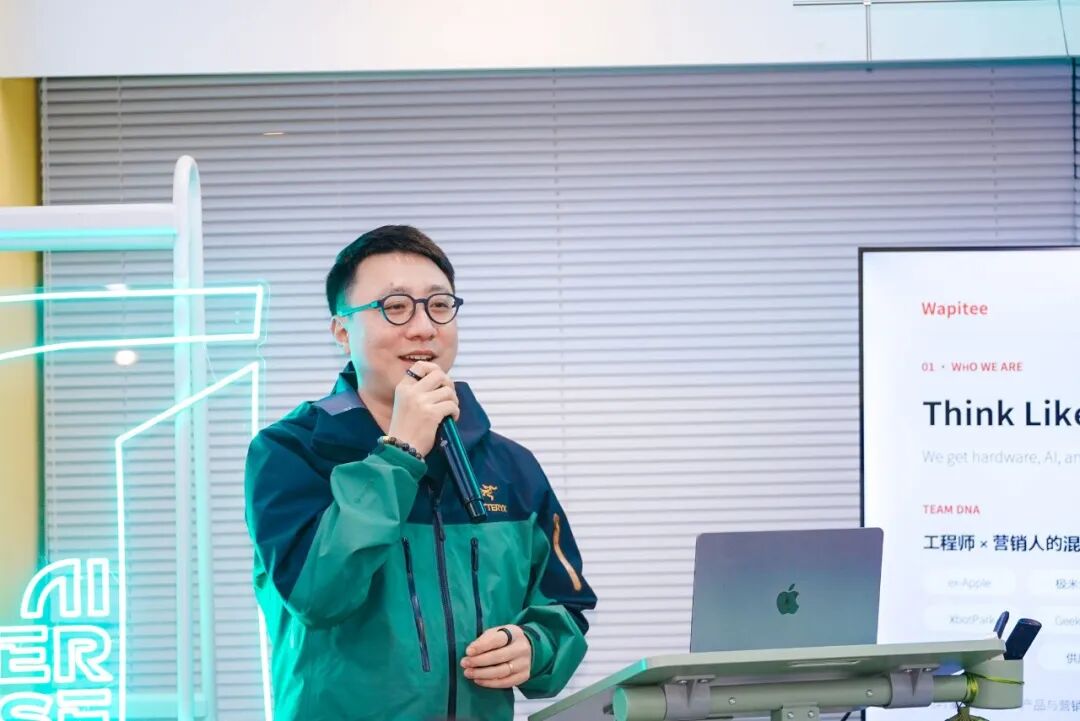
Jacob, Founder & CEO of Wapitee
Jacob
When Jacob took the stage, he was already wearing a client's product. With a background as an Apple hardware engineer and hardware founder, his Wapitee now helps AI smart hardware brands enter overseas markets.
This time, he brought the questions clients most often ask to the stage: how does a new product find its positioning? Is crowdfunding mandatory? Should the team hire a CMO first?
On positioning, he cited Looki. When people first encounter a wearable recording device, different people default to different understandings. To get consumers to buy, you need to keep explaining what it is, whose life it fits into, what problem it solves, and why it's worth using continuously.

Jacob's presentation | Key questions when preparing GTM
Technology makes a new category possible, but why users need it still has to be found in the market.
AI hardware's features, product narrative, and target audience may all continue evolving after launch.
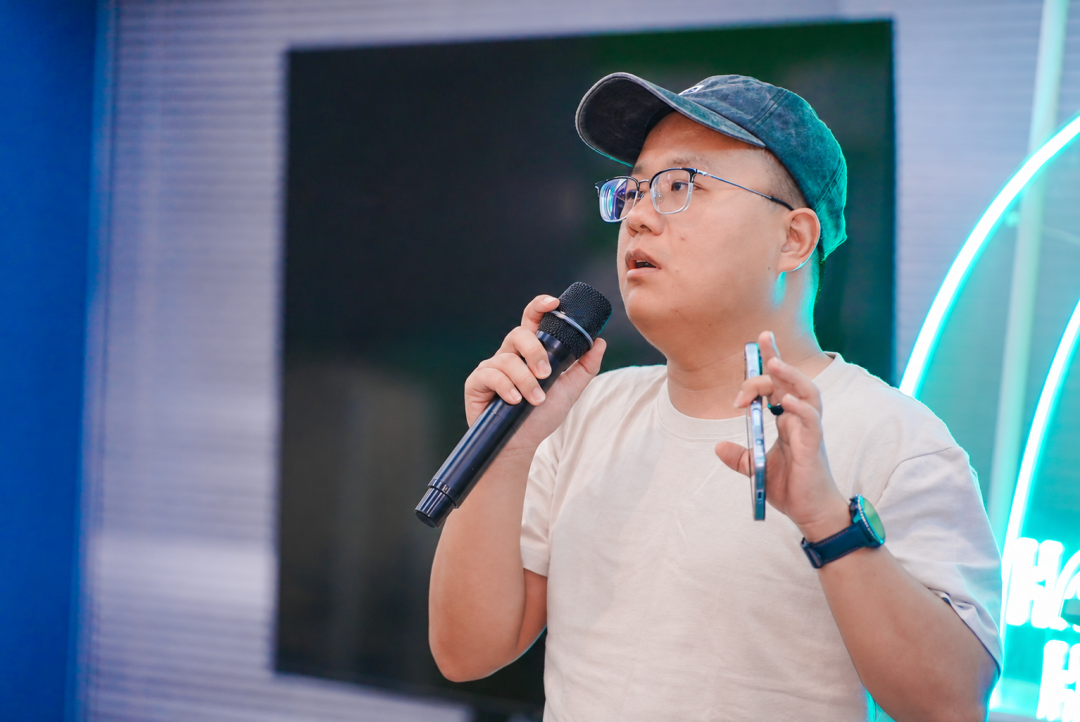
Jones, Initiator of IntentGrant
Jones
Jones used Today AI for the first time that very day. Half a day later, he'd already developed trust in this agent that understood him and proactively provided information.
This also made the problem he's working on more concrete: as we grow more willing to delegate to agents, how do we confirm that their actions actually have our consent?
From buying a cup of coffee to more important transactions and real-world actions, the scope of authorization, its validity period, and how to trace it afterward will gradually become practical concerns.
His IntentGrant aims to leave clear authorization records: who approved what action, when.
The team's proposed solutions include physical confirmation devices, and also integrating with existing hardware like wristbands, rings, and smart glasses. Through open protocols specifying what needs confirmation, verifiable records would connect authorization to execution.
His starting point: giving user consent a clear, traceable anchor. As agents begin acting on people's behalf, products also need to help people see exactly what permissions they've handed over.
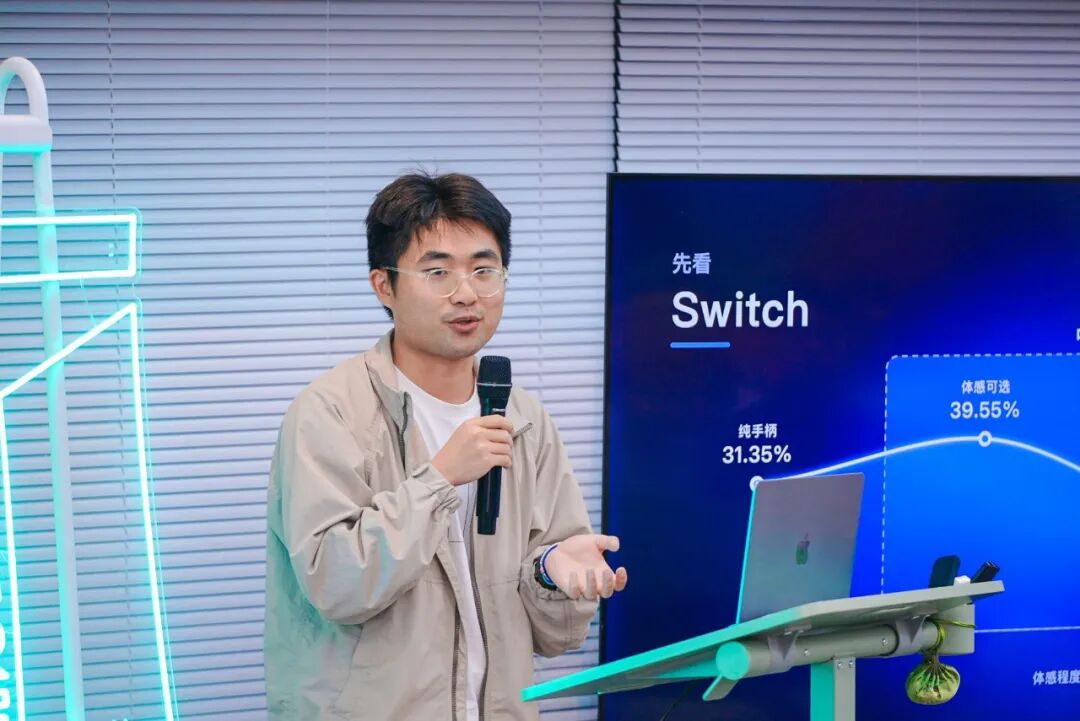
Jerry, Founder & CEO of Action&Link
Jerry
Jerry wants players to re-experience games they already love using their bodies.
His product GameChange attempts to plug configurable motion controls into existing games: some want running, jumping, and attacking all done physically; others just want to add hand aiming, punching, or dodging. People who love the same game may want completely different levels of exercise.
The project started in 2023 as an experiment among a few friends, gained attention on Bilibili, and gradually moved toward commercialization. Early on, the team relied on users buying 3D-printed products to keep the small project going.

Action&Link official app interface | Source: actionandlink.com.cn
At first, they preset what they thought were appropriate motions for each game. After engaging more users, they found it hard to satisfy everyone with a single solution.
Motion experiences need to leave room for players to adjust. This is also where the team hopes to bring in AI: generating initial configurations based on the game and user preferences, then letting players fine-tune — reducing the manual work of adapting game by game, playstyle by playstyle.
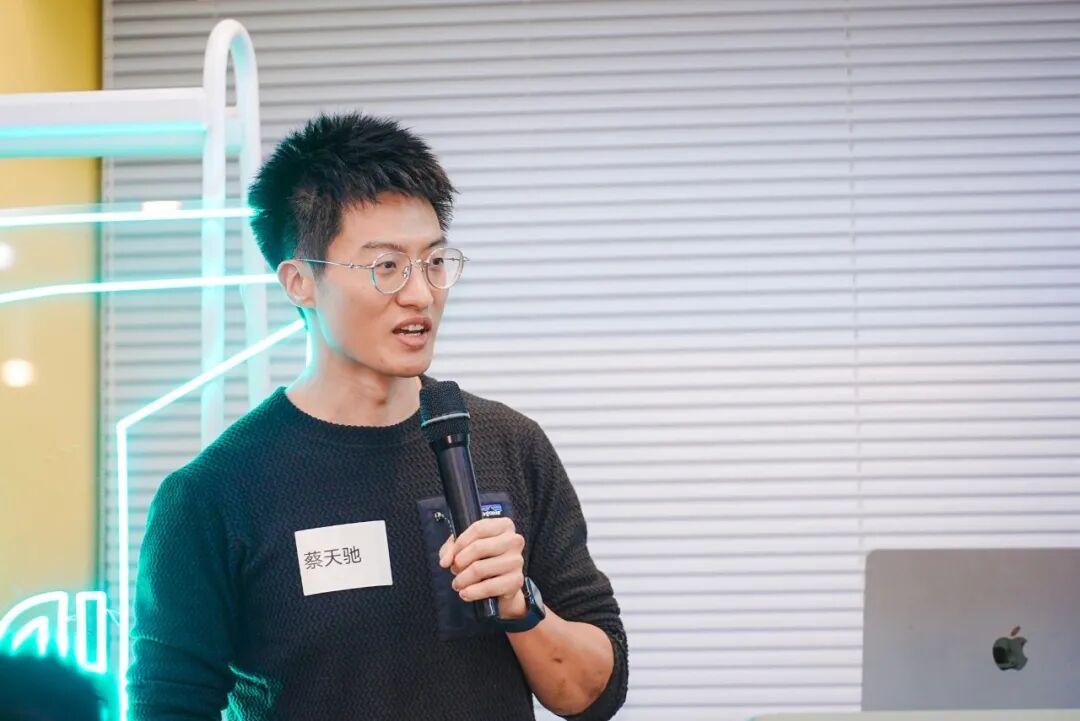
Cai Tianchi, Founder of Saddlepoint AI
Cai Tianchi
Cai Tianchi opened with a question: everyone says startup failure rates are high, so why do we only ever hear success stories? Where do the failures go?
So he decided to talk about several of his own failed attempts.
Cai Tianchi studied math and computer science, did reinforcement learning at Ant Group, and worked on Talkie and STARFIELD at MiniMax. After leaving to start his own company, he initially wanted to build a human-agent collaboration workspace: like programmers working with AI in an IDE, but letting users work with agents on a canvas.
Later, as models' delivery capabilities grew stronger, users grew less willing to open a canvas. He found he too preferred to just state his needs and let agents deliver the results.
"I bet on it last year, and I lost this year."

Cai Tianchi's presentation | User feedback on AI workspaces
But another attempt gave him different feedback. He'd long trained in rowing and competed in Hyrox, and later built a fitness app. The first version put everything in a chat interface; when he had athlete friends try it, they wanted to open it and immediately see body status, scores, and training results.
In one project, users found the canvas unnecessary; in another, users didn't want to keep chatting. The right interface ultimately comes back to what the user wants to accomplish in that moment.
He also dissected another wobble: trying to serve both content producers and consumers simultaneously, and ending up doing neither well. Production tools need to help people complete work; consumption products need to make people want to stay. Two different goals that each need their own clarity.
At the end of his talk, he invited anyone who wanted to discuss model training, fitness products, or startup failure experience to find him. As for people impulsively wanting to start a company, he joked, they could also find him for some "dissuasion."
Leaf, Former ByteDance, Full-time Indie Developer & AI Content Creator

Leaf
The final speaker, Leaf, introduced himself as a "lone wanderer." He brought an overseas customer acquisition experiment currently underway as an indie developer.
He'd turned roughly 2,000 AI advertising visual prompts into a product, but couldn't sell it. He tried $20 of Reddit ads; after three days, the ad dashboard showed about 1,000+ clicks, but only about 18 people actually reached the site. They left quickly, with no conversions.
He described this experience as: spending one dollar to pay someone to glance at you.
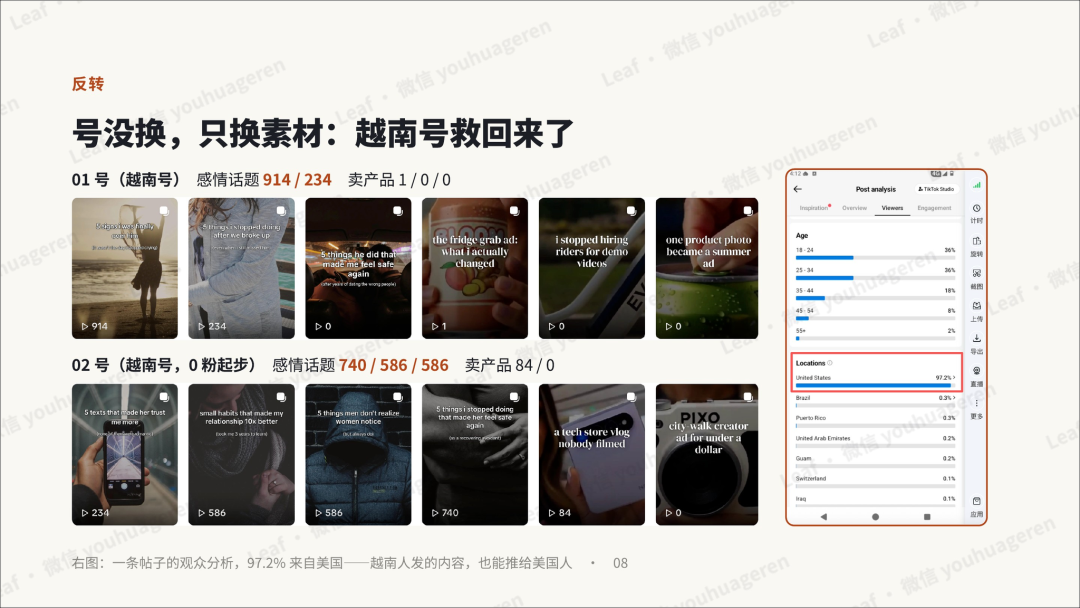
Leaf's presentation | TikTok accounts and content experiments
So he started trying to get organic traffic through multiple TikTok accounts. He'd assumed content creation would be the hardest part; once he actually started, he discovered that getting content posted normally, seen by people, and then driving viewers to the product page — each step had problems to solve.
Building products keeps getting easier; finding users still takes round after round of experimentation.
AI can help with execution, but which data to trust, where things went wrong, and how to adjust next time still require human judgment accumulated through practice.
🚥 Keep going, builders!
In this open mic, someone pivoted a startup direction, someone got their first users, and someone just figured out what they're actually good at.
These experiences give "keep taking action" concrete form: ship a version, get feedback, adjust the next step. The outcome is still uncertain, but things are already happening.
Thanks to every friend who took the stage, and to everyone who came. See you at the next Crossing open mic.
Keep going, builders!
Join the membership group
 Comment to win prizes