136 People and Their 100,000-Word AI Year-in-Review | Zhihu "AI Halftime"
This isn't just one person's feeling.
This isn't just one person's feeling.

👦🏻 Author: Jingshan
🥷 Editor: Koji
🧑🎨 Layout: NCon

The faster the era accelerates, the more we need to think long-term.
Zhihu user @zibuyu9 (Zhiyuan Liu, founder of ModelBest) used this line to open his year-end review. It rings true.
And honestly, it's not just his feeling.
Recently Zhihu has been running a large-scale initiative called "AI Halftime", bringing together annual reflections from frontline practitioners and researchers.
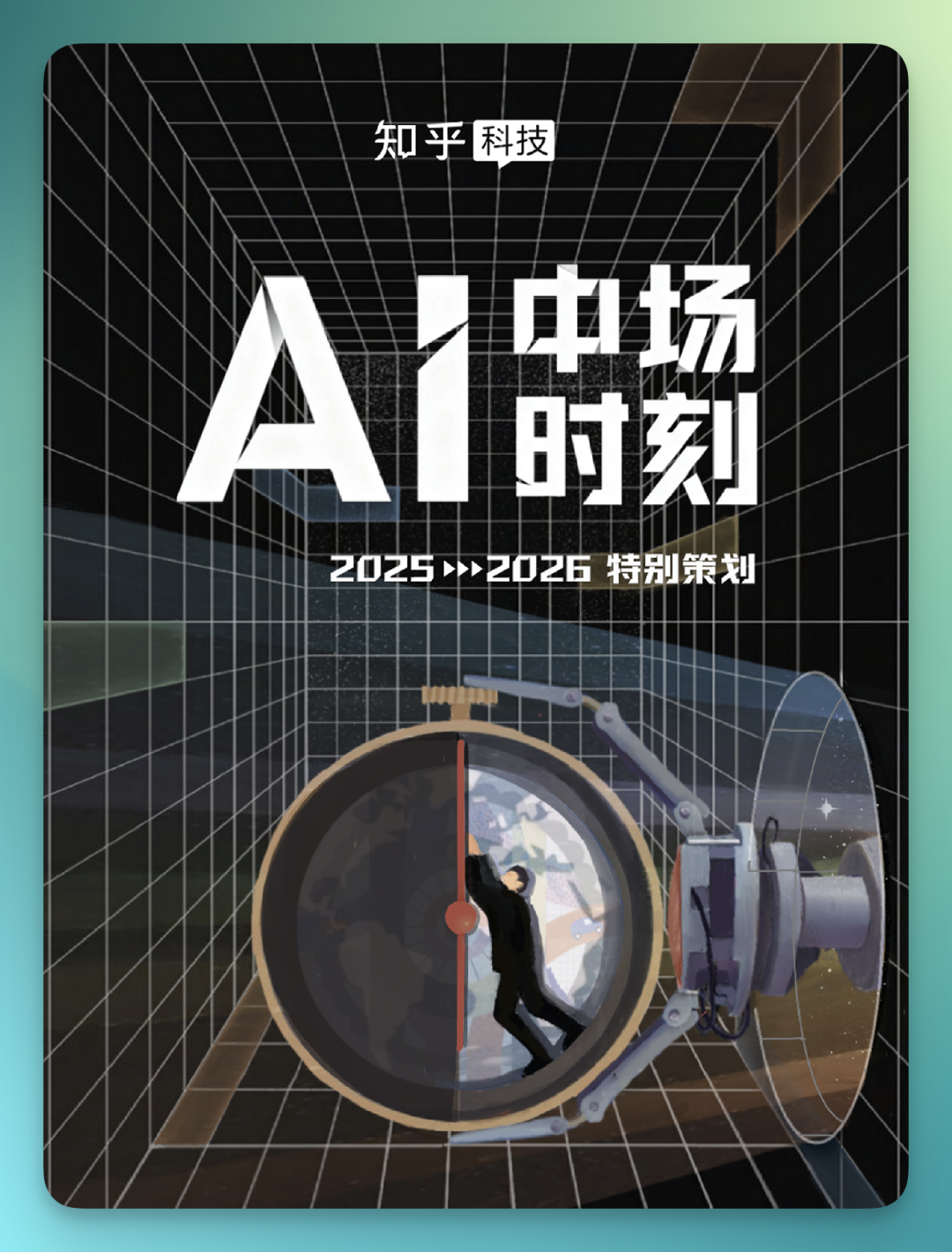
To date, thousands have participated in the overall project. Under one question — "As a tech professional, how would you summarize your 2025?" — there are already 136 high-quality answers, with more coming in steadily. The Crossing team read through all of it from start to finish, and the compiled content now exceeds 100,000 Chinese characters — dense with substance.

After finishing all 136 responses, a few especially specific details stuck with us:
【1】Some are genuinely anxious about their careers, discovering that age and experience — previously seen as advantages — are being reassessed. 【2】Someone spent several weeks just cleaning historical data so AI could actually be put to use. 【3】Others realized most of their code is now written by AI, and the focus of their work has quietly shifted.
None of these are grand narratives, but pieced together, they feel real.
🚥
Based on these 136 responses and 100,000+ characters of content, we did a systematic review.
Here are our observations.
1) People have demystified AI and started putting it to "wash dishes"
If 2023 was the inaugural year of AI's exponential growth — the first time people saw models write articles, code, and generate images — then by 2025, in Zhihu's discourse space, more people are seeing AI's reality after it stopped being "noble."
AI has started landing in practice.
This year, many practitioners share a common sentiment: AI is no longer lofty technology, but has become a "steel wool scrubber for washing dishes" in their hands.
The voices from the frontline can basically be summed up in one word: demystification.
Zhihu user @Yaoxiaobai recalled that in 2025, he went from an eager "explorer" of new tech to a "delivery lead" who only cares about results. Early in the year, he tried using large models to replace 30% of his company's workforce. The logic sounded good; the reality was mentally taxing.
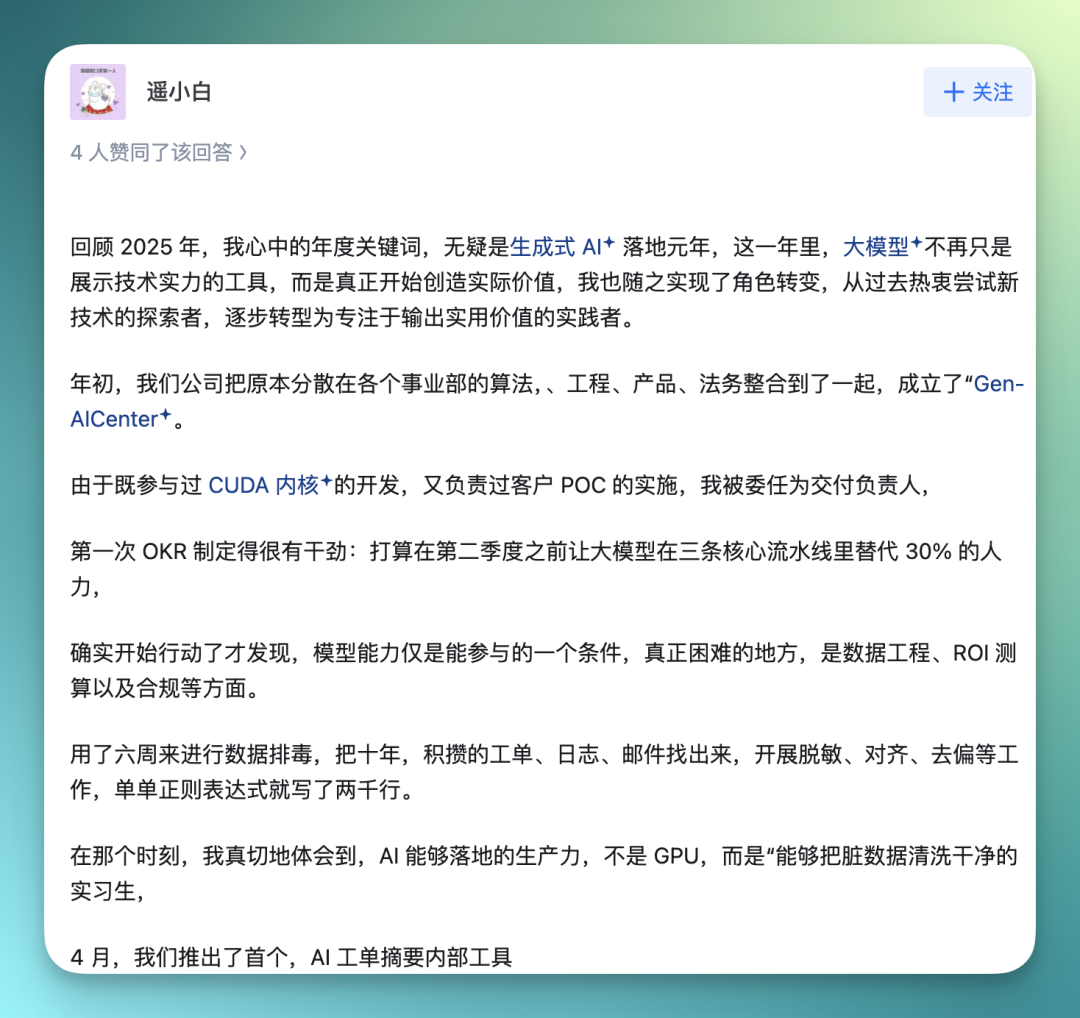
To get the model to truly understand the business, he spent a full 6 weeks on data cleaning, going through 10 years of accumulated tickets, logs, and emails — desensitizing, aligning, fixing formats.
By his own count, he wrote over 2,000 lines of regex. Through continuous overtime, he reached an extremely practical conclusion:
What truly determines whether AI can land is "the person who can clean dirty data."
This visceral feeling gets amplified even more in traditional manufacturing.
Zhihu user @Mouzhimingaixierendeshi documented his experience pushing predictive maintenance at an electric motor factory. When he told a veteran technician, pointing at vibration spectra and temperature curves on his screen, that "we can predict failures in advance," the other person patted the old equipment and cut straight to the point:
This step requires spending money to change things first.
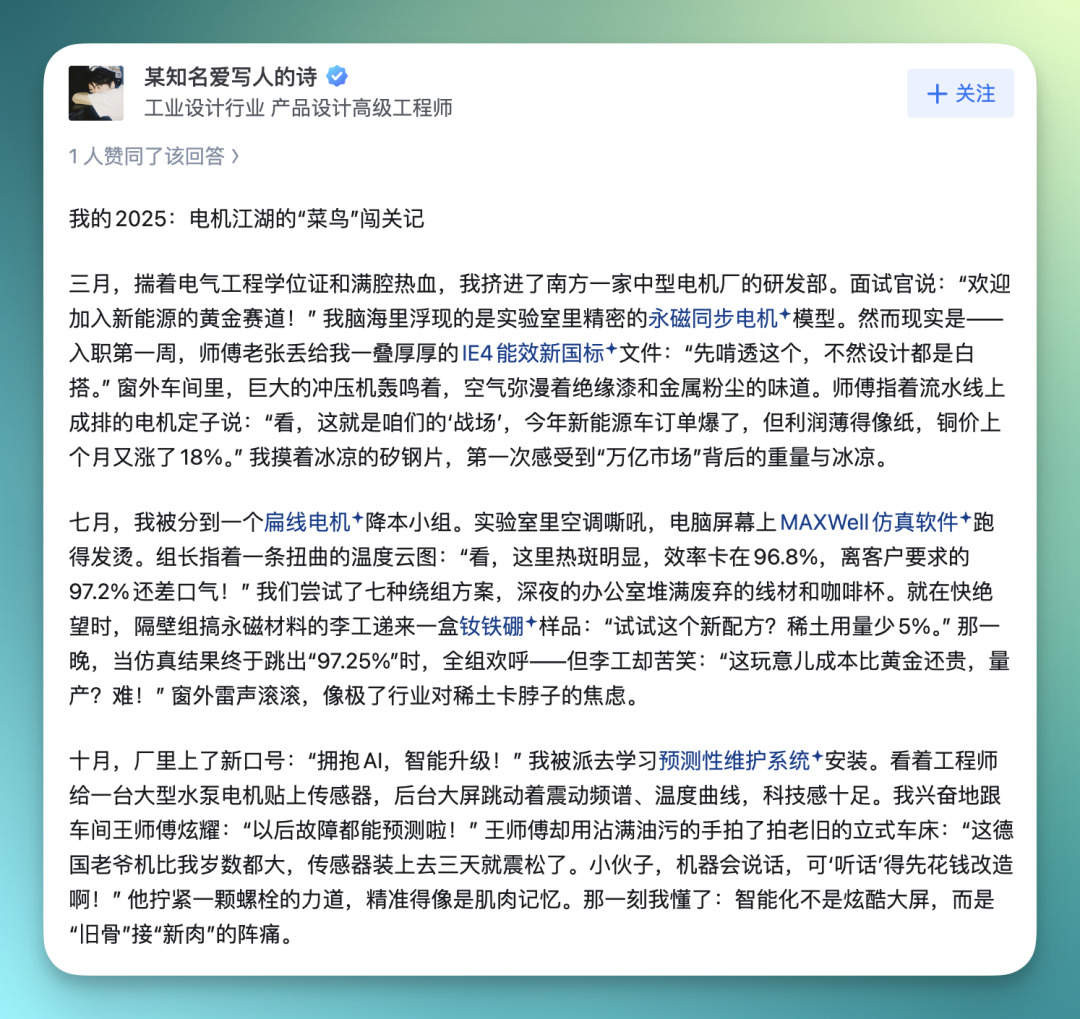
In that moment, he realized that so-called intelligent upgrading is the painful process of old systems gradually connecting to new ones.
So in 2025, "landing" is no longer a slogan — people need to pay real costs to get it done.
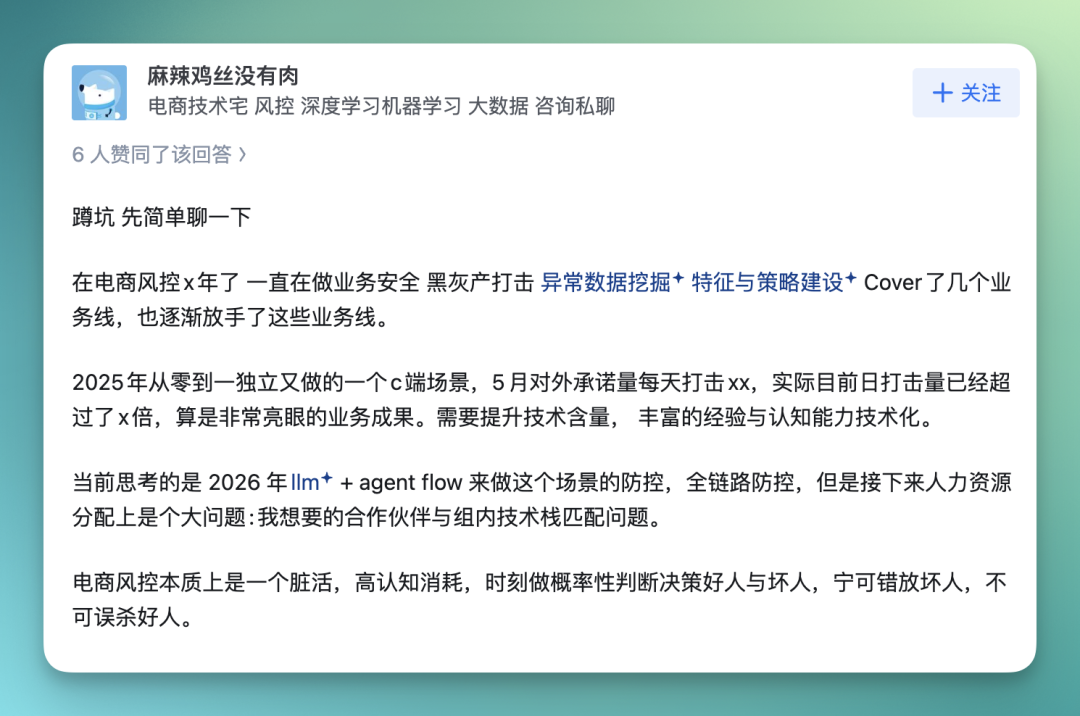
Zhihu user @Malajisimeiyourou described his work in e-commerce risk control as essentially doing "dirty work" long-term, with extremely high cognitive drain. Entrepreneur @Wang Ran used "scrambling and stumbling" to characterize his year.
He thought he had the direction figured out at the start of the year; only after diving in did he realize how far he still was from true industry know-how.
His assessment was direct:
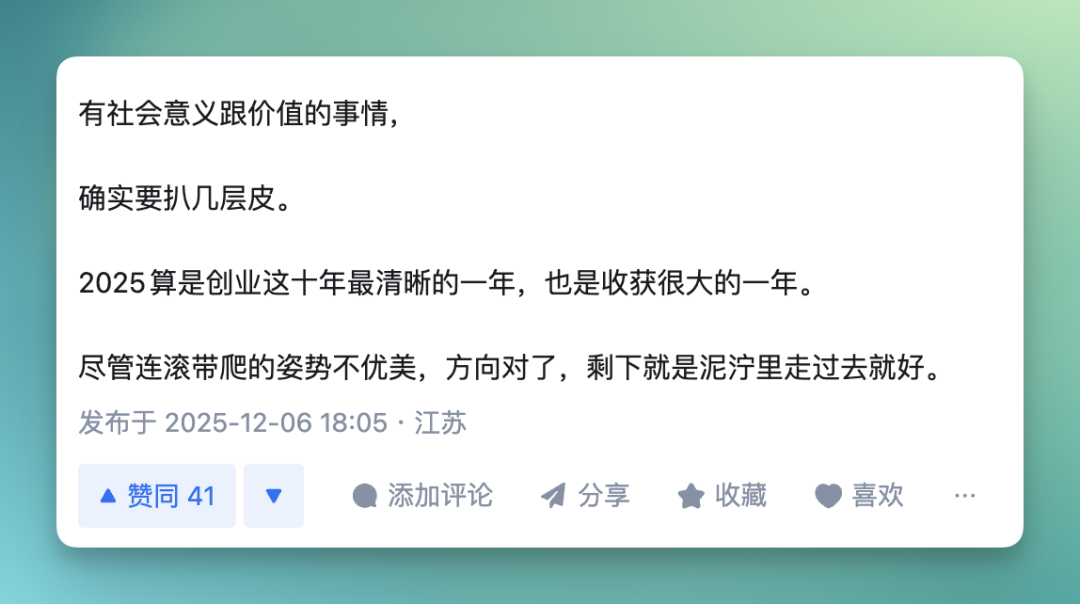
Things with social value were never glamorous to begin with.
But it's precisely from these "dishwashing" moments that AI truly embeds itself into industry.
@Yaoxiaobai's team eventually fed that batch of "dirty data" into a usable tool, compressing bond prospectus summaries from 2 hours to 5 minutes. He later realized that so-called technology changing the world often just means letting others get off work early to pick up their kids.
University teacher @smart chose to start a business specifically solving "small problems" like file format conversion and watermark removal. The tool isn't glamorous, but people use it every day.
In these responses, AI in 2025 is a bit specific, a bit fragmented, even a bit messy. But as @Wang Ran put it:
Whether the posture looks good doesn't matter. If the direction is right, keep walking through the mud.
2) The "super individual" under Vibe Coding
In 2025, a new term spread through developer circles: Vibe Coding.
It points to a very concrete shift: writing code is no longer the core barrier; understanding problems, breaking down logic, and making judgments are.
You no longer need to type code line by line — as long as you can articulate requirements clearly, AI can fill in the structure itself.
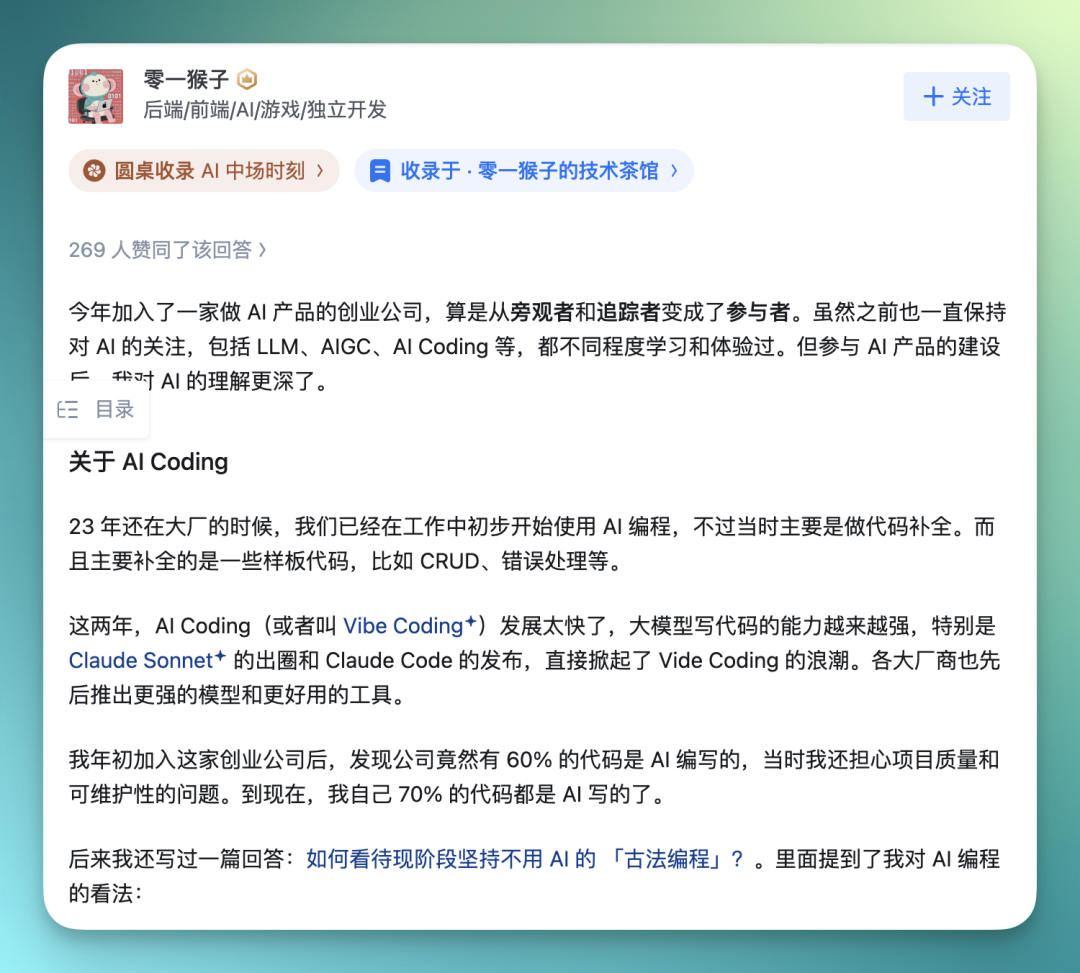
Zhihu user @Lingyihouzi called this his "shock education." In 2025, when he first joined an AI startup, he discovered a "counterintuitive" fact: about 60% of the company's code was AI-generated.
At first his biggest worry was quality and maintenance costs, but by year-end he had to admit a change had already occurred:
Now, roughly 70% of my own code is written by AI.
Beyond efficiency, there's also a shift in role. Engineers are gradually becoming designers.
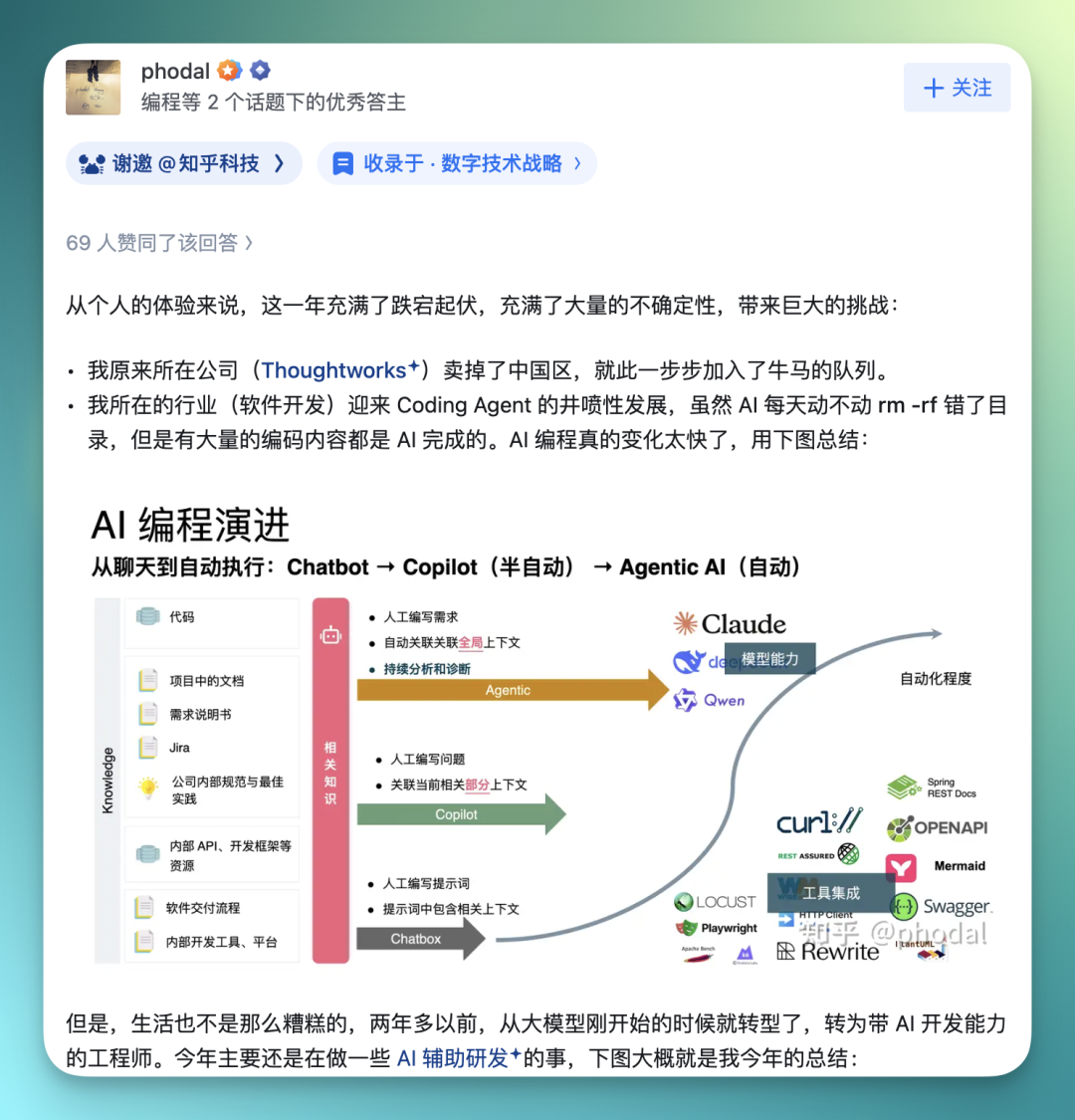
Zhihu user @Phodal (software architect) summarized his 2025 in one chart: from MCP to Skill, tools keep changing, but the core remains one thing: using AI Agent to build AI Agent.
He said this year's leap in Agent capabilities was so large that many complex jobs previously unapproachable can now be completed quickly.
Based on an Agent-driven testing approach, he built complex functionality like ChatDB in very little time, and for the first time clearly felt that "10x efficiency" wasn't just marketing speak.
When "can you code" is no longer the dividing line, the "super individual" starts to emerge.
Zhihu user @Orange AI shared a very concrete example. To hit the launch window for Nano Banana 2's model release, one engineer on his team took just two days to write a fully functional image community product using Vibe Coding.
His assessment was pragmatic:
No product manager needed, no designer needed — everything relies on AI and yourself. This is the end-to-end full-stack engineer.
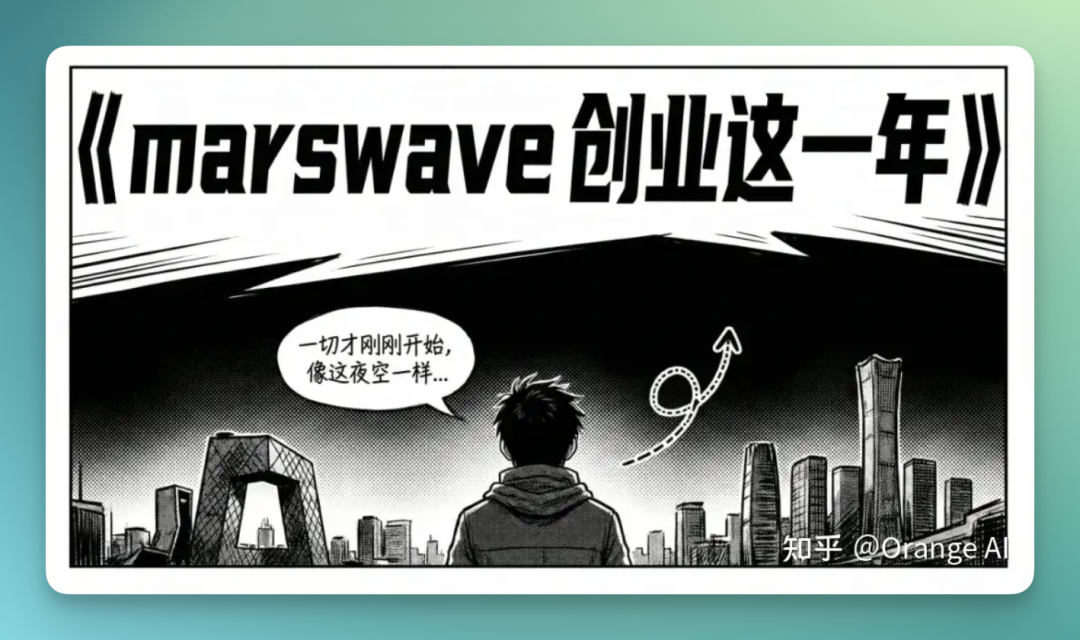
In 2025, one engineer can indeed become a full team in a short time.
This shift isn't limited to tech circles.
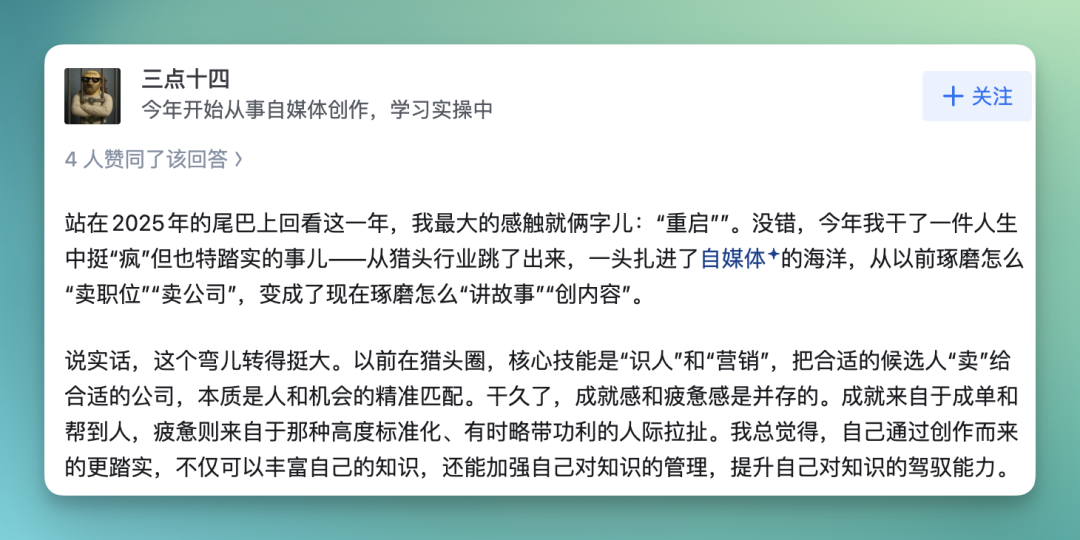
Zhihu user @Sandianshisi spent years in executive search before pivoting to content creation in 2025. For someone without a technical background, video production, scripting, image generation, and operations were previously out of reach.
But with AI assistance, he achieved "one person, one team."
His description was precise:
AI doesn't replace me — it arms me, amplifies me.
The "Vibe Coding creates super individuals" trend of 2025 isn't actually gentle.
It makes people who only know how to write fixed code anxious, while giving those with ideas, judgment, and communication skills their first real shot at Ship First.
As @Orange AI put it:
You don't need to keep asking yourself whether you've found PMF. When you truly have, orders will appear on their own.
3) Are outside veterans + AI replacing experts?
As AI technology advances, old habits slowly change.
In 2025, for many senior tech practitioners, the hardest thing to accept wasn't necessarily that AI is hard to learn.
What confused people most was: is the experience I've been proud of suddenly worth less?
This shift appears concretely in Zhihu user @Chen Wei's account. He gave a direct set of numbers: the proportion of Big Tech technical roles held by people over 35 dropped from 38% in 2022 to 14% by September 2025.
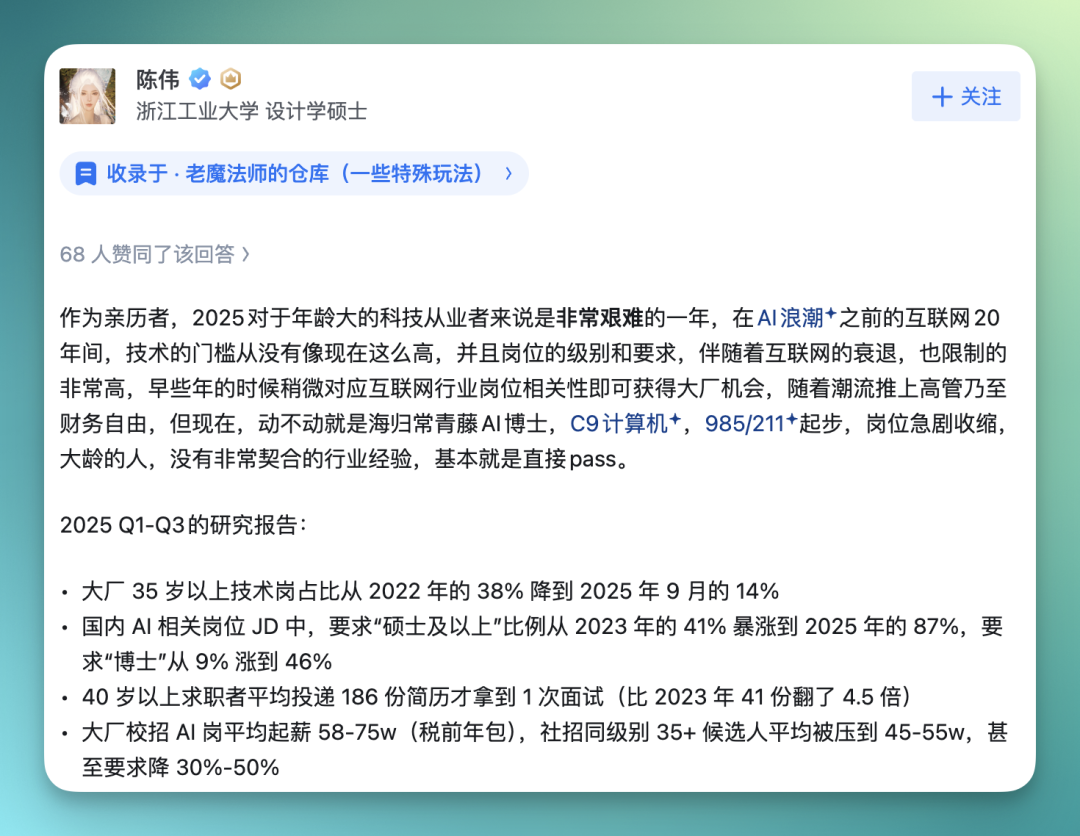
Beyond the numbers, the importance of "experience" itself has also been slightly shaken.
Previously, 10 years of business development experience was the mark of "seniority." By 2025, those 10 years are, in many interviewers' eyes, nearly reducible to zero.
@Chen Wei recorded a now-common interview exchange:
Have you tuned a 10,000-GPU cluster? Have you trained a 100-billion-parameter model?
Are you first author on NeurIPS / ICML?
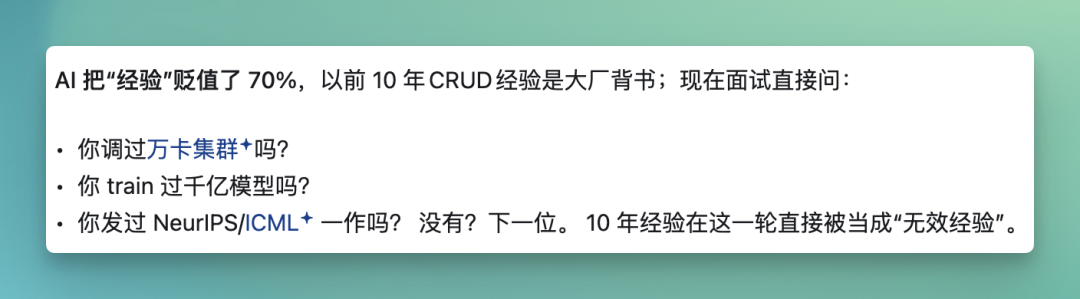
If not, the process often ends there. His assessment was direct:
AI has devalued "experience" by 70%. A 40-year-old with a family simply can't compete with a 25-year-old PhD.
This "experience compression" doesn't just happen in interview rooms — it happens at desks every day.
Zhihu user @Banbaiweiguan summarized his 2025 in one line: anxiety and pain walking side by side, hovering on the edge of breakdown for extended periods. The traditional software industry where he works has formed a gap with rapidly expanding core AI businesses.
For practitioners not in core AI tracks, this year was more like desperately maintaining the status quo — pushing to the limit just to "barely keep their jobs."
Even leaving became abrupt.
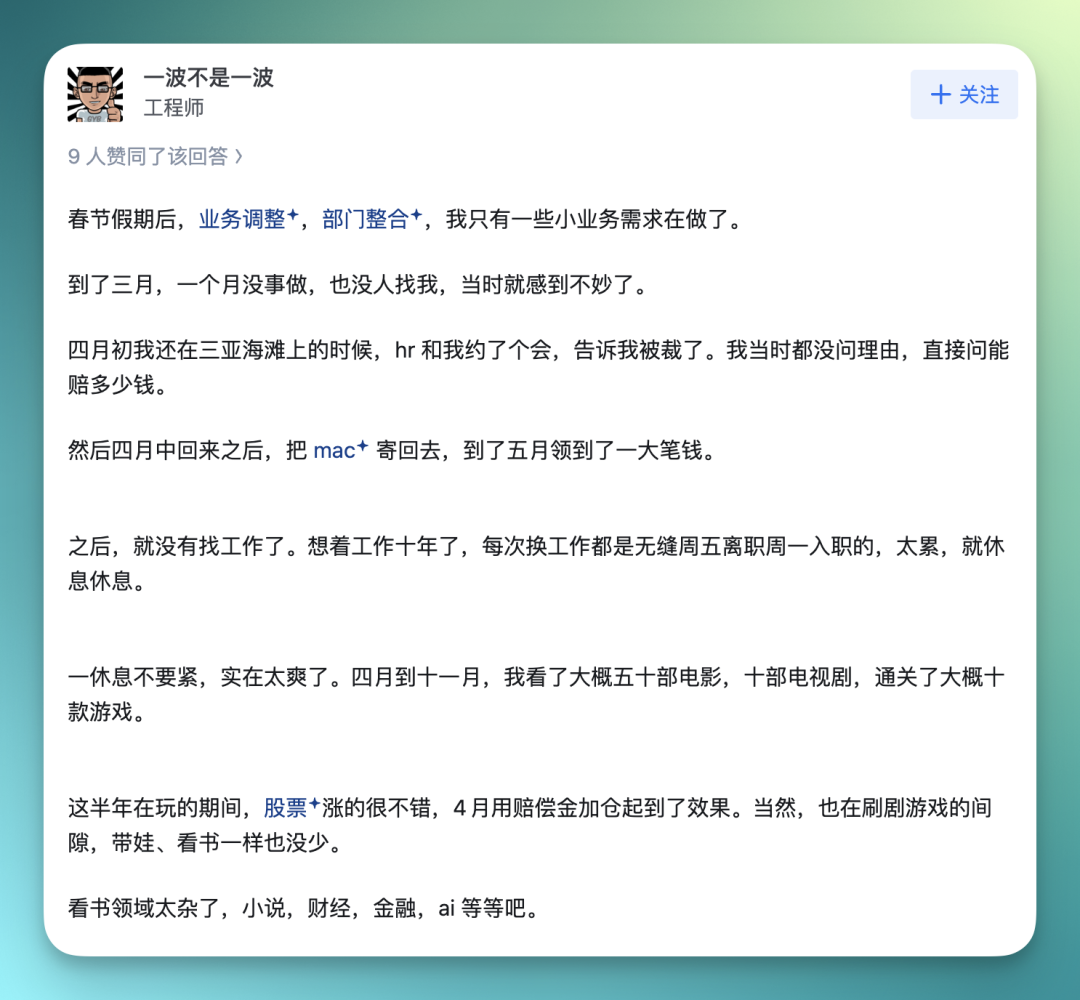
Zhihu user @Yibobushiyibo told his story: ten years of work, never unemployed between jumps, but in spring 2025 he suddenly received a layoff notice. This time, he didn't quickly find a next job, but was forced to rest for half a year before finally rejoining at a lower salary.
His summary was brief:
This year, that's how it was.
@Chen Wei further identified a phenomenon: experts and core business veterans who accumulated 20 years of industry experience are being marginalized; in their place are people without deep business knowledge but who hold "AI discourse power."
His critique was sharp:
Outside veterans + AI capabilities are replacing real experts. This is the industry's tragedy, and we are living through it.
The growing pains of 2025 seem to fundamentally shatter a long-held career illusion: the older, the more valuable.
4) From screen involution to embodied breakout into the physical world
As cloud large model parameters race to trillions, AI chatbots have become highly homogenized.
So some people realized one thing: continuing to compete inside chat boxes makes it hard to differentiate.
Thus, they turned their gaze toward a slower, more challenging direction: the physical world.
In 2025, embodied intelligence became the new buzzword.
Zhihu user @AIming's choice represents this shift well. He spent 6 years in autonomous driving, won a Waymo Open Dataset challenge, and lived through that track's highlight moments. But in 2025, he clearly realized for the first time that autonomous driving's rhythm had changed.
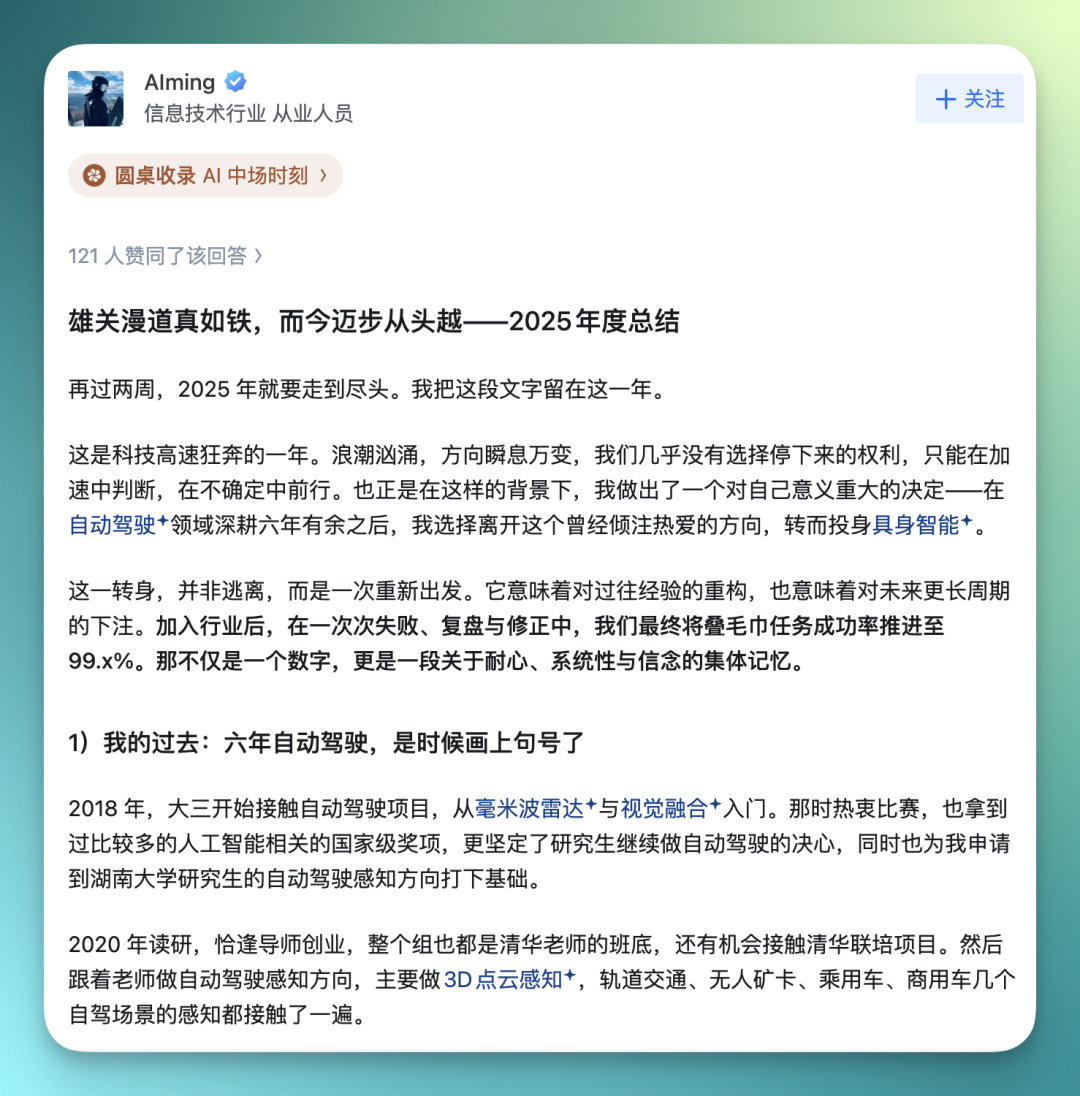
What finally pushed him to decide was a video: DYNA's robot towel-folding demo, 99.4% success rate.
His judgment:
When something can reach 99.x%, that means it already has landing value.
So he chose to leave autonomous driving and turn to embodied intelligence.
But this is extremely hard. In the pure software world, code not running is just a bug. In embodied systems, one wrong action can directly damage hardware.
To train the robot to fold towels properly, he and his team could only take shifts guarding their sole device, trial and error, restart after restart, enduring countless nights until pushing success to 100%.
He wrote a representative line in his response:
Precisely because it still has problems, I must come.
The same urgency appeared in Zhihu user @Mo Yilin's experience.
For him, 2025 was a highly compressed year: still hesitating on direction at the start of the year, pulling old friends to start a company in February, and by year-end their wheeled dual-arm robot had iterated to version 4.
They chose a more practical path: human-robot co-driving.
His judgment:
Making robots "useful" matters far more than making them "human-like."
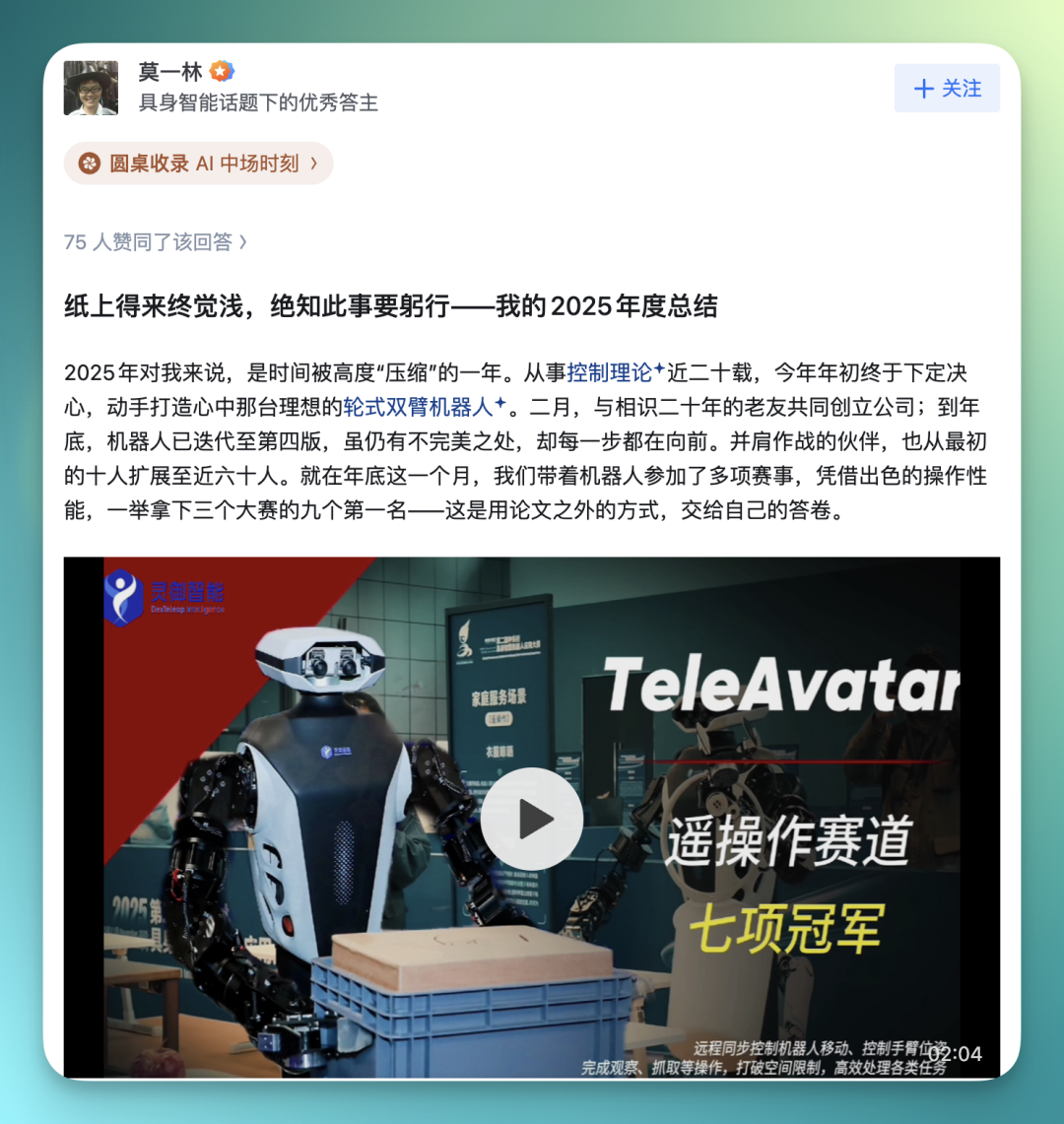
This engineering path of repeated trial and error in the physical world won them first prize at the Zhongguancun Embodied Intelligence Competition, delivering an answer that speaks through physical objects, not papers.
In academia, Zhihu user @Yue Lufei also narrowed his focus.
In 2025, he concentrated his research on "embodied intelligence." To get systems running, he personally tuned upper-level controllers, modified lower-level controllers, connected sensors, fixed underlying logic — doing massive amounts of dirty work that no one wants to put in papers.
It was precisely in this grunt work that he first truly understood what engineering limits mean.
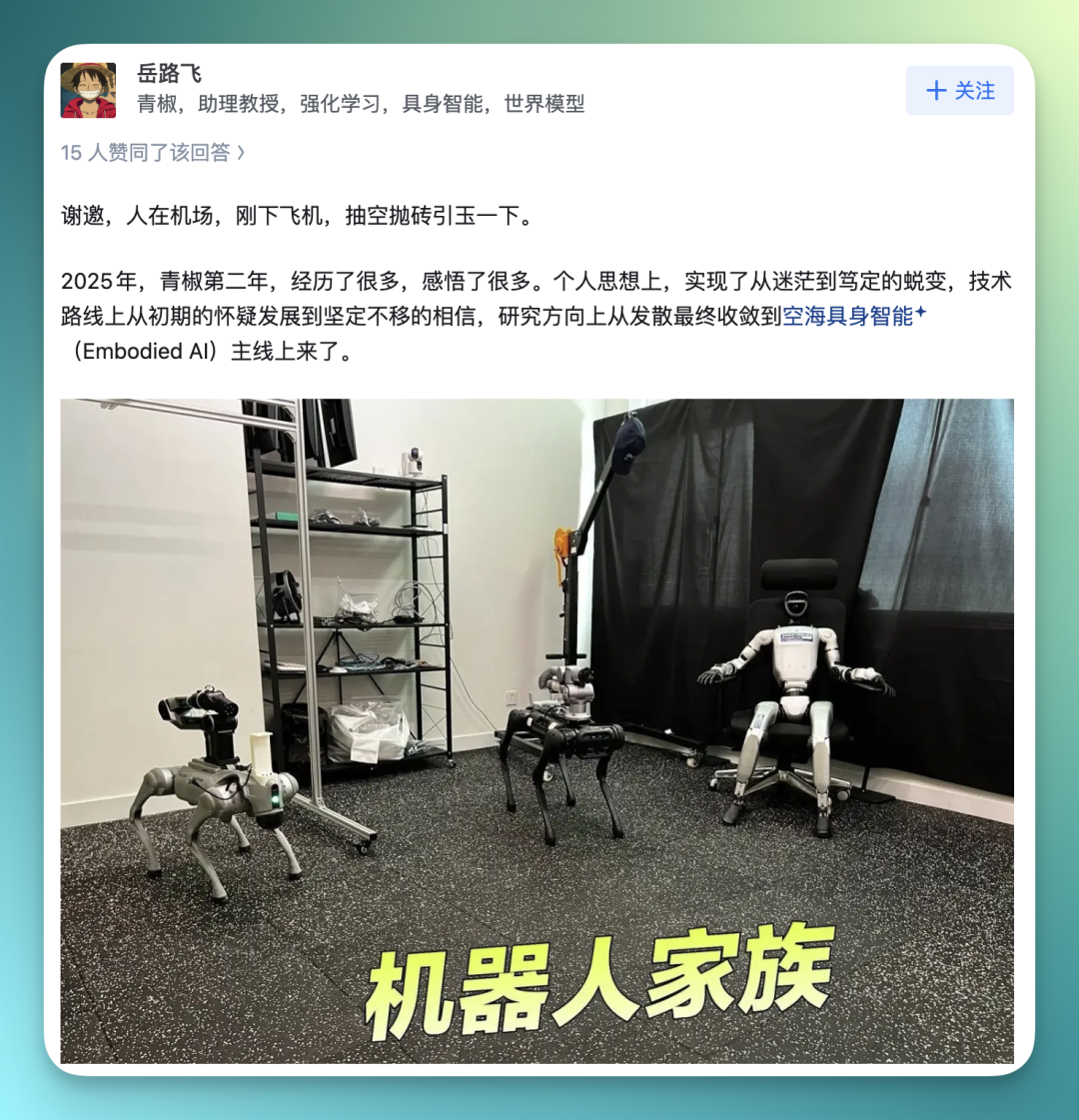
He wrote:
Hope to continue doing engineering-oriented research, and establish a foothold in this great voyage of embodied intelligence.
From screen involution to physical world breakout, this is actually a pragmatic technology value system.
These people are no longer satisfied with having AI generate a paragraph, an image, or a video in a chat box — they want it to tighten a screw, fold a towel, operate a real machine.
5) In an accelerating era, rediscovering "long thinking"
In 2025, one of the scarcest resources may be the ability to slow down and think.
Models are accelerating, hardware is accelerating, edge compute is accelerating, parameter scale is accelerating — it's easy to feel anxious: if you don't keep running, you'll be left behind.
But in Zhihu's year-end review, many voices emerged precisely because of this: the faster the era, the more we need deliberate deceleration.
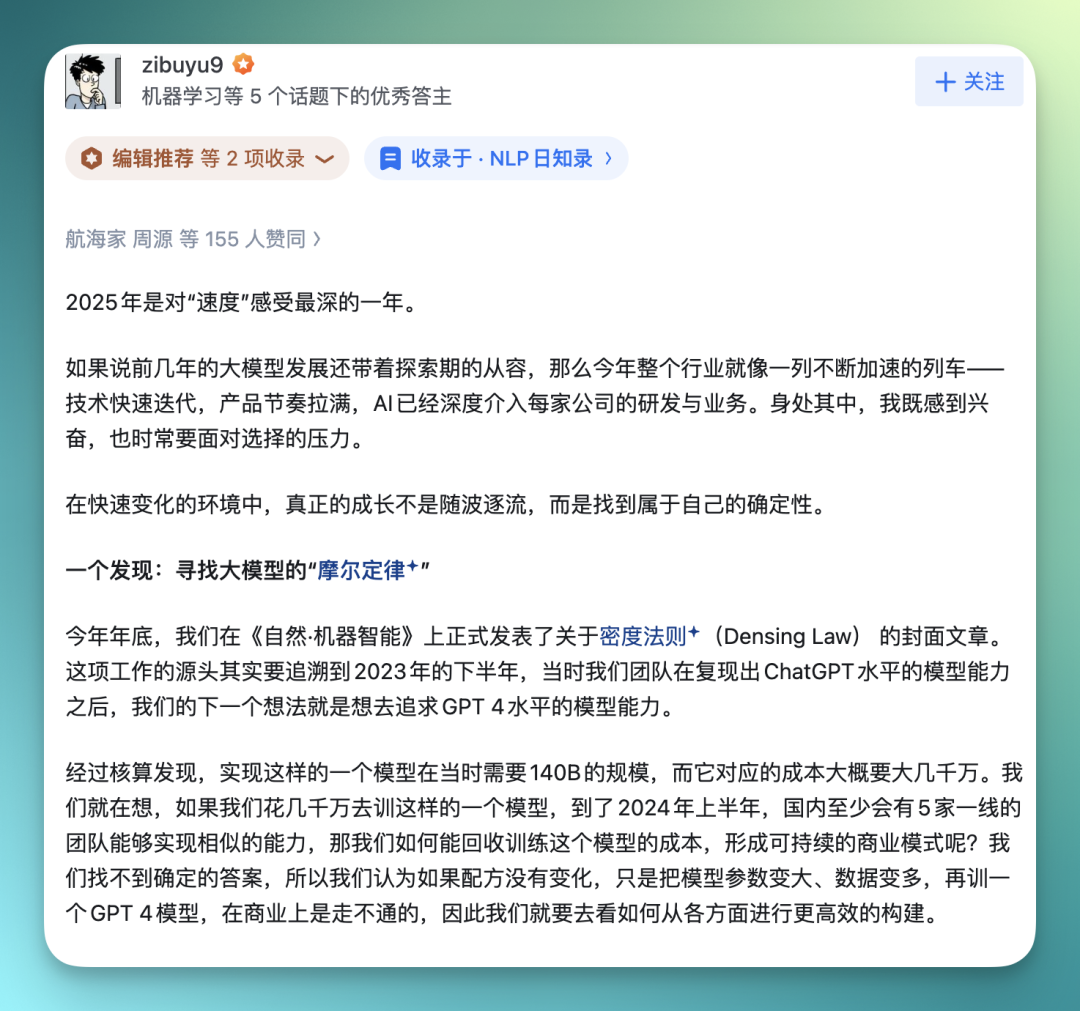
Zhihu user @zibuyu9 (Zhiyuan Liu, founder of ModelBest) gave a very sober assessment in his year-end summary:
The faster the era accelerates, the more we need longer-term thinking.
In his view, the truly important work of 2025 was clarifying some foundational questions: Is the agent a paradigm or a short-term application? For industrial efficiency gains, is the real bottleneck cost or structure?
These questions cannot be accelerated, and they are the "North Star" that prevents direction from drifting.
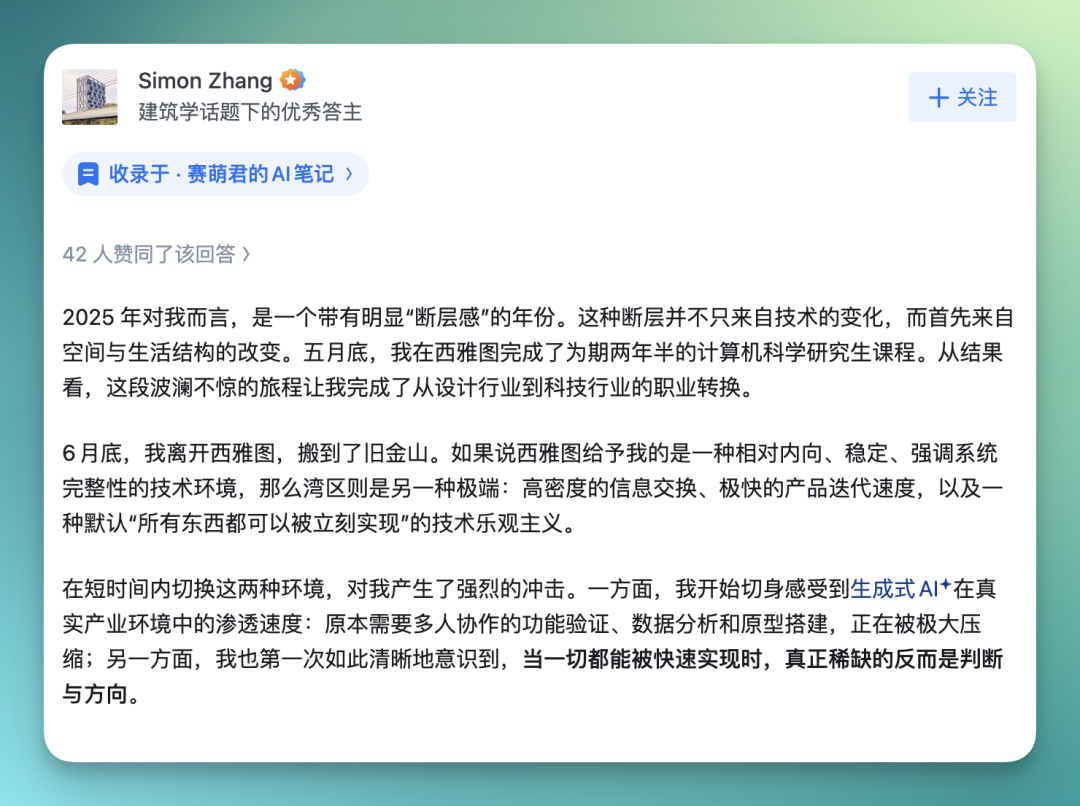
Zhihu user @Simon_Zhang moved from Seattle to the San Francisco Bay Area this year, directly entering a "high-density, strong-iteration" tech environment. There, nearly everything is implicitly expected to be "done faster."
But he consciously preserved a slow zone for himself.
He wrote clearly in his response:
Not everything valuable is suited to being accelerated.
As execution costs drop dramatically due to AI, he chose to put energy into the segments that still cannot be compressed: problem definition, structural design, system lifecycle judgment.
These things are slow, but they determine long-term ceiling.
Others simply chose to stop.
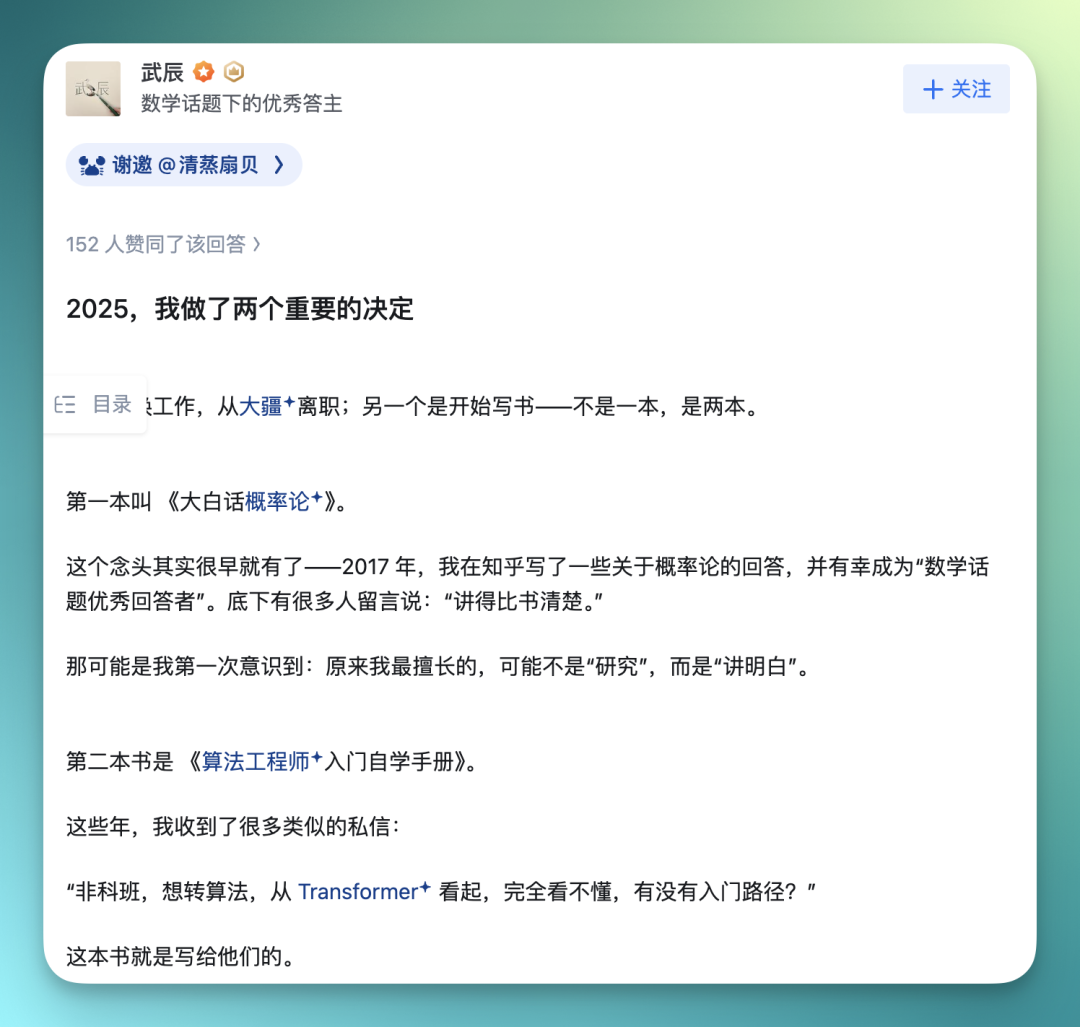
Zhihu user @Wu Chen made a decision in 2025: quit his job to write books.
He chose to spend a full year completing two introductory books for general readers: Probability in Plain Chinese and Algorithm Engineer's Self-Study Manual.
A late-night long conversation with DeepSeek helped him reconfirm his position. He realized his value lies in translating complex technology into language humans can understand.
He said:
In 2025, I stopped racing others. In 2026, I start walking my own path seriously.
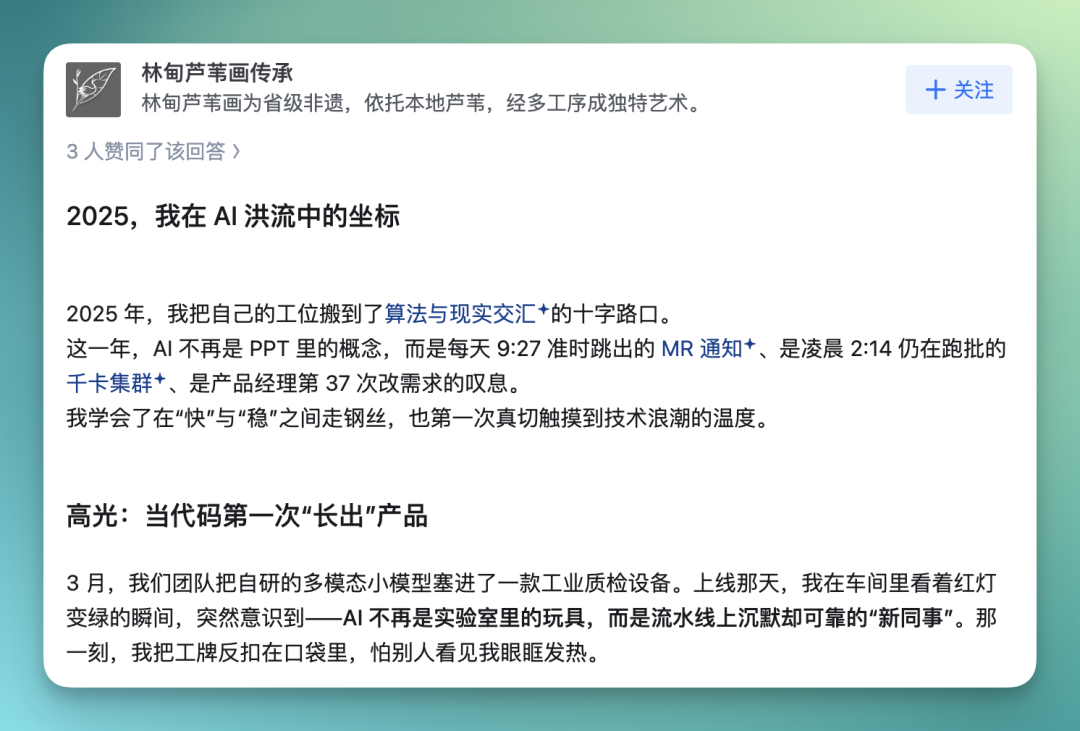
Zhihu user @Lindianluweihua-chuancheng documented his experience in an AI governance group.
When he held a 47-page AI Ethics Assessment Form, interrogating item by item whether models amplify gender stereotypes or introduce systemic bias, he suddenly realized something:
The end of writing code is writing the first draft of rules.
His conclusion could almost serve as the summary for this section:
Tech practitioners' ultimate competitive advantage is holding onto the "human" position within the algorithmic flood.
Read through all 136 responses, and you'll find: anxiety about AI is real, the growing pains are intense, but growth is also real.
After reading these 100,000 characters of answers, our strongest feeling is: AI technology is real, and the "process" of using AI to ship products is what excites people.
This is precisely part of the value of Zhihu's "AI Halftime" year-end review.
In Zhihu's discussion space, we saw how AI is being pushed into reality concretely, arduously.
Before 2025, many directions had already been validated once. Whether something can be done basically has an answer; what remains is whether it's worth continuing, and how to sustain it long-term.
This year is more like doing a post-mortem on the previous two years.
Which routes work, which judgments were too optimistic, which capabilities were overestimated, which foundations were neglected — answers are becoming concrete.
In these responses, you can clearly see different people's state changes:
Some clarified their direction this year and started actively narrowing focus — like @Yue Lufei concentrating on embodied intelligence and reducing scattered exploration;
Some learned to live with uncertainty this year — like @lllyyb no longer trying to catch every trend.
Others remain at the intersection, like @Daxianghuihui, keeping an open mind on direction but not yet giving themselves a definite answer.
These states aren't right or wrong — just different stages.
What matters is that all these changes were fully documented.
"AI Halftime" means the first half is over, and the second half will certainly begin. Carrying the experience, lessons, and patience accumulated this year, many have already returned to the sidelines, preparing to re-enter the game.
This year, hard work. 2026, keep going.
P.S. Finally, we welcome everyone to click "read original" to go to the question and share your real story.