Dropped Out of Middle School at 14, Now Making $6 Million a Year in VR Games — He Says the Skills Are Replicable | A Conversation with Proactor AI Founder Qin Tian

Those who gave me life: my parents. Those who gave me life again: myself.
I dropped out of middle school, but made $6 million from two VR games. Now AI is here — time to go bigger!

👦🏻 Interview: Koji
🧑🎨 Layout: NCon

Last month, I met Qin Tian. His story hit me hard.
In this era of AI spectacle and startup mythology, Qin Tian is one of the rare few who genuinely makes you do a double take. No pedigree, no credentials. He dropped out at 14, fled domestic violence, and survived at the very bottom of society — gaming for cash, welding batteries in illegal factories.
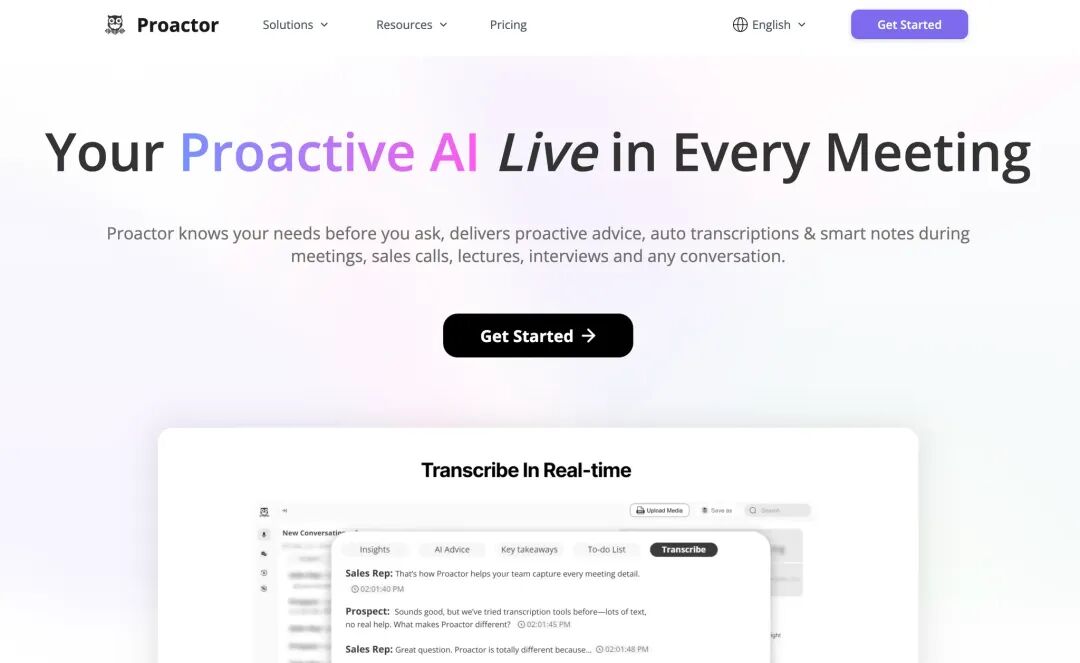
And yet this "jiu lou yu" (slang for someone who slipped through China's nine-year compulsory education net) turned out to possess ferocious social media marketing instincts. Over eleven years, he built a string of viral hits. His VR games pull in $6 million a year. Now he's gone all-in again on proactive AI, building a product that can perceive, think, and act on its own — Proactor[1].
Proactor launched on X in early July. Its announcement video hit 620,000 views and turned heads.
Last month, we visited Qin Tian's office first. Then we realized it was walking distance from AI Hacker House. So we headed back there together and kept talking for hours. The more we spoke, the more I admired and liked him.
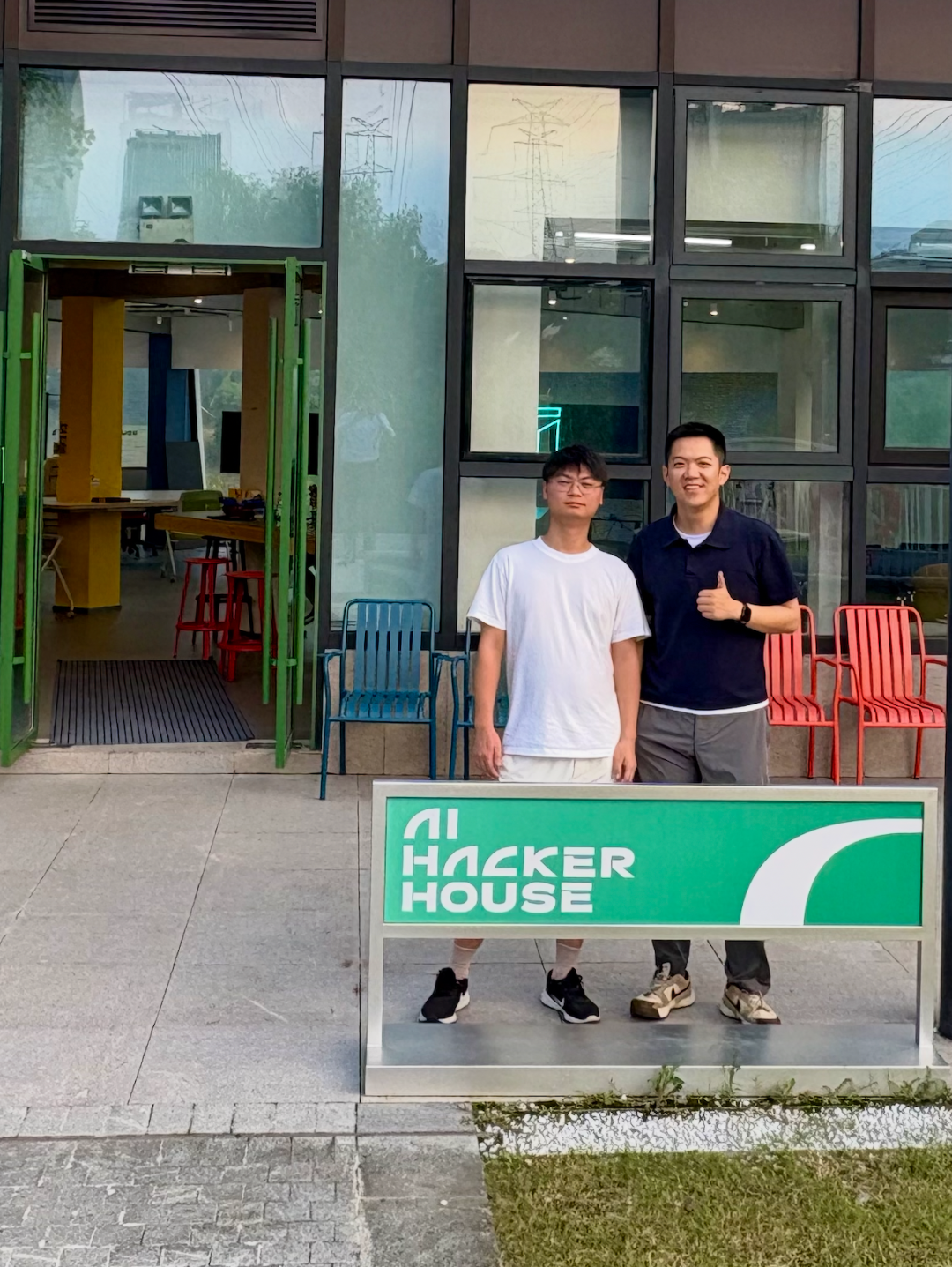
From bottom-rung gaming grunt to creator of billion-view hit games, to now pioneering the "proactive AI teammate" — his trajectory deserves serious examination.
His story isn't some inspirational "overcoming the odds" template. It's about how an entrepreneur used extreme execution and abstraction skills to survive multiple technology cycles, always positioning himself at inflection points, straining to seize the AI moment.
Rapid Fire
👦🏼 Koji
How old are you?
👦🏻 Qin Tian
👦🏼 Koji
What school did you graduate from?
👦🏻 Qin Tian
I'm the real deal "jiu lou yu" — short for "fish that slipped through the nine-year compulsory education net." I ran away from home due to domestic violence before finishing middle school, so strictly speaking, I only graduated from elementary school. Its name was Aikou Hope Elementary.
👦🏼 Koji
How many years have you been entrepreneuring?
👦🏻 Qin Tian
From 2014 to now, eleven years.
👦🏼 Koji
What did you do before starting up?
👦🏻 Qin Tian
My first real venture was at 19. Between 14 and 19, after running away from home, I lived under the radar — afraid my family would report me missing to police and drag me back to get beaten. No ID card. I joined a game-boosting studio to survive, doing Fantasy Westward Journey power-leveling.
During that time I also used a $7 fake ID to get into an illegal factory in Shenzhen welding batteries, and flipped Diablo III gear as a virtual goods trader.
👦🏼 Koji
MBTI and zodiac sign?
👦🏻 Qin Tian
ENTP, Capricorn.
👦🏼 Koji
One sentence on your company/product?
👦🏻 Qin Tian
Our team spent most of the past year building a proactive AI product called Proactor — an AI with independent thinking and autonomous action capabilities.
The previous projects were VR games, still maintained by the original team. The VR titles are War of Wizards (a VR MOBA) and Cooking Clash. Together they've generated roughly 2-3 billion organic views across TikTok, YouTube, and Instagram.
👦🏼 Koji
Revenue and profit?
👦🏻 Qin Tian
Proactor just launched so barely any revenue yet. The two VR games do about $5-6 million annually in copy sales and IAP. We've poured all the VR earnings into AI.
👦🏼 Koji
Latest funding and valuation?
👦🏻 Qin Tian
We hadn't raised before — always self-funded. After Proactor launched, some investment firms started reaching out.
👦🏼 Koji
Team size?
👦🏻 Qin Tian
About 80 total. The new AI team has around 30 people working on Proactor.
Why "Proactive AI"? A Paradigm-Breaking Bet
👦🏼 Koji
What opportunity did you see when you started Proactor?
👦🏻 Qin Tian
Using ChatGPT, I noticed that AI output quality often depends entirely on how clear and complete my prompt is.
When facing a complex problem, I might need to write hundreds of words setting up conditions, background, details. If I miss something or explain poorly, the AI has to "guess" or "hallucinate" to fill in what I left unsaid.
That kind of gap-filling obviously isn't reasoning from real context — it's statistical, hallucinatory generation.
Sure, large models have gotten much better at comprehension these past few years. But even the strongest comprehension can only work with what you give it.
In other words, current AI thinks "passively": humans provide the prompt, then it reasons and generates. The problem is, human expression is naturally limited. Especially when articulating complex problems, that "compressed expression" often omits crucial information.
So what the AI receives is essentially a "fuzzy input," and that input caps its potential.
I saw a very clear opportunity here: moving AI from "waiting to be asked" to "actively perceiving and abstracting problems."
If AI could actively observe and learn human context — whether work scenarios or life states — and without prompts, or with only vague prompts, independently figure out "what's the real problem," then search knowledge bases for solutions, it wouldn't just give passively responsive "local optima." It could potentially deliver "true global optima" redefined from a higher-dimensional vantage point.
What we call "global optimum" today is often just the best solution exhaustible within the bounds of a single prompt, given limited human expression.
But if AI could see context clearly and abstract problem definitions to more fundamental structures, then reorganize the problem from multiple angles, the answers it produces might exceed the original question's boundaries — that's "optimal" in the truest sense.
So what Proactor aims to do is push one step further: not just optimizing how AI responds to prompts, but exploring how AI understands "why people raise this prompt in the first place" — even starting to perceive and think based on context before humans have fully articulated themselves.
This is an opportunity about intelligence transforming from "passive tool" to "active cognitive agent." And once that transformation happens, the ROI is exponential.
👦🏼 Koji
From project kickoff to launch, how long did Proactor take?
👦🏻 Qin Tian
About a year. Last May we first hired an AI PhD to build a demo validating the concept — exploring what new experiences and technical challenges proactive AI could unlock. When the demo came together in December, we were thrilled. We decided to go all-in, formally assembled a team, and rebuilt the project for real users and commercialization.
Official user launch was mid-July this year.
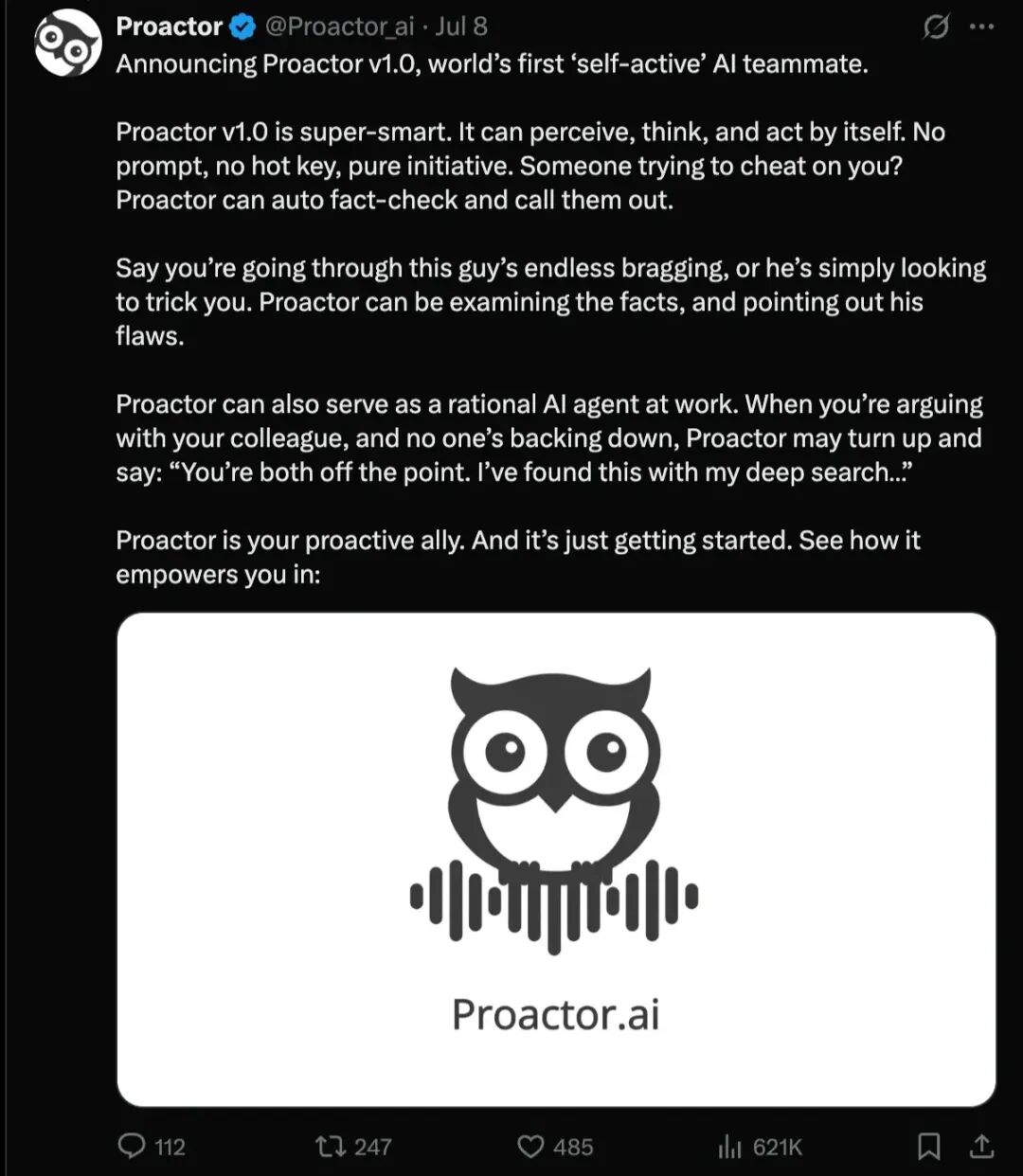
Proactor officially announced on X, July 8, hitting 620,000 views
👦🏼 Koji
What were the biggest challenges during R&D?
👦🏻 Qin Tian
One of the biggest challenges was giving AI judgment about when to speak up and when to stay quiet as it shifts from "passive response" to "proactive intervention."
That judgment isn't simple. Behind it lies a balance between precision, timeliness, and compute cost.
We encountered roughly three typical scenarios:
- When not to intervene: The user is casually chatting in a hypothetical context. If the AI jumps in blindly, it creates noise and wastes compute for no benefit.
- Context-independent scenarios: The AI hears "How many calories in this Snickers?" — a clear, context-free question. It should answer immediately or miss the response window.
- Complex context scenarios: The AI hears "How do we push forward Director Zhang's contract?" This heavily depends on context — who is Director Zhang, what's the contract about. Sometimes that information lies in the past, sometimes it gets filled in later. The user is just surfacing the problem first, background to follow. If the AI rushes to answer with incomplete context, it typically outputs useless suggestions, burning money and degrading experience.
We've explored extensively around this problem, but it remains a long-term, complex challenge.
👦🏼 Koji
What feedback have you gotten since launch? What was expected, what surprised you?
👦🏻 Qin Tian
Beyond the usual feature feedback, the most common feedback we receive is about the accuracy of the proactive AI's advice. This is also what we care about most and have been working hard to improve.
👦🏼 Koji
When I use Proactor myself, it feels pretty much the same as Plaud, Zoom, and other AI meeting summary features — just standard meeting recording + meeting summary + post-meeting todo suggestions. Have you gotten similar feedback from users? What's your differentiation from them?
👦🏻 Qin Tian
Thanks Koji, we've actually heard this feedback before.
Some users do feel that Proactor "is more like an advanced meeting note-taking tool." But this experience often happens when the meeting scenario you're using it in tends to be informational — things like status updates and sync meetings. In these cases, Proactor deliberately stays quiet and tries not to disrupt your rhythm.
That's because it's fundamentally a "proactive AI," but it also has judgment — if it determines that the current scenario doesn't need extra help, it won't force its way in. But the moment it detects you might have a problem or raises a key need, it immediately acts.
One of the most core differences between us and other tools is this: everything we output happens in real time.
Most meeting AIs give you a summary after the meeting ends, then extract a few todos from it. Proactor is different — it starts processing while you're still in the meeting.
As you speak, it's organizing summaries, identifying action items, even proactively giving you suggestions, pushing relevant materials, or telling you what you could do next.
We had a user share a real example: in one meeting, they mentioned "SEO traffic is high, but orders are few." Proactor immediately identified this as a conversion rate anomaly, quickly analyzed possible causes, and found a common phenomenon — many companies now use AI-generated content for SEO. These articles may rank well, but the quality is low, users bounce quickly after clicking, so naturally there's no conversion. This phenomenon is called "AI SEO bubble."
Proactor didn't just find this — it also pushed optimization methods, third-party reference links, and operational suggestions, all completed in real-time during the meeting. You could click and review right then to get inspiration for solving your problem.
And the user doesn't need to do anything for all of this. They just need to talk naturally, then glance at it when needed.
This user said something that particularly moved us:
"I had just raised the problem, and Proactor had already done all the research."
That's the experience we're trying to create — not you ask it a question and it answers, but it's already thinking and solving for you the moment it recognizes a problem emerging.
So overall, Proactor isn't a traditional note-taking tool.
It's a true "real-time AI teammate."
Especially in scenarios like interviews, brainstorms, and teaching — situations that are problem-dense and fast-decision — its proactive capabilities become particularly obvious. But in more sync-oriented routine meetings, it chooses to quietly stay on the sidelines without disturbing you.
What we've consistently insisted on is this: Proactor only acts when truly needed.
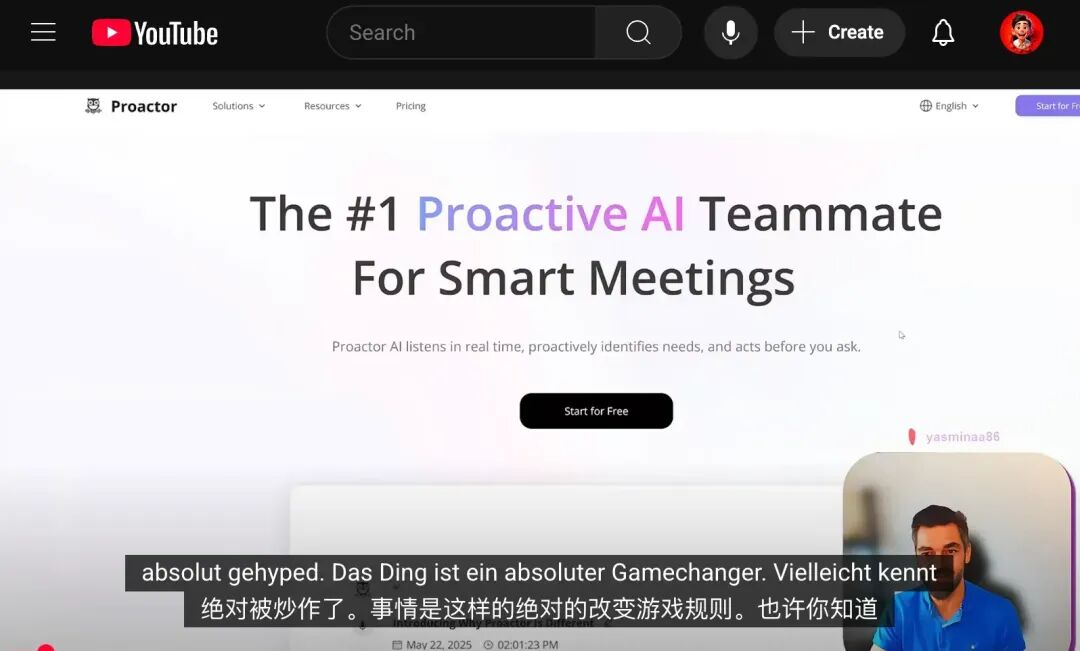
User-published Proactor experience video on YouTube[2]
👦🏼 Koji
Then how does Proactor judge "now is a good time to speak"? This sounds extremely difficult and critical. Is your trigger mechanism rule-driven, model-driven, or how is it implemented?
👦🏻 Qin Tian
There's both model and rules involved — it's a comprehensive engineering solution, and we're continuously upgrading and iterating to make it more natural.
👦🏼 Koji
"Proactive AI" does sound exciting, but it's also an enormously ambitious project. I imagine phones, operating systems, and tech giants will all get involved in the future. Why is this suitable for a startup team to tackle? How do you think about this?
👦🏻 Qin Tian
When Google first built its search engine, it also started with two broke guys with nothing. Apple was the same — both were super large projects and opportunities. And at that time, there were also various giants as competitors.
We're doing this because we see the enormous opportunity here, and this kind of opportunity is rare in a lifetime. If we saw it but didn't try our best, we'd regret it for the rest of our lives.
We don't know what the result will be, but just fucking do it. If you box yourself in and dare not step forward because you're afraid of competition and giants, then you lose that kind of do-or-die courage, the boldness of "if not me, then who," the drive to forge ahead — and a person will ultimately end up mediocre and fade away without accomplishment.
People cannot lose their vitality and original aspiration.
Making Viral Hits Is a Meta-Cognitive Capability
👦🏼 Koji
What do you think is your and your team's biggest advantage? Your marketing capability is very strong — is this the core advantage that lets you cross into different products and quickly make them blow up?
👦🏻 Qin Tian
I think our biggest advantage isn't actually the surface-level short video traffic capability, but what supports all of this behind the scenes — the systematic, structural understanding of the world. It's a meta-cognitive capability.
Many people fall into local perspective when making decisions, only seeing what's in front of them. But truly high-quality, effective judgments often depend on the size of a person's "bounded rationality boundary."
The larger this boundary, the more you can see, and the easier it is to make better long-term choices. And it's precisely this meta-cognitive capability that my team and I rely on to achieve breakthroughs in completely unfamiliar fields in a short time.
We only started engaging with social media during the process of promoting our VR game. Before that, the last time I had Douyin installed on my phone was five years ago.
It was from that point that we started from zero researching how to make videos and how to run traffic, eventually reaching over a billion+ plays annually. On the surface, this looks like we mastered "short video traffic capability," but essentially, it's our ability to understand the world, cognitive structure, thinking patterns, and principled awareness at work.
And we firmly believe this capability can be generalized and transferred — it doesn't just apply to traffic acquisition, but can equally be applied to product design, engineering development, business strategy, and other complex systems.
We also have a team that's fought side by side for 11 years. Between us, there's over a decade of shared struggle. My partner and I are childhood friends who wore open-crotch pants together, ran away from home together, and have walked all the way to today together.
This deep trust and tacit understanding gives us extremely strong execution and stress resistance, and is also the foundation of our combat effectiveness.
👦🏼 Koji
What's the secret to your team not breaking up for 11 years?
👦🏻 Qin Tian
There were actually several times we nearly really went under, but we were lucky — each time when the old business wasn't working, we managed to find a new direction in time.
And our entire team's state is this — once the direction is clear, we can quickly switch and quickly execute.
For example, when we started making games, nobody had actually used Unity before, so we really started from zero, from chapter one section one "What is Unity." Not learn first then start, but learn while doing, moving forward while stumbling through pitfalls.
Same with marketing. We had never done social media before, so we just gritted our teeth and learned and tried, and also managed to get billions of plays a year.
What if game data wasn't good? We'd iterate a version a day — like submit a new build at midnight, then the next morning at 10 AM when we got to the office, we'd look at the data from those 10 hours to analyze conclusions. Fortunately, the games we made were all for overseas markets, so when we were resting at night was when overseas users were active, allowing us to collect lots of data. Then by 11 AM we'd finalize the next version's adjustments and feature plans, and that evening we'd already have the new version live.
It's through this kind of extreme, frenetic iteration rhythm.
Most importantly, the brothers on our team are all really nice — not just capable, but crucially, nobody left when the company was in its toughest times. We hit a point where cash flow nearly broke, and one brother directly said: I can go six months without salary and keep working, I hope we can make this happen.
👦🏼 Koji
Can you abstractly summarize what exactly is the capability to do well at short video traffic? What qualities does it require?
👦🏻 Qin Tian
From an abstract perspective, the capability to do well at short video traffic isn't "internet sense," "inspiration," or "whether you shoot well" — these subjective perceptions. Rather, it's a systematic, quantifiable ability to optimize "attention structure."
In other words, it's not art, it's an engineering problem.
Underlying Principle: The Algorithm Formula for Views
For mainstream platforms represented by TikTok, short video views can be roughly understood through this formula:
Views ≈ Completion Rate × Engagement Rate (likes + comments + shares)
- Completion rate determines the floor of views
- → The "base coverage" of how much the video gets pushed out depends on this.
- Engagement rate determines the ceiling of views
- → Whether the video can break out of its circle and achieve exponential spread depends on this.
If a video has high completion rate, even with average engagement, it can steadily get 100,000-level views.
If on top of high completion rate, engagement is also high, then that's the potential for 1 million, 10 million+ views.
But if there's only high engagement but poor completion — these videos also often struggle to take off (Instagram is the exception; IG weights engagement more heavily).
This logic is highly consistent with platforms' core objective: increasing user time spent and retention.
A video that "makes people finish watching" is itself the greatest value to the platform.
Our Methodology: Modeling "Viral Hits" as a Math Problem
Our team doesn't rely on "internet sense," "inspiration," or "hooks" — these感性词汇 to analyze videos. Instead, we took another path: we treat video as a model composed of 20-30 quantifiable parameters.
We set scoring standards for each item, forming a "video scoring model," and use this to train creators. Additionally, we've built a ternary function model of completion rate × engagement rate × video length:
As long as you input a video's length and its 6-second completion rate, we can back-calculate what its final completion rate and engagement rate need to reach to potentially break a million views, with prediction accuracy close to 100%.
Traditional video creation emphasizes "experience" and "intuition," but this path is hard to replicate and can't train others. We chose to go the opposite way:
- Replace subjective judgment with objective data modeling
- Replace flashes of inspiration with principled system training
- Use explainable standards to achieve the transformation from viral video to replicable capability
To wrap up, here are the three essential qualities for mastering short-form video traffic:
- Systems thinking → Don't worship "internet intuition." Instead, deconstruct the structure and causality behind viral hits.
- Quantifiable expression → Avoid analyzing content through vague feelings. Use mathematical language to define what "good" means.
- Productized training capability → Turn experience into mechanisms and methodologies, rather than being someone who "can only go viral yourself but can't teach anyone else."
👦🏼 Koji
There's a saying: "Don't analyze why any single short video hits or flops. What's more important is creating in volume and launching frequently." Do you agree?
👦🏻 秦天
Partially. I agree with "creating in volume and launching frequently," especially early on. Only with a large sample size can we collect data and induce the objective patterns within.
Once samples accumulate, there will always be good and bad ones. We can compare the differences, then model and predict them. But if you just create in volume without analysis and induction, it's hard to converge on a relatively precise range—you're just wandering in noise, relying on luck and volume for distribution.
But early on, when entering a new field or direction, mass creation and accumulating samples is more important than analysis.
👦🏼 Koji
What's the biggest viral short video in your history? Can you share how it was made?
👦🏻 秦天
War of Wizards' highest-performing single video has roughly 150 million views across Instagram, TikTok, and YouTube combined. Cooking Clash had a video hit 10 million views on domestic Douyin within 3 hours last week[3], 30 million in 8 hours, and 7 million daily views on Bilibili—ranking second on Bilibili's all-time daily chart. Total cross-platform views are probably around 100 million-plus now.
Brilliant teammates plus scientific methodology—you can continuously replicate viral hits.
👦🏼 Koji
Do you use account matrices? What's your view on this strategy?
👦🏻 秦天
We don't use account matrices. We take the premium content route with only a handful of accounts. Account matrices are disliked by platforms, lead to lower content quality, and users don't like low-quality content either.
We don't do things that users and platforms dislike.
We believe users and platforms are our bread and butter. Our goals and behavior patterns should align with their expectations to receive maximum reward.
👦🏼 Koji
Do you work with KOLs? How do you view the relationship between self-produced short videos (posted on official accounts) and KOL-sponsored videos?
👦🏻 秦天
We do work with some KOLs. KOL conversion rates are generally higher than content from official accounts.
From Running Away at 14 to a $6M-a-Year Entrepreneur
👦🏼 Koji
I was stunned within the first 10 minutes of meeting Qin Tian. He said he ran away from home at 14, never attended school in the standard education system, and that "the university of society" shaped him into the mature CEO he is today. Would you share the story of that year with everyone?
👦🏻 秦天
At 14, Deng Jie (co-founder, childhood friend who ran away with me) and I ran away from home. We first drifted from Anhui to Kaifeng, where I found a World of Warcraft power-leveling gig through a newspaper ad—500 yuan monthly salary. But I got fired in under two weeks because I typed too slowly and wasn't proficient with computers.
Then I spent two weeks in an internet café getting familiar with computer operations, and found a Fantasy Westward Journey studio in Handan, Hebei recruiting at the "high salary" of 800 yuan.
This gave me a chance to survive.
👦🏼 Koji
Why did you run away from home back then?
👦🏻 秦天
I once shared my story on Zhihu.
My family was extremely strict growing up. When other village kids played outside after school or on weekends, I was locked in my room doing exercises from various tutoring materials—even bathroom breaks were confined to that homework room. From childhood, after finishing schoolwork and Olympiad math, my dad would pull out exam papers from eight years prior and make me redo them. I was so bored I read the entire Xinhua Dictionary cover to cover, repeatedly.
The pressure wasn't just academic. If I fought with other kids outside, regardless of who won or who was right, I'd get beaten when I came home. If I beat another kid, my dad would hit me while asking why I hit them—no interest in hearing my explanation.
Once I got bullied by other kids until my mouth was full of blood, and came home to another beating for being so useless. Another time he whipped me with a rice cooker's power cord—seven lashes total before I ran to the mountains. One lash hit so hard I couldn't breathe from the pain. Another struck a rock on the ground, cracking the cord's insulation. I stayed in the mountains until late at night, then sneaked back. In our local dialect, my childhood was "three beatings a day, one thrashing every three days."
The spiritual sarcasm hurt most. In elementary school, he'd often ask why I didn't just drown myself in the pond, or why I didn't die when people were dying everywhere. Once he saw a news report about an internet-addicted teenager who killed his father, and told me about it at dinner in an especially harsh tone, as if I were that teenager about to kill him. It might not sound that serious, but it hurt worse than being told to die.
Once someone overpaid me by 50 yuan and I returned it. I came home thrilled, thinking I'd done something right. From dinner through cleanup, he mocked me (in our dialect, meaning sarcastic ridicule). I couldn't understand how doing the right thing made me an idiot.
As a child, I felt that if I went to a shop that was too clean, I wouldn't dare enter. I felt I didn't deserve such clean places.
In middle school, with my father working elsewhere, my rebellious psychology and sudden freedom led me to lie about textbook fees to fund internet café visits. To others, I still appeared the "obedient, award-winning good student." But behind the scenes, I endured everything at home while secretly reading novels and going online. I'd often climb walls with classmates to surf the net at midnight. Until one day, I carefully hid my keys, took six virtual characters to a street competition. Returning around 5 AM, I found the front door locked and my room light on. Realizing I'd been caught, I thought: if they catch me, I'll be beaten to death.
Growing up, relatives always told me how my two older cousins were stripped naked and hung from roof beams by my father as children—reportedly beaten until bathwater ran bloody (probably exaggerated). I already pictured him rushing back from elsewhere to strip and hang me.
My mother asked where I'd been. I said a classmate's house, trying to bluff through. She didn't say much then.
But I never expected she'd visit that classmate's house the next day, learn I wasn't there, and stop by my homeroom teacher to confirm I'd never paid that 50-yuan fee. I was completely at a loss.
Already insecure in class, I thought: once this gets out, I'm finished at school. And who knows how badly I'll be beaten at home.
That afternoon, Deng Jie—who often went online with me—said: "Want to run away? My mom beat me today too."
We were so young then, long denied any autonomous action. Most independent behavior was criticized and beaten. This was the most painful thing I'd ever experienced, yet to this day I'm completely satisfied: if I hadn't left, I'd regret it for life. In that oppressive family environment, my future would have been twisted and killed.
So I made the biggest gamble of my life: running away.
👦🏼 Koji
That takes wisdom, and truly tremendous courage! Then what? Only 14 and on your own—how did you do at that Fantasy Westward Journey studio in Hebei? Did you meet good people?
👦🏻 秦天
It was a 50-square-meter room crammed with over a dozen people living and eating together—a Fantasy Westward Journey trade-running studio, subsisting on steamed buns and grinding trade runs for money.
During this time, I met an online friend from the game who also ran a Fantasy studio. He offered me 1,500 yuan to join him. I went—it was a tiny 3-person studio whose business was earning money and grinding experience for the boss's own accounts, pushing for server-wide #1 on the experience leaderboard.
So from 15 to 16, my colleague and I worked 24-hour shifts: 1 main account + 5 alts multiboxing, alts earning point cards and skill money for the main, main account pushing levels. To compete for server first, we wouldn't log off even in the final minute before Tuesday's 8 AM server maintenance, ultimately sending the boss's main account to #1 server-wide.
In that moment, my biggest takeaway was learning how to be #1! It's about fighting for every second! Truly fighting for every second!
But since this studio's promised 1,500 salary actually only paid 500, I had to grab my bucket and run again—this time to Shenzhen. There I continued Fantasy power-leveling, but genuinely at the "high salary" of 1,200 yuan monthly. Working night shifts operating five accounts for experience grinding, I simultaneously taught myself C language through videos—my first exposure to programming.
At 17, Deng Jie and I pooled 3,000 yuan to start our own game power-leveling business, taking clients directly. We spent 2,000 on a secondhand computer we shared in shifts, rented a place for 500 monthly, and survived on 5-yuan fried rice noodles daily. A year later we expanded to a dozen computers and a dozen employees—our first real business operation.
By then I felt safe enough to contact family without fear of being dragged back and beaten to death. I reconnected; Deng Jie was called home to learn a trade, then went to Shanghai for programming training at an institution.
I continued the gaming studio in Shenzhen. Later, rumors spread that Fantasy power-leveling would trigger bans. Afraid of being unable to compensate clients if true, I shut down the studio.
Right then, Diablo III launched. I became a "speculator" in Diablo 3's US server real-money auction house.
At first, Blizzard kept banning me because I used a Chinese PayPal for payments. I lost my Fantasy earnings until only 1,500 remained. Then I found a Chinese friend in the US to partner with—using his PayPal, the bans stopped.
I turned that final 1,500 yuan into over 500,000 within half a year.
But soon after, Blizzard suddenly announced the real-money auction house's closure. One employee, hearing this, stole over 100,000 yuan of my equipment inventory and ran overnight. With my remaining money, I tried other game projects—several failed, lost everything.
Through this I realized Diablo 3's success didn't mean I was capable—I just caught a good trend. One needs a zero-reset mentality. What truly matters is whether you can stand back up and climb higher after falling to nothing.
At this dead end, Deng Jie was already working at a Shanghai software outsourcing company, building OA and CRM systems for fund companies. He said these systems sold to fund companies for 50,000 or 100,000 yuan annually each—sell to ten and that's serious money. I was fired up. So in 2014, we pooled 50,000 yuan and met in Shanghai to start taking software outsourcing contracts.
This was probably our first true entrepreneurship, from "Sanhe gods" to formally entering the internet software industry.
👦🏼 Koji
I admire you so much!
👦🏻 秦天
Around 2016, when I was 21, I wrote something like this:
This year I'm 21. I have infinite hope for myself, endlessly pushing forward. In this persistent swing of desire, I maintain an unbalanced, autonomous equilibrium, fighting to the death for that seemingly distant and intangible future. All of this began with a decision I made at 14. If I hadn't escaped that environment, I believe I was destined to become timid and insecure. At best, I would have fulfilled their wishes—gotten into college and lived an unremarkable life. This was the biggest gamble I ever took. Those who gave me life: my parents. Those who gave me life again: myself.
👦🏼 Koji
That's incredible! Then what? The story between 14 and your first product that actually made money?
👦🏻 Qin Tian
From 2014 to 2017, we spent three years doing outsourcing work. Then in 2017, we launched our first domestic product, which accumulated 100 million yuan in revenue. At the end of 2020, we started going overseas with a utility app product matrix. In 2022, we began developing VR games. That's roughly the trajectory.
👦🏼 Koji
How did you decide to develop products for the Meta Horizon Store ecosystem?
👦🏻 Qin Tian
I bought an Oculus VR headset and saw that Beat Saber had accumulated $200 million in revenue. I saw the potential in VR. At the time, I was torn between mobile games and VR. My partner wanted to do VR. We believed that as long as brothers are united, we could succeed at anything. We eventually agreed to pursue VR games, even though we had zero experience with game development at that point.
👦🏼 Koji
What products did you develop on the Meta Horizon Store? Which one performed the best?
👦🏻 Qin Tian
War of Wizards and Cooking Clash — these two. We started from scratch, teaching ourselves what Unity even was, learning game development and operations from zero. Our two games managed to carve out a living space for ourselves within the VR ecosystem and sustain the team. Combined, the two games have generated roughly 2 to 3 billion organic views on social media, which brought us users and revenue.
For the Curious, This Is the Best Time in History
👦🏼 Koji
Last question: You didn't graduate from middle school, yet you emphasize self-directed learning. Looking back now, how do you view traditional education? And what about the opportunity in AI-powered education?
👦🏻 Qin Tian
We have tremendous respect for systematic education. Over half of our team members hold graduate degrees or higher; a quarter are returnees from overseas study. We fully recognize the value of traditional education — China has the world's strongest engineer training system.
You can see that in top-tier American AI companies, the proportion of Chinese people is already very high, often exceeding 50%.
And we've discovered an interesting pattern when hiring: the "number one" student from every school is a super genius, even if that school's ranking isn't high or prestigious at all.
What I mean is, even if you're not from a famous school, if you're ranked first in your grade or major, that usually indicates extremely strong learning ability, comprehension, and self-drive. We've found that such people significantly outperform average graduates from elite schools in actual combat.
So we pay close attention to a person's horizontal "ranking" rather than just looking at their school's rank. Of course, if someone is both from a top school and ranked first, we generally think: wow, this is a genius among super geniuses. We're honored to have some such people on our team, and I've learned a great deal from them.
As for AI education, I think its greatest value lies in "adaptivity" and "zero-barrier access."
Within traditional education systems, it's actually very difficult to achieve true personalized teaching. Say you're 12 years old but interested in relativity or quantum mechanics — it's hard to get that satisfied in a conventional school system. But now, if you're interested, you can just chat with AI like ChatGPT or DeepSeek. No matter how "naive" or imprecise your questions, it won't mock you or grow impatient. Instead, it explains patiently in language you can understand. You never have to worry about "being laughed at for asking stupid questions," nor about "falling behind because you didn't understand."
For many people like me who made their way through self-study, this is a massive shift. Because you're no longer limited by resources or background — as long as you have curiosity, you can start learning anything.
For the curious, this is the best time in history.
References
[1] Proactor: https://proactor.ai/
[2] User-posted Proactor experience video on YouTube: https://www.youtube.com/watch?v=1Ekkz7w3k5M&t=13s
[3] Cooking Clash had a video on Douyin last week that hit 10 million views in 3 hours: https://www.douyin.com/user/MS4wLjABAAAAI-LQudLVJBG0obH28_aBUqPQ434JrSAIsknK-28WZMY