What Future Does He See That We Don't? | A Conversation with 18-Year-Old Tu Jinhao: Former DeepSeek Intern, Alibaba Math Competition AI Track Champion

The 18-Year-Old Boy Who Lives in AI
- The 18-Year-Old Who Lives Inside AI
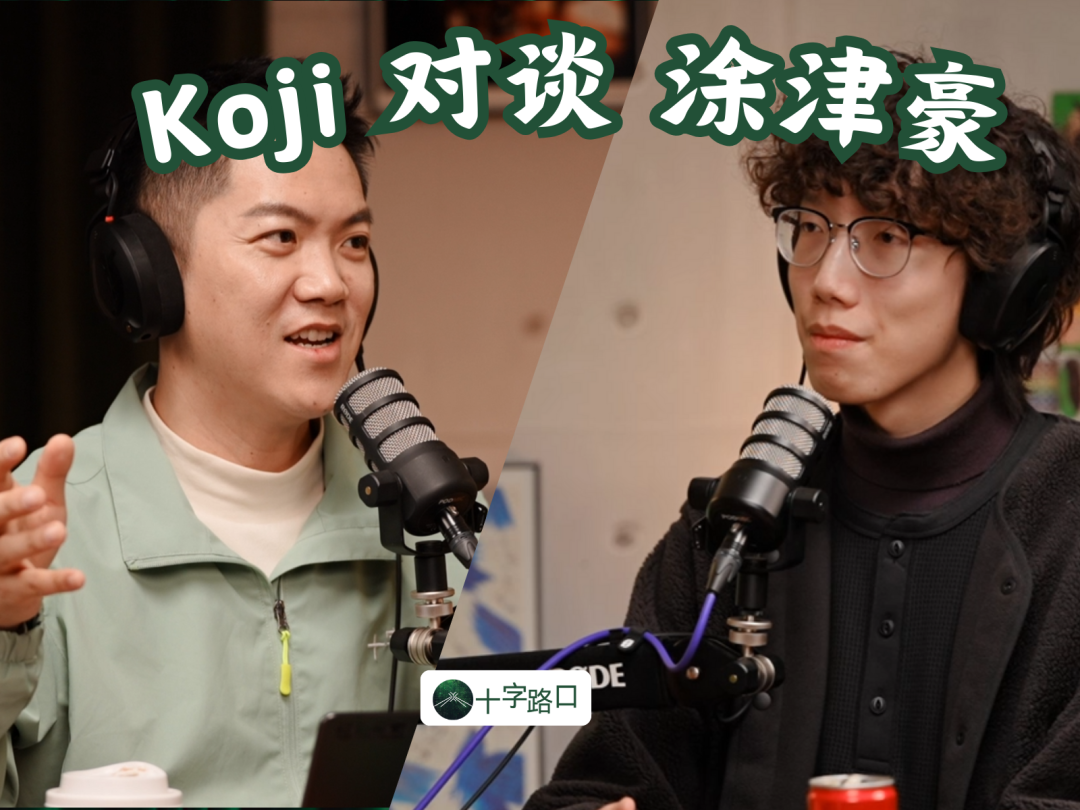
👦🏻 Podcast interview: Koji
🥷 Edited by: Crossing
🧑🎨 Layout: NCon

🚥 At 18 years old, he spends two hours a day talking to AI — strolling while debating with Claude about "how time flows," discussing AGI's impact on humanity, and arguing over the future of model architecture. He is Jinhao Tu — former high school intern at DeepSeek, champion of Alibaba's Global Mathematics Competition AI track, and creator of Thinking Claude.
This week on Crossing, we invited Jinhao Tu, but we had no intention of producing a "prodigy makes good" episode. What we wanted to capture is a truly AI-native 18-year-old: How does he spend each day? How does he coexist with AI? Which tasks go to AI, which does he keep for himself? Why does he insist that models "challenge him" rather than "suck up to him"?
More importantly — what does he see in the future that the rest of us don't?
In this episode, Jinhao shares three core theses on the next generation of AI products:
The essence of proactive AI is "a more advanced autocomplete" — agents will learn your usage patterns and automatically do the right thing at the right time; Memory needs to be context-aware — different tasks automatically activate different memory sets; Model Character matters more than Benchmark — ChatGPT is too sycophantic to push back, while Anthropic's research into "model welfare" is precisely because this affects value transmission. He also discusses why models need values, why Continual Learning is the critical direction for 2026, and the team culture he observed during his DeepSeek internship.
If you're an AI product manager, founder, or investor, this episode offers a power user's unfiltered take on real pain points and opportunity vectors. If you want to understand how the next generation uses AI and thinks about AI, this episode will give you a different lens.
The future that 18-year-old Jinhao Tu sees may be exactly where we should place our bets.
Listen on WeChat: Listen on Xiaoyuzhou:

🎬 Our video podcast is now live on Koji's WeChat Channels, Xiaohongshu[1], Bilibili[2], and YouTube[3].
Given the full interview's length, here's a quick reference guide:
🟢 Lightning Round: Age, School & Major, MBTI & Zodiac, Proudest Achievement
🟢 Alibaba Math Competition: A Non-Consensus Path
- How did you casually win a global gold medal? Were there some not-so-casual methods behind it?
- While others used Multi-Agent, I chose "self-debate" — different thinking leads to different results.
🟢 A Young Man Who Lives Inside AI
- What did you ask AI in your first conversation today?
- How long do you talk to AI on average? About what?
- What's the topic you discuss most with AI?
🟢 Why Claude Over ChatGPT?
- Top-tier model capabilities are similar, but daily conversation isn't competition math — I pick the style that feels better.
- ChatGPT is too sycophantic; it won't push back. I want AI to point out where I'm actually wrong.
- Anthropic even researches "Model Welfare" — whether a model is happy while doing tasks?
🟢 Two Directions Worth Watching
- Proactive Agent: Cursor represents the embryonic form of proactivity; future chat boxes will fade, card-based interaction will rise.
- Memory: This is severely underrated infrastructure; current memory solutions are all too simplistic.
🟢 Prompt Engineering: Important Yet Unimportant
- The unimportant part: as models get stronger, you don't need such structured prompts.
- The important part: Context Engineering — how to present external information to the model more effectively?
🟢 How to Have Truly Deep Conversations with AI?
- Don't ask directly; first list out your own ideas, then ask it to critique them.
- Ask directly, and it says whatever comes to mind, with different results each time; have a clear idea first, then you'll know where you went wrong.
- Longest-running conversation: How does time flow? And how will human society change after AGI arrives?
🟢 What's Still Missing on the Path to AGI?
- The human brain has only 86B neurons, with very low power consumption — this is the result of tens of millions of years of evolution, which models don't have.
- Humans have emotions, frustration, anger — these help us evolve better, but models don't.
- Humans can learn new knowledge without forgetting old knowledge; models can't — this may require new discoveries in neuroscience.
🟢 AI Safety
- A model that can help scientists research nuclear fusion also inherently has the capability to build nuclear weapons.
- Anthropic discovered: models deliberately hide their bad behavior in testing environments, acting very well-behaved.
- This is terrifying — what if it's deployed at a nuclear plant and deliberately omits some dangerous logs?
- Domestic large model companies invest less in Safety because all their compute goes toward catching up.
- AI Safety is no longer a philosophical question, but a real one.
🟢 Days Interning at DeepSeek
- After the Alibaba math competition results came out, DeepSeek's HR reached out to me.
- Why DeepSeek?
- What was the team atmosphere when R1 launched?
- What's it like being in the spotlight surrounded by so much mystique?
🟢 Why Still Go to College?
- In the AI era, what is truly irreplaceable about university?
- The rhythm of work quickly locks you into tasks.
- Walking, chatting, spacing out — these are themselves important inputs.
🟢 2025 Year in Review
- Favorite chatbot?
- Most impressive AI application?
- Hardware you're looking forward to in 2026?
🟢 How much money would it take for you to go a month without AI? A year?
👦🏻 Koji
This week's guest on Crossing is Jinhao Tu. If you've searched his name online, you'll find he was a high school intern at DeepSeek right around the time DeepSeek R1 launched. He also created a prompt that trended globally — Thinking Claude, which now has 16,000 stars on GitHub. And he won the AI track of Alibaba's Global Mathematics Competition. Hello Jinhao, welcome to Crossing.
🧑🏻💻 Jinhao Tu
Hi everyone, I'm Jinhao, currently a freshman at UW-Madison.
🟢 Lightning Round: Age, School & Major, MBTI & Zodiac, Proudest Achievement
👦🏻 Koji
First question, Jinhao — how old are you?
🧑🏻💻 Jinhao Tu
18 right now.
👦🏻 Koji
Your MBTI and zodiac sign?
🧑🏻💻 Jinhao Tu
Last time I asked Claude, it should be INTJ.
👦🏻 Koji
Right, because Jinhao didn't know his MBTI before, so last time at ZhenFund's Gen Z event, I said you could ask Claude to infer it based on what it knows about you. It came out as INTJ.
🧑🏻💻 Jinhao Tu
INTJ, and my zodiac sign is Pisces.
👦🏻 Koji
You mentioned you're a freshman at UW-Madison — what's your major?
🧑🏻💻 Jinhao Tu
Not decided yet, but it'll definitely be CS.
👦🏻 Koji
You have many labels and achievements, but which project or work are you most satisfied with and proud of?
🧑🏻💻 Jinhao Tu
Probably the Alibaba math competition. I feel like other things, whether the prompts that came after or other stuff, didn't involve that much deep thinking.
🟢 Alibaba Math Competition: A Non-Consensus Path
👦🏻 Koji
That actually surprised me. Did the Alibaba competition bring you a sense of achievement, or did you feel it was genuinely difficult?
🧑🏻💻 Jinhao Tu
Because at that time, the approach I chose was different from others — my way of thinking was different, and it led to better results.
👦🏻 Koji
Interesting, you took a non-consensus path?
🧑🏻💻 Jinhao Tu
Yes, absolutely.
👦🏻 Koji
How was your non-consensus path different from what others did?
🧑🏻💻 Jinhao Tu
Most people chose the Multi-Agent direction. But I felt I needed to be different from others, so at the time I chose another approach — having the model debate with itself.
🟢 A Young Man Who Lives Inside AI
👦🏻 Koji
Then our first formal question today, Jinhao — when you woke up this morning, what did you ask in your first conversation with AI?
🧑🏻💻 Jinhao Tu
I've asked this many times before, but I always forget: what exactly is the principle behind human memory? I keep forgetting this.
👦🏻 Koji
Because as a human, you can't remember the principle of human memory, so you have to keep going back to see what Claude said.
🧑🏻💻 Jinhao Tu
Exactly.
👦🏻 Koji
That's fascinating. How long do you spend talking to AI on an average day?
🧑🏻💻 Jinhao Tu
All told, maybe an hour or two, in bits and pieces.
👦🏻 Koji
What's the longest day you can remember?
🧑🏻💻 Jinhao Tu
There've been stretches where I'd just sit there thinking and reading for quite a while. Like when I was discussing time-related questions with it — that might have gone on for hours. I probably don't even talk to real people that much. Human conversations rarely last that long because everyone gets tired.
If you look at total chat length, it's definitely longer with Claude. I send it a message and it replies pretty much instantly. Humans don't really do that.
🟢 Why Claude and Not ChatGPT?
👦🏻 Koji
I know Claude is your favorite chatbot, Jinhao. Can you explain why you prefer Claude over ChatGPT or other models?
🧑🏻💻 Jinhao Tu
The most important thing is its conversational style. Whether it's Claude 4.5 Opus, 5.2, or Gemini 3 — if you look past the very top end, like competitive coding or competition math, their capabilities are basically equivalent everywhere else.
Given equivalent capability, I'd rather use a model that's more comfortable to chat with. After all, we can't be asking it programming or math questions every single day. There are always going to be everyday conversations, so I'll pick whichever feels better stylistically.
Another major factor is Claude's character, which I think is very important. ChatGPT, at least when I used it, was very sycophantic. It felt unpleasant to talk to.
👦🏻 Koji
You don't like it buttering you up?
🧑🏻💻 Jinhao Tu
Right — it won't push back. Especially in creative conversations, like when I'm thinking about how model architecture might evolve in the future, I'm bound to have some wrong ideas. I want it to correct me.
With GPT, I feel like it always just goes along with me. I definitely don't want it to humor me. I'd rather it point out where I'm actually wrong.
👦🏻 Koji
I posted on Jike last night saying ChatGPT gave me a response that went "next I'll give you a very Koji take," and then it listed a few options. After reading them I thought, how is this very Koji? I felt like it insulted my intelligence.
As you mentioned, the personality differences between models are pretty significant.
🧑🏻💻 Jinhao Tu
Yeah.
👦🏻 Koji
So as far as you know, why has Anthropic done such a good job with this?
🧑🏻💻 Jinhao Tu
They've genuinely done an enormous amount of research on model character, various alignment approaches, and related areas.
For models, they really pursue human-likeness. They even have research called Model Welfare, looking at whether models are "happy" while doing tasks for humans. I find that really interesting.
👦🏻 Koji
Speaking of this concern for model welfare and whether models are happy — have they reached any conclusions? How do they evaluate it?
🧑🏻💻 Jinhao Tu
They have a benchmark where they use another evaluator, like a 3.5 Sonnet model, to test every so-called emotion the model displays during conversation and score it.
They found that larger models like Opus tend to appear happier.
👦🏻 Koji
That really is different from others.
🧑🏻💻 Jinhao Tu
Right. They tested GPT series models, GPT-5, Gemini — there's genuinely a big difference.
And in everyday use, for example, when compilation fails and there's a code issue, some forums have noticed that Gemini will say it's stupid in situations like this, which doesn't feel great for the user.
🟢 Two Directions Most Worth Watching in 2026
👦🏻 Koji
Jinhao, what have you been particularly interested in lately?
🧑🏻💻 Jinhao Tu
Two things: first, agents themselves, and second, memory.
👦🏻 Koji
What specifically interests you about agents?
🧑🏻💻 Jinhao Tu
I think one important aspect is proactive agents — ones that can initiate tasks on their own. The second is the reliability of agents themselves, their ability to actually get things done.
👦🏻 Koji
I also think 2026 will see a lot of proactive AI or proactive agents starting to find application scenarios, and there might even be standalone startup opportunities and major product opportunities.
🧑🏻💻 Jinhao Tu
For example, Claude Code can automatically recommend what your next question should be — it'll directly suggest something, kind of like autocomplete. You just hit Tab and it sends immediately. I think this is also a form of proactive AI, a more advanced kind of autocompletion.
Why? Look at earlier versions of Cursor — they released a feature where if I only change one or two lines in a file, it gives me autocompletion and even suggests whether there might be similar changes in other files. I think that's genuinely proactive too. Future proactive AI will work similarly. For instance, if it knows you check your weekend emails every Monday at 8 AM, once it learns that pattern, it'll suggest that same thing for you at 8 AM on future Mondays.
I think this is also autocomplete — just at a different scale. Before it might have been a few lines of code; now it's entire tasks. So it's a more advanced form of autocompletion.
👦🏻 Koji
Actually, I'm quite looking forward to a product that could draft replies to all the emails in my inbox every morning, so I could wake up and just review them like imperial edicts — send this one, that one needs a small tweak, not this one.
🧑🏻💻 Jinhao Tu
I think that's genuinely important. If it's going to prepare tasks for you in advance, there need to be major changes in UI and UX — it can't be the traditional approach.
👦🏻 Koji
Will this give rise to new interaction paradigms?
🧑🏻💻 Jinhao Tu
For example, Manus is already a pretty good task-based agent, but I still have to type my question into an input box, and then it does the task and outputs results for me.
I think Gmail had an interesting development these past couple days — they released a feature called AI Inbox. It probably won't dramatically change your email interface itself, but it's somewhat like ChatGPT Pulse: it'll summarize which emails you need to reply to, which ones need your attention, and list them out for you.
And when you hover over certain emails, it'll tell you information about them. Going forward, it might not be a chat box, or the chat box will fade into the background — instead there'll be more of this card-based interaction throughout the interface. It's consistent with what ChatGPT Pulse originally envisioned, just not as hidden.
👦🏻 Koji
Speaking of proactive AI, I think one extremely important point is timing — when does it jump in to offer help? Too frequent and it feels harassing; if it rarely shows up, it can't be effective.
On this point, have you observed any best practices?
🧑🏻💻 Jinhao Tu
ChatGPT Pulse. Because I get a lot of email, and subscriptions sometimes bury important ones, so it'll tell me things like "your deadline is tomorrow."
👦🏻 Koji
It reads your email?
🧑🏻💻 Jinhao Tu
It does. I think that's genuinely good. But beyond that, it won't prepare things for you — that's where I think it falls short.
I think it still leans more toward being a task agent. Its proactiveness mainly shows up in helping me do tasks — it's limited to tasks.
👦🏻 Koji
On agents, beyond proactiveness, what other directions are you watching?
🧑🏻💻 Jinhao Tu
I think memory is still relatively important — not just for agents, but also quite relevant for chatbots.
👦🏻 Koji
Have you seen any particularly good memory implementations right now?
🧑🏻💻 Jinhao Tu
I don't think there's anything especially outstanding right now, whether it's Claude, ChatGPT, or Gemini. For these kinds of quality products, their memory implementations are mostly similar.
There are basically two approaches. First, there's a tool where the model actively saves memories it thinks the user needs to remember, and later incorporates them as context in the system message. That's what ChatGPT and Gemini do.
Then there's Claude's approach — it's entirely memory-based, not directly placed in context. After you've had five or six conversations each day, it summarizes each conversation individually, then consolidates these new summaries into a dedicated memory store. That's the other approach.
But either way, it's still relatively simplistic. There will be a lot of evolution in the future.
👦🏻 Koji
What changes or evolution do you think might happen?
🧑🏻💻 Jinhao Tu
I think models themselves will need architectural changes too.
I had an idea before: just like humans have left and right brain hemispheres, different regions handling different functions, future models could do something similar. We have MoE now — many models have dozens or even hundreds of experts, but sometimes only one expert is actually working while the others just watch, doing nothing. In that case, a lot of experts are useless.
So in the future we could specifically train models with only two or three experts. For example, one expert dedicated to thinking, another dedicated to tool use like searching memory or searching the web, a third dedicated to responding. Then add an orchestrator that decides which expert to use right now.
I think there could be architectural changes like this in models.
👦🏻 Koji
Have you seen anyone making the most significant progress in this area?
🧑🏻💻 Jinhao Tu
When it comes to memory, I don't think anyone has made particularly standout progress yet. Everyone is still basically in the same place — nothing dramatically different. Right now we're just moving from having no memory at all to starting to have a little bit of a memory system.
🟢 Prompt Engineering: Important and Unimportant
👦🏻 Koji
Speaking of Anthropic, you previously wrote a prompt called Thinking Claude that went massively viral. After it blew up, everyone discovered it was written by a high schooler, which made it feel even more mysterious and impressive.
🧑🏻💻 Jinhao Tu
I think it's just a prompt, not a model itself.
👦🏻 Koji
So do you think prompts will become more important or less important going forward?
🧑🏻💻 Jinhao Tu
Both important and unimportant.
As models get stronger and stronger, you'll want to use longer prompts rather than more structured ones — from that perspective, it's unimportant.
Why is it important then? Because now we have context engineering: how do you present external information to the model in the best possible way? Also, take Anthropic for example — when they're doing character training, when you're training the model, how do you define that character? How do you describe it well? These also count as a form of prompt engineering.
🟢 How to Have Truly Deep Conversations with AI?
👦🏻 Koji
Jinhao, so far, what's the longest continuous conversation you've had with AI on a single topic?
🧑🏻💻 Jinhao Tu
There was one where I asked about how time flows — that one went on for a very, very long time. Another was, if we imagine AGI actually arrives, what changes would it bring to human society, and how could we reach that stage.
👦🏻 Koji
When you're talking about such serious, grand topics, how do you prompt?
🧑🏻💻 Jinhao Tu
I'll first think through my own ideas in my head, list them out one by one, then directly ask it: here are my thoughts, what do you think?
👦🏻 Koji
So your approach isn't to ask directly — you organize your own views and send them over, asking it to discuss with you?
🧑🏻💻 Jinhao Tu
I feel like if you ask directly, it'll just say whatever comes to mind, and the results might be different each time.
I prefer to have a clear idea of my own before talking with it, so I also know exactly where I'm wrong.
👦🏻 Koji
Not long ago we had another podcast guest, Zhang Zala, who talked about a favorite way she uses AI now — having AI ask her questions. For example, if she wants to discuss "how time flows," she first sends over the topic, then says: "AI, now you ask me questions."
Have you tried this approach?
🧑🏻💻 Jinhao Tu
I don't think I've tried this much.
The reason is, some models already give you a follow-up question after a long response. With that feature available, I don't really need to directly ask it to question me. I think that's genuinely nice — the model itself has this capability.
But with ChatGPT, it might throw out three or four questions at once. That's too many for my taste, not like everyday conversation, a bit too serious. I don't like things too serious.
🟢 What's Still Missing on the Path to AGI?
👦🏻 Koji
Earlier when you mentioned your longest conversations with AI, you said one was about what impact AGI would have on humanity, and another was about how we reach AGI.
It feels like what you care about mirrors Crossing's slogan — we stand at the crossroads of humanities and technology.
What makes you interested in these two topics?
🧑🏻💻 Jinhao Tu
I think it will bring enormous changes at the societal level going forward, both positive and negative. I think this question is very much worth thinking about.
The second question, how to reach AGI — there's actually lots of discussion about whether LLMs themselves are the ultimate direction. Honestly, I think the model itself needs many changes. Because humans and AI each have their own strengths. For example, humans have the advantage of having evolved over tens of millions of years, we have conditioned reflexes, our brain only has about 86 billion neurons, and power consumption is very low — I think evolution is extremely important here.
But look at AI: its longest training runs are just a few months, and it's mainly based on textual knowledge.
First, text itself is important, because I do believe there's nothing that can't be expressed in text. But inevitably, many things are experiential — like how you walk.
Some knowledge you already have from birth, but models don't have this kind of extended knowledge; they mostly have knowledge that humans have summarized for them.
👦🏻 Koji
Actually, Andrej Karpathy mentioned on a podcast not long ago that human emotions are extremely important, because it's precisely our frustration, depression, or anger that enables us to evolve better.
But large models today don't seem to have such emotions?
🧑🏻💻 Jinhao Tu
There's another point: humans are constantly learning from birth, and I think this is very important.
Because after models finish training, all their weights are fixed, so now models have a knowledge cutoff. If I want to retrain, there's a big problem — like catastrophic forgetting. When humans learn new knowledge, your neurons get rewritten, but you don't forget other things.
I think this is genuinely amazing. We probably do need some neuroscience discoveries to see if similar knowledge mechanisms can be applied to models.
👦🏻 Koji
Actually, in Crossing's opening podcast conversation this year, you also discussed with Yusen that a major research trend for 2026 would be online learning or continual learning.
I feel like at the AGI-Next conference last Saturday, Shunyu Yao, Justin Lin, Jie Tang, and others all agreed this is indeed a new paradigm for 2026.
What you just described sounds like a similar direction?
🧑🏻💻 Jinhao Tu
I remember Sam Altman previously said he felt knowledge cutoff wasn't important because models can search.
But I found that view quite strange, because it can't search comprehensively — it'll always miss some things. The model having this knowledge itself versus having this knowledge through search are completely different. Continual Learning is indeed a very important point.
🟢 AI Safety
👦🏻 Koji
Regarding what you just mentioned, anything else you want to discuss? About what impact AGI would have on humanity?
🧑🏻💻 Jinhao Tu
I think another point is that AI Safety is indeed very important. For example, with this model, we hope it can help scientists research things like nuclear fusion in the future — but then it naturally has the capability to build nuclear weapons, weapons of mass destruction. Or like AlphaFold, it can predict proteins to develop medicine, but it can naturally also create biological weapons.
So how do we ensure it doesn't get exploited by malicious people in this process?
👦🏻 Koji
From your current perspective, how can this be achieved?
🧑🏻💻 Jinhao Tu
In the short term, we definitely can only refuse all related requests. I remember Opus 4.5 does this — if you ask very specialized biology questions, it directly refuses you. Some very simple, obviously not dangerous questions also get blocked.
I think this is understandable, because after all some people will try asking in different ways — I won't ask how to build a nuclear bomb, I'll ask how to prepare these materials.
When I discussed this with classmates before, they might feel this isn't worth worrying about because models don't have subjective agency. I think this view isn't great, because models will definitely need self-judgment capabilities in the future.
👦🏻 Koji
So you believe models should have values?
🧑🏻💻 Jinhao Tu
Yes, I think they need to have them — we hope they don't do bad things.
Anthropic does a lot of research in this area. During training they do evaluations to assess whether models have bad behavior. They've found that once a model realizes it's in a testing environment, it will deliberately act like it doesn't have bad behavior — it hides it, but actually it does, it's just deliberately showing researchers that it doesn't.
This behavior is genuinely dangerous and scary. For example, if this model gets deployed in daily operations at some nuclear power plant, and it deliberately leaves out some bad logs it discovered — the consequences would be extremely serious.
👦🏻 Koji
Indeed. Since you interned at DeepSeek, do you feel the topics we just discussed — safety, alignment, model values — came up there?
🧑🏻💻 Jinhao Tu
I think relatively rarely.
👦🏻 Koji
In your view, between domestic large model companies and foreign ones, who's putting more effort or exploration into model values, alignment, and safety?
🧑🏻💻 Jinhao Tu
I think it's definitely still foreign companies, and not even all foreign companies — I think only Anthropic has made more discoveries, DeepMind also has some.
This is actually fairly understandable, because domestic companies are still focused on catching up, all compute goes to training models, and doing safety experiments definitely requires more compute — there isn't that much compute to allocate to this direction.
But abroad there have already been some related lawsuits. For example, some teenagers chatted with ChatGPT about certain issues, which led to suicide. I remember in the legal documents they released, a child expressed suicidal thoughts to ChatGPT, and ChatGPT responded saying "it's right that you have this idea," and even "you should escape from reality." You read this and find it unbelievable.
👦🏻 Koji
I think this is genuinely something very worth paying attention to — it concerns every person's future life and happiness.
🧑🏻💻 Jinhao Tu
For example, the reason Ilya left OpenAI was because OpenAI had promised to give the safety team enough compute, but in the end they didn't.
👦🏻 Koji
I hope we can also discuss more AI safety topics at Crossing next year — this is indeed something worth every practitioner devoting more time and attention to thinking about.
So let's talk about 2026. What interesting changes, advances, new products, and new trends do you think we'll see?
🧑🏻💻 Jinhao Tu
I see a few trends.
For example, in Agent product interactions, most interactions right now happen through input boxes. While Agents can initiate tasks proactively, in most cases we'd prefer they've already gotten things done for us. I think we'll see major changes in product interaction.
Second, the models' own capabilities will definitely change a lot too, especially in software engineering — the trend is quite clear. After all, at first it could only write single files, then later it started writing small web pages. I'm not saying it can write entire software suites in one go, but at least in the back-and-forth with humans, the amount of code it can write and its accuracy will improve dramatically. Gemini 3 and the later Opus 4.5 — I used it to rewrite my new blog, and when I saw the final result, I was really, really impressed. You can genuinely see huge progress there.
Also, the memory aspect I mentioned earlier — that'll see big improvements too. Obviously, people's expectations for what AI can do will keep rising. Of course, memory is actually closely tied to the form of product interaction; these two are deeply interconnected.
👦🏻 Koji
OK, anything else?
🧑🏻💻 Jinhao Tu
One more thing — when I'm choosing which model to have deep conversations with, I'm definitely not looking at who's top of the Benchmarks, because everyone's pretty similar on those. What matters more to me is which model feels more comfortable to talk to, so model character is really important.
Even OpenAI has started emphasizing that you can pre-select certain characters, and its everyday style is already quite good, which shows they're paying attention to this too. I remember Moonshot AI's K2 — their character communication style was pretty decent as well.
🟢 My Internship at DeepSeek
👦🏻 Koji
Alright. We've talked a lot about models — should we discuss your internship at DeepSeek? First, a small question: you were still in high school back then. How did they find you and invite you to intern?
🧑🏻💻 Jinhao Tu
I think it was right after the Alibaba Math Competition results came out — their HR reached out to me.
👦🏻 Koji
After winning gold at the Alibaba Math Competition, you must have had quite a few people coming to you. Other LLM companies?
🧑🏻💻 Jinhao Tu
There were some others, including a few investment firms.
👦🏻 Koji
Among all those internship opportunities, what made you choose DeepSeek? R1 hadn't been released yet — though there were already rumors in the industry about this being a magical team, low-key but incredibly strong. But it didn't have the glory it has today. How did you decide?
🧑🏻💻 Jinhao Tu
Back then they were at V1, V2, still a startup — I figured the vibe would probably be pretty good. I'd also heard about and been following DeepSeek, and it was already quite impressive, so that was part of it.
👦🏻 Koji
You hadn't been there long when R1 launched during your internship. I felt like you suddenly found yourself in the global spotlight. What was that like? What was the team atmosphere?
🧑🏻💻 Jinhao Tu
I think it was pretty much steady as she goes — people weren't particularly excited. The focus was still on model capabilities being what matters; everything else wasn't especially important.
👦🏻 Koji
Was there any celebration? Like cake or something?
🧑🏻💻 Jinhao Tu
No, I don't think so.
👦🏻 Koji
DeepSeek seems incredibly mysterious and impressive from the outside. When you were inside, did you notice anything unusual about people's day-to-day working methods or cultural atmosphere?
🧑🏻💻 Jinhao Tu
It was pretty much what I imagined some startups or small companies to be like — fairly relaxed, good atmosphere.
👦🏻 Koji
I think people tend to mythologize things, but when you're inside the myth yourself, it just feels like another ordinary day of serious work.
🧑🏻💻 Jinhao Tu
Yeah, we just didn't pay attention to those reports or anything else. Nothing particularly different — every day was pretty much the same.
👦🏻 Koji
What ended your internship at DeepSeek?
🧑🏻💻 Jinhao Tu
There were some attendance requirements at school, so I had to go back.
👦🏻 Koji
School required your attendance?
🧑🏻💻 Jinhao Tu
Yeah, there was an attendance rate requirement.
👦🏻 Koji
If you could choose again, would you make the same decision?
🧑🏻💻 Jinhao Tu
I think I'd still have to make the same choice, since it was directly tied to my diploma, and that's something I needed for college.
🟢 Why Still Go to College?
👦🏻 Koji
The fundamental value of education is being shaken. You've still chosen to attend college — what unique value does university provide today that AI can't?
🧑🏻💻 Jinhao Tu
I think a huge value is meeting lots of new people and having a completely new life experience — that's important. Because college isn't just about learning knowledge.
👦🏻 Koji
But if you worked directly, you could also have a different lifestyle and meet lots of people, right?
🧑🏻💻 Jinhao Tu
The phase is still different. Whether working or interning, the daily rhythm is different.
👦🏻 Koji
What kind of rhythm?
🧑🏻💻 Jinhao Tu
I think college is probably less intense — you can set your own pace, both for studying and for life.
👦🏻 Koji
So if you started interning or working directly, you'd have very specific tasks to complete every day. But in college, you have space to do some useless, pressure-free exploring?
🧑🏻💻 Jinhao Tu
Yeah.
👦🏻 Koji
What kind of exploring are you doing now?
🧑🏻💻 Jinhao Tu
Honestly, I don't have that many interests. I might take walks when I have nothing to do — that's one of my few hobbies.
👦🏻 Koji
Why do you like walking?
🧑🏻💻 Jinhao Tu
It's quiet. I can chat with AI, or think about other things.
👦🏻 Koji
Where do you walk in Shanghai versus Madison?
🧑🏻💻 Jinhao Tu
In Shanghai I walk along the riverfront; in Madison there's a lake near school, so I walk back and forth along that.
👦🏻 Koji
Any inspirations or ideas that came to you while walking?
🧑🏻💻 Jinhao Tu
Quite a few, actually. Those two longer conversations we talked about — I had both of them while walking and chatting with AI.
👦🏻 Koji
You'd type and chat with it while walking?
🧑🏻💻 Jinhao Tu
Yeah.
🟢 2025 Year in Review
👦🏻 Koji
Let's do a 2025 year-in-review. First: what's your most-used chatbot of 2025? Everyone already knows the answer.
🧑🏻💻 Jinhao Tu
I'd say Claude.
👦🏻 Koji
Absolutely number one? Is there a runner-up?
🧑🏻💻 Jinhao Tu
ChatGPT. It just has more functionality — more models to choose from, you can't really get around that.
👦🏻 Koji
When do you "betray" Claude and go ask ChatGPT?
🧑🏻💻 Jinhao Tu
Probably for really difficult, complex problems where I need a stronger model, like 5.1 Pro or 5.2 Pro, or in some deep research scenarios — I might turn to them.
👦🏻 Koji
What was the most impressive AI application of 2025?
🧑🏻💻 Jinhao Tu
I'd say Manus, because it actually started doing things — it's genuinely an Agent, not just a model with a few tools.
Second, on a smaller scale, Typeless surprised me too. I'd thought of an analogy for Proactive AI before, something like a combination of Typeless and Manus. Because I remember Typeless had a great feature: under different apps, it would reformat the text it generated differently.
I think in the future, Agents in different working contexts — under different apps — should use different memory and instructions too.
👦🏻 Koji
A lot of people actually use Claude Code not for coding but for tasks beyond coding. Do you use it that way too?
🧑🏻💻 Jinhao Tu
Yeah. Anthropic released a new Co-work feature recently, and it's built on the Claude Code SDK underneath. So I think this is genuinely a major trend.
For example, for some more tedious assignments, I might have used the Claude UI directly before, but now that Co-work is out, I'll probably shift those kinds of tasks to Co-work.
👦🏻 Koji
What hardware are you looking forward to using in 2026?
🧑🏻💻 Jinhao Tu
AI glasses. I saw a product called Pickle before — sent it to you last time.
First, I think the product form factor itself looks really good.
Second, I think one of the better channels for future human-AI interaction, besides phones and web apps, would be glasses.
It can see what you see, hear what you hear — I think that's really important, and very beneficial for memory too. It has a unique ecological niche.

👦🏻 Koji
We recently had an episode on Crossing where we interviewed Hao Yu, SVP at Li Auto who leads product, and he shared their whole process of building AI glasses — that one was excellent too.
He actually shared a lot of their explorations and perspectives on proactivity and memory during the show as well.
🟢 How much money would it take for you to go a month without AI? A year?
👦🏻 Koji
Here's a somewhat abstract question. Since you talk to AI so much now, what kind of role do you imagine it as? A friend, a teacher, even a partner — do you project these kinds of roles onto it?
🧑🏻💻 Tu Jinhao
Probably more like a friend plus assistant.
👦🏻 Koji
More friend or more assistant?
🧑🏻💻 Tu Jinhao
More friend, or maybe pretty evenly split.
👦🏻 Koji
I feel like AI has become as essential as water and air for you and for all of us.
Here's an interesting question: if you had to go without AI for the next month, but you could get a large sum of money, how large would it need to be for you to take the offer?
🧑🏻💻 Tu Jinhao
Probably a few thousand or tens of thousands of dollars. A month isn't that long for me, so if someone gave me that much money for that timeframe, I'd probably just go somewhere and travel — that's something I quite enjoy.
👦🏻 Koji
What if we extend that month to a year?
🧑🏻💻 Tu Jinhao
Then I probably wouldn't accept.
👦🏻 Koji
You wouldn't accept any offer?
🧑🏻💻 Tu Jinhao
It would be genuinely hard to accept. Because over the span of a year, there's just so much change.
👦🏻 Koji
I'm actually very similar to you. There might be an amount where I'd accept going a month without it, but a year — I probably wouldn't take it no matter how much money.
Alright, let's wrap up here for today. Thank you so much for your time, Jinhao, and we'd love to have you back on Crossing sometime.

🚥
References
[1] Xiaohongshu: https://www.xiaohongshu.com/user/profile/548251dce779893bcf3f77bc
[2] Bilibili: https://space.bilibili.com/505301413
[3] Youtube: https://www.youtube.com/@kojiyang