Today, I'm Inviting 10,000 Young People to Write Their Wills With AI
Today is the Ghost Festival, and we want to invite you to do something very important, very special with us. Write a will. Don't get us wrong — this isn't a "hell joke," much less...
Today is the Ghost Festival, and we want to invite you to do something very important, very special with us.
Write a will.
Don't get us wrong — this isn't a "dark joke," and it's certainly not some kind of curse.
Conventionally, this is a day for remembering the dead. But it's also a fitting day to talk about life and death.
We hope that on a day like this, through the experience of writing a will, we can think together about how to live, and about what life itself means.
Not writing alone, not writing for family or friends — but writing with AI.
You'll need to spend a little time in conversation with AI, guided by its prompts, to produce an "AI Will" that belongs to you.
This is the "AI Will Co-Writing Initiative" — launched by The Fair in partnership with SiliconFlow (an AI large-model cloud service provider) and the China Will Registration Center, open to everyone but especially young people.
Scan the QR code below to begin.

Afterward, whenever and wherever you want, in whatever mood, you can update it again and again.
To practice looking death in the eye, again and again, and each time to turn back with equanimity.

I'm sure you feel the same way — "death" is no longer a taboo subject.
In Departures, the dead retain their dignity. In Coco, parting through death holds warmth. In Brush Up Life, the protagonist treats repeated cycles of life and death as a splendid adventure. In reality, mortuary science has become a popular major for college applicants. "Death" now has a broader, more positive space for discussion.
So writing a will — especially for those still in the prime of life — is no longer something to be avoided.
On the contrary, in recent years we've seen more and more young people writing wills.
The China Will Registration Center's white paper shows that from 2017 to 2023, the number of post-80s individuals writing wills at the center increased 21.5-fold, while post-90s increased 11.2-fold; additionally, in 2023, 167 "post-00s" wrote wills at the center.
Why would young people, still far from death, want to write a will?
To answer this, I want to share a film. Not about young people — about the elderly.
In The Bucket List, two elderly men with cancer decide to team up and fulfill their final wishes: skydiving, racing cars, seeing the pyramids in Egypt, watching lion prides on the savanna. One is a wealthy businessman, the other a car mechanic — both carrying lifelong resentments, reconciled only through this journey at life's end.
This story makes me wonder:
Why do people always wait until the brink of death to figure out who they really are?
Why not write a "bucket list" earlier, to check off, to eliminate, to reconcile?
You can write when you're confused.
I once wrote a will during my hardest days, only to realize that my parents, whom I loved most, would be left with nothing if I were gone. So I started working and living again. @Tina
You can write when you've suffered a spiritual crisis and want to interrogate life's value.
In my forties, I wrote a will in my notes app yesterday. It wasn't because my child disappointed me with college entrance exam results, nor because raising a second child exhausted me — I simply didn't want to live any kind of life. Life is meaningless; you can't think about it too carefully. @Junyi
You can write when you've prematurely understood life's impermanence.
Chatting with my boyfriend at night, I suddenly thought of the plane crash news from a couple days ago... I told him, "Let's never take the same flight." I must write my first will before year-end, and let my parents and boyfriend know I'm safe when I travel — many things I used to think excessive suddenly feel important. @Ran
You can even write at any moment, using this special form of writing to witness each step of your growth, marking time's measure.
I'm 22, just graduated and started working. I want to write a will, and do so every New Year's Eve. I hope to recognize what matters most, to cherish more, and to live more calmly. @Gu Xiaozhi
This will be another kind of "brush up life."
Like standing again and again at the transit station between life and death, asking yourself:
Any regrets in this life? Where to in the next?
Don't be afraid, don't worry. Every word you write is foreshadowing a new beginning.

If you don't know where to begin, perhaps try chatting with the "AI Will" we've developed.

Scan the QR code to begin
Here's a simple guide on how to use it:
-
After entering, the AI will randomly ask you a will-related question. Write your answer, and it will follow up based on your response.
-
The "AI Will" will engage in 10 rounds of dialogue with you; if you want more, you can continue the conversation.
-
When finished, you'll receive a draft will based on your conversation. You can click "Edit Will" to make additions or deletions to the AI-generated text.
-
You can save, bookmark, and share the will, or save and bookmark your Q&A conversation.
-
Relax — you don't need to answer too formally or seriously. Write whatever comes to mind. Don't worry about the AI misinterpreting casual or spoken answers; it's quite smart.
-
Please note: the "AI Will" has no legal validity. If you want a legally binding will, you can use this as reference.
-
We will properly safeguard your submitted private information and ensure it isn't leaked. If we need to use any information in subsequent reporting, we will contact you for permission.
You might be asked questions like these:
-
How should your belongings be handled?
-
Who would you like to say goodbye to?
-
What regrets do you still have in life?
-
How do you want others to remember you?
-
How would you like your funeral arranged?
...
These questions themselves are excellent starting points for reviewing your life.

What's it like to write a will with AI's help?
First, it's very private.
AI is a non-living conversation partner — you don't have to worry about being judged. It won't laugh at outlandish ideas or question whether your choices are unconventional.
Second, you feel respected.
A friend who's been in long-term counseling told me that using this program, she often had the illusion that she was talking to a patient counselor.
"Every follow-up question made me feel heard as a unique, sensitive, emotionally rich individual."
For example, you may have never thought about what to leave for those you love.
But the "AI Will" will guide you bit by bit to recall:
What objects represent precious shared memories between you and your loved ones?
What precious gifts have you received? What touching stories happened between you and the gift-givers?
What do you hope your loved ones will see or experience that will make them think of you again?
In this process, what matters is no longer the answer to "what to leave for loved ones" itself, but in tracing past memories, constantly reminding you —
You are precious. You are loved. You have so, so, so many beautiful memories.
Finally, the most marvelous experience lies in "talking with AI" itself.
AI has no life. In another sense, it is immortal.
Discussing life and death with such a special form of "life" is quite profound.
I often feel that as AI develops closer to a form of intelligent life, we humans are instead given an opportunity to re-examine ourselves:
What is so special about our life and intelligence?
What can our brief lives leave on the vast scale of time?
What is the difference between humans and AI before life and death?
In this conversation, you will realize that our human lives — brief, ordinary, and full of peril — are precious.
It may not let you see through life, much less transcend death. But perhaps at the right moment, it can dispel your nihilism and confusion.
And confirm that "I" am not irrelevant to this world.

This isn't The Fair's first time inviting everyone to write wills together. Three years ago, we invited 5,000 young people to face the camera and read their wills aloud.
Listening to their regrets, their loves and hates, their arrangements and imaginings for the world after they're gone — every heart trembles, and in that trembling, some ice melts.
So I want to invite you again to experience the "AI Will Co-Writing Initiative."
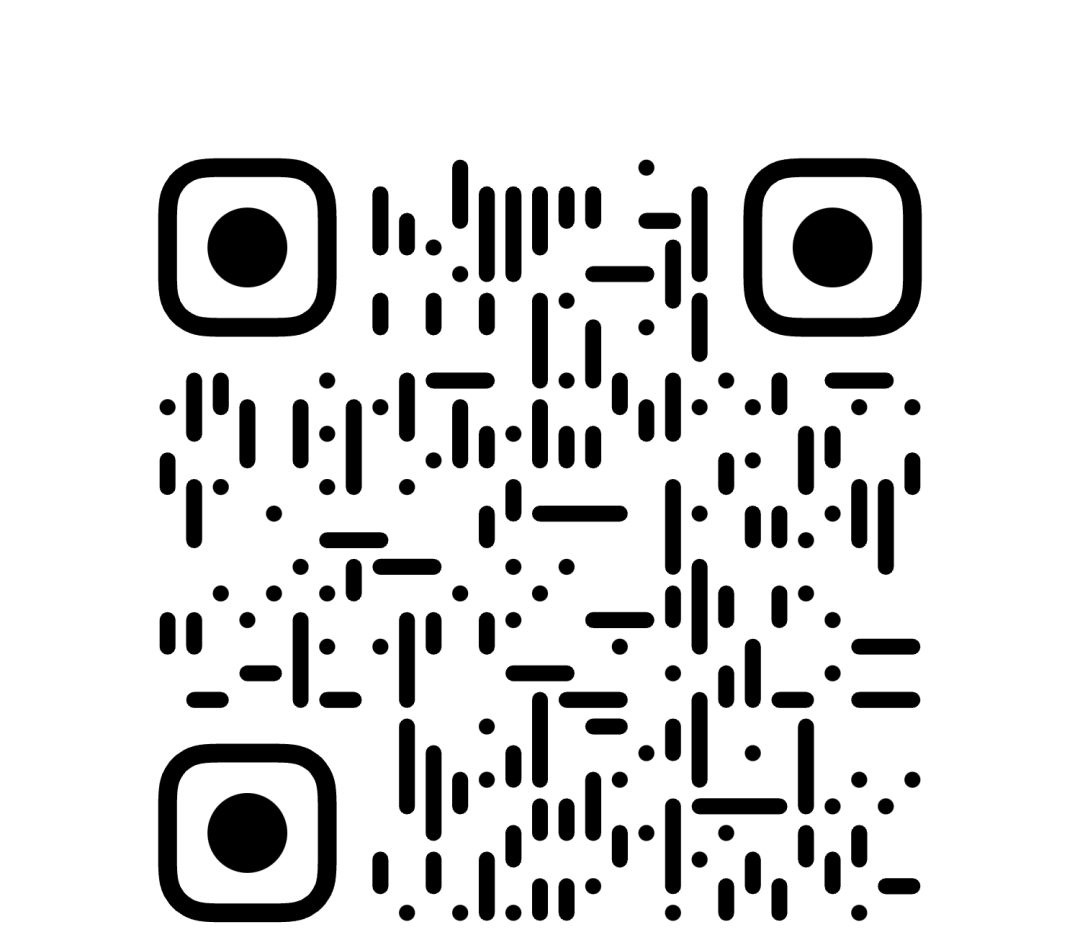
Scan the QR code to begin
We partnered with SiliconFlow and the China Will Registration Center to launch this initiative so more people can participate, and so we can learn more about young people's perspectives on life.
I hope you enjoy this process, and gain insight into living through contemplating death.
I hope even more that you'll share your feelings after writing your will with us, with those around you. It too might melt the ice in someone else's heart.
The ancients said, "If you don't understand life, how can you understand death?"
The reverse is also true. If you don't understand death, how can you understand life?
After looking death square in the eye, perhaps we can finally see clearly what people truly live for.
Enjoy the conversation. Live to the fullest.
Initiators | Wei Zhang, Koji Product Development | Ran Chen Content | Miaoduo Li, Ke Liang, Xueqin Wang Visual | Kuizi Partnership Coordination | Ping Zhong, Jinhui Yu