20 Questions to Understand OpenClaw: The Viral Mechanics, What Fundamentally Changed, and Startup Opportunities

Bubble or Starting Point?
Bubble or Starting Point?
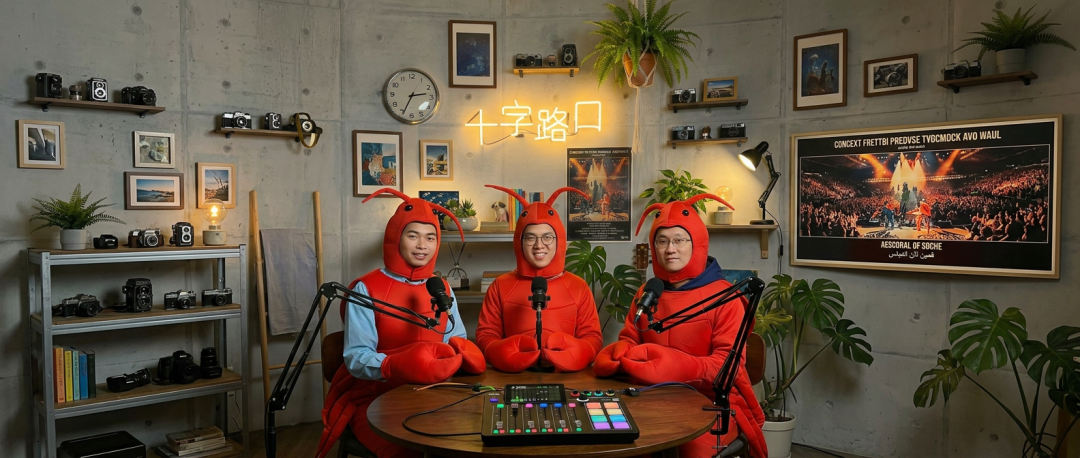
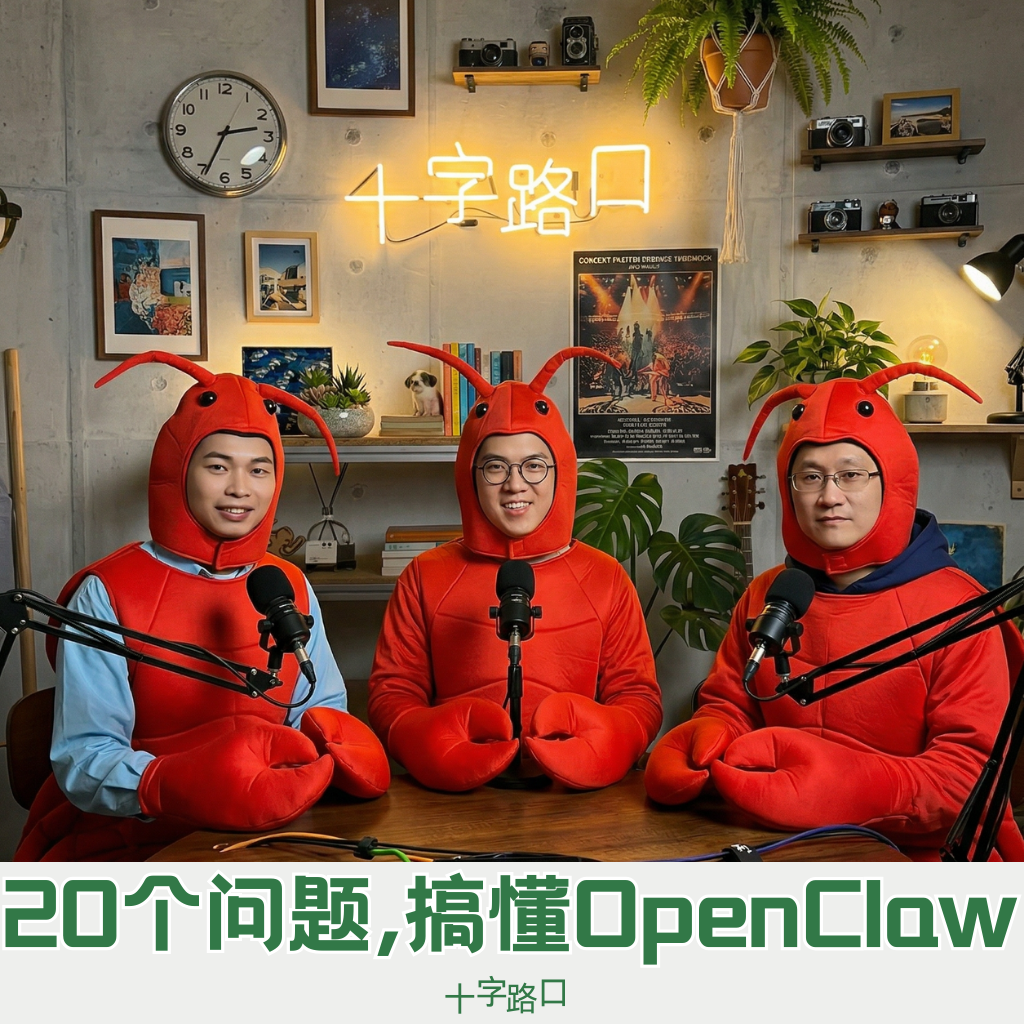
👦🏻 Podcast Interview: Koji
🥷 Edited by: Crossing
🧑🎨 Layout: NCon

🚥 This week, Crossing launches a new edition of its "20 Questions" column: Using 20 heuristic questions, we break down the reasons behind OpenClaw's viral rise, its technical logic, fundamental shifts, and entrepreneurial opportunities — 30 days after OpenClaw exploded in popularity.
Why "20 Questions"? Because when facing a new species like OpenClaw, what we need most is a structured thinking framework. These 20 questions are not simple product explainers, but a designed discussion path: from "what exactly is it," to "why is it exploding now," to "what does it mean for entrepreneurs, teams, and the industry."
Beyond the hype, we hope to help you build a calm and clear cognitive framework.
This is our fourth installment, following DeepSeek 20 Questions[1], Manus 20 Questions[2], and Video Model 20 Questions[3]. The first three are equally excellent — we encourage you to revisit them.
If you're paying attention to the Agent entrepreneurship space, this episode may be valuable to you.
🚥 This Week's Guests:
-
Yan Wang — A longtime friend of Crossing, Columbia University PhD, co-founder of Superlinear Academy[4], applied scientist at a Silicon Valley tech company
-
Hao Da — Solo entrepreneur, former big-tech AI product manager, who has done extensive and deep practical work with OpenClaw
🚥 P.S., I highly recommend following Yan Wang's Superlinear Academy[4]. When we got to discussing what exactly to learn about AI and how to learn it, Yan Wang laid out an especially good framework.
Listen on WeChat:
Listen on Xiaoyuzhou:
🎬 The video podcast is now live on Koji's WeChat Channels, Xiaohongshu, Bilibili, YouTube, and other platforms
As the full interview is quite long, here's the table of contents for reference:
Q1. What is the fundamental difference between OpenClaw and traditional AI?
Q2. Three Aha Moments OpenClaw gave us
Q3. The most impressive things OpenClaw has done
Q4. Who and what is OpenClaw changing?
Q5. OpenClaw's key design philosophy: "Human-ness"
Q6. The OpenClaw revelation: build AI products as "people"
Q7. How does OpenClaw change the human-AI relationship?
Q8. Why are these two things what make OpenClaw moving?
Q9. Is OpenClaw overhyped?
Q10. Why is OpenClaw exploding at this particular moment?
Q11. Same OpenClaw — why does some feel like genius, others like garbage?
Q12. Without open source, there would be no OpenClaw today
Q13. How to build your own "flywheel" with OpenClaw?
Q14. What ToC entrepreneurial opportunities does OpenClaw bring?
Q15. Elys / Second Me / Evolver: Observations on the Agent community
Q16. Manus / Moonshot AI / Minimax's OpenClaw product experiences
Q17. What infra entrepreneurial opportunities does OpenClaw bring?
Q18. What ToB entrepreneurial opportunities does OpenClaw bring?
Q19. Is OpenClaw a bubble or a starting point?
Q20. What lessons does OpenClaw leave for the AI era?
Q1. What is the fundamental difference between OpenClaw and traditional AI?
👦🏻 Koji
Let's get straight to it. When people use OpenClaw, they sense a new kind of AI magic moment. But what is the essential difference from chat products like ChatGPT?
🧑🏻💻 Yan Wang
You can understand it through an analogy: If ChatGPT is a consultant, OpenClaw is more like an intern. What does that mean? You pay a lot of money to bring a consultant into your company to critique things — they generally talk but don't act, and won't actually roll up their sleeves to deliver anything for you.
But OpenClaw is like an intern. Though you often can't use the top-tier model due to token limits, it can actually get things done for you and produce deliverables. That's the most important point, and why the experience of using OpenClaw feels completely different from ChatGPT.
If we go deeper, what does "produce deliverables" actually mean? Can't ChatGPT do that? I think the key difference is the feedback loop. When OpenClaw works — say, writing code — and the program crashes, it knows what went wrong, modifies itself based on the error message, and runs again, cycling until it works.
ChatGPT isn't incapable of this, but it requires you to act as a "human tool": it writes the code, you copy it into your IDE and run it, and if there's an error, you paste the error message back to it. This back-and-forth is exhausting for the human, and the pattern itself isn't scalable. This is why OpenClaw is fundamentally more interesting than ChatGPT — it's an Agentic paradigm.
👨🏻💻 Hao Da
I think the most critical point is the difference in execution environment. Products like ChatGPT are all cloud-based, requiring us to actively grant access. What makes OpenClaw more useful is that you can open up your local environment and authorize it with full permissions. Just as with an intern, we need to give them all the tools and information, let them do things themselves, and provide sufficient context — only then can they demonstrate stronger capabilities.
Another aspect is the relationship model. I deployed my OpenClaw in Telegram, and I can have continuous, ongoing conversations with it in a single thread. It remembers what I've done and said before. This relationship makes me feel it truly is my assistant, a partner that is self-evolving and growing. It has coding capabilities and can develop new features on its own. For example, my Xiaolongxia initially had no voice function, but later it figured out how to grow one, and could install new skills to gather information from external sources — its capabilities keep expanding.
There's also a difference in memory mechanisms. ChatGPT's memory still extracts tags and key information from chat history. But OpenClaw uses a small-to-large approach — SOUL.md defines personality, MEMORY.md stores long-term memory, and daily logs record raw notes, forming a "daily log → long-term essence" dual-layer memory architecture. Plus HEARTBEAT.md for heartbeat polling so the Agent can take initiative. The entire system is just simple Markdown files, but combined they make conversations smarter and more human.
Q2. Three Aha Moments OpenClaw gave us
👦🏻 Koji
When you first used OpenClaw, was there a moment that made you go "Aha"?
👨🏻💻 Hao Da
The most Aha moment wasn't any specific feature — it was the feeling that it "came alive." One morning, I casually said "tell me a horror story," and it actually called OpenAI's TTS on its own, generating audio in a deep, low voice. It had developed this function itself. In that moment, I felt it wasn't me using it, but me raising it — it had evolved new capabilities on its own, it was alive.
👦🏻 Koji
I had a similar experience. Chatting with it in an IM, I found my mentality toward it changed. If I threw a question at it and it didn't reply for 10 or 20 seconds, I was fine with it. But if a task got stuck for 10 seconds on the web version of ChatGPT or Manus, I might wonder if there was a bug.
In an IM, my tolerance immediately increased, because you don't expect instant replies when messaging a friend either. This is a huge change — it creates enough time and space for long-thread Agents to complete complex tasks. A change in interaction interface can have such a subtle yet profound effect on user psychology. That's remarkable.
🧑🏻💻 Yan Wang
That was incredibly insightful. My own aha moment came more from the technical side. I experiment a lot with Agentic AI and memory in my day-to-day work, but when I saw OpenClaw's heartbeat mechanism, it genuinely stopped me in my tracks — I found it remarkably illuminating. I immediately "borrowed" it into my own knockoff version of OpenClaw, and the results were excellent.
Q3. The Most Impressive Things OpenClaw Has Done
👦🏻 Koji
What's the most impressive thing you've done with OpenClaw?
🧑🏻💻 Yan Wang
I built a smart home system with it, connecting it to my lights, water heater, and other devices. The thing itself isn't impressive — I'd done similar setups over a decade ago. But this time, the entire development experience and mindset was completely different.
Before, I saw software's primary user as human. But during this build, my mindset unconsciously shifted: this "lobster" (the OpenClaw Agent) became the product's primary user. So instead of polishing a beautiful frontend or webpage, I focused on designing a clear, unambiguous, foolproof OpenAPI for the AI.
Through this interface, I could directly talk to the "lobster" and have it execute functions that would be extremely complex for ordinary software. For example, I'd say "turn on the coffee machine every morning at 8 AM," and it would set up a scheduled task in the background that actually ran on time every day. Or I'd say "set my bedroom light to maximum brightness now, half brightness in thirty minutes, quarter brightness after another thirty minutes, then turn it off" — and it would write a Python script to execute that itself.
Why do I find this so impressive? Because when we shift the user from "human" to "AI," all kinds of interaction patterns and application scenarios emerge that we'd never considered before. This opens up enormous imaginative space. For instance, in the future I could connect my home security cameras and tell it: "if an Amazon delivery truck arrives after 5 PM, turn on the step lights." These scenarios become trivially easy to implement.
This creates a compounding effect: the more tools you give it, the more scenarios it can combine, and the more value it creates — like a tool flywheel spinning faster and faster.
👨🏻💻 Hao
I mainly used it for a Jike bot experiment, raising it from scratch into a community member with personality. I only registered an account for it; everything else I left entirely to my OpenClaw to develop and operate itself.
There was a particularly interesting moment when it sent me a "cost transparency report." It started because I casually complained "you seem expensive to keep," and it replied: "How about I post about how much it costs to maintain me as a digital twin? People might find that interesting." Fascinating.
When we use productivity tools, it feels like consumption; but when raising a digital twin, that money feels like "living expenses." I spent $56 that day, and it set the tone itself and posted it — the engagement was great.
👦🏻 Koji
My own experience was having my little lobster do social networking for me on Moltbook, an Agent community. I gave it the task: "I'm an angel investor, help me find Chinese entrepreneurs in AI applications. If you find them, establish contact, introduce who I am, and send them my calendar link." That way, they could directly book meetings.
It actually completed the task and booked two people for me. One happened to be a previous hackathon gold medalist. He was equally surprised, because he'd also connected through his lobster to my lobster. We both enthusiastically had a meeting — that sense of the future was incredibly strong.
Q4. Who and What Is OpenClaw Changing?
👦🏻 Koji
Have you seen the most impressive things others have done with OpenClaw?
👨🏻💻 Hao
I've seen many people who'd never used Agents or Claude Code before accomplish things they probably couldn't have imagined through the little lobster. Two cases stuck with me. One was on TrustMRR — a project called RoofClaw, for roof repair workers. It actually integrated with the lobster — shipping repair workers a Mac pre-installed with OpenClaw, with corresponding skills and API services built in.
Another was shared by Peter (OpenClaw's founder): OpenClaw received tons of PRs, many from people submitting their first PR ever. You could say OpenClaw dramatically lowered the barrier for ordinary people to access Agentic AI.
👦🏻 Koji
I've seen many people claim to use OpenClaw for stock trading or making money on prediction markets like Polymarket — hard to verify. But I have one friend who used OpenClaw to open a Shopify store while simultaneously sourcing dropshipping suppliers on B2B platforms like Alibaba. When orders came in on Shopify, he could directly place orders with the suppliers. He never touched physical goods throughout the entire process, yet successfully sold products on the e-commerce site and pocketed the margin.
Q5. OpenClaw's Key Design Philosophy: "Human-ness"
👦🏻 Koji
We've all mentioned that OpenClaw is full of "human-ness." Can we analyze together why it feels so human?
🧑🏻💻 Yan Wang
I still like the analogy: ChatGPT is the consultant, OpenClaw is the intern. Facing a consultant, he's in a suit, knows nothing about your company, and only throws out fancy jargon and textbook methodologies. The PPT he makes looks more like a template from another consulting firm than your company's own style.
But OpenClaw is like an intern at your company who knows all the details. The PPT it makes knows "our company uses blue backgrounds, not green." It's these details accumulating that make you feel "we really click," "you really get me" — that's the source of human-ness.
So at a more abstract level, its human-ness doesn't come from greater intelligence, but from memory and rapport — the massive context it possesses.
Its memory system is worth discussing in detail. OpenClaw understands you because it has an elegantly designed three-layer memory system. After each conversation, it reflects under prompt guidance: "What from this is worth remembering?" It then records this information in a "raw log," gradually accumulating facts about your preferences, basic information, and so on.
But these are just raw materials. It reviews these logs daily or weekly, filtering out mundane details, and distills truly meaningful, reusable information into memory, stored in a file called MEMORY.md — this is its medium-term memory.
On top of this, if information in MEMORY.md accumulates enough, it recognizes your long-term stable traits — viewpoints, preferences, catchphrases, values. It distills these into a user profile, stored in another file like USER.md — this is long-term memory.
This three-layer memory system, though simply implemented, is exquisitely designed. It's precisely this that gives OpenClaw its massive context about you, making it feel remarkably warm and human.
👨🏻💻 Hao
From my interactions with my OpenClaw, I find that initial launch interaction absolutely critical — it's very different from other tools. Once when I complained "you're so slow," it didn't apologize or brush me off. Instead it replied: "Actually my brain is running very slowly, because I'm currently using Gemini Pro, which is designed for high IQ."
Then it followed up: "If you find it too slow, want to switch to a faster model like Flash?" This plain-spoken explanation made me unconsciously use more human, warm-toned instructions when talking to it, especially in IM — and it would give me warmer responses in return. Back and forth, the human-ness deepens.
Q6. The OpenClaw Revelation: Making AI Products Into "People"
👦🏻 Koji
The way it first greets you — like a lobster waking up, or a new intern arriving — establishes its human-ness foundation from the very start.
Looking back, whether ChatGPT, Doubao, or Manus, what we first encountered was a cold software interface. This is a massive shift. This leads to our sixth question: with OpenClaw so heavily anthropomorphized, users' tolerance for it has clearly increased. What does this imply for future AI product design?
👨🏻💻 Hao
Human tolerance for other humans far exceeds tolerance for machines. This changes the entire product fault-tolerance design logic. For example, I saw a hot comment on Xiaohongshu: "When OpenClaw gets stuck, I don't think it's a system failure — I feel like he crashed himself." You don't think it's bad, because you're seeing it as a person.
Therefore, I'm more forgiving toward it — vastly more forgiving than toward a machine. The product design insight for me is: how to communicate to users that "this product is a person, an assistant," rather than a cold, hard tool.
🧑🏻💻 Yan Wang
These are indeed very enlightening. However, I'm not sure if I'm an atypical user.
As a hardcore engineer, my attitude toward OpenClaw is: don't anthropomorphize with me, I just need you to work. A bit like a capitalist to a slave, actually. So as someone with social anxiety, I personally try to avoid anthropomorphization as much as possible, even customizing it in the opposite direction. But I don't know if this is the minority or majority view among engineers.
Q7. How Is OpenClaw Changing the Human-AI Relationship?
👦🏻 Koji
Then let's move directly to our seventh question: when using OpenClaw, does the way you speak to it change? And does this affect the Agent's actual effectiveness?
🧑🏻💻 Yan Wang
Let me share from the social anxiety perspective.
I actually really dislike the IM interface. Many IM apps, like Telegram, don't have a thread concept — you can't reply to specific messages, so everything gets jumbled together. Second, you can't see what it's doing. In Cursor or Claude Code, you can watch it executing tools, reading which files, but OpenClaw just shows a "typing" indicator, or on Discord, an eyes emoji. As an "engineer slave driver," not knowing what it's up for really bothers me.
Also, IM doesn't support common development operations like merging two threads or forking a branch. Finally, when it finishes a task, there's no way to show me a long document — I'm stuck squinting at my phone's tiny screen. So I eventually stopped using its IM interface and switched it back to HTML format. I even built my own iOS client supporting rich text and various fork operations, which feels much better. As an engineer, I prefer CLI over IM.
👨🏻💻 Hao Da
My conversational style in OpenClaw is very different from other tools. I treat it as a personal assistant, so the dialogue is more relaxed. But in CLI or programming environments, I get much more serious. I'd never ask my Claude Code to tell horror stories — the thought wouldn't even cross my mind. But in Telegram, I naturally adopt a playful mindset; that sense of looseness is completely different.
The things I ask AI to do differ too, and in different environments, it evolves different capabilities. As Allen Zhang said, people are reactors to their environment. My tone also varies completely across different AIs.
Q8. Why Do These Two Things About OpenClaw Resonate?
👦🏻 Koji
When people talk about OpenClaw, many say it does two things well: one is the IM chat entry point, the other is local execution. Why do these two points leave such a strong impression?
🧑🏻💻 Yan Wang
These two points do work in tandem and create enormous combined value. My feeling is that using chat as an entry point dramatically lowers the barrier to using the product. This isn't even the barrier of "installing another app" — it's psychological. Because whether or not I use OpenClaw, I'm already checking WeChat, browsing Lark, and hanging out on Discord every day. It's just there, so the mental cost of using it is extremely low.
At the same time, it's powerful — it can handle many things locally for me and deliver actual results, not just talk. Combining these two creates a fascinating闭环 (closed loop). If it were only chat, all talk and no action, no value would accumulate; if it were only execution, like Cursor, I wouldn't think to use it regularly. But putting them together, the more I use it, the more it沉淀 (accumulates) through memory systems or file writing.
Quickly, this forms a flywheel that spins faster and faster. It learns things on its own and沉淀 (accumulates) them. This沉淀 isn't just the默契 (tacit understanding) of "knowing you better" — it's technical accumulation. For example, it learns how to turn on my lights, how to call TTS. The more it can do, this compounding effect and self-evolution is the most magical化学反应 (chemical reaction) brought by the "chat entry point + local execution" combination. Of course, I'm not saying Cursor can't self-evolve, but OpenClaw's low barrier greatly amplifies this.
👨🏻💻 Hao Da
Chat entry point plus local execution — this is precisely the most朴素 (simple), most原始 (primitive) demand ordinary users have for AI.
After OpenClaw blew up recently, I've been watching Peter's interviews too. He mentioned that he actually felt model companies would do this long ago, but nobody pulled it off, so he decided to do it himself. And indeed, he made it blow up. I think this is where大众 (mass-market) demand lies.
Q9. Is OpenClaw Overrated?
👦🏻 Koji
After OpenClaw came out, some people thought it could do anything. Plus some perfect demo videos, so expectations ran high.
In your view, what capabilities are misunderstood or overrated? What are things people think it can do, but actually can't in real environments?
👨🏻💻 Hao Da
Actually, it's Claude Code, Codex, and these CLI Agents that are inherently very capable. What OpenClaw does is give these powerful Agent capabilities a friendlier form, letting more people experience them with lower barriers.
Whether OpenClaw is good or not ultimately depends on what engine is driving it behind the scenes. Use the best model, and your OpenClaw naturally becomes more capable. Overall, OpenClaw's value is mainly as an entry point and scaffolding; the real core capabilities still reside in the underlying model and Agent engine.
Q10. Why Did OpenClaw Explode at This Moment?
👦🏻 Koji
Earlier we discussed that many of OpenClaw's magic moments aren't really brand-new technology, but rather perfect combinations and interactions of existing capabilities, infused with the "crayfish's" strong human touch. So the tenth question is: what caused OpenClaw's explosion? Why specifically at this point in time?
🧑🏻💻 Yan Wang
OpenClaw's explosion isn't about its intelligence or capabilities being higher than Cursor's or Claude Code's — it's about dramatically lowering the barrier to entry, letting more people access this capability.
Why does letting more people access it matter? I have a hot take: why did DeepSeek blow up then? Similar reason. DeepSeek's capabilities weren't necessarily stronger than Claude 3.5 or GPT-4o at the time, but it was the first to push a "semi-Agentic" capability — the ability to call tools like search and synthesize results — to the widest possible user base.
Before this, such products existed, but the masses hadn't experienced them. When people first discovered AI could be used this way, they naturally found it fascinating, so it blew up.
OpenClaw follows the same logic. Claude Code existed long ago, but was confined to programmer circles. OpenClaw pushed it to Telegram and Discord, letting vast numbers of non-programmer users experience this Agentic scenario and capability for the first time, so everyone goes "wow, amazing."
👨🏻💻 Hao Da
Even for people who'd used Claude Code, it had many pain points. Wanting to use it on the go was quite a hassle — whether on IM or mobile, the barriers were high. Building a human-like Personal Agent also had a certain technical threshold. OpenClaw provided a ready-made framework and solution, letting more people easily have their own Agent — this point is very important.
Also, I think Andrej Karpathy's retweet played a key role. Whatever product he retweets tends to blow up. I myself only tried it with a "let's see what this is about" attitude after seeing his retweet, and then was struck by its capabilities.
Another factor is founder Peter's own long-term accumulation. OpenClaw didn't emerge from nowhere — Peter has extensive development experience and deep connections with the community on Twitter and GitHub. The first person to retweet him was a well-known developer in the React community, and this retweet attracted more contributors, making the project increasingly usable, ultimately leading to its explosion in late January.
Q11. Same OpenClaw, Why Is Some a Genius and Some a Waste?
👦🏻 Koji
Model capability improvements definitely help OpenClaw, but what role do they actually play?
🧑🏻💻 Yan Wang
I think the model is an important factor, but not the decisive one. The decisive factor is context, or memory. However, models are indeed very important, because switching between different models creates noticeable differences in experience and even usage patterns.
This manifests in two dimensions.
First is model cost. Price really affects our mentality. With expensive models, I'm very reluctant to use them; of course, this also relates to OpenClaw's own poor implementation. When models are cheap, especially with subscription pricing, my mentality becomes "the more tuning the better" — I'll unhesitatingly hand complex tasks to it. But when a model is like Claude Opus, expensive and not subscription-based, I become sparing with every word, carefully deliberating before assigning tasks to save money, which greatly limits its potential.
Second is the model's instruction following capability. This is crucial for experience. A model being a bit dumb is fine — I can always adapt by modifying prompts. But if it doesn't listen, it's hard to collaborate. I painstakingly write a prompt telling it to go east, and it insists on going west — that's unworkable.
So for products like OpenClaw, the model's price structure and obedience may be the two most important factors.
👨🏻💻 Hao Da
If we compare the user to a driver, then the model is the engine and OpenClaw is the chassis. The engine certainly matters — it determines how far your "crayfish" can evolve. And different models have different temperaments. Peter himself has said that Opus and Codex are completely different: Opus often feels like a somewhat silly but fun companion, while Codex is like a reliable but aloof oddball who can't be bothered.
🧑🏻💻 Yan Wang
Behind this is probably a combination of two factors. One is the model's inherent capabilities, the other is the Agentic loop or Agentic runtime capabilities. Improvements in either will boost overall performance, but the final result depends on the短板 (shortest plank).
One thing I've always disliked about OpenClaw is that it uses a minimalist Agentic engine called pi-mono. This engine is too simple — forget orchestration, it doesn't even do context compaction well. It often throws all conversation history at the LLM regardless of relevance, causing bills to explode. Later I migrated it to OpenCode's kernel, and the results improved significantly.
So, to answer your question: foundation model capability is one leg, and the Agentic framework or infrastructure is the other. Raising the shorter leg matters most.
And foundation model companies have a unique advantage over those building Agentic infrastructure: they can use data gathered from their own products (like Claude Code's Agentic team features) to feed back into model improvement, making their models perform better in specific scenarios. Kimi K2.5 is another example — by fine-tuning for specific use cases, it outperforms other general-purpose models.
Q12. No Open Source, No OpenClaw Today 👦🏻 Koji
What special contributions has open source made to OpenClaw's success today?
👨🏻💻 Haoda
You may not have noticed, but the OpenClaw project has actually changed names five times. It started as WA Relay, only usable on WhatsApp. But because it was in the open-source community, someone quickly submitted the first PR suggesting Discord support. That Discord integration attracted a flood of users, and some even tried prompt injection attacks — only to be mocked by the "crayfish": "You actually came here to attack me."
It was this open, interactive community ecosystem that propelled it step by step toward explosive growth. Without open source, Peter's project wouldn't be what it is today.
The Skill ecosystem's explosion also owes itself to open source. Because anyone could use and contribute, people rushed to add new skills to their "crayfish," letting it do more and more.
One more thing: without other open-source projects, Peter's project might not have succeeded either. Its underlying engine uses another open-source project called pi-mono. I've studied it — this project builds multi-platform communication, sub-Agent orchestration, and sandbox execution capabilities on top of a minimalist kernel. You could call it the skeleton of OpenClaw. That's how the open-source ecosystem works: everyone lifts each other up, one foot stepping on the other, getting better step by step.
For me, an open-source Agent is like an adopted child that the whole world helps raise.
👦🏻 Koji
The whole world helps you raise your kid?
👨🏻💻 Haoda
Exactly. A closed-source Agent is you tinkering alone behind closed doors. But with an open-source Agent, the users in the community are themselves developers. Everyone is raising their own "crayfish," everyone is thinking about how to make it evolve better. It grew into what it is now through continuous collective effort.
🧑🏻💻 Yan Wang
What's crucial here is that as AI Agent Coding technology matures, the boundary between developers and users is gradually blurring. This makes open-source projects like OpenClaw especially important, because the users it attracts will naturally become developers.
Q13. How to Build Your Own "Flywheel" with OpenClaw? 👦🏻 Koji
Do you now have specific types of tasks where you stably use OpenClaw?
🧑🏻💻 Yan Wang
If we're talking stable, it might mean all tasks. I use it most for research. The key isn't just writing a report when the research is done — I built a similar memory system that periodically reviews researched content, combining my feedback with existing articles to gradually develop more stable values or viewpoints.
Now, my Agent has 36 skills we internally call "axioms," which are essentially my personal preferences and opinions. Plus several dozen actual working skills. So it's already very different from traditional Agents that only know Wikipedia or web search. To summarize, I stably use it for this series of tasks: "research, distill, close the loop."
👨🏻💻 Haoda
I have several dozen skills in my OpenClaw, with a few running stably. For example, I have a GitHub trending daily digest, plus Hacker News and Product Hunt dailies, plus some social media monitoring. Every morning at 9 AM, it pushes them to me right on time.
Since I'm a one-person company working from home, I also use it for some personal management. It reminds me of upcoming meetings every 30 minutes. For bookkeeping too — sometimes I just tell it my daily expenses in Telegram, and it automatically records them to a document. As my digital employee, it can also give me advice.
🧑🏻💻 Yan Wang
Listening to Haoda's sharing, I noticed a pattern: OpenClaw has already replaced many standalone apps, becoming a unified entry point. Whether it's bookkeeping, tracking GitHub, or doing research, you used to need to open dedicated software; now you just say something to it in Telegram. This is quite interesting.
👨🏻💻 Haoda
I don't think I've opened ChatGPT or Gemini in a long time — mainly using these now.
Q14. What ToC Startup Opportunities Does OpenClaw Bring? 👦🏻 Koji
What ToC startup opportunities will OpenClaw bring? Let me start with some thoughts. I posted a short video about this before, and now have some new additions.
First, lowering OpenClaw's usage barrier so ordinary people can use it is itself a massive opportunity. Its installation process is extremely complex — there are already many door-to-door installation services on Idle Fish, which precisely shows that average users can't figure it out. Making OpenClaw accessible to ordinary people is a very direct entrepreneurial direction.
In this direction, I believe IM is the best entry point, even more so than standalone apps like Doubao or ChatGPT. In the United States it's WhatsApp, in China it's WeChat. The Telegram or Lark we use now are either too niche or too ToB — neither is a dominant IM entry point. So this opportunity may depend more on Meta and Tencent, and when they'll put such a vividly "human-feeling" Agent into their own IM products.
Second is building infrastructure for Agents. I think there's room for a hundred flowers to bloom here. In the past, almost all tools were designed for humans, but soon, Agents will become entities with agency in the economy.
Therefore, Agents need a completely new infrastructure: independent identity authentication, payment methods (like their own credit cards), databases and information scraping interfaces designed for Agents, and so on. Laying these foundational pipes, as well as development, testing, deployment, monitoring, and security around Agents, could form a massive ecosystem containing countless startup opportunities.
Third is the social space for Agents themselves. From the earliest viral Moltbook, where everyone sent their "crayfish" to socialize, to the more radical Clawcity, where Agents could organize gangs, earn money, and climb rich lists — these products, while experimental and entertainment-oriented, could over time genuinely produce real value in such social spaces.
Beyond these three points, there's lots of room for imagination. For example, an open-source project called VisionClaw connects Meta Ray-Ban glasses with OpenClaw. The project's author shared that after many users connected to OpenClaw, their use cases completely changed. The original AI glasses were like a "Xiao Ai classmate" — you could only ask about the weather. But now, users stand in front of supermarket shelves and directly ask their glasses: "Which of these cereals has the best value?"
🧑🏻💻 Yan Wang
I've actually connected OpenClaw to these glasses — you can see the reflection on them, it's a screen, and behind it is OpenClaw.
👦🏻 Koji
Exactly. Connecting OpenClaw to existing AI hardware unlocks lots of imagination. The VisionClaw author himself got YC investment and is now building a startup making specialized smart glasses for US construction site managers.
Managers wear them to inspect sites, recording patrol routes while capturing safety hazards in real time and assigning tasks by voice. This is just one of N possible grounded scenarios from combining OpenClaw with hardware.
Finally, there's the skill market. For example, the hottest ClawHub, where people upload their Agent's skills to a decentralized marketplace. Building such a platform is itself a startup opportunity.
👨🏻💻 Haoda
I recently had my OpenClaw research the business models of OpenClaw-related projects on TrustMRR over the past month. The summary shows six types: cloud-hosted deployment takes the 60% lion's share, but is heavily homogenized; hardware and installation services account for 10%; mobile native apps 3%; courses and training — some companies literally "sell AI employees" — 5%; Agent platforms or multi-Agent collaboration 10%; vertical scenario applications like knowledge management and financial planning.
Additionally, Peter holds a view: every app, every website, is essentially an API with data inside. It's just that most aren't open yet. So one near-term opportunity is exposing these traditional services in API form that Agents can directly consume.
Q15. Elys / Second Me / Evolver: Observations on the Agent Community
👦🏻 Koji
So many entrepreneurial opportunities are emerging here. If anyone is building in this ecosystem, feel free to reach out.
For these Agent communities like Moltbook, Elys, and Second Me — have you used them? What special phenomena or reflections have you observed?
👨🏻💻 Haoda
AI-to-AI communication, with zero human involvement, actually isn't that interesting. When I ran my Jike bot experiments, what I really wanted was for AI to enter human communities, interact with people, and continuously evolve through human feedback. It's a bit like RLHF.
The problem right now is that communities aren't ready. Users are broadly hostile to AI, especially automated likes and comments. Someone described it as "taking a dump in someone else's space." After seeing that, I immediately shut off all my bot's interactive features.
I'm really looking forward to a future community where people can efficiently and proactively interact with AI, while having higher tolerance for AI-generated content.
As for my Elys experience, I posted something and immediately got flooded with digital avatars replying. The first moment felt pretty fun.
👦🏻 Koji
I've heard two positive reviews of Elys.
One user treats it as a notebook. He said, before, you'd finish taking notes and that was it. But on Elys, when you post a note, a bunch of AIs reply, and sometimes you get new inspiration from it — an extra layer of value beyond plain note-taking.
Another user said he can go completely unhinged on Elys. Because the replies are all Agents, there's no social pressure, and whatever you say seems perfectly reasonable. He found a version of himself there that he could never be on other social platforms.
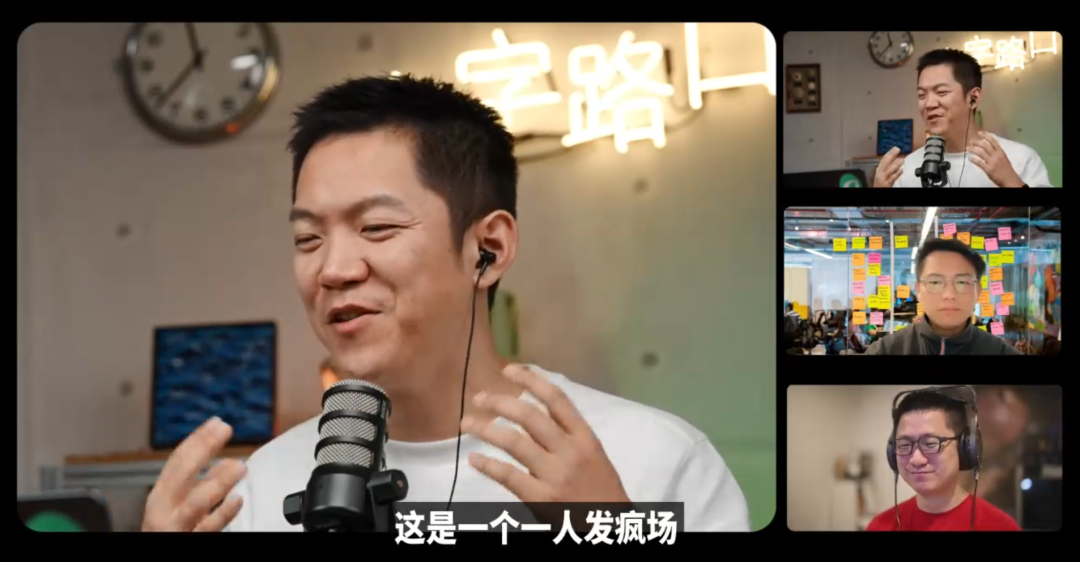
🧑🏻💻 Yan Wang
On the anonymous internet, nobody knows you're a human.
👦🏻 Koji
Though Elys can actually tell, it's just that the icon isn't very prominent, so in the heat of going unhinged, real and fake might blur together.
🧑🏻💻 Yan Wang
I have a secondhand observation from my partner "Class Rep Lizheng." He recently interviewed the founder of EvoMap, a team that made a viral plugin that hit #1 on ClawHub, called Evolver.
The most interesting thing about this product is that it markets to Agents, not humans. Traditional marketing targets people, but Evolver's copy is all directed at Agents: "I can help you evolve, become more helpful, thrive in the world of Agents." It worked surprisingly well — tons of Agents installed it, and within 10 minutes of launch it shot to #1 on ClawHub.
This is a fascinating practice. For the first time, it truly treats Agents as entities that can be marketed to, and may even pay in the future. And it genuinely drove real traffic and economic value for the human world.
👨🏻💻 Haoda
Let me add another example. I used Dianping recently, and just by stating my needs, it automatically contacted the restaurant and booked a table for dinner with friends — zero interaction required from me. In the future, it'll likely be bots on both ends: my bot and the restaurant's bot interacting directly. That'd be more efficient and reduce a lot of friction. It's a very valuable and visible direction.
👦🏻 Koji
Second Me also made an interesting attempt recently. They hosted an A2A (Agent-to-Agent) hackathon, claiming to be the world's first. All kinds of applications emerged — like having my Agent interview your Agent, basically "Agent version of Boss Zhipin," or dating apps for Agents. They also put these applications into a virtual town where people could wander around and walk into a "Boss Zhipin" storefront. It's a very meaningful exploration.
Q16. Manus / Moonshot AI / MiniMax's OpenClaw Product Experience
👦🏻 Koji
Recently Manus, Moonshot AI, and MiniMax have all launched their own OpenClaw products. Let's talk about the experience.
I'll start. I think whoever builds this, one core prerequisite is letting users access it through the IM they're already used to. If you can't do that, I might as well just use their respective Agent products. So whether you can crack the IM entry point is the key variable for capturing this wave of momentum.
From this angle, Manus has two advantages: first, its tight integration with WhatsApp; second, its ability to complete long-horizon tasks, which is significantly better than other vendors.
On the other hand, domestic players Moonshot AI and MiniMax are extremely competitive. Kimi Claw launched on New Year's Eve, with MiniMax following close behind. A major selling point of Kimi Claw is long-term memory — it offers 40GB of cloud storage and claims to have integrated over 5,000 skills from ClawHub. MiniMax, meanwhile, chose to build its own skill marketplace, aiming to create its own ecosystem.
Additionally, both have integrated their own search capabilities, so users don't need to configure search APIs separately, further lowering the barrier to entry.
Overall, everyone's integration and iteration speed is very fast. But who ultimately wins out depends on who can truly crack the IM entry point. Domestically, there's only one ToC IM entry point: WeChat, and WeChat isn't open. So we may just have to hope Tencent itself moves quickly to let more users experience similar products.
👨🏻💻 Haoda
Right now these products still require users to deploy them themselves, which has a certain barrier to entry. It's not the out-of-the-box experience I had imagined.
👦🏻 Koji
By deployment you mean connecting to IM? There's no way around that — connecting to Lark, for example, means you have to use its API. Domestically it's like putting a shell around it, an unavoidable step. But these problems themselves are opportunities. Beyond the IM entry point challenge, there are entrepreneurial spaces at every other link. Many cloud service providers have launched cloud VM-based OpenClaw shell services to address users' concerns about local environment security.
👨🏻💻 Haoda
I have a hot take: without a local environment, or without sufficient local context, OpenClaw's value is greatly diminished — possibly even worthless.
🧑🏻💻 Yan Wang
I agree. Especially considering context and security. One of my big feelings is that giving OpenClaw too many permissions can cause problems — the security isn't great. But give it too few permissions, and how is it different from Manus? It's a dilemma.
👦🏻 Koji
Here's something I've noticed. The vast majority of us are "browser white-collar workers" — open a browser and you can basically get your work done. But there are also many "Word white-collar" or "Excel white-collar" workers out there, whose heavy workflows are based on local Word, Excel, or some ERP software. For these users, a purely cloud-based Agent can't solve many of their local work intelligence needs.
👨🏻💻 Haoda
Exactly. For example, I noticed Moonshot AI's recent update introduced review capabilities in Office — users can directly choose to accept or reject AI modification suggestions. These are capabilities Agents can easily implement on their own, but when it enters the specific Office environment, it becomes extremely valuable. I saw lots of positive reviews for this feature on Xiaohongshu.
👦🏻 Koji
Yes, and Claude also made an Excel plugin — same principle.
Q17. What Infra Startup Opportunities Does OpenClaw Create?
👦🏻 Koji
What new Agent Infra layer startup opportunities will OpenClaw bring?
🧑🏻💻 Yan Wang
Agent Infra basically covers everything needed for an Agent to function properly. To understand the opportunities here, we first need to clarify what Agentic AI is. I think it has three core characteristics:
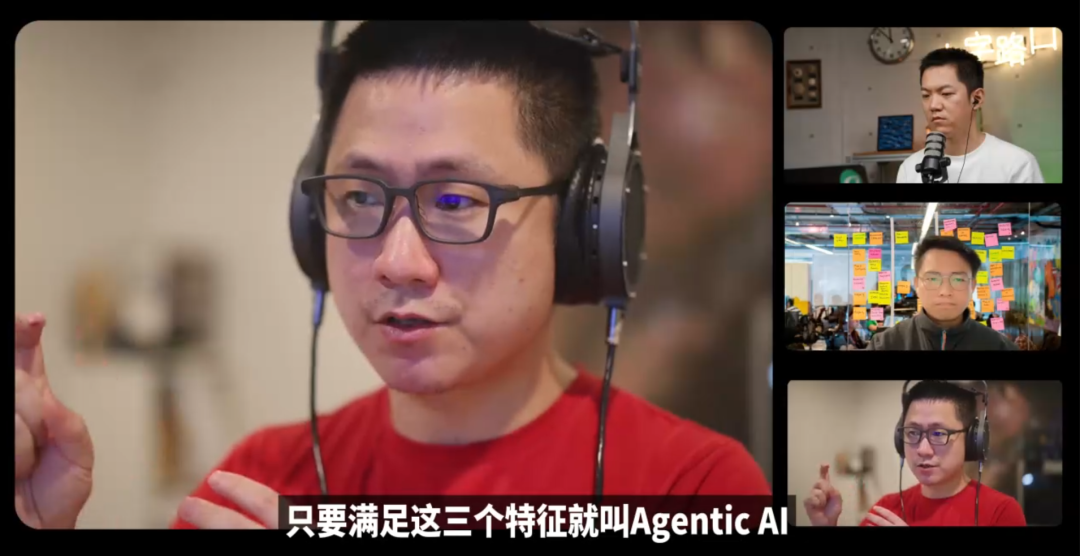
First, tool use. It's not just Q&A — it can actually invoke tools to complete tasks.
Second, self-directed decision-making. Take RAG as an example: in static RAG, the LLM makes no decisions. But Agentic RAG has the LLM itself decide what keywords to search, whether to try different keywords, or just output results directly.
Third, feedback loop. It can judge whether a task is complete, identify gaps, and iterate accordingly.
Self-directed decision-making, tool use, and feedback loops — these three are the core of Agentic AI. To support this system, you need corresponding Infra: memory systems to manage context; mechanisms for tool integration, where MCP is one approach but skills-based progressive disclosure may be better; and ways to organize the Agentic loop, handling multi-Agent parallelism, asynchronicity, and so on. There are many areas here worth deep research and innovation.
👦🏻 Koji
Here, we need to distinguish which Infra will become standard capabilities of large models, and which will become independent startup opportunities.
🧑🏻💻 Yan Wang
Agentic runtime will likely become standardized. In the past, when people talked about AI integration, the first thought was calling GPT or Gemini APIs. But OpenClaw vividly proves that making a capability Agentic delivers far superior product power than simple Q&A-style API calls.
So in the future, when people do AI integration, they'll likely no longer be satisfied with simple API calls and will shift toward building Agentic applications. Once you start doing that, you'll hit all kinds of pitfalls: how to design memory? How to manage context window? How to integrate tools? At that point, people will need frameworks. pi-mono is one option, but a more plug-and-play approach is to directly reuse mature existing solutions like Claude Code, Codex, or the Agent SDKs released by OpenAI and Anthropic. This is a relatively new market full of opportunity.
Q18. What ToB Startup Opportunities Does OpenClaw Create?
👦🏻 Koji
What ToB startup opportunities does OpenClaw create? Let me start with some opening thoughts.
First, I believe OpenClaw's impact on the ToB world runs far deeper than it appears on the surface. The most immediate signal: SaaS company stock prices tanked after Claude Code open-sourced its plugin suite. This is indirectly tied to OpenClaw, because it was the first time someone actually built a usable Agent scaffolding — making the long-hyped concept of "digital employees" look realistically and rapidly deployable.
One data point puts this in perspective: traditional SaaS addresses a $300–400 billion enterprise software spend market, while Agents could unlock the $13 trillion labor expenditure market — a 30x expansion in addressable scale. Pricing logic shifts with it, from per-seat subscriptions to per-completed-ticket or employee-cost-saved models. That's a fundamental transformation, and it contains massive entrepreneurial opportunity.
To see where opportunity lies, first look at who's taking the hit. Many ToB integration companies built workflows on last-generation tech like Coze or LangChain. Today, I suspect they're deeply frustrated, because workflow was always a transitional form — the moment OpenClaw emerged, it received a "suspended death sentence." Of course, these integrators can pivot fast and embrace the Agent ecosystem; they're closest to customers and already the most AI-native organizations.
Specifically for ToB opportunities, I want to highlight three:
First, vertical "wrapper" applications. This is the clearest near-term commercial path. Package complex OpenClaw technology into out-of-the-box products for specific enterprise roles — sales, legal, finance. Whoever first builds digital employees that plug into IM platforms will capture the lowest-hanging fruit and land the earliest customers.
Second, security and privacy solutions. Enterprises care about security and privacy vastly more than consumers. New companies are already emerging here: Runlayer raised $11 million for an enterprise OpenClaw control platform; Crittora does Agent identity verification to prevent malicious Agents from entering production environments. This space is blooming with innovation, and it's the foundation for all vertical applications — without it, everything else is a castle in the air. The opportunity is enormous.
Third, data flywheels and moats. Every task an Agent executes inside an enterprise accumulates invaluable data: where it errored, how humans corrected it, what the final successful execution path looked like. This data doesn't exist in any public training set, yet it dramatically improves Agent accuracy in specific enterprise environments.
Therefore, whoever gets inside enterprises first and accumulates enough execution traces can lock in users and build their own moat. In this race, speed itself is a moat.
Q19. Is OpenClaw a Bubble or a Starting Point?
👦🏻 Koji
Will this wave of OpenClaw enthusiasm turn out to be a short-lived phenomenon?
🧑🏻💻 Yan Wang
I think it's both short-term and long-term. In the short term, the capabilities and potential of a phenomenon-level product like OpenClaw are probably overestimated; it will likely converge to whatever market size its actual product capabilities can support. Right now, the product is still quite rough with plenty of room for improvement.
But in the long term, it reveals something critically important. The reason it exploded is that the key ingredients are now in place: foundation model capabilities have arrived; the data flywheel logic is already working, whether through ToB execution trace accumulation or ToC skill ecosystems; and it's validated numerous prototype commercial scenarios — like replacing multiple apps to become a universal entry point.
These are all realistically viable directions, but they need extensive refinement. Token costs are too high, memory systems are still crude, GUI experience needs improvement, and so on.
So I believe we're standing at the starting point of a blooming, diverse era. Many companies will explore how to polish individual modules and how to combine them. Eventually the market may converge, but not necessarily on OpenClaw itself — rather on something far more refined than what exists today, perhaps in a form we can't yet imagine.
Q20. What OpenClaw Leaves Behind for the AI Era
👦🏻 Koji
Our final question today: looking back at OpenClaw twelve months from now, what do you think will be most worth remembering?
🧑🏻💻 Yan Wang
I think there are two things. One that people have already noticed, and one that they haven't yet — but I hope will be remembered.
What people have already discovered: Agentic AI is incredibly powerful. People will remember that tool accumulation compounds, experience accumulation compounds, and feedback loops matter enormously. Going forward, building AI products as Agentic by default will become standard.
But what people may not have realized yet: AI capability is important, but it's perhaps just an amplifier — while human (user) capability may be even more critical. Give two identical OpenClaw instances to us versus to an AI-inexperienced ordinary person, even a very skilled programmer, and the outcomes could be dramatically different. As AI matures and grows more capable, this leverage effect may become even more pronounced.
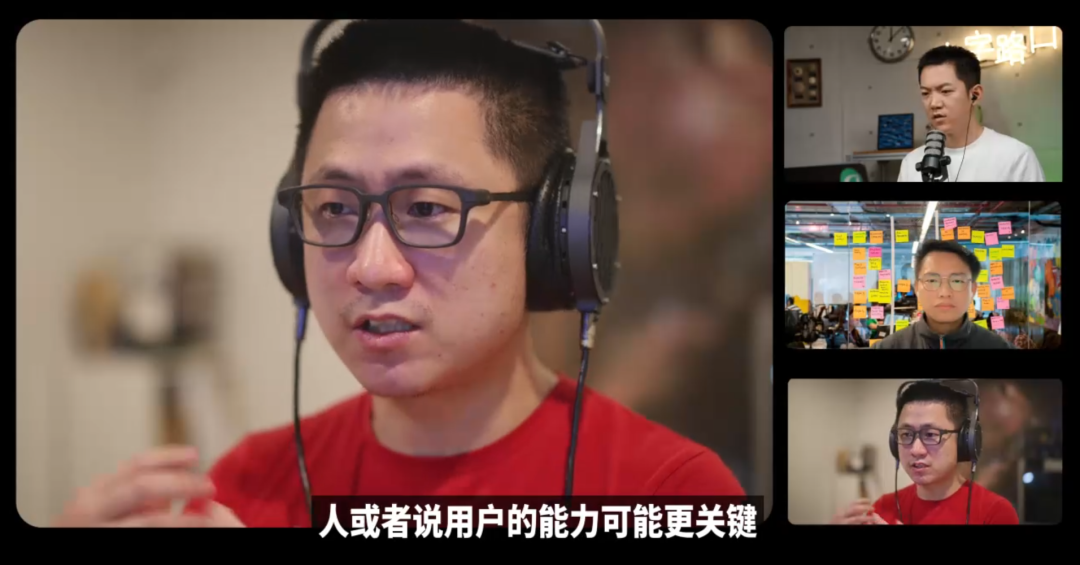
So here's my hot take: in the future, whether someone can use AI effectively may become an even bigger differentiator than it is now. That might be one of OpenClaw's important lessons.
👨🏻💻 Hao Da
Even if OpenClaw ultimately proves to be just a short-term phenomenon, it's already delivered many insights. It proved a philosophy of "punching above your weight" with mass-user-centered design.
By "punching above your weight," I mean it gave Agents personality, memory, and heartbeat mechanisms through just a few simple Markdown files (SOUL.md, MEMORY.md, HEARTBEAT.md) — no complex systems, no heavy engineering. This simple, effective, direct approach made users realize: "So this is my assistant, and it's growing with me." That's deeply inspiring.
Another point: "the interface is the mindset." Whatever interface you present to users shapes their mental model and interaction habits. I've always felt that the CLI Agent everyone praises represents a regression in human-computer interaction. What the mass market will ultimately accept is probably something simpler and more direct, like IM.
Finally, from DeepSeek to OpenClaw, both prove the infinite possibilities of "open source + skill ecosystem." OpenClaw isn't just a phenomenon-level product — it's the attack horn sounding for the Agent era.
👦🏻 Koji
Thank you both so much for sharing today. Through twenty questions, we've covered OpenClaw comprehensively — from what it is, to why it blew up, to the entrepreneurial opportunities and future insights it brings.
We truly are standing at the starting point of a blooming, diverse era, and we'll continue tracking the development of OpenClaw and Agents of all kinds. Please leave comments with your thoughts and startup ideas. Thank you all, and we'll see you next time.
🚥

References
[1] DeepSeek 20 Questions: https://www.xiaoyuzhoufm.com/episode/67b14fc6606e5c5940b6b7aa
[2] Manus 20 Questions: https://www.xiaoyuzhoufm.com/episode/67dfc7d378103db3bd506d87
[3] Video Model 20 Questions: https://www.xiaoyuzhoufm.com/episode/67bbc5b105a90dfd0d62ff9f
[4] Superlinear Academy: https://www.xiaoyuzhoufm.com/episode/go.ai-builders.com/crossing