A long essay Xing Wang recommended back in 2012 — perfect timing to read it now

What actually transcends time?
What Actually Made It Through Time?
🥷 Compiled by: Koji, Jingshan
🧑🎨 Layout: NCon

First off, happy New Year to all our friends at Crossing! 🎉🎉🎉
Over the New Year's holiday, we're putting AI aside for a moment to recommend an old article worth reading slowly.
This is an article Xing Wang mentioned and shared with me during a dinner in March 2012. He clearly loved it — the next day at noon, he sent me an email with the PDF attached. That year, Peter Thiel had just made a series of choices that weren't widely understood at the time.
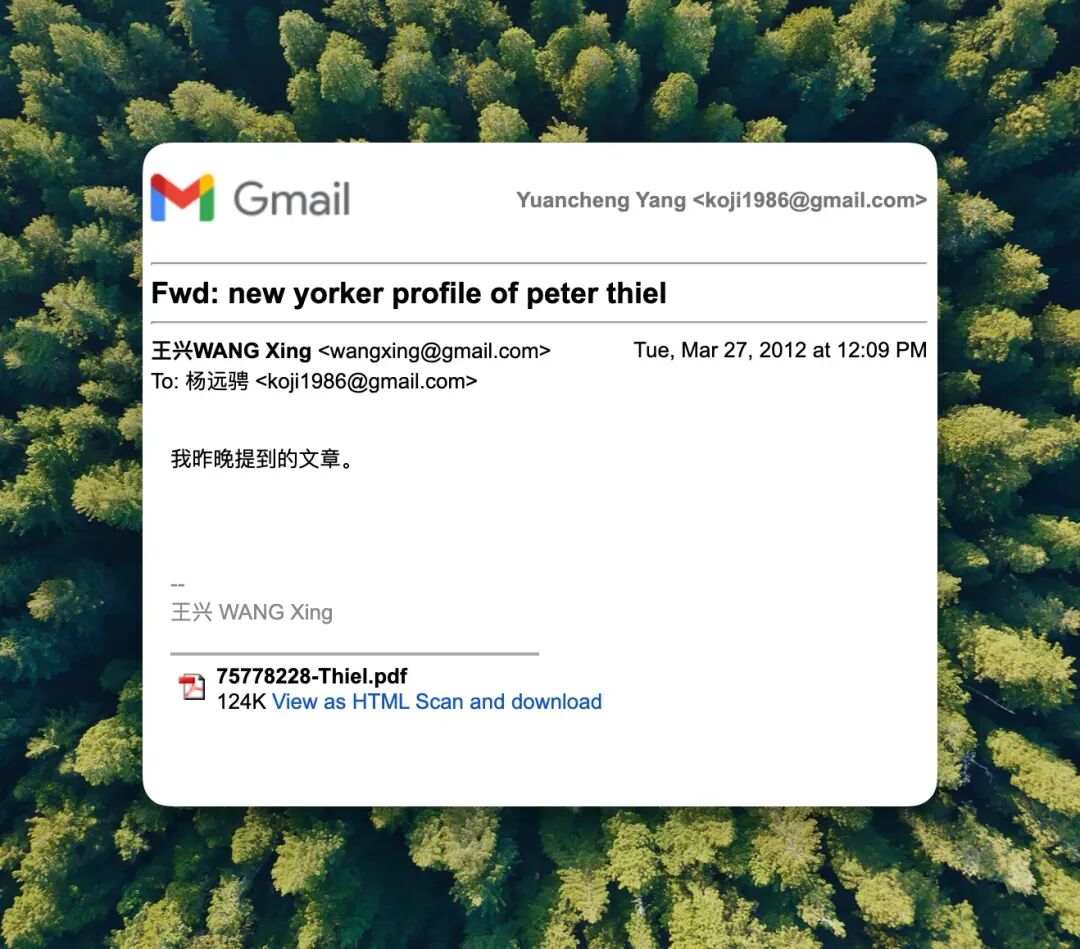
It was a New Yorker profile of Peter Thiel, titled:
"No Death, No Taxes"
If you know Peter Thiel, you probably know the labels: PayPal co-founder, Facebook's first outside investor, Palantir founder, one of Silicon Valley's "weirdest" thinkers.
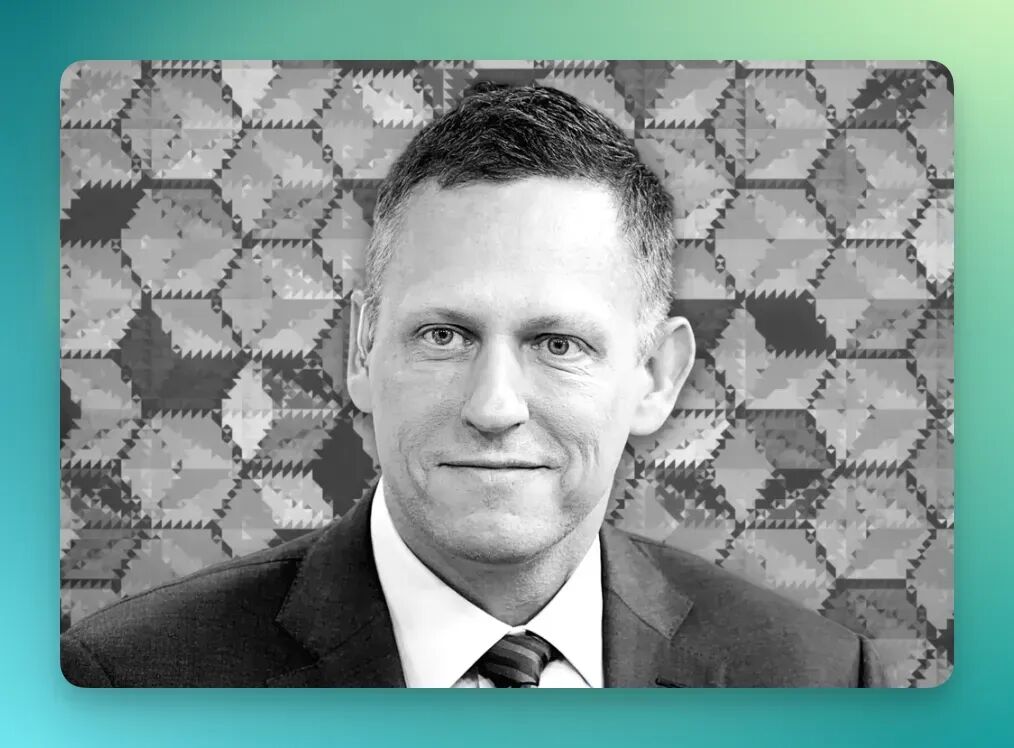
But this article isn't about those "success credentials." It's about the real story of someone who was impatient with "the way things are" from childhood.
In 2012, when Peter Thiel occupied a series of highly non-consensus positions — his investments, his Thiel Fellowship, his long-term bets — this article captured him in that "not yet validated" state. By 2026, we can clearly see what actually made it through time.
The holiday is a perfect time to reread this kind of story — highly narrative, information-dense, and immune to obsolescence.
Below is the full translation.
Regrettably, due to Chinese internet censorship, we've had to excerpt and delete roughly 3-5% of the content. Those interested in the complete version can search for the original.
Please note: "the present" in the text refers to 2011.
In Silicon Valley, Mind Elsewhere
Peter Thiel reached into his jeans pocket, pulled out an iPhone, and held it up.
"I don't think this is a technological breakthrough, not if you compare it to the Apollo program," he said.
Thiel was waiting for a table at Cafe Venetia, on University Avenue in downtown Palo Alto, California. This street is basically Silicon Valley's launch runway.
The cafe was packed. Everyone looked healthy, dressed casually, holding Apple devices, talking about either ideas or angel investing.
Ten years earlier, Thiel had sat in this same spot drinking coffee with his friend Elon Musk. That conversation led to a decision: take PayPal, the online payments company they'd built together, public.
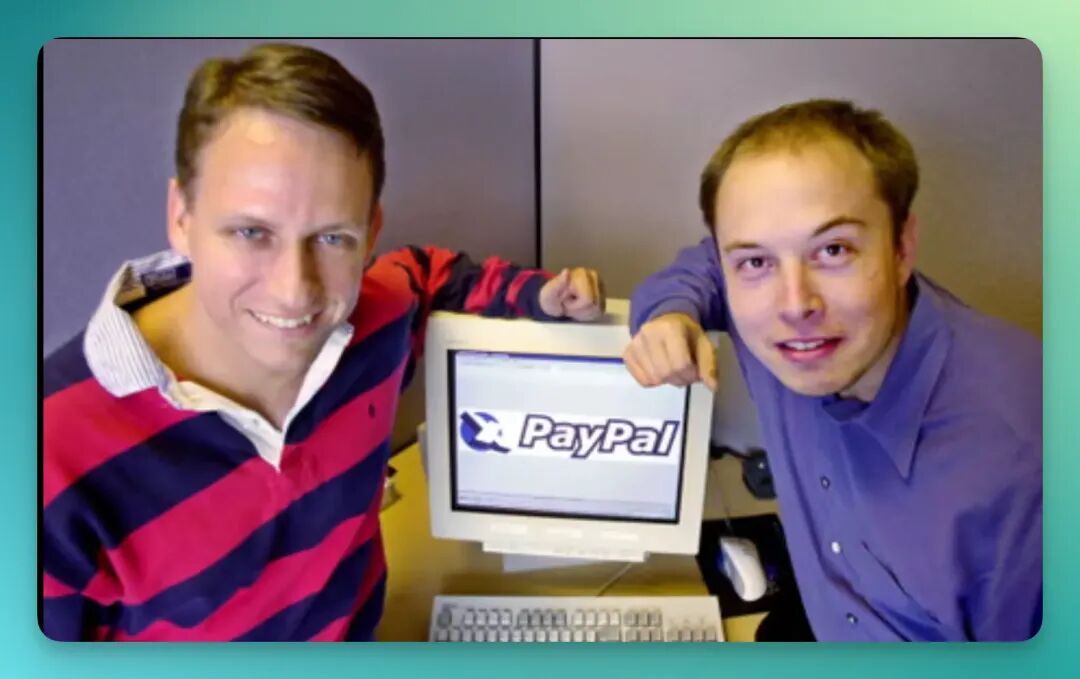
In 2002, shortly after PayPal's IPO, it sold to eBay for $1.5 billion. Thiel personally walked away with $55 million from that deal.
Most of Thiel's fortune was made within blocks of Cafe Venetia.
PayPal's first office was five blocks down this street, above a bike shop. Across the road was 156 University Avenue, Facebook's earliest headquarters.
In the summer of 2004, Thiel gave a Harvard dropout a $500,000 loan. His name was Mark Zuckerberg. It was Facebook's first outside funding. Thiel later converted the loan into a 7% equity stake and joined the board.
Today, that stake is worth at least $1.5 billion.
The company that later replaced Facebook at 156 University Avenue was Palantir Technologies. Its software helps government agencies find fraudsters in massive datasets. Thiel co-founded Palantir in 2004 and invested $30 million.
Now, the company is valued at $2.5 billion, and he is chairman of the board.
He may be one of the most successful tech investors in the world.
The information age made Thiel extraordinarily wealthy, but it also disappointed him.
He believes technology hasn't created enough jobs, nor has it delivered real leaps in manufacturing and productivity. However vibrant the virtual world may be, it can't substitute for progress in the physical one.
"The Internet is a net positive, but the gains are limited. Apple is innovative, but mostly in design."
"Twitter has a lot of users but doesn't employ that many people."
"Maybe five hundred people have stable jobs for the next decade, but how much does that actually contribute to the entire U.S. economy? It may not noticeably raise living standards over the next ten or twenty years."
His assessment of Facebook was "net positive," not because of the money, but because of its significant social impact.
Thiel rarely updates his own Facebook.
He "never really adapted to the BlackBerry, the iPhone, email" — he only started texting a year ago. His sports car has a voice-recognition system he still hasn't fully figured out.
He owns a $7 million mansion in San Francisco's Marina District and, in July, bought a $27 million oceanfront property on Maui. Yet to him, Silicon Valley's skyrocketing home prices aren't progress — they're evidence that "more and more people are being left behind."
He noticed that Cafe Venetia almost never has empty tables, and the same goes for elsewhere on University Avenue. This only makes already abnormal housing prices look even more irrational.
This false prosperity in Silicon Valley, in his view, is yet more evidence of the narrow-mindedness of the elite.
Technology's "Fake Progress"
Thiel grew up middle-class, attended Stanford and Stanford Law, worked at an old-guard elite law firm in New York, and did stints at top investment banks. He now has two assistants and a personal chef. Lately he's been reading the obscurest-of-obscure essays by the philosopher Leo Strauss.
By résumé, he's followed the most standard elite trajectory imaginable. But personally, he looks down on "the elite."
"The elite always have this old problem — their judgment is permanently skewed optimistic. Probably more so now."
If you were born in 1950 and happened to be in the top 10% of earners, your first twenty years were practically an automatic upgrade. Get into a good graduate program in the late sixties, land a good job on Wall Street in the late seventies, then ride the macroeconomic cycle.
Sixty-one years in, your life story is one uninterrupted ascent. But for most 61-year-olds in America? Not even close.
So Thiel's skepticism about the Internet's importance doesn't stem from disliking technology. On the contrary, he's deeply drawn to it. What truly disappoints him is this: America, the country that invented the modern assembly line, the skyscraper, the airplane, and the personal computer, is slowly losing its belief in the future.
In his view, many Americans are dazzled by various gadgets and incremental upgrades, forgetting how transformative technology could actually be. He keeps returning to the fifties and sixties, when science and technology truly entered the public consciousness — when people talked about the future with open imagination and real ambition.
A book that deeply influenced Thiel was The American Challenge by French writer J.J. Servan-Schreiber, published in 1967.
It sold worldwide.
The author argued that America's dynamism in technology and education was leaving the rest of the world far behind, and predicted that by 2000, America would become a post-industrial utopia: communication unconstrained by time and space, income gaps narrowing, computers liberating humanity.
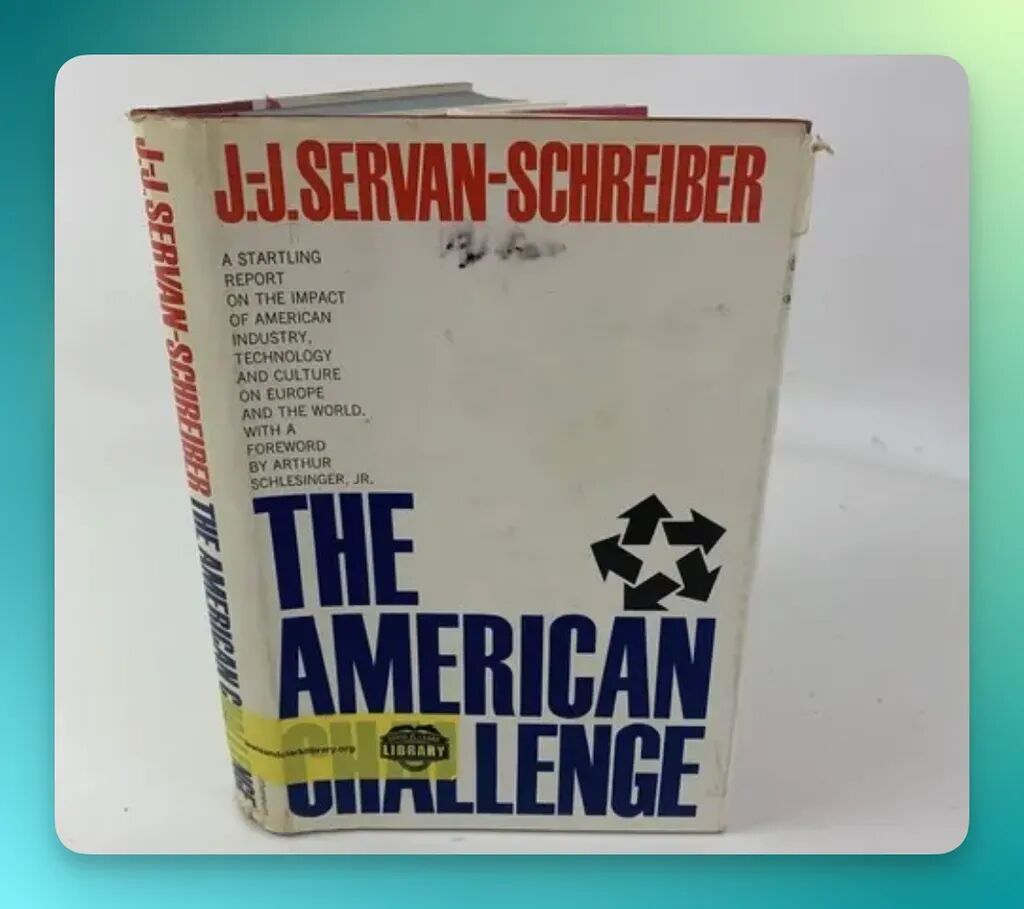
The book even got specific: "Four-day workweeks, seven hours a day. Only thirty-nine working weeks a year, with thirteen additional weeks of vacation... All this will be achieved within a generation."
In the era of The Jetsons and Star Trek, many Americans genuinely believed space travel would soon be as routine as air travel. Bold, outlandish visions saturated the popular imagination: underwater cities, reforesting deserts, using robots to extend human lifespan, even transforming San Francisco Bay into two massive freshwater lakes separated by dams covered in highways.
For kids obsessed with science, the worlds imagined by Asimov, Heinlein, and Clarke felt more real than reality itself — and seemed destined to replace it sooner or later.
Thiel believes confidence in the future began its decline with the 1973 oil crisis.
He called that year "the last year of the 1950s." From then on, humanity sank into a state of "technological slowdown." Reading sixties science fiction today feels like examining artifacts from another civilization.
"These days, stories are either about technology failing or technology being used for evil. Of the twenty-five best science fiction stories from 1970, you'd get something like 'My robot friend and I took a walk on the moon.' By 2008, it was 'The galaxy is ruled by a fundamentalist alliance, and someone hunts planets for sport.'"
Thiel's venture firm, Founders Fund, posted a manifesto about the future on its website that opens with a blunt line: "We wanted flying cars, instead we got 140 characters." (Editor's note: referring to Twitter's original 140-character limit per message.)
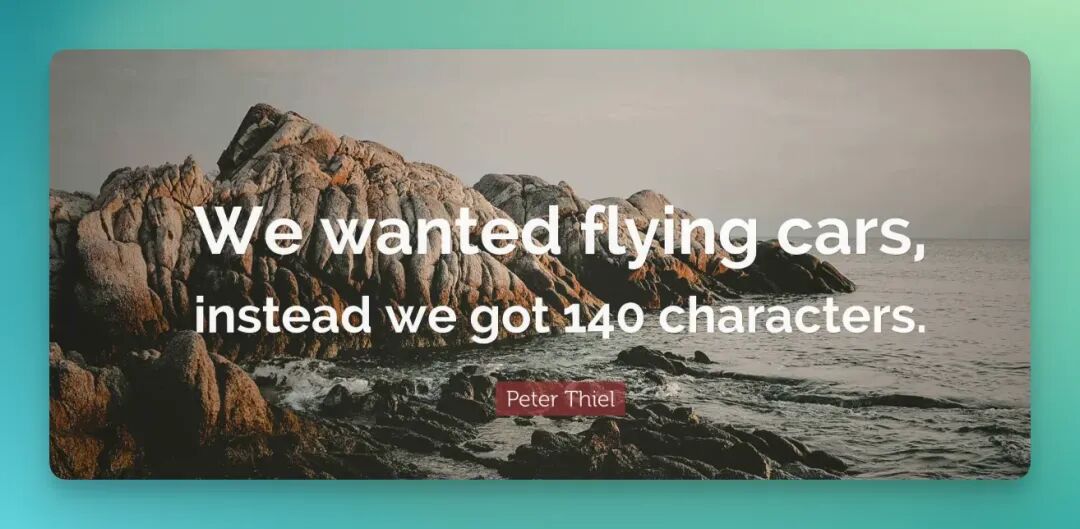
In his view, this very degradation of imagination explains a litany of American problems: collapsed manufacturing, stagnant wages, the ever-ballooning financial sector.
He put it this way: "Things are changing so fast it makes you dizzy, but there's no real progress."
Born to Win
Thiel's own story began at the tail end of the "golden age" — 1967, Frankfurt, Germany.
When he was one, his father Klaus moved the whole family to Cleveland. Klaus worked at a major engineering firm and transferred frequently; the family followed him everywhere, even to South Africa and Namibia. Peter attended seven different elementary schools.
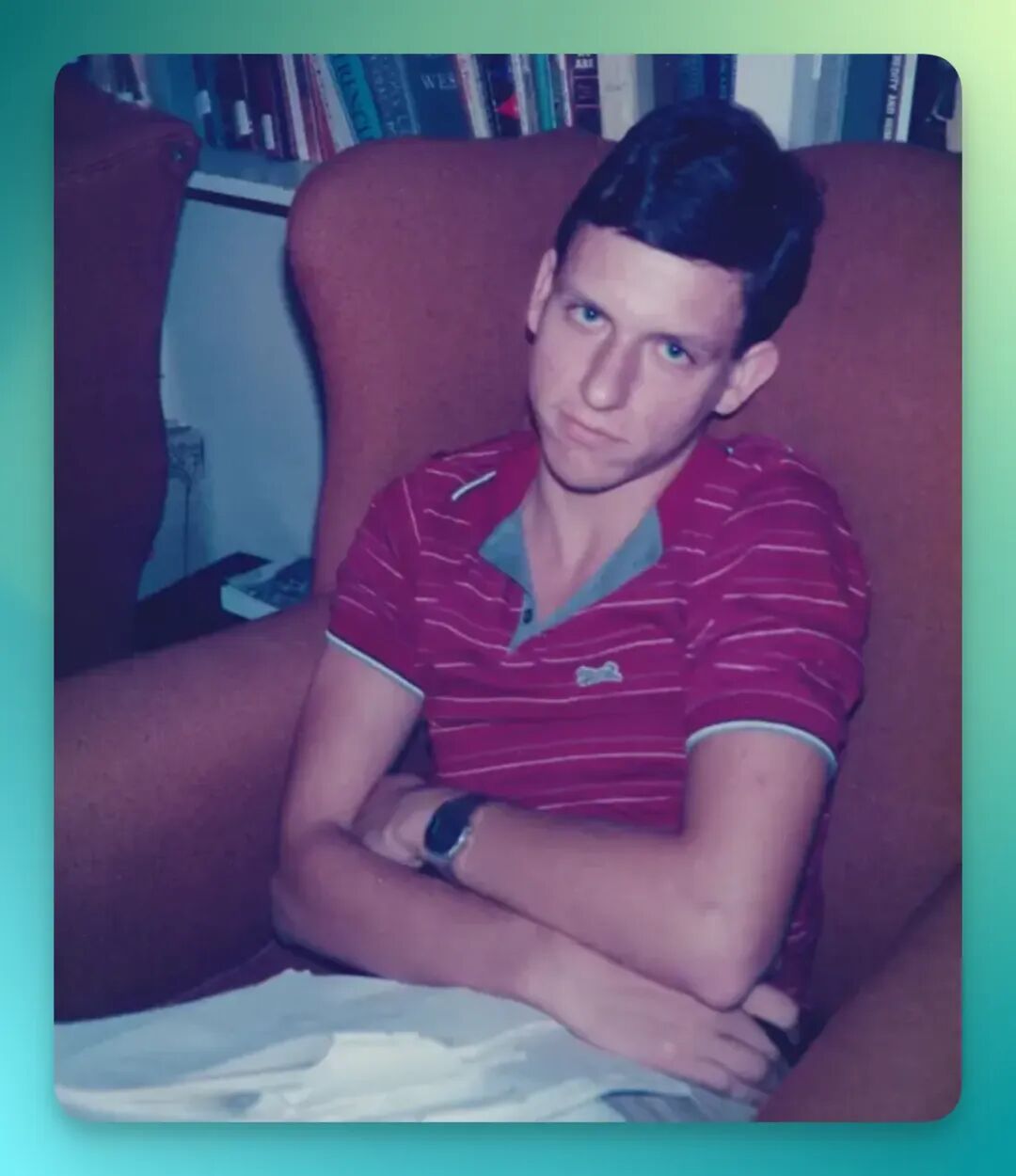
The final move came in fifth grade, when they settled in Foster City, a planned community south of San Francisco Bay. Before middle school, his parents forbade him from watching television. In this environment, he grew into a "brilliant loner" — supremely confident, ferociously competitive.
He was a math prodigy and a nationally ranked chess player, with a motto pasted on his chess set:
"Born to win."
Lose a casual game in college and he'd sweep the pieces straight onto the floor, saying: If you can "lose gracefully," you've probably already gotten used to losing.
As a teenager, he devoured The Lord of the Rings, reading it over and over. Later he fell for Solzhenitsyn and Ayn Rand. In high school he already believed in libertarianism, and believed it to the extreme. He's softened slightly since — now he'll concede that government spending on science isn't entirely out of the question.
Though Thiel was 44 at the time, it wasn't hard to picture him as a teenager. He walked with a slight forward hunch, as if finding his tall frame somewhat awkward. His auburn hair held a dab of gel, his nose long and fleshy, his blue eyes clear, his teeth very white.
He typically wore T-shirts and sneakers, liked hanging out in cafés. An actor portrayed him for 34 seconds in The Social Network; he felt the performance made him look too old, too much like the investment-banking type.
Though he had acquired all the standard luxuries of a twenty-first-century magnate, he lacked the natural taste for spending money. His most striking feature was his voice: something metallic caught in his throat, pressing his tone deep and flat, an authoritative monotone.
When thinking deepened even slightly, he'd get stuck — either falling silent or stammering for a full forty seconds: "What I want to say is... is... um... you know, it's like... right, I agree to some extent... to some extent... agree with these. I don't... um... I don't... um... in a sense it's a kind of politics without much ambition."
Thiel never made enemies, disdained gossip, rarely joked, and treated others' jokes as if he hadn't heard them.
He was approachable yet distant, transparent yet impossible to read. He'd answer anything you asked, and at length, but his logic ran so cold and flat that it became a kind of barrier against intimacy.
Thiel's closest friends all dated back to the early PayPal days, late nineties, or even further to his Stanford years in the late eighties. They resembled him, and each other: male, conservative, preternaturally strong in math and logical reasoning.
Their friendships were forged through abstract debate.
David Sacks left PayPal in 2002 and now runs Yammer, an enterprise social network. (Editor's note: David Sacks is now one of the hosts of the wildly popular Silicon Valley podcast All-In.)
He met Thiel at Stanford; both were in the same club. Their conversations revolved around evolutionary theory, libertarian philosophy, and the anthropic principle — the theory that the universe exists because conscious observers are there to perceive it.
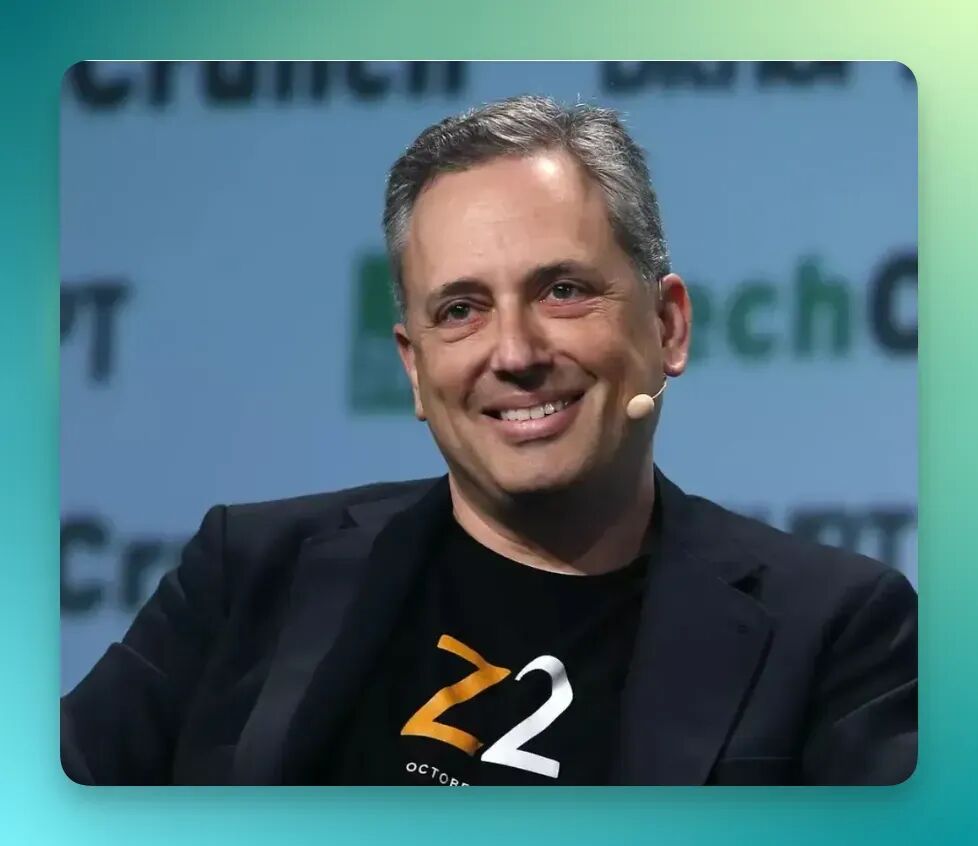 David Sacks
David Sacks said: "He could demolish your argument in five minutes. Like chess. He'd dig deep, find the holes in your logic. He genuinely wanted to win."
In the summer of 1998, Max Levchin, a 23-year-old Ukrainian programmer newly arrived in the Bay Area, attended Thiel's talk at Stanford on currency trading. The next day they drank smoothies in Palo Alto and sketched out what would become PayPal: a simple, unified, secure e-commerce payment system.
Levchin said: "I have a smart-person addiction, and I immediately felt I needed to spend more time with Peter."
While developing the PayPal prototype, Levchin and Thiel would regularly torture each other with fiendish math problems. (For example: how many digits in 125 to the 100th power? Answer: 210.) Levchin said: "It was kind of a strange courtship, two nerds desperately trying to impress each other."
In 2005, AI researcher Eliezer Yudkowsky met Thiel at a dinner party. They argued over whether someone could have "negative talent" in the stock market — whether "inverse stupidity" counts as a form of intelligence.
Yudkowsky said: "I remember every conversation with Peter being delightful, the topics wide-ranging. I'd rather compare it to an IQ test in the real world than to ordinary conversation."
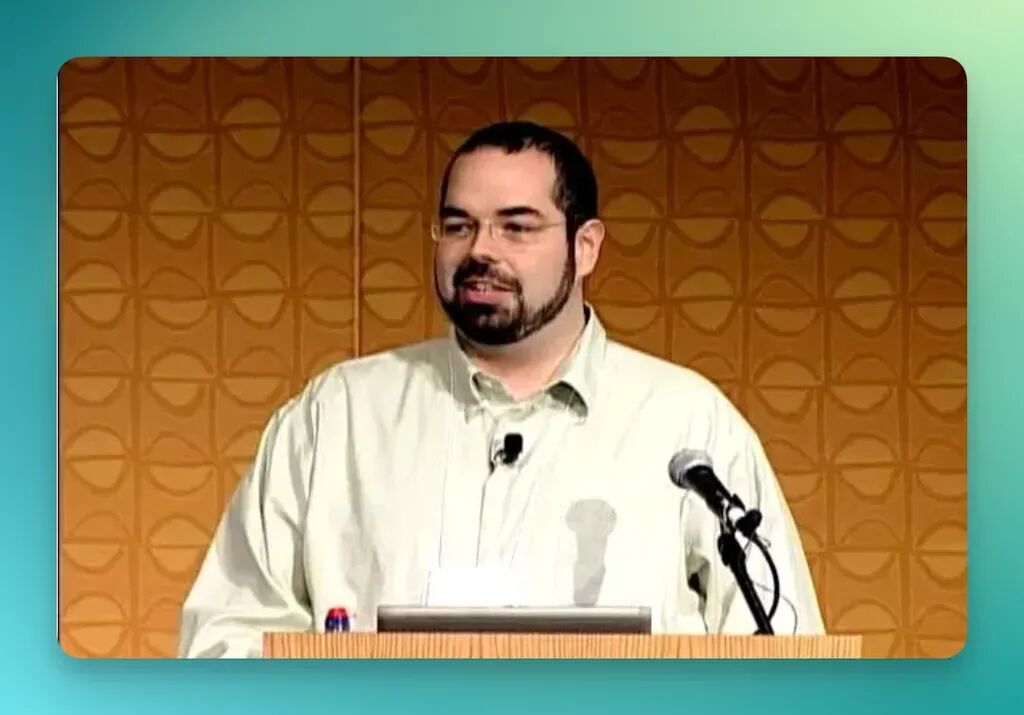 Eliezer Yudkowsky
In Silicon Valley, few could match Thiel's philosophical depth with comparable business instincts. His relentless drive to build PayPal, against all odds, stemmed partly from wanting to create an online currency that bypassed government control.
At Stanford, Thiel fell heavily under the influence of French philosopher René Girard. This philosopher's theory of "mimetic desire" holds that people learn what to want by imitating others.
Thiel once noted that in many situations, the conformity people display reaches genuinely unsettling levels.
Mimetic theory forces you to confront these hidden truths. As an investor and entrepreneur, he has consistently tried to go against the grain, seeking opportunity where no one else is looking.
Thiel's friends prize his tolerance for eccentric ideas.
Elon Musk, after leaving PayPal, founded SpaceX and Tesla. He said Thiel thinks without conventional constraints. Very few people in the world can truly exercise independent critical thinking — most rely on analogy or follow the herd — but Peter prefers to reason from first principles.
Musk added that while he considers himself fairly freedom-oriented, Peter takes it even further.
Yet Thiel himself is not truly without constraints.
He appears awkward navigating the emotional world of adults, like a gifted child who never quite grew up. A friend who had known him for over a decade said, "He's so rational, I'm not sure he even cares about intimate human emotions. I've never seen him express them. It's clearly an underdeveloped part of his personality."
Though fiercely competitive, he paradoxically hates conflict.
As PayPal's CEO, despite a company metric literally called the "world domination index," he delegated all management duties to avoid the friction of overseeing people. Similarly, he recruited only from like-minded circles, because judging whether strangers could work together was simply too much effort.
Reid Hoffman was among his old friends.
They had argued constantly as Stanford students.
Thiel liked to quote Thatcher: there's no such thing as society, only individuals. Reid Hoffman was a committed leftist who believed property itself was a social construct. In 1997, Reid Hoffman decided to put his principles into practice and founded SocialNet.
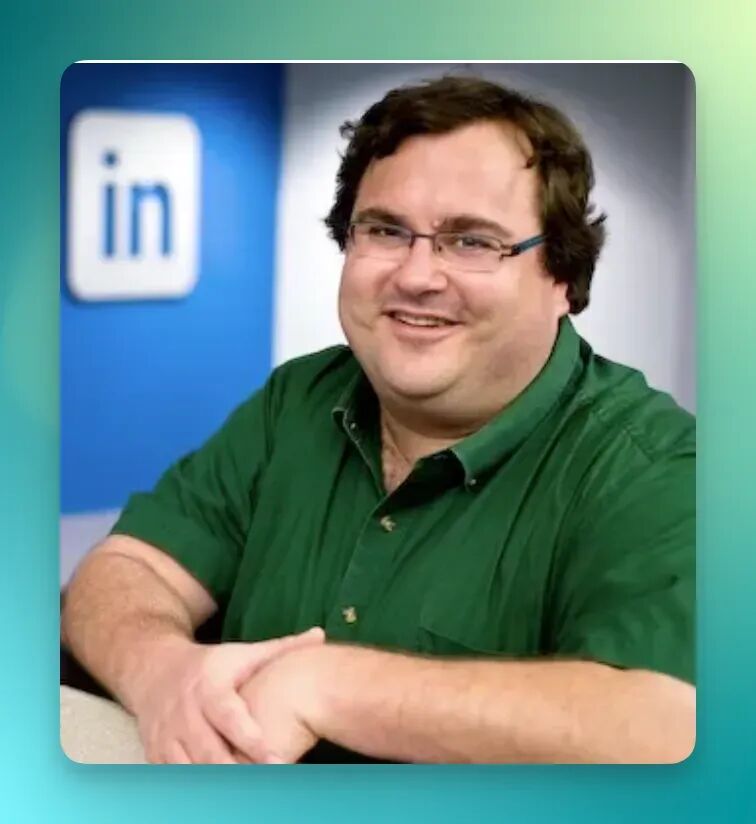 Reid Hoffman
Thiel called it the first social networking company.
The project failed because users kept using fake identities — not the way people wanted to connect online at the time. Later Reid Hoffman joined PayPal's board and became VP of external relations.
After PayPal sold to eBay in 2002, Thiel switched to investing.
He put up $10 million to start the hedge fund Clarium Capital, mostly his own money.
In the summer of 2004, Reid Hoffman, who had just founded LinkedIn, and Sean Parker made the introduction that brought Mark Zuckerberg to Thiel. At the time, Facebook was just a website for college students.
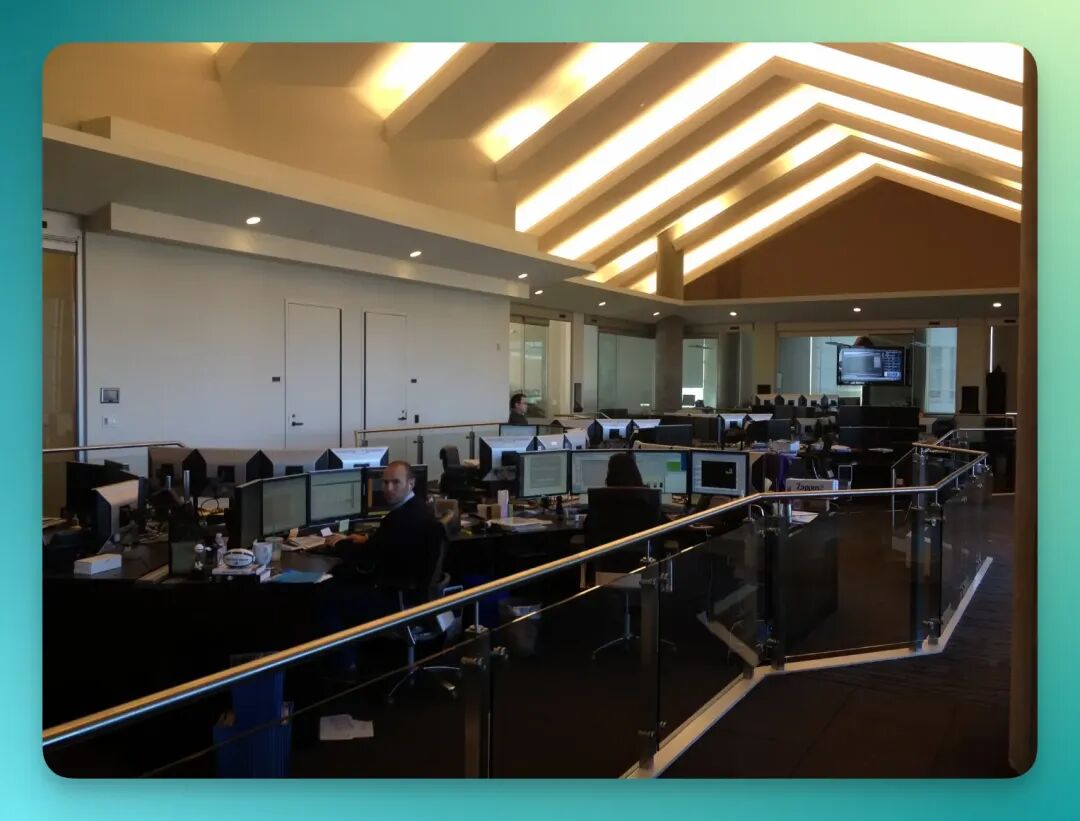 Inside Clarium Capital
Thiel was convinced that what others had failed to do, Facebook could pull off.
Making this investment was, in a sense, a philosophical concession to his friend Reid Hoffman. Thiel explained that while he was fundamentally still repulsed by a society-dominated-everything model, if he had insisted on being a libertarian purist like Ayn Rand, he never would have invested in Facebook at all.
Clarium was once a dark horse that burst onto the hedge fund scene.
Thiel and his colleagues' trading style bore his personal stamp: buying Japanese government bonds while others were dumping them, going long on energy because he believed oil supplies were about to run dry, and spotting the bubble in the U.S. housing market early.
By the summer of 2008, Clarium's assets under management had surpassed $7 billion — a 700-fold increase in six years.
Thiel was widely seen as an investing genius. That year, in an interview with the libertarian magazine Reason, he sounded optimistic. The winds were turning increasingly anti-libertarian, he said, but that very fact suggested the world was actually becoming more free — perhaps because life had simply gotten too good.
In September 2008, Clarium moved most of its operations to Manhattan.
Then, at the end of that month, the financial crisis hit.
The fund started losing money, and this "contrarian" style turned against him. Thiel predicted that governments worldwide would intervene in concert to stabilize the global economy, so he stayed long on equities for the remainder of the year. The market crashed. In 2009, he started shorting. The market rallied.
Investors pulled out. Some privately complained that Thiel had plenty of ideas but no grasp of trading timing or risk management.
One major Clarium shareholder felt the firm had become little more than a Thiel personality cult — staffed by young intellectuals who worshipped the boss, studied chess to be like him, and even adopted his habits of not watching television or sports.
Clarium continued to bleed.
In mid-2010, Thiel closed the New York office and moved back to San Francisco.
By that year, Clarium's assets had dwindled to $350 million, two-thirds of which was still Thiel's own money — nearly all his liquid wealth. One colleague said Clarium had effectively become Peter's family office.
He is fiercely competitive. In the summer of 2008, he had been on the verge of joining the ranks of the world's top hedge fund managers. He came that close — and then missed it.
Facing the first major setback of his career, Thiel remained calm. He didn't sweep the chess pieces off the board.
But as his wealth shrank, he began developing his pessimistic theory of "technological stagnation." He became convinced that without a new wave of technological revolution, the downsides of globalization would spark more conflict, potentially even global catastrophe.
Thiel, along with Sean Parker and others, co-ran Founders Fund. He threw his energy into a series of audacious projects — ventures that seemed driven less by financial return than by some utopian vision.
He invested in nanotechnology, space exploration, and robotics. Thiel believed that computers smarter than the human brain would transform human life as fast as possible, so he became the largest donor to the Singularity Institute.
The think tank, co-founded by his friend Eliezer Yudkowsky, aimed to prepare for the arrival of the "intelligence explosion" and ensure that machines would remain friendly to humans as they self-improved. Thiel also donated $3.5 million to the Methuselah Foundation, an organization dedicated to reversing aging.
Beyond that, he was an early backer of the Seasteading Institute.
The organization was founded by Patri Friedman, a former Google engineer and grandson of economist Milton Friedman. The concept of "seasteading" involved building floating cities in international waters, free from existing laws and regulations.
Thiel was enthusiastic about the idea. Though he had no intention of actually moving out to sea, he donated $1.25 million and served as a director for a time.
Don't Go to College, Go Start a Company
Thiel believed that solving technological stagnation would require lonely, bold, visionary entrepreneurs who refused to follow the crowd.
On a rainy Silicon Valley day, Thiel — wearing a windbreaker and jeans, driving his dark blue Mercedes-Benz SL500 — was searching for an address in the industrial park between Highway 101 and the bay. He was headed to a company called Halcyon Molecular, which aimed to tackle aging. Thiel was their largest shareholder and a board member.
He wasn't wearing his seatbelt as he drove. "I've been debating the seatbelt thing," he said offhandedly.
I asked him what the debate was.
"Well... it's... the argument for wearing one is that it's safer. The argument against is that if you know you're not being safe, you'll drive more carefully," he said, turning left and clicking his seatbelt into place.
"Though empirically, wearing a seatbelt and driving carefully is the safest, so I won't argue that point."
Thiel started talking about the first time he became aware of death.
The memory was extraordinarily vivid, as if it had happened that morning, though it dated back to when he was three years old. He was sitting on the cowhide rug in his Cleveland apartment, asking his father where the rug came from. His father said it came from a cow.
What happened to the cow? It died. What does died mean? What is death? His father told him that all cows die, all animals die, all people die.
"I felt that day... it was really a very, very unsettling day," Thiel said.
That unsettled feeling never left him.
Even in middle age, he had no intention of making peace with death. He called this "the ideology of the inevitability of individual death." Thiel believed that for thousands of people, accepting death was actually a way of ignoring it — a mass complacency, a popular blindness. He saw death as a problem to be solved, and the sooner, the better.
Given current medical research, he figured he could live to 120. But in the grand scheme of life extension, that would merely mark halftime.
In 2010, his friend and Founders Fund partner Luke Nosek told him about a biotech startup. The company was developing a method to read the entire human genome sequence using electron microscopy, which would allow doctors to quickly understand all of a patient's genetic information — at a cost of roughly $1,000.
Halcyon Molecular's research promised revolutionary breakthroughs in detecting and reversing genetic diseases. Thiel decided to make Founders Fund their first outside investor. He was drawn to the talent and passion of Halcyon's young scientists. When they asked for $50,000, he came back with a $500,000 first-round investment.
Thiel finally found Halcyon's office, parked, and walked in quickly. A row of posters lined the hallway, asking: "What would you do with more time?"
One image of a futuristic library carried the caption: "There are over 120 million books in the world. How many have you read?"
An all-hands meeting was underway in the conference room.
About forty people, mostly in their twenties and thirties. They took turns presenting, with Halcyon founder William Andregg occasionally jumping in with questions. William Andregg was 28, tall, wearing cargo pants and a rumpled pink shirt untucked. As an undergraduate studying biochemistry at the University of Arizona, he had made a life wish list that included traveling to other solar systems.
He later realized he wouldn't complete even a fraction of it in one lifetime. He spent several weeks in a funk, then decided to put "solving aging" at the top of his list. At first, he was hesitant to use that phrase, but Thiel encouraged him to make it the company's core rallying cry: Some might think it's crazy, but it will attract like-minded people.
At the meeting, Thiel followed the technical jargon without difficulty. During a particularly dense presentation, he raised his hand: "I know this is a risky question, but what's your probability of success for Prototype A?"
The scientist on stage, laser pointer in hand, answered: "Fifty percent by early summer, eighty percent by summer's end."
The guy's hair and beard were extremely messy.
But Thiel's assessment: "Very cool."
Seeing my blank expression,
Thiel scribbled a note on his yellow legal pad and passed it to me: "Attach large atoms (like platinum or gold) to DNA so it shows up under the microscope."
At the weekly meeting, several employees introduced themselves. Michael Andregg (the company's CTO) put up a slide listing his interests: cryonics (just in case), dodgeball, self-improvement, personal digital archiving for superintelligence via AI or "mind uploading."
I later learned that "mind uploading" meant simulating a human brain on a computer.
Before leaving, Thiel offered the employees some business advice. He asked everyone to list the three smartest people they knew by the following Monday. He told them to recruit through their existing networks as aggressively as possible. That's how he had done it at PayPal.
"We have to build the team with the conviction that this company is going to be a massive success. Once you hit that inflection point, you'll wish you'd hired everyone yesterday — the pressure is enormous."
The next stop was another industrial park a few miles away.
This company's goal was to cure all viral diseases by developing a "liquid computer": a system of hundreds or thousands of molecules capable of processing basic information. If all went well, these liquid computers would enter cells, recognize viral markers, and trigger "short circuits" that shut down any cells carrying those markers.
The company was at such an early stage that it asked me not to disclose its name.
The office was cramped. Three guys and three women in their twenties were eating sandwiches and grapes in the kitchen area. Downstairs, the lab was packed with DNA synthesizers, flow cytometers, and similar equipment. They were all "defectors" from graduate school — exactly the kind of talent Thiel favored most.
One of the founders, Brian, told me his story.
Last year, he was 13 days away from defending his doctoral dissertation at Scripps Research when his advisor discovered he was planning to drop out and start a company — and completely lost it. Over lunch, Brian recounted: "My advisor was furious and piled on a bunch of harsh conditions for me to graduate, so I had to withdraw." (He did eventually get his degree, of course.)
In Brian's view, the best way to change the world is to start a company, "to get everyone motivated and pulling toward the same goal." The other founder, D.J., had "escaped" from Stanford University. In his view, even top universities grind down potentially Nobel-caliber genius students into rule-following corporate types.
In June 2010, Brian and D.J. holed up at a Motel 6 in Palo Alto, preparing to drive to Pittsburgh to start their company at their alma mater, Carnegie Mellon University. Before leaving, they met with Max Levchin (Thiel's old PayPal partner). Max Levchin introduced them to Thiel, who said on the spot: "This company shouldn't be in Pittsburgh — it belongs in Silicon Valley. Give me a week and I'll prove it to you."
In the end, Brian and D.J. took investment from Max Levchin and Thiel and put down roots in Silicon Valley.
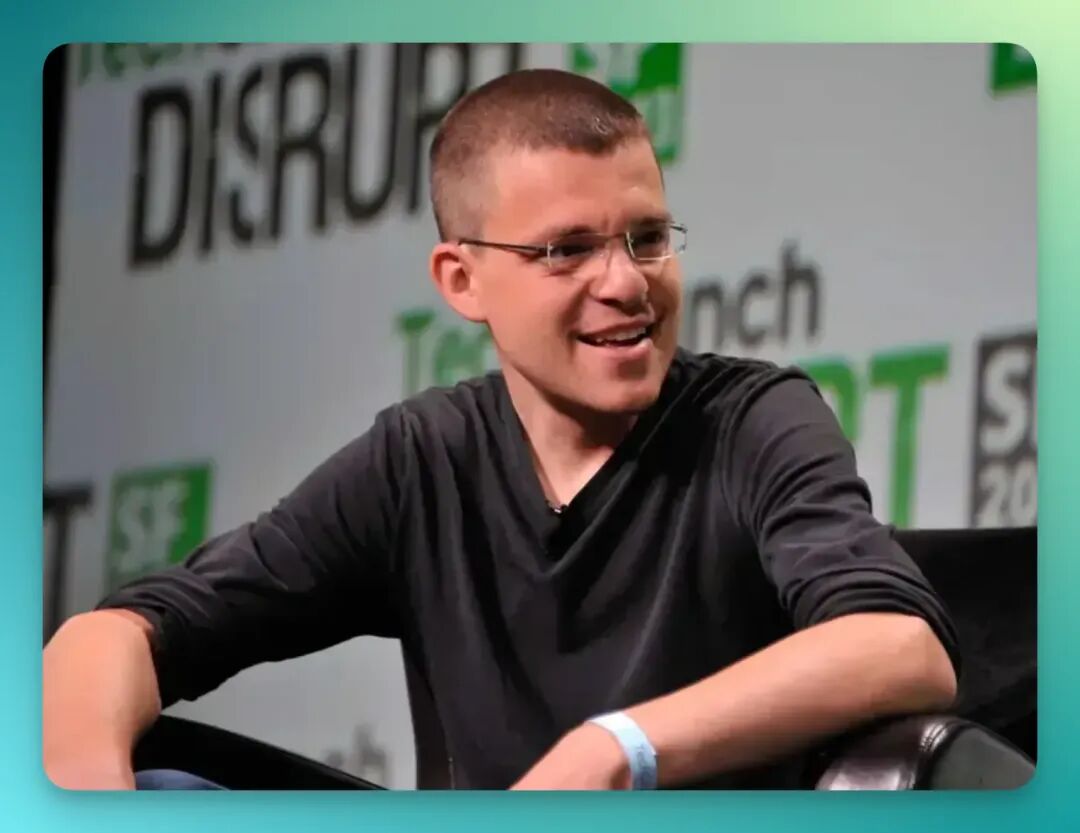
Max Levchin
Thiel believed the next bubble in the United States economy was education.
He compared university administrators to subprime mortgage brokers, and debt-burdened graduates to the last generation of "indentured servants" in developed nations — debt they couldn't shake even through bankruptcy. In his eyes, this blind social reality was most clearly reflected in credential worship: the belief that as long as your kid got into a prestigious school, they could climb the social ladder.
Thiel argued that college education had become an extremely expensive form of "insurance," which itself proved that real innovation had stalled. During periods of economic stagnation, education devolved into a positional tournament.
"This has completely departed from what would actually benefit individuals and society."
It's easy enough to criticize higher education for saddling students with years of debt, since this forces them into fields like law or finance that they might never have chosen otherwise. And in an increasingly stratified society, a college diploma has become a necessary ticket for entry.
But Thiel's view was more radical: he despised the very idea of "using college to find your academic direction."
In his view, studying the humanities was especially unwise, since it typically led students to fall back on law school as a last resort. Academic scientific research was equally unreliable — timid and narrow-minded, obsessed with turf battles rather than pursuing breakthroughs.
Most critically, university education didn't teach entrepreneurship at all.
Thiel believed young people, especially the most talented among them, should plan their lives early, and the plan he endorsed above all others was this: start a tech company.
Thiel had considered founding his own university, but found it hard to convince parents to resist the Ivy League and Stanford name-brand halo. In September of the previous year, on a flight back from New York, he and Luke Nosek hatched an idea:
Give scholarships to brilliant young people willing to drop out and start companies.
Thiel moved fast: the very next day, he announced the "Thiel Fellowship" at the annual TechCrunch Disrupt conference in San Francisco:
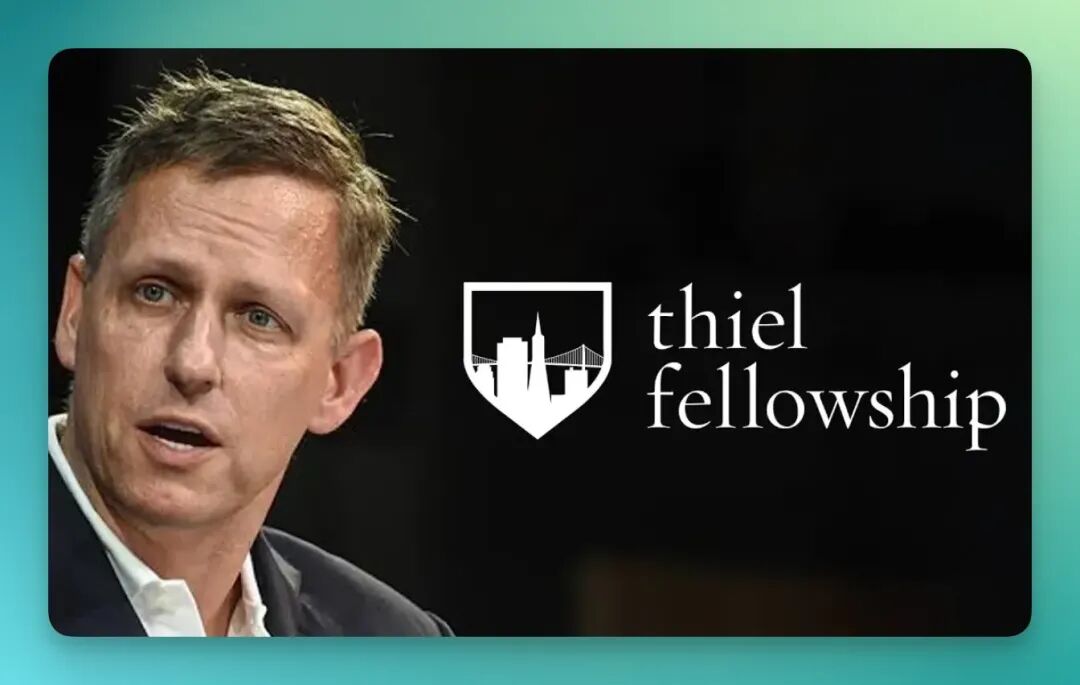
Twenty people under age 20 would be selected each year, each receiving $100,000 over two years. The program made immediate headlines, with critics accusing Thiel of encouraging young people to interrupt their education in pursuit of wealth.
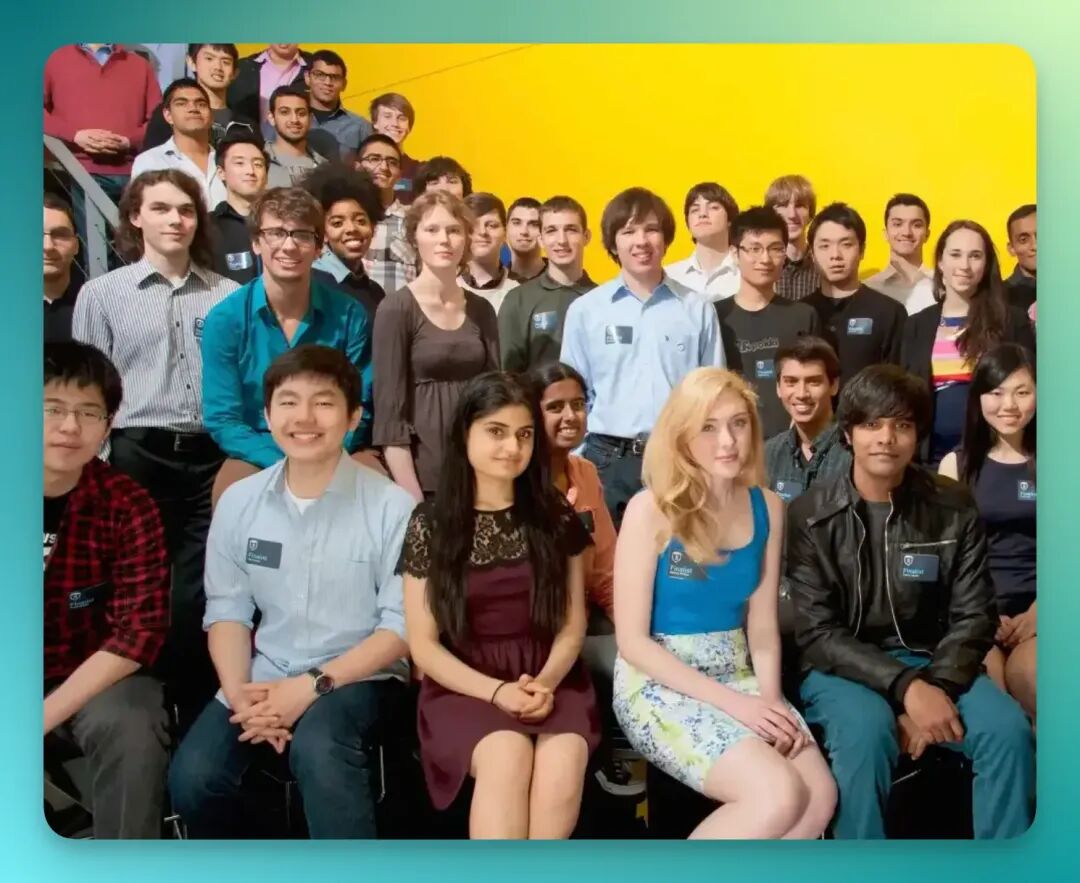
Thiel countered that fellowship recipients could return to school after the two years.
Technically true, but somewhat disingenuous, since a substantial part of his goal was deliberately to cause trouble for top universities and poach their best students in the process.
Founders Fund, Clarium Capital, and the Thiel Foundation were all squeezed onto the fourth floor of a brick-and-glass building on the edge of San Francisco's Presidio. From the windows, you could see Alcatraz and the Golden Gate Bridge.
The building actually sat in the courtyard of Lucasfilm's San Francisco headquarters, with statues of Darth Vader and Yoda displayed on the first floor. Coincidentally, Star Wars was Thiel's favorite film.
After wrapping up visits to the biotech companies, Thiel prepared to interview fellowship applicants. Out of more than 600 applicants, only 50 had made it to the final round. The first to sit across the dark conference table was a Chinese-American from Washington State named Andrew Hsu.
He was a 19-year-old prodigy, still wearing braces.
He could solve simple algebra at age five; at eleven, he and his brother started a nonprofit to provide textbooks and vaccines to Asian countries; at twelve, he enrolled at the University of Washington; and until recently, he had been a fourth-year PhD student in neuroscience at Stanford.
He wanted to start a company developing educational video games based on the latest neuroscience research. He spoke in a tone almost identical to Peter Thiel's: "My core goal is to disrupt both the education and gaming industries."
Thiel expressed his concern that this kind of company would attract people with a "nonprofit mentality". He felt they would think: "This isn't about making money, we're doing good, so we don't have to work that hard. And by the way, I think this mentality has already become an epidemic in clean energy — it attracts a lot of brilliant people who think they're saving the world."
"Don't they work hard?" Andrew Hsu asked.
"Have you thought about how to solve this problem?"
"So you're saying that just because the company has an educational component, that could become a problem?"
"Exactly. The main reason we're reluctant to invest in these kinds of companies is that you end up attracting people who don't want to work too hard. That's also my understanding of why these companies don't succeed," Thiel said.
Hsu got the message. "Right, this is actually a gaming company — I wouldn't say it's an education company. The people I want to hire are hardcore gaming engineers who definitely won't slack off."
Hsu ultimately received the fellowship.
Another recipient was a Stanford sophomore from Minnesota who had been fixated on energy and water scarcity since age nine — back when he wanted to build a perpetual motion machine.
He told Thiel: "After two years of failing, I realized that even if I solved perpetual motion, nobody would use it if it was too expensive. The sun is an eternal energy source, but we're not using it well, so I started obsessing over how to bring costs down."
At seventeen, he began working on solar tracking mirrors.
If he could invent a cheap enough method to use them for heat collection, solar could beat coal on price. While at Stanford, he started a company focused on this, but the school wouldn't let him use the project for course credit. So he simply took a leave of absence to apply for Thiel's fellowship.
I asked if he worried about what he might lose by not finishing college.
He said: "I think I've already gotten the best of what Stanford has to offer. I now live in an entrepreneur house called Black Box, very close to campus. It's got a hot tub and a pool — pretty fun. I can still go back on weekends to hang out with friends, so I'm not missing the social life, and during the week I get to do what I actually love."
Next came two Stanford freshmen, Stanley Tang and Thomas Schmidt. They wanted to build a mobile app called QuadMob that would let you see your friends' locations in real time on a map.
Stanley Tang, from Hong Kong, explained: "You pull out your phone and know where your buddies are — whether they're at the library or the gym." He had previously published a book about internet millionaires. He continued: "Every Friday night going to parties, I keep getting separated from friends as people move between different gatherings. I'm constantly texting a dozen people 'where are you' — it's really annoying."
Thiel asked him how this would change the world.
Stanley Tang said: "We're changing college life, connecting people. Later we'll change social life entirely, filling the gap between the digital world and the real world."
Thiel wasn't impressed.
This sounded too much like the kind of startup that survives in the cracks between Facebook and Foursquare — certainly not something that could pull the United States out of technological stagnation. In the end, the two didn't receive the fellowship.
In 1992, a Stanford Law student named Keith Rabois got himself in trouble. He stood outside a teaching assistant's dorm room shouting and hurling vicious slurs. The incident blew up, and he was ultimately forced to leave Stanford.
Thiel, then also in law school and leader of a conservative student group as well as founder of The Stanford Review, decided not long after to co-write a book with his friend David Sacks exposing the dangers of so-called "political correctness" on campus.
David Sacks said: "Peter wanted to write a book pretty early on. If you'd asked us in college what Peter would end up doing, we'd have guessed he'd become a pretty famous public intellectual. But we also knew he wanted to make money — and not small money, serious money. It felt like he'd decided to become a billionaire first, then a thinker."
Published in 1995, The Diversity Myth remains Thiel's only book. It piled example upon example of campus identity politics run amok, warning that this climate of intolerance, left unchecked, could evolve into authoritarianism.
They even portrayed Rabois, who had hurled abuse at that teaching assistant years earlier, as a courageous individual standing up to a "witch hunt." The book argued that Rabois's act challenged the most fundamental taboo, because implying any connection between homosexuality and AIDS would mean acknowledging that some lifestyles carry greater health risks — and therefore, that not all lifestyles are equally valid.
When Thiel wrote these homophobic passages, he never discussed with his co-author Sacks what this meant to him personally. Sacks told me Peter wasn't out at the time. Not until 2003, when Thiel was in his mid-thirties, did he tell friends the truth. He had once asked a friend: "Do you know how many people in finance are openly gay?"
He explained that he didn't want his sexual orientation to affect his work.
Though Thiel still doesn't much enjoy discussing homosexuality, he admits to regretting what he wrote about the Rabois case.
"These days I think identity issues are far more complicated," he said. "There genuinely are distinctive experiences tied to being gay, or Black, or female, and that does matter. But back then the tendency was to inflate these into a rigid ideology."
He feels that his own anti-"political correctness" stance back then fell into an equally rigid way of thinking. When The Diversity Myth comes up now, Thiel grows almost sheepish — campus political correctness, after all, seems trivial compared to the larger problems facing the nation.
Thiel inherited his parents' Christian faith, though he considers his own views somewhat "unconventional," mixed as they are with the cultural libertarianism he champions.
"I believe Christianity is true," he said, "but I don't feel compelled to convince others of it." (It's hard to imagine Thiel being this relaxed about any other subject, given how competitive he is.)
Sonia Arrison, a writer who researches longevity, first met Thiel in 2003 when she heard him deliver a lunch talk on the failures of the U.S. Constitution.
Eight years later, though they had become close friends, she remained baffled by his religious beliefs. "He wouldn't tell me what he believes," she said. "He felt I should be able to figure it out myself. He never directly answered whether he believes in God."
Thiel even compared the distinction between faith and empiricism to that between technology and globalization. "Technology is like a miracle — creating something that didn't exist before," he said. "Globalization is like evolution — endlessly copying what already exists."
As for the tension between being gay and Christian, Thiel finds it genuinely complicated, but he resents the notion that "if you're going to be politically correct, you have to abandon your faith."
His friends consider these personal labels irrelevant; what matters is his mind. Thiel himself stops short of saying this so absolutely, but he enjoys deflecting with characteristically paradoxical remarks.
He laughed: "I could construct stories about how these identities shaped me, but I don't find that very interesting. Being gay might make you an outsider, with both downsides and benefits. But that sounds too deliberate — maybe I'm an outsider because I was a nerdy, introverted prodigy as a child, not because I'm gay. Probably some combination of factors."
He flashed a knowing smile and added: "Or maybe I'm not an outsider at all."
A Dinner for Believers in "Utopia"
In late March, Thiel hosted an intimate dinner. His mansion sits between San Francisco's Presidio and the bay, near the Palace of Fine Arts.
A chessboard and shelves crammed with science fiction and philosophy books offered the only clues to their owner's personality. Otherwise, the living and dining rooms were tastefully, anonymously elegant.
Thiel's assistants, dressed in black formalwear, circulated pouring wine and seating guests. Each place held a menu — three courses, with a choice of steamed salmon or sweet pepper polenta for the main.
Thiel's guests looked slightly out of place at the candlelit table. Among them was his Stanford friend David Sacks, co-author of The Diversity Myth. There was Luke Nosek of Founders Fund, who handled biotech investments. And AI researcher Eliezer Yudkowsky.
The latter was a prodigy who never finished middle school, famous for having written a thousand-page Harry Potter fanfiction online attempting to explain magic through scientific method.
Also present was Patri Friedman, founder of the seasteading movement. Wiry and slight, with close-cropped hair and a thin ring of beard, he dressed eccentrically — something like the protagonist of Crime and Punishment.
Patri Friedman, founder of the seasteading movement
The conversation centered on two main topics:
How great entrepreneurship is, and how useless higher education has become.
Luke Nosek believed the best entrepreneurs should devote their entire lives to a single idea. His fund existed specifically to back such visionaries and let them call the shots, shielded from meddling by mediocre professional managers.
Thiel picked up the thread. America once had four places that drew ambitious young people: New York, Washington, D.C., Los Angeles, and Silicon Valley. But the first three no longer cut it — Wall Street lost all its luster after the financial crisis.
Only Silicon Valley still attracted young people with big dreams, though their inspiration was sometimes snuffed out by college education before they even graduated. His fellowship existed to help such prodigies change the world before the system assimilated them.
I interjected that staying in school had its benefits.
Reading classics of literature and philosophy, debating people with different viewpoints — Thiel himself had been educated this way. He had even written that "civilization is the antidote to multicultural chaos." I agreed with this. Wasn't this circle of libertarian entrepreneurs its own form of self-enclosed clique?
The reaction around the table was fierce and unanimous.
Eliezer Yudkowsky said he felt physically repulsed by my mention of those "classics." Luke Nosek was visibly angered — he had failed English in his Illinois high school, he said, because his teacher told him he couldn't write. A fellowship like Thiel's would have spared people like him considerable suffering.
Thiel watched the direction of the argument with a smile. Then he pushed back his chair and said:
"Most dinners are either too long or too short."
Thiel is happiest when people mock his investments.
But he has a weakness: the assumption that any "minority" position must be right.
His defense of Rabois was largely driven by the romance of one person against the world.
During the financial crisis, he lost billions by refusing to follow the herd. If AI and seasteading represent humanity's only hope, it's certainly not because people are laughing at or fearing them.
And yet, how much hope Thiel's utopian projects actually offer remains unclear.
His theory that innovation stagnation drives economic decline is persuasive but not proven.
Since the 1970s, trains and planes have barely gotten faster, and median incomes have barely risen. What necessary connection exists between these two trends? American worker productivity has risen while the middle class has shrunk. Thiel dismisses this evidence outright: "I don't believe those productivity numbers — people are just measuring inputs, not outputs."
So why would breakthroughs in robotics and AI necessarily reverse this trend?
Thiel said:
"Yes, the robotics revolution will eliminate many jobs, because you'll need fewer people to do the same things. But the benefit is that it frees people up to do other things. There will be social disruption, but I think it's different from our current predicament, which is caused by globalization."
The problem: if chip production can be outsourced, why not longevity drugs? In an unregulated market, who ensures fair distribution? Technological breakthroughs don't always reduce inequality; sometimes they exacerbate it.
Longevity is a case in point. As Thiel put it: "The most extreme form of inequality is that between life and death."
The first people to reach 120 will almost certainly be wealthy.
For struggling Americans, progress in energy and food would matter most for living standards, because these determine prices.
This blind spot is telling.
In Thiel's technological utopia, perhaps a few thousand Americans might ride in autonomous vehicles to age 150, while millions lose their jobs to computers and die at 60.
The next technological revolution may indeed be imminent, but it won't automatically improve most people's lives.
Thiel's beloved words "disruption" and "risk-taking" reflect, to some degree, a certain immunity to others' suffering. The heartbreak and frustration experienced by "average" people ground down by tedious work, money worries, and childcare — these seem entirely foreign to him.
Thiel and his Silicon Valley circle can imagine futures others cannot precisely because they refuse to leave behind the endlessly curious adolescent stage that most people, pressed by life, are forced to abandon.
Everyone constructs logic and analysis to support their views, but a private philosophy usually grows from some deep interior corner, from original expectations of the world.
Thiel is no exception.
He wants to live forever, to escape to outer space or city-states on the sea, to play chess against a robot that can discuss Tolkien — because these are all fantasies from his childhood.
Fortunately, Thiel's fantasies aim to make the world better.
He said:
"It seems we've gone a long time without asking the right questions. Simply asking 'What would make America better?' would be a huge step forward. Though much is going wrong now, I feel strangely optimistic. This is a relieving crisis — we don't know where it's headed, but at least everyone knows the foundations are rotten. We're better off than when things were rotten but everyone thought they were fine."
This is a Silicon Valley billionaire's "libertarian vision of the future."