The 5 Most Thought-Provoking Articles I Read in 2023

A new year, and I've decided to reopen my WeChat Official Account and start writing again. First, to share what I've seen and what I've been thinking about. Second, to use writing as a way to push myself into more systematic reflection. Third, to meet new people through it.
At the start of the new year, I've decided to revive my WeChat Official Account and start writing again. Three reasons: first, to share what I've seen and thought about; second, to force myself into systematic reflection through writing; and third, to meet a more diverse range of new friends.
I sent these thoughts to ChatGPT and asked it to name my account. From the hundreds of options it quickly generated, one jumped out at me: "TheCatalyzer."
The logo is AI-generated too. I had ChatGPT craft a prompt for MidJourney, based on the letter "C," the concept of a catalyst, and my three motivations for writing. MJ designed the logo you see.
Why is there a little bird in the logo? Because in 2023 I fell hard into birdwatching — completely addicted — so I wanted to give birds a place in the design, haha.
"TheCatalyzer" is Koji's personal newsletter. A catalyst is a fascinating thing — tiny yet enormously powerful, capable of accelerating chemical transformation. I hope that through sharing and writing, I can provide catalysts that spark both myself and others; and I hope the catalyst can also help me build more meaningful relationships and grow together.
2023 is over. Standing here now, I doubt many people miss it.
But stretch the timeline out — stand ten, twenty years from now — and perhaps more people will come to miss it.
People might miss the tempering it brought: objective changes in the external world forced us to confront challenges head-on, to face our own SWOT analysis, to think and transform.
People might also miss the courage it brought: even after everything 2023 threw at us, the vast majority of us survived steadily into the new year. What future storms should we fear?
But what I hope my future self misses most is the resilience it forged: changes in the external world made us more aware of our own tenacity — read, do, ask questions, make friends. This is what keeps people alive, keeps us optimistic about life, keeps us loving other people.
In the spirit of this new year, I think the most fitting New Year's message — and the best source of motivation — remains this passage from Lu Xun:

Hope cannot be said to exist, nor can it be said not to exist. It is like a road on the ground — the ground was originally without road, but where many people have passed, a road is made.
I spent a day scrolling through my 2023 Moments, Jike posts, Evernotes, and important group chats, rereading articles I shared with others or that others shared with me. From these, I found the five pieces that inspired me most.
❶
"How to Do Great Work"
by Paul Graham

I've subscribed to Paul Graham's blog — the "Godfather of Silicon Valley" — for over a decade. He has unmatched charisma in entrepreneurship and innovation. This was his most important piece this year; he said himself that he spent half a year preparing it.
At 20,000 words, I recommend reading the full text. Here are 15 highlights:
On career choice and new ideas:
-
What's the intersection for great work? Three traits: 1) aptitude for it; 2) deep interest in it; 3) room for outstanding achievement in it.
-
Having new ideas is a strange game, because it usually consists of seeing things right in front of us. Once we see a new idea, it often seems obvious — why hadn't anyone thought of this before? When an idea seems both novel and obvious, it's probably a good one.
-
A good new idea must look bad to most people, or someone would have already explored it.
On methods for work and life:
-
Develop the habit of initiating and driving projects yourself. Don't let "work" mean only what others tell you to do. If you ever do great work, it will probably start with a project you initiated yourself — it may be part of something larger, but you'll be driving a piece of it.
-
If we're young and ambitious but don't know what to do, what should we do? We know we shouldn't drift passively, assuming problems will solve themselves. We need to take action, but there's no systematic procedure to follow. When we read biographies of people who did great work, luck plays such a large role: they discovered what to do through chance meetings, or by picking up a book they happened to grab. So we need to make ourselves a conspicuous target for luck. The way to do this is to stay curious — try many things, meet many people, read many books, ask many questions.
-
I think for most people who want to achieve great things, the right strategy is not to plan too much. At each stage, do whatever seems most interesting and offers the best options for the future. I call this approach "staying upwind" — this seems to be how most great achievements happen.
(Intermission: After finishing this post, I realized it's too long to read in one go, so I'm inserting some "bird photos" to lighten things up.)
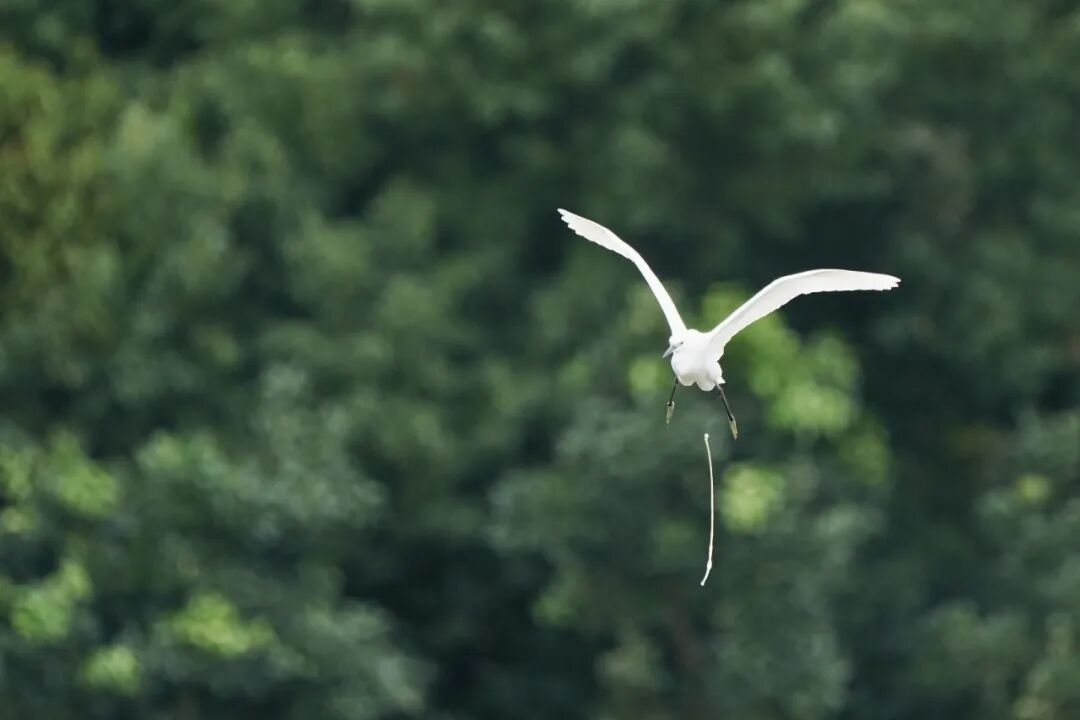
- This summer, I photographed this egret in Qingpu, Shanghai
- It happened to be elegantly pooping a massive load
On curiosity:
-
What are we "excessively" curious about — "excessive" to the point that most others would find it boring? That's what we're looking for.
-
The three most powerful intrinsic motives are curiosity, pleasure, and the desire to do something impressive. When they converge, they become the most powerful combination.
-
Curiosity is the best guide. Curiosity never lies. It knows better than we do what's worth paying attention to.
On patience and sincerity:
-
The problem with exponential growth is that the curve feels flat at the beginning. But it isn't. Early exponential growth curves are still wonderful curves — we just can't intuitively grasp this, so we underestimate the early stages of exponential growth.
-
The core of sincerity is honesty. We're taught from childhood to be honest as a selfless virtue — as a sacrifice. But in fact, honesty is a source of power. To see new ideas, we need to be exceptionally sensitive to truth. If we're trying to see more truth than others have seen so far, how can we have a sharp eye for truth if we're intellectually dishonest?
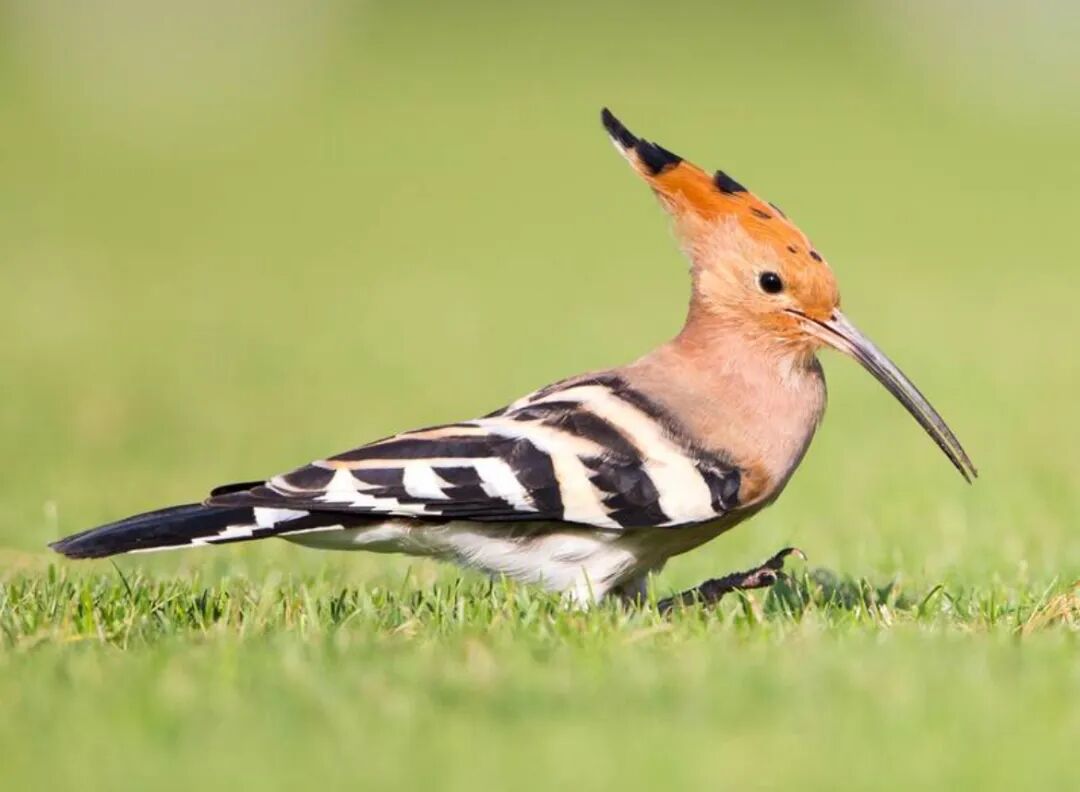
- My "gateway bird": the hoopoe, common in Shanghai, weirdly beautiful
- Photo source: eBird
On accumulating advantages:
-
The factors in great achievement are: ability, interest, effort, and luck. Luck we can't control, so we can ignore it; and if we truly want great achievement, we can assume everyone works hard. So the question comes down to ability and interest — can we find work that combines our abilities and interests to generate new ideas?
-
The advantages of youth are energy, time, optimism, and freedom. The advantages of experience are knowledge, efficiency, money, and power — work hard, and we can acquire some of the latter while young, and retain some of the former as we gain experience. Another advantage of experienced people is knowing what advantages they have. Young people often don't realize their advantages — the greatest possibility comes from time, and young people have no concept of how rich they are in time.
-
If many of the best people in our field are concentrated in one place, it's usually a good idea to spend time there. This will increase our ambition, and simultaneously increase our confidence by showing us that these excellent people are human.
-
Seek the best colleagues. How do we know if we have good enough colleagues? In my experience, when you do, you know — which means if you're not sure, you probably don't. There may be more specific answers, but here's an attempt: good enough colleagues provide surprising insights; they can see and do things we can't.
❷
"New York Essay"
by Diao Yang @ Tengda Capital
When this article first started flooding my Moments feed, I saw the title and assumed it was some artsy youth's New York travelogue — no desire to click. But as more and more people shared it, I got curious and opened it, only to discover a deep analysis and personal reflection combining historical review, current observation, and future outlook, written with wit and vitality.
First, the author reviews how, despite the so-called "golden decade" the United States experienced in the 1990s — with high-speed economic growth and technological innovation driving productivity transformation — this period was far from smooth sailing. It was filled with major events and challenges: terrorism, financial crises, the rise and burst of the dot-com bubble, and the 9/11 attacks. Through the author's personal experience, the article shows the social turmoil and economic volatility of this period. This is the comfort the author offers today's Chinese people: dig into any country's golden age, and you'll find noise and crises — America's "golden decade" was also thrilling.
Facing China's current environment, the author proposes new paradigms and hope. First, paradigm shift: from "incremental paradigm" to "stock paradigm." Second, mindset change: emphasizing the importance of composure and focus, reverence, and beginner's mind. Finally, the author stresses that new paradigms and new hope don't mean blind optimism — they require sufficient risk awareness and expectation management, as well as more grounded, more humble value creation and trust-building.
The article's final paragraph, which I quote in full:
Finally, I want to say: new paradigms, new hope — this doesn't mean blind optimism. Whether we call the current environment a once-in-a-century transformation or a thirty-year cycle, the road ahead will inevitably be winding, the challenges enormous.
For objective conditions, including future prospects and investment returns, we need sufficient risk awareness and expectation management. After all, the era of high-speed growth and triumphant advance has left us. We need to learn to use extreme patience and perseverance, lower our expectations, accumulate small victories into big ones, and as Warren Buffett says, get rich slowly.
Whether investing or serving corporate clients, we need to be more grounded, more humble, build solid trust relationships, and diligently create value.
I remember Tom Cruise's late-90s hit Jerry Maguire had a classic scene: as a top sales agent, he suddenly had a flash of inspiration and wrote out an exciting mission statement late at night. There are a few lines I'd like to quote as this article's closing: the foundation of any business's success is personal relationships based on trust. Fewer clients, less money. More attention. Caring for them, caring for ourselves.
"The key to the business is personal relationships. Fewer clients, less money. More attention. Caring for them, caring for ourselves."
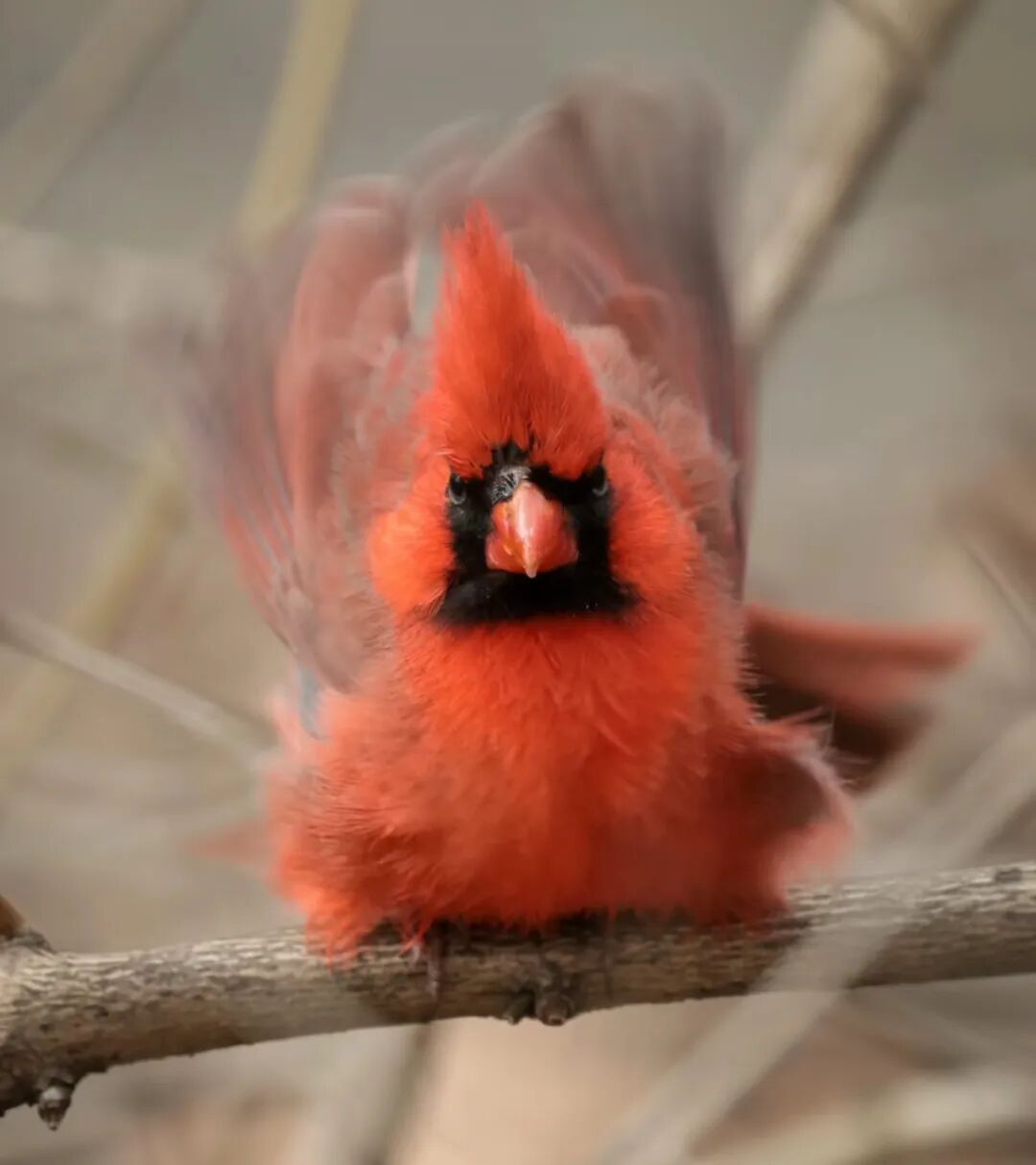
Central Park is also a birdwatching mecca. This northern cardinal was photographed in Central Park by Xiaohongshu user @FischerAfu.
❸
"The OpenAI Mission"
by Greg Brockman & Ilya Sutskever @ 2019
This article comes from OpenAI co-founder Greg Brockman's personal blog. In 2019, he and fellow co-founder Ilya Sutskever co-wrote OpenAI's mission statement. It was a year on the verge of major transformation, and they — including Sam Altman and other OpenAI members — were among the few pioneers worldwide who firmly believed that AGI technology could not only become reality but bring enormous benefit to humanity.
As I read, I wondered: if I could travel back to 2019 and see this article then, would I think they were crazy or genius? Would I chase after it recklessly, or dismiss it with a laugh?
In just four or five years, perhaps we've already lived through the greatest turning point in human history. Reading this manifesto always stirs something in me: what an extraordinary era we were born into! We should choose to embrace it, and enjoy it.

Common kingfisher — I asked ChatGPT what its favorite bird is, and this was its answer. Photographed in Songyuan by Xiaohongshu user @PicassosGun.
❹
"A Conversation with Xiang Biao: Building Your Own Rear Base in an Uncertain World"
by Guyu
In 2023, there may be only one thing everyone was certain of: "uncertainty."
So taking time to discuss how to find grounding and mental health in such an uncertain era is a proposition important to all.
Throughout the year, on this topic, I believe Xiang Biao offered us the most profound insights while also providing practical methods.
This is a very rich interview, discussing the various anxieties and challenges people face in the current era of uncertainty. Xiang Biao mentions the huge fluctuations in social mood, the torn state of society, and the distress of feeling life is out of order. He also points to the desire for stability, and the sensitivity to time and age, all of which affect people's life choices and planning.
Q- Guy u: Is there any breakthrough for living under this "only correct view"?
A- Xiang Biao: Of course individuals must make breakthroughs, otherwise your whole physical and mental health is affected, so you have to find a way. One way is to think. So we should provide thinking tools — journalists, researchers, artists — pointing out the absurdity of reality, transforming things once considered sacred, indestructible, unshakeable into objects of ridicule, or at least objects of analysis. This itself gives you power.
Right now, perhaps the most important thing is attitude first — your own attitude, and the attitude of people around you matters too. If you and those close to you share the same attitude on very fundamental questions — what is success? What is glamour? Or why so much glamour? If you can align on those things, it actually changes your quality of life very effectively.
Q- Guyu: One thing actually confuses me: is "using yourself as method" a kind of petty comfort or a way to avoid the important issues? You understand it intellectually, but at the action level you might still encounter problems. Can "using yourself as method" still hold up right now?
A- Xiang Biao: I think it must hold up, in the current situation you must persist. If you're anxious about gender issues, you see those mocking situations that don't allow you to speak your own perception of life. And not allowing you to be angry, you're unhappy, you're hungry, and someone says you're not allowed to be unhappy, says look at how hungry Syrian refugees are, what right do you have to say you're hungry. Then we must stay clear-headed, maintain this resilience. In this sense, I think figuring out your own position, where you come from, why you're in this situation? What is your relationship with others? Thinking these through is a great power.
As we discussed earlier, understanding the ins and outs of powerlessness itself immediately gives you power, so using yourself as method is the most direct. Of course if you have the means, simultaneously observe how others' behaviors come about, and that deepens your understanding, enriches it further. In today's situation, I think changing attitude, changing cognitive approach is very important.
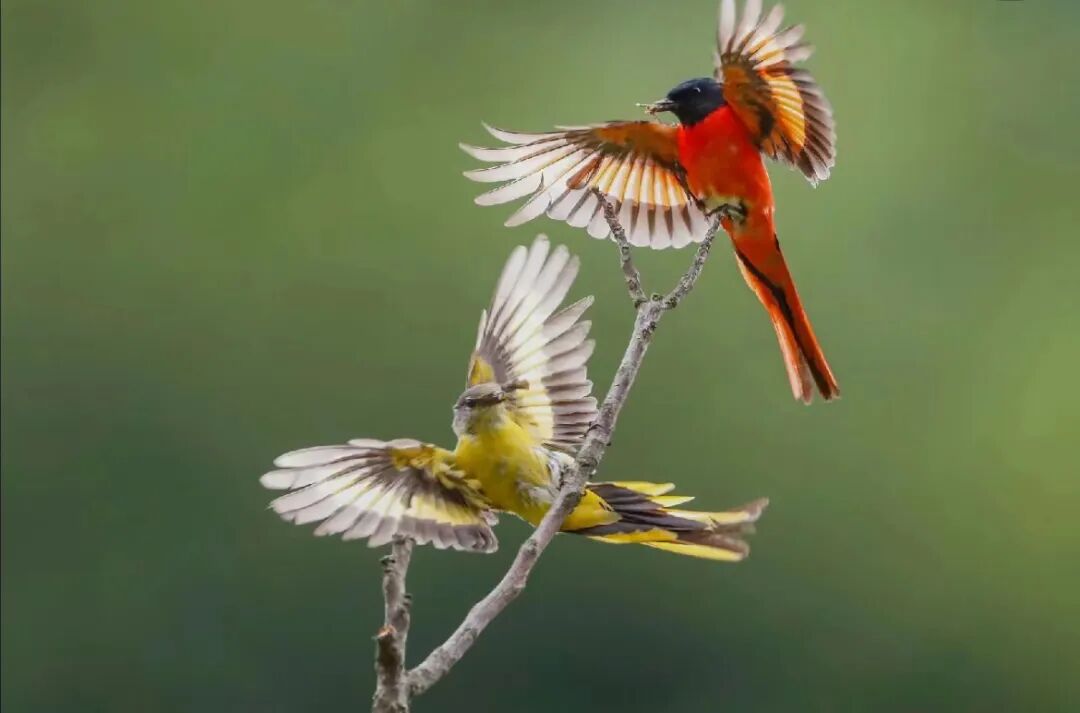
Scarlet minivet, a pair — male red, female yellow. I saw them on a business trip to Fuzhou, breathtaking. Photographed by Xiaohongshu user @ShangguanJunjin.
P.S. Early this year, the brand I co-founded, Tangdao, had the honor of inviting teacher Li Songwei to launch a "Wave-Dissolving Ritual," and to write an article, "Building Breakwaters at the Boundaries of Daily Life". From beginning to end of year, I've pulled it out and reread it seven or eight times, finding something new each time.
"At this time of bidding farewell to the old and welcoming the new, rather than wishing for calm seas in this world, I'd rather bless you that in the new year, waves won't breach your shore."
❺
"In Memory of Lianjia Founder Zuo Hui, Two Years After His Passing"
by MacTalk
I was previously quite unfamiliar with Zuo Hui, but after subscribing to Dedao's Detailed Conversations series through Li Xiang, I read Detailed Conversation — Zuo Hui and gained a ton of inspiration. As MacTalk's article wrote: "If you're in management, if you're interested in Lianjia, if you want to understand what deep thinking means, I recommend you casually flip through it when you have time. If you can persist through one page, I bet you won't be able to stop yourself from devouring the rest."
This recommended article is just an extraction from the full book. If you have time and interest, I recommend reading the entire book.
- Between people, we should look each other in the eye. With superiors, subordinates, colleagues, users — we should strive to build "eye-level" cooperative relationships. Eye-level means never looking down from above with arrogance, never looking up from below with humility. As times develop, this is gradually improving. But there are indeed cultural attributes at play.
- I believe that when a person is trusted, respected, they won't forget that feeling. Maslow's hierarchy of needs is interesting — once higher-level needs have been satisfied, you're unwilling to go back. Just like relationships between people: once you experience that this way of interacting is better, you'll never want to return to that old way.
- Some people said Lianjia grew big because I was willing to share benefits with agents. That's not accurate. Insecure managers generally use two methods to manage people: showing force, or showing favor — I think these methods only work short-term. Long-term, when income is decent, respect, encouragement, and recognition from clients matter more. We're in the business of motivating people.
- First, abstract concrete capabilities — including business chains, processes, and experience. Second, embed these abstract capabilities into the organization, which involves team culture, organizational capability, and IT systems.
- Blackstone founder Stephen A. Schwarzman said in his book that the effort for doing something small is about the same as doing something big. I didn't think about anything else at first, I just knew I had to do something big.
- Q: "Aren't you going to do something about these consumer misunderstandings?" — Zuo Hui: "I can't change it. I can't even change my own son."
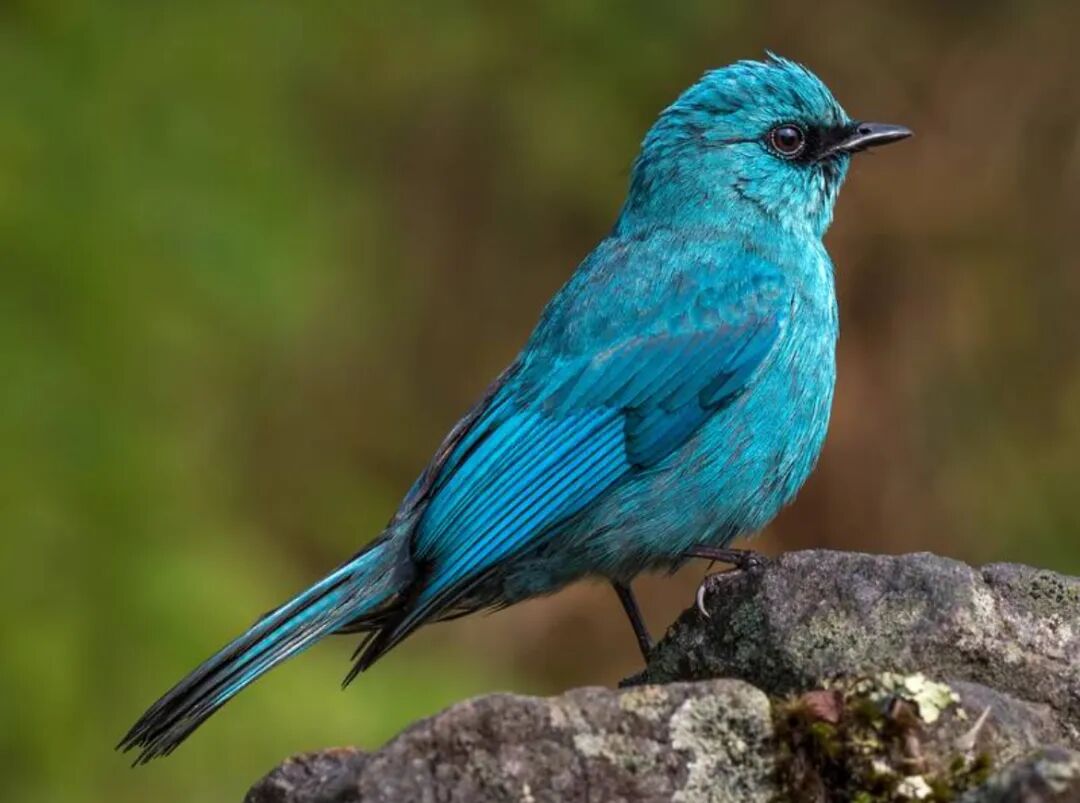
- Verditer flycatcher, made a surprise appearance in Shanghai this year, causing a minor sensation in "birdwatching circles"
- Photo source: eBird
"Tonight, You Don't Have to Walk Straight into 2024"
· Final bonus recommendation ·
Finally, a personal recommendation: The Fair's article published on the last day of 2023, "Tonight, You Don't Have to Walk Straight into 2024".
I co-founded The Fair in 2015; eight years have passed in a blink. The slogan we chose as our mission was "We will eventually change the direction of the tide." Later we gradually realized that our group probably isn't quite capable of changing the tide's direction, but we still want to try — who knows? Even if we can't change it, we'll certainly leave something for ourselves.
Borrowing this article's ending as my own:
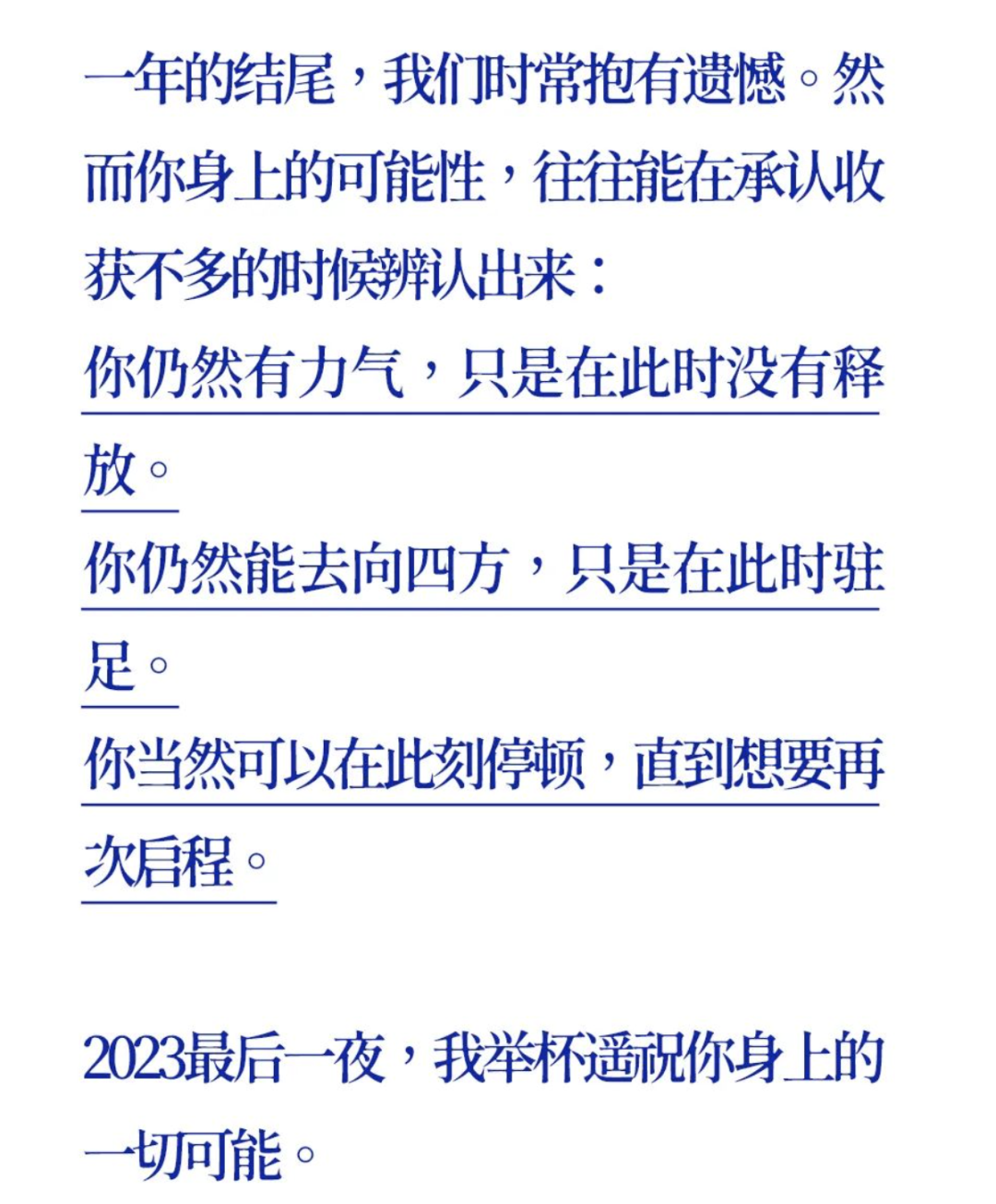
This new year, beyond more reading and better living, I also plan to build more diverse new friendships.
Especially hoping to meet friends immersed in AI — feel free to add me on WeChat: YuanchengYang, or find me on Jike: @koooji