AI Open Mic, Episode 15, 2025: Here's what Crossing and friends talked about…
What AI Entrepreneurs See and Think at the Crossing
What AI Entrepreneurs at the Crossroads See and Think
👦🏻 Author: Jingshan
🥷 Editor: Zeo
🧑🎨 Layout: NCon
Open Mic is a signature offline event format of the Crossing community.
From our earliest experiments to now, we've hosted 16 AI Open Mics, inviting over 150 next-generation AI entrepreneurs and active builders to take the stage. Each speaker gets 10 minutes to share their AI products and perspectives.
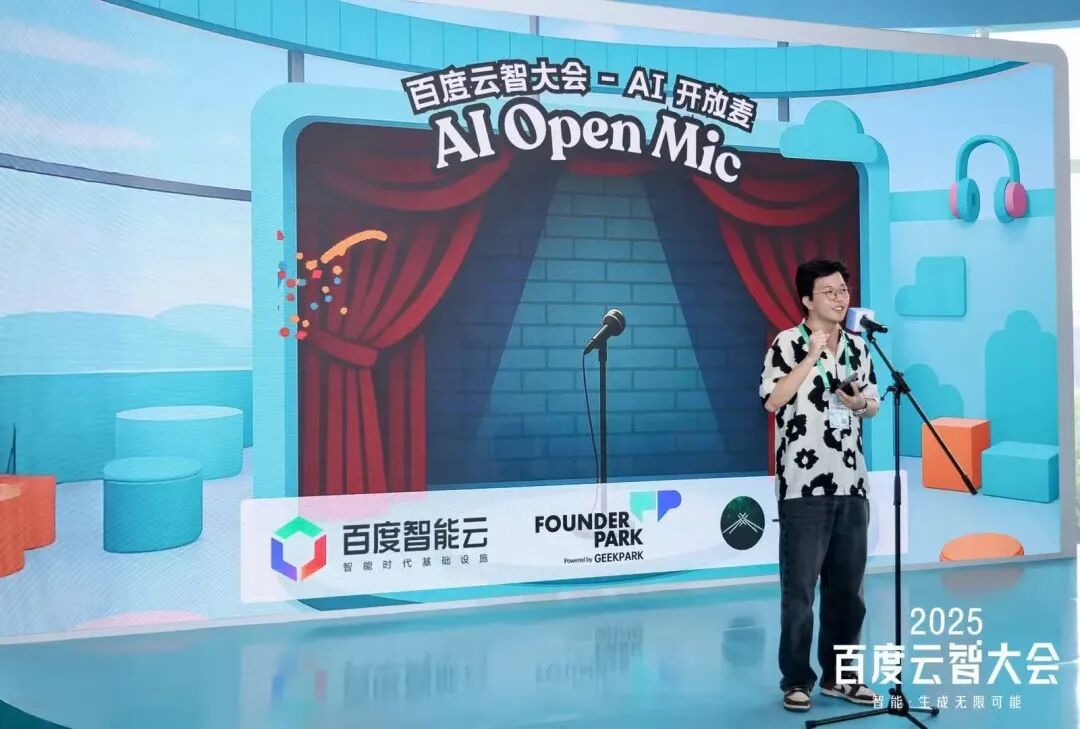
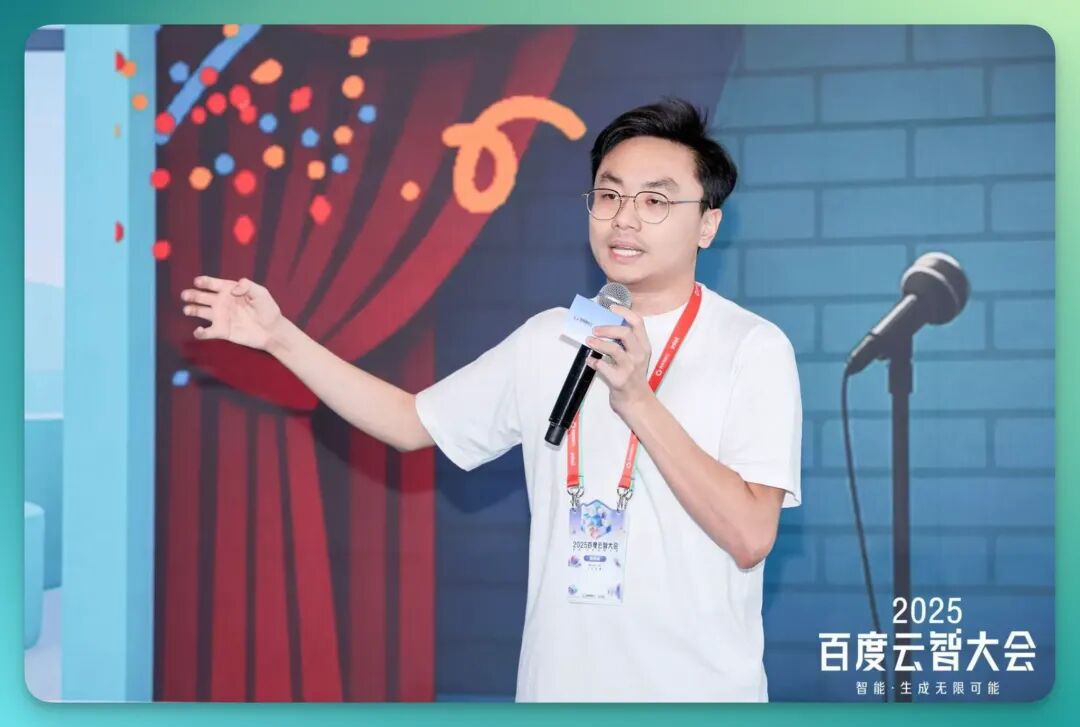
This past Friday afternoon (August 29), we partnered with Founder Park to hold a new AI Open Mic at the Baidu Cloud Intelligence Conference.
In this article, we've distilled standout quotes and observations from 9 AI entrepreneurs who spoke at the event.
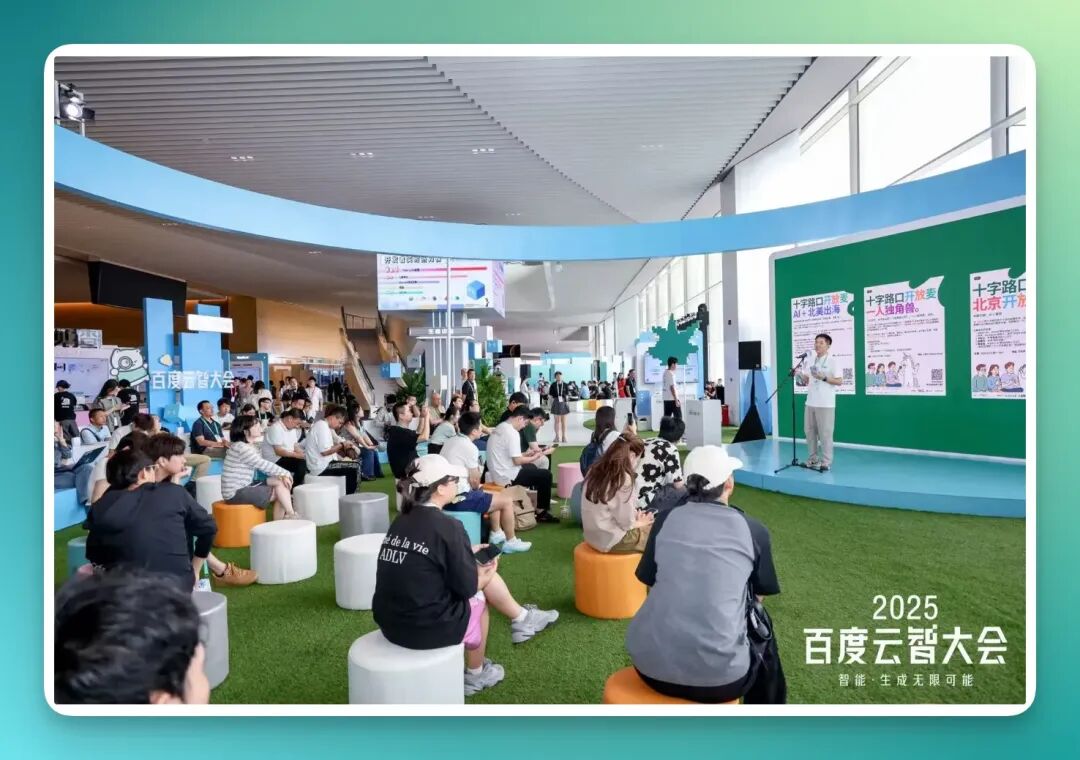
The AI Open Mic scene — relaxed, lively, serious, and earnest
Finding the Right Path, Staying Alive
Throughout the Open Mic, you'd notice that while the speakers work in wildly different directions, their concerns converge remarkably.
Strip away the jargon, and their straight talk boils down to two core questions:
【1】How do you find the right path?
【2】How do you stay alive?
Around these two questions, speakers threw out various "golden quotes" and their own reflections on the AI industry and entrepreneurship.
Here's a summary of their standout shares.
Chunxiang Zhao (Founder of Laplace): AI Coding Is Still in Its "Wild West Era"
This time, Zhao didn't introduce his own product. Instead, he shared his latest observations and thinking on Vibe Coding.
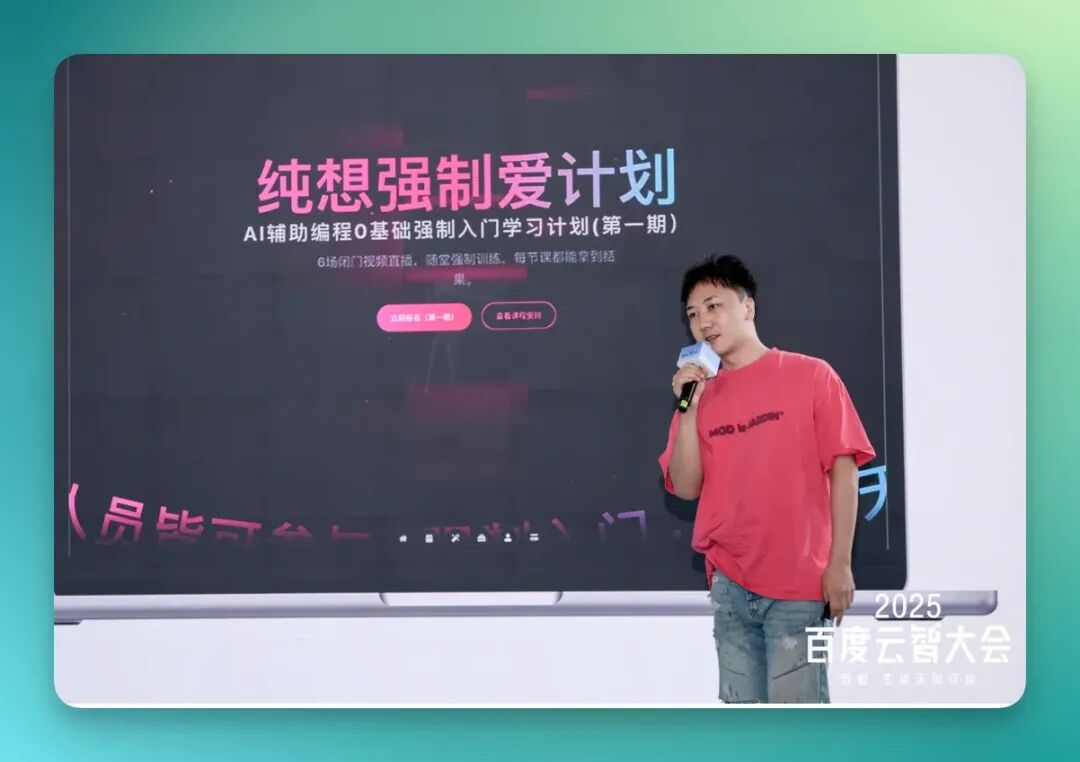
Over the past year, he launched the "Chunxiang's Mandatory Love Plan," leading hundreds of absolute beginners into the world of Vibe Coding. Through numerous indie developer communities, he's witnessed people's daily Vibe Coding routines firsthand.
Based on these hands-on experiences, he offered one key observation: Vibe Coding's value stratification is extremely pronounced.
【1】Skilled practitioners can use it to dramatically accelerate their work — people with coding foundations benefit deeply from these tools.
【2】Beginners, conversely, tend to spiral into chaos, with project complexity rapidly "entropying." Thus, AI Coding remains a "Wild West" for most people.
The "entropy" here borrows from physics, referring to the rapid increase in a system's complexity and disorder.
Many AI IDE products appear to be consumer-facing (To C), but actually operate on a B2B logic: they help novice users' projects spiral out of control faster, without truly addressing these users' ongoing needs.
Therefore, he believes:
Low-code remains a false proposition — it's just being replayed in a new form.
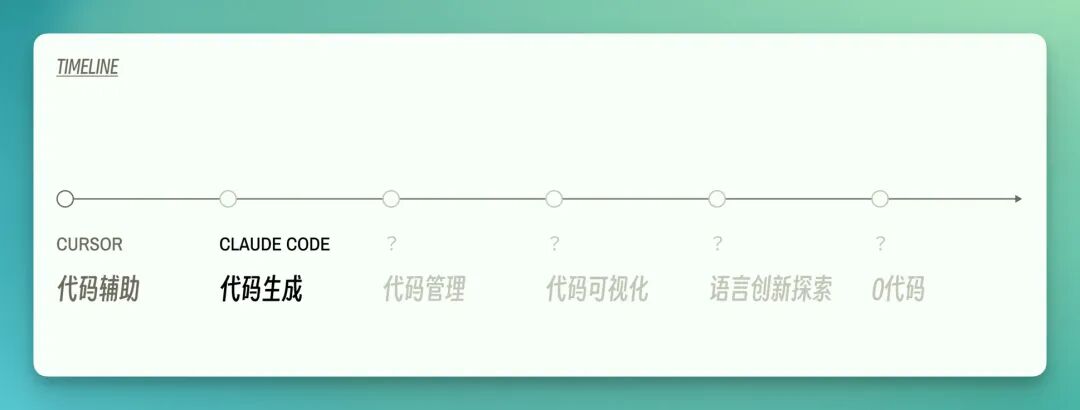
In the timeline Zhao compiled, AI Vibe Coding still largely sits in the earliest, first phase.
As a supplement, he noted that some domestic products are already attempting to break through phases 3 and 4, such as Qoder.
The deeper problem with AI Vibe Coding today:
Even though AI writes code quickly, human users still spend far more time on "planning" than on "generation." Even with manual coding rates below 3% (Zhao noted that in most cases, actual hand-written coding volume doesn't even exceed 1%).
Yet the time spent planning tasks still far exceeds the time spent actually generating code.
Today's AI Coding still sits at the stage of "one prompt, one AI action" — users struggle to enter "flow state": one sentence down, the Agent busies itself for 10 minutes, and the user gets interrupted, unable to maintain coherent thought.
So he believes:
Agent is merely a transitional form.
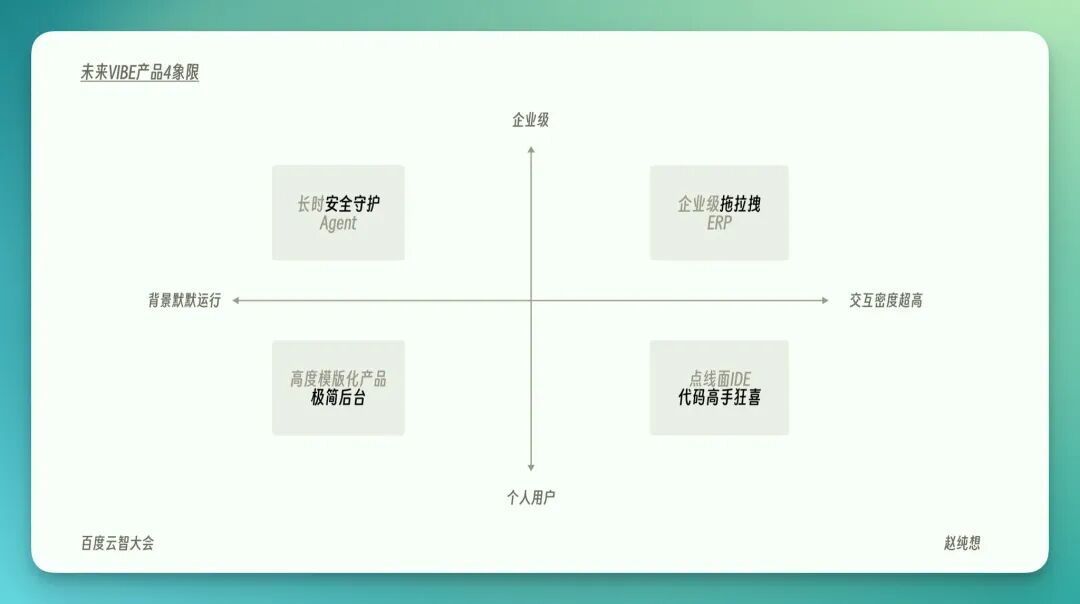
In the "Future Vibe Product 4 Quadrants" he presented live, he sketched out the paradigm for "future AI Vibe Coding tools":
They will likely collapse toward two ends: either fully automated background execution, or high-frequency interactive tools for skilled practitioners — the gray middle ground will be hard to sustain long-term.
The core thesis boils down to one sentence:
The entire AI Vibe Coding field has only just begun. True next-generation programming tools still need to break free from this "Agent" transitional phase, finding forms that let people sustainably enter flow state — rather than continuing to assume users can participate in coding themselves.
Kaixin Tang (Founder of Nooka): From "Anti-Addiction" to "Addiction"
At the Open Mic, Tang mentioned an intriguing project from his previous company: building an "anti-addiction system" for elderly folks and teenagers to prevent them from binge-watching short videos for too long.
Yet within a short period, they received tens of thousands of complaints from the elderly users — equal parts hilarious and exasperating.
When he left his previous company, he began thinking about how short videos have fragmented people's attention spans. If we have AI, how might we help people enjoy meaningful, knowledge-rich content?
Make acquiring knowledge as addictive as short videos.
He put it bluntly: AI can write articles, AI can draw pictures, but it doesn't understand true "creativity." Feed it the same prompt three times, you get roughly the same result — that's the proof.
So his approach: let AIs with different styles collide, generating surprises. Only this can spark something new.
He believes all future product competition will come down to "experience." His team chose audio as their breakthrough point, wanting to use AI to achieve "immersion" and "real-time feedback" that was previously impossible.
The goal is simple: make people as addicted to learning and acquiring valuable information as they are to short videos. This is also why "Gen Z Reconstructs Kant with AI Audio App Nooka" generated such massive buzz.
Xingji Zhai (Founder of Yuhe Tech): The B2B Entrepreneur's "Knee Slide" and Survival Rules
"What you choose NOT to do matters more than what you do."
This is Zhai's survival guide for B2B entrepreneurship. He emphasized that startups must切入 enterprises' core business, delivering genuine productivity.
As for "Does China B2B have a future?" his answer: effort matters less than choice. Understand risk, pursue high-quality revenue.
What impressed me most was his "knee slide" theory:
【1】Strategic conviction ≠ stubborn persistence
【2】Only those who can knee slide will go far
How do you know your choice is right?
Persist when you should persist, pivot when you should pivot. Roughly the right direction, and the organization stays vibrant.
Entrepreneurs need risk appetite, need risk perception. Strategic conviction doesn't mean "stubborn persistence" — "knee sliding" lets you go further.
Keep your mindset open enough: firm one second, knee slide the next, iterate fast.
Finally, we heard an amusing story from him. On the Yuhe team, people often couldn't get out of bed — so they actually used iPhone's "Find My" feature to wake each other up.
Rushan Liu (Founder of Kuangye Qunxing): Without Doing It Yourself, You Can't Build Experiences with Real Flesh and Blood
In an AI entrepreneurship circle full of "speed and passion," Rushan Liu hit the brakes.
"I spent six months as a user before I dared to build an AI product."
This founder, with a "customer success" background, brought a battle-hardened pragmatism from over a decade in the field: making good on sales promises, filling in sales potholes.
She said that in traditional industries, only steadiness, integrity, and long-termism can satisfy user needs. But when she crossed over to AI, she admitted she "couldn't quite make sense of it."
I don't get it, but I'm deeply shook.
Liu once encountered an investor who said: put together a PPT and we'll give you $10 million — but please don't be CEO anymore, replace yourself.
She was deeply shook, but ultimately chose to "do something more fundamental, endure a bit more hardship."
Many people build for investors, build for bosses — just not for users.
In her entrepreneurial journey, she's seen all too many common failure patterns:
【1】Hammer looking for nails: having the tech, then forcing a use case.
【2】No contact with real users: hands clean, insights too lofty.
【3】Short-termism: products rushed to market.
She said many AI products are just "more efficient garbage machines," because they're built for investors or bosses to see, not for users.
What pain points do paying users actually have? Let's do the work ourselves for 6 months before we talk.
Making money on day one is what makes a good product, so she used her own product to run "micro" businesses — short video agency operations, ad spots, you name it.
Though she joked that "agency operations" sits at the very bottom of the industry鄙视链, "even dogs wouldn't touch it," they still produced strong results: 1,600 creators participated in a "film your version" challenge, generating hundreds of millions in traffic.
If you can earn steadily, why take risks?
"Clumsy" persistence let them truly touch users' pain points. She believes competitive moats hide in these "experiences of flesh and blood."
Their product, Mulan, is an AI-powered CapCut.



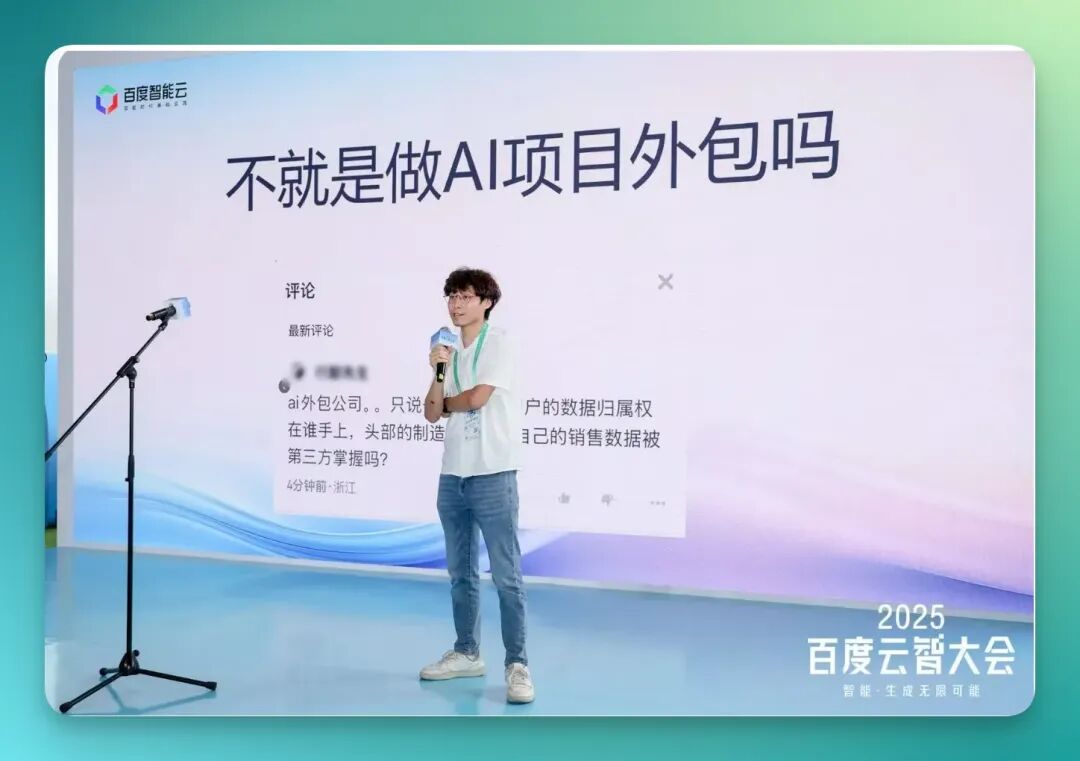
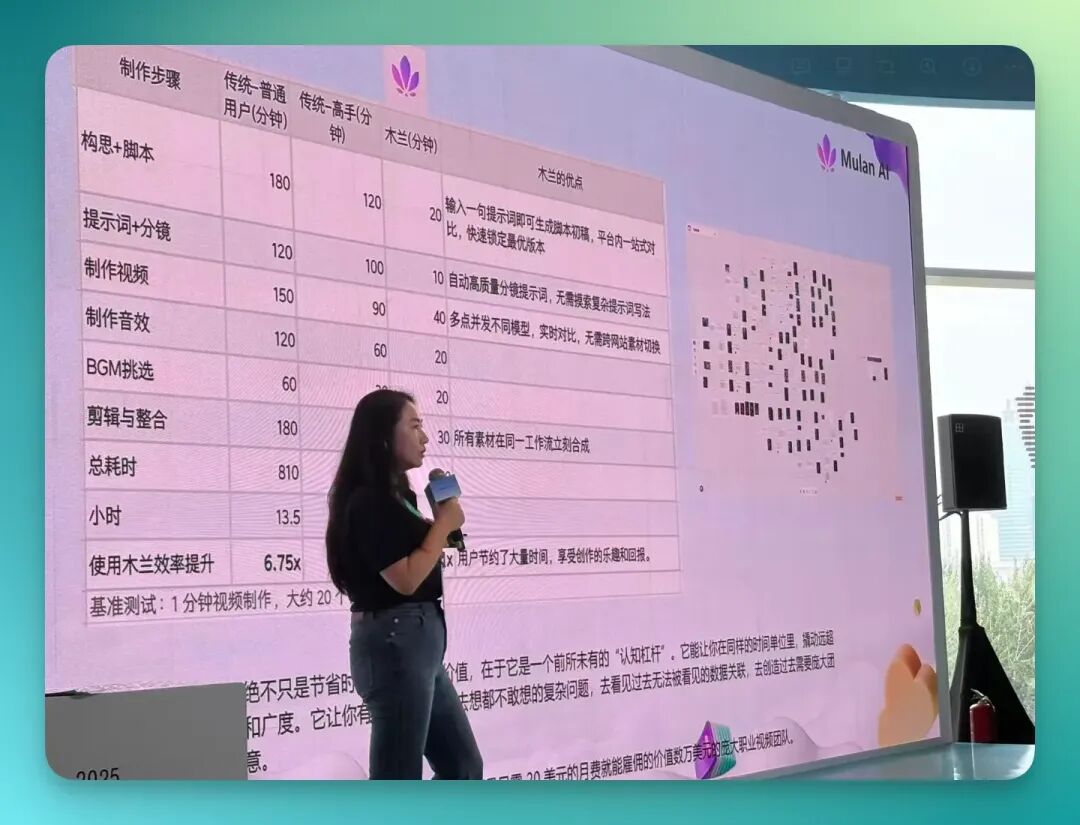
At the core of this product lies a simple conviction: audiences and platforms have an insatiable appetite for high-quality, precisely targeted content. Content generation and distribution should fundamentally operate as a streaming, continuously iterative process.
AI should be able to play a role across the entire pipeline, integrating natively into platform operations. Yet, in her view, current products fall short: creation and distribution remain disconnected, AI can only assist in fragmented steps, and efficiency is limited.
So when audience expectations for content quality and precision keep rising, existing product forms struggle to keep up — unable to truly sustain this "insatiable" demand.
Facing a generational, "hero-level" product like CapCut, she believes there are "cracks to be found."
"Flesh and blood" is the phrase we heard most often in Liu Rushan's pithy remarks. It means: without getting your hands dirty, you cannot gain the kind of experience that is "flesh and blood."
Zhang Wei (Founder, X-FUN): Maintain an "Empty-Cup Mindset," Grind a Broadsword into a "Nail Clipper"
Working in packaging design — an extremely traditional industry — Zhang Wei continues his pursuit of "depth," but narrows the focus from "users" down to the "industry" itself.
He posed two questions to the entire audience:
Do you really understand the industry? Do you really know your own strengths?
His conclusion: "Understanding the industry matters more than understanding AI." The posture for AI entrepreneurship should be "industry + AI," not "AI + industry."
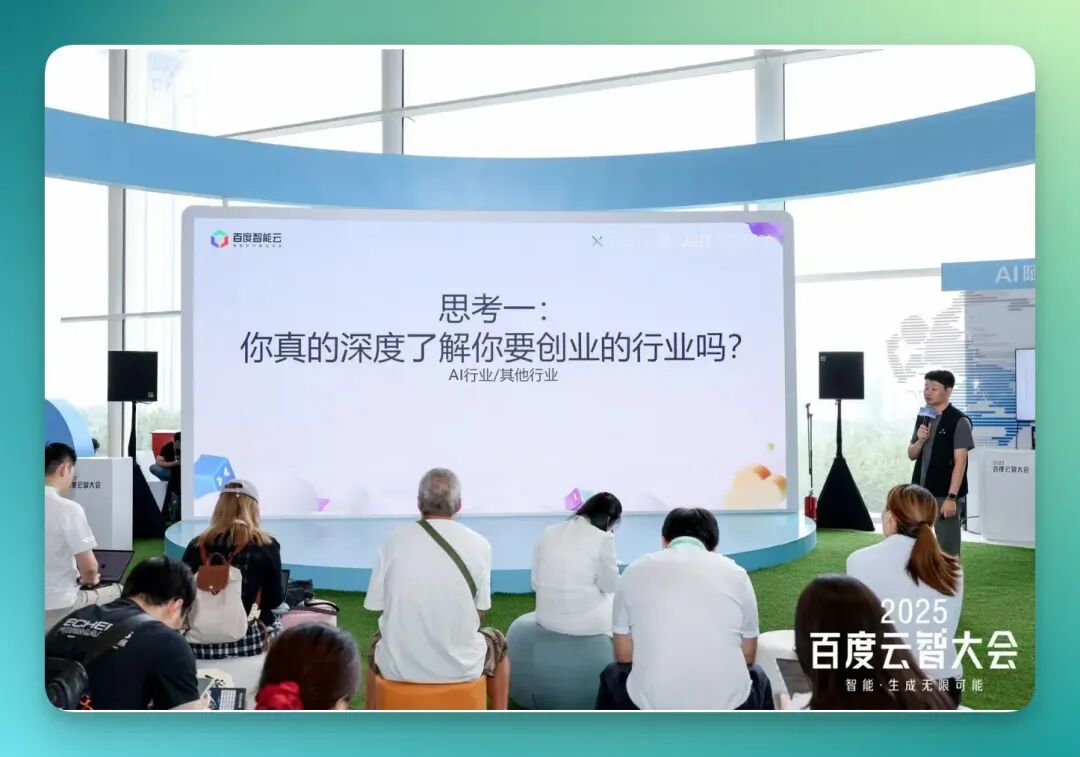
Do you have a clear sense of AI's boundaries and a forward-looking judgment of its trajectory?
He openly shared the pitfalls X-FUN stumbled into early on. At the time, AI models had limited comprehension of Chinese-language corpora, and the X-FUN team debated whether to "conduct separate Chinese training" — a detour that sent the product down the wrong path.
This experience gave him a clearer-eyed view of major players like Baidu: startups should not try to reinvent the wheel, but smartly stand on the shoulders of giants, leveraging the leaps in model capability that big tech drives forward, and focusing on their own areas of strength.
Do you have the mindset and readiness of an "empty cup"?
He advises founders to maintain an "empty-cup mindset" — grind that broadsword into a "nail clipper," honing an extremely small, extremely precise "entry point," sharp like a nail clipper.
Achieve ultimate sharpness on a single point, solving a high-frequency, hard-need scenario.
At the same time, seek out "industry running partners" — far more reliable than tinkering in isolation.
Koji (Founder, Crossing): The "Change" and "Unchange" of a New Generation of AI Founders
"When art critics get together, they talk about form, structure, and deep meaning. When artists get together, they talk about where to buy cheap turpentine."
As founder of Crossing, after interviewing more than 100 AI entrepreneurs, Koji uses Picasso's famous line to find a perfect footnote for the current atmosphere of AI entrepreneurship — "turpentine."
He finds that those truly at the cutting edge of action talk less and less about grand theories, and care more about the concrete "ammunition" and "tools" that keep products running and teams alive.
Centered on "turpentine," he shares several key shifts he has observed in the new generation of AI founders.
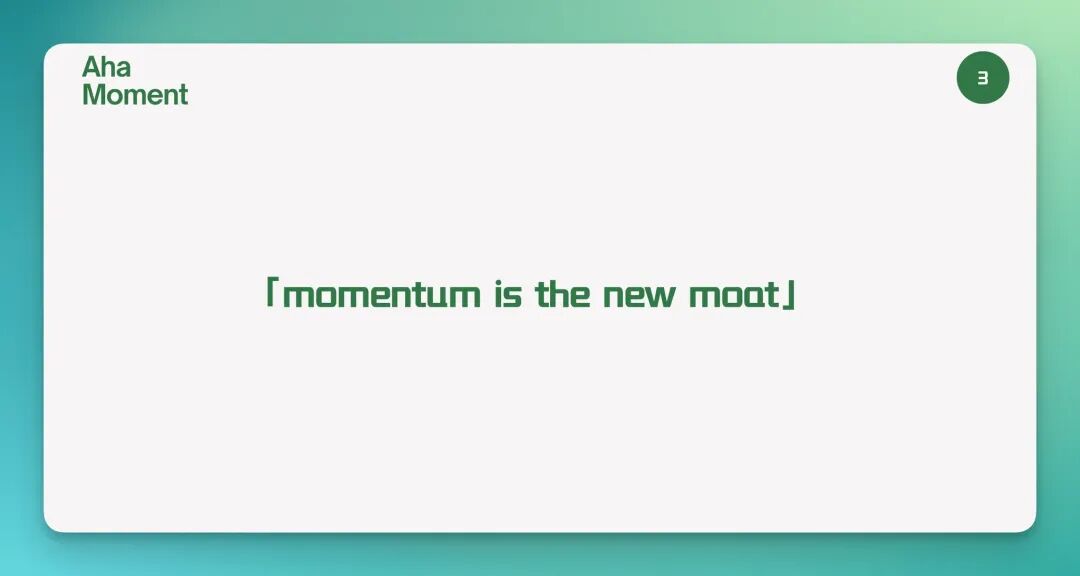
1. Momentum is the New Moat: Capturing "Momentum" Means Capturing Everything
"Marketing has been somewhat stigmatized in AI circles," Koji keenly points out the current paradox.
From the controversy over Moonshot AI's wasteful ad spending to DeepSeek's rise on pure technical merit, "doing marketing" seems to have become a kind of original sin. But he believes the more this is true, the more it represents an uncreative valley in marketing — and thus a real opportunity.
Whenever I meet a founder hesitating about whether to make some noise, I tell them: the Transformer paper is literally titled Attention Is All You Need. Just blindly believe in Transformer.
He cites a16z's view that "Momentum is the New Moat", and firmly believes that at this moment in time, narrative ability and the capacity to generate buzz are among a founder's most important skills.
Whether it was Cursor in its early days or the phenomenon of Manus, their success proves: on the premise that the product solves a real problem, rapidly building momentum can bring outsized returns that latecomers can only watch from afar.
Launching one week ahead versus one week behind can mean an entirely different world.
2. Redefining "Resilience": Embracing the Continuous Blows of "Fail Fast"
The inevitable result of Ship Fast is Fail Fast.
This demands a "new resilience" from founders. Koji believes that resilience in the past meant "persistence," while resilience today is the ability to withstand continuous failure and negative feedback without being crushed.
What Sam Altman calls the "fast fashion-ization of SaaS" is essentially a game of high-frequency trial and error. A single funding round now lets you fire many more shots than in the past, but many founders get stunned and scared off by the first two blanks and the rapid negative feedback.
In this environment, being able to absorb repeated blows, stay optimistic, and normalize it is itself a massive competitive advantage. This resilience keeps you at the table for another year or two — and that year or two is enough to let you ride the next wave of AI model evolution.
3. The Talent Magnet: From Attracting Talent to "Building a City" for Talent
"AI talent is extremely scarce," Koji emphasizes. This is no longer simply a hiring problem, but a core bottleneck that determines survival or death.
He shares a startling case: a company projected to earn $100 million in annual net profit, with a 360-person team, once had only two people in product and R&D. The founder had no choice but to open new offices around the world for the sake of talent.
This shows that an excellent founder must be a "talent magnet."
No matter how strong an individual is, they are limited. AI startups need to fight as a team. The ability to attract and retain top AI PMs, engineers, and marketing talent is a founder's most underrated and most critical capability.
He uses Manus as an example: CEO Xiaohong not only attracted top talent like Peak and Hidecloud, but many excellent young people on the team were also drawn by his magnetic field. This ability is the most solid barrier beyond the product itself.
Open Mic
The final open mic segment, welcoming more attendees to take the stage for impromptu sharing, made for an interesting closing.
MUJI, co-founder of Seede AI, "complained" to the audience about his ordeal with prompt engineering. He also mentioned an insight about users: ordinary people's needs from AI may be quite simple, like "make the text in this image align."
Get these simplest needs right, and the product becomes more complete.
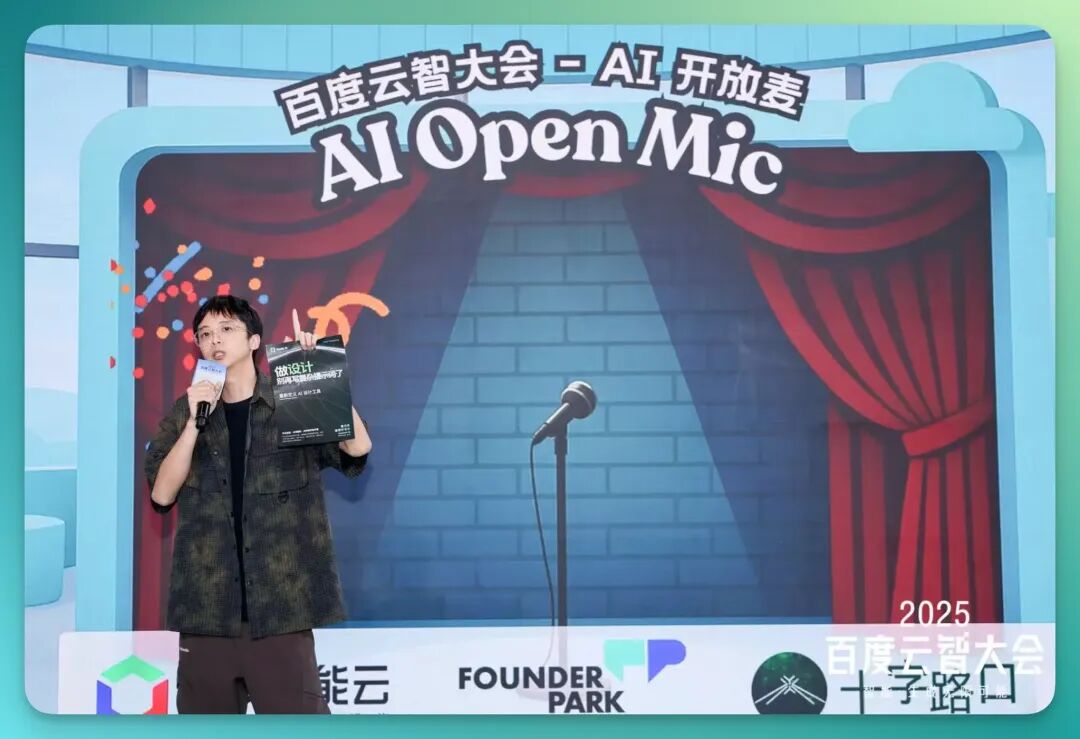
Chen Yexi, founder of "Travel Companion AI" (旅伴 AI), which focuses on AI-powered travel, shared his experience of closing the loop on a single need.
In his view, truly closing the loop on a demand means: not only solving the surface problem for users, but also connecting all the follow-up service links.
Turning Technological Imagination into Rapid Reality
When individual entrepreneurs focus their sights on application innovation and scenario breakthroughs, their success cannot be separated from a stable, open, and efficient "technology foundation." The quality of this "foundation" determines whether their imagination can smoothly land as products in users' hands.
Today, the role of building and maintaining this foundation is being assumed by platform enterprises.
At this year's Cloud Intelligence Conference, we happened to have the opportunity to observe Baidu's practice up close. Through it, we may find partial answers to this question.
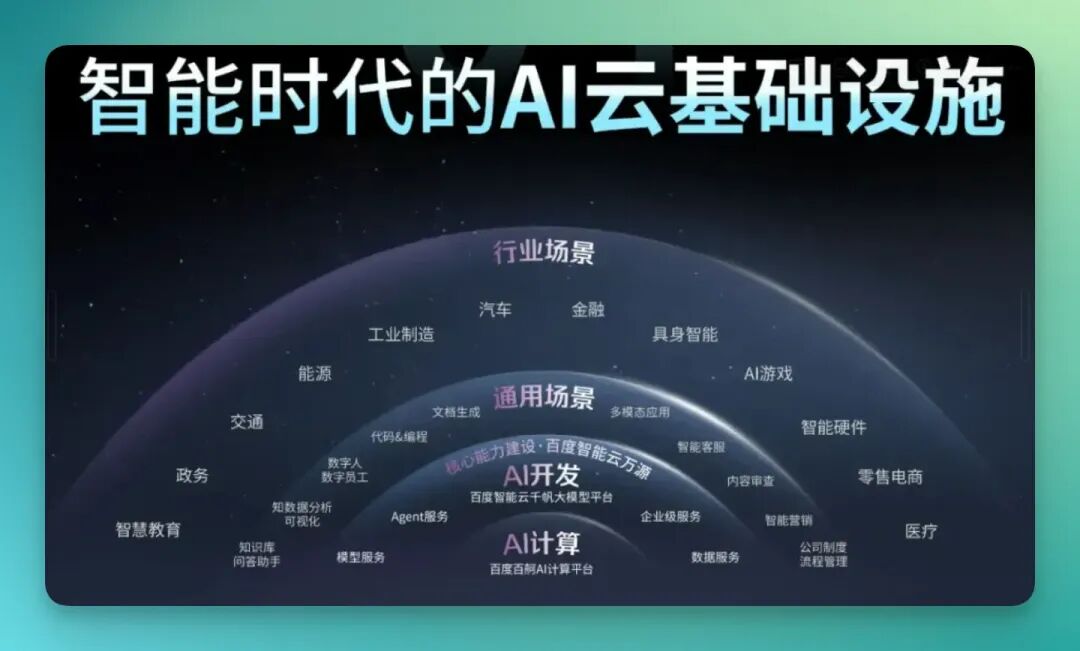
So how does a platform enterprise like Baidu strategically connect with AI entrepreneurs and startups, and thereby drive "new industries, new growth"?
Here is our summary: drive "new growth" through innovation efficiency; bring about "new industries" by lowering barriers.
In the current AI wave, for a good idea to ultimately become a successful product in users' hands, it often needs to cross multiple hurdles: models, compute power, and complex engineering. For resource-limited developers and startup teams, this is an enormous challenge.
The direct result of platforms providing support in these areas is creating more fertile soil for the germination of new industries. When entrepreneurs no longer need to be excessively distracted by underlying technology, they can devote their full energy to understanding user needs and mining application scenarios.
Thus, some ideas that were previously difficult to implement due to excessively high technical barriers and costs begin to become feasible. These explorations may initially be just new tools or services solving a specific problem, but as they gradually accumulate and mature, they can form entirely new commercial tracks.
More importantly, this creates fresh momentum for growth among platforms, developers, and startups alike. That growth stems from lowered barriers. By leveraging mature platform tools and services, the cycle from concept to market shrinks dramatically, and the cost of trial and error drops significantly.
This means a broader range of ideas can be validated quickly, accelerating both the density of innovation and the pace of iteration across the entire market.
The levers driving "new industries, new growth" fall roughly into three layers: [1] foundational model technology, [2] compute power, and [3] applications.
1) Learning to Predict the "Forward Path" of Tech Giants
At the Baidu Cloud Intelligence Summit, Dou Shen — Baidu's Executive Vice President and President of Baidu's Intelligent Cloud Group — handed the microphone to three young founders, letting them share firsthand experience about "new industries, new growth": Ru Yi, founder & CEO of Li Weike (AI glasses), Yachen Song, founder & CEO of VAST (AI 3D large models), and Binson Liu, founder & CEO of LynkSoul (HakkoAI).
Song, for instance, noted that Baidu's improvements in model reasoning capabilities had streamlined their operations and eliminated extra costs.
Each spoke about what benefits major platforms can bring to startups.
Among these, one point stood out — both to us and to attendees at the AI Open Mic: "AI large models don't need to be built from scratch by startups. Learn to predict the tech giants' forward path."
Platforms like Baidu are working hard to play their platform role well. With the Wenxin large model at its core, they've built a vast model "shelf" on the Qianfan platform. The shelf stocks versatile "general-purpose" models like Wenxin that handle common tasks, alongside "custom-fitted" models tailored to specific industries — finance, education, customer service, and more.
Beyond that, fine-tuning models used to require massive amounts of high-quality data, with costs so high that small teams couldn't even consider it.
Now platforms are experimenting with Reward Model-based Reinforcement Fine-Tuning (RFT), achieving strong results with far less data. In human-job matching tasks, for example, a few data points can tune a 10-billion-parameter model to near-100-billion-parameter performance. For founders, this is a textbook case of "small cost, big impact."
This means startups don't need to train large models from scratch. They can stand on the platform's shoulders, leveraging market-validated model capabilities to jumpstart product development.
As Zhang Wei, founder of X-FUN, put it: Founders need to predict the strategic trajectory of giants like Baidu.
Ride the wheels they've built, and you'll naturally be carried forward.

Now, AI product development has been dramatically accelerated.
Startup teams can pick the most suitable model straight from the shelf, pouring precious resources and time into understanding user needs and polishing product experience.
The distance from idea to mature product has been greatly shortened.
2) Making Compute Power On-Demand
After foundational technology, let's look at AI's starting point — compute power, also one of the heaviest cost burdens for founders.
The Scaling Law still holds, meaning the pursuit of extreme compute is far from over. But building and maintaining a large-scale GPU cluster from scratch is unimaginable for the vast majority of startups, and largely unnecessary for companies focused on application scenarios.
Beyond the difficulty of building large models from scratch, providing daily compute for model inference isn't easy for many small teams either.
So the platform's primary role is to transform complex "compute power" into a standardized commodity like electricity, letting innovators take what they need, when they need it, plug-and-play.
The strategic intent is for developers and startups to outsource complex underlying hardware problems to the platform, freeing precious capital and energy to focus on algorithm and application innovation.
3) "Modularized" Applications
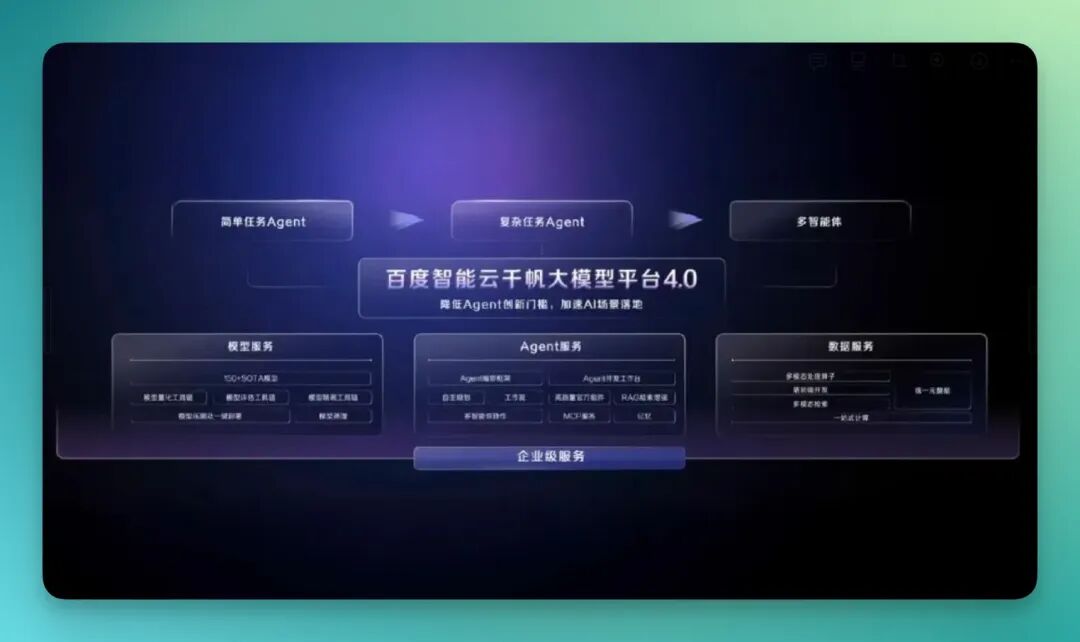
Let's look at one of the current cores of AI development — AI Agents. At this summit, Qianfan Enterprise AI Development Platform 4.0 was released, offering one-stop Agent development capabilities that significantly lower barriers.
A simple example: enterprises can now use intelligent customer service that matches user-submitted photos of faulty equipment to manual content, providing multilingual solutions. For startup teams needing rapid market validation, mature applications exist too. Upload a standard operation video, and within minutes an SOP is generated; or quickly customize something like the viral "Daniel Wu digital English coach" that blew up on short-video platforms recently.
Through this series of "modularized" tools and platforms, founders can stand on the platform's shoulders and rapidly turn ideas into reality.
One Ecosystem, All Services
This intent behind "modularized" applications shows even more clearly in the promotion of the MCP protocol.
Baidu is trying to open its 25 years of accumulated search capabilities, plus core services like maps and translation, to developers through standard interfaces. Next-generation smart hardware — like Li Weike's AI glasses or children's AI toys — doesn't need to build complex knowledge bases or search engines itself; it can directly tap Baidu's real-time search to answer users' time-sensitive questions.
Behind this lies an extension of platform strategy.
As more developers grow accustomed to calling services and building applications within one ecosystem, this means faster integration of powerful features for founders. For the platform, it means capturing a centralized, indispensable position in the AI application ecosystem.
Developers and Startups Now Have More "Business Possibilities"
With compute power secured, how to quickly and cheaply develop powerful AI applications is the second challenge.
This tests the platform's "engineering capability" — or more bluntly, whether they're willing to invest more resources and effort to package complex models, data, and toolchains into easy-to-use modules.
Whether it's multimodal RAG, tool calling (MCP), or multi-Agent collaboration, the platform provides ready-made frameworks and tools. The aim is to minimize development difficulty and let innovative ideas become reality at maximum speed.
Up close, we can clearly see the core symbiotic relationship of the AI era: the "pathfinder's" success validates the "road-builder's" value; while the "road-builder" determines how fast the "pathfinders" can go.
In short, we can clearly see that in this AI founder "waiting for the wind" process, platforms like Baidu are also gaining "flywheel effects."
[1] Through technology democratization, making models that don't need rebuilding from scratch and compute power that's on-demand, attracting the broadest range of developers and startups;
[2] Through technology openness, helping these users develop quickly, "modularize" applications, and achieve commercial validation;
[3] Successful applications and cases, in turn, validate and enrich Baidu's AI platform capabilities, attracting more developers and customers.
The ultimate goal of this flywheel, perhaps, is to enrich the platform itself, letting "cloud-intelligence integration" drive new industries and new growth. But along the path, AI founders gain more "business possibilities."
🚥
In each AI Open Mic, we believe the most valuable insights often come from the most candid exchanges between founders.
If you're also a peer exploring, acting, and creating in AI, whatever stage you're at, you're welcome to join Crossing's Open Mic.
Looking forward to connecting with you!