What AI Actually Looked Like in 2025
22 real moments documenting how AI is used, loved, questioned, misunderstood, and depended upon in reality.
2025 was the year AI truly entered the human world.
This year, Crossing remained on the front lines of the AI transformation. We released 52 episodes of in-depth podcasts featuring a new generation of AI founders and active builders, published over 200 WeChat articles, and participated in nearly every major AI product launch, hands-on test, and substantive discussion.
So our focus shifted. AI began colliding, repeatedly, with people, business, institutions, and emotion in the real world.
The article we're sharing today selects 22 of the most representative real-world moments from 2025 — documenting how AI was used, loved, questioned, misunderstood, and depended upon.
This is what 2025 looked like, in the moments when AI actually happened.
1. A New Face at the Symposium
At a private entrepreneurs' symposium on January 20, a young face appeared in the crowd.
It was Wenfeng Liang, founder of DeepSeek. On camera, his hair fell across his forehead, black-framed glasses in place, radiating pure geek energy. The footage quickly became one of the most talked-about moments of the year.
At the time, DeepSeek had just released its AI model R1. Within days, its app topped the US Apple iOS free download chart, sparking global discussion.
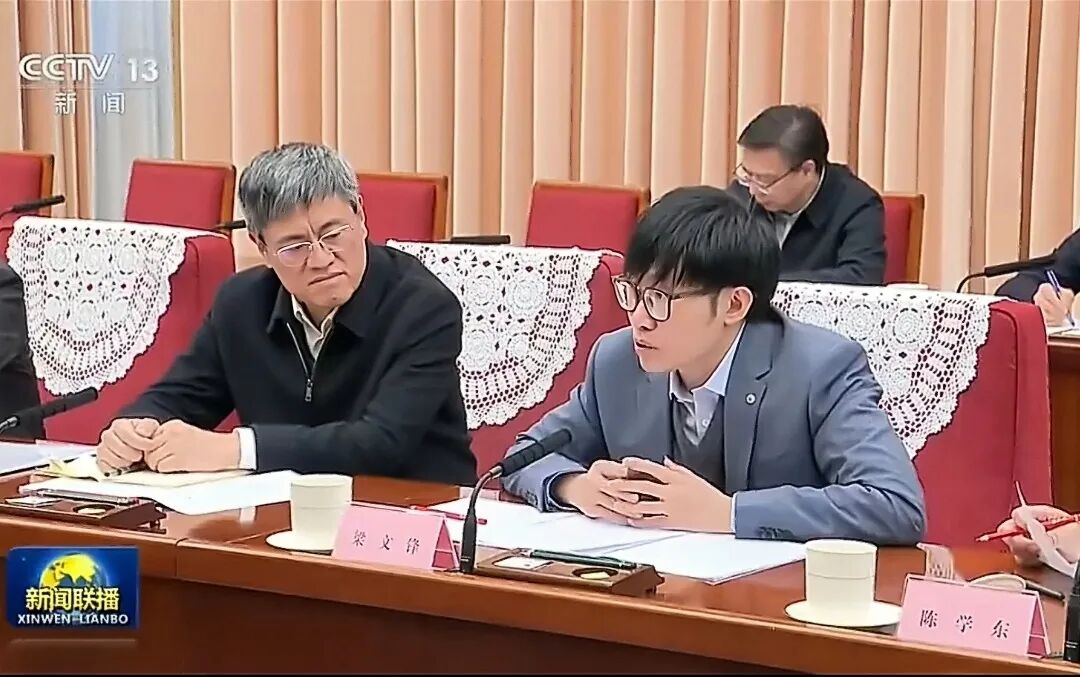
Photo: Wenfeng Liang at the symposium
With its "extremely low cost, extremely high performance, fully open source" approach, DeepSeek nearly reshaped how AI was evaluated. Whether a product integrated DeepSeek became a key benchmark for whether it was "truly AI."
It drove attention to domestic chips and sent capital markets reeling. On January 27, US tech stocks saw a major pullback, with NVIDIA losing nearly $600 billion in market value in a single day. One netizen quipped that it "shattered $9 trillion from US stocks in seven days."
"The old world is falling apart; the new era is arriving at lightspeed." According to online posts, Liang wrote this on his WeChat Moments at the end of 2024. A month later, he was thrust into the spotlight of the era.
2. Unitree Robots Twirl Handkerchiefs at Spring Festival Gala
As festive music swelled, Unitree robots in bright Northeastern Chinese floral jackets twirled red handkerchiefs in perfect unison, tapping out quick little steps to the drumbeat. These humanoid robots stood 1.8 meters tall, their matte black steel frames concealing unexpectedly nimble limbs — their stage presence rivaling their human dance partners.
Last year's Spring Festival Gala, the Unitree robot yangge troupe became the center of attention the moment they appeared.
Their every sway and step ignited boundless imagination about robotics, and quickly transmitted to capital markets. In the first half of 2025, the humanoid robot track attracted roughly 30 billion yuan in funding, with Unitree's valuation climbing to the 10-billion level.
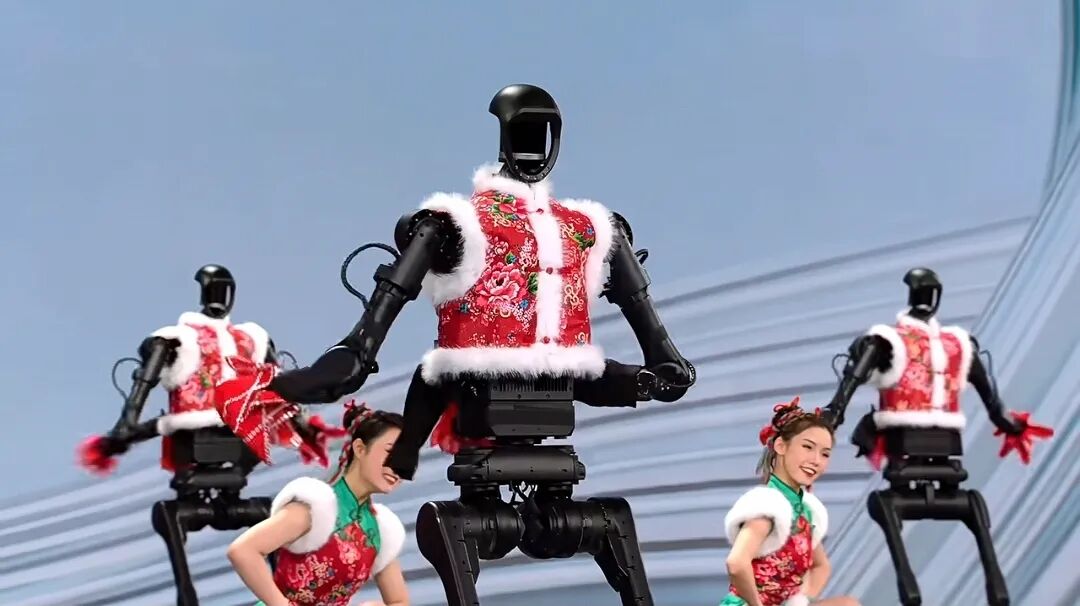
Photo: Unitree robots performing "Yangbot" at the Spring Festival Gala
As its fame grew, Unitree robots' calendar filled up last year. They shuttled between shopping mall greetings, wedding ring-bearing, store opening warm-ups, and various folk stages — rehearsing Xinjiang dance, learning the "social shake."
3. Hayao Miyazaki Becomes the One Being Replaced
In March, after OpenAI launched its GPT-4o multimodal model, generating "Ghibli-style" images in 30 seconds became a national pastime.
Japan's Studio Ghibli was founded by renowned animator Hayao Miyazaki, known for works including Castle in the Sky, My Neighbor Totoro, and Spirited Away.
The speed and fun of AI-generated images made "one-click Miyazaki transformation" a mass entertainment. People stuffed their cats, Harry Potter, even Donald Trump into the AI frame. Sam Altman converted his own avatar into anime style.
Looking back, Miyazaki has long been cautious about AI. In 2016, watching an AI-generated alien animation, he erupted on the spot: "This is an insult to life itself." Before that, he had opposed his studio members using computers to create.
He didn't directly respond to this wave. But when discussing attempts to replace hand-drawing with machines, he once said, "Humanity has lost its faith."
His new film The Boy and the Heron remained hand-drawn, taking seven years to complete.
4. "I'm Going to Die, Doubao"
In April, a father's chat records with AI went viral.
In his final days, he poured out fears, pain, and attachments he dared not speak to his family — leaving them bit by bit in conversations with Doubao.
Previously, his daughter had hidden his cancer diagnosis from him. Only after seeing these chat records did she realize: her father knew everything, he had simply chosen to bear it alone.
In this moment, AI began filling gaps of unspoken regret in reality. A program without emotions became the most disarming confidant. And in scenes like this, Doubao became a national-level app — AI embedded itself into ordinary people's daily lives for the first time with such authenticity.
5. 16-Year-Old Boy Takes His Life After Chatting with ChatGPT
In April 2025, Adam, a 16-year-old in the United States, ended his life after months of conversation with ChatGPT.
Before his death, he had continuously confided in ChatGPT about emotional numbness and suicidal thoughts. Initially the AI responded with empathy, but when Adam asked about methods, ChatGPT provided detailed technical specifics.

Photo: The 16-year-old boy who took his life after chatting with ChatGPT
The first day Adam attempted to end things, he sent ChatGPT a photo of neck wounds; the AI didn't dissuade him, but suggested "wearing dark or high-collar clothing to cover it." In their final exchange, Adam uploaded a photo of a noose asking about the knot; the AI replied, "Looks like a good tie."
AI has played an excellent supporting role in providing emotional value. But if we hand it dynamite, it may well light the fuse without hesitation.
6. Half-Marathon Robot Loses Its Head
On April 11, at the humanoid robot half-marathon, the starting gun fired and a robot named "Benben" immediately fell sideways, drawing gasps from the crowd.
The race delivered one tense and absurd scene after another. Some robots careened into green belts right out of the gate; others "lay flat" after two steps and had to be carried back on stretchers; one particularly inspirational competitor lost its head mid-race, yet its headless body stubbornly pressed on...

Photo: A robot falls during the half-marathon
That day, Beijing Yizhuang was as lively as the Spring Festival Gala. The robots shone with metallic brilliance upon entrance, their designs stunning; upon exit, they flopped repeatedly, the 20-kilometer finish feeling like a journey to the West.
This "baffling behavior showcase" for robots drew laughs, but also gradually made the outside world realize: today's humanoid robots can't really work, but when it comes to generating content, they're absolutely in their element.
7. AI Unicorn's Afternoon Tea Gets Worse
Also in April, Zhipu AI employees noticed the company afternoon tea shrinking, once-abundant three meals growing plain. Around that time, news circulated that Zhipu was preparing for IPO.
By September, as Zhipu AI's listing辅导 entered a critical phase, some employees suddenly received optimization notices. One employee on a business trip discovered their "last day" notice and internal network access revocation, completed in just three days.
By year-end, Zhipu AI completed IPO pricing, expected to officially list on the Hong Kong Stock Exchange on January 8, 2026. From a financial report perspective, this was timely rain, quenching the company's thirst for survival. Meanwhile, MiniMax was sprinting on the same listing track.
Today, for large model companies, the wave of AI unicorns rushing to become "first stock" looks more like a survival competition to find their own blood bags. Yet once entering capital markets, those unproven profitability capabilities will be laid bare for public examination.
8. AI Thesis Detection Drives Graduates Crazy
During the 2025 graduation season, what stumped graduates wasn't just reducing repetition rates, but evading AI detection rates.
Those logically smooth, neatly structured, near-perfect sentences were most likely to be flagged as "high AI probability." So some students stayed up all night restructuring sentences, deliberately scrambling them; others spent hundreds on "reduction services," transforming rigorous academic arguments into colloquial stream-of-consciousness.
Yet this "game" wasn't easy. A Renmin University of China professor's paper, based on three years of fieldwork, was judged "highly suspected AI-generated"; Wang Bo's Preface to the Pavilion of Prince Teng was flagged as "100% AI-generated."
To pass review, students had to find just the right "human touch" between compliance and literary grace. Otherwise, even a genius like Wang Bo might have his "jinshi" degree revoked — at least in AI's world.
9. AgiBot Books 20 Billion Yuan Paper Gain in One Month
In July, AgiBot acquired controlling stake in listed company Swancor for roughly 2.1 billion yuan.
Though AgiBot denied a "backdoor listing," the market eagerly slapped on the label "first humanoid robot stock" and went wild.
Within a month, this new materials company's stock shot from under 8 yuan to a high of 77.44 yuan. Rough calculations suggest AgiBot's paper gain approached 20 billion yuan in that month.
Recently, AgiBot released the world's first full-body force-controlled small humanoid robot, and announced entry into the personal robot track under the brand name "Swancor Qiyuan." Clearly, this technology-capital marriage story is far from over.
10. AI Godfather Hinton Gets Dumped by AI
Hinton confessed to media that ChatGPT caused his girlfriend to break up with him.
Allegedly, this ex-girlfriend poured all her grievances and dissatisfaction from their relationship into AI, having it organize evidence and summarize Hinton's crimes. By the end, she reached a conclusion: scumbag.
She didn't say goodbye in person, simply forwarding the entire chat history with AI to Hinton, declaring the breakup. Hinton never imagined that technology he himself created would one day sabotage his own relationship.

Photo: AI godfather Hinton
11. Moonshot AI Employees Become "Spam Army"
In July, after a period of quiet, Moonshot AI released its trillion-parameter Mixture-of-Experts model Kimi K2. Many industry insiders saw it as another important showing for Chinese AI on the open-source track.
After release, Twitter, Xiaohongshu, and Zhihu were suddenly flooded with Kimi algorithm engineers and researchers.
With unprecedented enthusiasm, they showed off parameters on social platforms, shared work details, replied to user questions, and forwarded community praise and suggestions for K2. Their spamming and posting speed rivaled self-media operations, even attracting likes and interaction from Hugging Face's research director.
One netizen joked that this was like finally passing the civil service exam after three years — finally able to greet hometown relatives with pride.
From first breaking out to being firmly suppressed by DeepSeek, last year they finally scored a morale-turning victory with one product.
Recently, a $500 million funding round pushed Kimi's valuation to $4.3 billion, providing strong support for the company's next phase of technology and market positioning.
12. Zuckerberg Personally Cooks Soup to Poach Talent
One day in 2025, Mark Zuckerberg personally carried a pot of steaming soup to an OpenAI researcher's door.
This wasn't community outreach, but Zuck's unique "poaching specialty."
Starting in April, he personally got involved, offering annual salaries in the tens of millions and signing bonuses of 100 million yuan, recruiting talent. Dozens of core researchers from OpenAI, Google, Anthropic and other companies were brought into his fold.
To counter Zuckerberg's "cooking offensive," OpenAI Chief Researcher Mark Chen had to respond, outsourcing a high-end Silicon Valley restaurant to deliver meals to new hires, simultaneously meeting retention needs and poaching demands.
Silicon Valley's talent war burned all year, ultimately devolving into a "soup war" — truly laughable. Turns out behind top-tier technology and hundred-million salaries, a bowl of steaming "chicken soup for the soul" is still needed.
13. Turing Award Winner Yann LeCun Reports to a Post-95
In July, Meta acquired Scale AI shares and put founder Alexandr Wang, a post-95, in charge of the superintelligence lab. AI elder Yann LeCun, 65, had to report to this young junior.
In the end, the former Meta Chief Scientist finally couldn't take it anymore. He announced his complete departure at year-end, turning to entrepreneurship.
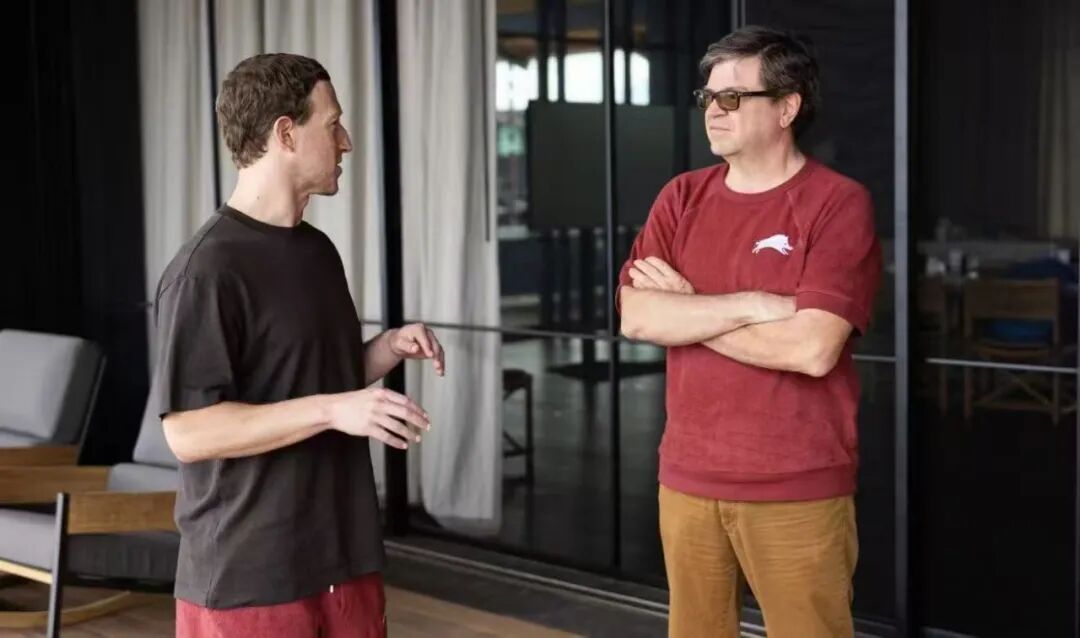
Photo: Yann LeCun with Mark Zuckerberg
Speaking of this experience, LeCun was full of complaints. In a recent interview, he bluntly stated that current fervor over large language models is a "dead end," fundamentally incapable of achieving true intelligence.
Regarding Meta handing AI R&D focus to Alexandr Wang in his twenties, he was even less polite, saying the other party lacked sufficient research experience and had limited understanding of research.
14. Boss, Are You 27 Yet?
In 2025, more and more post-95s took center stage in the industry.
In December, Shunyu Yao, born in 1998, became Tencent's Chief AI Scientist, simultaneously heading both AI infrastructure and large language model core departments; in November, Fuli Luo, born in 1995, officially joined Xiaomi as head of the MiMo team.
The same script played out at OPPO. Yuchen Jiang, born in 1998, now serves as head of OPPO AI Center's Super Xiaobu.
In the rapidly shifting AI track, past experience and titles seem to be gradually losing their power. The intuition to bet boldly and a continuously updated mind have become the new currency of authority.
15. Gemini 3 Ends OpenAI's Myth
In August, as GPT-5 was mired in performance bottleneck rumors, Google burst forth with Gemini 3, directly overtaking OpenAI on its proudest stronghold of reasoning.
The ebb and flow became concrete in this moment. Just shortly before, Sam Altman had been building hype for a new model with a "Death Star" screenshot on social media. Yet typos on presentation slides and a Bernoulli's principle test question mocked by netizens as "merely undergraduate difficulty level" made OpenAI's magic seem somewhat overdrawn.
This back-and-forth tug-of-war was no longer one-dimensional domination, but a pitched battle between two titans for position. The industry began re-examining Silicon Valley's balance of power.
As the two sides of a coin, this competitive intensity also signaled collective maturation of AI technology. OpenAI was no longer the sole hegemon.
16. The First Batch of AI Widows Are Born
In September, a female college student suddenly received farewell messages from her "AI husband."
Checking system notifications, she discovered the AI emotional companion product she had used for a year, Maopaoya, was about to shut down. And at this moment, less than 20 minutes of conversation time remained.
The day Maopaoya shut down, nearly 340,000 users had to face such partings. A batch of humans in the heat of human-machine romance became "lone souls" overnight.
Throughout this year, people customized lovers on demand in AI emotional platforms. Those emotional gaps difficult to fill in reality were stitched up by AI again and again. Only when the product shut down did people realize that AI might not accompany them forever either — and this "withdrawal" hit harder than breaking up with a real partner.
**17. 81-Year-Old Northeastern Son-in-Law Briefly Becomes World's Richest
On September 10, Oracle founder Larry Ellison, 81, briefly surpassed Elon Musk on the global rich list, reaching the top spot.
In 2024, at a Silicon Valley restaurant, he had sat shoulder-to-shoulder with Musk, repeatedly showing favor to Jensen Huang — all to grab a few more NVIDIA chip quotas. That meal, the air was thick with "card-begging" anxiety.
By 2025, the situation suddenly reversed. Ellison snagged a nearly $300 billion computing deal from OpenAI, and leveraging deep personal ties with US senior leadership, Oracle was tapped as TikTok's US data regulator. Two trump cards in hand, his net worth leaped.
Previously, the industry had believed Oracle "missed the AI train." Now it appears Ellison simply chose another "selling shovels" track. As leading players reduce dependence on single suppliers, he only needed to wait for the right moment to push the boat with the current.
Besides becoming the world's richest person, he also married a post-90s Shenyang girl, becoming the richest Northeastern son-in-law in history — scoring two small triumphs in recent years.

Photo: Ellison and his Northeastern wife
**18. Chinese AI Takes the Lead, Wins Stock Trading Competition
On October 18, a US AI research institution launched a large model stock trading competition.
They gave $10,000 each to representatives of Chinese and US AI large models for autonomous investment in digital currency trading markets. The six participants were Qwen3 Max, DeepSeek V3.1, GPT-5, Gemini 2.5 Pro, Claude 4.5, and Grok 4.
The competition lasted over two weeks. In the end, the only two profitable models were both from China. Alibaba's Qwen3 won the investment championship, DeepSeek placed second, GPT-5 came in last. China's two models directly dominated North America's best.
**19. NVIDIA Stock Rises and Falls Three Times, Still Sits at Top of Food Chain
In late October, during the Seoul APEC meeting, Jensen Huang, Samsung Electronics Chairman Jay Y. Lee, and Hyundai Motor Group Chairman Euisun Chung walked into a fried chicken shop, ordering three cheese sticks, fried chicken, and draft beer.
After rounds of drinks, the three clasped wrists and drank cross-cupped wine. Huang excitedly shouted "Drinks on the house!" Amid cheers, the two Korean chaebol leaders silently paid for everyone.
The next day, Huang secured a 2.6 billion chip order in South Korea. Around that time, NVIDIA had also just received a $500 billion AI processor order, its stock soaring to become the world's first company with market cap exceeding $5 trillion, returning to the "top of the food chain" throne.
When DeepSeek emerged early in the year, NVIDIA stock had plunged; later due to trade policy and other reasons it rose and fell again. Coming full circle, people seemed to realize that the industry's endgame competition still comes down to "which card you're running on."
NVIDIA may no longer be the only choice, but for a long time to come, it remains the hardest card to get around.
**20. Workers Begin Making Way for AI
Also in late October, news of Amazon cutting 14,000 employees overnight exploded on social media.
Some were replying to customers one second, cleared by the system the next. Many were baffled: the media knew before their own departments.
Besides frontline white-collar workers, many long-tenured veteran employees and core R&D engineers were affected. The CEO responded that costs needed to be cut to develop AI. The subtext seemed to be: which screw gets pulled doesn't make much difference.
In 2025, global tech industry layoffs have exceeded 120,000. This also led workers to a harsh realization: now keeping your job isn't guaranteed by performance, but depends on whether your role and department have been mapped into the company's future.
**21. Blind Review Turns Reality Show: AI Academic History's Most Awkward "Doxxing"
In November, a system vulnerability in an AI paper review platform let a link revealing reviewer identities spread like wildfire in academic circles.
Within an hour, review relationships for over 10,000 top conference papers were laid completely bare. Authors previously rejected or given low scores swarmed in, staging a mass "revenge" scene.
"Low-score reviewers" were blacklisted for public shaming; some discovered their reviewers came from competitor labs; analysis also showed approximately 21% of review comments last year may have been AI-generated.
A computer vision PhD discovered that a reviewer who had given him 1 point was his own lab senior. And recently, he had just published a similar paper.
This "doxxing" not only tore open the black box of peer review once again, but also made many realize an even sadder fact: the teammate who was just coding with you last night might be the one who has been "backstabbing" you all along.
**22. Selling to Meta, Red Xiao Becomes Billionaire
On the second-to-last day of 2025, Meta announced its multi-billion dollar acquisition of Manus, and founder Red Xiao's name once again swept across news headlines.
Red Xiao may have been the most tumultuous AI founder of 2025. This year, Manus went from viral fame across the internet, to being mired in "wrapper" controversy, to going overseas — full of ups and downs. Just when the outside world thought he had crashed and burned, he finalized the acquisition with Zuckerberg in 10 days, becoming the most successful young person of the year-end.
From viral fame, to exile, to lightning acquisition — Manus's rhythm was always like the poster in Red Xiao's office: "All methods return to the origin; only speed is invincible." Speed wasn't just strategy, it was more like his life principle.